Science Museum Valencia with kids: what to expect
Valencia: Príncipe Felipe Science Museum entry ticket
Is the Príncipe Felipe Science Museum in Valencia good for children?
Yes, particularly for children aged 6–14. Five floors of hands-on physics, biology, and technology exhibits. Admission around €9/adult. The building is fully indoor and air-conditioned — excellent as a rainy day option or midday refuge in summer heat.
The Príncipe Felipe Science Museum is the most underrated building in the Ciudad de las Artes y las Ciencias complex. Less marketed than L’Oceanogràfic and less photogenic than the Hemisfèric, it is nonetheless the place that genuinely engages school-age children’s minds rather than just their eyes.
| Where | Ciudad de las Artes y las Ciencias complex, Valencia |
| Cost | Around €9/adult, €6.90/child (4–12) |
| Time needed | 2–3 hours for a family visit |
| Getting there | Bus 13, 14 or 35, or ~20 min by bike via Turia Gardens |
| Best time | Weekday afternoons, outside school-group hours |
The building
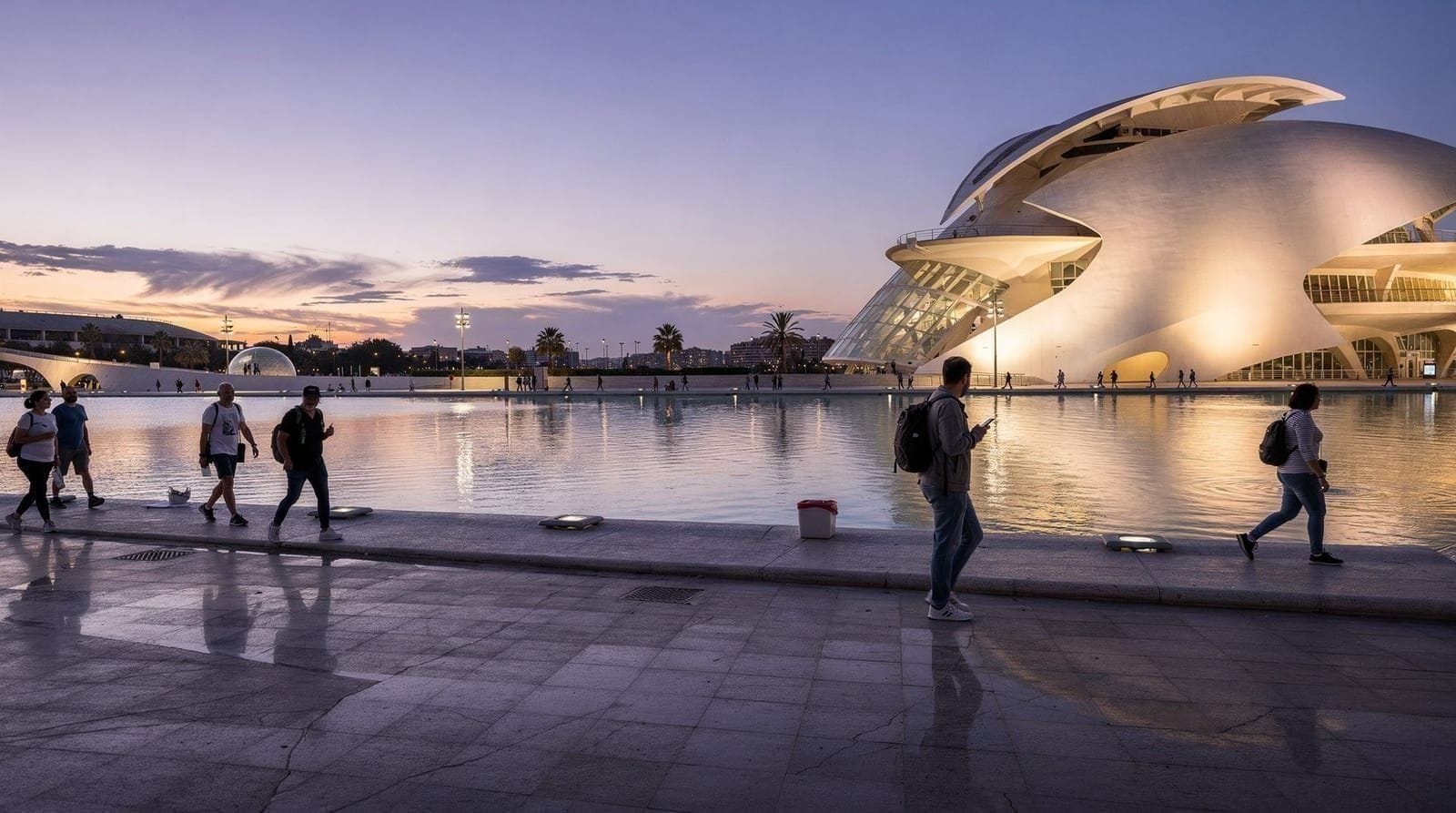
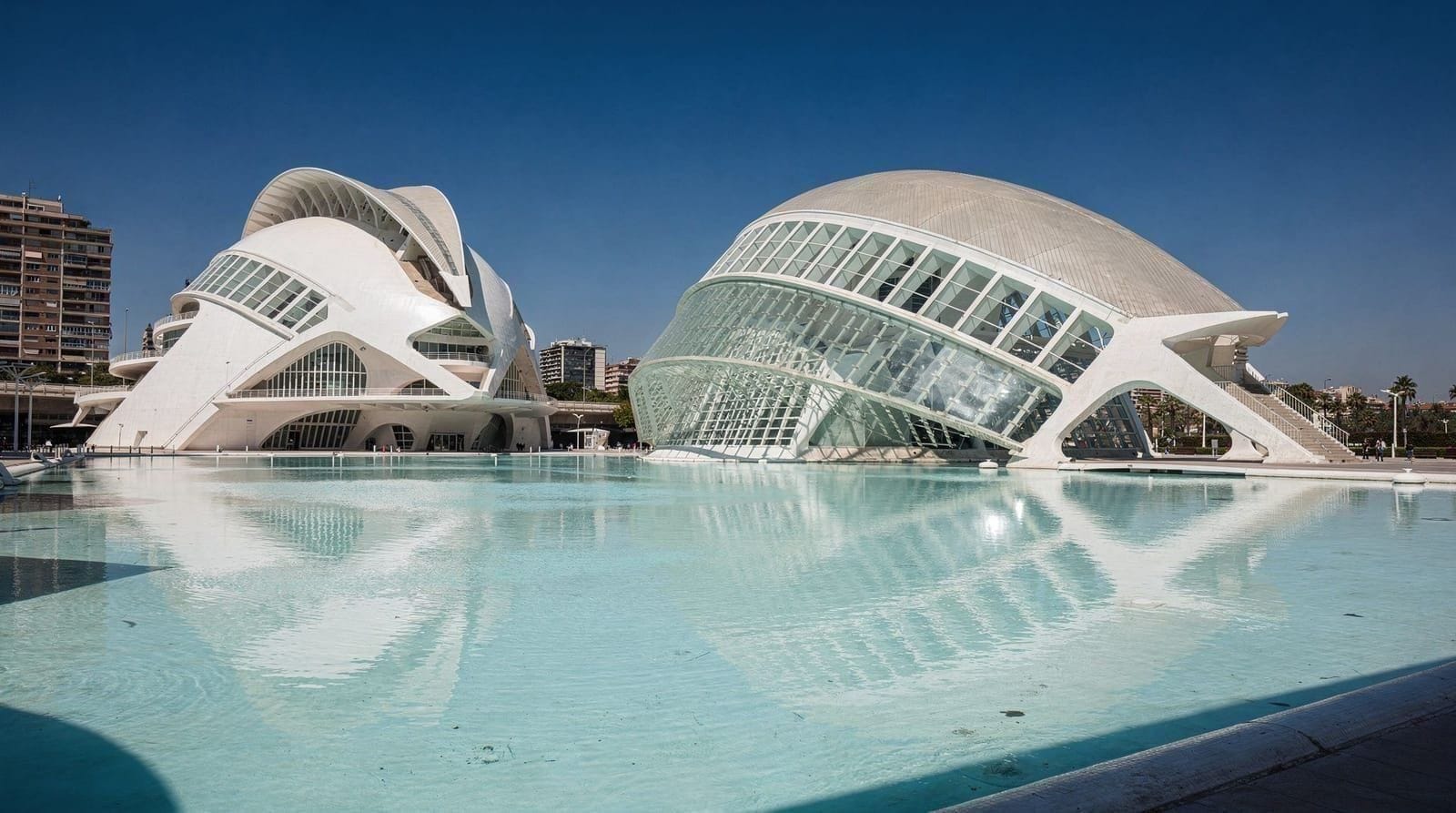
The museum occupies a 241-metre-long structure designed by Santiago Calatrava. From outside it looks like a series of giant white ribs — compared, variously, to a whale skeleton, a bleached forest, and a spacecraft hangar. The interior is airy and bright, with five floors of exhibition space connected by ramps and bridges.
The architecture is itself an exhibit. Children who are interested in construction, engineering, or just things that look improbable will spend time examining how the roof is supported and how the ramps flow between levels.
What to see on each floor
The permanent exhibition (“Phenomena”) changes in content periodically, but the general structure is stable:
Ground floor — life sciences: The human body section includes scale models, cross-sections, and interactive displays on anatomy, genetics, and medical science. Older children find the genetics content genuinely engaging. The oversized models of cellular structures work well for ages 8 and above.
Second floor — physics and technology: The most popular floor with children aged 6–12. Hands-on experiments in light, sound, magnetism, and electricity. These are proper experiments — build a circuit, change a lens, adjust frequencies — not press-a-button spectacles. Staff are generally available to assist with more complex experiments.
Third floor — space and environment: Astronomy exhibits, environmental science, and interactive screens on climate and planetary systems. Best for children with a specific interest in space; less engaging if the interest is not there.
Fourth and fifth floors: Rotating exhibitions and viewing platforms. Content varies by current programme.
Temporary exhibitions: The museum hosts substantial temporary exhibitions that rotate roughly every 6 months. These sometimes focus on contemporary science topics — artificial intelligence, environmental change, the human microbiome — and are often more engaging than the permanent galleries for older children and adults.
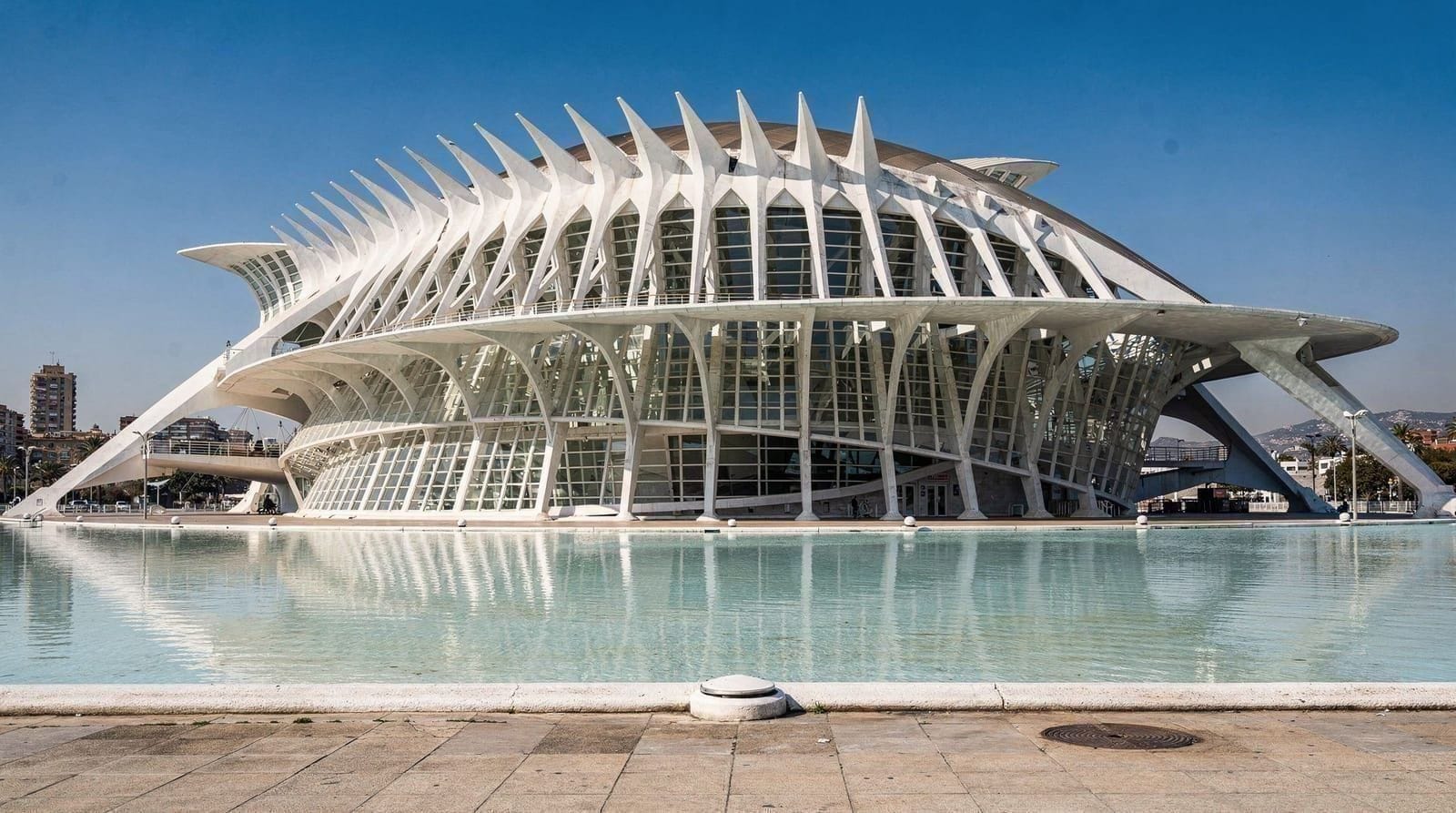 Príncipe Felipe Science Museum entry ticketCheck availability
Admission and combo tickets
Individual admission (2026 approximate):
- Adult: ~€9
- Child (4–12): ~€6.90
- Senior (65+): ~€6.90
- Under-3: free
Combo options:
- Science Museum + Hemisfèric: ~€14.10 per adult
- Oceanogràfic + Science Museum: ~€42–44 per adult
- Triple combo (Oceanogràfic + Hemisfèric + Science Museum): ~€48–50 per adult
- City of Arts full-day pass: ~€48–50 (most comprehensive option)
For a family of four spending one day at the Ciudad de las Artes y las Ciencias, the triple combo works out to around €178 (2 adults + 2 children) versus buying Oceanogràfic separately (€146) plus Science Museum (€32). The savings are modest but real.
The Hemisfèric: combining with the Science Museum
The Hemisfèric — the eye-shaped building immediately adjacent — is a 3D IMAX cinema that typically runs nature and science films of around 45 minutes each. The combination of Science Museum (2–3 hours) + Hemisfèric film (1 hour including settling in and out) fills a full half-day and covers very different modes of experience.
Practical notes for families:
- Book the Hemisfèric screening when you arrive, before entering the museum — morning screenings can sell out
- Children under 3 are not recommended for the immersive sound environment
- Screenings are in Spanish, sometimes with subtitles in other languages — check current programme for language options
- The building is very dark during screenings; bring young children prepared for this
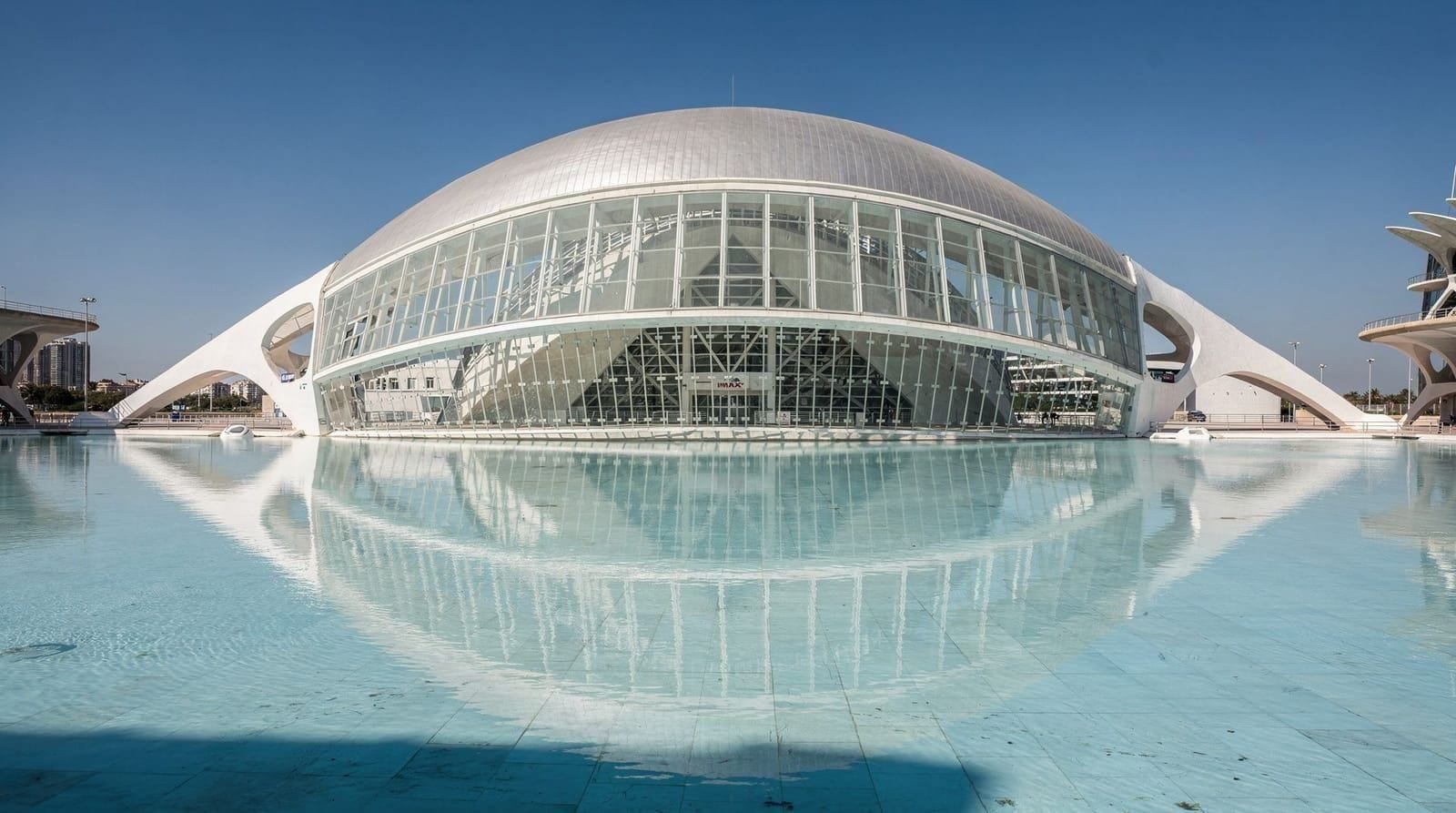 Hemisfèric + Science Museum comboCheck availability
Practical information
Opening hours: Tuesday–Sunday 10:00–19:00. Closed Mondays except public holidays. Hours extend during summer and school holidays — check the official site.
Café: The museum has a café on the ground floor with reasonable prices by Valencia attraction standards (€3–4 for coffee, €8–12 for sandwiches and snacks). Better options are the Hemisfèric café next door or the restaurants 10 minutes away along Calle Doctor Lluch.
Accessibility: Fully accessible throughout via lifts. Pushchair-friendly. All interactive exhibits are at child height on the lower floors.
Audio guide: Available in Spanish, English, French, and Valencian. Included in admission at most times — confirm at the ticket desk.
School groups: Science Museum attracts school visits on weekday mornings. Avoid Tuesday–Thursday mornings during term time if you want quieter galleries.
In context: Science Museum versus L’Oceanogràfic for families
The two most popular family attractions in Valencia offer very different experiences at very different prices:
| Factor | Science Museum | L’Oceanogràfic |
|---|---|---|
| Adult admission | ~€9 | ~€42 |
| Best age | 6–14 | 3–12 |
| Duration | 2–3 hours | 3.5–4 hours |
| Fully indoor | Yes | Mostly |
| Interactive | Yes, throughout | Limited to touch tanks |
| Pre-booking needed | Not usually | Essential in summer |
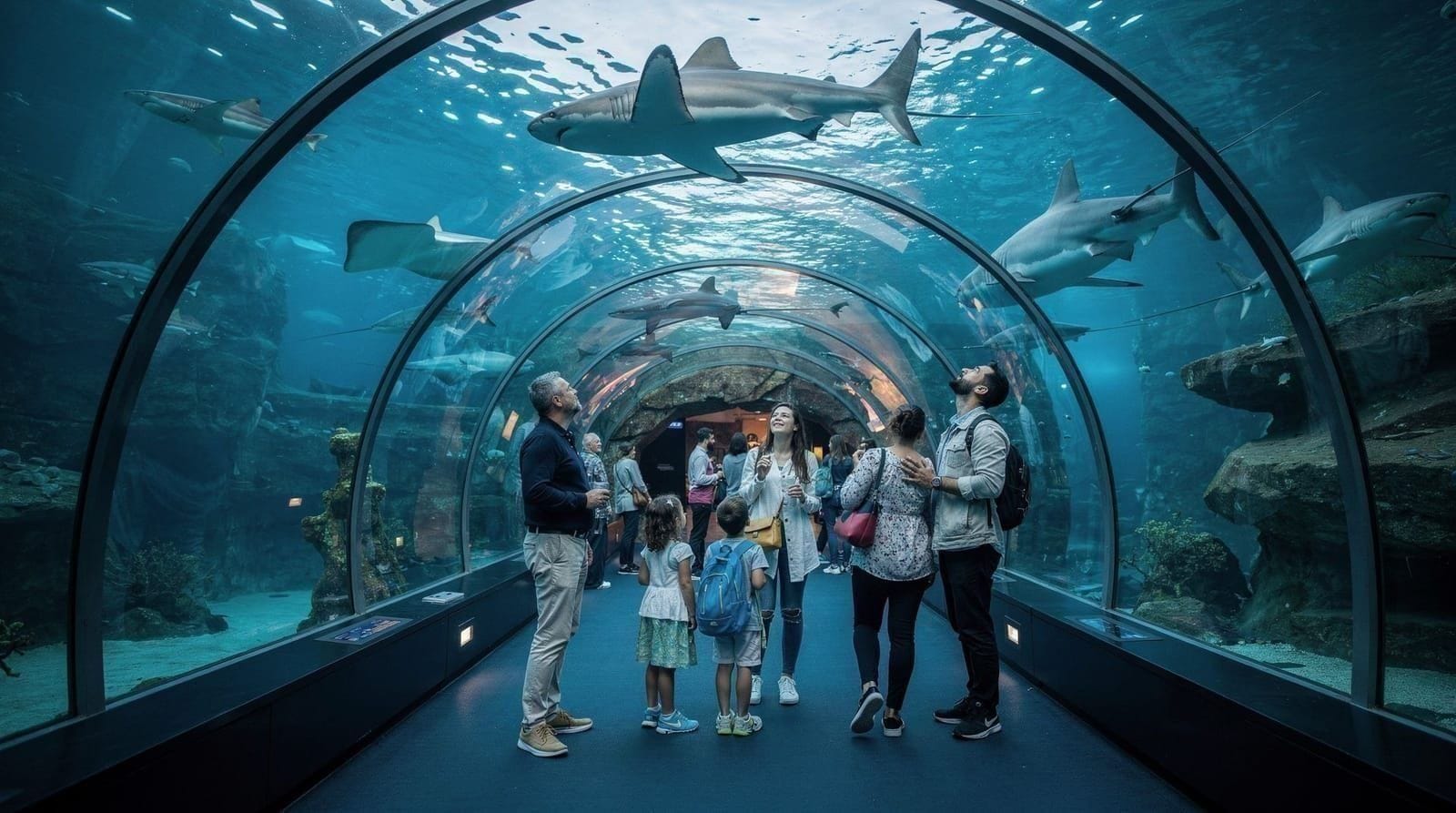
For budget-conscious families, the Science Museum at €9/adult is significantly better value per hour of engagement than the Oceanogràfic at €42. However, the Oceanogràfic provides an emotional punch — the beluga whales, the shark tank, the penguin parade — that the Science Museum does not replicate.
For a 3-day visit with both available, visit both. The Science Museum works well as a second-day addition to L’Oceanogràfic or as a rainy-day activity when the beach is not possible. See the rainy day guide and the 3-day family itinerary for planning details.
What children say about the Science Museum
The honest report: children aged 6–10 tend to engage intensely with the second-floor physics section and lose interest by the upper floors. This is not a criticism — most adults have a similar pattern. The two-hour window is the sweet spot for most family visits. If children are still interested after two hours, carry on; if they are flagging, move to the Hemisfèric or head outside.
The Science Museum is not a theme park and does not try to be one. It asks children to engage their attention and apply themselves — which is why it works better as a school-age attraction than an early-childhood one. For families with mixed ages, the second floor holds the youngest while older children explore higher levels independently.
For the full picture on Valencia’s family attractions, see the Valencia with kids guide.
Planning around the rest of a family day
Families spending a full day at the Ciudad de las Artes y las Ciencias typically pace themselves as: Oceanogràfic or Hemisfèric in the morning while energy is highest, lunch break, then the Science Museum in the afternoon once children are ready for a calmer, more focused activity. This order works better than the reverse — starting with the quieter Science Museum and then hitting the more stimulating aquarium tends to leave children overtired by the second stop.
If the museum itself is too much for very young children on a given day, the outdoor spaces around the complex — the shallow reflecting pools and the Turia Gardens cycle path immediately north — offer a free, low-stimulation break within a five-minute walk.
Nearby food options for families
The on-site café covers snacks and coffee, but for an actual family lunch, most parents walk 10 minutes to Calle Doctor Lluch, which has a wider choice of casual restaurants with children’s menus. For a picnic option, the grassy sections of the Turia Gardens nearby make a pleasant alternative to paying attraction-adjacent prices, particularly for families managing a tight Valencia on a budget itinerary.
Getting the most out of the visit with children
A little preparation changes how the museum feels. Before you go in, ask each child to pick one thing they want to find — a magnet experiment, the human body models, something about space. Children who arrive with a small mission explore with purpose instead of drifting from screen to screen, and the museum rewards that kind of curiosity far more than passive walking.
Once inside, resist the urge to read every panel aloud. Let the children touch, test and fail at the experiments first, and only then explain what happened. The second-floor stations work best when a child gets a result that surprises them, and a parent who simply says “why do you think that happened?” usually does more good than one who recites the explanation. If a station is occupied by another group, move on and circle back rather than queueing; the layout makes it easy to loop through the floors.
Staff on the floor are used to families and will often stop to help with an experiment that is not behaving. Do not be shy about asking, especially with younger children who may need a demonstration before they understand what a station is for.
Ideas for different ages
Ages 5 to 7: Keep the visit short and focused on the ground and second floors. Younger children enjoy anything they can press, turn or look through, even if they do not grasp the science behind it. Plan a break outside before they hit the point of overload, and consider the Gulliver park as a reward afterwards if the day allows.
Ages 8 to 11: This is the sweet spot. Children in this range can follow the logic of the physics experiments, enjoy the competitive side of some stations and often want to go back to the ones they have already tried. They also tend to be curious about the building itself, so the guide to the City of Arts and Sciences is a useful read beforehand if your child likes architecture.
Ages 12 to 14: Teenagers are the hardest audience, and the temporary exhibitions are usually the best way in. Topics tied to technology or current science tend to hold them longer than the permanent galleries. Letting them lead part of the visit, or giving them the museum plan and asking them to choose the route, often improves the mood considerably.
How the museum fits a wider Valencia trip
The Science Museum rarely needs a whole day on its own, which makes it easy to slot into a longer stay. Families planning several days can place it on the day they visit the Ciudad de las Artes y las Ciencias area, pairing it with a gentle stroll rather than another heavy attraction. If your trip includes the beach, keep the museum for a cloudy or very hot day; the guide to family beaches and the beaches with kids page will help you decide how to balance sand and screens.
For travellers who like a fixed plan, the Valencia with family itinerary and the one-day Valencia itinerary show where a museum visit can sit without crowding the rest of the day. Anyone staying a little longer can also look at how many days to spend in Valencia to decide whether the museum deserves its own half-day.
If you want the film and the museum on the same ticket, the combined options are covered above. Some families prefer to keep the 3D film separate, and a standalone Hemisfèric ticket such as the 3D IMAX screening on its own lets you choose a time that suits your children’s energy rather than building the day around one slot.
Rainy days, hot days and quieter days
The museum is one of the more reliable answers when the weather turns. On a wet day it is a natural first choice, and the rainy day guide for kids lists other indoor options if you want to pair it with something else. On a very hot day in the summer months, the indoor, air-conditioned galleries make a sensible midday pause; see the guide to Valencia in summer for how to organise early mornings and late afternoons around the heat.
In the cooler months, the museum is pleasantly easy to combine with a walk. The Valencia in winter and Valencia in autumn guides explain what the weather tends to be like, so you can decide whether to spend time outdoors before or after your visit. Families visiting in spring may prefer to keep the outdoor time for the gardens and use the museum as a shorter stop; the spring guide has more on that season.
Combining with other family stops
The complex is built for families to move from one attraction to the next, but not every child wants a marathon. A calm pairing is the museum followed by the Bioparc on a separate day, so that the animals feel like a treat instead of an extra task. For a day entirely about animals and water, the Oceanogràfic worth-it guide will help you decide how to divide your time. And if you want the whole complex in a single pass with the least planning, a combined full-day pass for the City of Arts and Sciences keeps the tickets in one place.
Whichever combination you choose, build in slack. Children rarely follow a timetable, and the best family days in Valencia are the ones where the plan has room for an unplanned ice cream, a longer stay at a favourite experiment or an early finish.
Frequently asked questions about Science Museum Valencia with kids
How much does the Science Museum Valencia cost?
Approximately €9 per adult and €6.90 for children (4–12). Under-3s are free. A combo with the Hemisfèric 3D film costs around €14.10 per adult. The triple combo with Oceanogràfic and Hemisfèric is approximately €48–50 per adult.How long should you spend at the Science Museum?
Budget 2–3 hours for a thorough family visit. Children aged 6–12 tend to linger on the interactive sections. Allow more time if you plan to include a Hemisfèric film screening.What floor is best for young children at the Science Museum?
The first and second floors have the most accessible interactive exhibits for younger children, including the human body section and basic physics demonstrations. The upper floors (3–5) are better suited to older children and adults.Is the Hemisfèric worth adding to the Science Museum visit?
If you have children aged 5+, yes. The 45-minute 3D IMAX film is a distinct experience from the museum and the combination fills a half-day comfortably. Check the current programme for suitability before booking.How do you get to the Science Museum from central Valencia?
Bus 13, 14, or 35 from the city centre (about 25 minutes). By bike through the Turia Gardens, approximately 20 minutes from the old town. The Science Museum is adjacent to the Hemisfèric, both in the Ciudad de las Artes y las Ciencias complex.
Top experiences
Bookable activities with verified prices and instant confirmation on GetYourGuide.