Albufera Natural Park — visitor guide
Honest guide to the Albufera Natural Park south of Valencia — sunset boat tours, authentic paella in El Palmar, how to get there, and what to skip.
Valencia: Albufera boat ride with food and paella included
Quick facts
- Best for
- Sunset boat tours, birding, authentic paella
- Time needed
- Half day minimum; full day ideal
- Getting there
- Bus 24/25 from Valencia (~45 min, €2)
- Don't miss
- Sunset from a wooden boat; lunch in El Palmar
- Avoid
- Overpriced paella at the entrance to El Palmar's main street
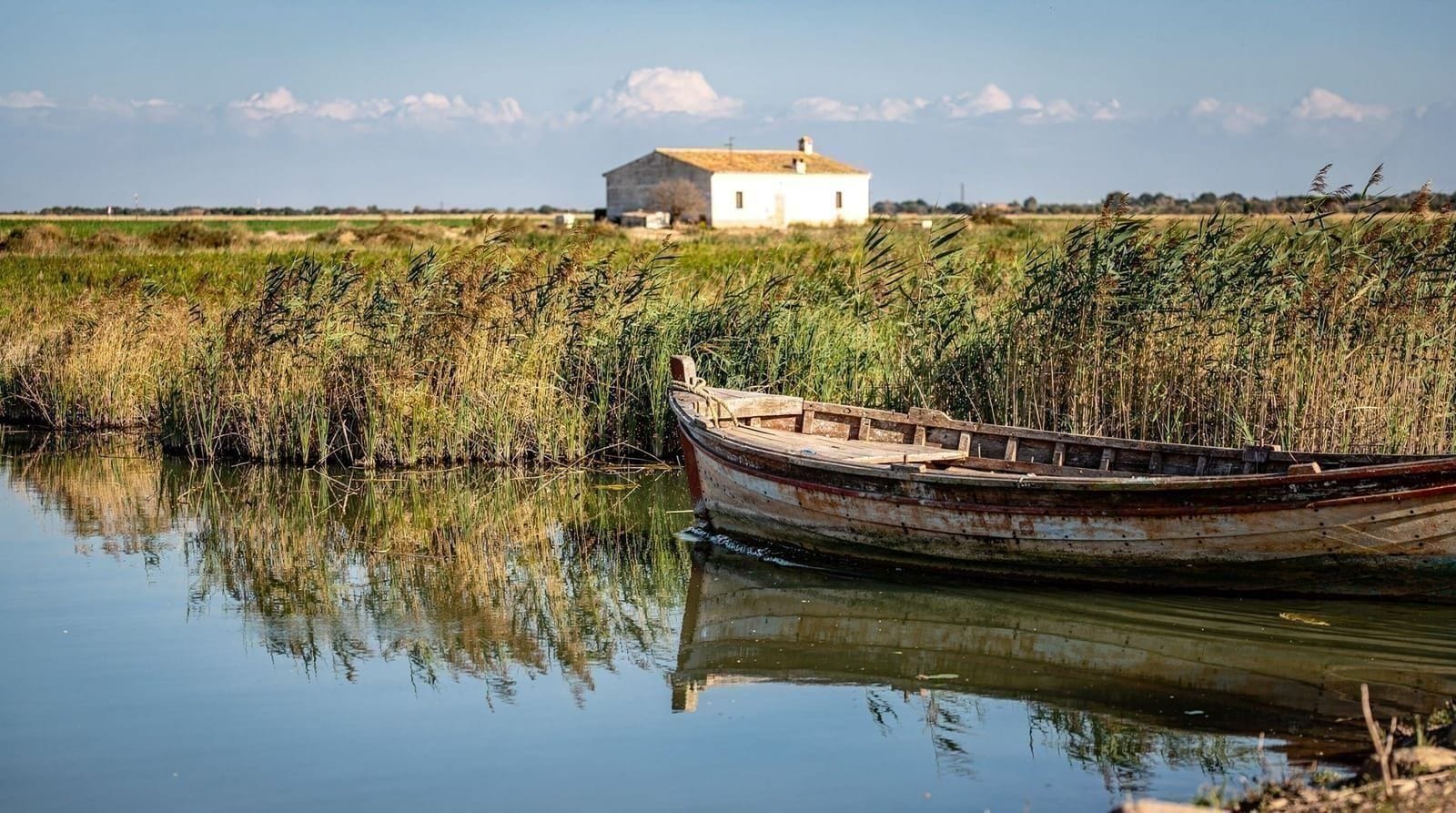
The Albufera is a freshwater lagoon 10 km south of Valencia, separated from the Mediterranean by a narrow strip of sand dunes and pine woodland. It covers 2,432 hectares of open water surrounded by 14,400 hectares of rice paddies, reed beds, and wetland habitats — a total natural park of 21,120 hectares. This is where Valencian paella was born, where over 250 bird species migrate through or breed each year, and where the sunset, seen from a flat-bottomed wooden boat called a albuferenca, is one of the quieter genuinely beautiful things you can do from Valencia.
| Where | 10 km south of Valencia, Parc Natural de l’Albufera |
| Cost | Around €25 independent; €40–55 organised tour with lunch |
| Time needed | Half day minimum; full day ideal |
| Getting there | Bus 24/25 from near Russafa (~45 min, €2) or car via V-31 |
| Best time | October for harvest and flamingos; sunset for the boat ride |
What the Albufera is
The lagoon was connected to the Mediterranean until the 13th century. Human activity — primarily the construction of rice paddies and the El Palmar village — gradually separated it. Today a system of sluice gates called golas regulates water levels between the lagoon and the sea, maintaining the brackish mix that supports the ecosystem. The water is shallow throughout (average depth 1 m), warm in summer, and covered in waterlilies and reed beds along its margins.
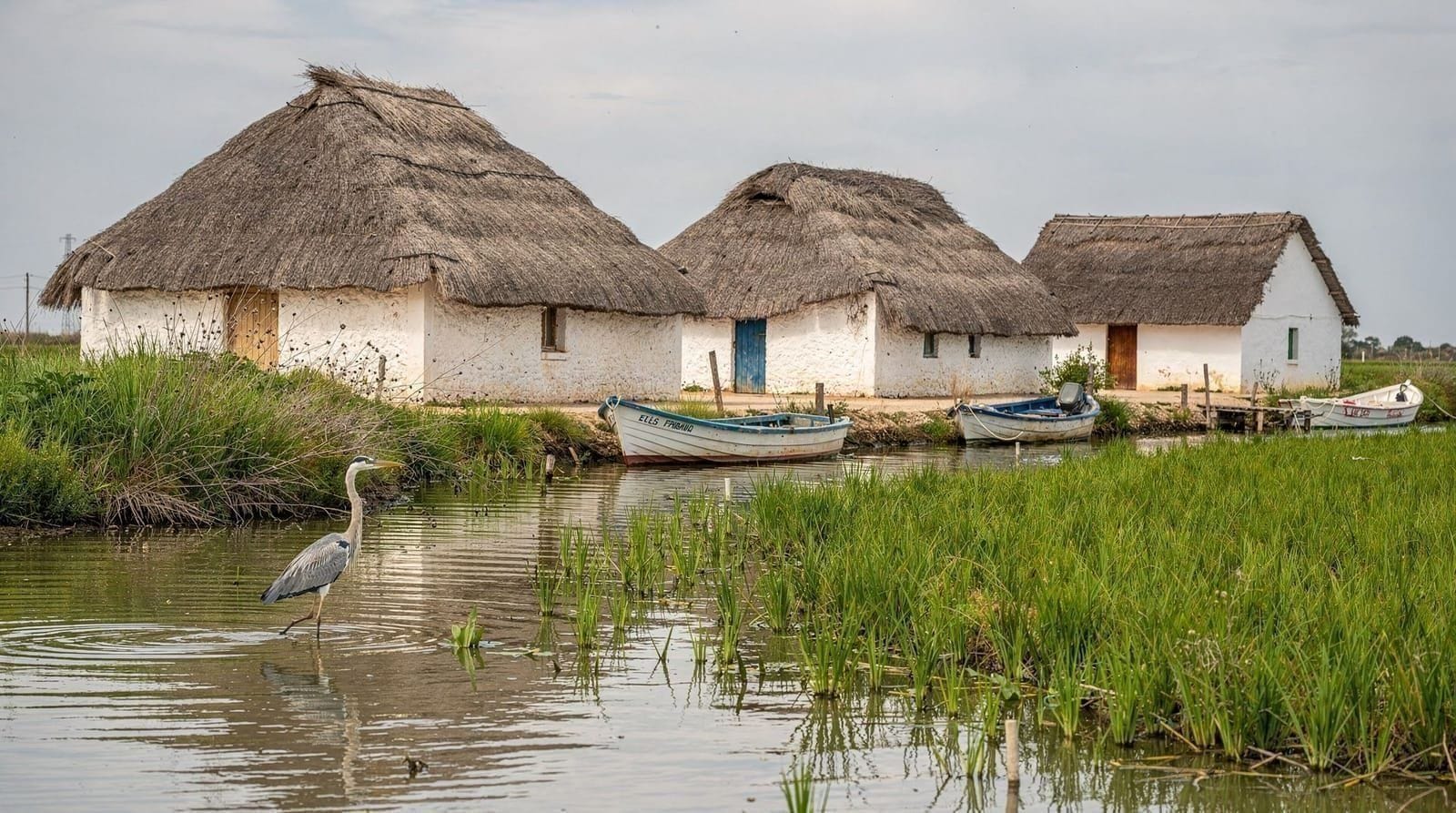
The park boundary encompasses far more than just the lagoon: the pine and dune forest of La Devesa (on the sandbar strip), the network of narrow irrigation canals called acequier running between the rice paddies, and the traditional fishing community at El Palmar on the lagoon’s western shore.
Getting there from Valencia
Bus 24 or 25 departs from the intersection of Gran Via Germanies and Calle Sueca (near Russafa), stopping at El Palmar village and at various points around the lagoon perimeter. Journey time: around 45 minutes to El Palmar. Single fare: €2. Buses run roughly every 30 minutes on weekdays; less frequently on weekends. Check the EMT Valencia app for current schedules.
By car: take the V-31 motorway south and exit at El Saler or El Palmar. Journey time from the city centre is about 20 minutes with no traffic. Parking in El Palmar fills on Sunday lunchtimes (peak paella day) — arrive before 12:30 or take the bus.
Organised tours from Valencia typically include return transport, the boat, and lunch — the most convenient option if you want everything handled.
Albufera boat ride with paella included — transport from Valencia, boat tour, and traditional lunch.
The sunset boat tour
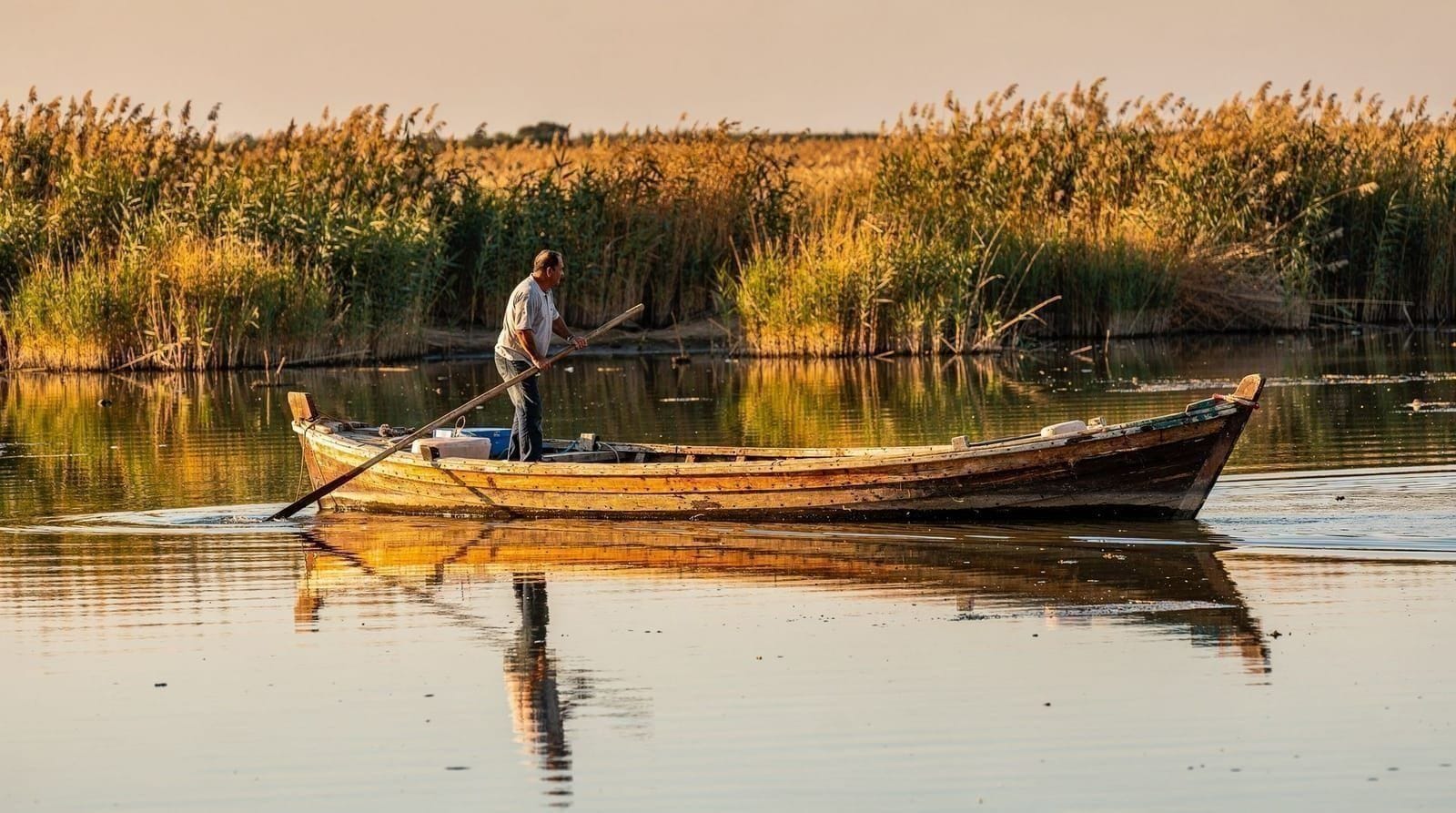
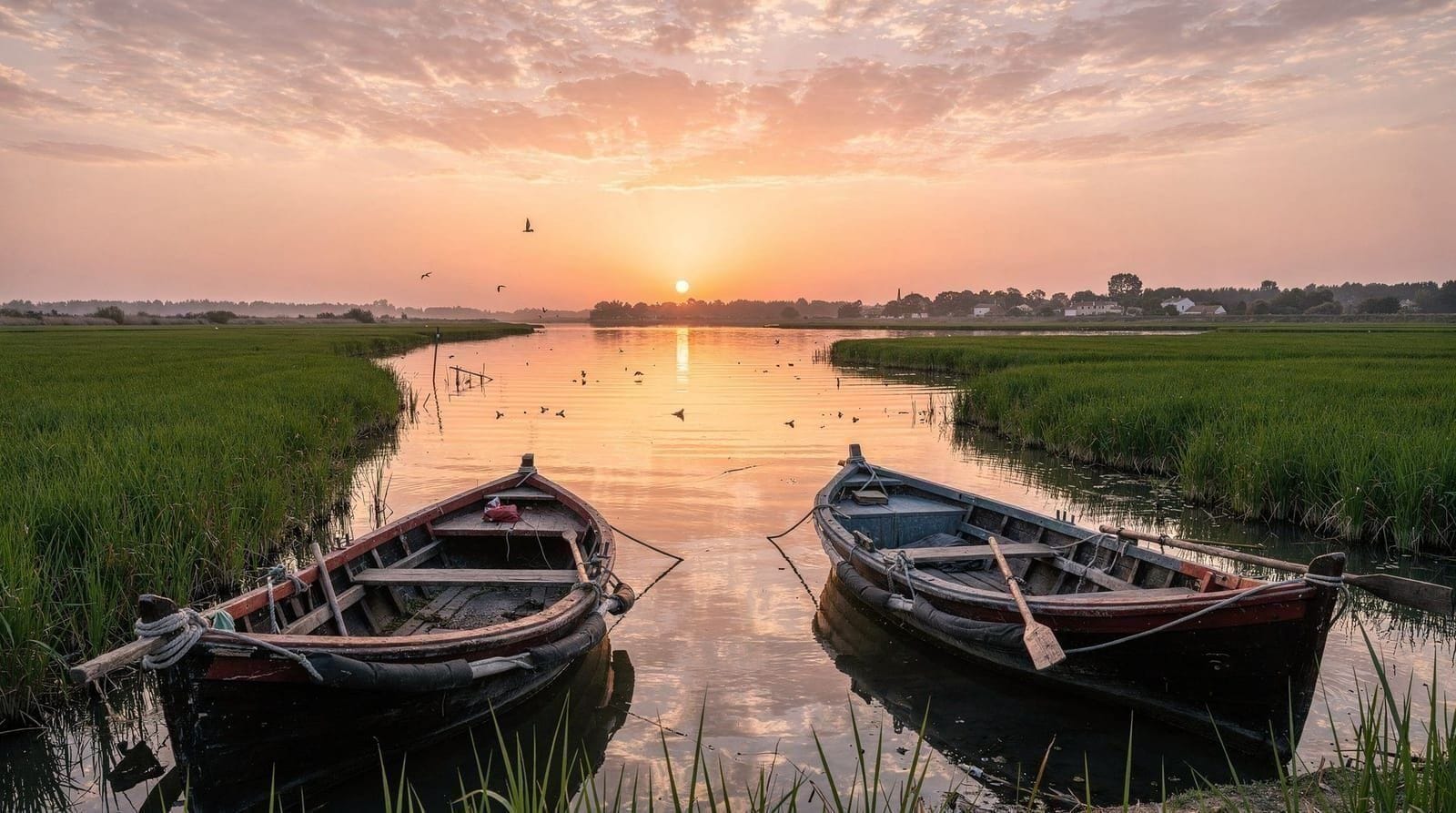
The traditional boat ride on the Albufera is the defining experience. The albuferenca — a flat-bottomed wooden vessel — poled or motored slowly across the lagoon, ideally in the hour before sunset when the light turns the water orange and pink, the rice paddies gold, and the distant city skyline silhouettes sharply.
Tours depart from the gola embarkation points at El Palmar or from the northern shore near La Cañada. Boat tours last 45–60 minutes. Key things to know:
Independent boat hire: at El Palmar, small independent operators rent boats with a local guide (barquero) for approximately €8–12 per person. Ask at the small embarkation points near the golas. These unorganised tours are often more authentic than package tours but depend on availability and weather.
Organised tours: include transport from Valencia, a dedicated guide, and often a paella lunch. Prices start at €40–55 per person depending on whether lunch is included.
The sunset timing matters. From October to March the sun sets before 19:00 — ideal timing aligns departure at 16:30–17:00. From May to August, sunset is after 21:00 — departure at 19:30 works well and avoids midday heat.
Albufera Natural Park eco boat tour at sunset — small group, quiet electric boat.
El Palmar: the original paella village
El Palmar is a fishing village of about 800 residents, its streets lined with restaurants that existed before Valencia’s tourism boom. Paella valenciana originated in and around the Albufera’s rice paddies and wetlands; the dish uses ingredients that were historically local — rice from the paddies, chicken and rabbit from the huerta farms, snails and green vegetables from the surrounding countryside.
The best paella here is cooked at lunchtime over orange and pine wood fires, not gas. Several restaurants in El Palmar still do this properly:
Mestre, Nou Raco, and El Bon Estar are three of the most consistently recommended. Expect to pay €15–22 per person for the full menú (first course, paella, dessert, drink). Bookings are strongly advised on Sundays, when El Palmar receives hundreds of Valencian day-trippers specifically for lunch.
Tourist trap warning: the restaurants at the very entrance of Calle La Sequiota (the main street of El Palmar) are the most visible and the least interesting — standard tourist pricing and often the least authentic cooking. Walk to the middle and far end of the street, or ask any local which restaurant their family uses.
Key rule: order paella only at lunch. Any restaurant offering paella at dinner is serving a reheated or pre-made version.
Read the full all-i-pebre guide — the eel stew of the Albufera that is less famous than paella but equally traditional, made with eels from the lagoon, paprika, garlic, and almonds.
Bird watching in the Albufera
The Albufera is one of the most significant waterbird habitats in Spain. Over 250 species have been recorded; the park is particularly important for:
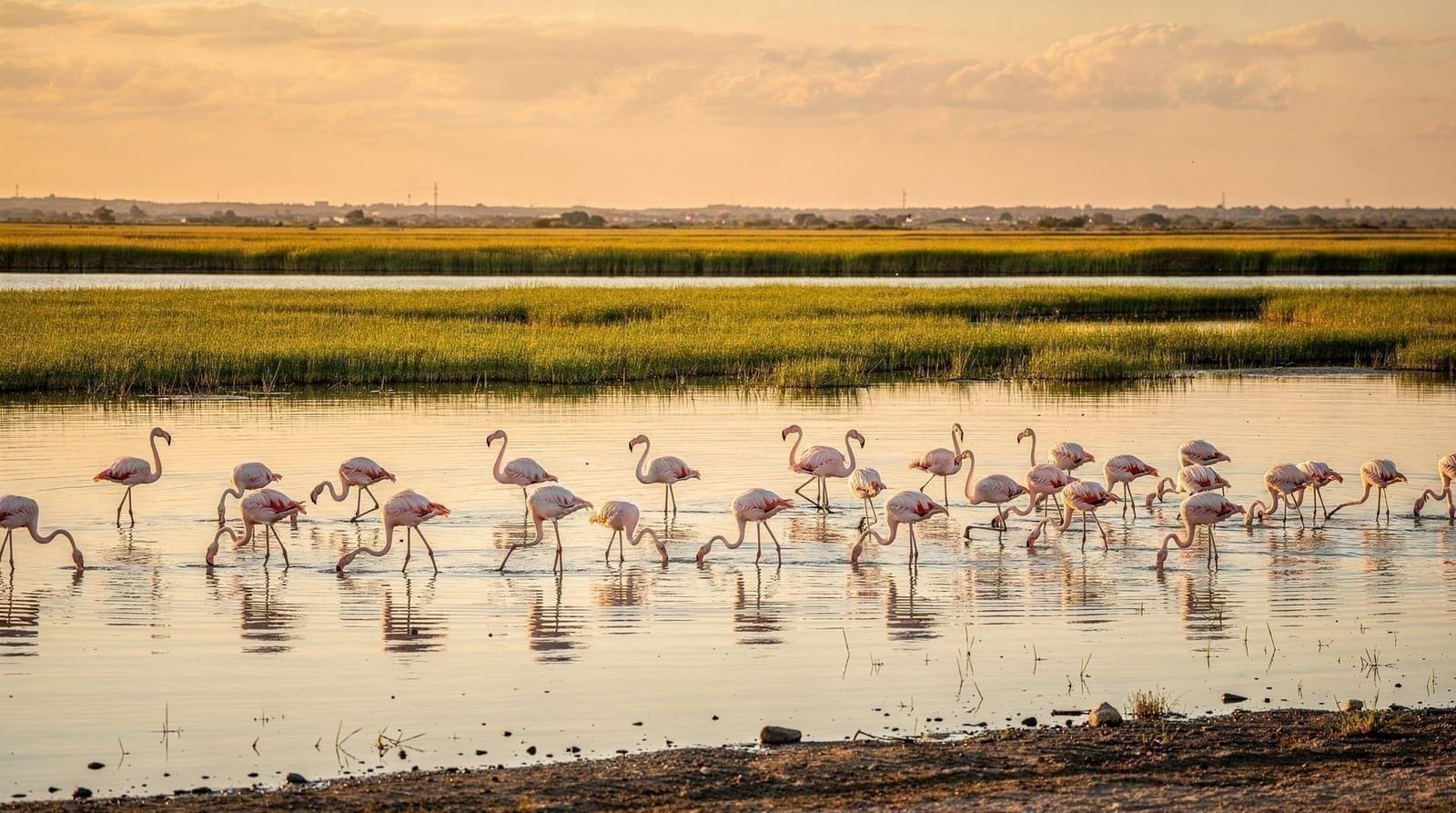
- Greater flamingo (winter visitor, sometimes in flocks of 1,000+)
- Little egret and grey heron (resident breeders)
- Glossy ibis (winter)
- Purple gallinule (resident, iconic local species)
- Marsh harrier (resident breeder)
- Whiskered tern (summer breeder)
- Eurasian wigeon and other ducks (winter, up to 100,000 individuals)
The best observation points are the Tancat de Milia (northwestern shore, with a raised hide) and the Gola del Perellonet (southeastern corner, where the lagoon meets the sea). Dawn and dusk are the most active periods. A pair of binoculars is sufficient; a 400mm camera lens opens up more species for identification.
The park visitor centre (Centro de Interpretación de El Palmar, free, open Tuesday–Sunday 09:00–14:00 and 16:00–18:00) provides current species lists and guided birdwatching tours on Saturdays at 08:00 (free, pre-booking required by phone).
La Devesa: the dune forest and beach
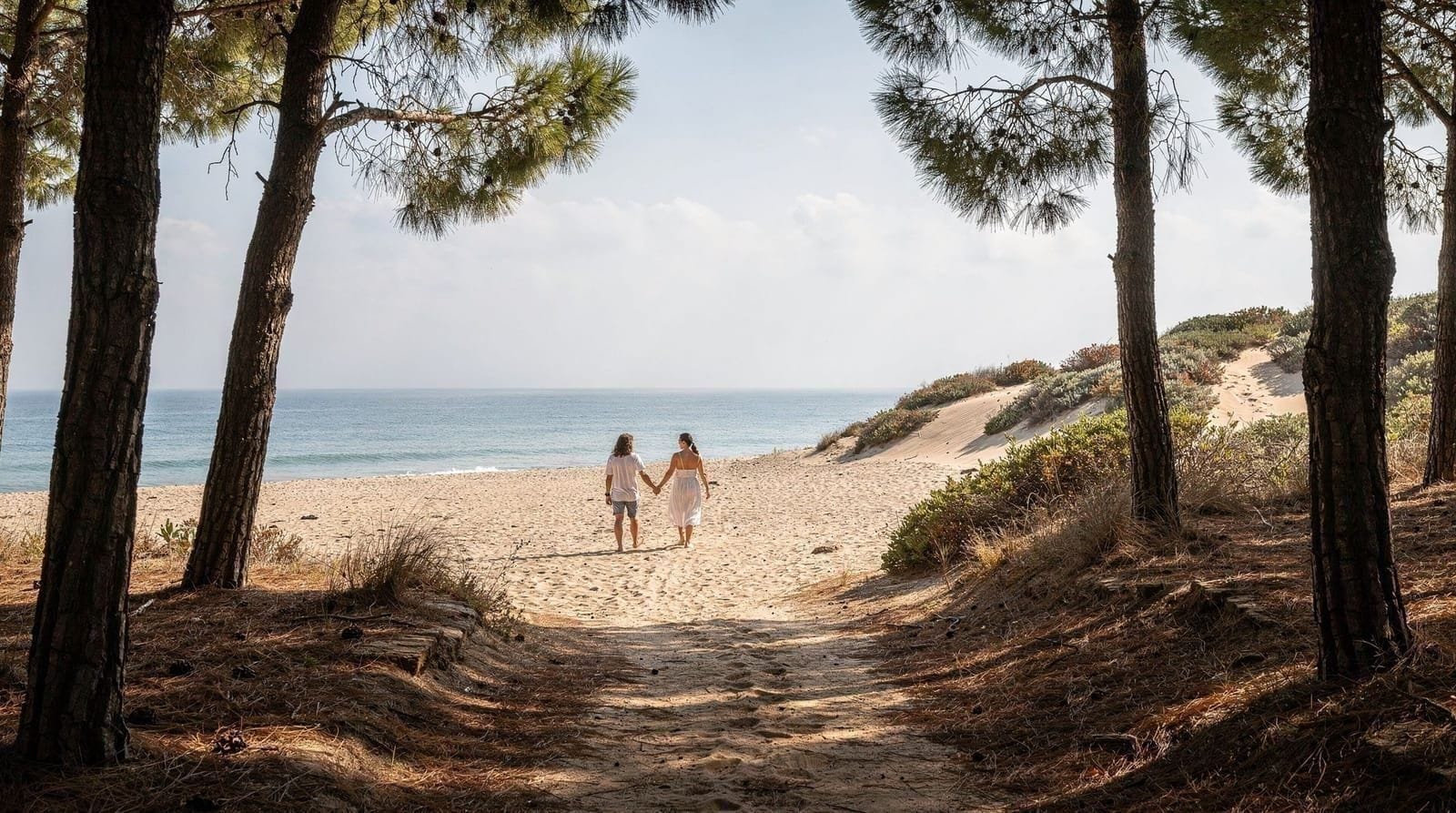
Between the Albufera and the Mediterranean runs a narrow strip of dunes stabilised by a mixed pine forest known as La Devesa. This is one of the least-visited beaches near Valencia — a long, undeveloped stretch with fine sand, no beach bars, and good water quality. Access is by car (parking at the southern end near El Saler) or bicycle along the coastal path from Valencia.
The forest itself is managed as part of the natural park. Walking trails pass through stone pine woodland with a sand substrate — a habitat increasingly rare along the Spanish Mediterranean coast. Swimming here means walking through pine trees to the sea, which is not convenient but genuinely beautiful.
Read the full El Saler and La Devesa destination guide.
The rice paddies — September and October
The Albufera rice harvest runs September to mid-November. During these weeks, the paddies are flooded and combine harvesters work the fields around the clock. At dawn, the low mist, the machinery lights, and the smell of cut rice are extraordinary. This is also peak flamingo season — the harvested fields attract large flocks. A bicycle tour from Valencia via the Turia path to the lagoon perimeter is the best way to see this.
The Albufera by bike and boat tour covers this specifically.
Organised tours vs. independent visit
| Independent | Organised tour | |
|---|---|---|
| Cost | ~€2 bus + €8 boat + €15 lunch = ~€25 | €40–55 all-inclusive |
| Flexibility | High | Low |
| Transport effort | Moderate (bus times, connections) | None |
| Best for | Budget-conscious, independent travellers | First-timers, families, limited time |
The organised tour with paella included is the better option if you are visiting Valencia for 3 days or fewer — it handles logistics and gives you the boat experience and a genuine Albufera lunch in one package. Independent visits are more rewarding if you have a full day, want to birdwatch seriously, or want to choose your own restaurant.
Private Albufera tour with paella, boat ride, and guided walk — flexible timing.
Combining with other stops
With El Saler beach: bus 24/25 stops at El Saler beach before continuing to El Palmar. You can swim at El Saler (quieter and cleaner than Malvarrosa), then continue to the Albufera for a late lunch or sunset boat.
With La Devesa: rent a bike in Valencia, cycle the 12 km coastal path south to the Albufera perimeter (flat, mostly traffic-free), take a boat tour, have lunch in El Palmar, then cycle back. Total distance approximately 25 km each way; allow a full day.
Full day itinerary: arrive El Palmar by bus at 11:00 → lunch 13:00–14:30 → boat tour at 15:30 (or sunset timing depending on season) → return bus. See the Albufera day trip itinerary for detailed logistics.
The Albufera by season
| Month | Water/weather | What’s best |
|---|---|---|
| Jan–Mar | Cool, water levels high | Winter birding — flamingos, ducks, herons |
| Apr–May | Mild, breeding season starts | Fewer crowds, active bird colonies |
| Jun–Aug | Hot, lagoon warm | Swimming at La Devesa, longest boat-tour hours |
| Sep–Nov | Cooling, rice harvest | Combine harvest scenery with flamingo arrivals |
| Dec | Cool, quiet | Lowest crowds, still-good birding |
October is the single best all-round month — see the practical tips below for why it combines so much.
Practical tips
- Sunday lunchtimes are crowded — every Valencian family uses Sunday for a paella lunch in El Palmar. Book a table by Friday.
- October is the best month for combining mild weather, rice harvest scenery, flamingo season, and still-warm swimming at La Devesa.
- Mosquitoes: bring repellent for sunset boat tours in spring and autumn. The reed beds are productive breeding habitat.
- Sunscreen: the lagoon boat is fully exposed; midday sun in summer is intense.
- Water: the lagoon water is eutrophic (nutrient-rich from agricultural runoff). Do not swim in the lagoon itself — use the sea beaches on La Devesa.
Other ways to explore the Albufera
Beyond the traditional wooden boat, a handful of quieter options exist for visitors who want to spend longer on or around the water. Kayaking along the lagoon’s northern margins, away from the tourist boat routes near El Palmar, is possible with a rented kayak — see the kayak and paddle guide for operators and put-in points. Cycling the perimeter combines the natural park with a proper day out; the flat coastal route described above also connects to the wider Turia park cycling network if you’re starting from the old town.
For visitors staying in Valencia without a car and short on time, the organised tour remains the simplest route to the Albufera’s highlights — boat, lunch and transport handled in one booking, with no need to plan bus connections.
Where to combine it with the rest of a Valencia trip
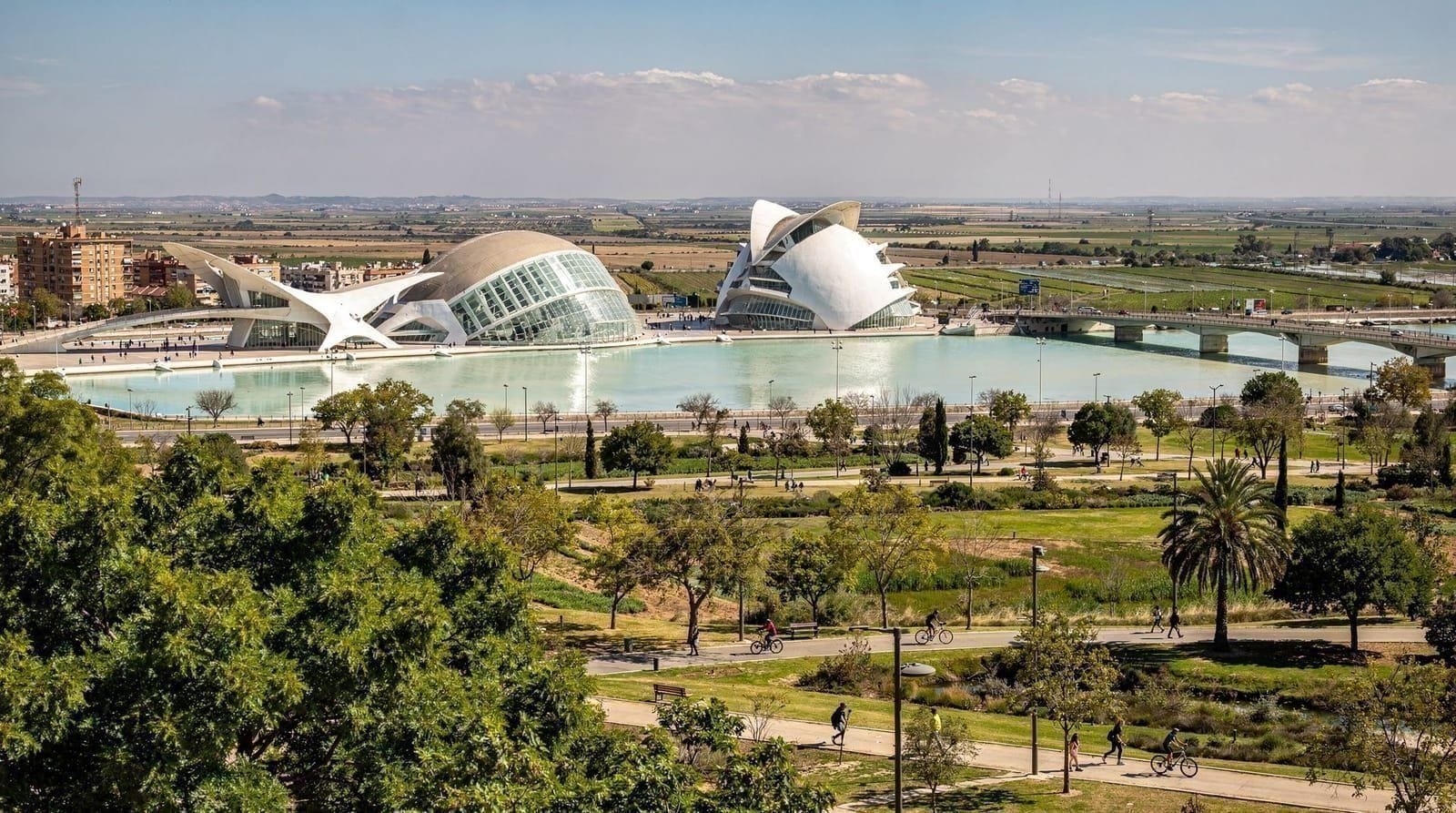
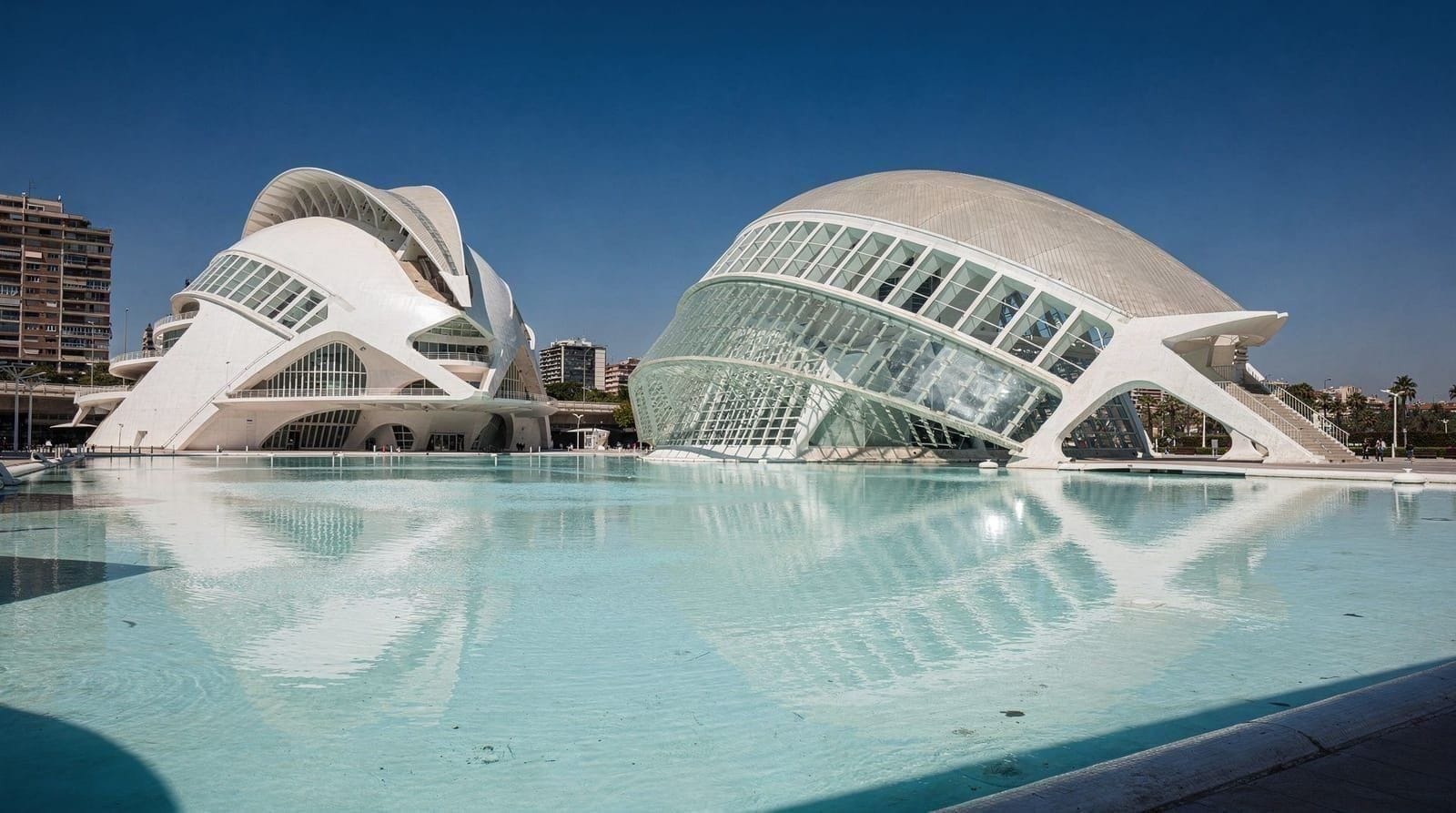
Most visitors slot the Albufera in as a half-day or full-day trip alongside the City of Arts and Sciences, since both sit on the southern side of the city and a taxi between them is quick. For food-focused visitors, pairing an Albufera lunch with a morning at the Mercado Central or the wider Valencia food markets makes for a full day built entirely around eating well. See the best beaches near Valencia guide for how El Saler and La Devesa compare with the city’s main beaches.
Frequently asked questions about Albufera
How do I get to the Albufera from Valencia?
Bus 24 or 25 from Avenida Germanies (near Russafa) runs to El Palmar in about 45 minutes for €2 each way. Buses run roughly every 30–60 minutes. A taxi costs €15–20 one-way. Organised tours include return transport from central Valencia.
Is a boat tour at the Albufera worth it?
Yes — the flat-bottomed albuferenca boats give a perspective on the lagoon and rice paddies that is impossible from land. The sunset is the optimal timing. Even a 45-minute ride significantly improves understanding of the scale and ecology of the lagoon. Budget €8–15 for an independent boatman or €40–55 for an organised tour with transport and lunch.
What is the best time of year to visit the Albufera?
October combines the rice harvest scenery, flamingo arrivals, warm-enough water at La Devesa beach, and comfortable walking temperatures (22–25 °C). Spring (April–May) is good for breeding birds. Summer is fine but hot and the lagoon is at its most eutrophic.
Can I eat paella in El Palmar?
Yes, and it is significantly better than most paella served in Valencia city. The restaurants in El Palmar — particularly those in the middle or far end of Calle La Sequiota, away from the tourist entrance stalls — serve paella cooked over wood fire at lunchtime. Book on Sundays. Expect to pay €15–22 per person.
Is the Albufera good for bird watching?
Very good. Over 250 species have been recorded, with winter concentrations of flamingos, ducks, and herons being particularly impressive. The Tancat de Milia observation hides are the best access points. A visit at dawn or dusk is worthwhile; bring binoculars.
How far is the Albufera from Valencia city?
The park boundary begins about 10 km south of the city centre. El Palmar village is about 14 km by road. The bus journey takes 40–45 minutes; a car journey without traffic takes 20 minutes.
Can I cycle to the Albufera?
Yes, and it is one of the best cycling routes from Valencia. The Turia park path leads to a coastal cycling route running south past El Saler beach and into the La Devesa pine forest. The terrain is completely flat. Distance from the city centre to El Palmar by bicycle is approximately 18–20 km. Allow 1.5–2 hours.
Top experiences
Bookable activities with verified prices and instant confirmation on GetYourGuide.