Ciudad de las Artes y las Ciencias — visitor guide
Complete honest guide to Valencia's City of Arts and Sciences — Oceanogràfic, Hemisfèric, Science Museum. What to buy, skip, and when to go.
Valencia: City of Arts full-day combined tickets
Quick facts
- Best for
- Architecture, science, families, aquarium fans
- Time needed
- Half day to full day
- Getting there
- Bus 35 or tram from city centre, ~15 min
- Don't miss
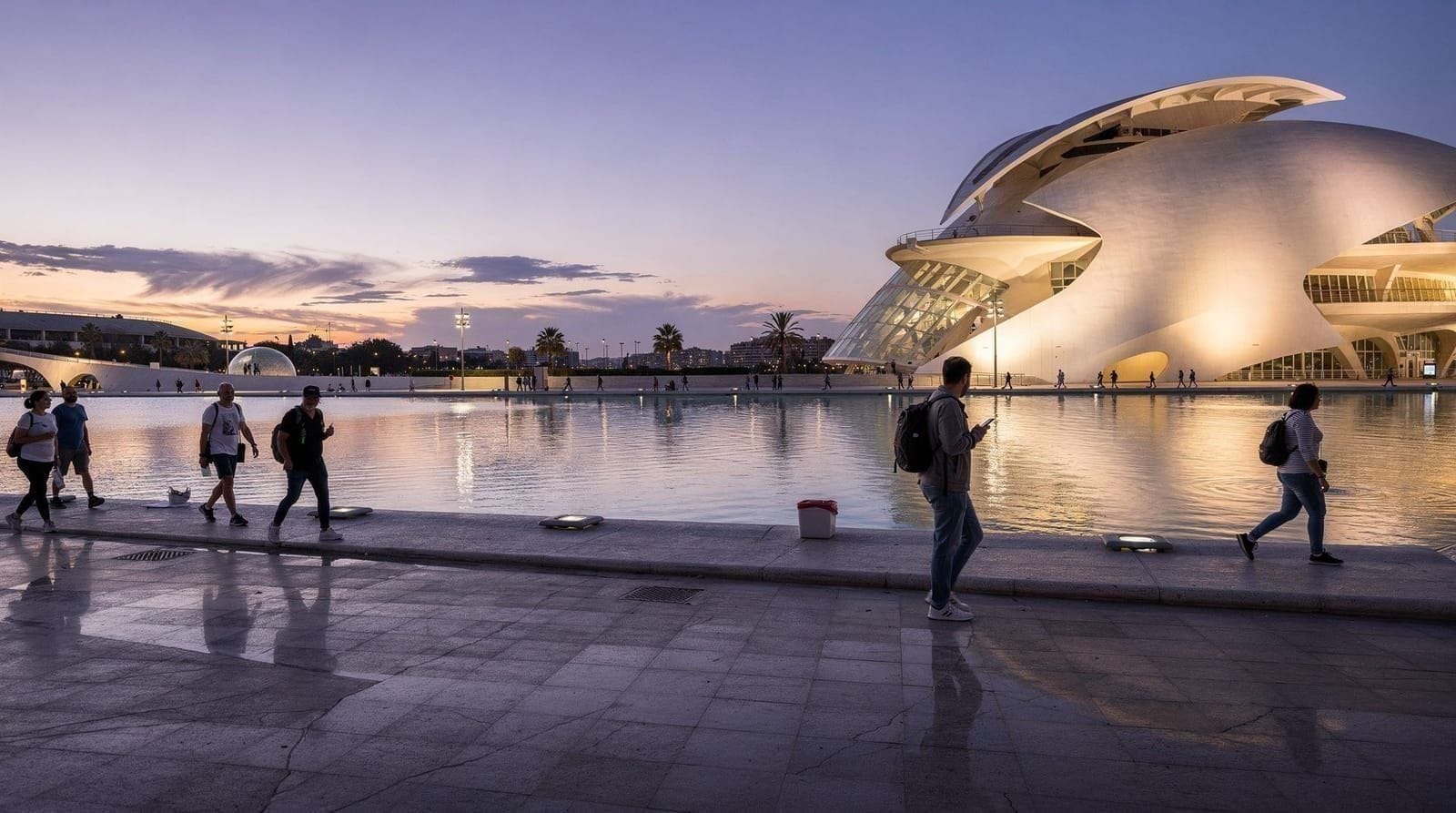
- Oceanogràfic, exterior walk at dusk
- Avoid
- Buying on-site food without checking café options
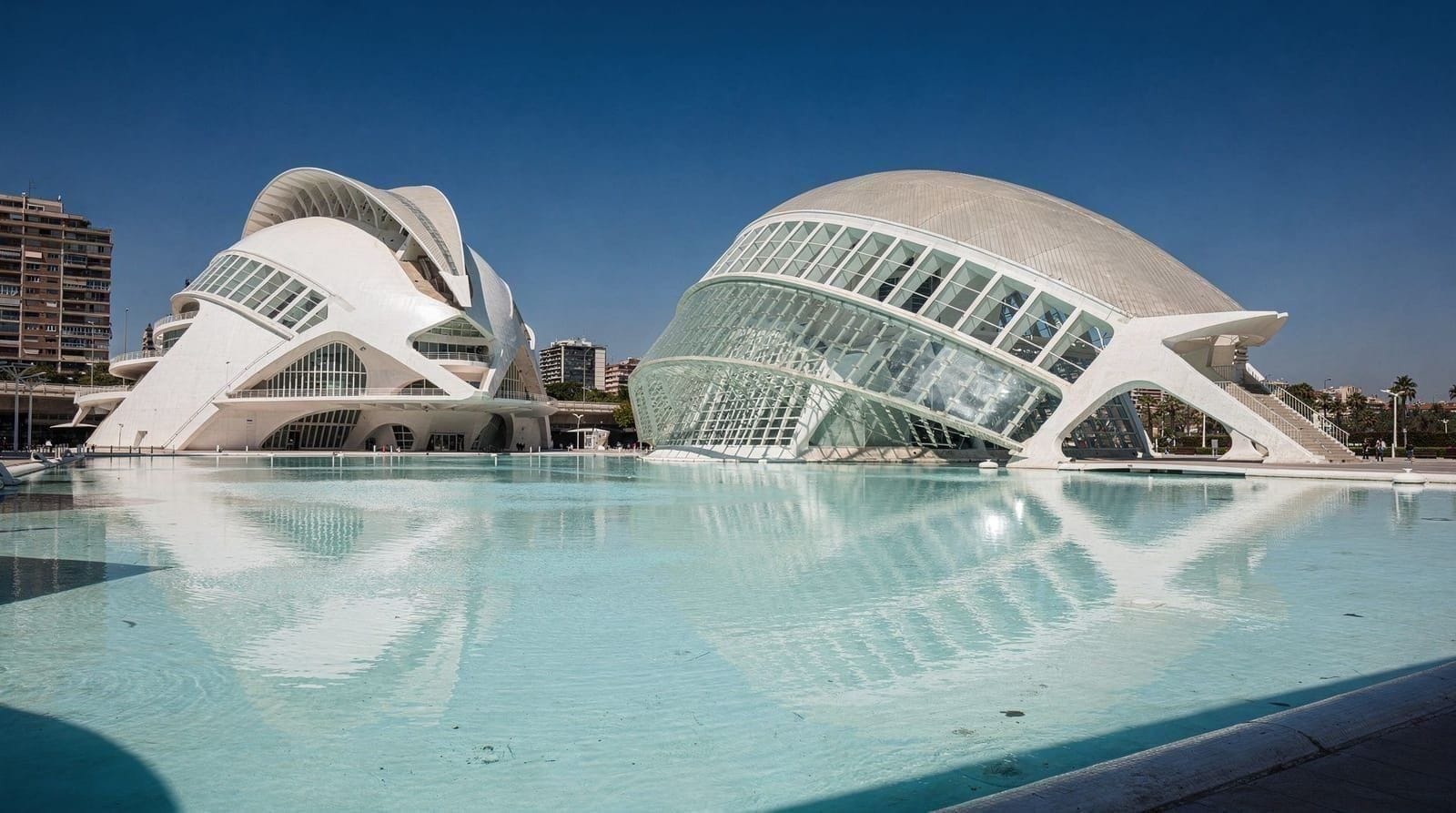
The Ciudad de las Artes y las Ciencias occupies the final 2 km of the former Turia riverbed where it widens before the sea. Designed primarily by Santiago Calatrava and Félix Candela, the five-building complex opened in stages between 1998 and 2009. The walk along the reflecting pools is free and among the most striking architectural sequences in Spain. Most visitors come for the Oceanogràfic aquarium — Europe’s largest. If you have children, budget a full day; without children, a half-day covers the priorities.
| Where | Southern end of the Turia gardens, Valencia city |
| Cost | Free exterior; Oceanogràfic €41.80; full-day combined ~€48–50 |
| Time needed | Half day without children; full day with |
| Getting there | Bus 35/95 or tram L8 from the city centre, ~15 min |
| Best time | Early weekday mornings; dusk for photography |
The five buildings explained
L’Oceanogràfic
Hours: daily 10:00–18:00 (extended summer hours to 20:00)
Entry: adults €41.80, children 4–12 €31, under 4 free
Designed by: Félix Candela
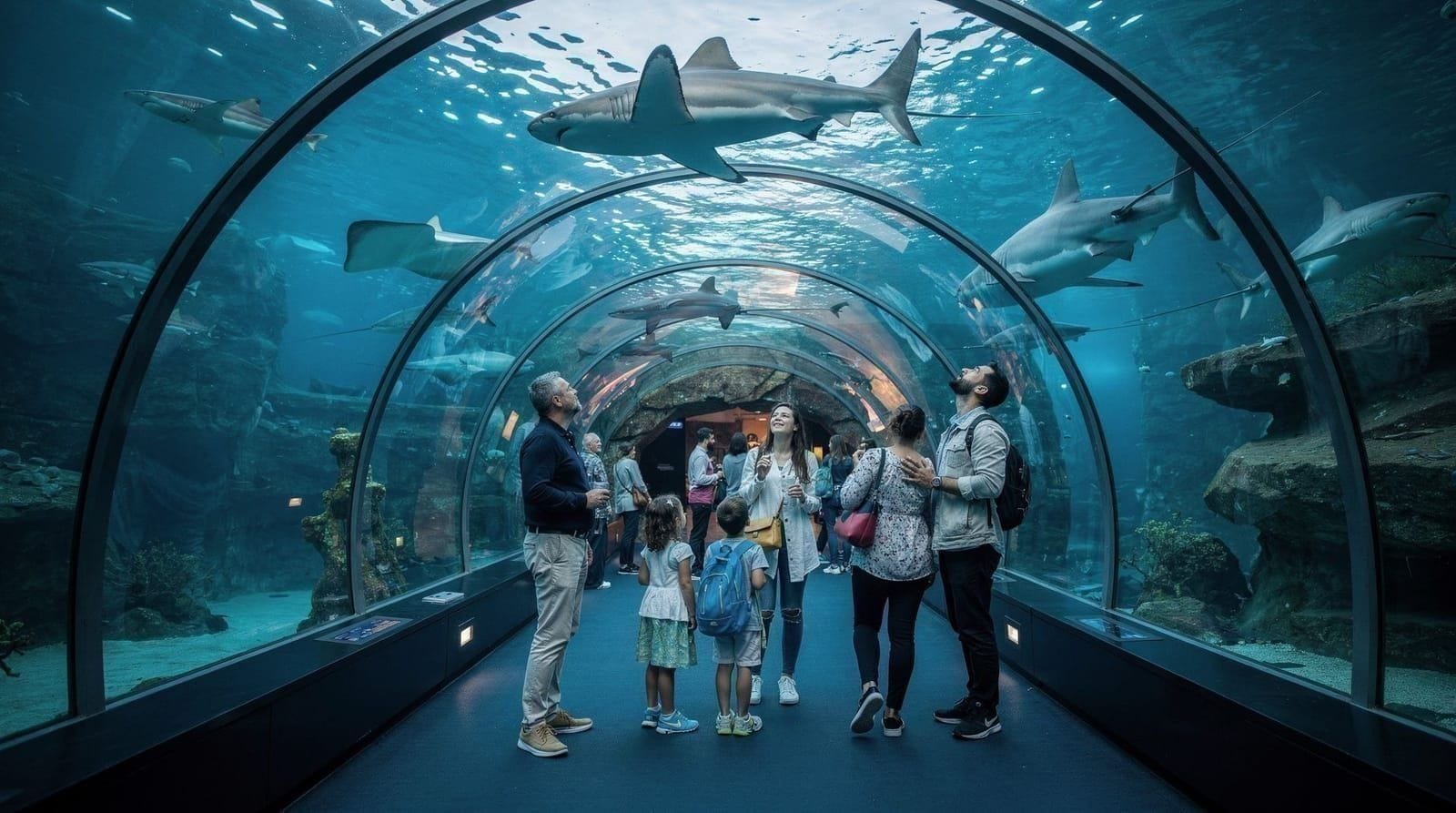
Europe’s largest aquarium covers 110,000 m² and houses more than 45,000 animals across 500 species. The main design concept places each marine habitat in a separate pavilion visible from the central lake: Arctic and Antarctic zones, dolphin and orca pools, a coral reef tunnel, Mediterranean species, Red Sea fish, and an underwater restaurant.
Honest assessment: the Oceanogràfic is genuinely excellent and worth the admission, especially for children. Plan at least 2.5–3 hours. The dolphin shows (three daily) divide opinion — they are well-executed performances but are shows involving trained cetaceans, which you may or may not find worthwhile. The jellyfish section and the penguin enclosure (with live-stream cameras in the Antarctic habitat) are the least busy and most interesting sections.
Practical tip: buy tickets online to avoid a potentially 30-minute queue at the ticket desk in high season. Arrive at opening (10:00) or after 15:00 for the thinnest crowds. School groups arrive between 09:30 and 11:00 on weekdays — arrive early or later.
L’Oceanogràfic entry ticket — skip the queue, book online.
El Hemisfèric
Hours: sessions run roughly every 1–2 hours
Entry: €8.90 per session (dependent on film)
Designed by: Santiago Calatrava
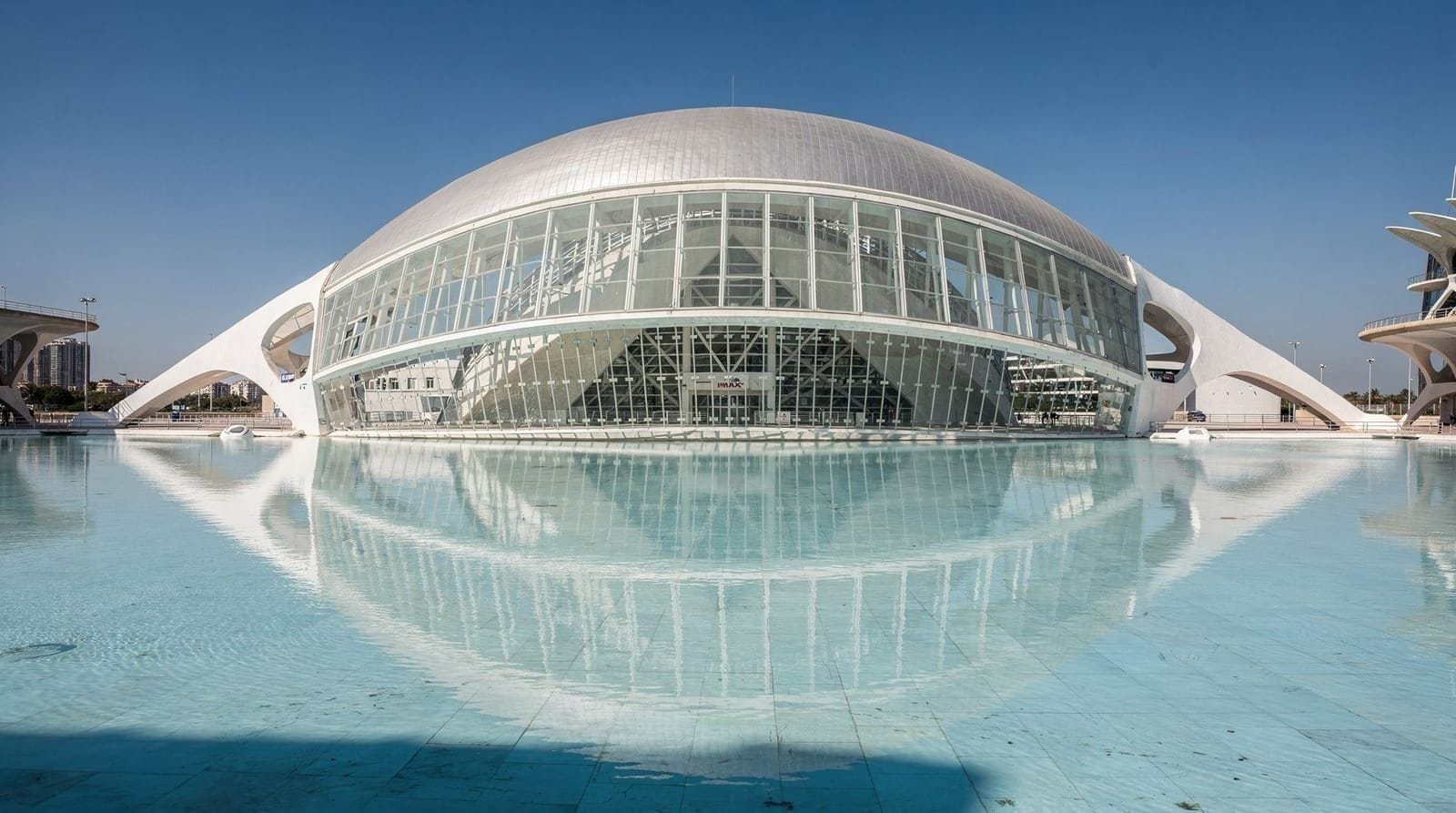
The building resembles a giant eye opening — a white concrete shell with a retractable outer “eyelid” that opens to reveal the glass dome inside. Inside, the IMAX projection dome screens 3D and 2D films on subjects including ocean life, space, climate, and natural landscapes. Sessions last 45 minutes to 1 hour.
Honest assessment: the building is spectacular from outside. The films inside are reasonably well-produced but are standard planetarium-style programming found at science museums worldwide. Worth seeing if you have children who enjoy this format or if you want to see the interior. Not worth prioritising over the Oceanogràfic for a visit of limited time.
Hemisfèric 3D IMAX film — check available sessions and book ahead.
Museu de les Ciències Príncep Felip
Hours: Tuesday–Sunday 10:00–19:00 (summer to 21:00); first Sunday of the month: free
Entry: €9; combined tickets available
Designed by: Santiago Calatrava
A 240-metre-long skeleton-like structure houses interactive science exhibits across three floors. The building interior — enormous steel ribs, vast glass walls — is architecturally more impressive than the exhibits, which are somewhat dated by current science museum standards (comparable to a 1990s-era Exploratorium). Good for children aged 7–13; less compelling for adults already familiar with interactive science museums.
Free visit strategy: the first Sunday of each month offers free entry. Sunday crowds are real but manageable if you arrive before 11:00.
L’Umbracle
Hours: daily, free access
Entry: free (outdoor promenade)
Designed by: Santiago Calatrava
A 320-metre-long raised garden walkway — an open-air pergola sheltering a curated planting of Valencia’s native species. The latticework casts geometric shadows in morning light. At the northern end is the Galería de Muestras, a small outdoor sculpture exhibition that rotates periodically. Worth a 20-minute walk-through, particularly early morning or at dusk when the reflected light on the pools is most dramatic. Free to enter and rarely crowded.
Palau de les Arts Reina Sofía
Hours: varies by performance schedule
Entry: opera tickets from €15 (standing gallery) to €150+ (premium seats)
Designed by: Santiago Calatrava
The city’s opera house is the most recent and most structurally complex of the five buildings, covered in mosaic ceramic tiles. Opera, ballet, and classical concerts run October–June. Standing-room gallery tickets are available at a significant discount online — check the Palau de les Arts website directly for the current season.
The free visit: what you can do without paying
This is an underutilised option that most visitors miss. The entire exterior of the complex — the lake, the reflecting pools between buildings, and the L’Umbracle walkway — is free. Walking the full loop from the Pont de l’Exposició bridge to the far end of the complex takes 40–50 minutes and gives views of all five buildings at their most impressive angles.
The best photography positions:
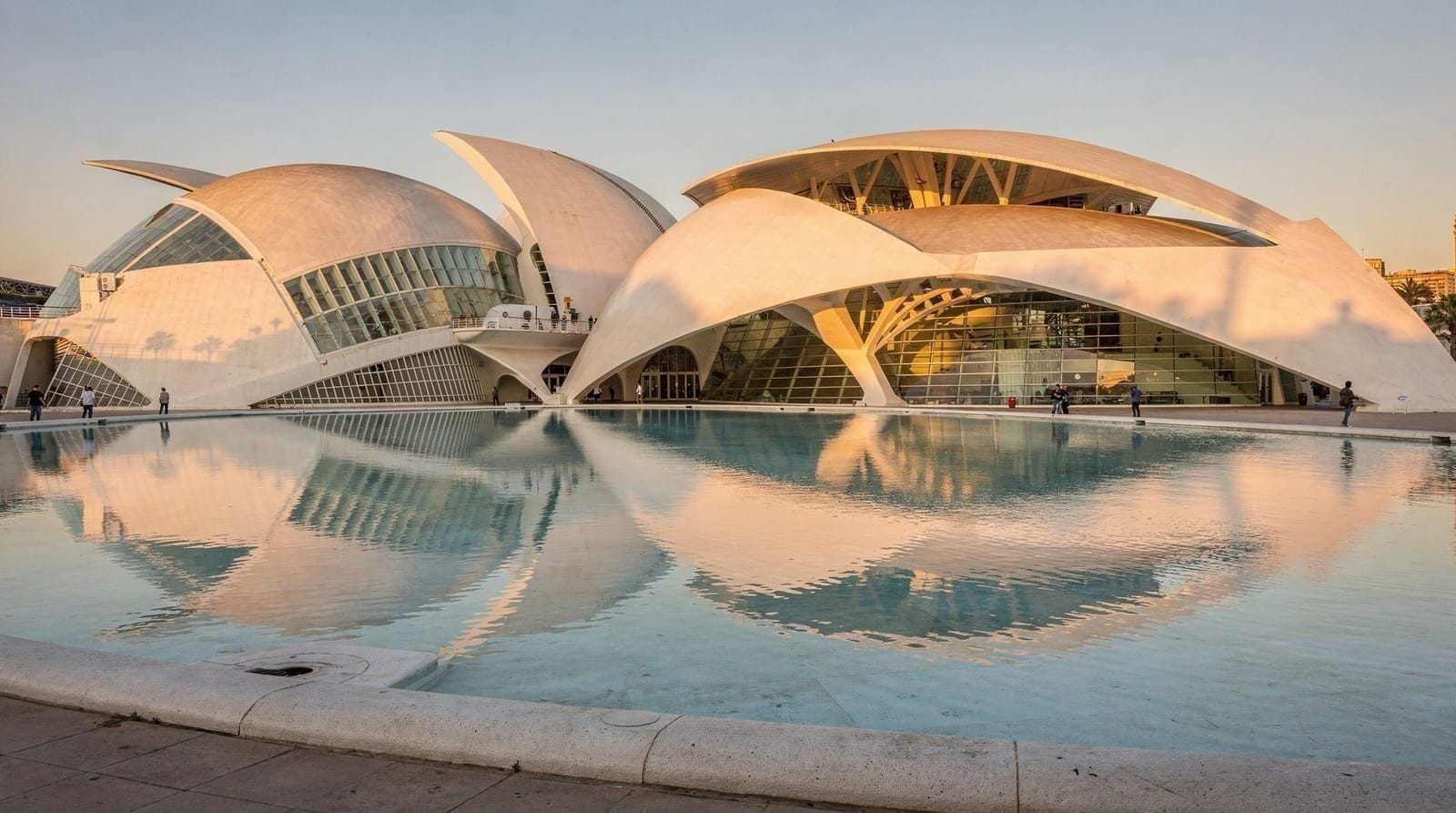
- Dawn or dusk: the buildings are reflected in the still pools; at golden hour the white concrete and glass turn gold and amber
- View from Pont de l’Exposició: looking south, all five buildings frame into a single shot
- L’Umbracle midpoint: looking back north toward the Hemisfèric, the building’s eye-shape is fully visible
Dusk on a clear day is the single best time to visit the exterior. Bring a tripod or brace against the railings along the reflecting pools if shooting after sunset — shutter speeds slow considerably once the artificial lighting takes over from natural light.
Combined tickets and value assessment
| Option | Price | Worth it? |
|---|---|---|
| Oceanogràfic only | €41.80 (adult) | Yes — genuinely good |
| Hemisfèric only | €8.90 | Marginal — exterior is free |
| Science Museum only | €9 | Good for families with kids 7–13 |
| Oceanogràfic + Hemisfèric | ~€42–44 | Yes if you have half a day |
| Full day combined (all venues) | ~€48–50 | Yes for families; generous if solo |
City of Arts full-day combined ticket — Oceanogràfic, Hemisfèric and Science Museum with one booking.
The tourist card (24/48/72h) includes discounts at the venues but does not bundle them into a single price — calculate whether the discount on individual tickets exceeds the card price based on your planned visits. See the tourist card honest review.
Getting here
Bus: EMT lines 35 and 95 run from Xàtiva metro station directly to the complex (10 minutes)
Tram: L8 to Eugènia Viñes, then bus or 20-minute walk
Bike: the Turia park cycling path runs directly alongside the complex — the most pleasant approach, particularly in the morning
Taxi/rideshare: €7–9 from the old town; easy to hail going back
On foot: about 3 km from the Cathedral — doable, partly along the Turia gardens
Parking is available beneath the complex (entrance on Autopista del Saler) for about €2.30/hour — useful if arriving by car for a full day, but city transport is generally faster.
At night: the complex is illuminated after dark, and the reflecting pools double the effect. It’s a legitimate reason to visit even without buying any tickets — a 30-minute evening walk costs nothing and looks entirely different from the daytime version. Some organised evening tours cover this specifically; see the night tours guide for options that combine it with other illuminated landmarks in the city.
What to eat and drink here
On-site food is expensive and mediocre: a sandwich at the Oceanogràfic café runs €5–8, a hot dog €4, bottled water €2.50. The solution is to bring your own picnic (supermarkets in Russafa, 15 minutes on foot to the northwest, or a bag from Mercado Central if you’re starting there) or eat in Russafa before or after the complex.
The closest practical eating options are along Calle Menorca in Russafa (a 15-minute walk or short taxi) — dozens of independent restaurants with menú del día for €12–15. Read the Russafa guide for specific recommendations.
The architecture: what Calatrava actually built
Santiago Calatrava is a Valencian architect (born in Benimàmet, 10 km from the city centre), which gives the complex a local significance beyond the global fame. The Hemisfèric, Science Museum, Agora (event pavilion, added later), and the Palau de les Arts are all his work. The Oceanogràfic is by Félix Candela (a Spanish-born architect working in Mexico who died the year before it opened).
The design language throughout is biomorphic — structures that evoke bones, eyes, shells, and vertebrae. Critics of Calatrava cite significant construction cost overruns across his global projects; defenders point to the genuine public delight the buildings generate. The City of Arts complex is his most coherent single work in scale and in the way the reflecting pools unify the disparate structures into a coherent landscape.
See the guided tour of the City of Arts and Sciences and the neighbourhood area guide for walking routes connecting the complex to the surrounding Russafa and beach areas.
Guided tours worth considering
A 2-hour guided tour of the architectural complex itself — exterior and buildings — adds context about Calatrava’s design intent and the political history of what was a famously expensive and controversial public project. Good guides contrast the original budget estimates with actual costs and explain the engineering challenges of building in a former riverbed.
Guided tour of the City of Arts and Sciences — architectural and cultural context.
Combining the complex with the rest of Valencia
The complex sits at the point where the Turia gardens meet the sea, which makes it easy to combine with either end of a Valencia day. Cycling or walking the full length of the Turia gardens from the old town takes 45–60 minutes and arrives directly at the Umbracle. Continuing past the complex toward the coast connects to La Malvarrosa beach, about 20 minutes further on foot or a short bus ride — a natural pairing for a full day mixing architecture, science and the beach. For families staying centrally, the family itinerary for Valencia guide has a version of this combined day built around younger children’s stamina.
Value for families vs. solo travellers
| Visitor type | Recommended spend | Why |
|---|---|---|
| Family with kids 4–14 | Full-day combined ticket, ~€48–50/adult | Oceanogràfic + Science Museum fill a full day |
| Solo adult, limited time | Free exterior walk only | The architecture is the real draw without children in tow |
| Couple, half a day | Oceanogràfic only, €41.80 | Best single-ticket value; skip Hemisfèric unless keen |
| Architecture/photography focus | Free exterior at dusk | No ticket needed for the best shots |
Frequently asked questions about Ciudad de las Artes y las Ciencias
Is the City of Arts and Sciences worth the entrance price?
The Oceanogràfic is the clearest yes — Europe’s largest aquarium with genuinely impressive design and animal variety is worth €42 for most visitors. The Science Museum and Hemisfèric are solid additions for families with children. For adults visiting alone, the exterior walk is free and often more visually striking than the interiors.
How long do you need at the City of Arts and Sciences?
Oceanogràfic alone deserves 2.5–3 hours. If you add the Science Museum and Hemisfèric film, plan a full day of 6–7 hours. The free exterior walk takes 45–60 minutes. Families with children aged 4–14 should budget 5–6 hours minimum for the Oceanogràfic and Science Museum.
Can you visit the City of Arts and Sciences without paying?
Yes. The L’Umbracle promenade and the exterior walk around all reflecting pools are free. This gives you full views of all five buildings. The first Sunday of each month gives free entry to the Science Museum. Sunday entry to the Hemisfèric is discounted but not free.
Is the Hemisfèric worth it?
The building exterior is one of the most photographed architectural landmarks in Spain and is free to view. The interior IMAX programmes are competent but not significantly different from planetarium shows in other European science museums. Worth it if you are with children who enjoy this format; less so for solo adult travellers who have limited time.
What is the best time to visit the Oceanogràfic?
Opening time (10:00) or after 15:00 on any day avoids the main school group rush. July and August see the longest queues — pre-booking is essential. The Oceanogràfic stays open until 20:00 in summer; an evening visit combines with the dusk lighting on the complex exterior.
How do I get from the old town to the City of Arts?
Bus 35 from near the Xàtiva metro station runs directly in about 10 minutes. The Turia park cycling path offers a pleasant 3 km bike ride. A taxi costs €7–9. Walking along the Turia riverbed takes about 35–40 minutes and is enjoyable in cooler weather.
Top experiences
Bookable activities with verified prices and instant confirmation on GetYourGuide.