Ciutat Vella and El Carmen — Valencia's historic heart
Honest guide to Valencia's medieval old town and bohemian El Carmen quarter — what to see, eat, drink, and skip in Ciutat Vella.
Valencia: medieval guided walking tour
Quick facts
- Best for
- History, architecture, nightlife, markets
- Time needed
- Half day to full day
- Getting there
- Metro L1/L5 to Àngel Guimerà or Xàtiva
- Don't miss
- Mercado Central on a weekday, Llotja de la Seda
- Avoid
- Tourist menus near Plaza de la Reina
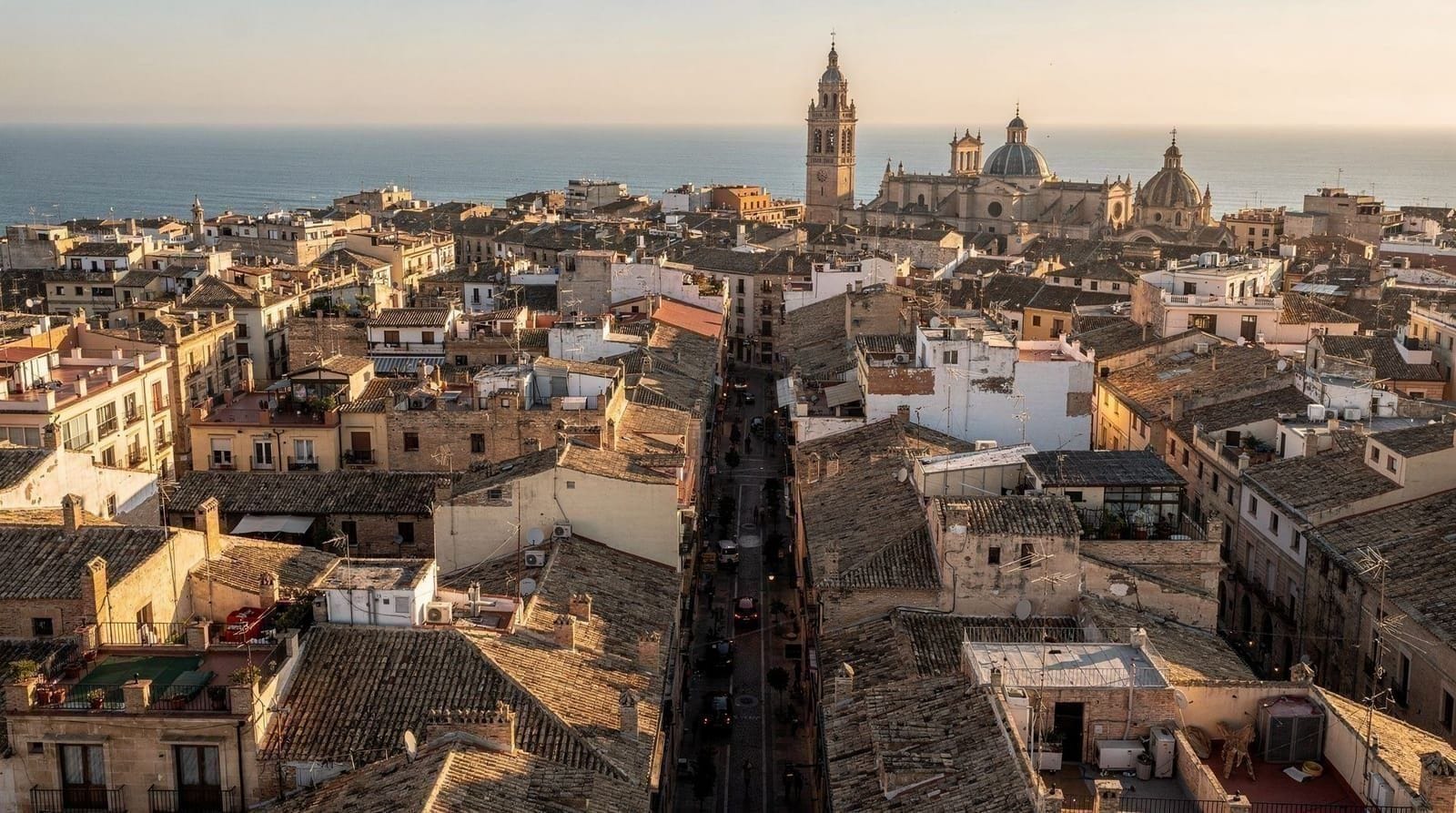
Ciutat Vella is the walled medieval city that was Valencia’s entire urban footprint until the 19th century. Within its roughly elliptical boundaries sit Roman ruins, Gothic masterpieces, a UNESCO-listed silk exchange, Europe’s finest Art Nouveau market, and the warren of streets known as El Carmen — the city’s bohemian, street-art-covered nightlife district. You can walk across the whole area in 20 minutes, but doing it justice takes at least half a day.
| Where | Historic centre of Valencia, within the old city walls |
| Cost | Free walking; individual monuments €2–12 |
| Time needed | Half day to full day |
| Getting there | Metro L1 (Àngel Guimerà) or L5/L3 (Xàtiva) |
| Best time | Weekday mornings for the market; evenings for El Carmen |
The two faces of Ciutat Vella
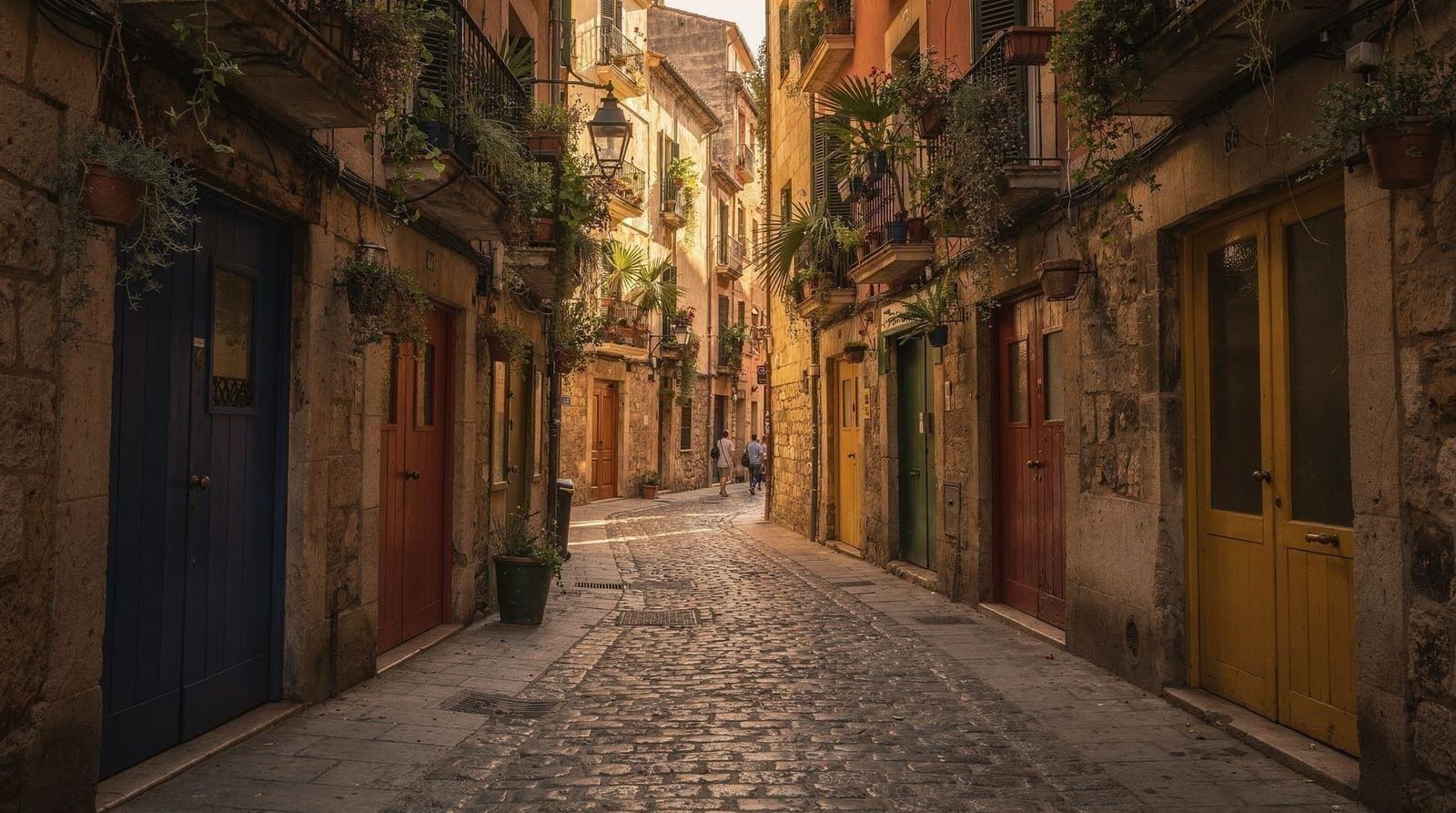
Locals distinguish between the more touristic zones around the Cathedral and Mercado Central, and El Carmen proper — the tangle of medieval lanes north of Calle Caballeros, where artisan workshops sit next to contemporary art galleries and the bars run until 3:00 on weekends. Knowing this split helps you move between crowd and quiet within the same 1.5 km².
Getting here
Metro line L1 (stop Àngel Guimerà) or L5/L3 (stop Xàtiva) both deposit you at the southern edge of Ciutat Vella within a 10-minute walk of every major monument. Buses 5, 7, 70, and 71 stop along Calle Colón and San Vicente. There is essentially no parking within the historic centre; arrive by public transport or on foot.
The monuments — what’s worth paying for
Mercado Central
Hours: Monday–Saturday 07:30–15:00; closed Sundays and public holidays
Entry: free
This is where the visit should begin — on a weekday, before noon. The 1928 Art Nouveau building by Alexandre Soler March and Francesc Guàrdia covers 8,000 m² and houses around 400 stalls selling Valencian produce: tiger nuts, Valencia oranges, smoked paprika, Grana Padano-style cheese, artichokes, jamón serrano at every grade. Arrive before 10:00 to see it at full activity and before the tour groups.
What to buy: a small bag of chufas (tiger nuts, the base of horchata, €3–4/100 g), local almonds, a wedge of manchego, and a glass of fresh-squeezed orange juice at one of the interior juice stalls (€2). What to avoid: the smoothie counters at the main entrance corners, where identical drinks cost €7–9.
Llotja de la Seda (Silk Exchange)
Hours: Monday–Saturday 10:00–19:00; Sunday/holidays 10:00–14:00
Entry: €2; free Sundays and public holidays
Location: Plaza del Mercado, 50 m from Mercado Central
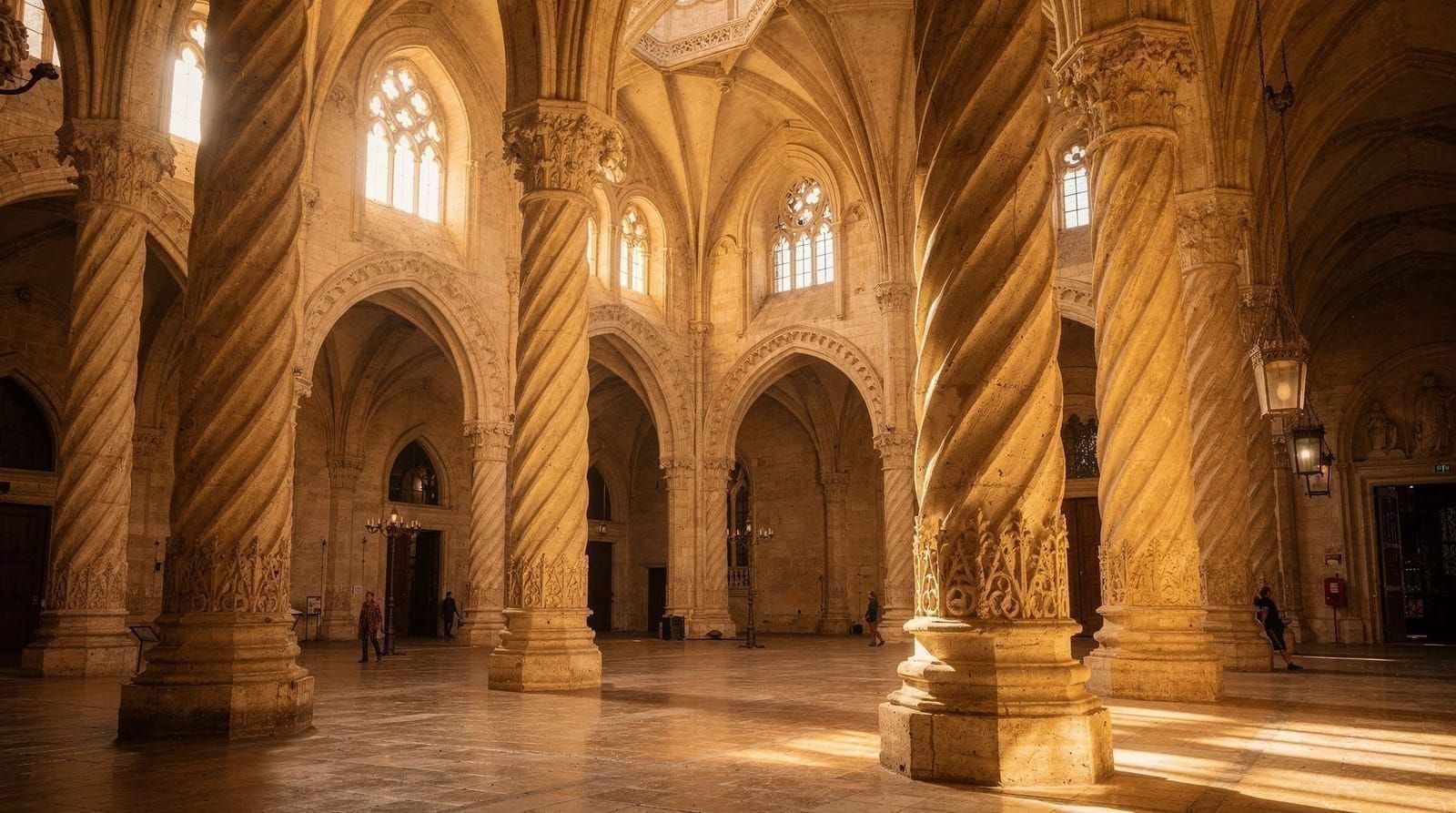
Built 1482–1548, the Llotja is one of the finest Gothic secular buildings in Europe and a UNESCO World Heritage site since 1996. The main Sala de Contratación (trading hall) has 24 twisted limestone columns rising 17 m without capitals — the effect is theatrical. The orange tree courtyard at the back is tranquil and often empty even when the main hall has a few groups. The Consulado del Mar (upstairs, accessible by a spiral stone staircase) has a carved wooden ceiling from the 16th century. Budget 45–60 minutes.
Valencia Cathedral and the Micalet tower
Cathedral hours (winter season): Monday–Friday 10:30–18:30; Saturday 10:30–17:30; Sunday 14:00–17:30 (check the official site for summer hours)
Micalet tower: 10:00–18:45 (separate ticket)
Entry: Cathedral + museum €12; Micalet only €3
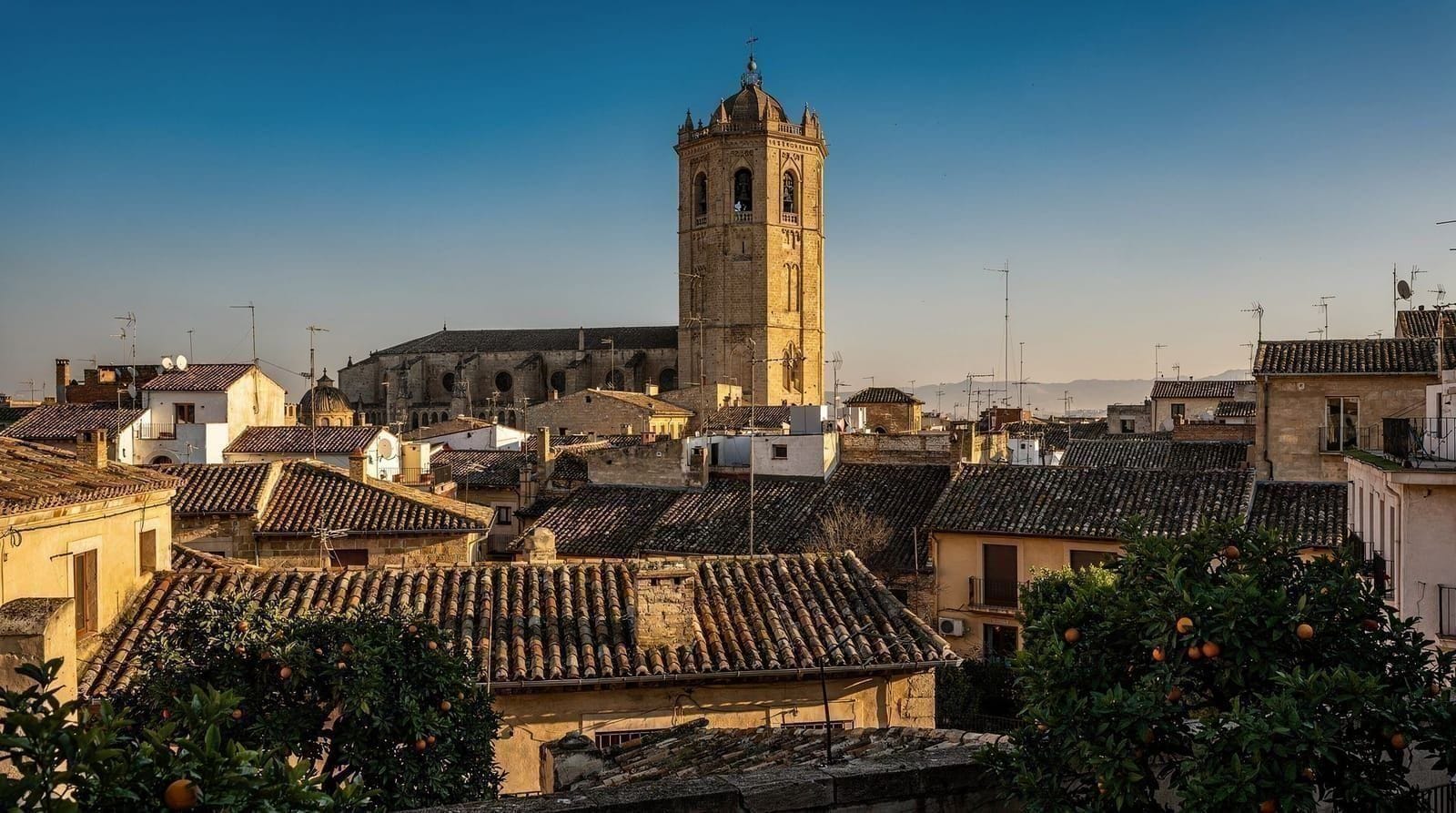
The Gothic–Baroque–Romanesque cathedral was built over the city’s 13th-century mosque. The most-visited item is the alleged Holy Grail in the Capilla del Santo Cáliz — a 1st-century agate cup the Vatican has acknowledged as “likely” the cup of the Last Supper since the 14th century. Whether you believe this or not, it is interesting that a pope’s claim is the basis of something millions visit each year.
The Micalet tower (207 steps to the top) offers the best free-ish panoramic view of Ciutat Vella, rooftops to the sea. Go before 11:00 or after 16:00 to avoid queues at the narrow staircase.
San Nicolás (the Valencian Sistine Chapel)
Hours: Tuesday–Saturday 10:30–19:30; Sunday 13:30–19:30
Entry: €7 (timed entry recommended online)
Address: Calle Caballeros 35
The ceiling fresco (completed 1693 by Antonio Palomino) was restored over seven years and reopened in 2016. It covers the entire barrel vault in trompe-l’oeil painting featuring 346 figures. The nickname “Valencian Sistine Chapel” is not exaggerated from a technical standpoint. Pre-booking online (€7 vs. €8 at the door) is worth it on weekends.
Torres de Serranos and Torres de Quart
Both are surviving 14th-century Gothic city gates at the northern and western perimeters of Ciutat Vella. Torres de Serranos: free on Sundays; otherwise €2; good view of the Turia gardens below. Torres de Quart: similar entry, still bears cannonball scars from Napoleon’s 1808 siege.
IVAM (Institut Valencià d’Art Modern)
Hours: Tuesday–Sunday 10:00–19:00; closed Mondays
Entry: €5; free Sundays (and Wednesdays 16:00–19:00)
Address: Calle Guillem de Castro 118 (just outside the old walls, El Carmen edge)
Valencia’s main contemporary art museum, focused on 20th-century Spanish work with a strong collection of Julio González sculpture. Less visited than it deserves. The permanent collection of Ignacio Pinazo drawings is worth 30 minutes even if you are not a dedicated art museum visitor.
El Carmen: the neighbourhood itself
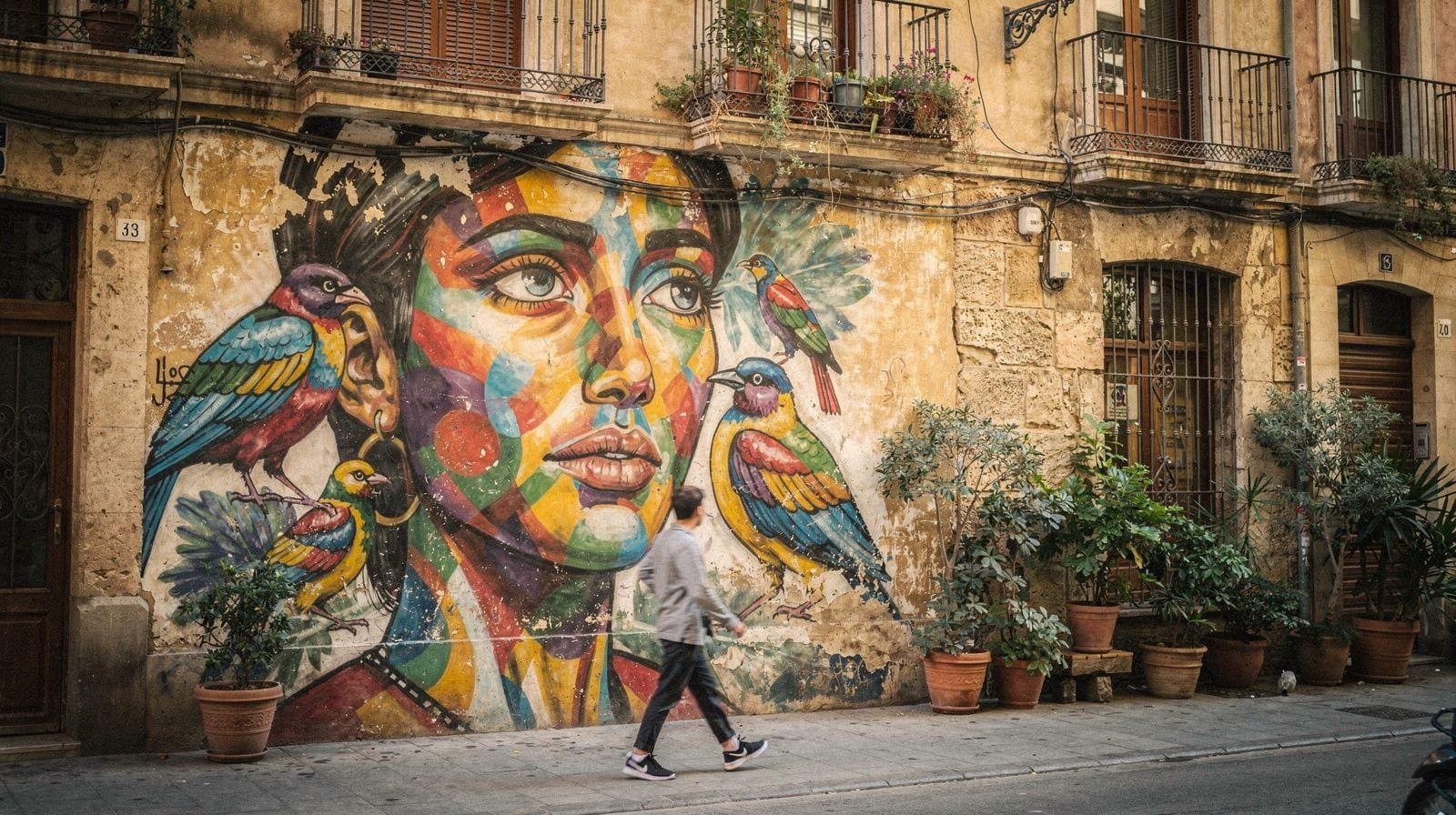
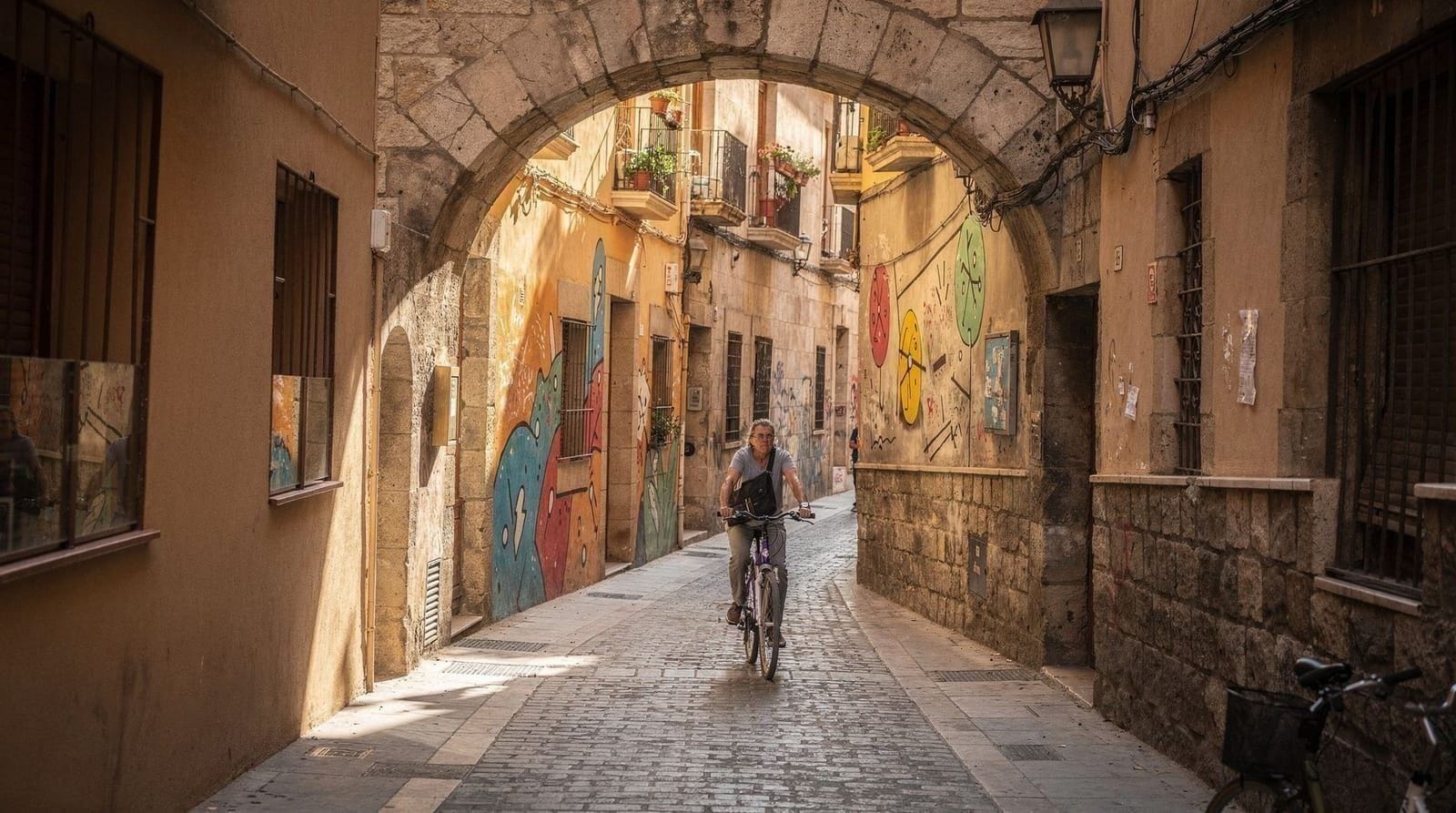
El Carmen occupies the northwestern quarter of Ciutat Vella, its oldest section. The defining street is Calle Caballeros — running from the Cathedral plaza toward Torres de Quart — lined with bars and the occasional well-preserved medieval merchant house. Off Caballeros, the streets become tighter: Calle Alta, Calle Baja, Plaza del Tossal, and a network of passages with no names on any map. This is where street art accumulates (and is frequently repainted), where small galleries occupy former convents, and where independent bookshops survive.
What happens at night: El Carmen is the most concentrated nightlife zone in central Valencia. Bars open from 20:00; the strip fills from 22:00 on Fridays and Saturdays. The crowd is mixed — tourists, Valencia university students, and local 25–40-year-olds. Music is mostly electronic or indie. Expect to pay €4–7 for a beer, €8–12 for a cocktail. The neighbourhood can be loud until 04:00.
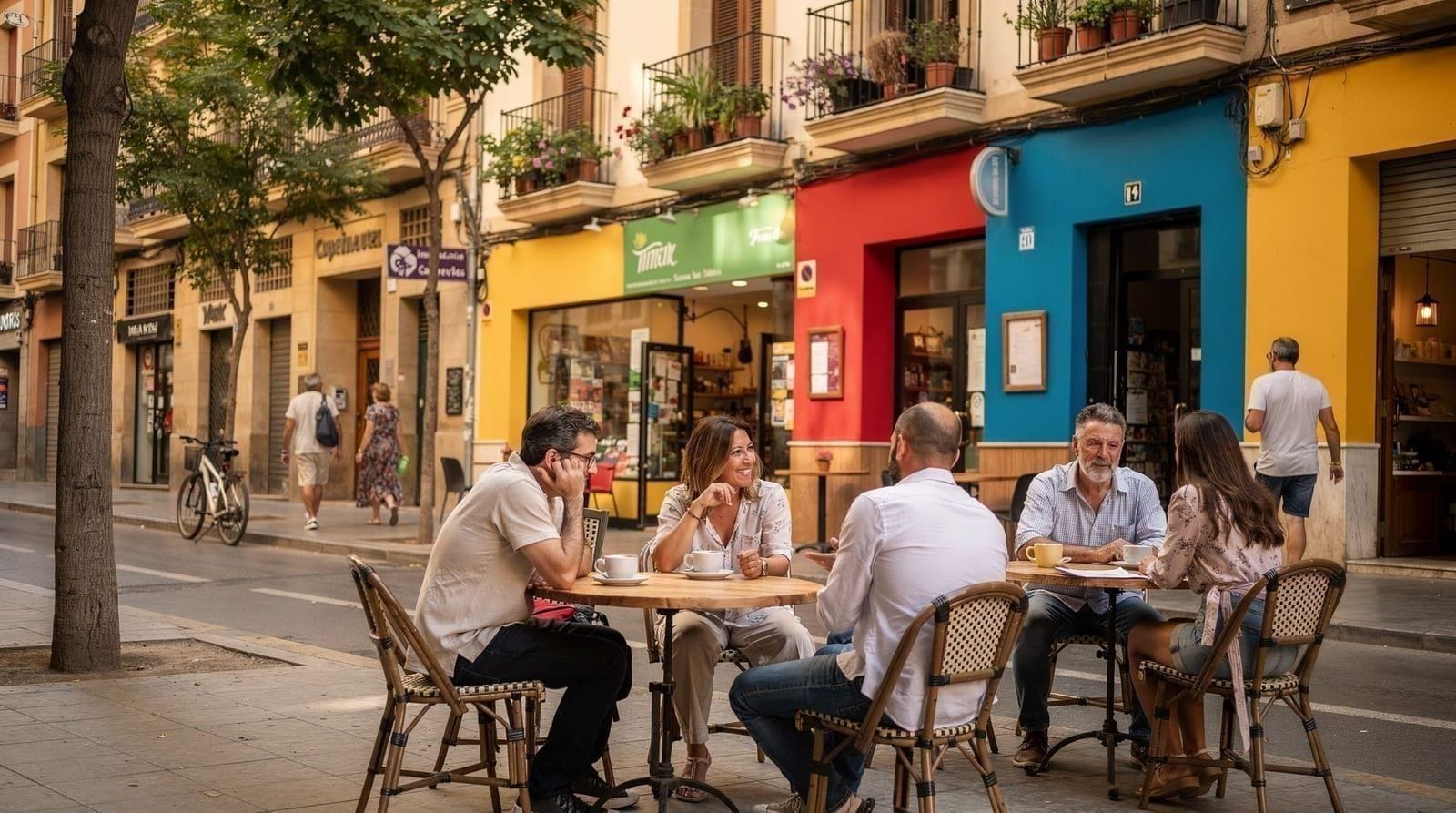
Daytime El Carmen: quieter and more interesting — artisan workshops (ceramics, leather, jewellery), vintage clothing shops, independent cafés. The terrace of Bar Negrito at Plaza del Negrito is the best people-watching spot in the entire neighbourhood.
Medieval guided walking tour of Valencia’s historic centre, which takes in El Carmen.
Street art in El Carmen
The street art here is not curated like a museum; it accumulates and evolves. The area bounded by Calle Murillo, Calle Alta, and Calle Baja is the densest concentration. Artists including Escif, Deih, and Julieta XLF have left work here over the years, though murals change regularly. The best time to see it is a quiet Sunday morning before 11:00 when the lanes are empty.
El Carmen alternative tour — street art, hidden stories, architectural layers beyond the monuments.
Eating and drinking in Ciutat Vella
Avoid the cathedral tourist strip
The restaurants lining the streets immediately around Plaza de la Reina and along Calle de la Paz serve generic food at inflated prices (€16–22 for a menú, versus €12–14 two streets away). The paella near the cathedral — bright yellow, loaded with frozen seafood, served at dinner — is precisely the dish locals would not serve you.
Where to eat instead
Bar Pilar (Calle Moro Zeit 13): opened in 1917, famous for clochinas (Valencian mussels, available May–August, €6–8 per plate) and a cold beer. Cash only, marble counter, no pretension.
Bodega Casa Montaña (Calle José Benlliure 69, slightly east toward Cabanyal): one of Valencia’s oldest wine bars, operating since 1836. Excellent tinned conservas and cured meats; wines from €3 per glass.
Central Bar (inside Mercado Central, near the main entrance): operated by chef Ricard Camarena, upmarket tapas at market prices. Anchovy on toast, €5. Cured mojama (salted tuna), €7. This is one of the few genuinely good eating options inside the market building.
Horchatería Santa Catalina (Plaza de Santa Catalina 6): the most famous horchata bar in the city, operating since 1836. Horchata con fartons: €3.50. Do not order the industrially bottled version on display — ask for “horchata natural.”
Menú del día picks
Restaurante Navarro (Calle Arzobispo Mayoral 5): reliable old-school Valencian cooking, menú at €13.50. Rice dishes, not paella but arroz a banda and arròs negre, cooked correctly.
Practical tips
Best time to visit Mercado Central: weekdays 08:00–12:00
San Nicolás booking: book online to save €2 and skip the ticket queue
Llotja queue: a small queue forms at 10:00 — arrive at opening or after 14:00
Nightlife: El Carmen bars get genuinely busy after 23:00 Friday/Saturday; pace yourself with the local drinking custom of ordering food with drinks
See the Valencia nightlife guide for Russafa comparisons, or check the full El Carmen neighbourhood guide.
Going deeper on each stop
Each monument above has its own fuller page if you want more before you go. The Mercado Central guide and the central market food guide help you plan what to taste and which stalls to head for. The Llotja de la Seda guide explains what to look for in the trading hall, and the cathedral and Micalet guide covers the climb and the interior. If the Grail is what draws you in, the Holy Grail in the cathedral page gives the background.
For the city gates, the Serranos and Quart towers guide is the place to start. For the artistic side of the quarter, the street art in El Carmen guide suggests how to read the murals, and the IVAM guide covers the modern art museum on the quarter’s edge. Anyone interested in how the old town fits into Valencia’s wider heritage will enjoy the UNESCO in Valencia guide and the Silk Route guide.
Building the rest of your day
Ciutat Vella works best as one chapter of a longer stay. The Valencia in one day itinerary threads the old town into a single day, and the first weekend itinerary gives it more room. After the old town, the Turia gardens are a gentle way to unwind, and the Russafa neighbourhood is the natural next step for an evening meal. If you prefer to decide how many days to give the city overall, the how many days in Valencia guide can help.
Guided vs. self-guided in Ciutat Vella
The monuments here reward context more than most — the Llotja’s twisted columns, the disputed history of the Holy Grail, and the layered ownership of El Carmen’s street art all benefit from someone explaining them rather than a plaque. A guided walking tour is the more efficient option if you have half a day and want the history explained properly; a self-guided walk with this page and a coffee stop or two works fine if you have a full day and prefer to wander at your own pace. See the guided vs self-guided Valencia guide for a fuller comparison, and the free walking tours guide if budget is the deciding factor.
Guided tour of the Cathedral, San Nicolás and the Llotja — the three ticketed highlights in one booking.Monument entry costs at a glance
| Monument | Entry | Free option |
|---|---|---|
| Mercado Central | Free | Always |
| Llotja de la Seda | €2 | Free on Sundays |
| Cathedral + Micalet | €12 / €3 | None (free to enter during services) |
| San Nicolás | €16 online (€18 at the door) | None (pre-booking saves €2) |
| Torres de Serranos | €2 | Free on Sundays |
| IVAM | €5 | Free on Sundays |
If you’re visiting on a Sunday, the Llotja, Torres de Serranos and IVAM are all free — a genuinely good-value day if you time it right, though the Mercado Central is closed.
Ciutat Vella as a base, and where else to stay
Ciutat Vella puts you within walking distance of every monument in this guide but comes at a price premium and, in El Carmen specifically, real nightlife noise on weekends. For a quieter but still central base, the Eixample sits just south of the old town at generally lower rates. See the where to stay in Valencia guide for a fuller area-by-area comparison, and the best area for first-time visitors guide if this is your first trip to the city.
Frequently asked questions about Ciutat Vella and El Carmen
How long does it take to see the old town properly?
A focused half-day (4 hours) covers Mercado Central, the Llotja, and the Cathedral with the Micalet tower. A full day adds San Nicolás, a wander through El Carmen’s streets, and time for a proper lunch. If you include IVAM and significant exploration of the street art, plan 7–8 hours.
Is El Carmen safe at night?
Reasonably so, with standard city precautions. Petty theft (phone snatching at bar terraces, pickpockets in crowds) is the main risk rather than violence. Keep your phone in a front pocket and bag closed when sitting outside. The heaviest nightlife crowds are Friday/Saturday after 23:00.
What is the Holy Grail in Valencia Cathedral?
It is an agate cup dating to the 1st century AD that, according to tradition reaching back to the 14th century, is the cup Jesus used at the Last Supper. The Vatican has given it partial official recognition. Whether you find it compelling as a religious relic or fascinating as an artefact with a remarkable documented history, it is worth seeing and reading about.
Can I visit the Llotja de la Seda for free?
Yes, on Sundays and public holidays (10:00–14:00) entry is free. Note that Sunday mornings bring more visitors. On other days entry is €2 — one of the better value admissions in the city for what you see.
What’s the difference between Ciutat Vella and El Carmen?
Ciutat Vella is the entire historic old town (all within the surviving medieval walls). El Carmen is a specific neighbourhood within Ciutat Vella — the northwestern quarter, historically the artisan and bohemian district, now known primarily for its nightlife and street art.
Top experiences
Bookable activities with verified prices and instant confirmation on GetYourGuide.