Valencia — city guide
The complete honest guide to Valencia, Spain — neighborhoods, food, beaches, transport, and the best things to do without the tourist traps.
Valencia: City of Arts full-day combined tickets
Quick facts
- Best for
- Culture, food, beaches, families
- Time needed
- 3–5 days minimum
- Getting there
- Metro L3/L5 from VLC airport, ~25 min, €2.80
- Don't miss
- Mercado Central on a weekday morning
- Avoid
- Paella for dinner — it's a lunch dish
Valencia is Spain’s third-largest city, a port metropolis on the Mediterranean coast with a genuine daily life that most tourists barely scratch. It has Europe’s largest urban park running through its centre, a cluster of futuristic architecture you can see for free from the outside, 11 km of urban beaches a tram ride away, and a food culture — paella, horchata, fideuà — that is older and more specific than anything you will find in Madrid or Barcelona. A well-organised 3-day trip covers the core; 5 days lets you add the Albufera and one day trip inland.
| Getting there | VLC airport, 8 km west; metro L3/L5, ~25 min, €2.80 |
| Getting around | Metro, EMT bus, Valenbisi bike share; walkable centre |
| Where to stay | Ciutat Vella for first-timers; Russafa for a local feel |
| Cost level | Cheaper than Barcelona/Madrid; €50–250/day depending on style |
| Best time | May–June and September–October |
Where Valencia sits and how to arrive
Valencia faces the Mediterranean at roughly the same latitude as Naples. The airport (VLC) is 8 km west of the city centre. The cheapest and most reliable route in is the metro lines L3 or L5 (direction Av. del Cid or Neptú): a single to the airport (zones AB) costs €2.80, the journey takes about 25 minutes to Xàtiva or Àngel Guimerà, and trains run every 10–15 minutes.
Taxis cost €15–22 fixed rate to the centre. Rideshares (Uber/Cabify) work but sometimes surge during busy arrivals. Avoid private transfer companies that advertise €45+ for the same route.
By high-speed train: AVE from Madrid takes 1 h 55 min (from €18 advance), and from Barcelona the Euromed takes around 3 hours (from €22). Valencia’s main station is the ornate Estació del Nord, 5 minutes on foot from the old town.
Getting around the city
Valencia’s public transport is good and inexpensive. A 10-trip SUMA 10 metro card (€5.40 in zone A, €7.50 in zones AB in 2026 after a 40% discount; check metrovalencia.es for 2027) or an EMT Bonobús (€8.50 full price, €4.25 with the 2026 discount) covers almost any journey you will make in the city. Key lines:
- Metro: L1, L3, L5 cover most tourist zones. L10 connects the beach to the port.
- EMT buses: 24/25 to the Albufera; 4, 6, 95 to Malvarrosa beach; 35 to Ciudad de las Artes.
- Valenbisi (bike share): first half hour of each trip free; see valenbisi.es for current prices. Most useful for Turia park and the beach promenade.
- On foot: the old town (Ciutat Vella), Russafa, and the Turia riverbed are all walkable in under 20 minutes from each other.
A car is not useful — nor advisable — inside the city. You will need one for Bocairent, Montanejos, and Morella.
Valencia is often compared with Barcelona, and the comparison is worth thinking through before you book, especially if you’re choosing between the two or splitting a trip across both. The short version: Valencia is smaller, cheaper, less crowded, and has a more genuine paella culture, while Barcelona has more world-famous architecture and a bigger nightlife scene. See the Valencia versus Barcelona guide for the full breakdown if you’re deciding between them or planning to visit both.
The neighbourhoods at a glance
Valencia’s urban fabric rewards a bit of wandering. The major districts each have a distinct personality:
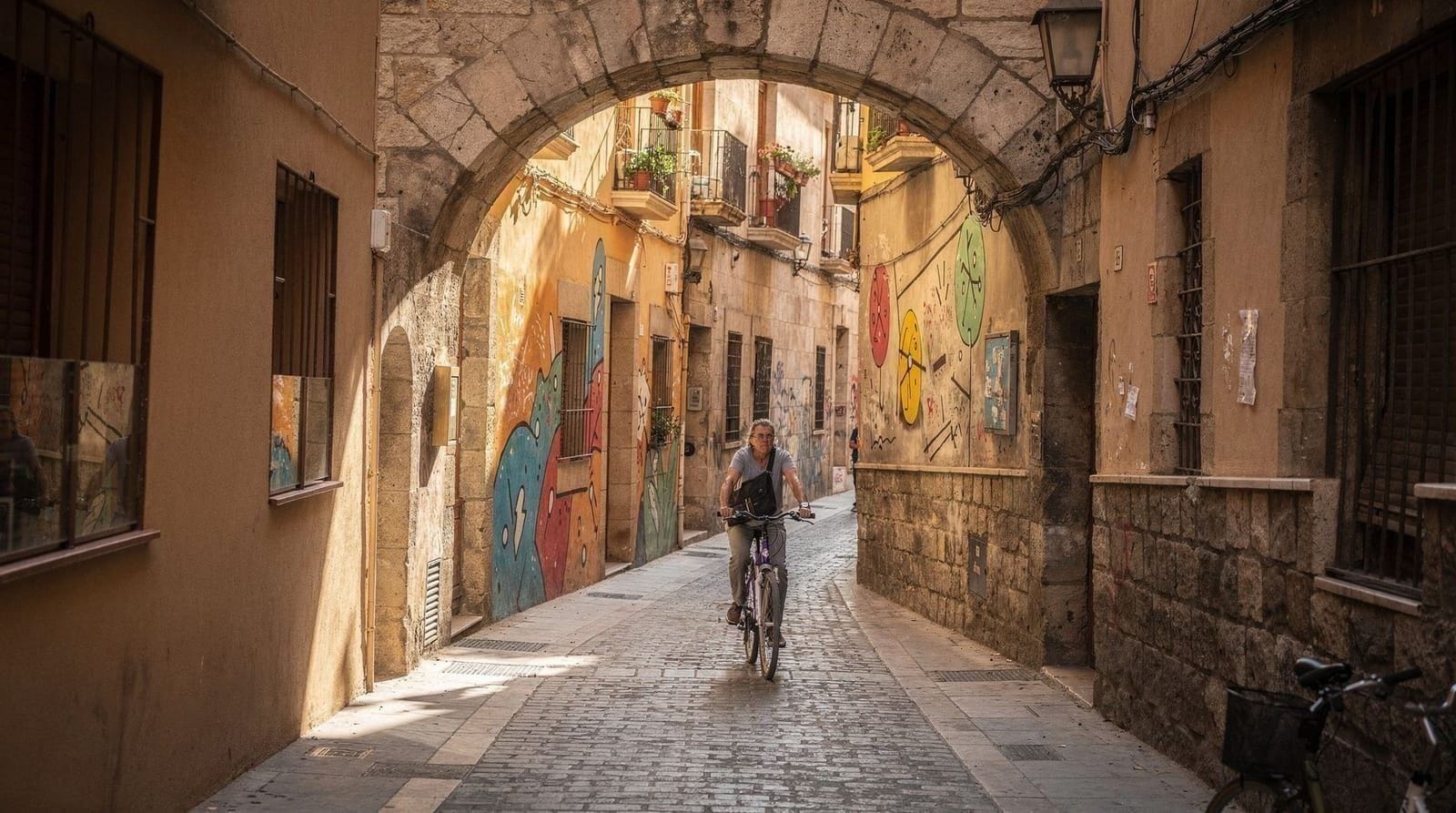
Ciutat Vella and El Carmen is the medieval heart, with Roman-era walls, Gothic monuments, and a bohemian bar scene in El Carmen. Mercado Central and the Llotja de la Seda (Silk Exchange) are here. Read the full guide to Ciutat Vella and El Carmen.
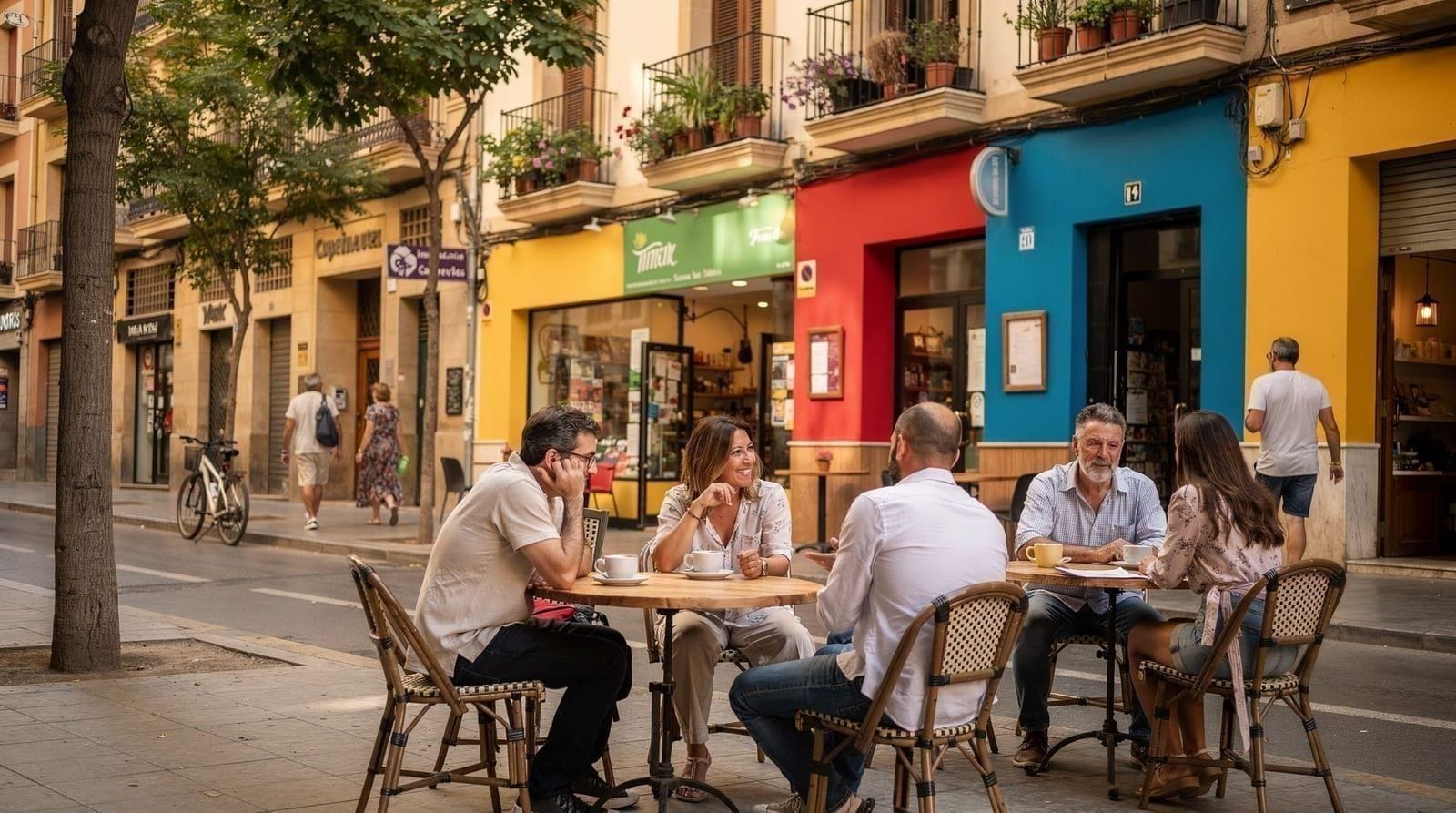
Russafa (also written Ruzafa) is the city’s creative district — independent restaurants, coffee roasters, concept stores, and the best Sunday brunch scene in Valencia. See the Russafa destination guide.
El Cabanyal is the historic fishing village, now gentrifying slowly, with some of the best seafood restaurants and a unique tiled architecture. El Cabanyal guide here.
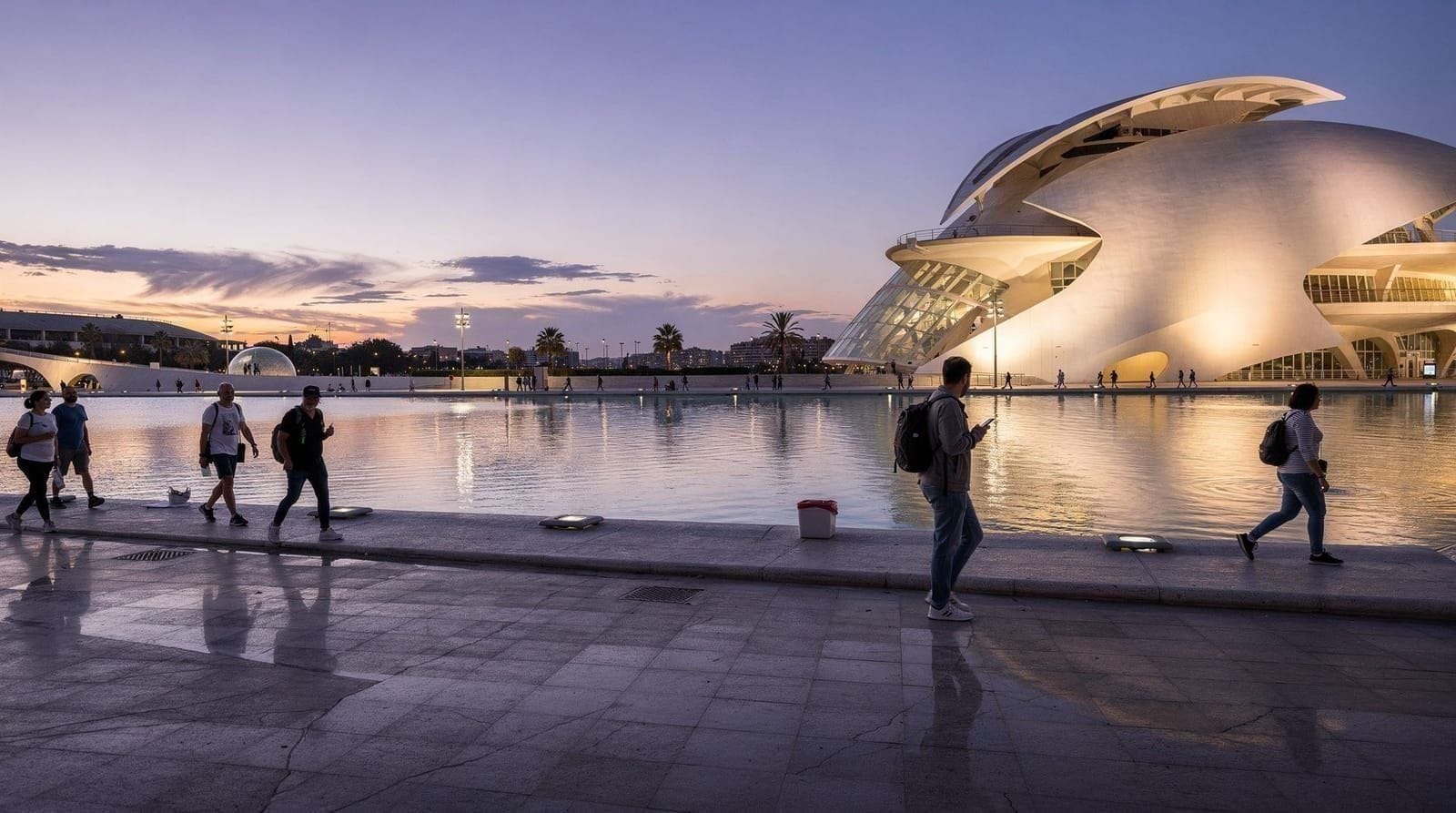
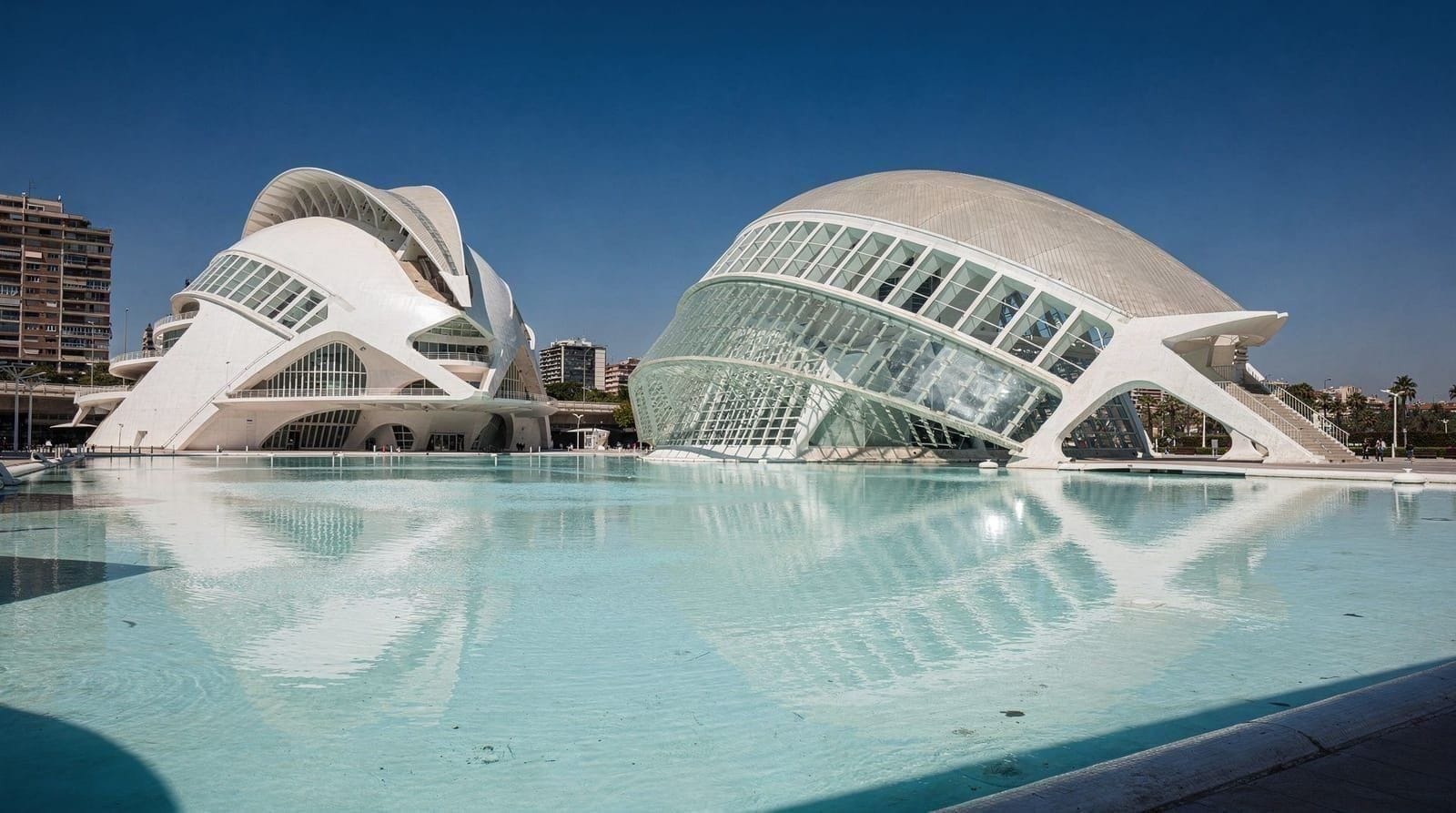
Ciudad de las Artes y las Ciencias — the complex itself is in the southern part of the old Turia riverbed. Full guide to Ciudad de las Artes y las Ciencias.
Eixample is the 19th-century grid expansion between the old town and Russafa, with Modernista buildings and a local restaurant scene that sees far fewer tourists than the old town.
The port and marina grew around the 2007 America’s Cup infrastructure. Sparse on character but good for sailing and catamaran trips. See the port and marina guide.
Not every neighbourhood is equally worth your time on a short trip. If you’re deciding what to prioritise versus skip, the overrated and underrated Valencia guide is a useful sanity check before you commit an afternoon somewhere.
What to actually do (honest breakdown)
The old town circuit (half day)
Start at the Mercado Central on a weekday morning (7:30–15:00, Monday to Saturday, closed Sundays and public holidays). Europe’s largest fresh produce market occupies an Art Nouveau building from 1928. Buy a bag of local almonds, a slice of jamón, and a fresh juice — but avoid the overpriced smoothie stalls positioned at the entrance. A smoothie here costs €7–9 versus €3–4 at a café two streets away.
From the market, walk 3 minutes to the Llotja de la Seda (Silk Exchange), a UNESCO World Heritage site with a stunning Gothic trading hall. Entry costs €2, free on Sundays. The columns inside are genuinely extraordinary — twisted limestone pillars rising 18 m without any interruption.
The Valencia Cathedral is 10 minutes on foot. The tower, known as the Micalet (Miguelete), offers the best panoramic view of the city for €3. The Holy Chalice chapel inside allegedly houses the cup used at the Last Supper — a serious claim the Catholic Church endorses, which makes for interesting reading regardless of your scepticism.
The Torres de Serranos and Torres de Quart are the surviving Gothic city gates. Torres de Serranos (free on Sunday mornings) overlooks the Turia riverbed.
Turia gardens (half day to full day)
The old Turia riverbed was drained after catastrophic flooding in 1957 and converted over three decades into an 8 km urban park. You can walk, cycle, or jog from the historic centre all the way to the sea. At the western end sits the Gulliver Park, a beloved free playground built on a giant reclining Gulliver figure — useful if you have young children. Rent a bike from any Valenbisi station or a private rental shop near the cathedral (around €8–12 for a half-day). Read the Turia by bike guide for route details.
The park is not uniform along its length — the stretch closest to the old town is manicured with fountains and sports facilities, while the sections nearer the City of Arts and Sciences open into wider lawns and running tracks. Locals use it constantly for jogging, and the running the Turia guide covers routes and distances if that’s part of your trip. For a slower option than a bike, walking a single section — old town to Gulliver Park, for instance — takes about 45 minutes and gives a genuine sense of the park without committing a full day.
City of Arts and Sciences (half to full day)
Santiago Calatrava’s complex of five buildings is one of the most photographed architectural ensembles in Europe. The walk along the reflecting pools is free. If you want to go inside:
- Oceanogràfic (Europe’s largest aquarium): check current prices on oceanograficvalencia.com, very worthwhile with 2+ hours
- Príncipe Felipe Science Museum: see cac.es for current prices
- Hemisfèric (IMAX cinema): see cac.es for current prices
Book the City of Arts full-day combined ticket — Oceanogràfic + Hemisfèric + Science Museum, queues skipped.
The complex is busiest on Saturdays from 11:00–17:00. A weekday arrival before 10:00 or after 15:00 is significantly quieter. The guided tour adds useful architectural context that the excellent but static exhibits inside do not provide.
Beaches (half day to full day)
Valencia has 11 km of city beaches accessible by tram (L8, from the Pont de Fusta stop) or EMT buses 4, 6, 95. La Malvarrosa is the most central urban beach with a good promenade of restaurants. Patacona is marginally less crowded, beginning immediately north. Both have fine grey-gold sand and calm Mediterranean water.
El Saler and La Devesa to the south are cleaner and quieter, bordered by the Albufera natural park pinewoods. Bus 24/25 or a rental bike via the Turia path.
Summer (June–September) brings crowds; July and August are peak, hot, and noisy. Water temperature reaches 27 °C in August. See the best beaches near Valencia guide and, for families specifically, the beaches with kids guide — the calm, shallow water at Malvarrosa and Patacona suits younger children better than the more exposed stretches south toward El Saler.
If you’d rather not walk the promenade blind, a beachfront cycling path connects the marina, Malvarrosa and Patacona in under 15 minutes, and several operators run e-bike and segway tours that combine the seafront with the old town in a single circuit — useful if beach time is limited and you want to see more of the city on the way.
Las Fallas (March 1–19)
Valencia’s defining annual event — 800 massive satirical sculptures installed citywide, then ceremonially burned on the night of March 19. Night fireworks run at 23:59 from March 15 to 18, with the Nit del Foc on March 18, Spain’s most intense fireworks display. Hotel prices triple and must be booked months in advance. The experience is entirely authentic, chaotic, extremely loud (continuous mascletà firecrackers at 14:00 daily), and genuinely unmissable if you can get a room. Read the Las Fallas complete guide and where to stay during Fallas.
Food and eating: the honest guide
Paella rules
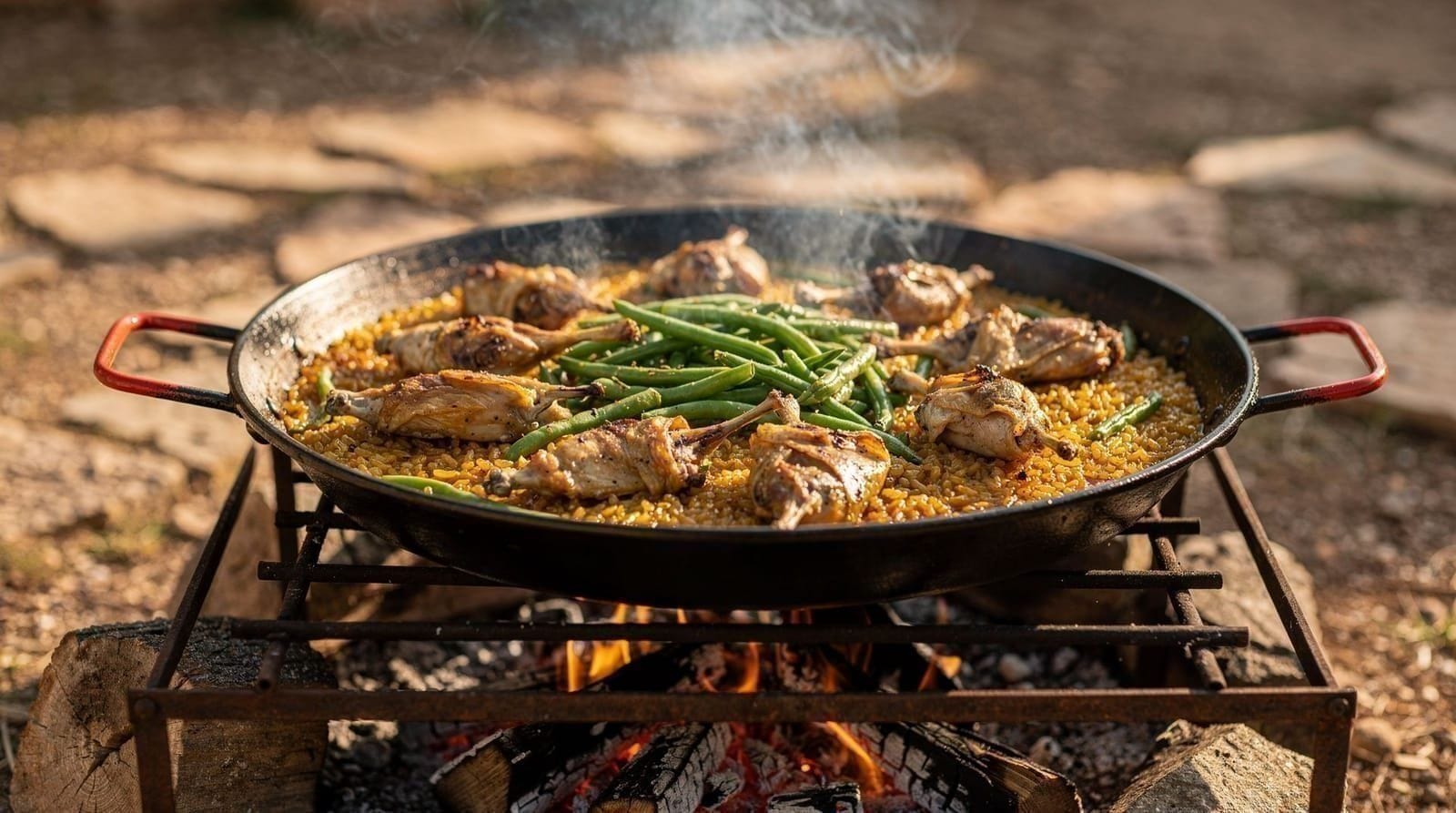
Paella valenciana is cooked over a wood fire at lunchtime. It is not a dinner dish. Any restaurant serving paella in the evening is serving a reheated or inferior version to tourists who do not know better. The traditional recipe uses chicken, rabbit, green beans, garrofó (butter beans), tomato, saffron, and rice — no seafood, no onion, no peas. These are not variations; they are errors according to any Valencian cook.
Where to eat real paella: Casa Carmela (Calle de Isabel de Villena 155, El Cabanyal), La Pepica (Passeig Neptú 6, Malvarrosa), Restaurante Levante (in Benissanó, 25 km north — the most-awarded paella restaurant in the world). Budget €15–25 per person. Read how to order paella like a local.
If you want to learn to make it yourself:
Traditional Valencian paella cooking class — 2 hours, you eat what you cook.
Horchata
Horchata (orxata) is a sweet, cold drink made from chufa (tiger nuts) grown in the Huerta Norte, immediately north of Valencia. It is served with fartons (elongated sweet pastry for dipping). The best place in the old town is Horchatería Santa Catalina (Plaza de Santa Catalina 6) — it has operated since 1836. Expect to pay €2.50–3.50 per glass. Avoid bottled horchata sold in supermarkets; it bears no resemblance to the fresh version.
Menú del día (lunch deal)
Almost every restaurant in Valencia offers a three-course weekday lunch menu with bread and a drink for €12–16. This is how locals eat. A typical menú: a first course (salad or soup), a second course (meat or fish), dessert (crema catalana or fruit), and a small glass of wine or water. This is the best value meal in the city — skip the tourist menus near the cathedral that charge €18–22 for inferior food.
Tapas and esmorzaret
The Valencian esmorzaret (second breakfast or mid-morning snack, 9:00–11:00) is a serious institution: a bocadillo (crusty roll) with fried calamari, sobrassada, or fresh cheese. Bar Ricardo (Calle Samaniego) and any of the old bars in the Mercado Central neighbourhood are good options. Budget €3–6.
For evening tapas, Russafa is the best neighbourhood — Calle Cadis and its surroundings have dozens of independent tapas bars with drinks from €2–3.
Tourist traps to avoid
- Agua de Valencia (cava, vodka, gin, and orange juice) is served exclusively at tourist tables for €8–14 per jug. Real Valencians do not drink it; it was invented in 1959 as a house cocktail for foreign visitors.
- Pan no pedido (bread you did not order): it is legal in Spain to charge €1–2 per person for bread placed on the table. Refuse it or ask “¿está incluido?” before eating anything left on the table.
- Smoothie stalls at Mercado Central: €7–9 for what you could make for €1.50.
- Menus near Plaza de la Reina and the Cathedral: €18–25 for pedestrian food. Walk one block off the tourist spine and prices drop by 30–40%.
Read the full tourist traps guide.
Practical information
When to go
May–June and September–October are the sweet spots: 22–28 °C, low humidity, short queues, beach water still warm in October. July and August are hot (35–38 °C inland, 28–30 °C on the coast), crowded, and expensive. March is worth considering only if you’re there for Las Fallas. December–February sees mild temperatures (12–17 °C), far fewer tourists, and some of the city’s liveliest food events.
See the full best time to visit Valencia guide.
Budget
| Category | Daily estimate |
|---|---|
| Backpacker (hostel, menú del día, public transport) | €50–70 |
| Mid-range (3-star hotel, restaurants, one attraction) | €120–160 |
| Comfortable (4-star, dining out twice daily, tours) | €180–250 |
A single metro journey is €1.50 in zone A and an EMT bus ticket is €2. The Valencia Tourist Card (24/48/72h, €17/24/30) includes unlimited public transport and discounts at attractions — worth it if you plan to use the metro more than 5 times per day. See the tourist card honest review.
Connectivity
Free Wi-Fi in the airport, metro stations, and most cafés. An eSIM for Spain costs €8–15 for 15 GB (Airalo, Holafly). Local physical SIMs (Orange, Movistar, Vodafone) are available at the airport and phone shops for €10–20 with data. Read the eSIM and connectivity guide.
For visitors who want mobility around the sights without renting a car, the Valenbisi bike share guide and the Valencia by bike overview cover the practical side — station density, pricing tiers, and which routes are genuinely comfortable versus stressful in traffic.
Entry requirements
Spain is Schengen — EU citizens need only a national ID. Non-EU (US, UK, Canada, Australia, etc.) currently enter visa-free for up to 90 days. ETIAS (pre-travel authorisation, not a visa) is expected Q4 2026 for non-EU nationals. See the entry requirements guide.
Accessibility is generally good by Spanish-city standards: the metro system has lifts at most central stations, the Turia gardens and beachfront promenades are flat and step-free, and newer trams are low-floor. The old town’s narrow, cobbled streets are the main friction point for wheelchair users or those with limited mobility. See the accessible Valencia guide for a fuller assessment before you travel.
Day trips from Valencia
Valencia is an excellent base for the region. The most popular day trips:
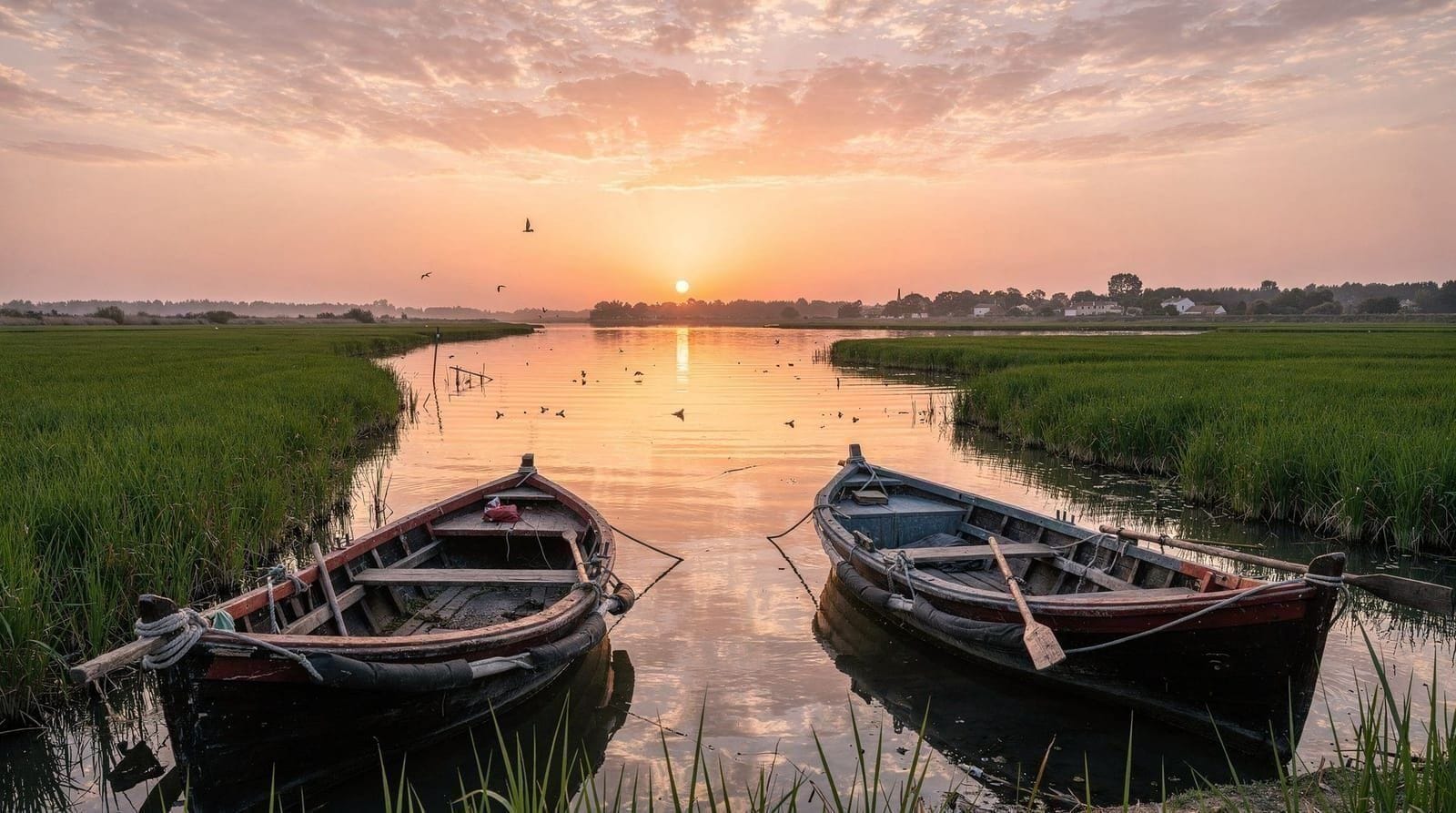
- Albufera Natural Park — 10 km south, bus 24/25 (45 min, €2). Best at sunset on a small wooden boat. Read the Albufera guide.
- Xàtiva — 60 km south by cercanías train (45 min, €4). Medieval castle, excellent old town.
- Sagunto — 25 km north, 30 min by cercanías. Roman amphitheatre, Moorish castle.
- Requena — 70 km west, 50 min by cercanías. Spain’s best Bobal wine region. Requena wine guide.
- Peñíscola — 130 km north, best by car or tour. Walled medieval city on a rock above the sea.
See the day trips from Valencia guide and the full itinerary options.
How many days: a quick breakdown
| Length | What it covers |
|---|---|
| 1 day | Old town circuit, City of Arts (exterior), one meal — see the one-day itinerary |
| 3 days | Old town, Turia gardens, City of Arts (inside), one beach afternoon — see the 3-day itinerary |
| 4–5 days | Adds the Albufera at sunset, Russafa in depth, and one inland or coastal day trip — see the 4–5 day itinerary |
Families travelling with children should also check the Valencia with family itinerary, which paces the same sights around nap times and shorter attention spans.
Getting an overview: organised tours
If you want a structured introduction:
2.5-hour historical city walking tour — covers the Cathedral, Llotja, Mercado Central.
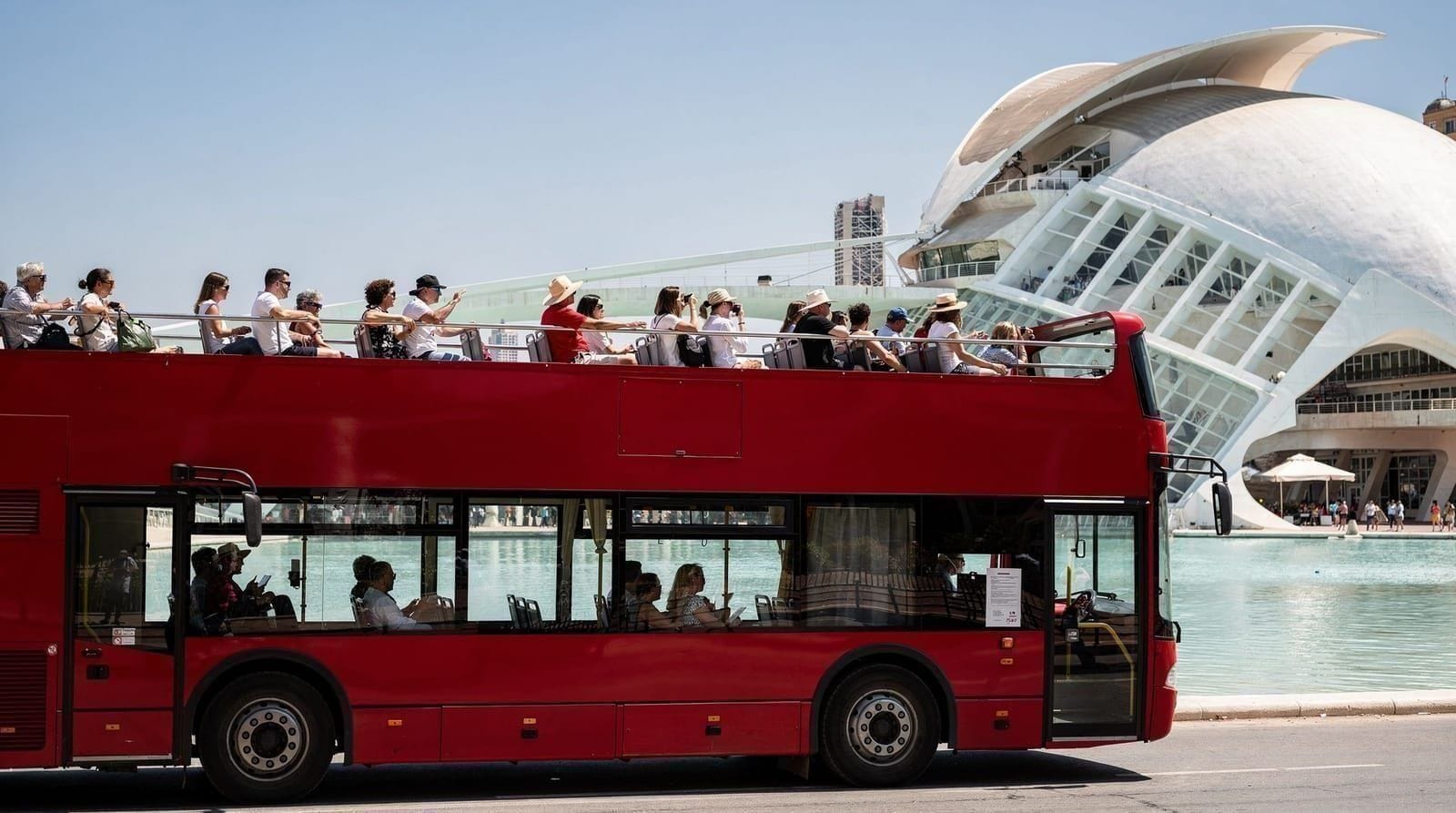
The hop-on hop-off bus is a practical tool for first-timers to understand the city’s geography before exploring on foot. It covers the old town, the port, Malvarrosa beach, and the City of Arts — a full loop takes around 90 minutes.
Valencia hop-on hop-off tourist and maritime route — 24 or 48-hour ticket.
Frequently asked questions about Valencia
How many days do you need in Valencia?
Three days is enough to cover the old town, the Turia gardens, the City of Arts and Sciences, and one beach visit. Add two more days for the Albufera, Russafa in depth, and a day trip. Five days gives a comfortable pace without feeling rushed.
Is Valencia expensive?
Valencia is significantly cheaper than Barcelona and Madrid. Expect to pay €12–16 for a menú del día, €3–5 for a coffee and pastry, and €1.50–2 for public transport. Hotels range from €25–40 (hostel dorm) to €80–150 (solid 3-star hotel) outside peak months. August and Las Fallas week are exceptions — prices double or triple.
What is the best neighbourhood to stay in Valencia?
For first-timers, the area between Ciutat Vella and the Turia gardens gives the best combination of location and atmosphere. Russafa is excellent for those who want a more local feel. The Eixample is quieter and has good transport links. See the where to stay guide.
Is Valencia safe?
Generally yes. The main risk is petty theft — pickpockets in busy tourist areas (Mercado Central, around the Cathedral), on the beach, and during Las Fallas when crowds are dense. Use a cross-body bag, keep phones in front pockets, and avoid leaving bags unattended on beach towels. Read the pickpockets and safe areas guide.
Can I visit Valencia with kids?
Yes, Valencia is one of the best family cities in Spain. The Oceanogràfic, Gulliver Park (free), Bioparc, and Science Museum are all well-suited to children. The beach is calm and shallow. See the Valencia with kids guide.
Do I need a car in Valencia?
No. Public transport covers the city, its beaches, and day trips to the Albufera efficiently. A car becomes useful for Bocairent, Montanejos, Morella, and Guadalest — places that are difficult or slow by public transport. See car rental for day trips.
When should I avoid visiting Valencia?
Mid-August sees peak crowds and intense heat (35–38 °C). If you are sensitive to noise, avoid Las Fallas week (March 1–19) — the mascletà fireworks are set off daily at 14:00, and the city essentially does not sleep. July is also busy on the beaches with Spanish domestic tourists.
Top experiences
Bookable activities with verified prices and instant confirmation on GetYourGuide.