El Palmar — Albufera fishing village and paella origin
Honest guide to El Palmar, the fishing village on the Albufera lagoon: where to eat authentic paella and how to book a boat tour.
Valencia: Albufera Natural Park eco boat tour at sunset
Quick facts
- Best for
- Authentic paella, boat tours, Albufera access
- Time needed
- 2–4 hours (lunch + boat)
- Getting there
- Bus 24/25 from Valencia (~45 min)
- Don't miss
- Paella cooked over wood fire; sunset boat tour
- Avoid
- Entrance-street tourist restaurants; paella at dinner
El Palmar is a village of about 800 people built on a peninsula in the Albufera lagoon, accessible only by road through the rice paddies. It has existed as a fishing community since the medieval period. Today it is primarily known for two things: traditional paella valenciana cooked over wood fire, and wooden boat tours on the lagoon. For visitors to Valencia, El Palmar is typically a half-day excursion — lunch, a boat ride, and a quiet walk around the village before the return bus.
| Where | Albufera peninsula, ~20 km south of Valencia |
| Time needed | 2–4 hours (lunch and a boat ride) |
| Getting there | Bus 24/25 from Valencia, around 45 minutes |
| Cost | Paella menú around €15–22; boat ride around €8–12 |
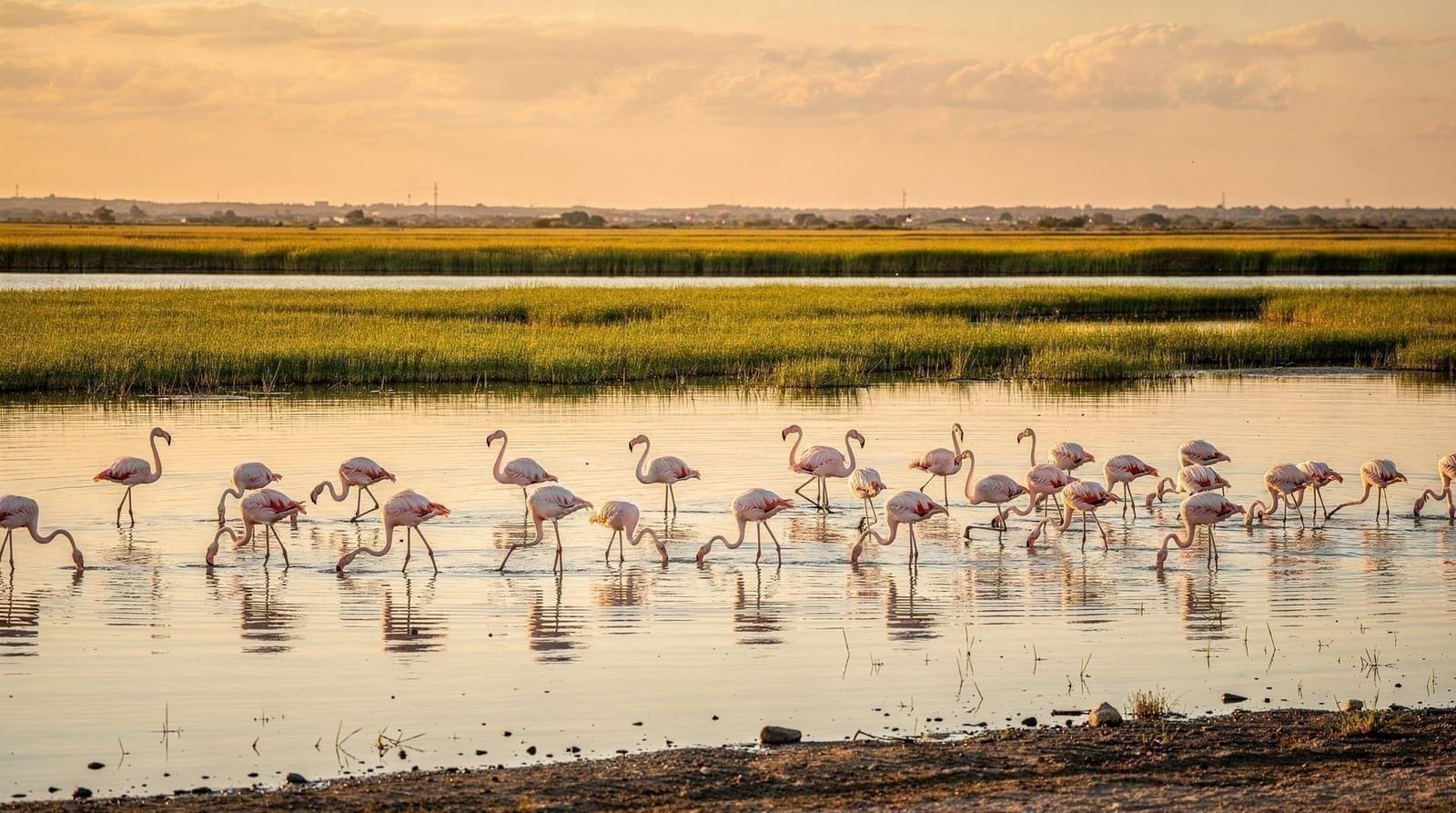
| Best time | Sunday for the local paella ritual; October for flamingos |
Getting to El Palmar
Bus 24 or 25 from Avenida Germanies (near Russafa), direction El Palmar. Journey time: approximately 45 minutes. Buses run roughly every 30–60 minutes on weekdays; check the EMT Valencia app. Single fare: €2. The bus deposits you at the village entrance.
By car: 20 minutes from central Valencia via V-31 south, exit El Palmar. Parking inside the village is free but limited on Sunday lunchtimes. Arrive before 12:30 if driving.
Paella in El Palmar: how to choose a restaurant
El Palmar’s main street, Calle La Sequiota, runs from the bus/parking entrance down to the lagoon. The restaurants nearest the entrance are the most tourist-oriented, with the most signage in multiple languages — and generally not the most interesting. Walk to the middle or far end of the street, or ask any local which place a Valencian family would use.
Traditional paella valenciana is cooked here as it has been for generations: chicken and rabbit, green beans (bajoqueta), garrofó beans, tomato, and rice, over an open wood fire of orange branches. The cooking takes 45 minutes; order when you arrive and the paella is ready when it is ready — do not expect it instantly.
Paella lunch timing: arrive by 13:00 to guarantee a table and have the paella cooked at its best. Arriving at 14:30 means the restaurants are winding down and the fires have been extinguished.
Trusted restaurants in El Palmar: Restaurante Mestre, Nou Raco, and El Bon Estar are consistently recommended by Valencians as the most genuine options. Prices: €15–22 per person for the full menú including first course, paella, dessert, and a drink.
Sunday bookings: El Palmar on Sunday lunchtime is when Valencian families come specifically for the ritual paella. Tables are not always available without a reservation — call ahead Friday or Saturday if visiting on a Sunday.
See the full Albufera destination guide for more context on the natural park and the boat tour logistics.
Boat tours from El Palmar
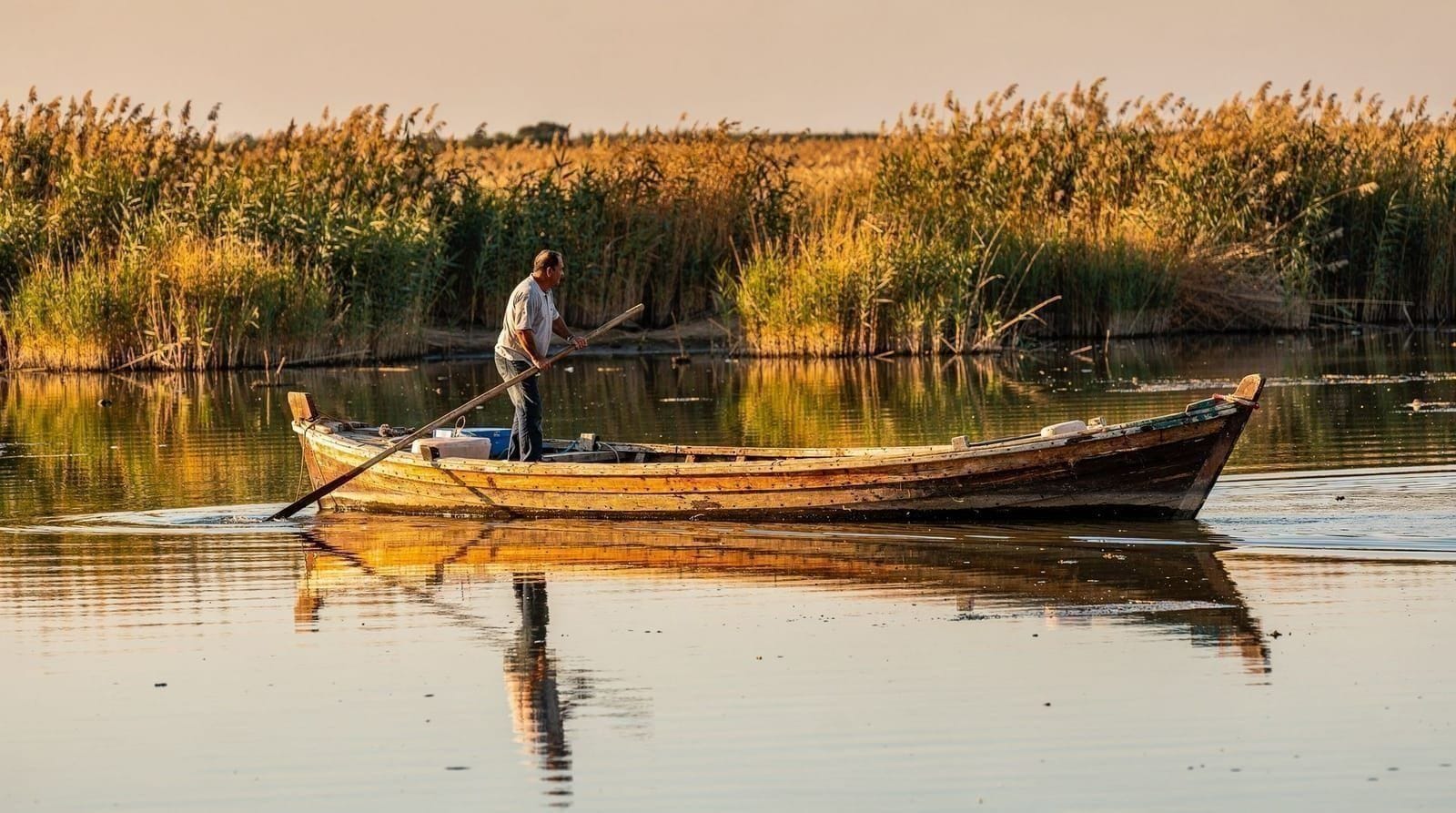
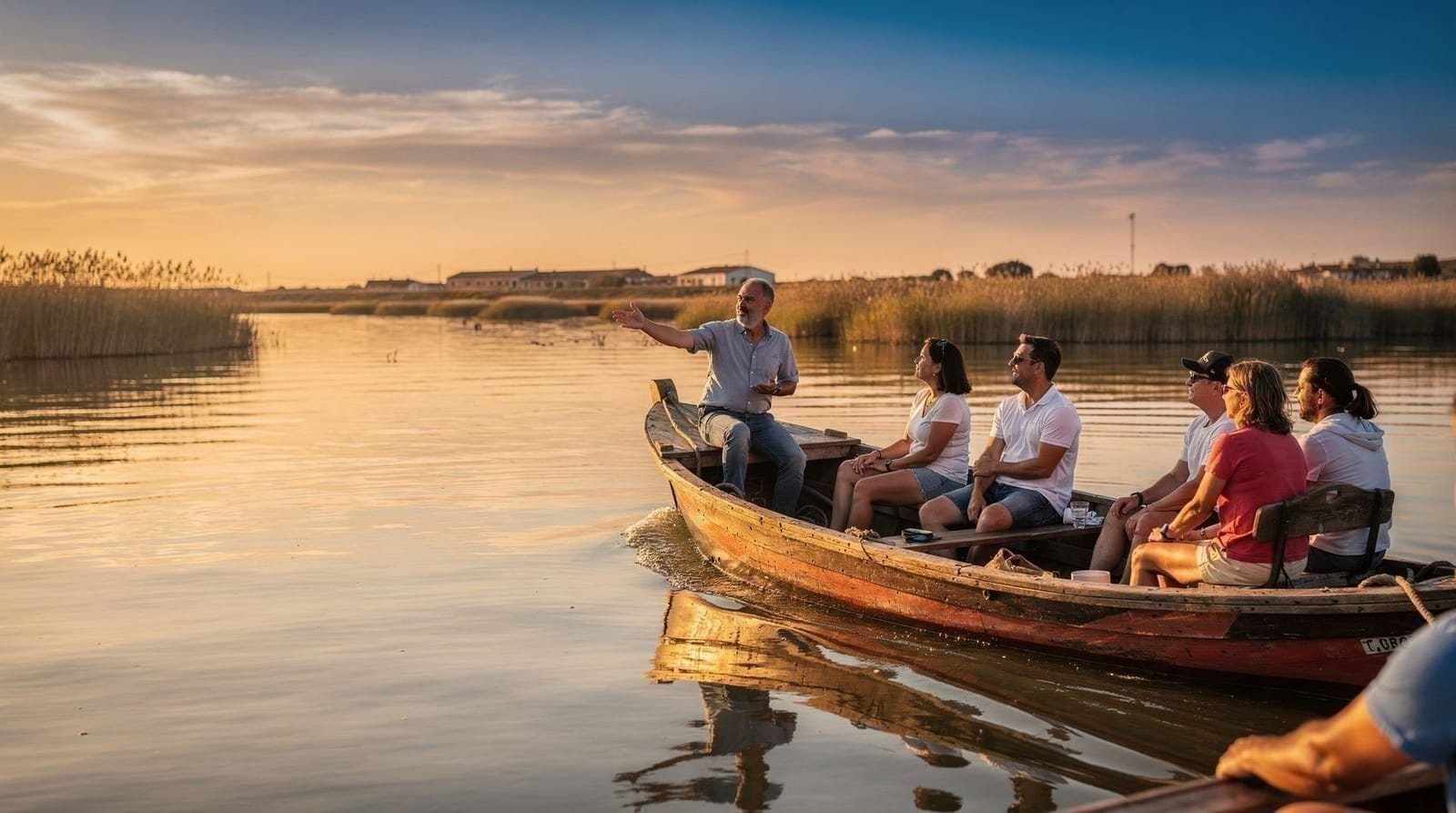
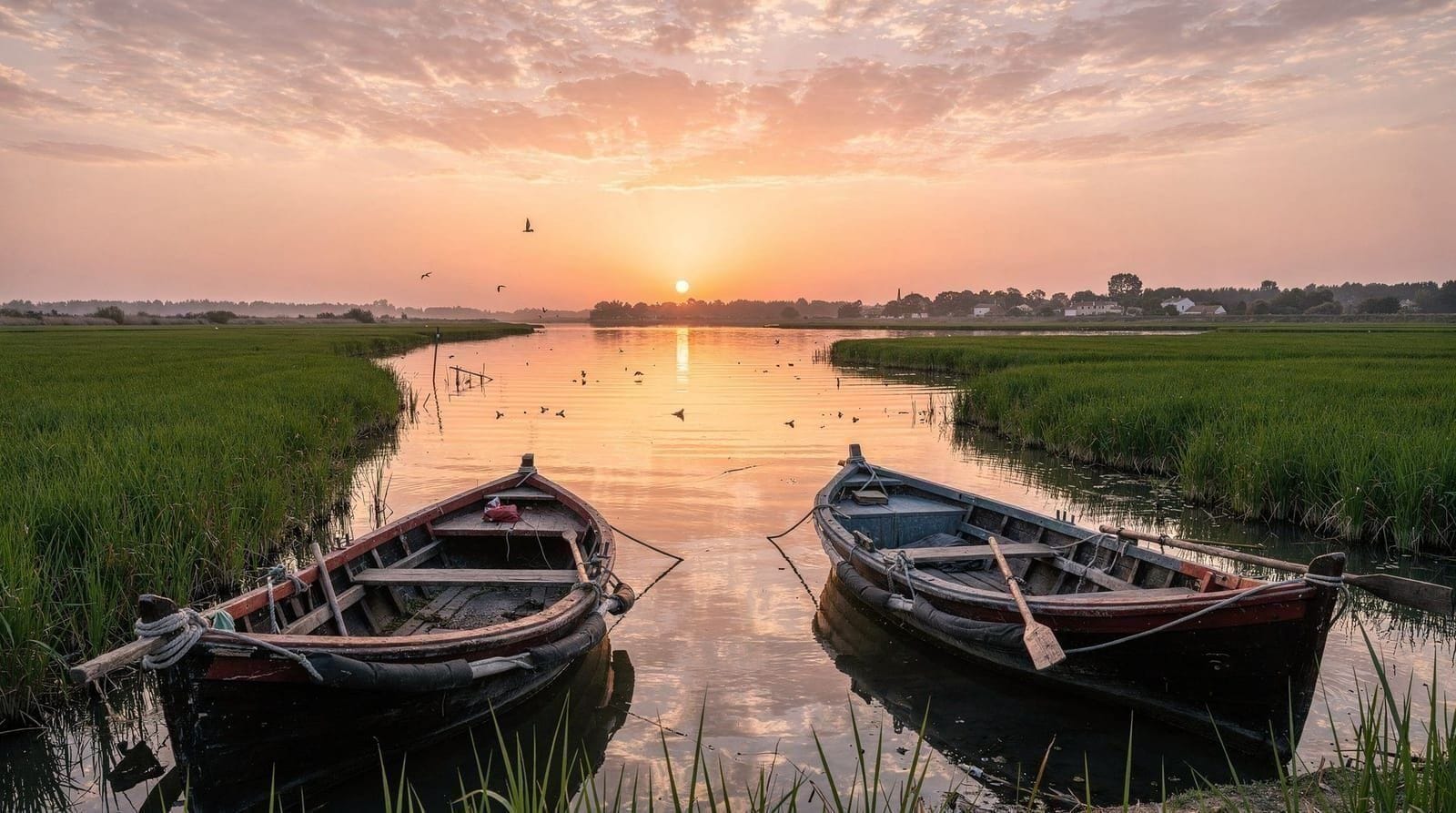
The boat tour operators are at the gola embarkation points — the southern end of the village where the canal meets the lagoon. Small independent barqueros (boatmen) take visitors on 45–60 minute rides in flat-bottomed albuferenca wooden boats for approximately €8–12 per person. You do not need to book in advance — walk to the gola and ask. When the water is calm and the light is good, these independent tours are among the most authentic ways to experience the lagoon.
Organised tours that include transport from Valencia, a boat, and lunch are also available. These are the more convenient option if you are not comfortable with independent logistics.
Albufera eco boat tour at sunset — small group, electric boat, includes transport from Valencia.
Albufera boat ride with paella — transport, boat tour, and traditional lunch from Valencia.
The village itself
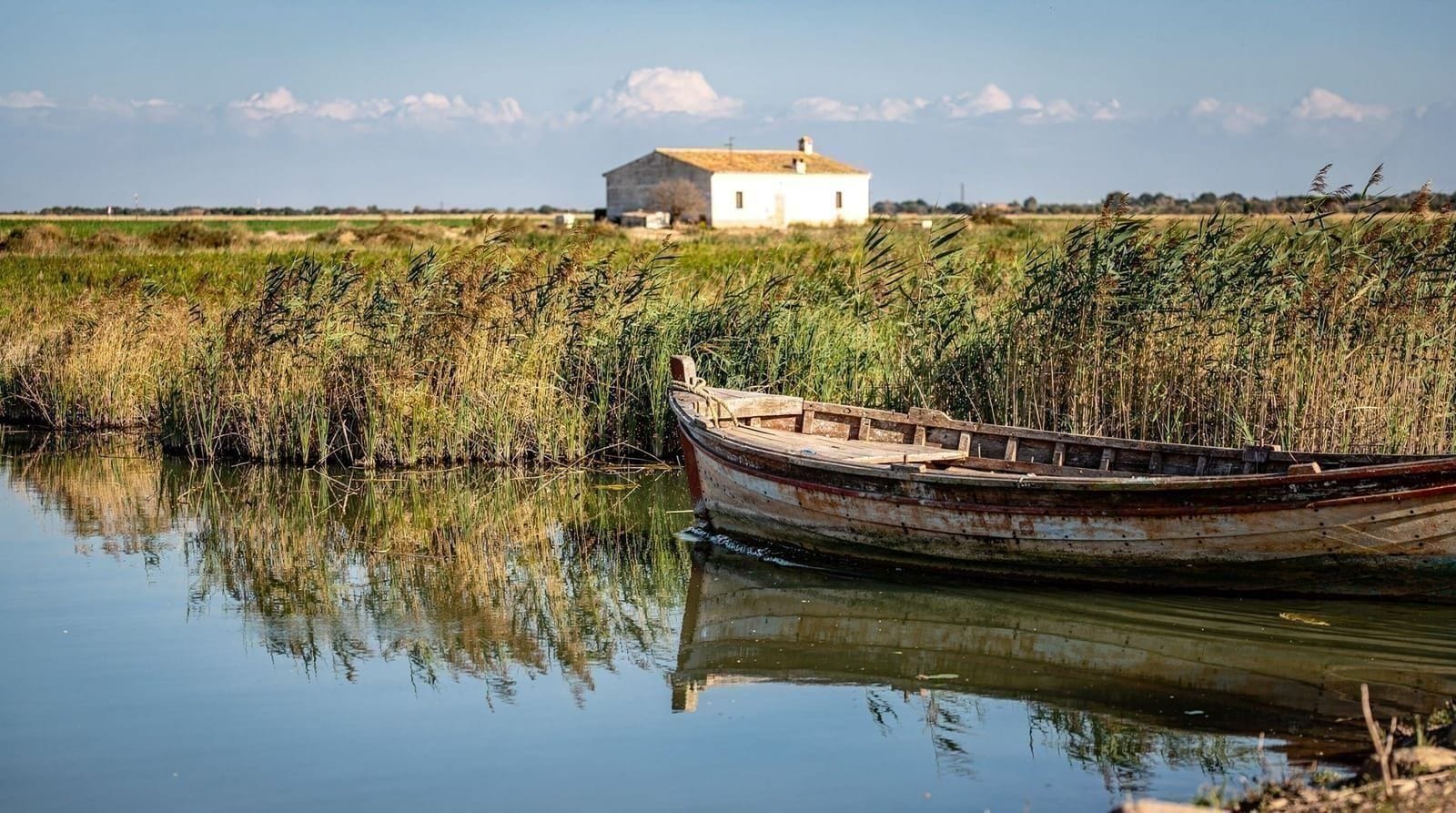
El Palmar has a quiet, lived-in character outside of lunchtime. The streets have traditional barracas (the thatched traditional Albufera farmhouses, now mostly converted), a small church, and fishing equipment stored in front gardens. The village is small enough to walk in 20 minutes. The bird life is immediately visible — herons in the reeds along the canals, purple gallinules visible from the village path by the water.
After lunch: combining with El Saler
After a paella lunch and a boat tour in El Palmar, bus 24/25 back north stops at El Saler beach on the way to Valencia. With the right timing (lunch ending at 15:30, boat done by 17:00), you can stop at El Saler for a swim before the return to the city. See the El Saler and La Devesa guide for what the beach is like.
The all-i-pebre tradition
Alongside paella, El Palmar is the origin of all-i-pebre — an eel stew made with fresh-caught eels from the Albufera, garlic, red paprika, almonds, and potatoes. This dish is far less known outside Valencia than paella, but it is equally embedded in the lake’s fishing culture. The eels used are the European eel (Anguilla anguilla), which lives in the Albufera’s brackish water and has been fished here for centuries.
All-i-pebre is served in most El Palmar restaurants as a first course, typically in a terracotta dish with coarse bread for soaking the sauce. It costs €8–12 per portion. If you have not encountered it before, ordering it alongside or instead of paella is a more genuinely local choice.
Note: the European eel is critically endangered as a species. Sustainable fishing quotas apply in the Albufera. The number of restaurants serving eel reflects the restricted catch, not a commercial abundance.
Read the full all-i-pebre guide for context on the tradition, the recipe, and where else in Valencia to find it.
Walking around El Palmar
The village is small enough to walk completely in 20 minutes. Points of interest beyond the restaurants:
The main canal (el canal): the primary water channel running through the village, where traditional albuferenca boats are moored. Painted wooden hulls, poles lying at angles, the smell of canal water and wood — a working image of the fishing culture that shaped this place.
La Iglesia de Sant Blai (the village church): a simple baroque village church, usually open on Sunday mornings. The interior has a large devotional painting of the Albufera fishermen’s patron saint.
The rice paddy paths: at the edges of the village, the network of narrow paths between the paddies is accessible on foot or by bike. Walking 20 minutes in any direction from the village puts you in the middle of the agricultural landscape that is the park’s dominant feature.
Practical notes for visiting El Palmar
Sunday logistics: the village is busiest on Sundays, when Valencian families converge for their weekly paella ritual. The bus runs more frequently on Sunday mornings to accommodate demand. Parking fills by 12:30. Tables at the better restaurants fill by 13:00. Plan accordingly: either book ahead and arrive on time, or choose a weekday when everything is calmer.
Weekday advantage: on a weekday, El Palmar is quieter, several restaurants offer a more relaxed menú, and the boat operators have more time. The rice paddies around the village have more agricultural activity midweek (tractors, irrigation adjustments, field workers). A weekday visit is often more authentic.
Weather and boat tours: the flat-bottomed albuferenca boats are not suitable for rough conditions. In winter or during periods of strong south wind (levante or garbí), independent boatmen may decline to go out. Organised tours make a similar call. If boat conditions matter to your visit, check the forecast.
Photography timing: the rice paddies at dawn (October–November, harvest season) are extraordinary — low mist, harvest machinery, migratory birds. This requires an early bus (the first bus 24/25 from Valencia departs before 07:00) and a commitment to arriving before sunrise.
For a full Albufera area itinerary, see the city and Albufera combined itinerary.
The rice-growing calendar
El Palmar’s whole rhythm follows the Albufera’s rice cycle, which shapes what the paddies look like at any given time of year.
| Period | What’s happening | What you’ll see |
|---|---|---|
| Apr–May | Fields flooded and prepared | Wide sheets of water reflecting the sky |
| Jun–Jul | Rice sown and growing | Bright green paddies, herons wading |
| Aug–Sep | Rice ripens | Golden-green fields, warm evening light |
| Late Sep–Oct | Harvest | Machinery in the fields, dawn mist, migratory birds arriving |
| Nov–Mar | Fields re-flooded, fallow | Open water, best season for flamingos and waterfowl |
The rice grown here — mostly the round-grain Bomba and Senia varieties — carries the Denominación de Origen Arroz de Valencia, a protected designation tied specifically to this landscape. It’s the reason paella in El Palmar tastes different from paella made with imported rice elsewhere: the grain absorbs stock without turning mushy, which is exactly what a wood-fired paella needs.
El Palmar vs El Saler for a half day
Visitors often ask whether to prioritise El Palmar or El Saler and La Devesa if time only allows one stop. El Palmar is the food-and-boat experience — go for the paella ritual and the lagoon. El Saler is the beach-and-forest experience — go for the pine forest walk and a swim in clean, natural-park water. They sit on the same bus route (24/25), so a full day combining both, with El Saler first for a morning swim and El Palmar second for lunch and the sunset boat, is realistic if you start early. See the Albufera destination guide for how the two areas connect within the wider natural park.
Albufera bike and boat tour — cycles through the rice paddies from Valencia before finishing with a lagoon boat ride.
Planning the day around El Palmar
The simplest shape for the day is lunch first, boat second, village walk last. Paella is the fixed point, so build everything around the table you have chosen and let the boat and the stroll fill the hours either side. If you are travelling without a car, the Albufera day trip guide walks through the bus logistics, and the getting around by metro and EMT guide explains how to pay for the ride and which stops to use in the city.
Anyone who would rather see the lagoon at its most atmospheric should read the Albufera sunset boat guide before deciding between an independent boatman and an organised departure. The sunset slot is popular for good reason: the light on the water and the reeds changes quickly, and the return to Valencia afterwards is easy to plan if you know the last bus in advance.
Where El Palmar fits in a wider Valencia trip
El Palmar works best as a slow counterweight to the city. After a morning in Valencia’s old centre, a lunch among the rice fields feels like a different country. Travellers who like to fold nature into a city break will find it sits naturally in the city and Albufera itinerary, and it pairs well with a beach afternoon, as the beaches and city itinerary shows.
If food is the reason you are coming, it helps to know what you are comparing against. The guide to authentic paella explains what separates a true wood-fired paella from the versions served to tour groups, and the how to order paella guide covers the small etiquette points that make lunch easier, from sharing the pan to pacing the meal. Pair that with the Valencia paella traps guide and you will recognise a weak restaurant before you sit down.
Families can treat the village as a gentle outing: the boat ride, the open space and the birds keep children occupied without a strict schedule, and the Valencia with kids guide has more ideas for filling the rest of the trip. Nature-minded visitors who want more time in the park than a boat ride allows can continue with the Albufera natural park guide.
A last piece of advice: do not rush. The pleasure of El Palmar is the pace. Order, settle in, let the pan take the time it takes, and leave the boat for when you are ready to move. Visitors who treat it as a checklist stop tend to leave feeling it was ordinary; those who give it an unhurried afternoon usually remember it as one of the better days of their stay.
Frequently asked questions about El Palmar
Do I need to book a restaurant table in advance?
On Sundays and in peak summer, yes — call ahead on Friday or Saturday for a Sunday lunch, or book online where the restaurant offers it. On weekdays outside summer, walking in and choosing a table is usually fine, especially if you arrive by 13:00.
Is El Palmar worth visiting outside paella season?
There’s no real “off season” for paella here — the wood-fired kitchens operate year-round. What changes is the rice paddy scenery: winter fields are flooded and open, ideal for birdwatching, while summer fields are green and growing. Either is worth seeing; they’re simply different landscapes.
Top experiences
Bookable activities with verified prices and instant confirmation on GetYourGuide.