Ciudad de las Artes y las Ciencias: the complete guide
Valencia: City of Arts full-day combined tickets
How much does it cost to visit the City of Arts and Sciences?
A combined full-day ticket for all three main buildings (Oceanogràfic, Hemisfèric, Science Museum) costs €48–50 per adult online. Individual entries range from €8.90 (Hemisfèric) to €41.80 (Oceanogràfic). Plan a full day — the complex spans 350,000 m² and three separate attractions.
Valencia’s Ciudad de las Artes y las Ciencias is one of the most photographed urban complexes in Europe — and one of the most misunderstood. Visitors often arrive expecting a single attraction and discover instead a sprawling 350,000 m² campus of separate buildings, each requiring its own ticket and several hours of your time. This guide tells you what to see, what to skip, and how to plan a visit that doesn’t feel rushed.
| Where | Drained Turia riverbed, south-east of the old city |
| Cost | Around €42 (Oceanogràfic alone) to €50 (full-day combo) |
| Time needed | Full day for one visit, 1.5–2 days to cover everything |
| Getting there | Bus 13 (20 min) or bike via Turia Gardens (~20 min) |
| Best time | Weekday mornings, opening at 10:00 |
What the complex actually contains
The Ciudad de las Artes y las Ciencias consists of six main structures built between 1998 and 2005 on the drained bed of the old Turia river channel. Architect Santiago Calatrava designed most of the complex; the Oceanogràfic was designed by Félix Candela. The six structures are:
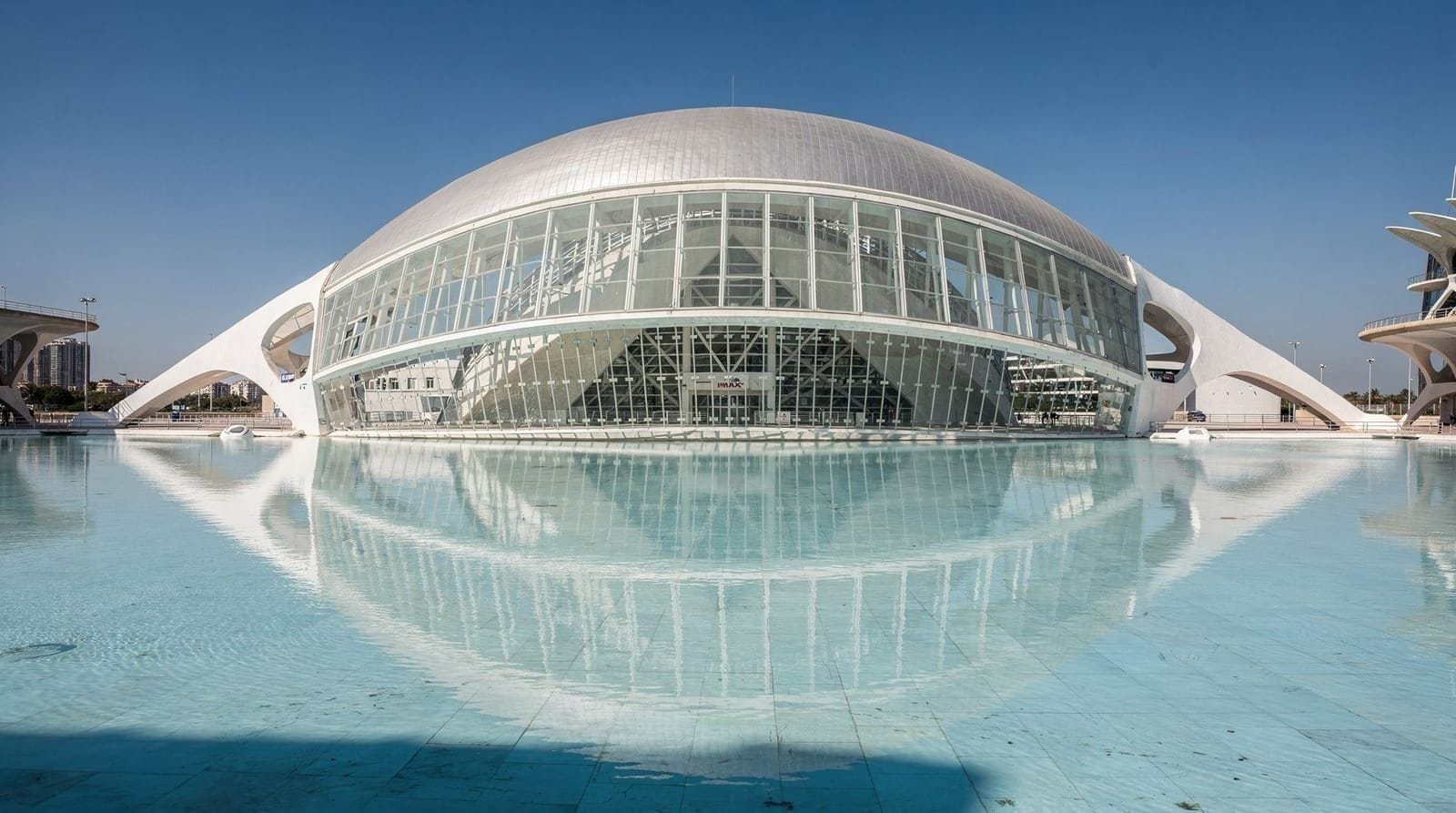
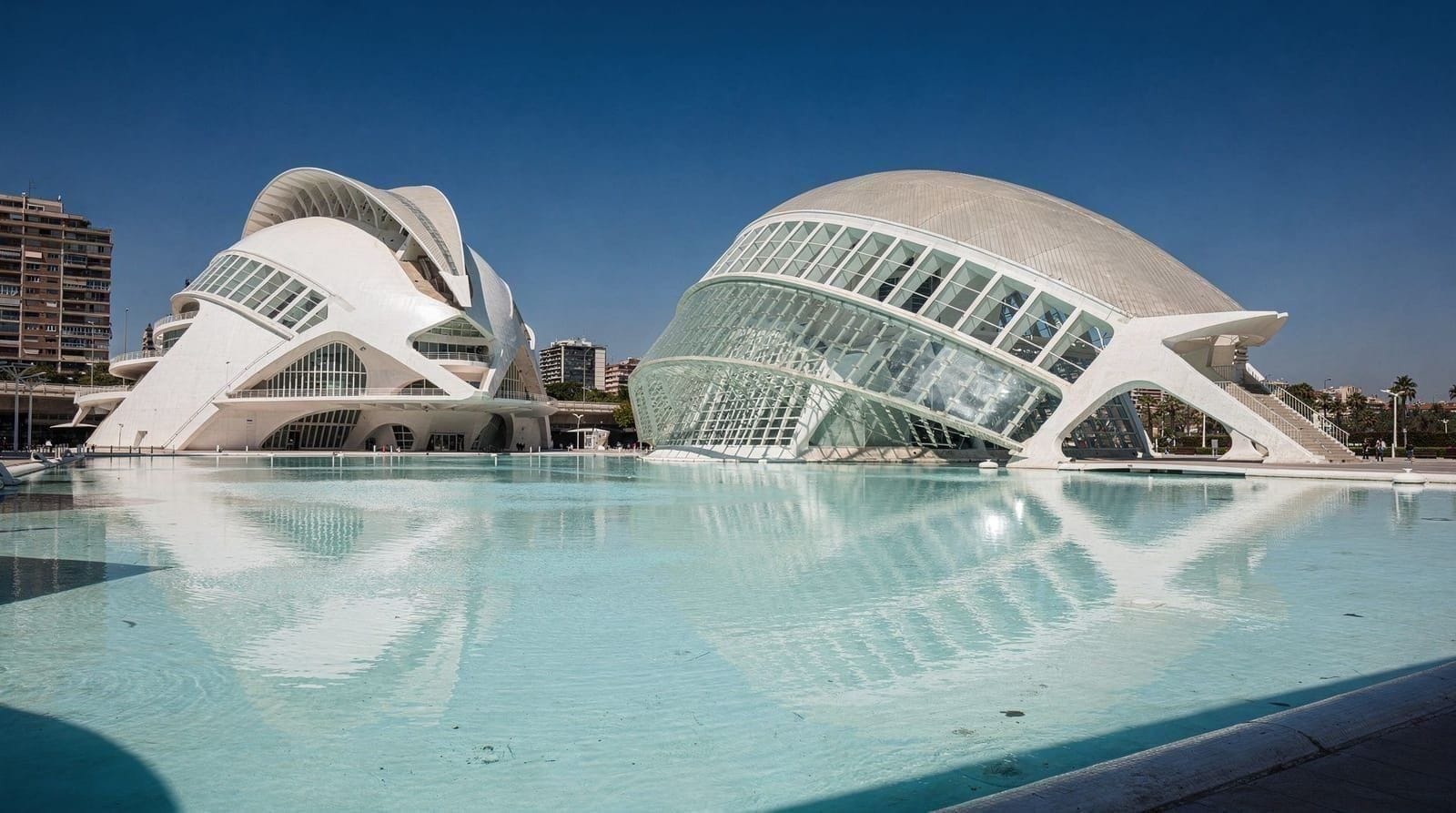
L’Hemisfèric (1998): A planetarium, IMAX theatre, and 3D cinema housed in an eye-shaped building that reflects in a 24,000 m² lake. The building itself — a concrete eyelid that opens and closes — is one of Calatrava’s most iconic works. See Hemisfèric guide.
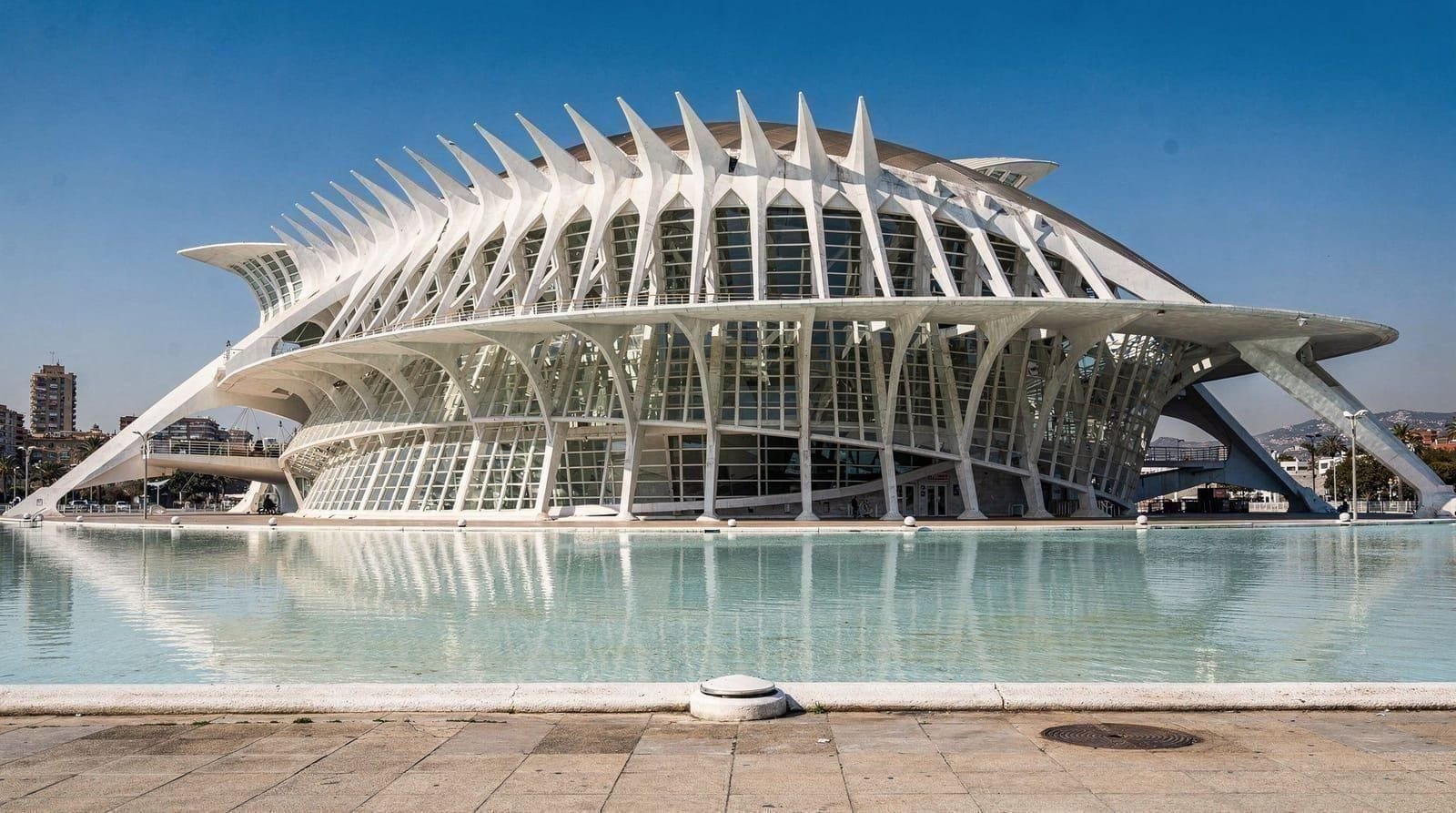
Museu de les Ciències Príncipe Felipe (2000): An interactive science museum occupying a 40,000 m² skeleton-like structure. Best for teenagers and adults, though younger children enjoy the ground floor. See Science Museum guide.
L’Umbracle (2001): A landscaped elevated walkway with native Mediterranean plant species growing between Calatrava’s concrete arches. Free to enter. Provides the best views of the reflecting pools below and the Hemisfèric across the water.
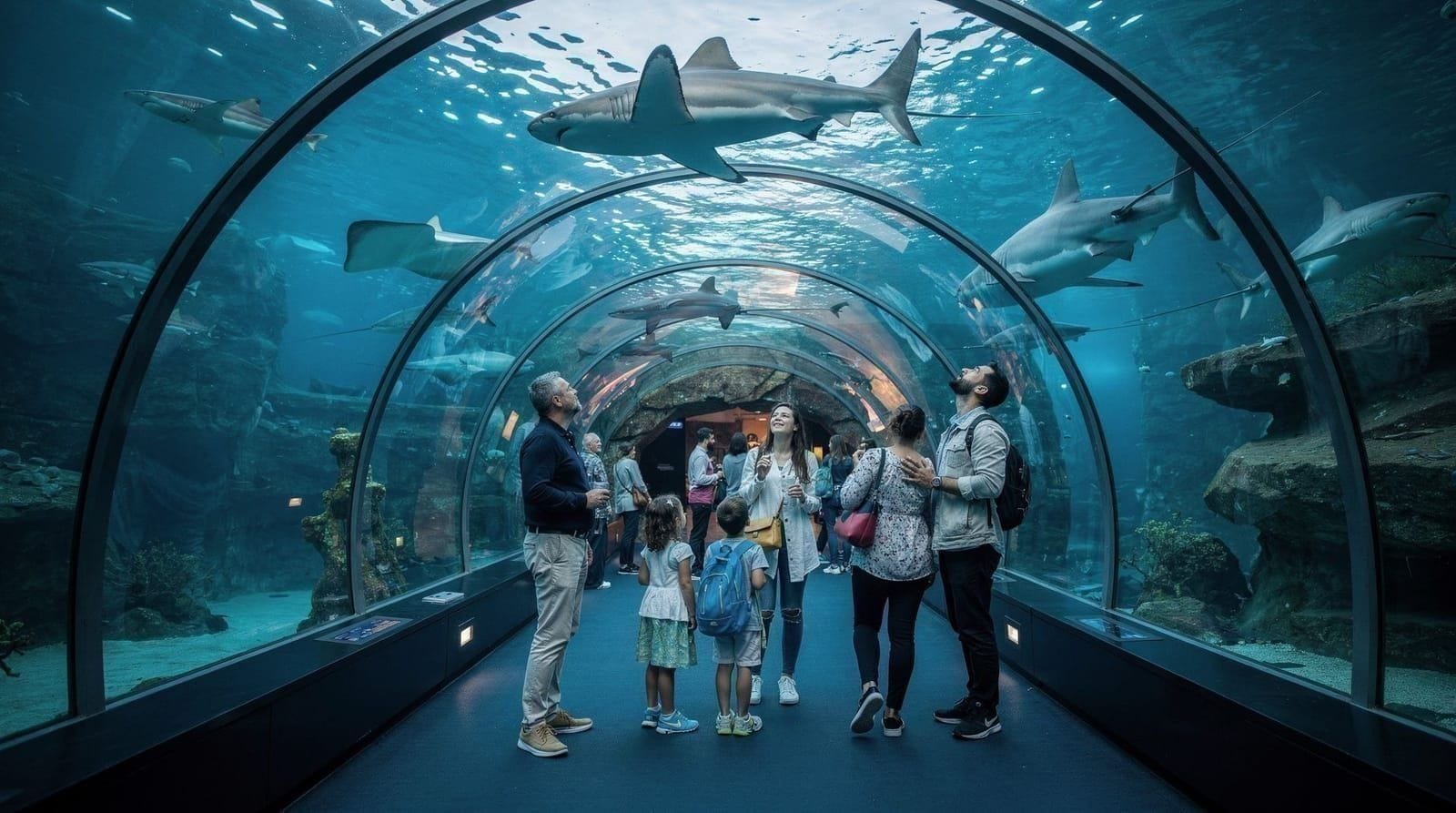
L’Oceanogràfic (2003): Europe’s largest aquarium. Nine separate pavilions covering Mediterranean, Arctic, Antarctic, tropical, and deep-ocean ecosystems. Requires its own full half-day. See Oceanogràfic guide.
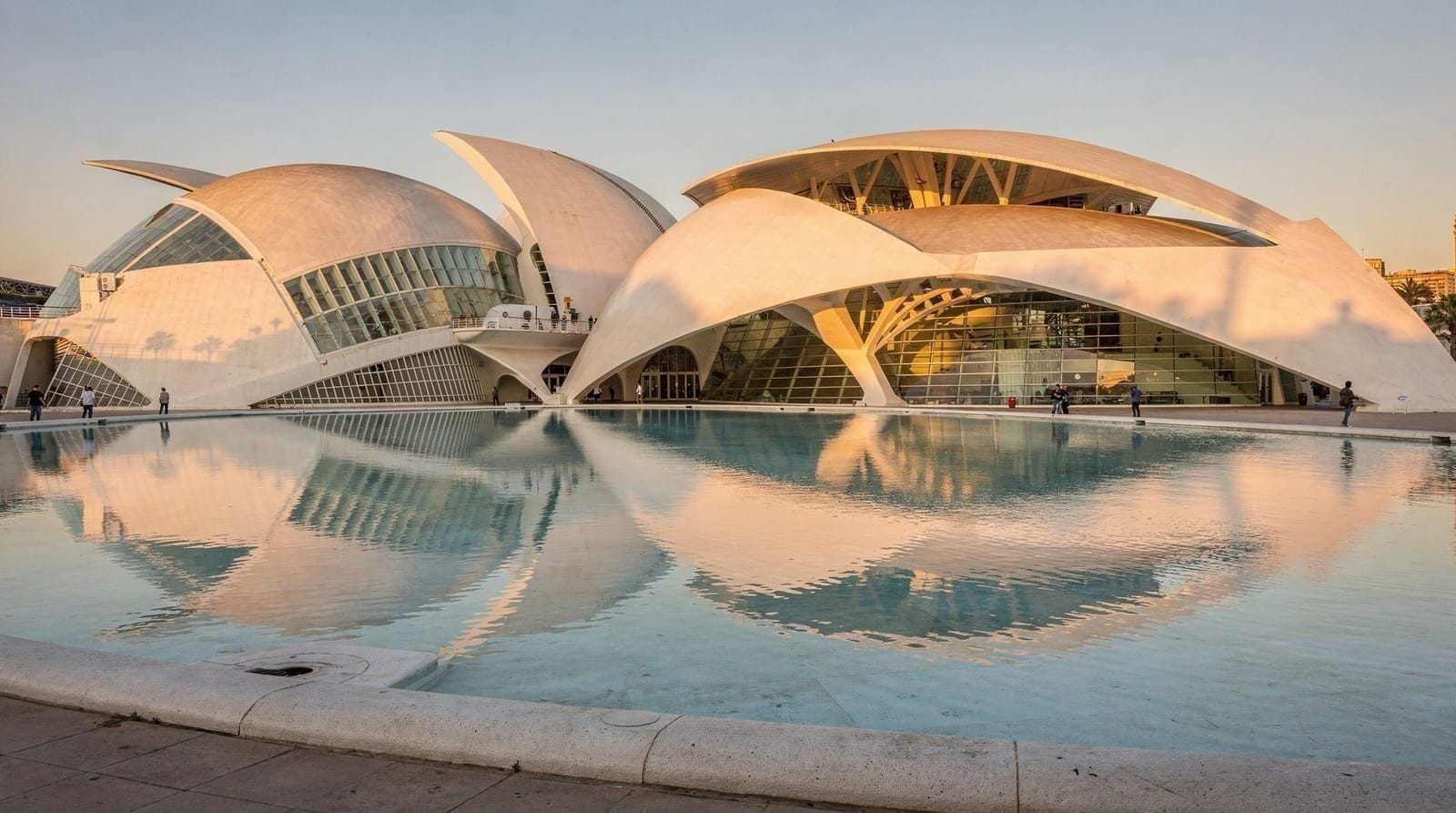
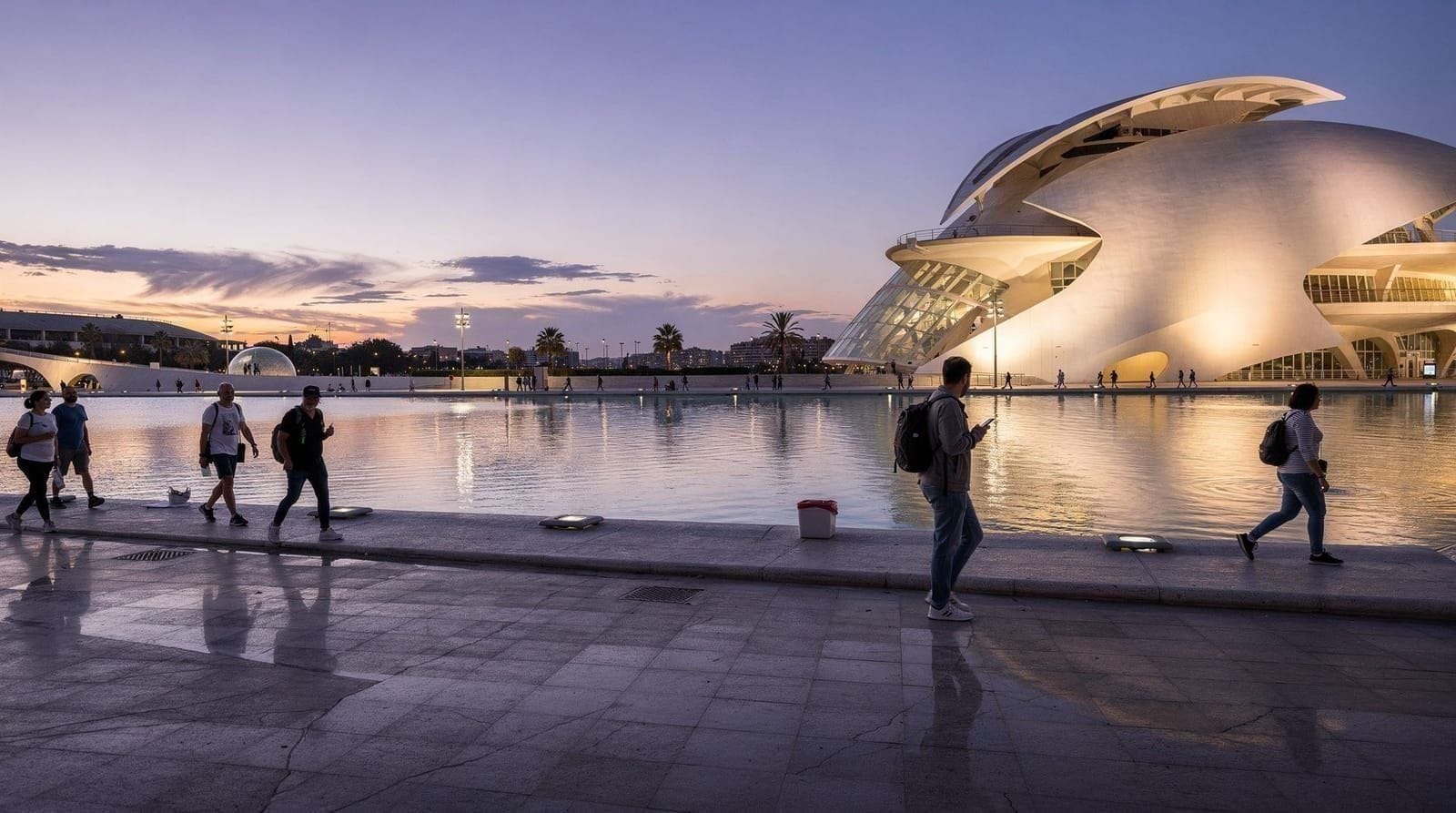
El Palau de les Arts Reina Sofía (2005): The opera house — a titanium-clad shell that resembles a giant helmeted figure. Home to the Palau de les Arts company, which presents opera, dance, and classical music. Tickets for performances are separate and unrelated to the attraction tickets.
L’Ágora (2009): A flexible event space used for concerts, sports events, and exhibitions. Not regularly open to visitors unless there is a specific event.
Honest assessment of each building
L’Oceanogràfic — priority 1
There is no debate: the aquarium is the best attraction in the complex for most visitor types. The scale, the quality of the exhibits, and the experience of walking through the underwater tunnel are genuinely impressive. Budget 3.5–4 hours minimum.
The honest caveats: dolphin shows were suspended in 2021 and remain off as of 2026. The food inside is expensive and mediocre. The queue without a pre-booked ticket on a summer weekend can reach an hour.
 Oceanogràfic ticket with immersive experienceCheck availability
Museu de les Ciències — priority 2
The Science Museum is better than its middling reputation suggests, particularly the upper floors with working models of scientific phenomena — pendulums, optical illusions, engineering demonstrations. The ground floor café is large and reasonably priced. It rarely feels as crowded as the aquarium.
The lower floors are clearly aimed at younger visitors (7–12) and can feel thin for adults. The exhibits have not been substantially updated since 2015.
L’Hemisfèric — priority 3
Films change regularly — IMAX documentaries about nature, space, and science. The projection quality is excellent. The session lasts about 40 minutes. It is not essential for most visitors, but good for a rainy day or as an add-on if you have already bought a combo ticket.
Programming in English is inconsistent — check the website for show times and language options before planning around it.
The Umbracle — free, don’t skip
The elevated walkway that runs along the north edge of the complex is almost always overlooked by visitors rushing to paid attractions. It is entirely free, offers the best aerial views of the reflecting pools and the Hemisfèric, and has a genuinely pleasant atmosphere in the early morning and evening. At night — particularly from 21:00 onward in summer — it becomes the starting point for the Umbracle bar terrace, which is popular with locals.
Palau de les Arts
Unless you have booked a performance, the opera house is viewable only from outside. That exterior is magnificent — one of the most arresting pieces of architecture in Spain. If you are interested in attending a performance, book several weeks in advance via the Palau website; prices range from €10 for a standing-area concert to €150+ for main-stage opera.
The three buildings compared
| Oceanogràfic | Science Museum | Hemisfèric | |
|---|---|---|---|
| Time needed | 3.5–4 hours | 2–3 hours | ~40 min session |
| Best for | Everyone, especially families | Teens and adults, hands-on exhibits | A rainy-day add-on |
| Crowds | Busiest, book ahead | Rarely as crowded | Depends on screening time |
| Priority | 1 | 2 | 3 |
If forced to choose only one, Oceanogràfic is the clear priority for nearly every visitor type — it’s the largest, most impressive, and most time-consuming, so building the rest of the day around it makes logistical sense too.
Ticket options and pricing (2026)
| Option | Adult | Notes |
|---|---|---|
| Oceanogràfic only | €41.80 | Best online; door price ~€1 higher |
| Hemisfèric only | €8.90 | Film programme varies |
| Science Museum only | ~€9 | |
| Oceanogràfic + Hemisfèric | ~€42–44 | Save ~15% vs. separate |
| Oceanogràfic + Science Museum | ~€42–44 | |
| Hemisfèric + Science Museum | ~€14.10 | |
| Triple combo (all three) | ~€48–50 | Best value if visiting all three |
| Full-day combined pass | ~€48–50 | Includes shuttle within complex |
 City of Arts full-day combined ticketsCheck availability
 walking tour of the City of Arts and SciencesCheck availability
The Valencia Tourist Card does not include City of Arts entries — it provides a 10–15% discount on individual tickets only. Compare the card cost versus the direct combo prices for your itinerary.
How to plan one day vs. two days
One day (tightly paced): Arrive at L’Oceanogràfic at 10:00 when it opens. Spend 3.5 hours there. Cross the pedestrian bridge to the Science Museum (15-minute walk or 5-minute shuttle) and spend 2 hours. Walk to the Hemisfèric for a 17:30 or 19:00 screening if available. The Umbracle on the way out.
This itinerary works for adults and teenagers. For families with young children, the science museum will likely be an afternoon activity too far.
Two days: Day 1 = Oceanogràfic in the morning, lunch at a restaurant near the complex, Science Museum in the afternoon. Day 2 = Hemisfèric morning session, Umbracle walk, cycle back to the Turia Gardens and into the El Carmen neighbourhood.
Children under 7: One attraction per day. The aquarium alone fills a morning and afternoon. Add Gulliver Park, which is free and sits 1.5 km north of the complex in the Turia riverbed, as a second-day option.
Getting there
Bus: Line 13 from Plaza del Ayuntamiento (stop: Marítima-Serrería or Museo de las Ciencias). Journey time about 20 minutes.
Metro + bus: Alameda station (lines 3/5) + bus 95 to the complex entrance. Total time about 25 minutes from the city centre.
Bike via Turia Gardens: The most pleasant option. The cycle route through Turia Gardens runs almost entirely car-free. From Plaza de España to the Oceanogràfic entrance is about 4 km (roughly 20 minutes on a rental bike). Valenbisi bike rental stations are scattered along the route.
Car: Underground parking at the Ágora car park. Budget €7–24 for a full day. Not recommended in July–August.
Hop-on hop-off bus: Both city tourist bus routes stop at the complex. Useful if you have a multi-day pass.
 the City of Arts and Sciences guided tourCheck availability
What makes a guided tour worth it
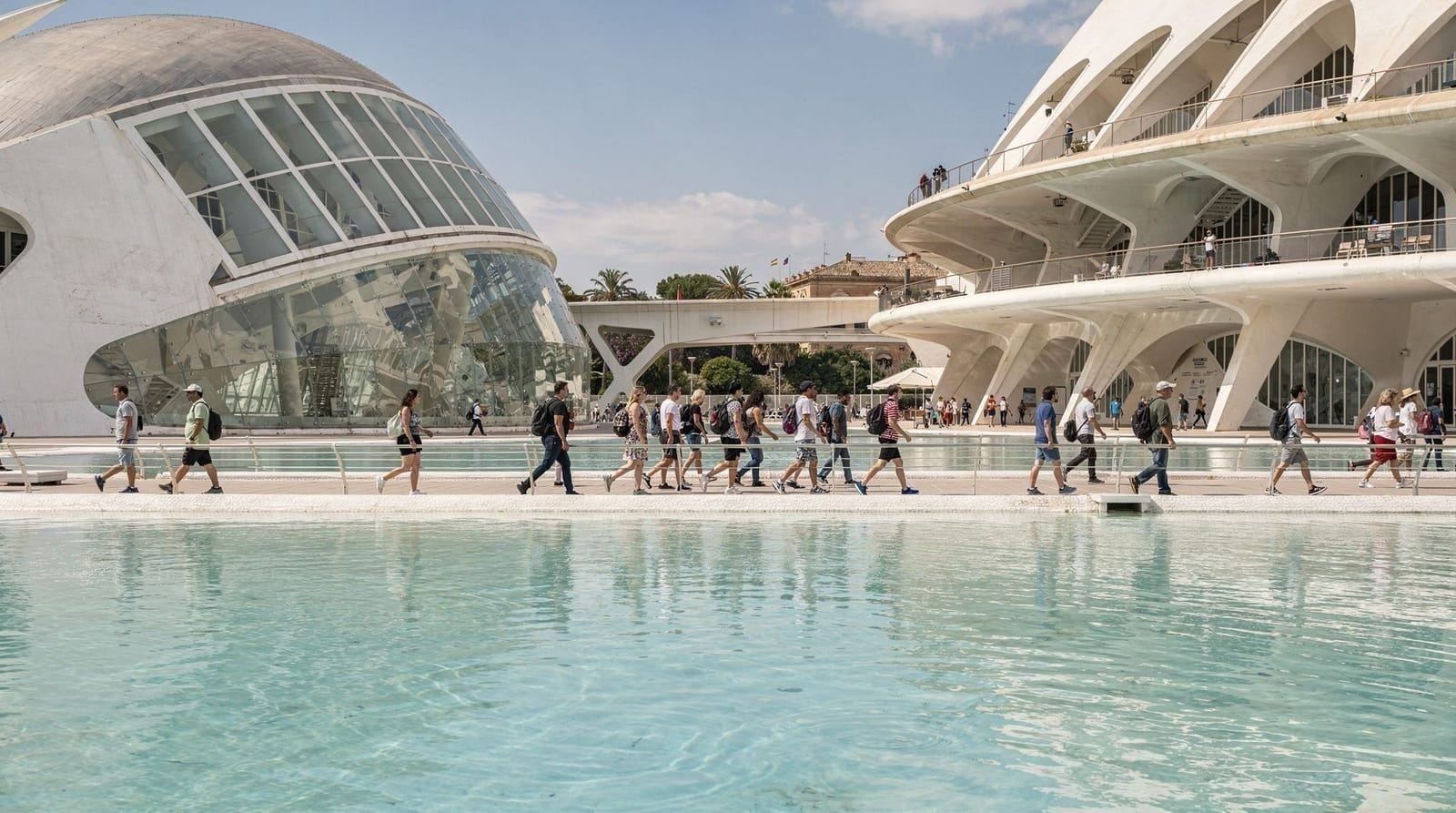
For most visitors, the individual attractions have sufficient audio guides and signage in English. A guided tour of the full complex adds value when:
- You want a concise 2-hour overview rather than a deep dive
- You have children who respond well to a narrator
- You want historical and architectural context for the buildings that the ticket desk audio guide skips
The guided tours that include Oceanogràfic entry also include priority access, which saves queuing time in summer.
Common mistakes visitors make
Assuming one attraction = the whole complex. The City of Arts and Sciences is not a single museum. Visitors who arrive expecting to see “it all” in two hours and spend 45 minutes queuing for a ticket leave frustrated.
Buying tickets at the door. In peak season, the combined online price is lower than the door price, and you avoid 45–60 minute queues. Book the day before at minimum.
Missing the free areas. The Umbracle, the reflecting pools promenade, and the Ágora footbridge are all free and well worth an hour of your time even if you have no budget for tickets.
Ignoring the Palau de les Arts. You cannot go inside without a performance ticket, but walking around it at dusk when the titanium panels catch the last light is one of Valencia’s genuine architectural experiences. It is a 10-minute walk from the Oceanogràfic exit.
Photographic visits
The complex is one of Spain’s most visited photography destinations. Best light conditions: early morning (08:30–10:00) when the reflecting pools are still and the low sun lights the Hemisfèric’s curved belly; and golden hour before sunset, when the titanium panels of the Palau de les Arts shift from grey-white to warm amber. The Umbracle walkway at night, lit from below, produces striking images.
For a pure photography trip of the complex, arrive at 08:30, spend two hours before the crowds arrive, and leave before 11:00. Combine with a walk back through the Turia Gardens.
The bigger context
The Ciudad de las Artes y las Ciencias sits in the drained riverbed of the old Turia, which flooded catastrophically in 1957 and was subsequently diverted south of the city. The decision to turn the dry riverbed into a park and cultural corridor — rather than a motorway, as was initially proposed — is widely considered one of the best urban planning decisions in modern Spanish history. The 9 km Turia Gardens connecting the complex to the city centre is the direct result.
The complex cost around €1.3 billion to build, financed by the Valencia regional government. It remains controversial in Valencia due to budget overruns and ongoing maintenance costs, but for visitors, it delivers a density of architectural and cultural experiences that few urban complexes anywhere in Europe can match.
For the neighbourhood surrounding the complex and accommodation recommendations, see the Ciudad de las Artes y las Ciencias neighbourhood guide.
Combining with a beach day
The complex’s location — south-east of the old city, close to the coast — makes it a natural pairing with a beach visit. Malvarrosa beach and the Cabanyal neighbourhood are a short bus or bike ride away, and several visitors split a day between the architecture-and-museums complex in the morning and the beach in the afternoon once the museum crowds peak. This works best in the shoulder months (May, June, September) when neither the complex nor the beach is at its most crowded.
Frequently asked questions about Ciudad de las Artes y las Ciencias
What is included in the City of Arts and Sciences full-day ticket?
The full-day combined ticket covers Oceanogràfic, Hemisfèric, and Príncipe Felipe Science Museum. The Palau de les Arts (opera house), Umbracle, and Ágora are visited separately — the Umbracle and Ágora gardens are free to enter.Do I need to book in advance?
Yes for July–August and holiday weekends. The ticket offices have 45–60 minute queues at peak times. Online booking is the same price or cheaper, and you skip the line.How long does it take to see everything?
Oceanogràfic alone takes 3.5–4 hours. The Science Museum takes 2–3 hours. The Hemisfèric film runs about 40 minutes. Realistically, you need 1.5 to 2 full days to cover everything at a relaxed pace.Is the City of Arts and Sciences good for kids?
Excellent. Oceanogràfic and the interactive Science Museum are top-tier for families. The Hemisfèric works for children over 6. The Umbracle garden walkway is buggy-friendly and free.Can I visit just for the architecture without paying?
Yes. The exterior spaces — the Umbracle walkway, the reflecting pools, the Ágora footbridge — are entirely free to access. Many photographers come purely for the architecture without entering any building.What is the best way to get to the City of Arts and Sciences?
Bus 13 from Plaza del Ayuntamiento takes 20 minutes. From Alameda metro (lines 3 and 5), take bus 95 or walk 2.5 km along the Turia Garden path. Cycling from the centre via the Turia riverbed cycle lane takes about 20 minutes.Should I visit Oceanogràfic or the Science Museum first if I only have one day?
Start with Oceanogràfic — it opens earliest, takes the longest at 3.5-4 hours, and gets busiest as the day goes on. Doing it first means you beat the peak crowds and still have the afternoon for the Science Museum, which handles later visitors more comfortably.Is the City of Arts and Sciences worth it if I don't like aquariums or science museums?
Yes, on architecture alone. The free exterior spaces — the Umbracle walkway, the reflecting pools, the Ágora footbridge, and the Palau de les Arts exterior — deliver a genuinely impressive experience without paying for any single attraction. Many visitors who skip all three paid buildings still consider the complex a highlight of their trip.
Top experiences
Bookable activities with verified prices and instant confirmation on GetYourGuide.