City of Arts and Sciences area guide: staying near Valencia's landmark
Valencia: City of Arts full-day combined tickets
Is it worth staying near the City of Arts and Sciences in Valencia?
It depends on your trip. If Oceanogràfic, the Hemisfèric, and the Science Museum are your main focus — especially with children — staying nearby saves significant commute time. If you want neighborhood atmosphere, restaurants, or easy access to the old city on foot, you'll be better served in Ruzafa or El Carmen, which are 30-40 minutes away.
The area surrounding the Ciudad de las Artes y las Ciencias is not a neighborhood in the traditional sense — it has no covered market, no historic street culture, no cluster of corner bars where locals read the newspaper. What it has is proximity to the most spectacular architecture in Valencia and some of the city’s best family attractions. Whether this is what you need depends on what kind of trip you’re planning.
| Where | South-east of the old city, along the Turia riverbed |
| Cost | Hotels around €80–180/night |
| Time needed | 1 full day at the complex if based here |
| Getting there | Alameda metro (lines 3/5), bus 19/35 |
| Best for | Families spending 1–2 days focused on the complex |
The Ciudad de las Artes y las Ciencias: what’s actually here
The complex was designed by Santiago Calatrava and Félix Candela and opened in stages between 1998 and 2005. It occupies the last section of the redirected Turia riverbed (tramos 14-18 of the Turia Gardens park), stretching roughly 2 km from the Àgora events building to the Oceanogràfic aquarium.
The component parts:
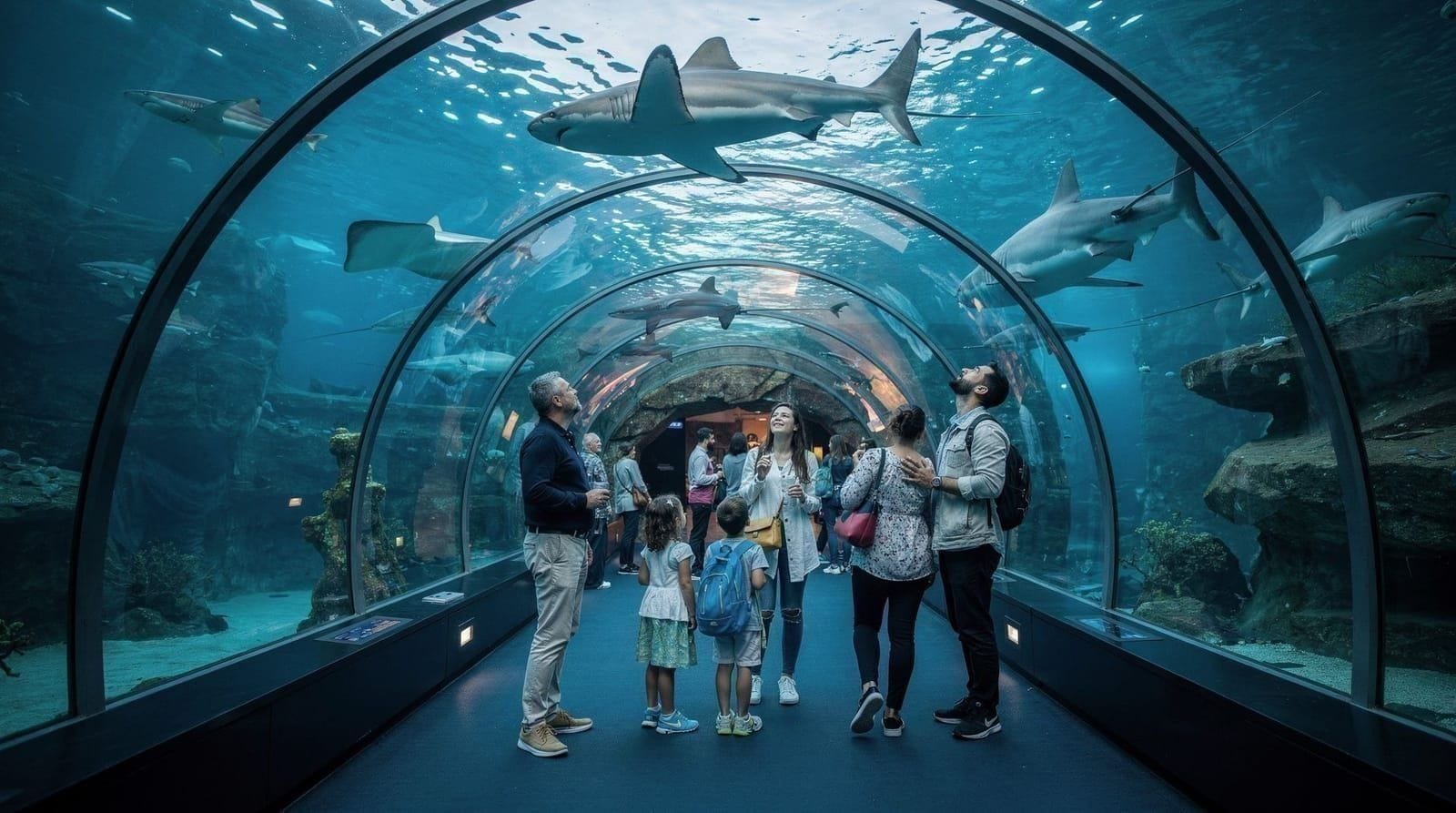
L’Oceanogràfic — Europe’s largest aquarium, with 500 species and 42,000 animals across separate habitats (Mediterranean, Antarctic, Wetlands, Tropical Ocean, Red Sea, Dolphins, Beluga whales). Genuinely impressive for both adults and children. Entry: €41.80 adults, €31 children 4-12. Allow 3-4 hours minimum. Book online to skip ticket queues.
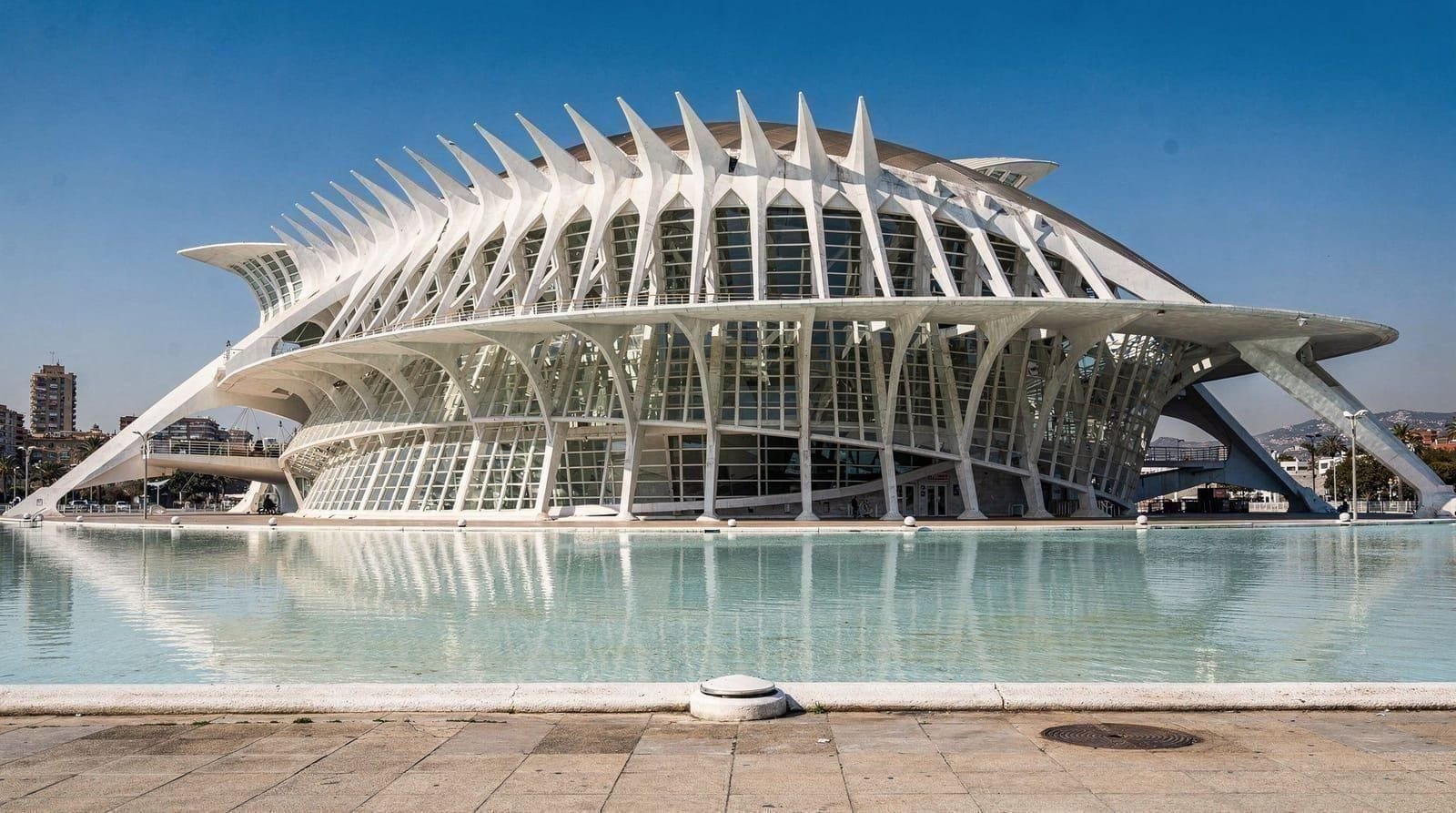
El Museu de les Ciències Príncep Felip (Science Museum) — interactive science museum in the spectacular “whale skeleton” building. Well-suited to ages 8-14. Entry: €9 adults, €6.90 children.
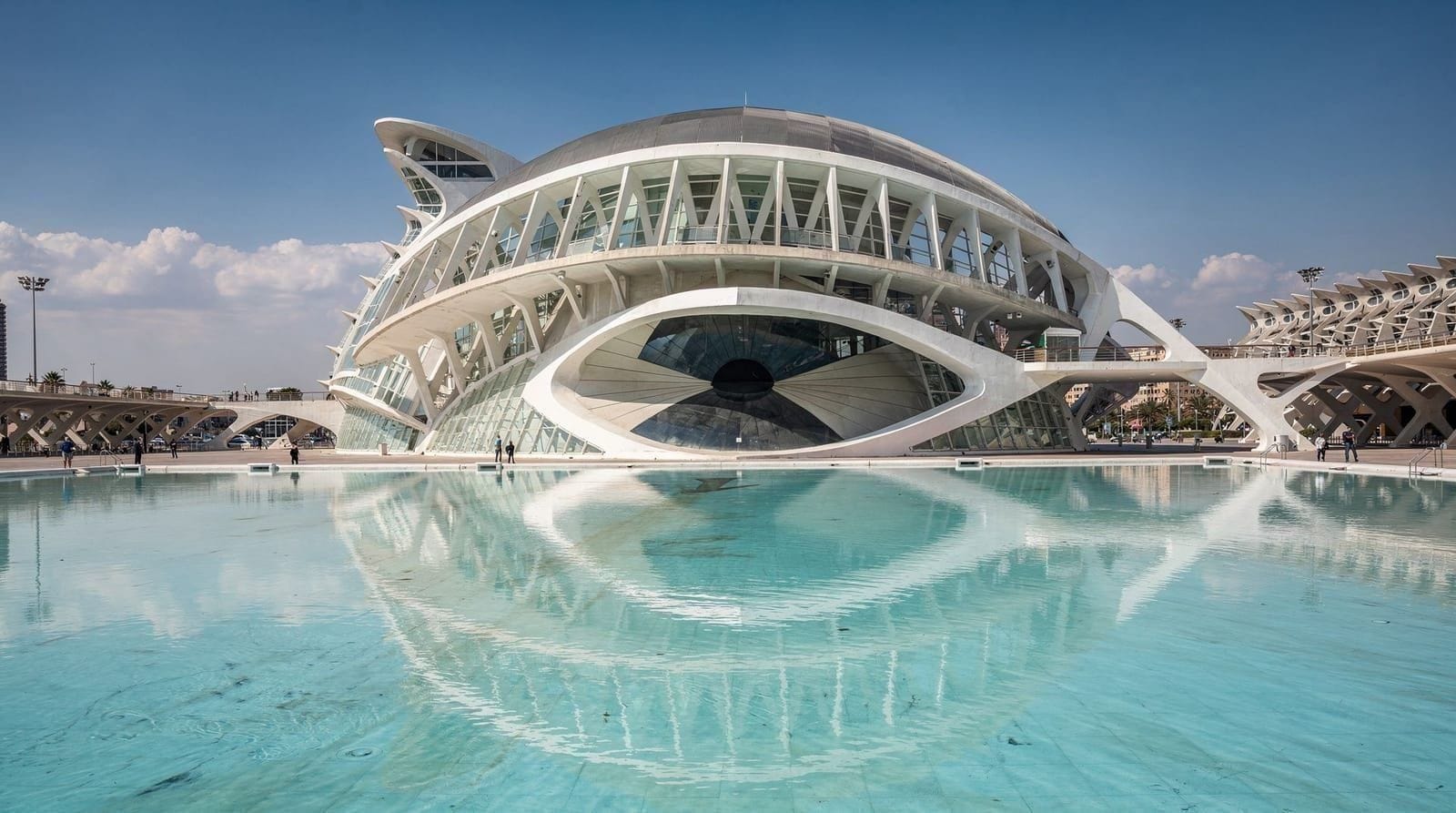
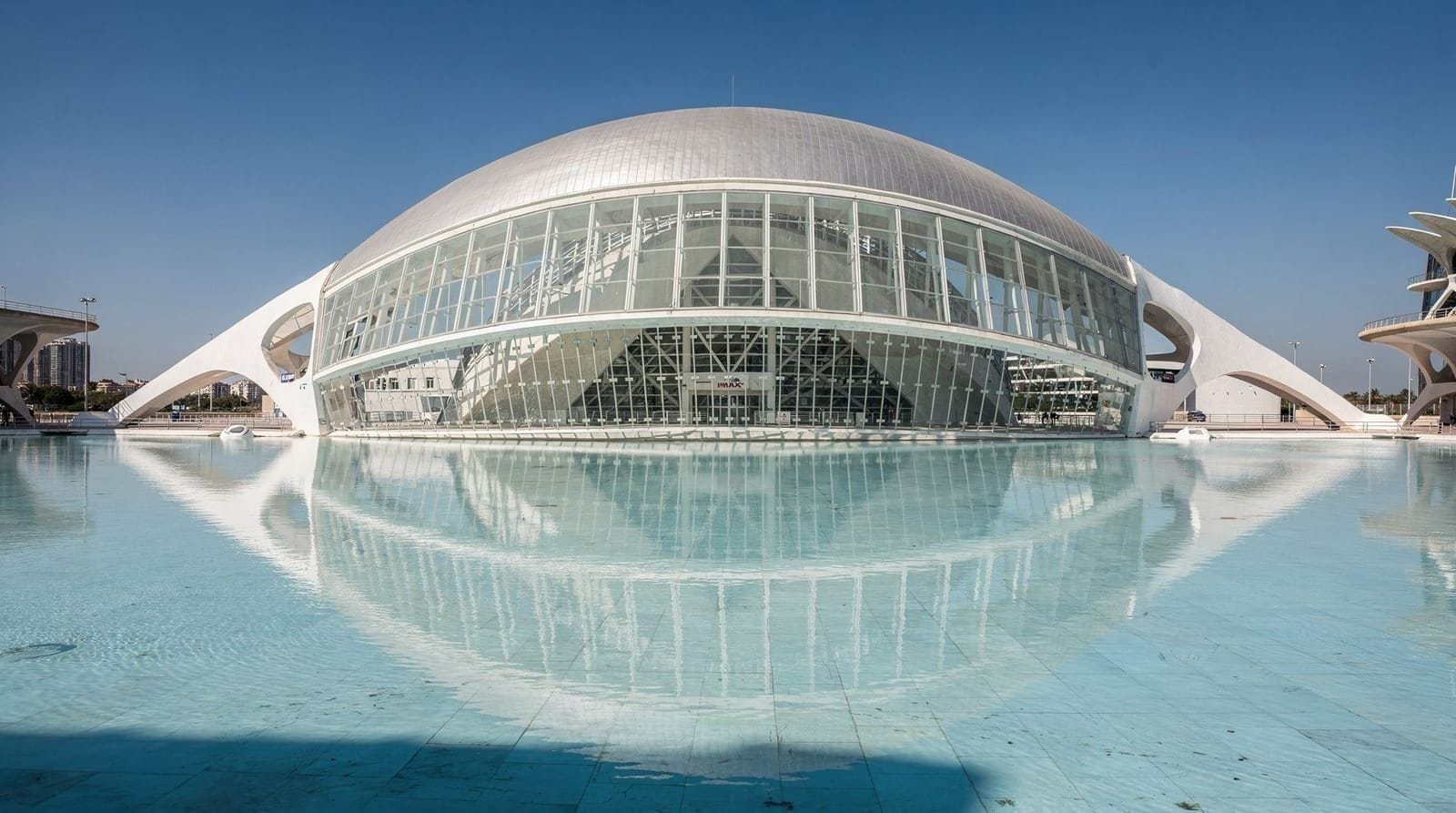
L’Hemisfèric — IMAX cinema and planetarium inside the eye-shaped building on the water. Shows change; check the program on arrival. Entry: €8.90/film.
L’Umbracle — a palm-lined elevated walkway (free access) with a sculpture path and views down the length of the complex. Best in the evening.
L’Àgora — covered events venue at the north end, used for concerts, events, and exhibitions. Not a visitor attraction without a specific event.
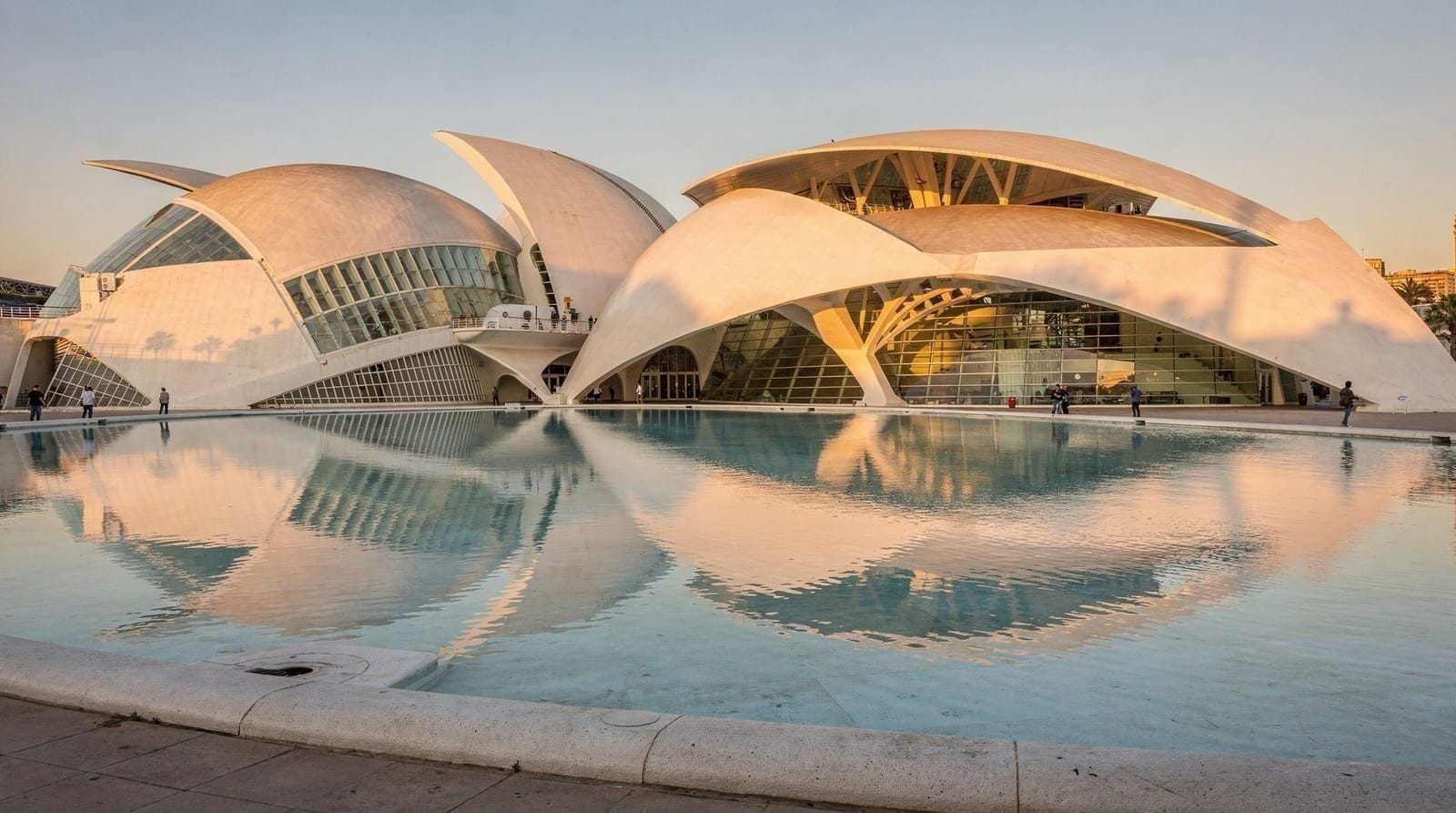
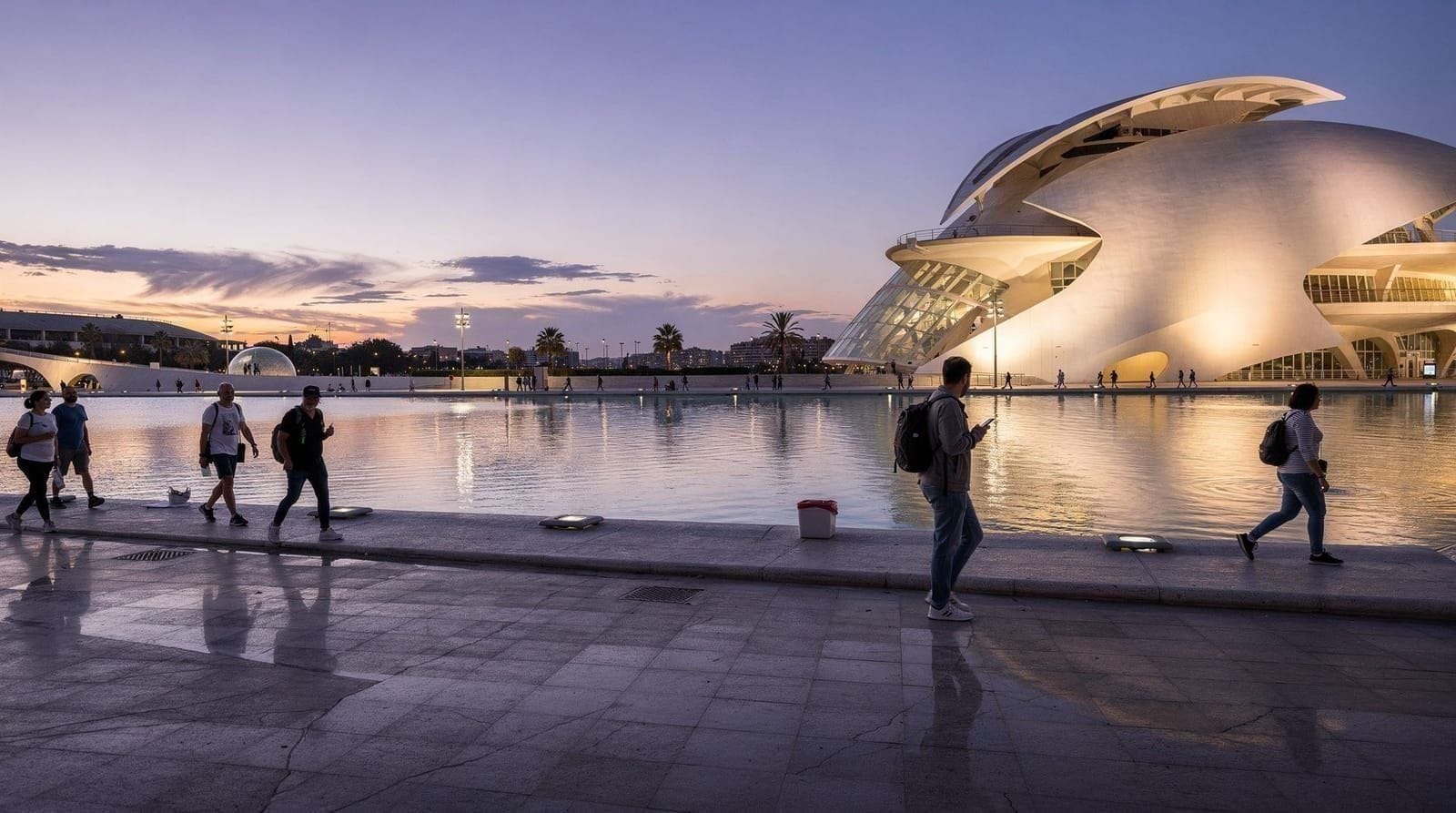
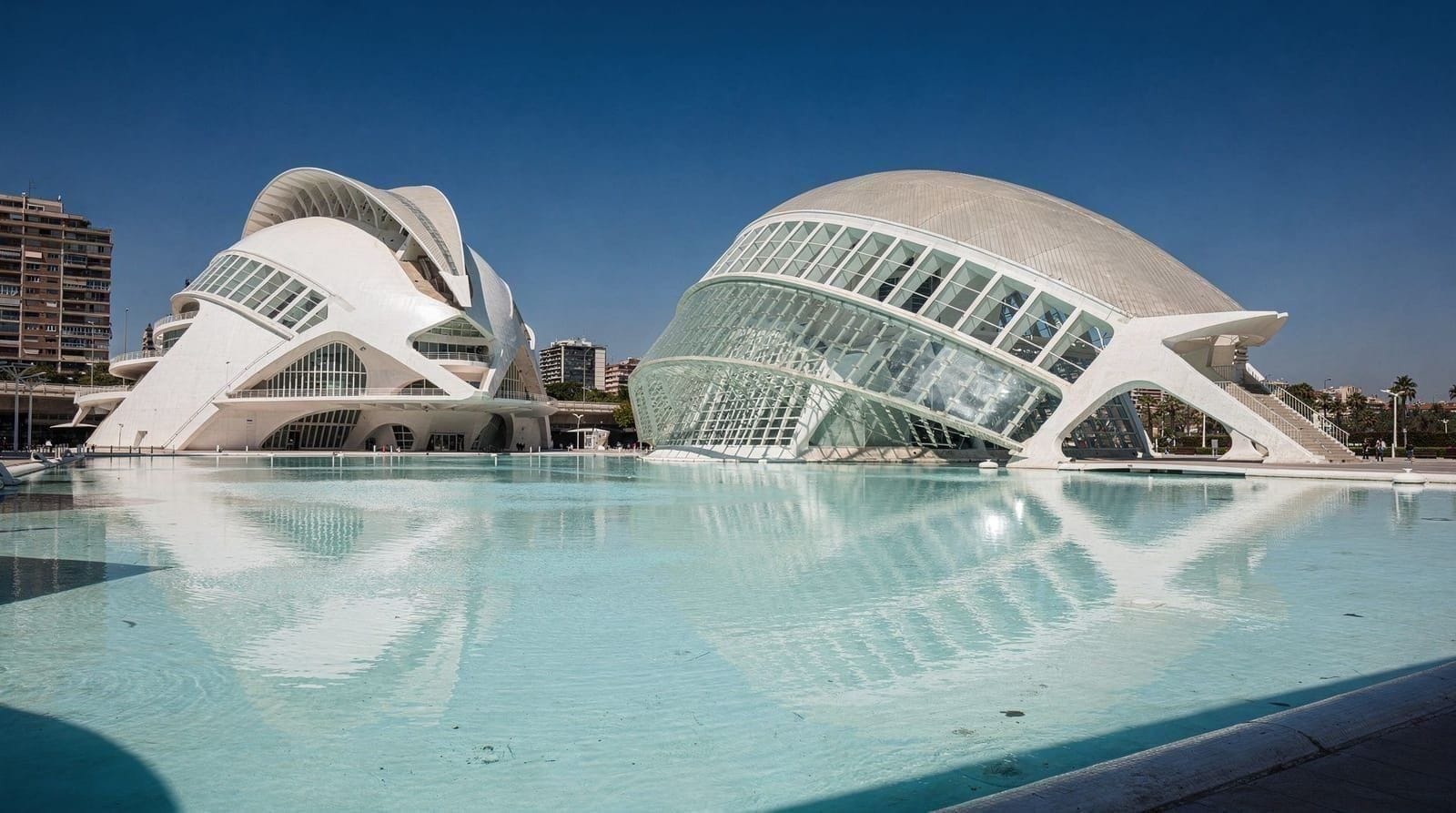
The complex’s signature view — the entire line of white buildings reflected in the shallow pools at golden hour — is one of the most reproduced images of modern Spain. The photography is exceptional at 07:30 (before the crowds) or at sunset. The photography tours guide describes the best shooting positions.
 City of Arts full-day combined ticketsCheck availability
 top Instagrammable photo tour at City of Arts and SciencesCheck availability
The surrounding area: practical reality
The streets immediately surrounding the complex (Av. del Professor López Piñero, Av. de Tarongers, Calle de Menorca) are modern development — apartment blocks, hotels, and chain restaurants serving the tourist traffic. The strip of restaurants on Av. de Tarongers has some acceptable options (a reliable pizza, a hotel buffet) but nothing comparable to Ruzafa’s food scene, 25 minutes away by bus or bike.
One practical advantage of the area: it’s flat, well-lit, and on a regular grid, which makes it easy to navigate with luggage or a pushchair. The Turia Gardens park entry is immediately adjacent to the complex and the flat cycle path leads west all the way to the old city.
The nearest metro station is Alameda (lines 3 and 5), which is actually closer to the northern end of the complex — about 10 minutes on foot to the Hemisfèric, 25 minutes to the Oceanogràfic. Bus lines 19 and 35 serve the complex directly.
This area vs. Ruzafa vs. El Carmen: where to actually base yourself
| Near City of Arts | Ruzafa | El Carmen | |
|---|---|---|---|
| Best for | Families focused on 1-2 attraction days | Food, nightlife, longer stays | First-time visitors, walkability to monuments |
| Distance to old city | 25-40 min bus/bike | 15-20 min walk | On foot, in the old city |
| Evening atmosphere | Quiet, hotel-district | Vibrant, restaurant-dense | Lively, historic streets |
| Typical price | €80-180/night | Similar range, more variety | Similar range, tighter supply |
The honest read: base near the complex only if the complex genuinely is your trip’s centre of gravity — otherwise the commute cost outweighs the convenience, and Ruzafa or El Carmen give a far better evening experience for the same money. See the where to stay in Valencia guide for the full neighbourhood-by-neighbourhood breakdown.
A useful middle-ground option that some visitors overlook: staying in Ruzafa or El Carmen and simply budgeting the extra 20-25 minutes each way to the complex on the specific day you visit. This gets the best of both — genuine neighbourhood evenings and a manageable commute for a single focused day — without paying the opportunity cost of a hotel-district stay for the whole trip.
Hotels near the City of Arts and Sciences
Meliá Valencia (Paseo de la Alameda): Large 4-star hotel with pool, 15 minutes walk from the Hemisfèric, 10 minutes from the Turia Gardens access. Conference-center feel. €120-180/night. Best for families and business travelers.
Hotel SH Valencia Palace (Paseo de la Alameda): Well-regarded 4-star, good pool and spa, close to the Turia Gardens. €110-170/night.
Hotel Vincci Lys (Calle del Mártires): Technically this is closer to Eixample than to the City of Arts, but it offers a better value base from which both the old city and the complex are easily reachable by metro or bike. €85-130/night.
Apartment hotels: The Sercotel Sorolla Palace (near the train station) and several Aparthotel options on Av. de Tarongers offer self-catering options in the €80-120/night range that work well for families staying 3+ days.
For a full comparison of neighborhood accommodation, see the where to stay in Valencia guide.
Getting from the area to other parts of Valencia
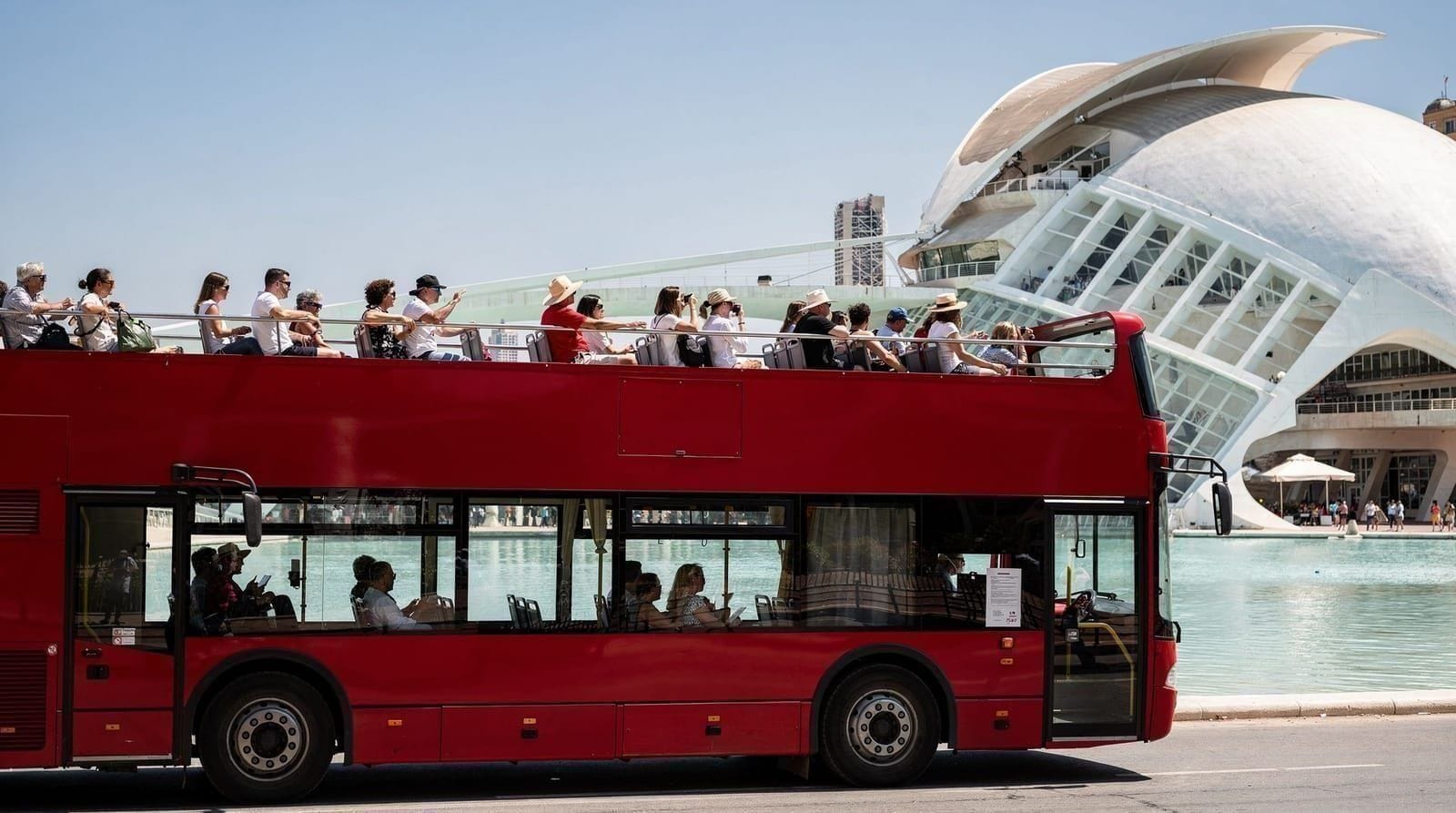
To the old city (El Carmen/Cathedral): Bus 19 or 35 from the Oceanogràfic stop to Alameda (10 minutes). Or cycle the Turia Gardens path (25 minutes, flat, spectacular). The hop-on hop-off bus also serves this route and is convenient for families with young children.
To Ruzafa: Bus 35 or 19 to the Xàtiva stop (15 minutes), then on foot.
To La Malvarrosa beach: Bus 19 toward the port direction, or cycle northeast through the Cabanyal neighborhood (30 minutes by bike, flat).
To the airport: Metro line 5 from Alameda to the airport in approximately 20 minutes.
the City of Arts and Sciences guided tourCheck availability
Is this area right for your trip?
Use this checklist:
Stay near the City of Arts if:
- You’re traveling with children who will spend full days at Oceanogràfic and the Science Museum
- You have limited mobility and want flat, accessible routes between your hotel and the main attraction
- You’re staying for only 1-2 days focused on the complex itself
- You value quiet evenings over a vibrant nightlife scene
Stay elsewhere (Ruzafa, El Carmen, Eixample) if:
- Your visit is 3+ days covering multiple areas of Valencia
- You want to eat well in evenings without commuting
- You prefer neighborhood character to hotel-district convenience
- You’re coming primarily for the historic city center
The best area for first-time visitors guide has a more detailed decision framework with day-by-day scenarios.
Day-planning from the area
Efficient family day at the complex: Oceanogràfic opens at 10:00. Arrive at 09:45 (online tickets purchased in advance). Spend 3.5 hours. Eat at the Restaurante Submarino inside the Oceanogràfic (worth it for the experience — tables inside the shark tank, €30-40/person for lunch) or bring a picnic to the L’Umbracle terrace. Spend the afternoon at the Science Museum (closes at 19:00). Evening: walk along the illuminated pools at sunset, then take bus 19 to Ruzafa for dinner.
Photography day: Arrive at the complex at 07:15 before the crowds. Shoot the reflections, the Hemisfèric eye, and the L’Umbracle walkway. By 09:30 the light is harder and the crowds have arrived. Take the cycle path west through the Turia Gardens to the old city (30 minutes) for a morning coffee and the Mercado Central.
Family planning at the complex — realistic logistics
For families, the City of Arts and Sciences requires serious planning to get the most value. Several practical points:
Oceanogràfic booking strategy: Book tickets online 2-3 days ahead in high season (June-September) and during school holidays. The ticket office queue in July can exceed 1 hour. Online booking includes a time-slot entry, which means you can enter directly via a dedicated entrance at your booked time. The price is identical to on-site purchase.
Age-appropriate experiences:
- Under 3: Oceanogràfic is manageable (pushchair-friendly on the wider paths) but the Science Museum and Hemisfèric films are not well-suited for toddlers.
- 3-7: Oceanogràfic is ideal — the tunnel through the shark tank, the seal exhibit, and the jellyfish display hold attention well. The Science Museum has some interactive elements that work for this age.
- 8-14: Both Oceanogràfic and the Science Museum. The Hemisfèric IMAX film on the program depends on the age-appropriateness of the content — check before booking.
- 15+: The full complex.
One day versus two: The Oceanogràfic alone is 3-4 hours for a family. The Science Museum is another 2-3 hours. Attempting both in one day with children under 10 results in exhausted children. Consider splitting over two days if you’re staying 3+ nights.
Food and facilities: The Oceanogràfic has a good cafeteria and the Restaurante Submarino for special occasions. The Science Museum has a café. Picnicking is possible on the L’Umbracle walkway (no formal prohibition). The restaurants on nearby Av. de Tarongers serve adequate family lunches at €12-15 per adult (children’s menus €6-8).
Baby changing and accessibility: The Oceanogràfic and Science Museum both have baby changing facilities and are fully wheelchair and pushchair accessible. The L’Umbracle walkway is accessible; the Hemisfèric has lift access.
Transport to/from the airport
For visitors flying into Valencia Airport (VLC), the City of Arts area can function as a logical intermediate stop before heading to the city center accommodation. Metro line 5 from the airport to Alameda (the station closest to the City of Arts north end) takes approximately 20 minutes. This makes it possible to:
- Land at the airport
- Take the metro to Alameda
- Walk or cycle to the City of Arts complex for an afternoon visit
- Continue metro or bus to your accommodation in the evening
This is a convenient airport day-1 itinerary that avoids the need to store luggage — you can check into your hotel first (if arrivals allow) and then proceed, or drop bags at the airport’s left luggage facility.
For visitors flying out of Valencia, the reverse works too: if your accommodation is anywhere near the Alameda metro line, a final morning at the complex followed by a direct metro ride to the airport is a low-stress way to end a trip, since it avoids a last-minute cross-city dash through old-city traffic. Budget the same 20 minutes for the metro leg, plus standard airport arrival time on top.
Frequently asked questions about the City of Arts area
How long should I budget for the City of Arts and Sciences?
The Oceanogràfic alone requires at least 3 hours; 4 hours is better for families. The full complex (Oceanogràfic + Hemisfèric + Science Museum) is comfortably a full day. The exterior and L’Umbracle walkway can be seen in 45 minutes without entering any buildings.
Is the area good for cycling?
It’s excellent for cycling. The Turia Gardens cycle path ends at the Oceanogràfic, and the streets around the complex are wide and have good cycle infrastructure. Several bike rental companies operate in the area, and Valenbisi bike share has stations nearby. See the cycling in Valencia guide.
Are there supermarkets near the City of Arts?
Yes — a Mercadona supermarket on Calle de Menorca is the most convenient. For a better food shopping experience, the Ruzafa market or the Mercado Central are worth the 15-minute bus ride.
Can I walk from the City of Arts to the old city?
Yes. The route along the Turia Gardens is approximately 3.5 km and takes 40-45 minutes on foot. It’s flat, car-free, and passes through the park — pleasant enough that many visitors do it both ways in a day. By bike it’s 20-25 minutes.
What is the best view of the City of Arts and Sciences?
The reflection pools along the western length of the complex are best at sunrise and at the golden hour before sunset. The L’Umbracle elevated walkway gives a useful longitudinal view. For photographs, the north end (near the Hemisfèric) and the south end (near the Oceanogràfic) give different angles. The professional photography tours operate at dawn for maximum quality.
Can I combine a visit to the City of Arts with a beach day?
Yes, and it’s a popular combination. Malvarrosa beach and the Cabanyal neighbourhood are a 20-25 minute bus or bike ride northeast of the complex. Splitting a day between the museums in the morning and the beach in the afternoon avoids backtracking to the old city and works especially well for families.
The architecture in context
The City of Arts and Sciences is Santiago Calatrava’s most complete realization of his organic-structural aesthetic, and understanding his design principles makes the complex more legible.
Calatrava’s work consistently references natural forms: the Hemisfèric’s eye, the Palau de les Arts’ ribbed shell, the Science Museum’s whale skeleton. The structures are also extreme engineering exercises — massive spans, unprecedented cantilevers, and the deliberate use of white concrete as both structural material and visual surface. Calatrava designed both the architecture and the structural engineering of the buildings, an unusual combination.
The Hemisfèric (completed 1998): The first building constructed, and the one that established the project’s character. The outer shell is shaped like a human eye, with a movable “eyelid” that can close over the glass inner structure. Inside: an IMAX screen 900m² in area. The building is reflected in a shallow pool specifically designed for this effect.
L’Oceanogràfic (completed 2003): Not by Calatrava — this is the work of Félix Candela (structural engineer) and David Chipperfield’s design team. The buildings are concrete shells forming organic, canopy-like structures over the water habitats. The largest building contains a tunnel running through the Mediterranean tank.
El Museu de les Ciències Príncep Felip (completed 2000): The “whale skeleton” building — a massive vaulted structure with exposed diagonal structural members that read as ribs. The interior is a 40,000 m² science museum arranged across multiple levels connected by ramps rather than stairs, making it highly accessible.
Palau de les Arts Reina Sofía (completed 2005): The opera house and concert hall, built at the eastern end of the complex. The white titanium and white trencadís mosaic cladding on the helmet-like shell is the building’s most distinctive visual element. It’s Valencia’s main venue for opera, ballet, and orchestral music.
Ticket prices and planning (2026)
Up-to-date reference prices for planning your visit:
| Attraction | Adult | Child (4-12) | Notes |
|---|---|---|---|
| Oceanogràfic | €41.80 | €31 | Book online; queues long in peak season |
| Science Museum | €9 | €6.90 | Interactive, best for ages 8+ |
| Hemisfèric (1 film) | €8.90 | €6.90 | Film schedule varies; check on arrival |
| Full combo (all three) | €48–50 | €37–39 | Available online only |
The combo tickets offer meaningful savings if you’re visiting more than one attraction. The Valencia tourist card sometimes offers discounts, but the combo ticket from the official site is usually more flexible.
Book online for the Oceanogràfic especially — the ticketing queue in July and August can be 45+ minutes, and online booking lets you enter directly via a dedicated entrance.
Eating near the City of Arts: realistic options
The restaurant situation in the immediate complex vicinity is convenient but not remarkable. The better options:
Restaurante Submarino (inside the Oceanogràfic): Unique — the dining room is surrounded by the aquarium tanks, with sharks and rays visible through the glass walls. The food is reasonable mid-range Spanish cuisine at €30-40/person for lunch. Book ahead; this is genuinely sought-after for its novelty. Worth it once for the experience.
The complex terrace bars: The Hemisfèric and Umbracle areas have café-bars serving sandwiches, ice cream, and drinks at tourist prices (€4-6 coffee). Functional but not destinations.
Av. de Tarongers restaurants: A 5-minute walk from the complex, several restaurants serve reliable daily menus (€13-15) aimed at office workers and local families. Quality is adequate and prices are more honest than the complex itself.
For serious dinner, take the bus to Ruzafa (15 minutes) — the difference in food quality is substantial.
Extending the visit: beach and neighbourhood combinations
Because the complex sits close to the coast, several visitors extend a day here into a beach afternoon. Malvarrosa beach is a 20-25 minute bus or bike ride northeast, reachable through the Cabanyal neighbourhood, which is worth a stop in its own right for the ceramic-tiled facades and the fish market. This combination works especially well for families who want to balance a museum-heavy morning with unstructured beach time in the afternoon, and it avoids the need to return to the old city and back out again. See the Cabanyal beach guide for the practicalities of that stretch of coast.
Top experiences
Bookable activities with verified prices and instant confirmation on GetYourGuide.