El Carmen neighborhood guide: Valencia's medieval heart
Valencia: medieval guided walking tour
What is El Carmen neighborhood in Valencia?
El Carmen is the historic heart of Valencia's Ciutat Vella (old city), a compact neighborhood of medieval lanes, Gothic gates, and Baroque churches bounded by the Torres de Serranos to the north and Calle de Quart towers to the south. It contains the Mercado Central, the Cathedral, and the Lonja de la Seda — all within 10 minutes on foot of each other.
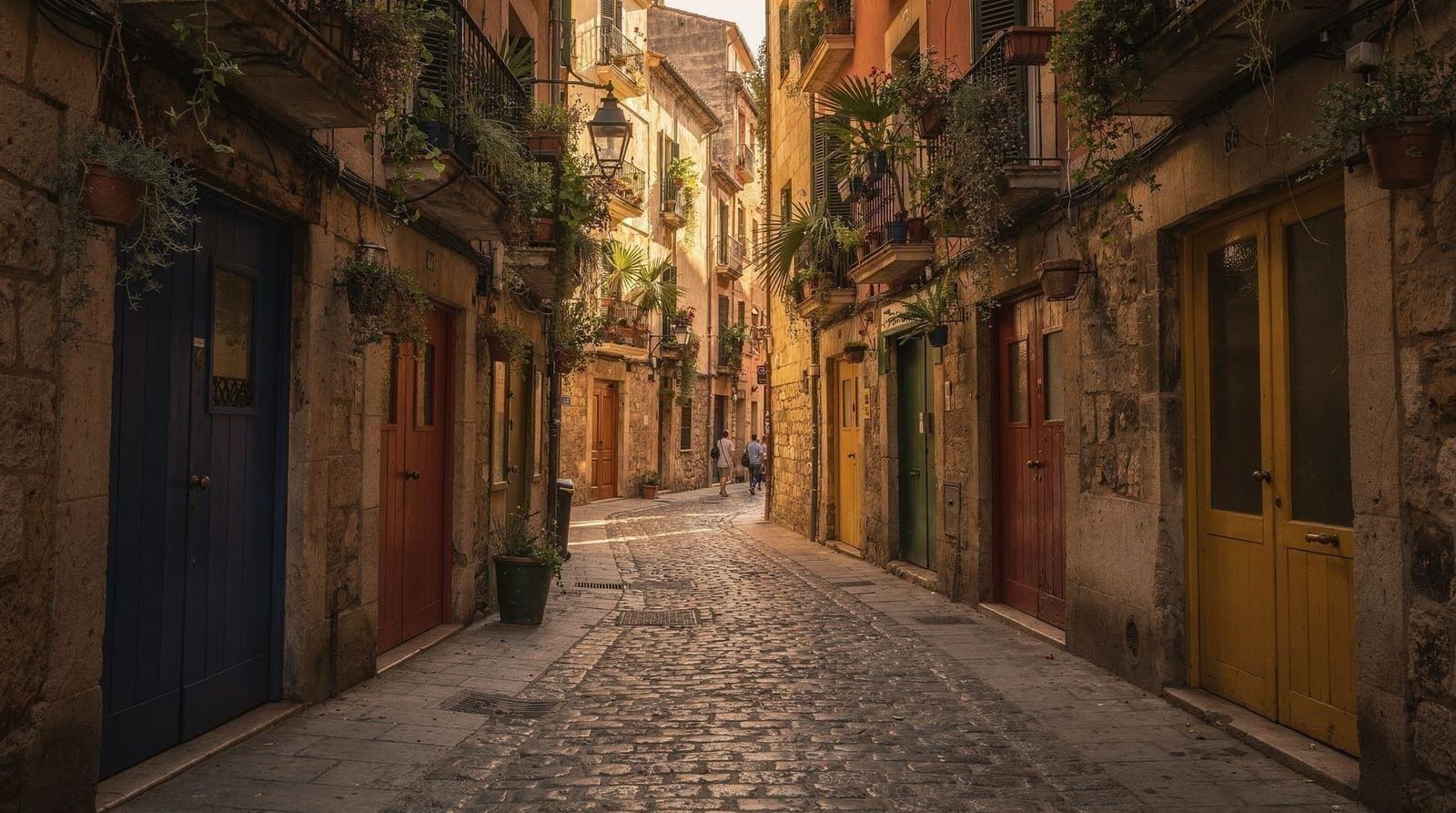
Few European city centers have survived with as much medieval street structure intact as El Carmen. The neighborhood occupies roughly one square kilometer inside Valencia’s old walls — a dense fabric of lanes, plazas, and covered passages that still follow the geometry of the 9th-century Moorish medina. Walk half a block in any direction from the Plaza de la Reina and you’re in narrow streets that predate the Spanish kingdom by centuries.
What makes El Carmen different from other Valencia neighborhoods
El Carmen is Valencia’s oldest continuously inhabited urban fabric, but it isn’t a museum district. It’s also genuinely inhabited — locals shop in the Mercado Central every morning, children go to school in buildings that were once convents, and residents water plants on balconies that overlook Roman-era streets. The coexistence of the very old and the very alive is El Carmen’s essential character.
The neighborhood’s boundaries are easy to identify: the Turia Gardens park forms the northern edge (where the medieval walls met the river); the Torres de Serranos (the main north gate, 1392) and the Torres de Quart (the west gate, 1444) are the two surviving monumental gateways. To the east, the neighborhood transitions into the Cathedral quarter and Xerea. To the south, it merges with the broader Ciutat Vella.
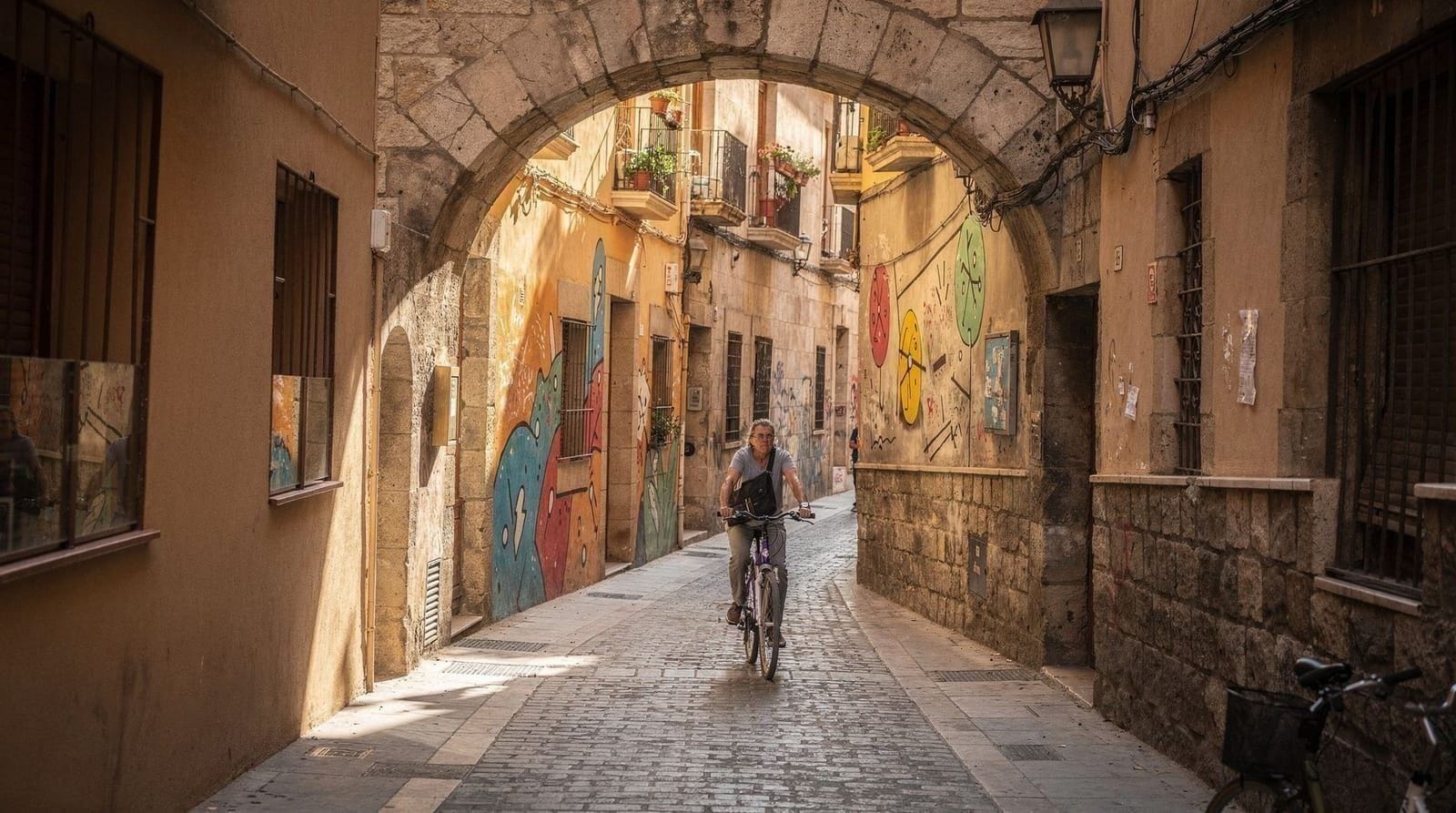
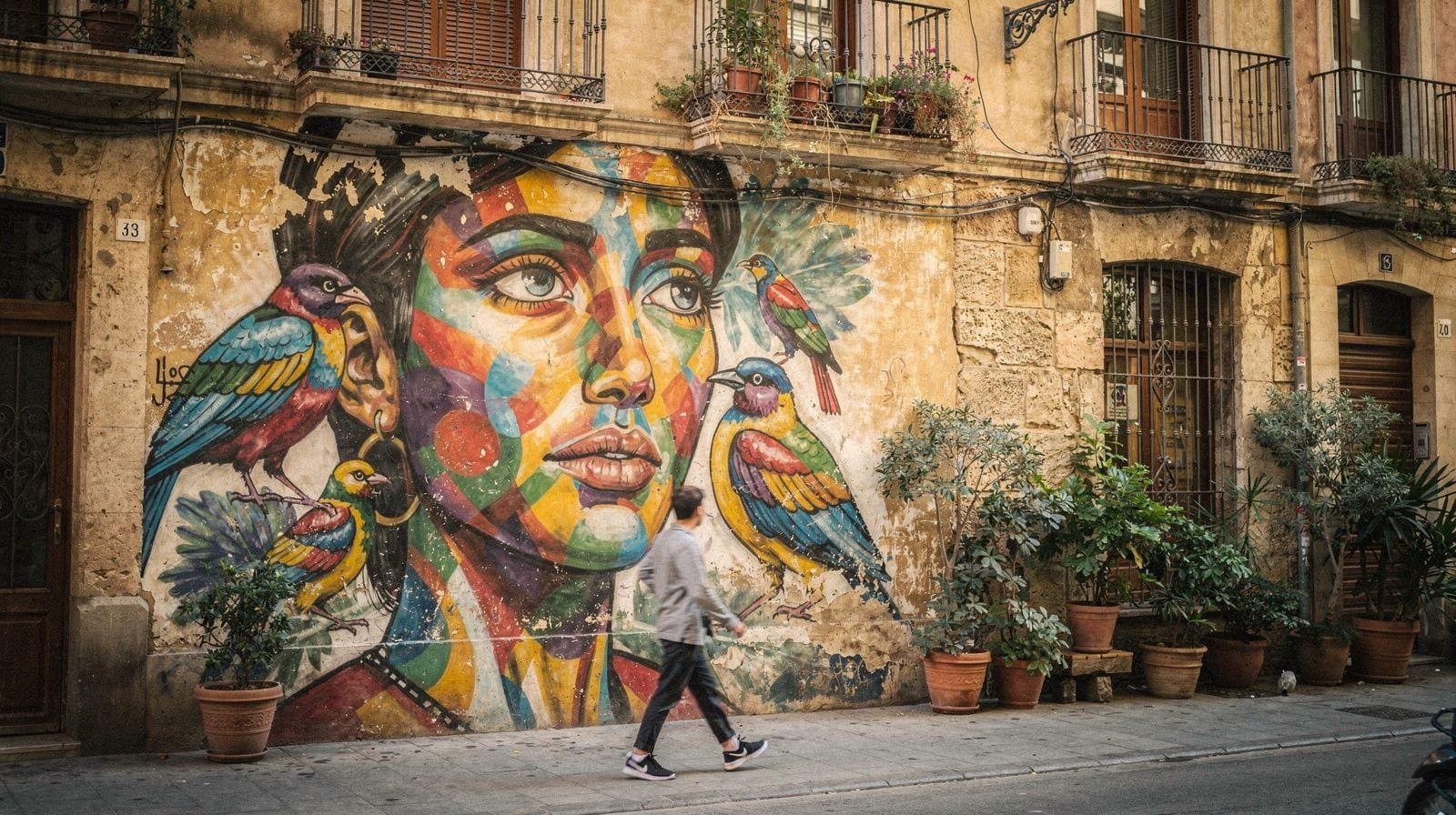
The street art scene is a defining element of contemporary El Carmen. The neighborhood has accumulated a dense collection of murals — some by internationally recognized artists — on the walls of its wider lanes. This wasn’t a top-down arts initiative; it grew organically from the late 1990s as the neighborhood began recovering from a period of significant decay. The street art guide covers the main pieces and where to find them.
Key monuments and sites
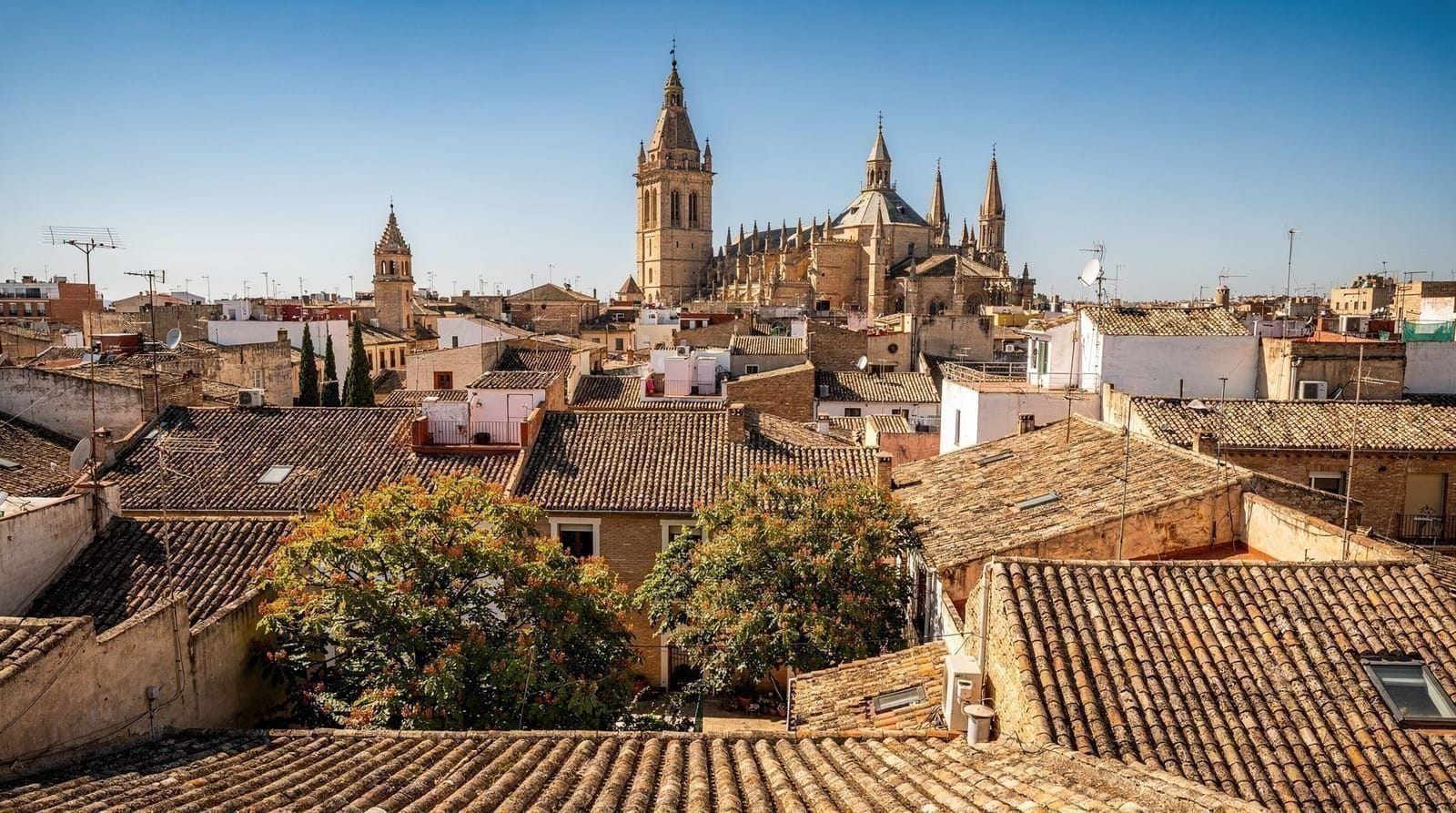
Torres de Serranos: The northern gate of medieval Valencia, now free to enter (small fee for the tower). Climb the towers for the best free view over the old city roofline and the Turia Gardens. Open daily, closes 14:00 on Mondays. Adult ticket: €2.
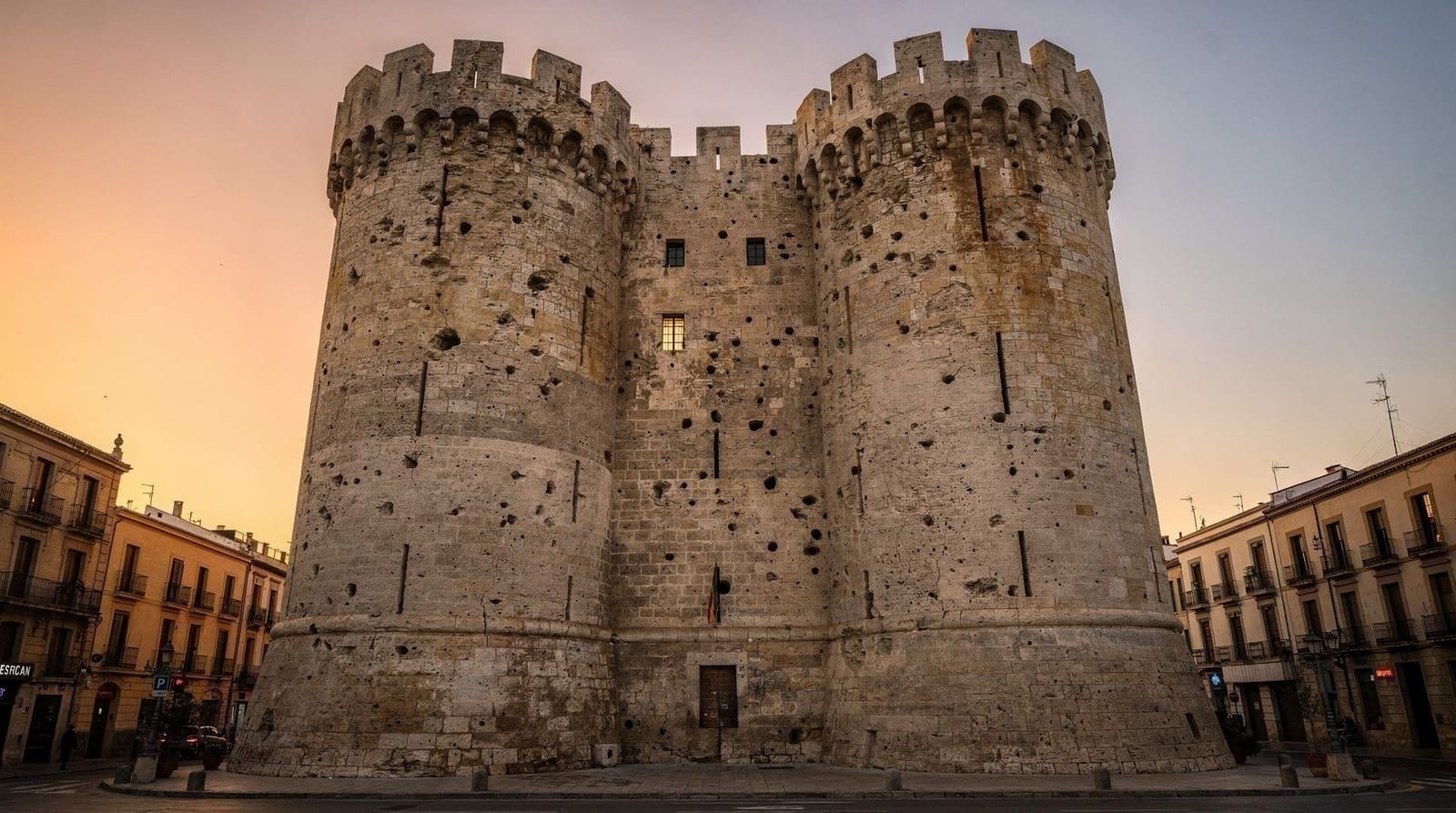
Torres de Quart: The western gate, with visible cannonball damage from the Napoleonic siege of 1812. Free access to the base. The tower itself opens for periods but is less visited than Serranos.
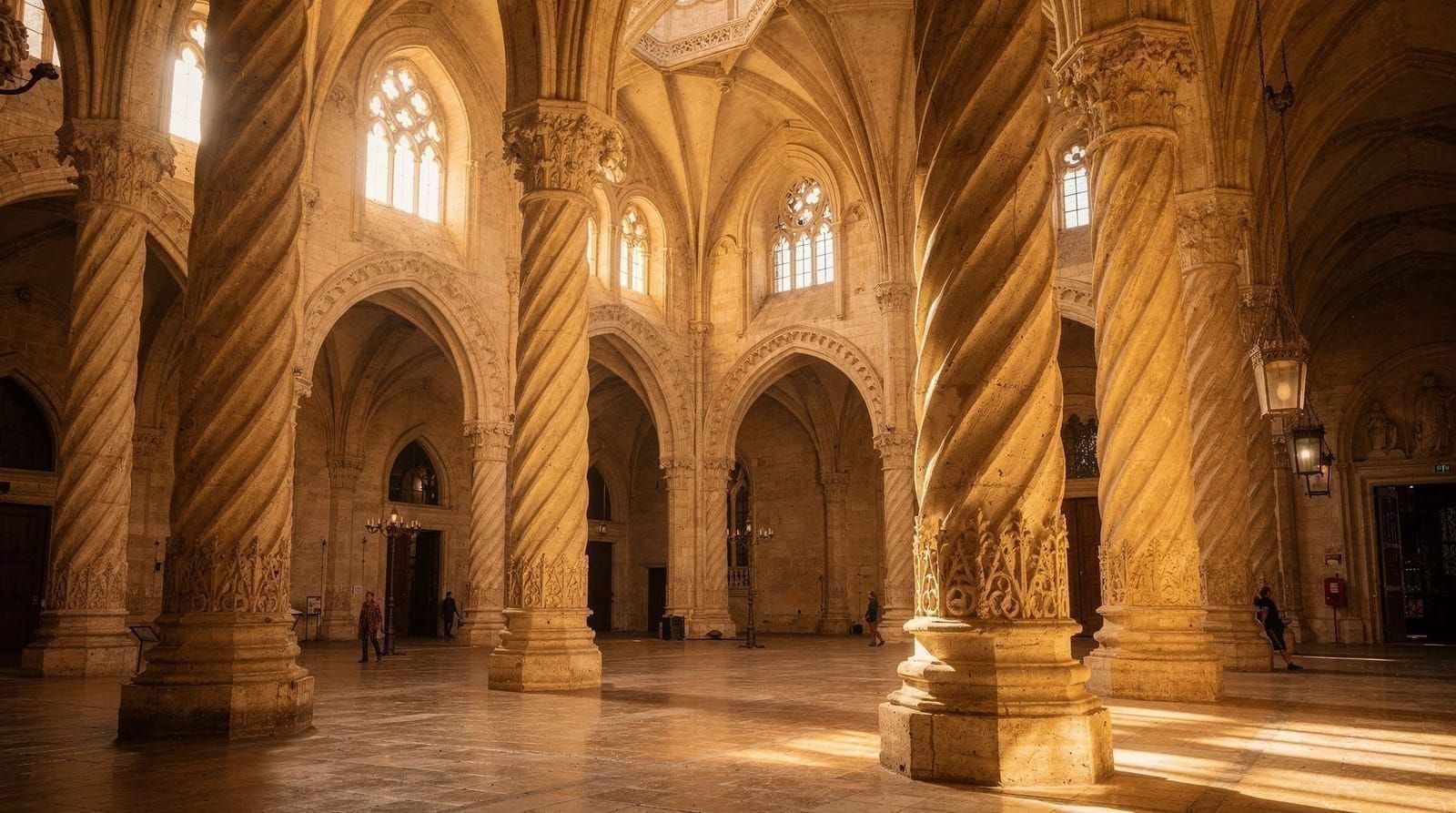
Lonja de la Seda (Silk Exchange): UNESCO World Heritage Site, one of the finest examples of Valencian Gothic civil architecture, built between 1482 and 1548. The interior Hall of Columns — with its twisted spiral columns — is remarkable. Entry €2 adults, free Sunday afternoons.
Valencia Cathedral and Miguelete Tower: The cathedral was built on the site of a mosque over two centuries, resulting in a mix of Romanesque, Gothic, and Baroque styles that is architecturally fascinating precisely because of its inconsistency. The Miguelete bell tower (1381–1429) can be climbed for €3 — 207 steps, excellent 360-degree views over the old city.
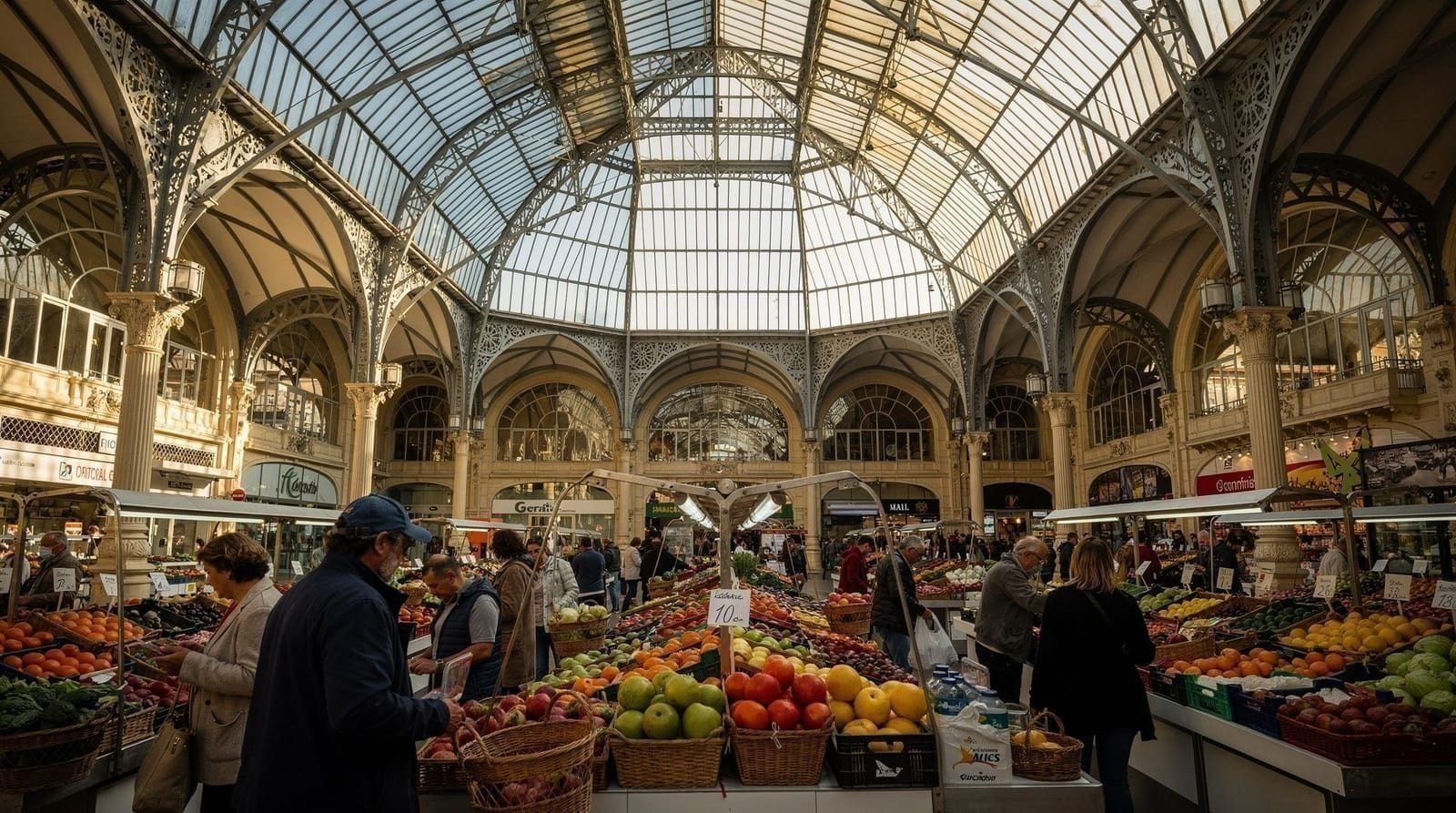
Mercado Central (Central Market): Not just a food market — the building itself (1928, by Francesc Guàrdia and Carles Sorí) is one of the largest Art Nouveau buildings in Europe. The iron and ceramic tile interior is genuinely extraordinary. Arrives early: the best stalls are picked clean by 11:00.
San Nicolás Church: Known as the Sistine Chapel of Valencia, its interior is covered in 17th-century frescoes by Antonio Palomino. Entry is ticketed (€16 online, €18 at the door), and the lighting is controlled for theatrical effect. It’s genuinely worth it.
Where to eat and drink in El Carmen
El Carmen’s restaurants and bars cover the full range from tourist trap to serious local. Here’s how to distinguish them:
Tourist trap signals: Menus in 6 languages displayed outside the door, photos of every dish on the board, staff actively calling pedestrians in from the street. These concentrations are heaviest around Plaza de la Reina and the approach to the Cathedral. Paella at these restaurants is invariably made with stock instead of proper sofrito, often served at the wrong time of day. See the paella traps guide for the full picture.
Worth the detour:
Bar Pilar (Calle del Moro Zeit 13) — one of the oldest bars in Valencia, famously associated with clochinas (small local mussels served with vinegar and lemon). A genuinely unreconstructed old bar with no social media presence and no tourist menu.
Bodega Casa Montaña (technically Cabanyal, but worth mentioning as a benchmark for what a real Valencia bodega looks like) — if you want the El Carmen equivalent, look for the bars near Calle del Cavallers with wine served from the barrel.
Navarro (Calle de l’Arquebisbe Mayoral) — reliable rice dishes, proper paella at lunch only, no photos on the menu.
La Pepica (technically on Malvarrosa beach, but historically associated with Hemingway) — mentioned here only because guides still recommend it; the food is average and the prices are high. Skip it unless you want the historical anecdote.
Coffee: Café de las Horas (Calle del Comte d’Alacant) is the atmospheric choice — extravagant interior, Spanish specialty coffee. Café Negrito (Plaza del Negrito) is a neighborhood institution for morning coffee with locals.
Bars and nightlife: The Plaça del Tossal and Calle del Dau area is the center of El Carmen’s late-night scene. Bars here are open until 03:00-04:00 on weekends. The quality is inconsistent; some spaces are genuinely good bars with music, others are tourist-trap cocktail operations charging €12 for a gin and tonic. The best rooftop bars guide covers some of the more elevated options.
 medieval guided walking tourCheck availability
Practical logistics
Getting there: Metro Alameda (lines 3/5) is the closest station, a 5-minute walk to the center of El Carmen from the south. The Turia Gardens entry from the Alameda bridge leads directly up into the neighborhood. Bus lines 9, 11, 27, and 70 stop on the perimeter.
Parking: Effectively impossible in the neighborhood itself. If you have a car, use the Jardines del Real car park (north bank of the Turia, 15 minutes walk from El Carmen center) or the underground car park on Calle de la Corona.
Best time to visit: Weekday mornings (09:00-13:00) are when the neighborhood is most local in character — the market is in full operation, the lanes are navigable, the tourist density is low. Saturday afternoons are crowded. Sunday mornings are quiet and the Lonja de la Seda entry is free.
Walking routes
The monument circuit (2 hours): Torres de Serranos → Calle dels Cavallers → Plaza de Benicarló (Valencian Parliament building, exterior) → Lonja de la Seda → Mercado Central → Cathedral → Miguelete Tower (climb) → Plaza de la Reina.
The street art route (1.5 hours): Start at the Torres de Quart, walk north along Calle de Guillem de Castro, turn east on any of the lanes off Calle dels Cavallers, working through the interior lanes toward the Turia. The densest concentration of murals is in the grid of lanes between Calle dels Cavallers and the Torres de Serranos. The street art guide has a more detailed map.
Evening aperitivo circuit (1 hour, from 19:30): Plaza del Negrito → Calle de la Bolseria → Plaça de Mossén Sorell → Calle del Dau → Plaça del Tossal. Stop for vermut with olives and chips at any of the bars on Plaza del Negrito before the dinner hour (21:00 onwards).
El Carmen for the first-time visitor
If you have only one day in El Carmen: start at 09:00 at the Mercado Central (buy something — fruit, jamón, a coffee at one of the market bars), walk to the Lonja de la Seda, continue to the Cathedral and climb the Miguelete, then walk north to the Torres de Serranos for the rooftop view. This is less than 2 km and covers the four most important sites. Eat lunch at a restaurant on Calle del Mar or Calle del Cavallers (look for handwritten menus in Valencian on a chalkboard — these are for locals).
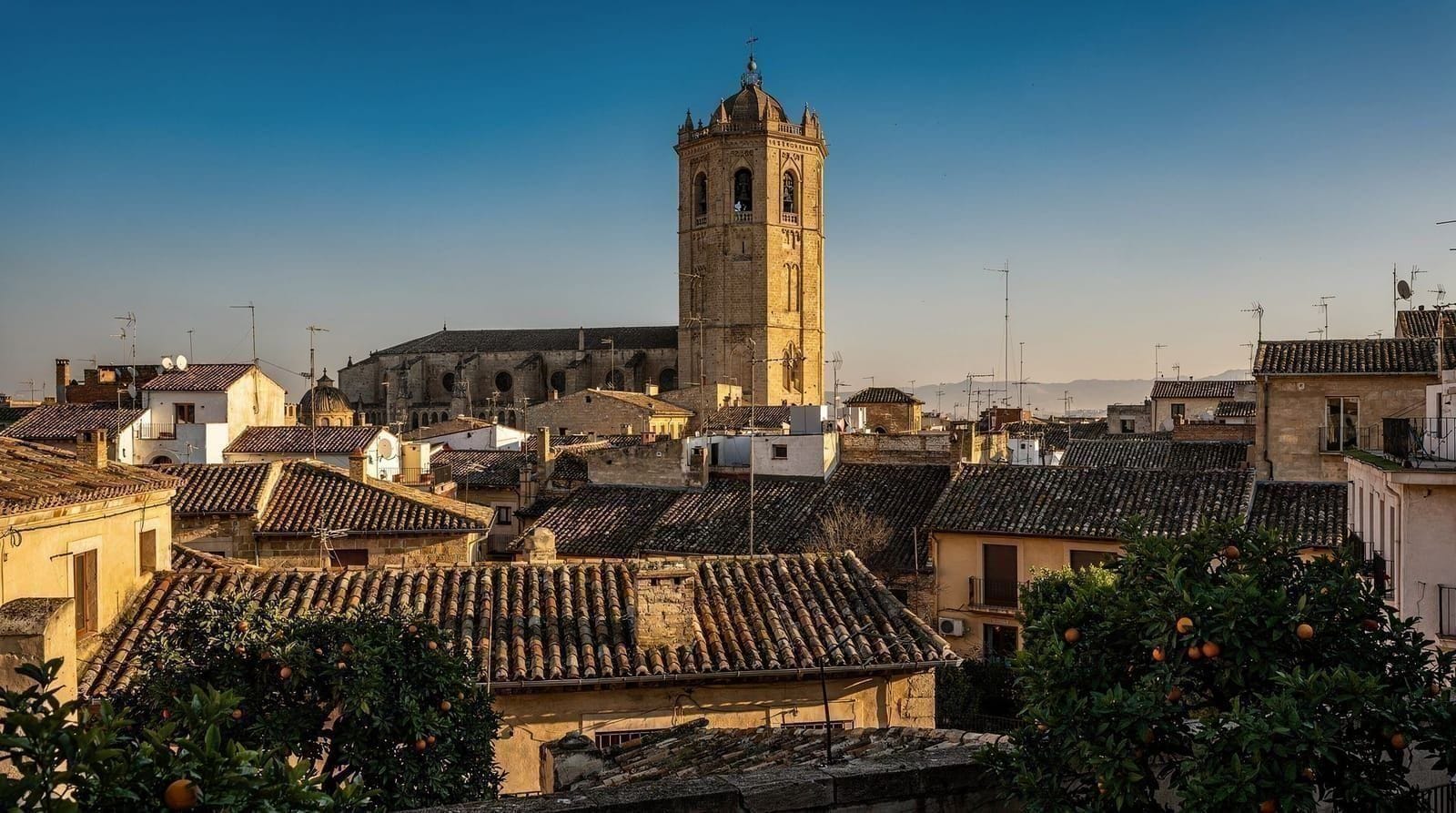 Cathedral, St. Nicholas and Lonja de la Seda tourCheck availability
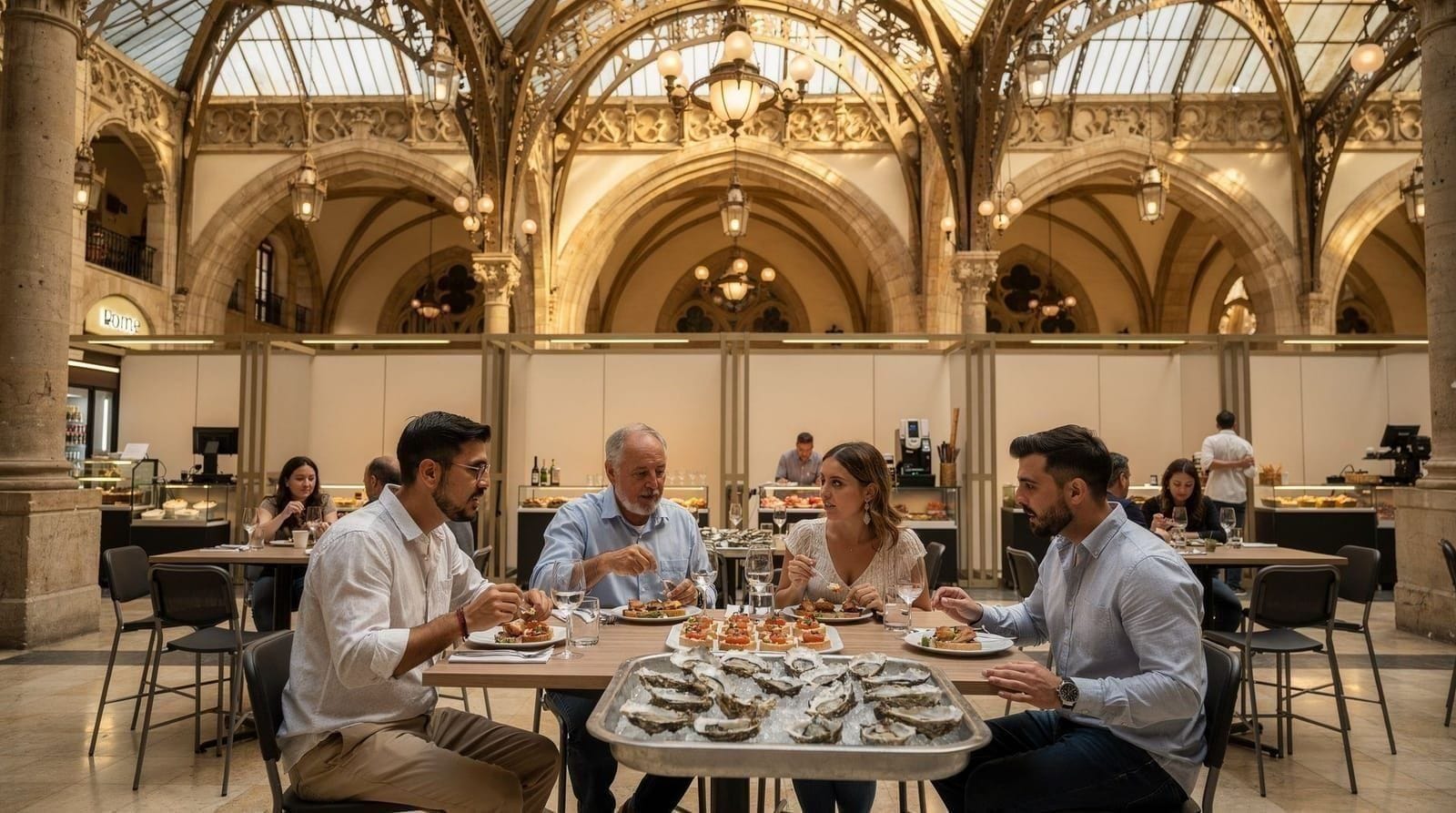 guided old town tour with wine and tapasCheck availability
El Carmen’s history in context
Understanding why El Carmen looks the way it does requires a quick sketch of 800 years of urban history.
Pre-Christian Valencia (714-1238): The Moorish city of Balansiya was a prosperous agricultural and trading center, organized around the Grand Mosque (where the Cathedral now stands) and a regular grid of streets radiating outward. The mosque’s minaret became the Cathedral’s bell tower — the Miguelete — a physical continuity between the two phases of the city’s religious life.
The Christian Reconquista and expansion (1238-1400): After Jaume I of Aragon conquered Valencia in 1238, the city was resettled by Christian colonists. The existing street pattern was largely maintained — El Carmen’s medieval labyrinth is in significant part an adaptation of the Moorish street layout. The great Gothic monuments of the 14th and 15th centuries — the Cathedral, the Lonja, the Torres de Serranos — were built during the period of Valencian mercantile expansion, when the city controlled much of the western Mediterranean silk trade and rivaled Florence in commercial sophistication.
The silk trade golden age (1400-1600): Valencia in 1500 was one of Europe’s wealthiest cities. The Lonja de la Seda was built explicitly as a statement of this wealth — a secular temple to commerce, decorated with the same artistry as contemporary religious buildings. The merchant families who funded it were not pious donors; they were pragmatic businessmen who understood architecture as a signal of civic legitimacy.
Decline and stagnation (1600-1900): The expulsion of the Moriscos in 1609 (the descendants of the Moorish population who had nominally converted to Christianity) removed a substantial part of the agricultural and craft workforce. Valencia’s relative economic position declined across the 17th and 18th centuries, which paradoxically preserved the medieval structure of El Carmen — there wasn’t enough money to tear down and rebuild, so the old streets survived.
20th century revival and decline: El Carmen’s 20th century was characterized by alternating neglect and regeneration. The neighborhood’s affordable rents made it a center for artists, bohemian culture, and alternative spaces from the 1980s onward — the street art scene grew from this period. By the 2000s, renovation had accelerated and El Carmen had transitioned from a slightly dilapidated authentic neighborhood to a slightly gentrified authentic neighborhood.
Seasonal and time-of-day considerations
Morning (07:30-11:00): The best time for photography and the most local version of the neighborhood. The Mercado Central is at peak operation, the streets are not yet crowded with tourists, and the low morning light catches the carved stone details on the Gothic buildings from the south. The bars around Plaza del Negrito serve the best morning coffee at this hour.
Midday (11:00-14:30): The busiest tourist period. The Cathedral and Lonja queues are longest. The Mercado Central becomes crowded. The streets near Plaza de la Reina are at their most dense. This is the time to be in a monument interior rather than on the street.
Late afternoon (17:00-20:00): The tourist density drops somewhat. The light from the west illuminates the north-facing facades of the narrow lanes. The aperitivo bars around Plaça del Negrito and Plaça de Mossén Sorell begin filling with locals at 18:30.
Evening (20:00-23:00): The neighborhood transforms. Restaurants open at 21:00 and fill by 22:00. The lanes around Calle del Cavallers and Calle del Mar are alive with people but not crowded. The Plaça del Tossal bar scene begins after 22:00.
Las Fallas (March): El Carmen is the center of the Fallas festivities for several of the most important local comissions falleres (neighborhood associations that build and burn the papier-mâché sculptures). The sculptures are erected in plazas throughout the neighborhood and burn on the night of March 19. This is the most intense urban festival experience in Spain — genuinely extraordinary, but also extremely loud (firecrackers from dawn), crowded, and disruptive of normal sleep. The Fallas complete guide has the full logistics.
Where to go next from El Carmen
El Carmen works best as a base for the rest of the old town. If the Gothic gates and the Silk Exchange catch your interest, the Torres de Serranos and Quart guide goes deeper into the two surviving gateways. For the wider picture of Valencia’s heritage, the UNESCO sites guide and the silk route guide tie the Lonja to the story of the city’s trading wealth.
If you are deciding where to sleep, compare El Carmen with other districts in the where to stay guide and the best area for first-time visitors. Food-focused visitors will want the Valencia food markets guide and the eat like a local guide to pair with a morning at the Mercado Central. To move between neighborhoods without a car, see getting around by metro and EMT.
Security and practical safety
El Carmen has improved dramatically in security over the past 20 years, but it retains some characteristics of a mixed urban neighborhood:
Street theft: The main risk. Walking while looking at your phone is the most common scenario for bag snatching. The area around Plaça del Tossal after midnight and the streets connecting to the train station have higher incident rates. Keep your phone in your pocket, carry your bag in front of you in busy areas.
Late night (02:00-05:00): The bars around Plaça del Tossal and Calle del Dau attract a crowd that includes intoxicated individuals and occasional disorder. This is not a serious safety problem but it is different from the daytime neighborhood. The lanes away from the bar concentration are quiet and generally safe.
Pickpockets at the Mercado Central: During the busy midday period, the area immediately outside the Mercado Central is a known pickpocket zone. This is consistent with most busy tourist markets anywhere in Spain.
Frequently asked questions about El Carmen
How long does it take to walk around El Carmen?
The core of El Carmen is compact enough to cross in 15 minutes at a walking pace. A thorough exploration of the neighborhood — including the main monuments, a look at street art, and time in the market — takes a comfortable half-day. The monument circuit described above is approximately 2 km.
Is El Carmen good for families?
El Carmen is manageable with children, though the cobblestones and stairs make pushchairs challenging. The main family attractions in the area are the Mercado Central (excellent for curious children of all ages), the Torres de Serranos (climbable, good views), and the Gulliver Park in the Turia Gardens immediately north of the neighborhood. See the family guide to Valencia for more.
What is the oldest street in El Carmen?
Calle dels Cavallers (Street of the Knights) is often cited as the most historically significant — it was the main street of the city’s Christian nobility after the Reconquista in 1238. Many of the Gothic palaces visible behind later Baroque facades date from this period.
Are there free things to do in El Carmen?
Yes: Torres de Serranos exterior (free), Torres de Quart (free), Turia Gardens (free), street art (free), the exterior of the Mercado Central (free). The San Nicolás church and the Cathedral interior charge admission; the Miguelete tower climb is €3. The Lonja de la Seda is free on Sundays.
What is the best street to explore in El Carmen?
Calle dels Cavallers for architectural history. Calle de la Bolseria and the lanes off it for street art. The covered passage Carrer de les Avellanes for atmosphere. The approaches to Plaza del Negrito for food and aperitivo bars.
Top experiences
Bookable activities with verified prices and instant confirmation on GetYourGuide.