Eixample — Valencia's 19th-century grid district
Guide to Eixample, Valencia's 19th-century grid district — Modernista architecture, Mercado de Colón, and a quieter base close to the old town and Russafa.
Valencia: hidden tour of Eixample, Cánovas and Ruzafa
Quick facts
- Best for
- Architecture, local dining, quiet stays
- Time needed
- 1–2 hours walking
- Getting there
- Metro L1/L3/L5 to Colón or Xàtiva
- Don't miss
- Mercado de Colón; Modernista buildings on Gran Via
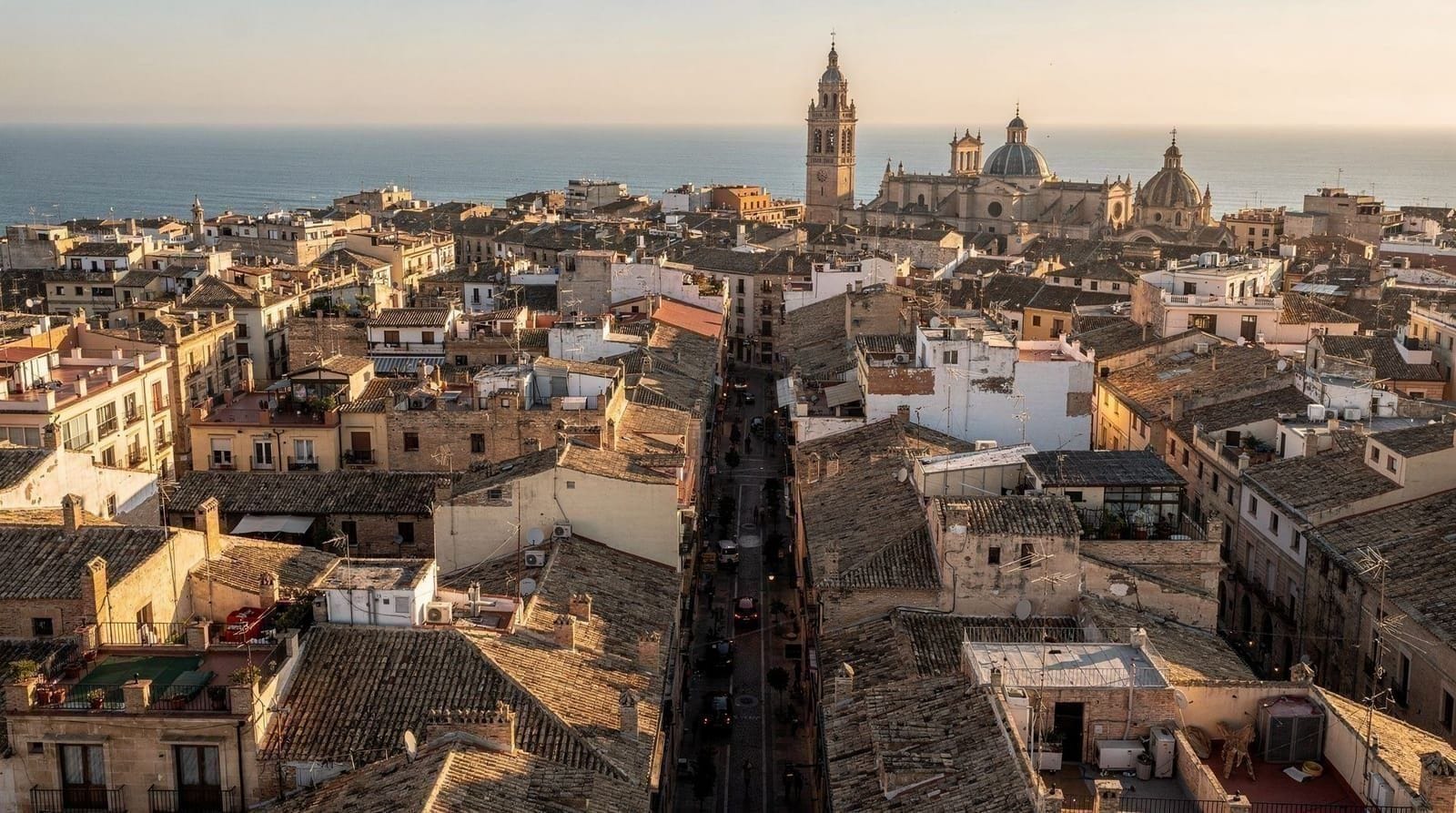
Eixample (from the Valencian word for “expansion”) is the 19th-century grid neighbourhood built between Valencia’s medieval old town and the Russafa district. Planned in the 1880s following the demolition of the city walls, it is Valencia’s version of Barcelona’s Eixample — a rational street grid of wide boulevards and city blocks with chamfered corners, lined with apartment buildings ranging from neo-classical to Modernista in style.
| Where | Between Ciutat Vella and Russafa, central Valencia |
| Cost | Free to walk; Mercado de Colón food/drinks €5–12 |
| Time needed | 1–2 hours walking; good multi-day base |
| Getting there | Metro L1/L3/L5 to Colón or Xàtiva |
| Best time | Year-round; weekday mornings for the market building |
What Eixample is
The neighbourhood is bounded roughly by the old town to the north, Russafa to the south, the train station (Estació del Nord) to the southwest, and the Turia park to the north. Gran Via Marqués del Túria and Gran Via del Marqués de la Ensenada are the two main axial avenues. This is primarily a residential and commercial neighbourhood — no major tourist monuments of its own — but it functions well as a base and contains several architectural highlights.
Mercado de Colón
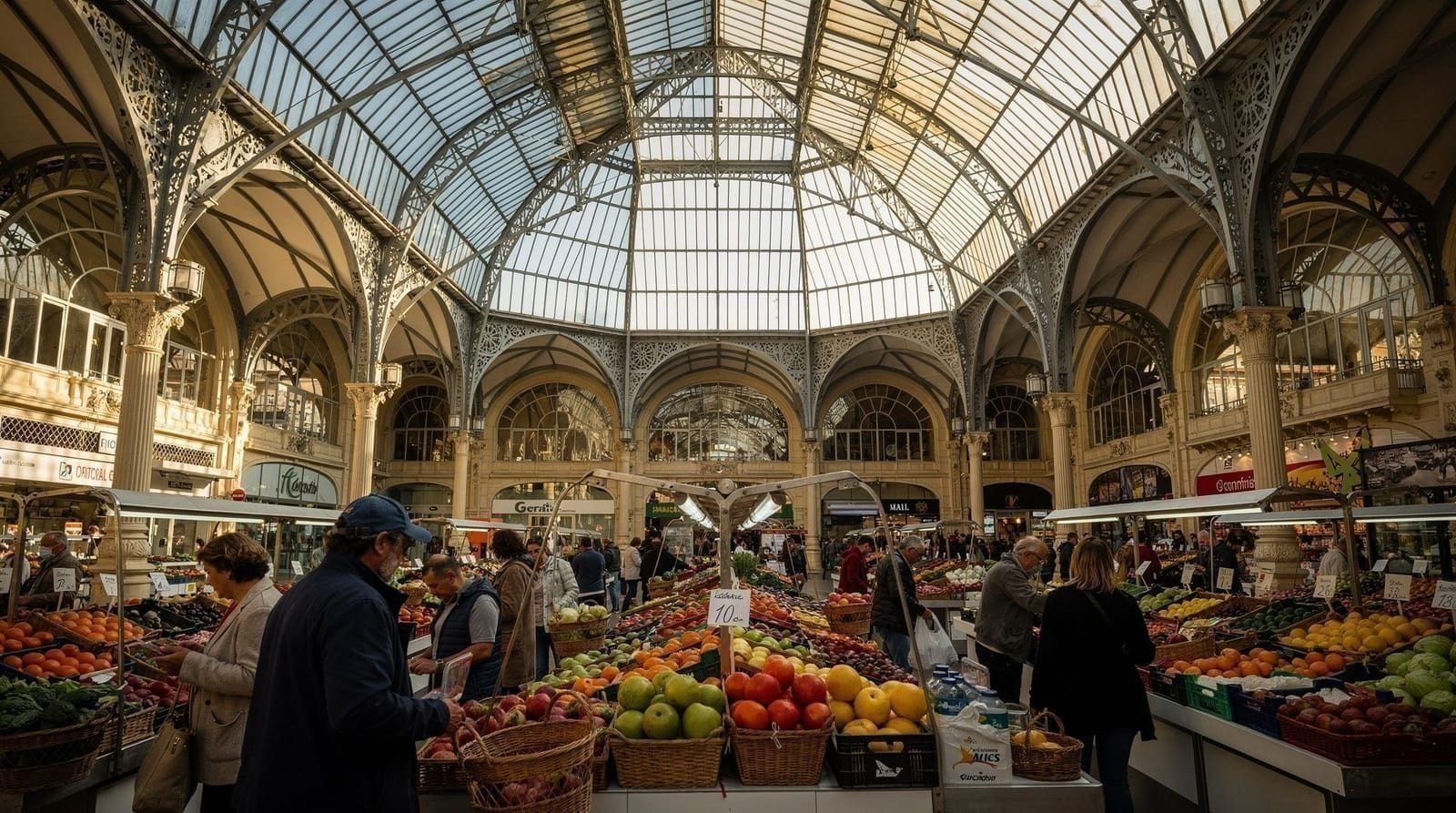
The most-visited building in the Eixample is the Mercado de Colón (built 1914–1916, by Francisco Mora), a Modernista iron-and-glass market hall that is now a food and leisure venue rather than a traditional produce market. The building itself is the reason to visit — the ornamental ironwork, the ceramic tile roof decoration, and the proportions of the main hall are genuinely impressive.
Today Mercado de Colón houses gourmet food stalls, a wine bar, a pharmacy, and several cafés. Quality is good but expensive: a glass of wine €5–8, tapas dishes €6–12. It is more suitable for a morning coffee and a look at the architecture than for a meal. Read the Mercado de Colón guide.
Modernista architecture on Gran Via
The Gran Via Marqués del Túria has a concentration of late 19th and early 20th-century apartment buildings with ornate façades — carved stone, wrought iron balconies, ceramic tile panels. The most photogenic blocks are between Calle Ruzafa and Calle de la Paz. This is a walking observation, not a museum admission — the buildings are simply on the street.
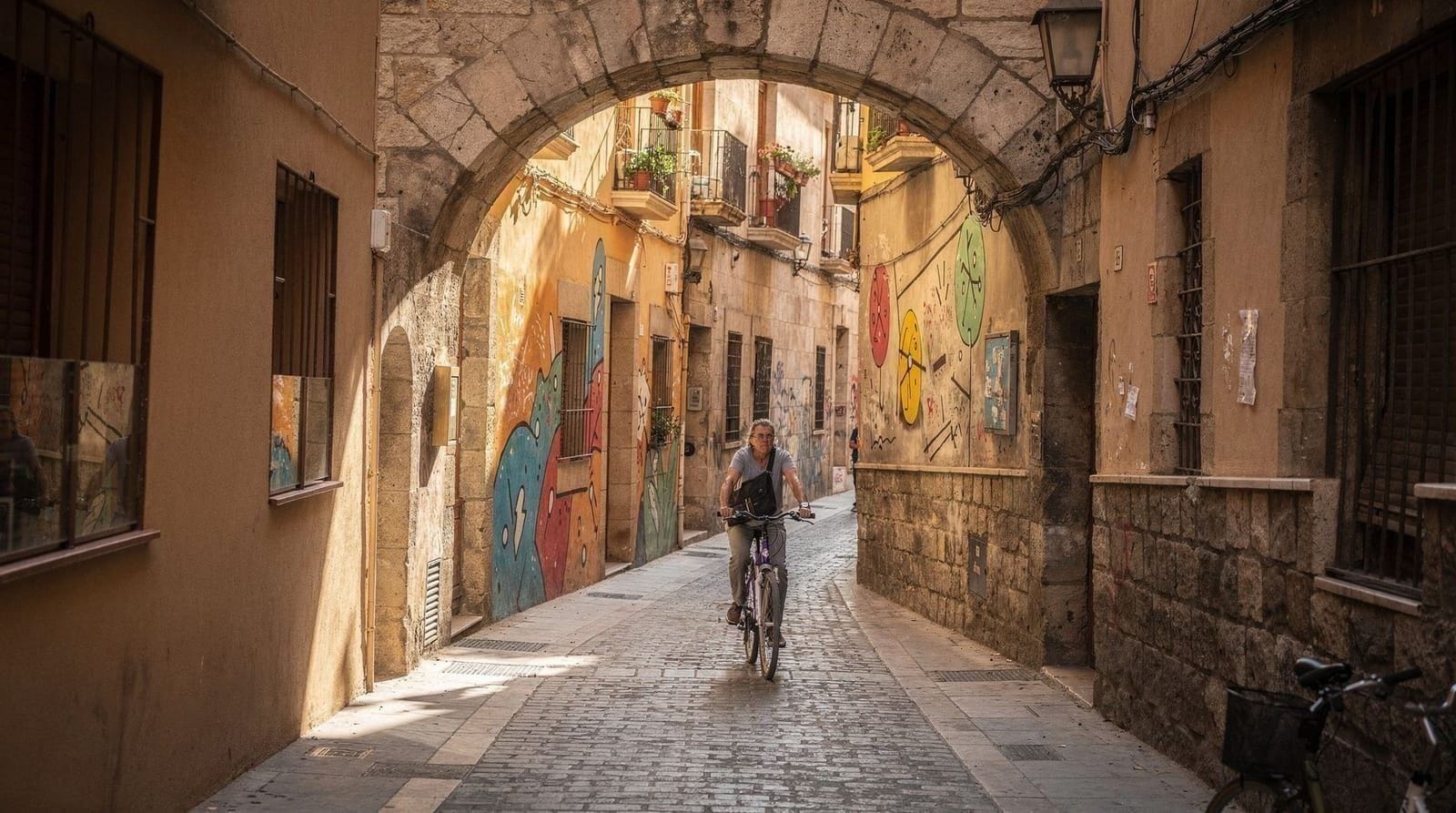
Hidden Valencia tour of Eixample, Cánovas and Ruzafa — architectural layers and local stories.
As a base for visiting Valencia
Eixample hotels tend to be slightly less expensive than old-town accommodation while being equally central — 10 minutes’ walk to the Cathedral, 5 minutes to Russafa, 15 minutes to the City of Arts by bus. The neighbourhood has good supermarkets (Mercadona on Calle Colón), pharmacies, and local restaurants with weekday menú del día for €12–14. It is quieter than El Carmen at night, making it practical for travellers who want to be central but not in the middle of bar noise.
Walking the Gran Via
A walk along Gran Via Marqués del Túria from the Colón metro junction to the Xàtiva area (about 1.2 km) gives a concentrated view of the Eixample’s built character. The boulevard has a central tree-lined walkway with benches, flanked by apartment buildings of varying vintages. The most architecturally interesting blocks are between Calle de la Paz and Calle Ruzafa, where several buildings retain their original ornamental ironwork and ceramic tile cladding.
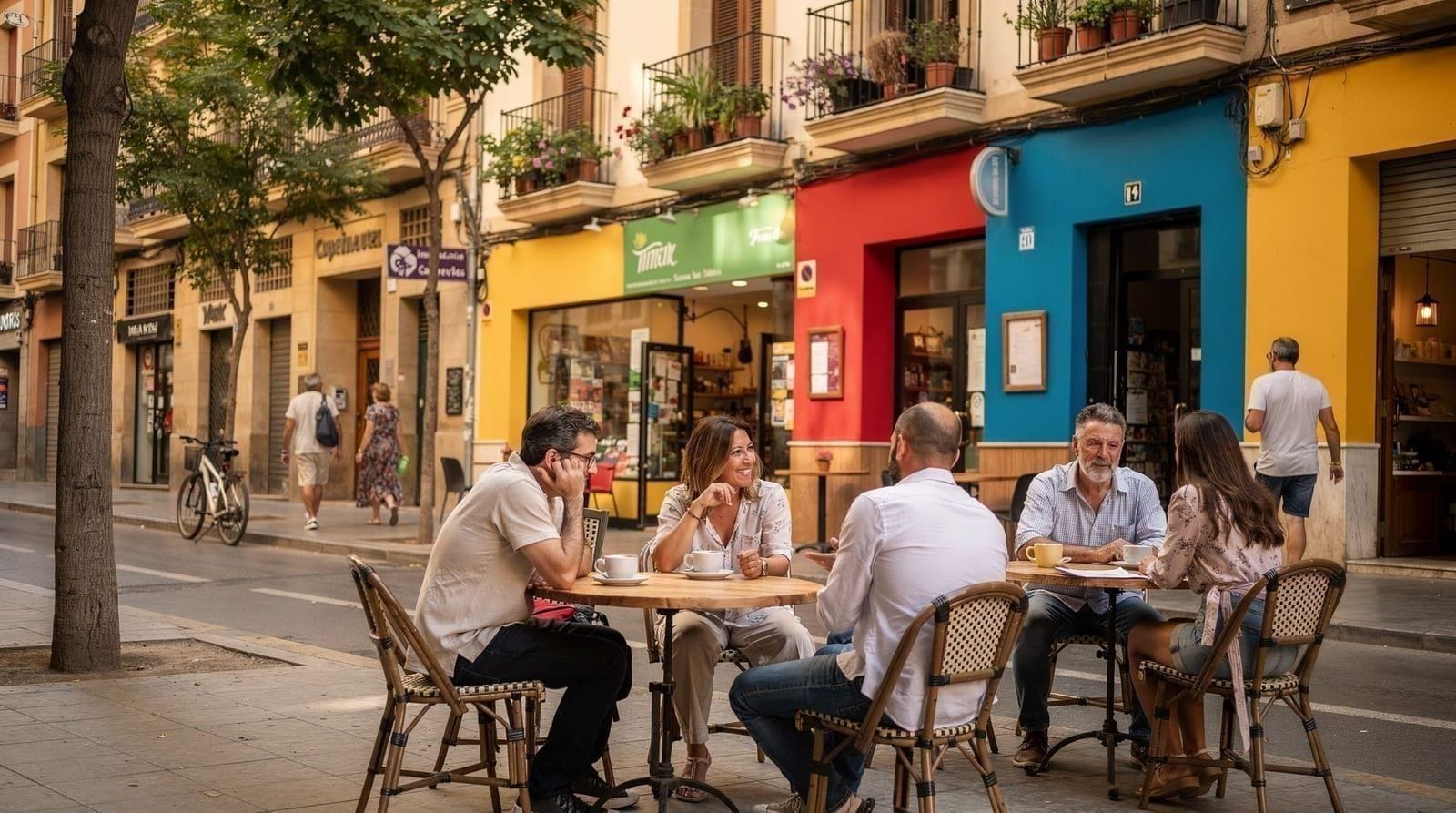
This is not a tourist walk in the sense of requiring a guide — it is a neighbourhood walk, the kind any resident does daily. The people you see are Valencia residents going about daily life: parents with children, shoppers, office workers on lunch break.
Calle de la Paz (east of Gran Via): a quieter street with several good local restaurants and a concentration of craft workshops — a tailor, a frame-maker, a ceramics studio — in the ground-floor premises.
Practical information for Eixample
Best cafés: Dulce de Leche (Calle Cádis 43, technically on the Russafa border) and several traditional cafe-bars on Calle Jorge Juan serve a morning café con leche at the marble bar for €1.20–1.60.
Supermarkets: a large Mercadona on Calle Colón (central Eixample) and smaller local grocery shops throughout. The Mercadona is useful for picnic supplies before heading to the beach or the Turia park.
Transport hub: Xàtiva metro station (the southern edge of Eixample, at the junction with Russafa) is one of Valencia’s most useful transit nodes — lines L1, L3, and L5 intersect here, giving easy access to the old town, the airport, and the northern beach suburbs.
See the where to stay in Valencia guide for hotel area recommendations and the Russafa guide for the adjacent food and nightlife district. For the Modernista architecture beyond the Eixample, the Mercado de Colón guide covers the building in detail.
Eating in the Eixample
The Eixample’s dining scene is local-focused. Restaurants here do not have the buzz of Russafa or the historic cachet of the old town, but the quality-to-price ratio is often better. A few dependable options:
Casa Carmencita (Calle del Poeta Querol 14): old-school valenciana cooking in a white-tablecloth setting that is more traditional than fashionable. Menú del día €14 on weekdays. Arroz a banda executed without shortcuts.
Bar La Salseta (Calle de Pizarro 9, Eixample edge): a lunchtime institution for nearby office workers. The daily set menu changes with what the kitchen bought at the market. €11–13 with wine.
Cafeterías on Calle Colón: the main commercial street has standard Spanish café culture — marble-bar coffee for €1.20–1.60, pastries, bocadillos at the morning rush.
Eixample vs. staying in the old town
The standard tourist accommodation choice is between the Ciutat Vella (old town) and the Eixample. The old town has the character and the immediate proximity to the major monuments. The Eixample has lower noise levels at night, slightly lower prices, and equal access to transport. For a first visit of 2–3 days heavily focused on monuments, the old town edge is worth the slight premium. For a longer stay (5+ days), the Eixample’s quieter streets and more local restaurant culture tend to suit visitors better.
The distinction between northern Eixample (closer to the Turia park, quieter) and southern Eixample (closer to Xàtiva station and Russafa, more active in the evenings) is worth noting. Ask your hotel which end of the district they are in.
See the best area for first-time visitors guide for a more detailed comparison across all Valencia neighbourhoods.
Eixample compared with the other central options
| Neighbourhood | Character | Price level | Nightlife |
|---|---|---|---|
| Eixample | Grid streets, local restaurants | Mid | Quiet |
| Ciutat Vella / El Carmen | Medieval lanes, monuments | Mid–high | Loud (weekends) |
| Russafa | Bohemian, food-focused | Mid | Lively |
Eixample is the compromise choice — walkable to everything, quieter at night than El Carmen, without Russafa’s crowds at dinner time. See the Ciutat Vella and El Carmen guide and the Russafa guide for the two alternatives in more detail.
Getting to the City of Arts from here
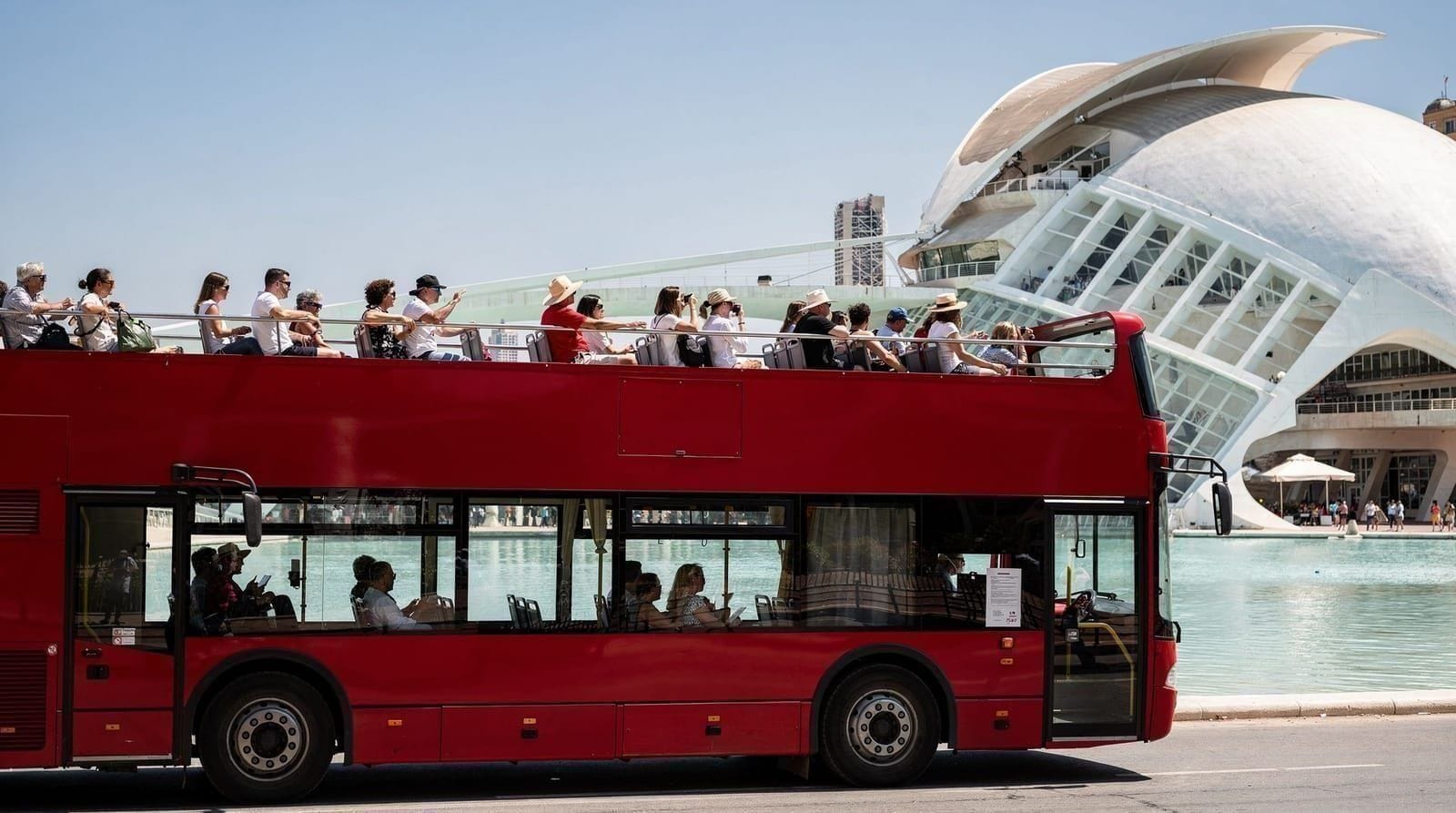
Eixample’s southern edge, near Xàtiva station, is one of the more convenient starting points for a visit to the City of Arts and Sciences — buses 35 and 95 run directly from the Xàtiva metro junction, and the Turia park cycling path is accessible on foot within 10 minutes. This makes Eixample a genuinely practical base for visitors planning to split their time between the old town and the modern architecture complex to the south.
How to read the grid
The street plan is the first thing that sets Eixample apart from the winding lanes of the old town. Blocks are regular, corners are cut at an angle so that each junction opens into a small square of light, and the boulevards are wide enough for trees. Once you understand the logic it is almost impossible to get lost: walk in one direction and you will eventually meet one of the two big avenues, and from there the metro stations at Colón and Xàtiva are easy to find. That legibility is part of why long-stay visitors like the district. After a day among the medieval streets of El Carmen, the order of the grid feels like a relief.
Look up as you walk. Most of the interest sits above the shopfronts: balconies with curling ironwork, stone masks over doorways, tiled panels beneath the cornices, and tall wooden doors that open onto stairwells with decorated ceilings. If a door happens to be open you can often glimpse a tiled hallway. Do not walk in uninvited, since these are private homes, but a pause on the pavement is enough to appreciate how much care went into ordinary apartment buildings. For wider context on the style, the Modernisme in Valencia guide places these façades alongside the city’s other Modernista landmarks.
A slow half-day route
Eixample suits an unhurried morning more than a checklist. A sensible order is to start with coffee near Colón, spend time inside the market hall while it is quiet, and then drift south along the Gran Via, stopping whenever a façade catches your eye. Leave room to wander into the side streets, because the quieter blocks are where you will see everyday Valencia: neighbourhood bakeries, small ironmongers, and bars where the regulars know the staff by name.
If you would rather have someone explain what you are looking at, a guided walk adds a lot here, since the district gives little away without context. a historical walking tour of the city is a good way to connect the Eixample to the medieval centre it grew out of, and it helps to see both in the same day so the contrast makes sense.
Finish the route with a long lunch rather than a snack. Weekday set menus are the best value in the district, and the menú del día guide explains how they work, what usually comes with them, and how to avoid the tourist versions. After lunch, a stroll through the Turia gardens is an easy way to round off the day without needing any transport.
Combining Eixample with nearby areas
Because the district sits between the old town and Russafa, it combines easily with either. A morning in Eixample followed by an afternoon and evening in Russafa works well, as the tapas bars there are a short walk away; the tapas in Ruzafa guide lists what to order. In the other direction, the Cathedral and the central market are close enough to visit on foot, and the central market guide will help you plan that stop.
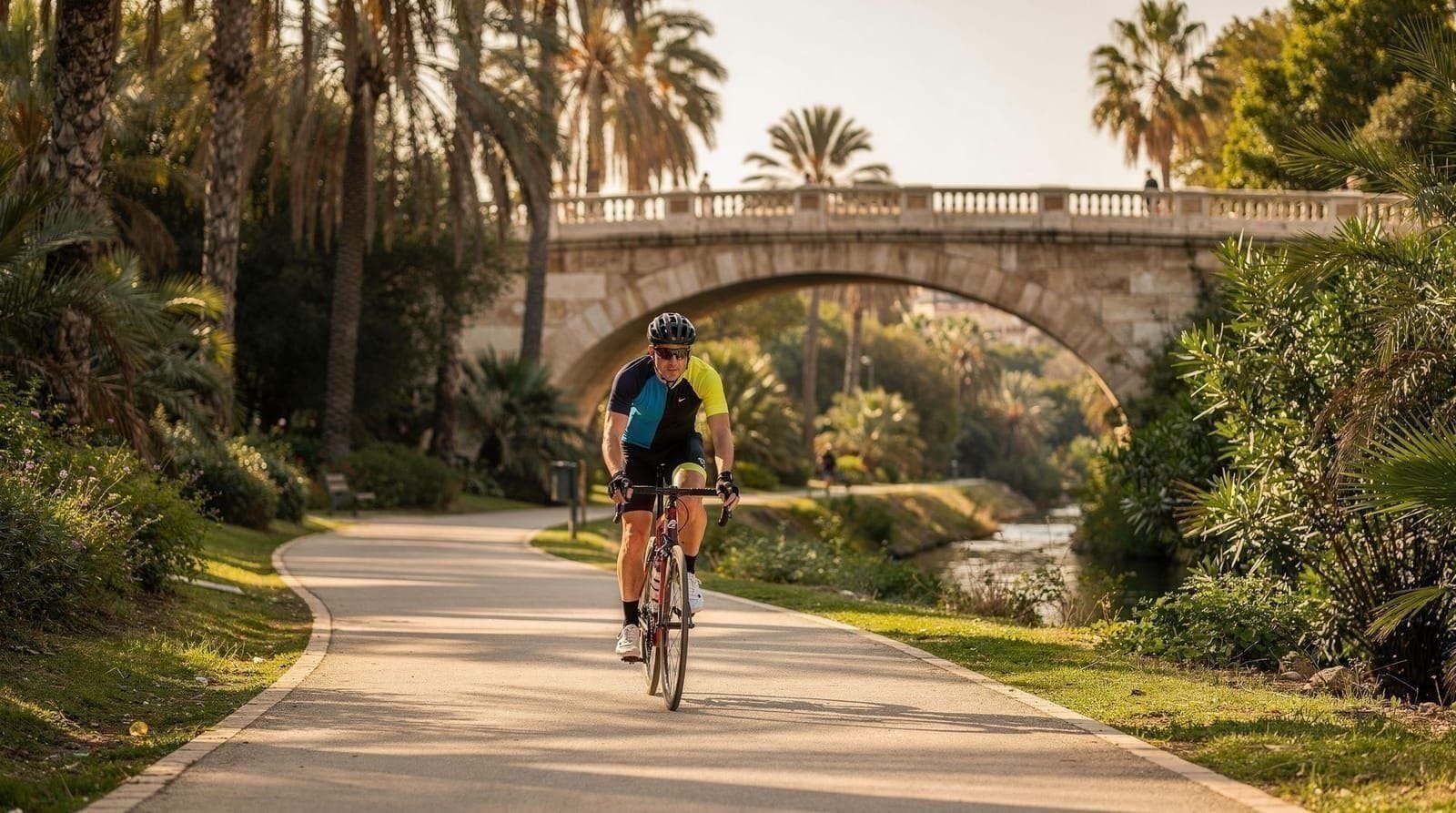
Cyclists will find the flat grid and wide avenues easy going. The Valenbisi guide covers the city’s public bikes, which are useful for hopping between Eixample, the Turia park and the City of Arts without waiting for a bus. If you prefer to have a guide lead the way, a guided bike tour of the city covers the same ground at an easy pace.
Who will enjoy Eixample most
Architecture lovers get the most from the district, followed by travellers who value routine: a regular café, a nearby supermarket, a quiet street to come home to. Families often appreciate the pavements, the shade of the boulevard trees and the nearby green space, and the district works well alongside the suggestions in the Valencia with kids guide. Remote workers and anyone staying for a week or more tend to settle here quickly, because daily life is simple and nothing feels staged for visitors.
It is less suited to anyone whose priority is a lively street scene at night, or who wants to step out of the hotel straight into a major monument. Those travellers will be happier in the old town. If you are still deciding, the where to stay in Valencia guide and the Valencia in one day itinerary will help you judge how much time you will actually spend in each part of the city.
Making the most of a short visit
If Eixample is only a stop on a busy itinerary, keep expectations modest and plan around the market hall and a short stretch of the Gran Via. It pairs naturally with the Valencia first weekend itinerary, where it fits as a calm interlude between the busier sights. Go on a weekday morning if you can, when the streets are at their most characteristic and the market building is not crowded, and bring a camera for the façades rather than expecting a list of ticketed attractions.
Frequently asked questions about Eixample
Is Eixample a good place to stay in Valencia?
Yes, particularly for stays of five days or longer. It’s central, quieter at night than El Carmen, and generally better value than old-town accommodation, while still being a 10-minute walk from the Cathedral and 5 minutes from Russafa’s restaurants.
Is there anything to actually see in Eixample, or is it just a residential area?
The main sight is the Mercado de Colón, a Modernista market hall from 1914–1916 now used as a food and drinks venue. Beyond that, the appeal is the Gran Via’s Modernista apartment façades — a walking observation rather than a ticketed attraction, best appreciated on a slow stroll rather than a rushed visit.
Top experiences
Bookable activities with verified prices and instant confirmation on GetYourGuide.