Agua de Valencia — what it is and whether you should order it
Valencia: tapas and drinks evening tour
Duration: 3 hours
What is Agua de Valencia and should I order it?
Agua de Valencia is a cocktail made from fresh orange juice, cava (Spanish sparkling wine), vodka, and gin. It tastes mostly of orange juice and goes down easily, which is part of why tourists order several. A proper version costs 8-12€ per glass, or 20-30€ per jug. It is a tourist-era invention from the 1960s, not a traditional Valencian drink — but that does not mean it is bad.
Agua de Valencia is one of the most-ordered drinks in Valencia by international tourists and one of the most ignored by locals. That gap is worth understanding before you order.
| What it is | Orange juice, cava, vodka, gin — served cold |
| Fair price | 8–12€ per glass, 20–35€ per jug |
| Where to try it | Café Madrid (original) or any El Carmen neighbourhood bar |
| Traditional? | No — invented 1959, tourist-era drink |
| Pair with | Evening/aperitif, not with paella |
What is in the glass
The standard Agua de Valencia recipe:
- Fresh-squeezed Valencia orange juice (the most important ingredient)
- Cava (Spanish sparkling wine, typically brut)
- Vodka
- Gin
- Served cold, in a highball glass or a shared jug
The proportions vary by bar. A standard ratio is roughly 60% orange juice, 30% cava, 5% vodka, 5% gin. The result is a drink that is cold, refreshing, lightly fizzy, and predominantly orange-flavoured. The alcohol is present but not obvious.
This is both the appeal and the problem. It goes down very easily, particularly in Valencia’s summer heat. But it is not a soft drink — a standard glass contains something approaching one and a half standard drinks of alcohol.
The invention story
In 1959, a group of Basques arrived at Café Madrid in the El Carmen neighbourhood. When the barman offered them wine, they declined, saying they would drink only “agua de Valencia” — meaning nothing local interested them. The barman, Constante Gil, improvised a drink from what was behind the bar: fresh Valencia orange juice, cava, vodka, and gin. He called it Agua de Valencia, both as a joke and as a genuinely appealing drink.
The recipe spread through Valencia’s bar culture over the following decades and became associated with the city’s nightlife and, eventually, with tourism to Valencia. It is a genuine local invention — just not an ancient or traditional one.
Café Madrid at Carrer dels Cavallers 35 in El Carmen still exists and still serves the original recipe. It is the historically legitimate place to try it, though the prices reflect the location and reputation (12-15€ per glass).
The story is well documented enough that most Valencia bartenders will repeat some version of it if asked, though details vary slightly between tellings — the core facts (Café Madrid, Constante Gil, 1959, the Basque customers) are consistent across the accounts that circulate locally.
The quality gap in Valencia’s bars
Not all Agua de Valencia is made with fresh orange juice. Many tourist-facing bars use concentrated orange juice or orange juice from cartons. The result is noticeably sweeter, more artificial, and entirely different from the version made with freshly squeezed local oranges.
This distinction matters because Valencia’s oranges are genuinely exceptional — the region produces some of Europe’s best citrus fruit, and fresh juice from a Valencia orange has a flavour and natural acid balance that carton juice cannot approximate.
A few signals that indicate fresh juice is being used:
- The bar has a visible juicer or juice press
- The drink has a slight cloudiness and pulp
- The price is 9€ or above (fresh juice is more expensive)
- The flavour is slightly tart as well as sweet
If the drink is uniformly sweet without any acidity, concentrate was used.
How it compares to sangria
Visitors often assume Agua de Valencia is a version of sangria, but the two drinks have almost nothing in common beyond both being served cold and both being popular with tourists. Sangria is wine-based, typically red, with chopped fruit steeped inside it, and is more common in Andalusia and generic “Spanish” tourist menus than specifically in Valencia. Agua de Valencia is spirit-and-cava-based, built around fresh orange juice, and is a genuine Valencia invention rather than a national cliché. If a bar’s menu lists both, the Agua de Valencia is the more locally rooted choice of the two — though neither is an everyday local drink.
Agua de Valencia next to the city’s other drinks
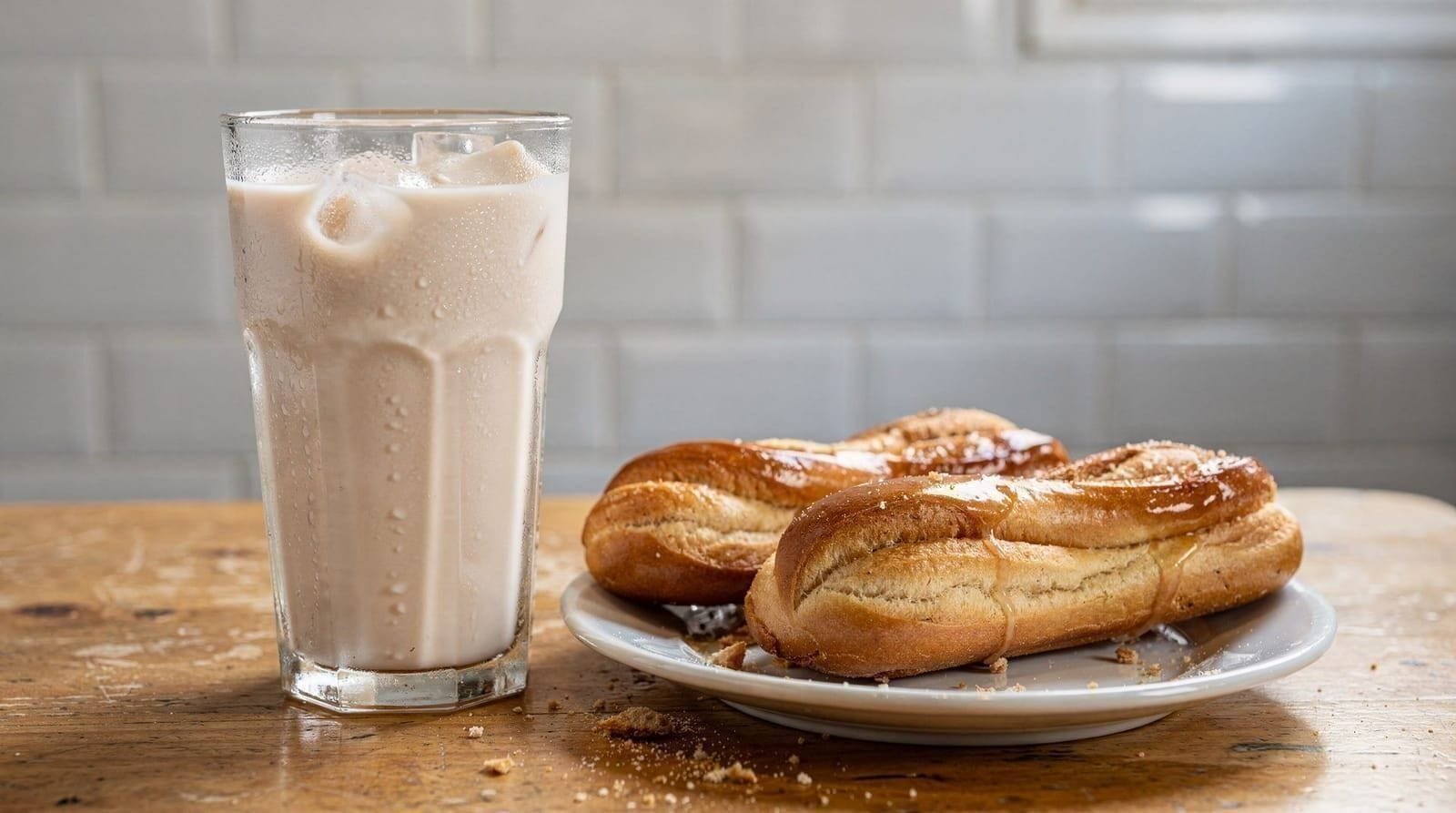
It helps to place the cocktail on a map of what Valencia actually drinks. In the morning and early afternoon the city runs on coffee, and on the sweet, cold horchata and fartons that locals take as a snack. At a long lunch the table belongs to wine or beer, which is exactly where the menú del día logic comes in: a fixed lunch with a drink included, not a cocktail. The esmorzaret and almuerzo tradition is the same story, a mid-morning sandwich with a small beer or a coffee rather than anything sparkling and orange.
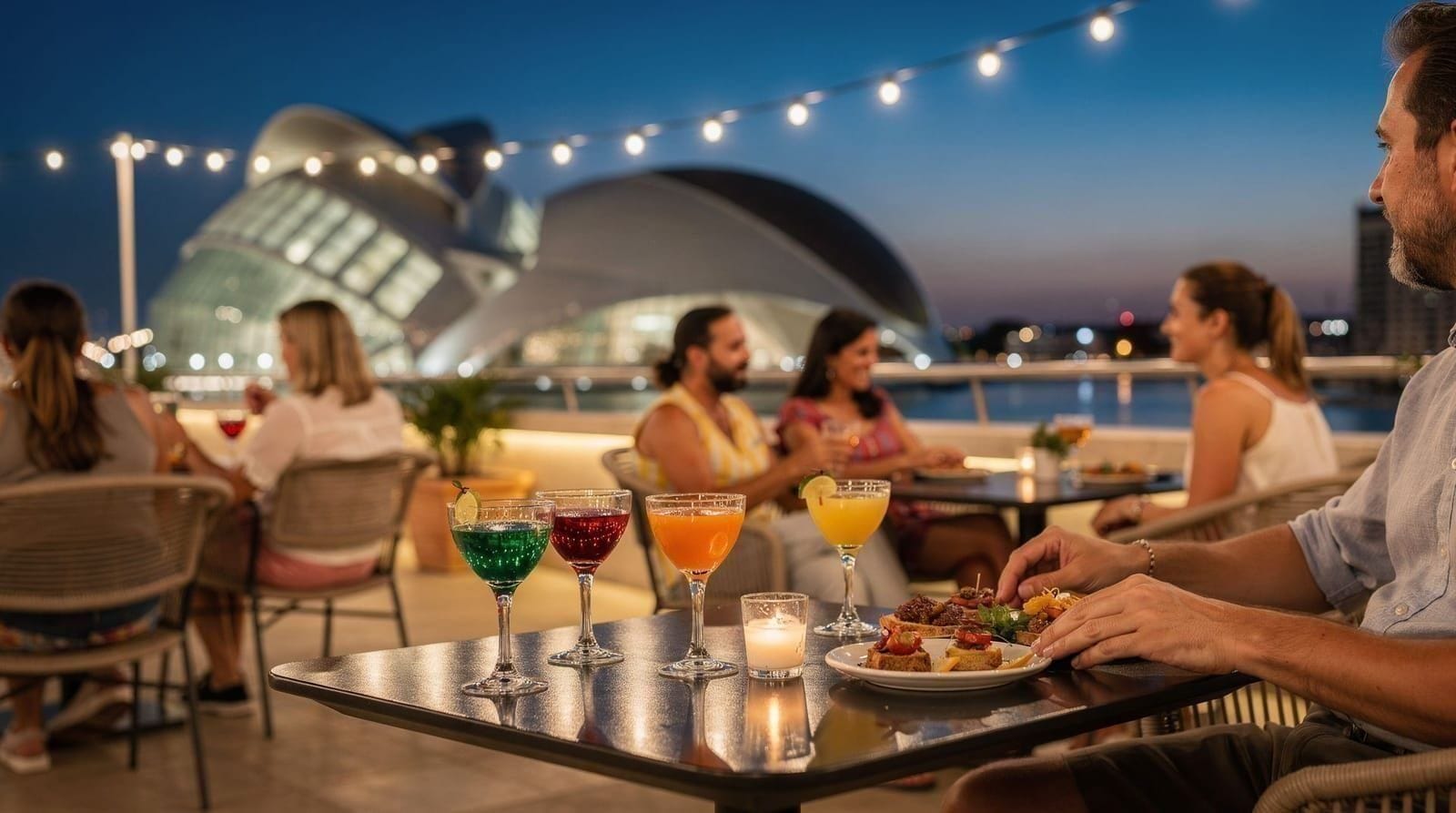
Agua de Valencia belongs to a different slot entirely: the stretch between the end of the afternoon and the start of the late Spanish dinner. That is when a jug on the table makes sense, with something salty to eat alongside. If you are curious about the wider picture of how people here eat and drink, the eat like a local guide and the Valencia food markets guide give the context that a single cocktail cannot.
For readers who want a second opinion on whether the drink is worth the money, the shorter is Agua de Valencia worth it page and the blog post is Agua de Valencia worth ordering look at the same question from a slightly different angle.
Ordering it like a local would
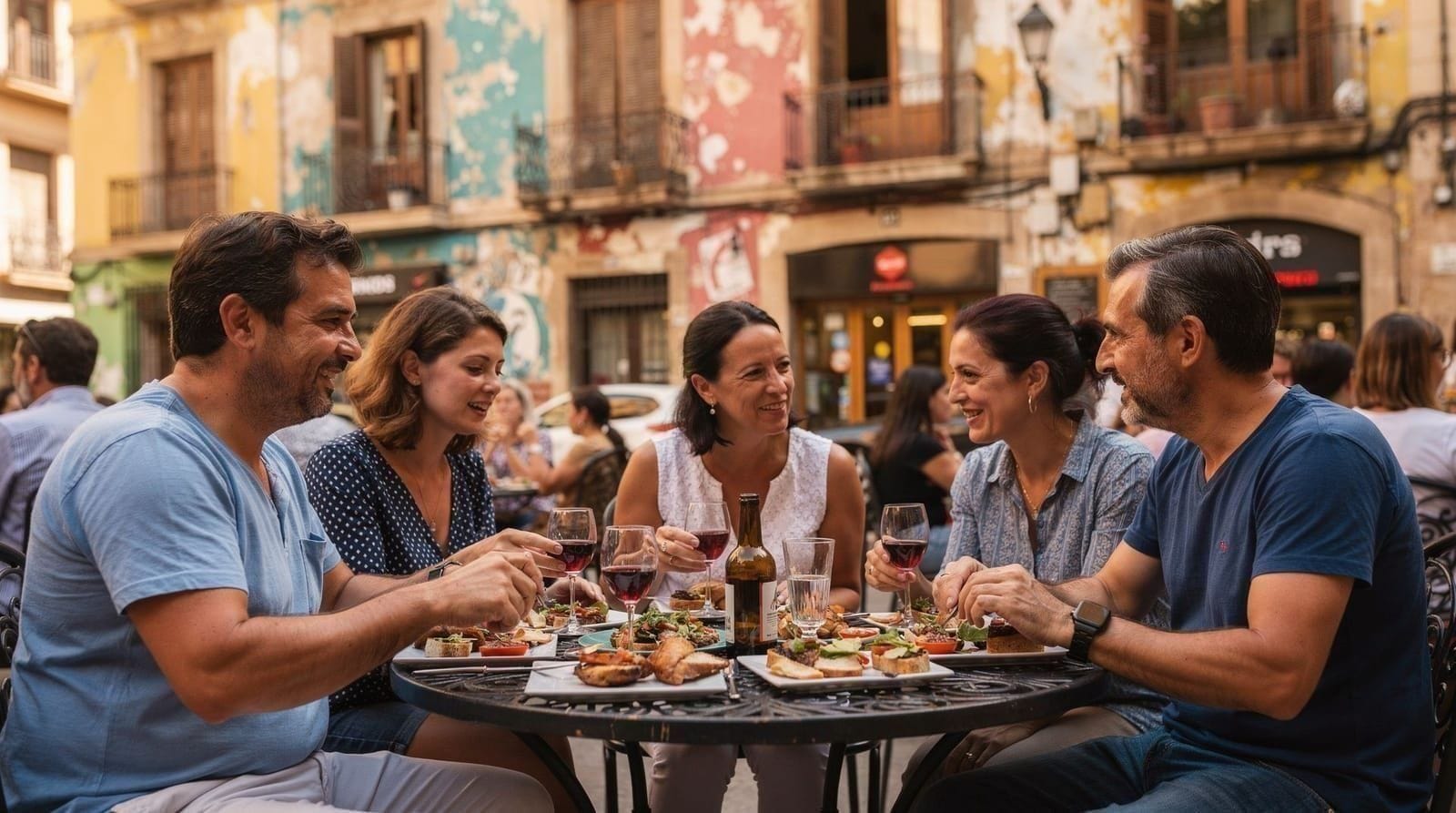
Locals who do order Agua de Valencia tend to do it in a small group, sharing a jug rather than each ordering an individual glass, and treat it as a once-in-a-visit or special-occasion drink rather than a nightly habit. If you’re spending an evening around Ruzafa’s tapas bars, ordering a single jug to share partway through the evening — rather than glass after glass early on — keeps the sweetness and alcohol in check and matches how it is actually consumed by people who live in the city.
Pacing an evening around a jug
The easiest way to enjoy the drink without regretting it is to treat it as one stop in a longer evening rather than the whole plan. Start with something light and savoury, move on to a jug once there is food on the table, and finish with water or a coffee. Bars in this city expect you to eat as you drink, and small plates arrive quickly if you ask.
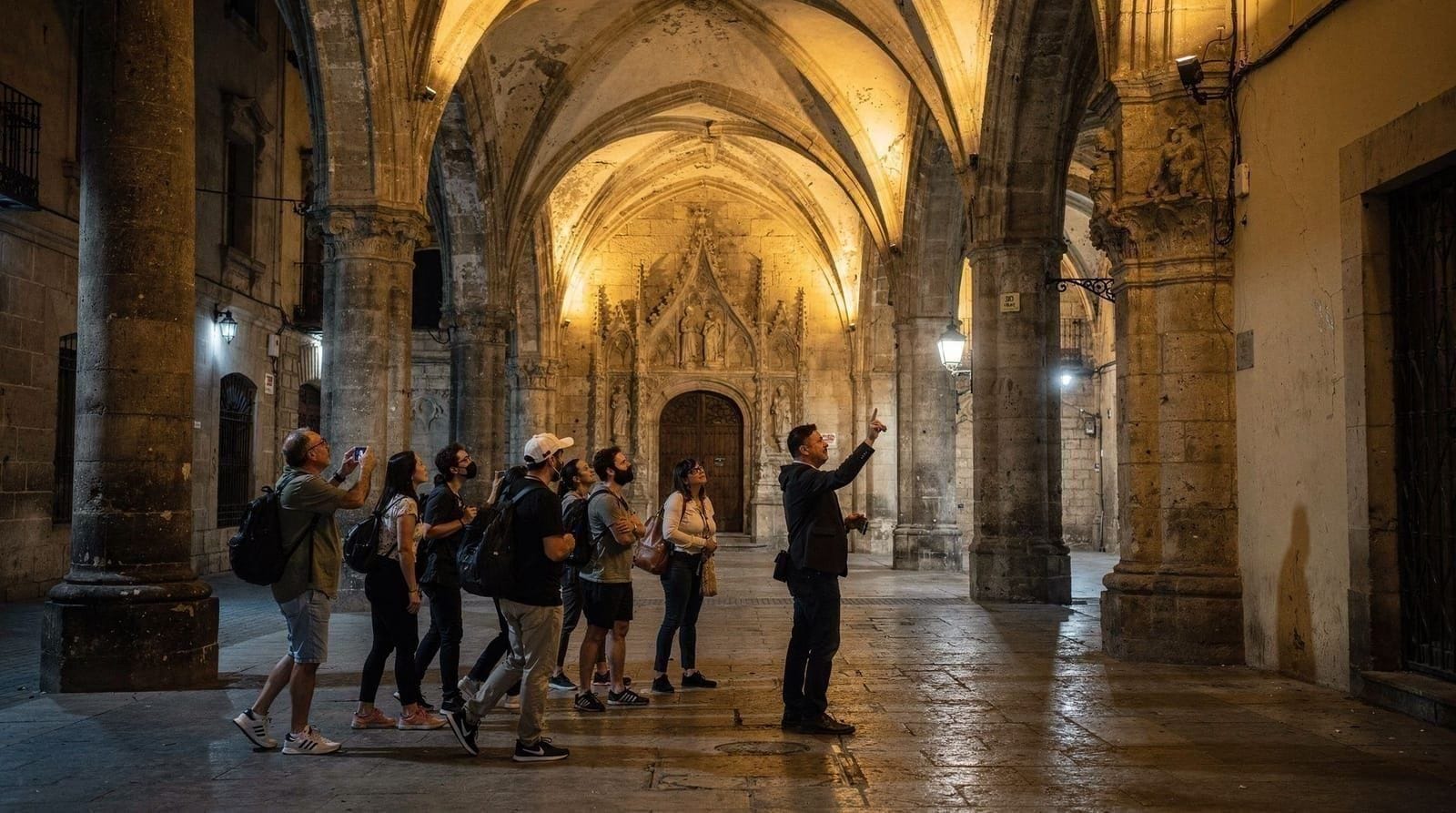
If you would rather not plan the route yourself, a guided evening can take care of it. Joining a guided evening of tapas and drinks is a sensible way to see how the bars you visit pair food with what is in the glass, and to ask the guides directly which places squeeze their own oranges. The same applies if you prefer wine to cocktails: a wine tasting with tapas pairings gives you the local alternative in a seated, unhurried format.
A few practical habits make the evening smoother:
- Share the jug instead of ordering individual glasses, so nobody loses count.
- Drink water between rounds, especially in the heat.
- Keep the walk home in mind: the old centre is compact, and getting around by metro and bus is simple, but the late-night options are thinner than in the day.
- Watch your belongings in crowded bars; the advice in the pickpockets and safe areas guide applies as much after a few drinks as before them.
Where to drink it
Café Madrid (Carrer dels Cavallers 35, El Carmen): the original. Expensive for what it is, but legitimately the source. The bar is modest in scale — the prices reflect the story more than the surroundings.
Café de las Horas (Carrer del Comte d’Almodóvar 1, near Plaza de la Reina): a baroque, theatrical bar that serves Agua de Valencia in elaborate glassware with a flourish. If you want the theatrical version of the experience rather than the historical one, this is the place. Prices are high (12-15€) but the spectacle is consistent.
El Carmen neighbourhood bars generally: more casual bars around Carrer dels Cavallers and Carrer del Portal Nou serve reasonable versions at 8-10€. These are less tourist-facing and often better value.
Ruzafa: Ruzafa tapas bars serve Agua de Valencia as an evening option. The quality is variable but generally honest — neighbourhood bars tend to use fresh juice because their local customers would notice if they did not.
What not to do
Do not order Agua de Valencia with paella: it is a cocktail, not a food wine. The sweetness and carbonation work against a serious rice dish. Order local wine from Requena or a cold beer with lunch.
Do not order the 5€ jug deal: any bar offering cheap Agua de Valencia is almost certainly using concentrate, low-quality cava, and minimal spirits. The drink only makes sense with fresh ingredients.
Do not assume one glass is harmless: the drink is alcoholic. Three glasses in the afternoon heat will have a predictable effect that several tourists discover unexpectedly.
Do not pay 20€ for a glass: near the cathedral and in some rooftop bars, prices reach 18-20€ per glass for the same drink. This is pure location premium. Walk five minutes in any direction and pay 8-10€.
The honest verdict
Agua de Valencia is a pleasant, well-balanced cocktail suited to hot weather. It is not particularly complex or interesting as a drink — the fresh orange juice does most of the work. Drinking one in Valencia, in a bar with some historical claim to the recipe, is a reasonable thing to do once.
It is not, however, a traditional or culturally significant drink in the way that horchata de chufa is. It is not something Valencians drink regularly. It is a tourist item that happens to taste good and happen to have a genuine local origin story. Both things are true simultaneously.
If you want the most distinctively Valencian drink experience, horchata at Horchatería Santa Catalina on a summer afternoon is more interesting and more connected to local food culture. If you want a refreshing cocktail that will be memorable and pleasant, Agua de Valencia in El Carmen does that job.
Fitting it into a trip
If this is your first visit, the drink is a small footnote rather than a reason to plan a day around. A relaxed schedule such as the Valencia first weekend itinerary leaves room for an early-evening stop in El Carmen after a day of sightseeing, while the Valencia for foodies itinerary is the better frame if eating and drinking are the main point of your trip.
Season matters too. The cocktail is at its best on a warm afternoon, which is why it is so tied to the summer months in Valencia. In cooler weather, a glass of local wine feels more natural, and you will see locals drinking accordingly. During big festival periods the bars fill quickly and prices rise, so check the festivals calendar before you pick a date if you want a quiet drink.
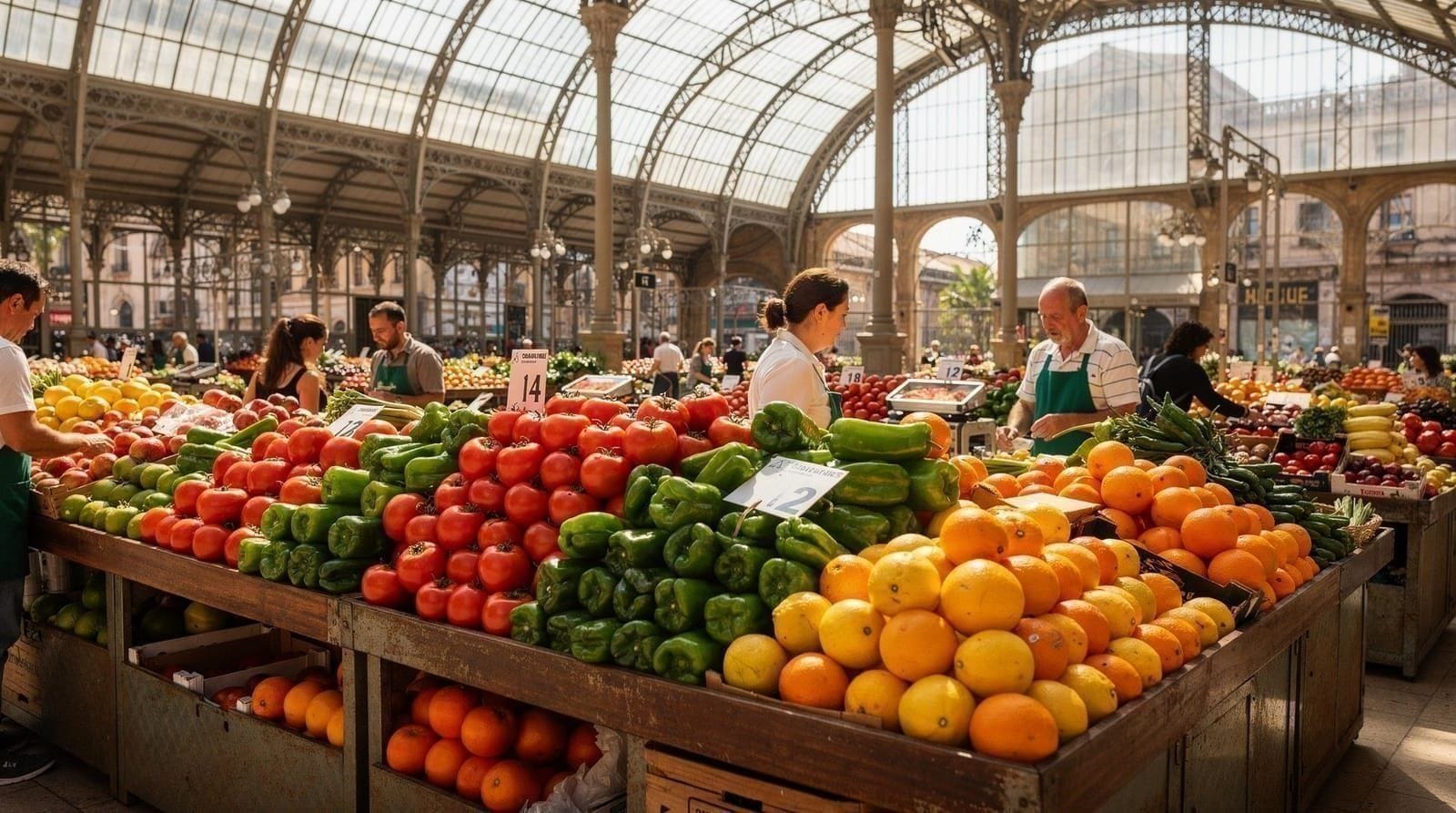
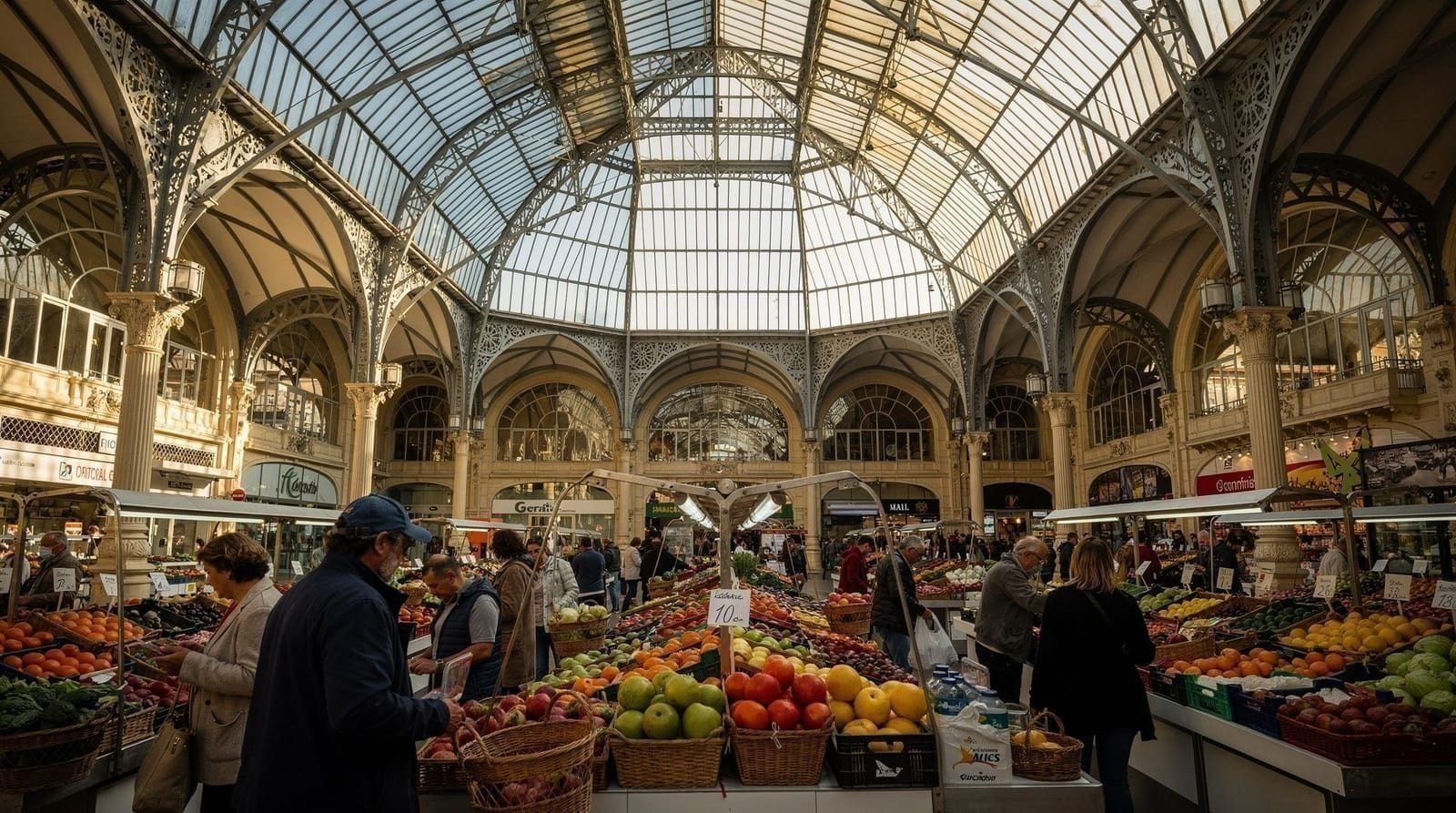
If you are still deciding where to base yourself, the El Carmen guide and the where to stay in Valencia page explain why the old town is both the birthplace of the drink and an easy base for an evening out on foot. For a food-led introduction to the area during the day, a morning food tour around the central market pairs well with an evening drink later on, and you can read more about the market itself in the Central Market guide.
Agua de Valencia at home
The recipe is simple enough to replicate:
- 3 parts fresh-squeezed orange juice (Valencia oranges if you can find them)
- 1.5 parts cava (brut)
- Small pour of vodka
- Small pour of gin
- Serve over ice in a tall glass
The key is fresh-squeezed juice. Without that, you have a mediocre mimic. Valencia oranges (the fruit, separate from the drink named after the city) are in peak season roughly December through April — outside that window, even locally bought oranges may be imported, so the home version won’t taste quite as sharp as it does mid-winter in the city itself.
Alternative drinks in Valencia
For local non-alcoholic options: horchata de chufa (tiger nut milk, 3-4€) is irreplaceable as a distinctly Valencian experience.
For local alcoholic options: Bobal wine from Requena (65 km west of Valencia) is an indigenous grape with a strong flavour profile — earthy, dark-fruited, underrated internationally. A glass of young Bobal at a neighbourhood bar costs 2-4€.
For broader evening context: best rooftop bars in Valencia for views, and the Ruzafa tapas guide for neighbourhood bars.
Valencia: tapas and drinks evening tourA guided evening tour that covers the drinking and eating culture of Valencia is useful for context — you will understand what to order and where, including when Agua de Valencia makes sense and when it does not.
Frequently asked questions about Agua de Valencia
Is Agua de Valencia a traditional Valencian drink?
No. It was invented in 1959 by Constante Gil at Café Madrid in the old city, as a cheeky response to a group of Basques who said they would only drink "agua de Valencia" (water from Valencia) rather than their local wine. The drink is a genuine local invention, but it is from the mid-20th century tourist era, not from traditional Valencian food culture. Horchata de chufa is the traditional drink.How much should Agua de Valencia cost?
A single glass at a reputable bar should cost 8-12€. A jug (for 2-4 people) runs 20-35€. Near Plaza de la Reina or the cathedral, you may pay more for a lower-quality version. If a bar is serving it for 5€ a glass, it is likely using concentrate orange juice rather than fresh. The cocktail only makes sense with freshly squeezed Valencia oranges.Does Agua de Valencia taste alcoholic?
Less than it is. The combination of sweet orange juice and bubbles from the cava masks the vodka and gin. A standard serving contains roughly 15-20 cl of cava plus 2-3 cl each of vodka and gin — comparable to a strong glass of wine or a single mixed spirit drink. Tourists who order "one more" because it tastes mild are usually surprised later.Where was Agua de Valencia invented?
At Café Madrid, Carrer dels Cavallers 35, in Valencia's old city (El Carmen neighbourhood). Constante Gil invented it in 1959. The café still exists and still serves the original recipe. It is not the cheapest place to drink it but it is the most historically legitimate one.Should I order Agua de Valencia with a paella lunch?
It is not a natural pairing. Agua de Valencia is a cocktail — it works as an aperitif, a late-afternoon drink, or part of an evening out. The sweetness and alcohol content make it an awkward companion to a serious rice lunch. With paella, the traditional choice is local wine from Requena or a cold beer.What is the best place to try Agua de Valencia?
Café Madrid (Carrer dels Cavallers 35) is the original and the most historically justified choice. Alternatively, Café de las Horas near Plaza de la Reina serves an elaborate version in ornate surroundings. For a neighbourhood bar version, any established bar in Ruzafa or El Carmen will do it reasonably well.Is there an Agua de Valencia without alcohol?
Some bars make a non-alcoholic version with orange juice, sparkling water, and a small amount of grenadine for colour. It is not the same drink but is an option for non-drinkers who want the visual experience.How many people does a jug of Agua de Valencia serve?
A standard jug (approximately 750ml to 1 litre) serves 2-4 people depending on pour size. Three people sharing a jug each get roughly two glasses.Is Agua de Valencia vegan?
The standard recipe (orange juice, cava, vodka, gin) is vegan. However, some cavas are not vegan (they use animal-based fining agents). Ask if you are strict about this.Why do some bars serve it in a fishbowl?
Some tourist bars serve Agua de Valencia in oversized decorative glasses or punchbowl-style vessels as a visual gimmick. It is a marketing choice, not a traditional serving format. The drink is the same inside regardless of the container.
Top experiences
Bookable activities with verified prices and instant confirmation on GetYourGuide.