Tourist traps in Valencia — what to avoid and where to eat instead
Valencia: authentic Valencian paella cooking class
Duration: 4 hours
What are the biggest tourist traps in Valencia?
The top traps are restaurants serving paella at dinner (a tell-tale sign of low quality), automatic bread charges of €5-8 per person, tourist set menus near Plaza de la Reina that use frozen ingredients, Mercado Central smoothie stalls at tourist prices, and "saffron" products that are not real saffron. Knowing these patterns in advance saves you money and frustration.
The tourist trap landscape in Valencia
Valencia is not a city that systematically scams tourists. Compared to heavily touristified destinations, it’s relatively honest — most residents are proud of their food culture and genuinely want visitors to eat well. The traps that exist are structural rather than malicious: restaurants in high-footfall tourist zones find that quick turnover beats quality, and certain “Valencian” products have been repackaged for tourist consumption at premium prices.
Knowing which patterns to avoid puts you ahead of 80% of visitors.
| Worst zones | Plaza de la Reina, Calle Navellos, Mercado Central smoothie stalls |
| Biggest single fix | Never order paella for dinner — lunch only |
| Bread/cover | Always ask “¿Es de pago?” before touching anything brought unasked |
| Safer neighbourhoods | El Carmen interior, Russafa, Benimaclet, El Cabanyal |
| Saffron/ceramics | Buy from Mercadona/El Corte Inglés or genuine artisan shops, not kiosks |
The paella trap: dinner service is the tell
This is the most important thing to know about eating in Valencia.
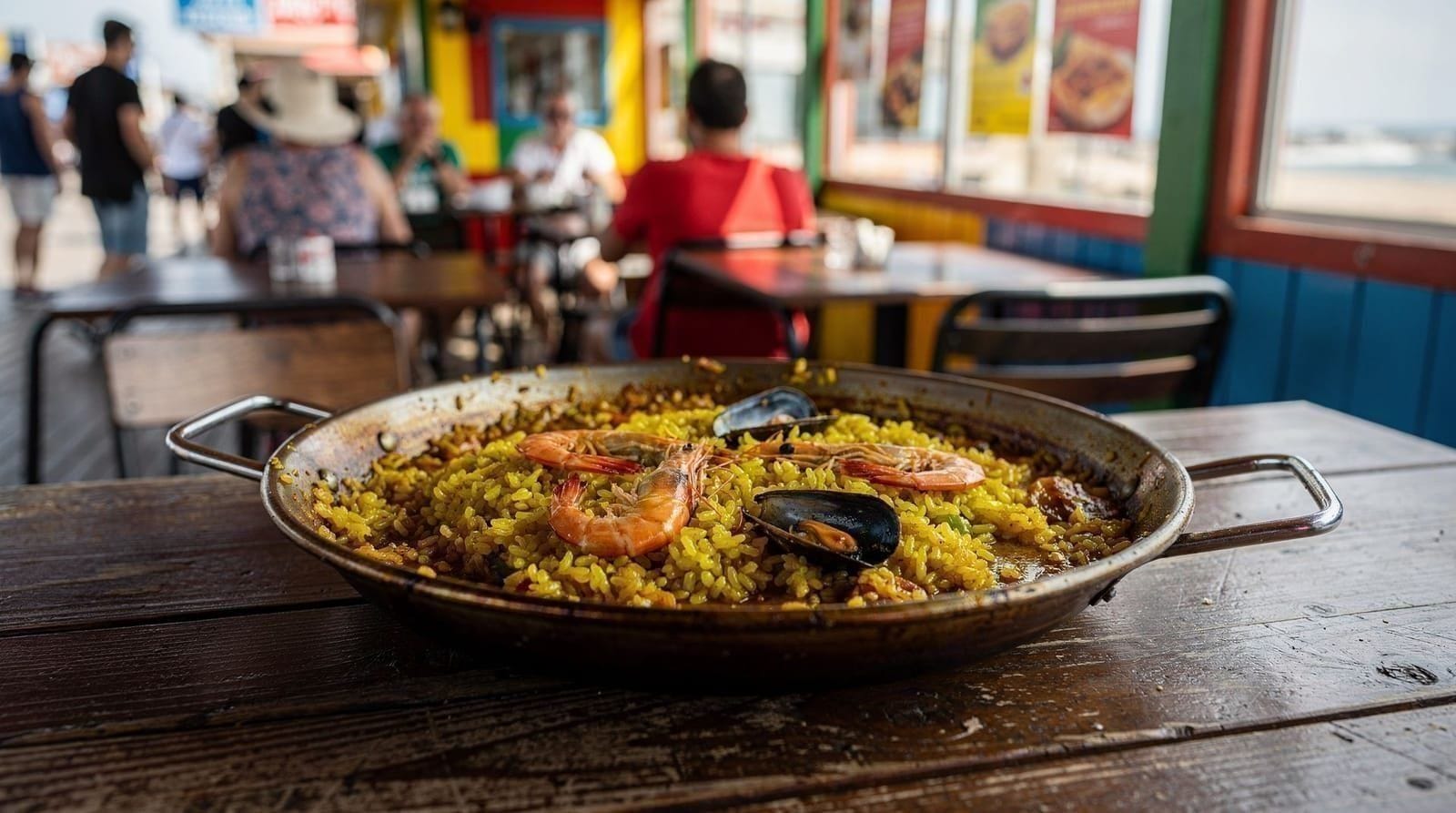
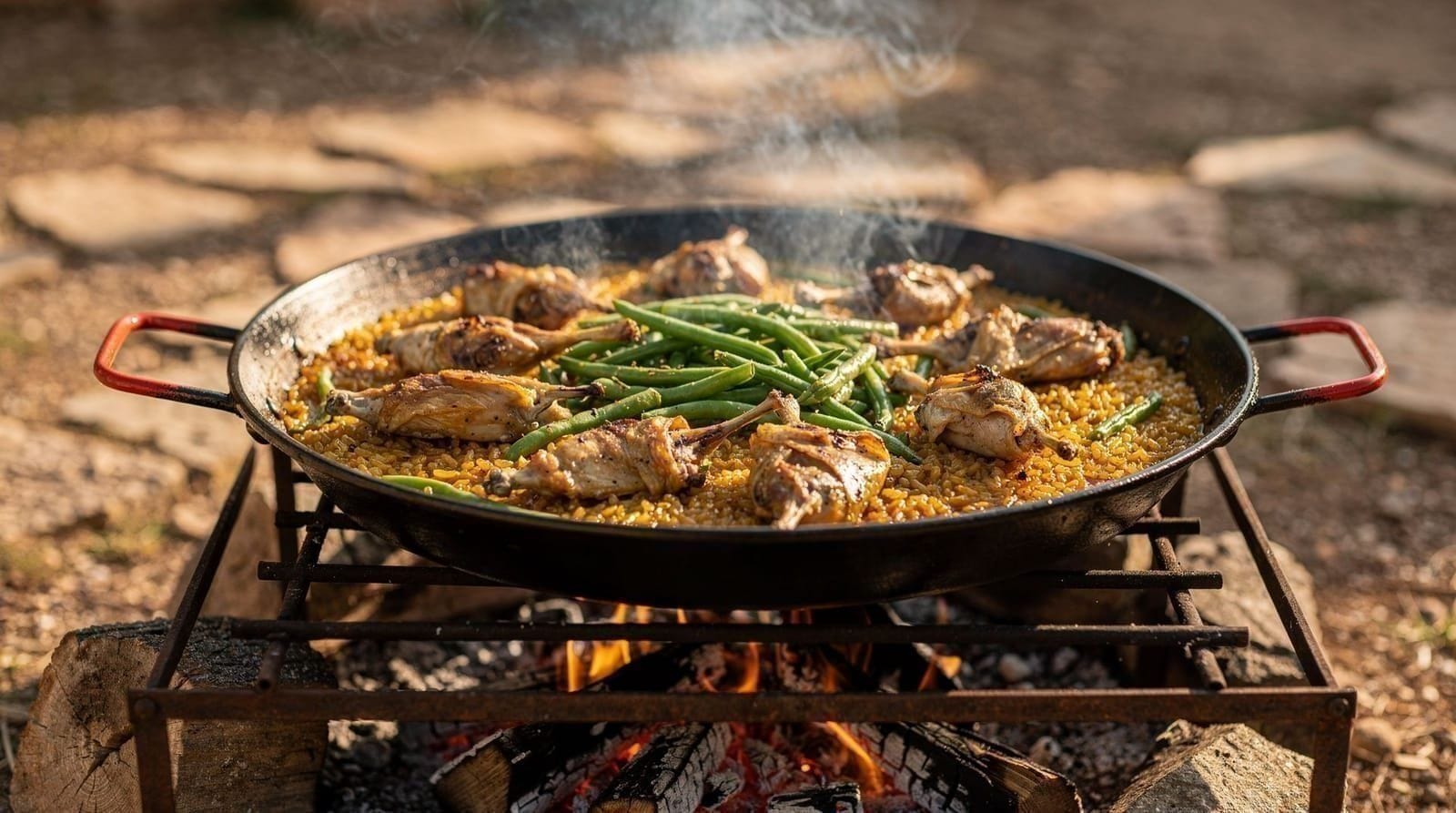
Paella is a lunch dish. In Valencia specifically — the birthplace and denominación of origin home of authentic paella — the dish is cooked over a wood or orange-branch fire on Sunday mornings and served at the midday meal (almuerzo), typically from 14:00 to 16:00. The cooking process is communal, takes 45-60 minutes, and the result should be eaten immediately.
Restaurants that serve paella at dinner are almost certainly not cooking it fresh. They’re either:
- Reheating a batch made earlier (socarrat, the prized crust, cannot survive reheating)
- Making it to a simplified recipe that doesn’t require advance fire preparation
- Using an industrial or restaurant-grade hob rather than wood fire
This isn’t a subtle quality difference — a reheated tourist-dinner paella and a genuine wood-fire rice are fundamentally different dishes.
How to eat paella properly: Go for lunch, between 13:30 and 15:30. Look for restaurants that list it as a minimum 2-person order (proper preparation is incompatible with single-serve cooking). Expect to wait 20-30 minutes after ordering. If you want a guided introduction to the best places and cooking traditions, a paella cooking class gives you hands-on context.
Authentic paella cooking class in Valencia — learn the real technique instead of guessing at a restaurantThe restaurants closest to the Cathedral — notably on Carrer d’en Bou, Calle Navellos, and the immediate Plaza de la Reina perimeter — are the most problematic. For the full breakdown of paella trap restaurants and real alternatives, see paella traps.
Charged bread: refuse immediately
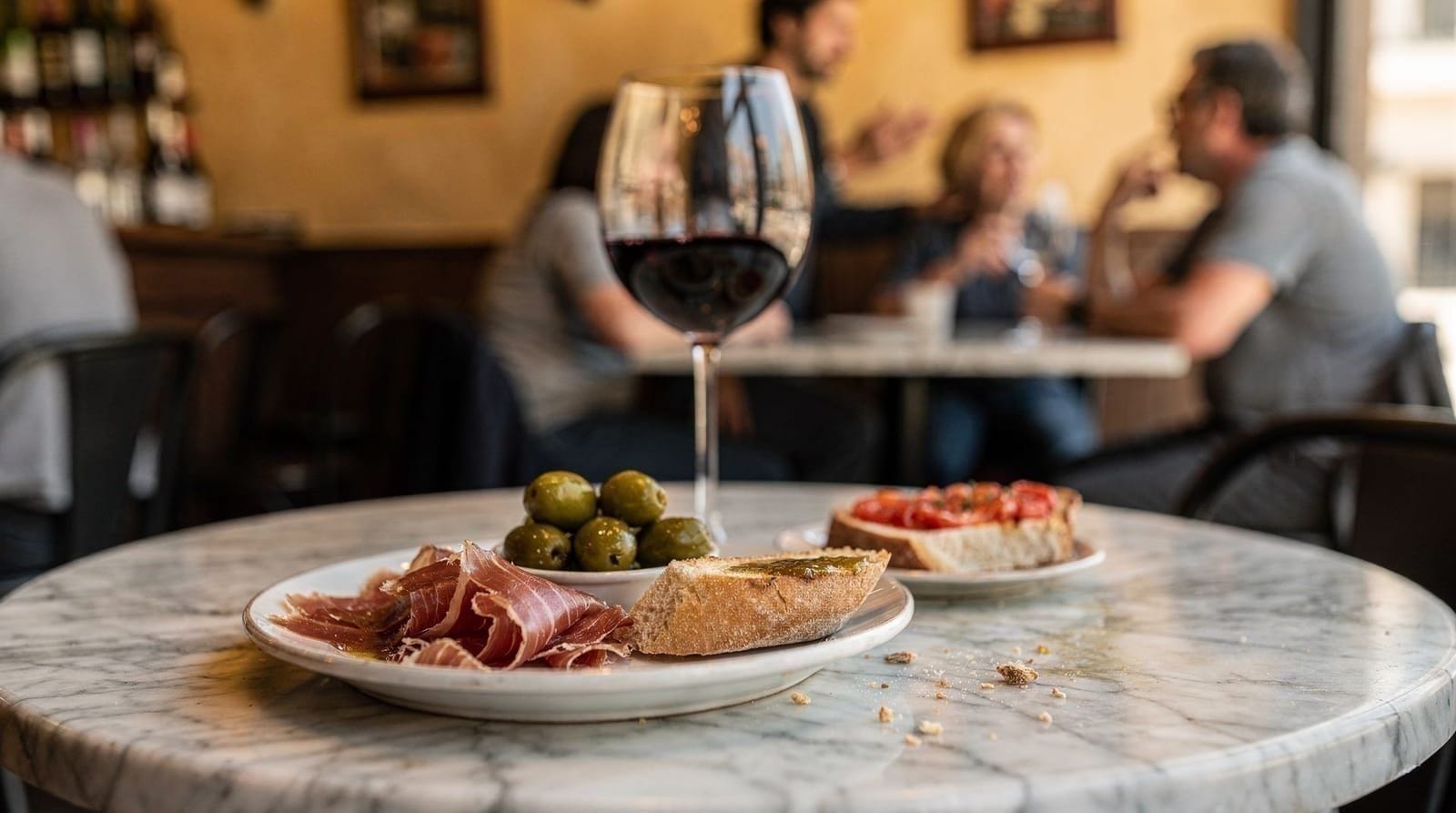
Walk into a tourist-area restaurant in Valencia and within two minutes, bread will appear on your table — sometimes a basket of plain rolls, sometimes olive oil and sobrasada, sometimes aioli. It arrives uninvited.
It is charged. The amounts range from €1.50 per person to €5 per person (for an “amuse-bouche” presentation) and occasionally up to €8 for an elaborately arranged spread.
This is legal under Spanish consumer law as long as the charge is listed on the menu. It is not fraud, but it is a practice that targets tourists who don’t know to check.
What to do: When the bread arrives, ask “¿Es de pago?” (Is it charged?). If yes: “No queremos, gracias” (We don’t want it, thank you). The waiter removes it; you pay nothing. Do this before touching the bread — once you’ve eaten any, the charge stands.
On a bill for a party of four, this refusal saves €6-20 depending on the restaurant.
A related but separate charge to watch for is the “cubierto” or cover charge — a per-person fee for table setting that’s distinct from the bread charge and can stack on top of it. Both must legally appear on the menu, but tourist-zone menus often print them in small type at the bottom of the card rather than alongside the dish prices. Scanning the bottom of the menu before ordering takes a few seconds and avoids the surprise at the end of the meal.
The Plaza de la Reina restaurant zone
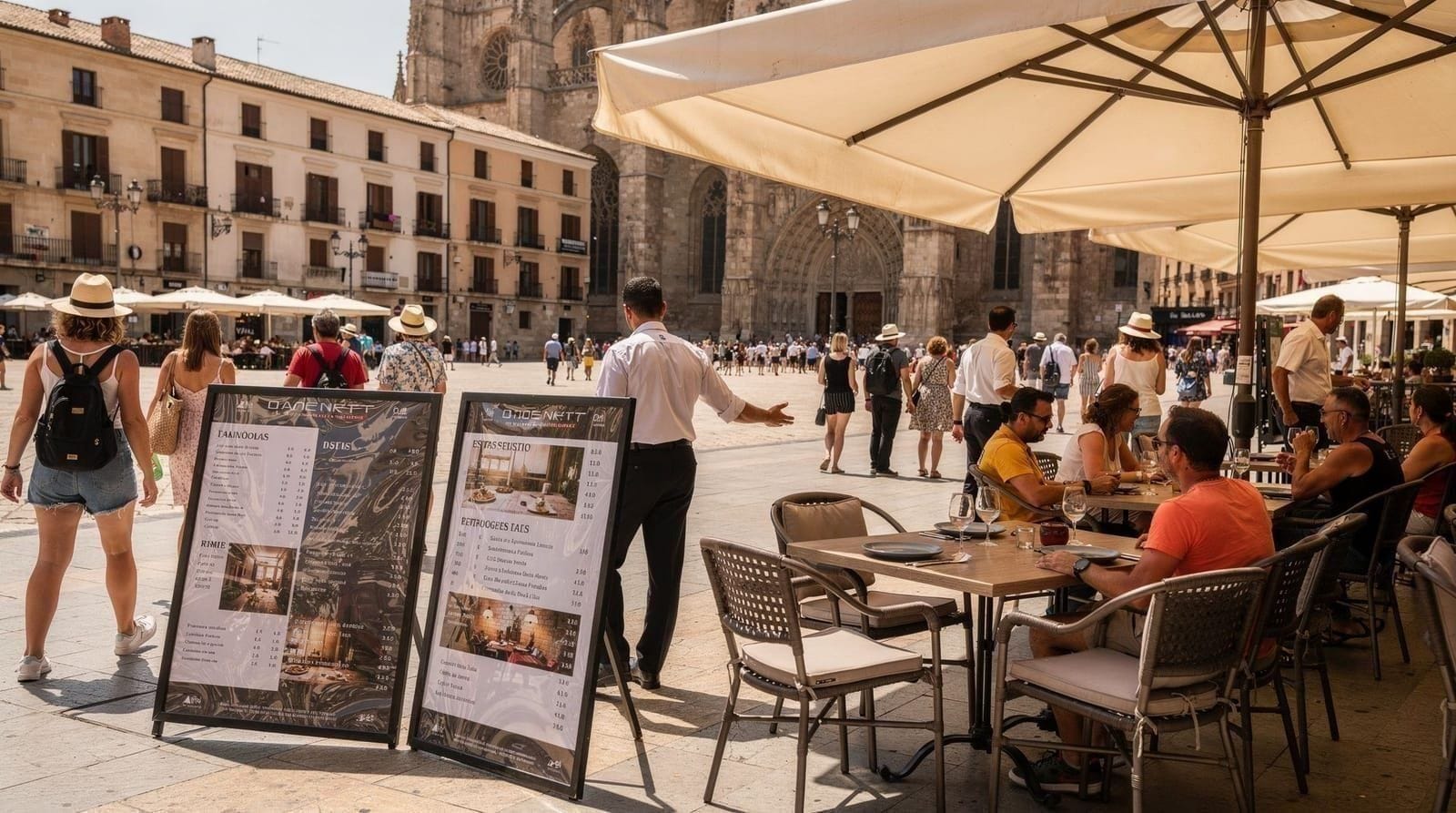
Plaza de la Reina is Valencia’s most beautiful central square — the Cathedral on one side, the Miguelete tower rising overhead, outdoor terraces catching the afternoon sun. It is also the most tourist-dense restaurant zone in the city.
The restaurants immediately on the plaza and on the streets leading to it (Calle Navellos, Calle de la Paz heading south, the cluster around Calle del Mar) follow a predictable pattern:
- Multilingual menu boards with photos
- Dedicated “tourist menu” (menú turístico) at €12-18 offering paella, a second course, and a drink
- Bread brought automatically
- Waiters standing outside to guide you in
The menú del día (worker’s set lunch) at a good local restaurant in Russafa or Benimaclet uses fresh daily ingredients, follows the cook’s morning market choices, and costs the same. The tourist menu near Plaza de la Reina uses pre-portioned frozen paella, standard starter dishes, and the same drink.
The alternative: Walk five minutes north to El Carmen’s interior streets, or 15 minutes to Russafa, and eat at a bar that writes its menu on a blackboard. For specific named recommendations, see tourist menu traps.
Mercado Central: market reality vs tourist spectacle
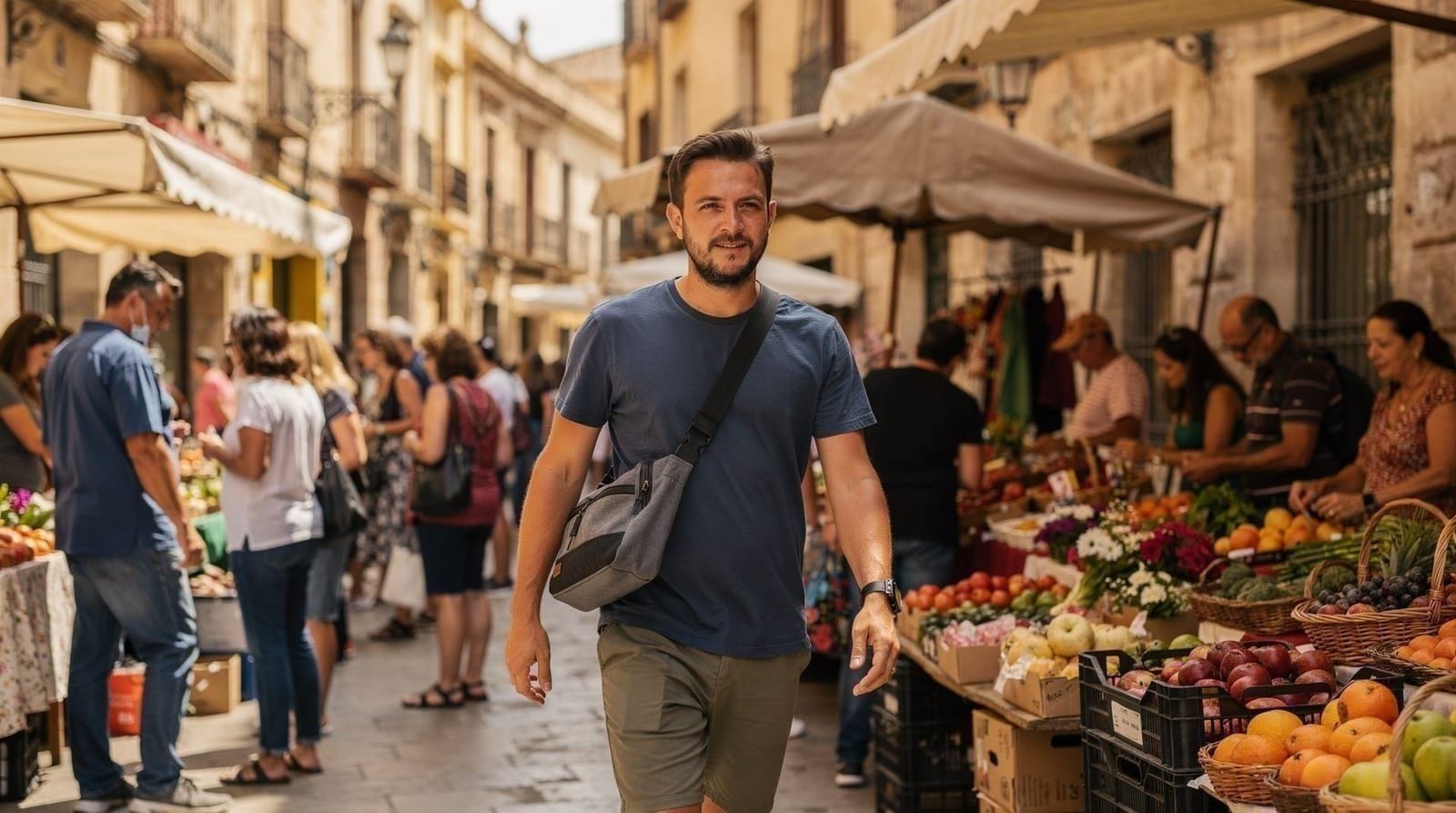
The Mercado Central is genuinely one of Europe’s great food markets — the 1928 Art Nouveau building, the stalls selling locally grown produce, the fish and meat section that supplies the city’s best restaurants. Entry is free. The market is worth visiting.
The trap is the consumer economy that’s grown around its tourist reputation:
Smoothie and juice stalls: A fresh-squeezed orange juice or “Valencia smoothie” at the kiosks immediately inside and outside the market entrance costs €4-7. At a café bar two streets away, the identical product costs €2-3. The premium is entirely location — you’re paying for the Instagram backdrop.
Preserved goods at tourist prices: Packaged chorizo, jamón, cheese, nougat (turrón), saffron, and paprika are sold at stalls near the entrance at prices significantly above supermarket rates. These products are genuine, but the same jamón de bellota you can buy at a tourist market stall for €40 is available at Mercadona or Carrefour for €22.
How to use the market well: Visit it for the experience and to buy fresh produce for picnics (the stalls selling individual pieces of manchego, ibérico cuts, or seasonal fruit are good and fairly priced). Drink your coffee at a bar counter facing the market or on a side street. Don’t buy packaged goods here — take them to a supermarket.
The fake saffron problem
Saffron stalls in tourist zones near Mercado Central, in the El Carmen souvenir shops, and on the waterfront sell attractively packaged “Spanish saffron” at prices that should trigger immediate suspicion.
Genuine saffron (azafrán) — particularly the Denominación de Origen Protegida saffron from La Mancha — is harvested by hand from individual crocus flowers. A single gram of high-quality DOP saffron costs €10-18. A 2-gram sachet at a tourist kiosk for €5 is not saffron.
What it usually is:
- Safflower (cártamo): A cheap substitute with some colour but no flavour
- Turmeric (cúrcuma): Adds yellow colour, completely different flavour profile
- Dyed corn silk: Used in low-end counterfeit saffron worldwide
The labelling is the giveaway — genuine saffron will list country of origin, DOP certification, and weight on the label. Generic tourist packaging often says “Spanish saffron” without certification details.
Where to buy real saffron: El Corte Inglés (department store on Calle de Colón) stocks genuine DOP saffron from certified Spanish producers. Mercadona supermarkets sell a reliable house-brand saffron in the spice aisle. A market spice stall with certifiable origin documentation is also reliable.
Agua de Valencia: the drink trap
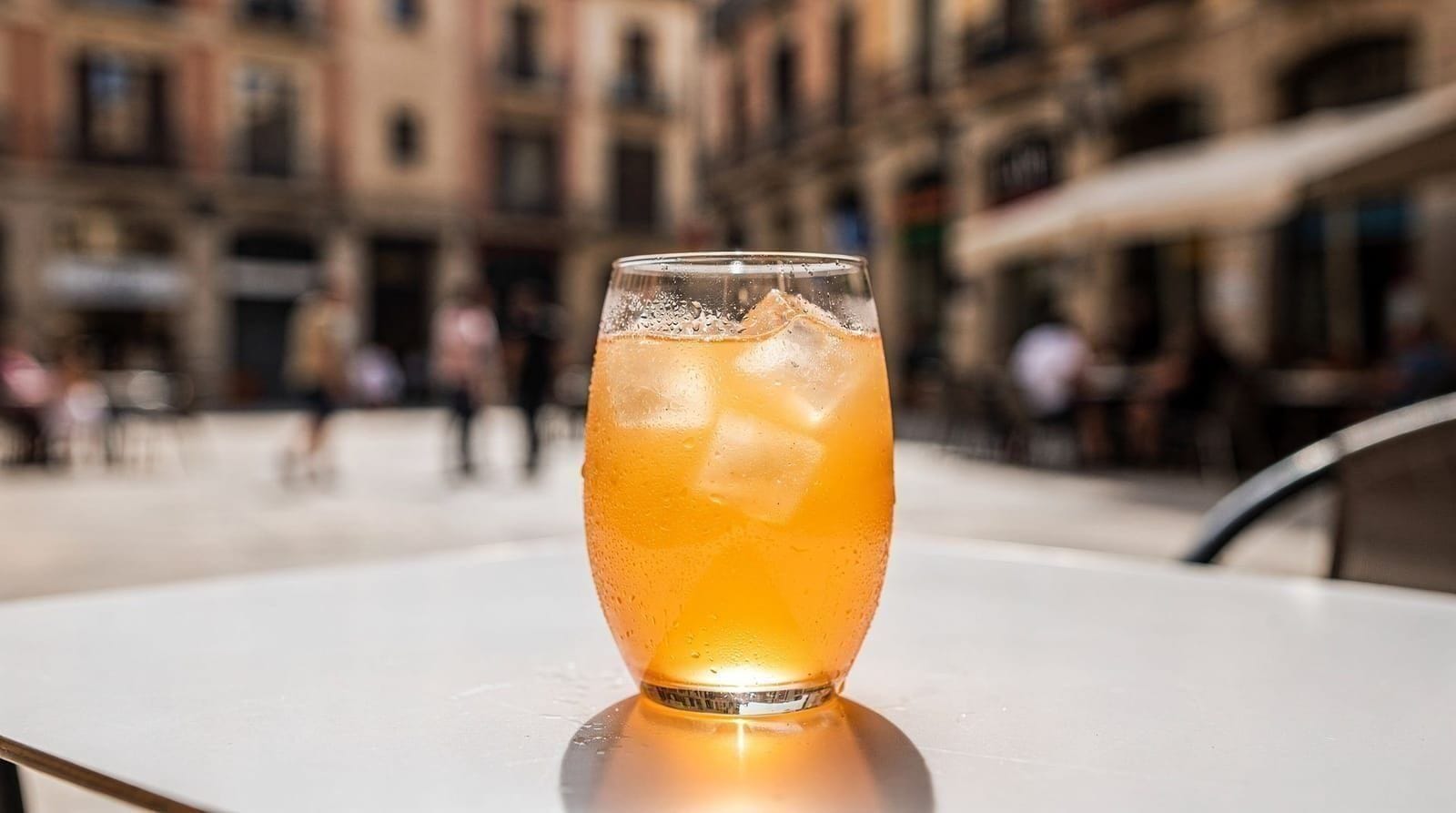
Agua de Valencia is a real Valencian cocktail — a mix of cava (Spanish sparkling wine), vodka, gin, and fresh orange juice, allegedly invented in 1959 at the Café de las Horas on Calle de Museu in El Carmen. It’s worth trying once.
The trap is the tourist version: oversized decorative glass jugs (jarras) served at beach bars and tourist restaurants for €15-25 each, usually made with cheap cava and minimal spirits, presented as a “signature Valencia experience.” The portion is generous but diluted. You’re paying for the performance.
For the full honest breakdown, see is Agua de Valencia worth it?
The better option: If you want to try Agua de Valencia authentically, order it at a local El Carmen bar by the glass (copa), not the jug. Or go to Café de las Horas (Calle de Museu 1, open late) where the story started.
The hop-on hop-off bus: know what you’re buying
The hop-on hop-off tourist bus operates in Valencia and serves a genuine purpose — it covers the City of Arts and Sciences, old town, marina, and beach circuit efficiently. But it’s sometimes oversold as a “see Valencia” product.
What it does well: Covers the wide geographic spread of Valencia’s sights efficiently, with audio commentary, and is particularly useful for mobility-impaired visitors or those with young children who can’t walk the distances.
What it doesn’t do: Give you any authentic engagement with the city. If you’re mobile and have time, the metro, tram, and walking give you a richer experience at lower cost.
Honest use case: Buy the hop-on hop-off if you have 1 day and want to tick off the geographic spread of sights efficiently. Skip it if you have 2+ days and are happy using public transport.
Trap signals at a glance
| Signal | Genuine | Tourist trap |
|---|---|---|
| Paella served | Lunch only (13:30–15:30) | Any time, including dinner |
| Menu | Chalkboard, changes daily | Laminated, multilingual, unchanged |
| Bread | Included or clearly optional | Brought unasked, charged extra |
| Staff | No active soliciting | Waiter stationed outside |
| Saffron price | €10–18/g minimum | €3–5/g “bargain” |
Fallas season: a different set of traps
Las Fallas (mid-March) introduces its own layer of tourist-pricing patterns on top of the year-round ones covered above. Accommodation prices in the old town routinely double or triple for the festival week, restaurants extend their tourist-menu pricing to venues that are reasonable the rest of the year, and street-food stalls around the main fallas monuments charge festival premiums that don’t exist in February or April. None of this is unique to Valencia — most festival cities do the same — but it catches first-time visitors who book based on off-season price research. If you’re planning around the festival, the Las Fallas complete guide and the first-timer’s guide to Fallas cover the festival-specific budgeting separately from the general traps in this guide, including where to stay to avoid the worst of the surge pricing.
Souvenir ceramics: real vs tourist production
The Valencian ceramic tradition (azulejos, painted tiles, cerámica decorativa) is genuine and worth engaging with. The tourist shops selling “traditional” Valencia ceramics at €3-15 per piece near the Cathedral are selling imported or mass-produced items, often from China, with Valencian motifs applied.
Genuine Valencian ceramics come from the region’s traditional production centres — Manises (known as “the city of ceramics,” 15 minutes from Valencia by metro) has actual workshops and studios selling hand-painted pieces at workshop prices. If you want to buy authentic local ceramics, a day trip to Manises or a visit to a genuine artisan shop (El Corte Inglés or the IVAM museum shop carry curated local pieces) is the better route.
Two more traps worth knowing about
The tourist card oversell: Valencia’s tourist card bundles public transport and museum discounts, and it’s genuinely useful for some itineraries — but not all of them. Whether it pays off depends entirely on how many paid attractions you plan to visit and how much you’d otherwise spend on transport. See the honest tourist card guide before buying one on impulse at a kiosk; for some 1–2 day trips centred on the old town, it doesn’t pencil out.
Pickpocket paranoia vs real risk: Valencia is not a pickpocket-heavy city compared with Barcelona or Rome, but incidents do concentrate around the Mercado Central, the Cathedral area, crowded beaches in peak summer, and the metro during Fallas. Ordinary precautions — bag zipped and in front, phone not left on outdoor café tables — are sufficient; there’s no need for the level of vigilance appropriate to a genuinely high-risk city. The pickpockets and safe areas guide has the specific zones and a level-headed risk assessment.
Wider context: Once you’ve internalised the paella-at-dinner rule and the bread-charge check, the remaining traps in this guide are minor by comparison. For the fuller picture of eating well without falling into any of these patterns, the eat like a local guide is the natural next read.
Flamenco evenings: enjoy them for what they are
Flamenco comes from Andalusia, not from Valencia, so a flamenco night here is a staged show rather than a local tradition. That is no reason to skip it. If you fancy an evening of music and dance, a dinner-and-show format such as a flamenco performance paired with dinner sets expectations clearly: you are buying a professional show, not a slice of everyday Valencian life. Book it for the entertainment, eat your paella at lunch elsewhere, and nobody feels misled.
Paying for the card only if it fits your plan
If you do decide the tourist card suits a plan built around several paid sights, compare the options calmly rather than at a kiosk. a short-stay tourist card for one to three days only makes sense when your days are packed with ticketed visits. For a lighter schedule, the Valencia tourist card attractions guide and the worth-it breakdown show what is actually covered, and the Mobilis card guide is worth reading if transport is your main concern.
Putting it together: a trap-free day
A simple shape for a day that avoids almost every trap above: start with a market visit and a coffee at a counter away from the entrance, following the Mercado Central guide and the food markets guide. Spend the late morning on a sight such as the Cathedral and Miguelete or the Lonja de la Seda, then walk away from the square for a proper midday meal. The menú del día guide explains how to read a chalkboard menu, and the how to order paella guide covers the dish itself.
In the afternoon, let the neighbourhoods do the work. The El Carmen guide, the Russafa guide and the Cabanyal guide all describe areas where locals outnumber visitors and menus are written for them. If you are still choosing where to base yourself, the best area for first-timers and where to stay in Valencia help you pick a quarter that keeps you out of the worst zones from the start.
For longer plans, the Valencia in one day itinerary, the 3-day itinerary and the foodies itinerary build in lunch-time paella and local streets by design, while the Valencia on a budget guide shows how avoiding these traps keeps money for things worth paying for. The companion blog post on tourist traps to avoid and the overrated and underrated guide give a second opinion on the same themes.
Frequently asked questions about Tourist traps in Valencia
Is eating paella for dinner in Valencia a tourist trap?
Yes — ordering paella for dinner in Valencia is the single clearest sign you're in a tourist-oriented restaurant. Traditional Valencian paella is a midday dish (lunch), cooked over a wood fire and served fresh. Restaurants that offer paella for dinner are almost certainly reheating a pre-made batch, or using different cooking methods. Locals eat paella on Sunday at lunch, never for dinner.Why is bread automatically brought to the table in Valencia restaurants?
In many tourist-area restaurants, bread is brought automatically but charged — €1.50 to €5 per person, sometimes more. Spanish consumer law allows this as long as it's listed on the menu. You can and should refuse it by saying "no queremos pan" (we don't want bread). This small refusal saves €6-15 per meal in tourist zones.Are the restaurants near Valencia Cathedral tourist traps?
Many are, yes. The zone immediately around Plaza de la Reina, Calle Navellos, and the streets between the Cathedral and Mercado Central has the highest concentration of tourist-menu restaurants in Valencia. These menus typically offer 2 courses plus a drink for €12-15 but often use frozen ingredients and oversized portions of paella that was never cooked to order. Two or three streets in any direction, the quality and value improves significantly.Is the Mercado Central expensive?
The market building is free to enter, and the stalls selling produce (cheese, meat, fish, vegetables) are priced at normal market rates. The tourist trap element is the smoothie, juice and snack stalls immediately inside and outside the market, which charge €4-7 for drinks that cost €2-3 at any bar a few streets away. Buy produce at the market; drink your coffee elsewhere.How do I spot a tourist trap restaurant in Valencia?
Key signs — menu boards in multiple languages with photos, "authentic paella" offered at dinner, waiters actively soliciting customers from the doorway, laminated multi-page menus, bread and olives brought automatically, and location on or immediately adjacent to Plaza de la Reina, Plaza del Ayuntamiento or Calle Navellos. None of these signs alone is definitive, but three or more together means proceed with caution.Is Agua de Valencia a tourist drink?
Agua de Valencia (cava, vodka, gin, orange juice) is genuinely a Valencian invention — the story is that it was created at the Café de las Horas bar in 1959. But it has become heavily associated with tourist-area bars, where it's served in oversized decorative jugs at €15-30 each, often diluted or made with cheap spirits. At El Carmen neighbourhood bars, you can drink it more authentically. Full review at /guides/is-agua-de-valencia-worth-it/.Is fake saffron sold in Valencia?
Yes. Stalls in tourist areas near Mercado Central sell bright orange "saffron" in decorative packaging, often at suspiciously low prices. Real Spanish saffron (azafrán, particularly from La Mancha with DO designation) is one of the world's most expensive spices — a genuine 1g dose costs €10-15 or more. Products sold for €3-5 per gram in tourist kiosks are typically safflower (cártamo), turmeric, or dyed cheaper alternatives, sometimes incorrectly labelled. Buy saffron from a reputable source or bring it from a Spanish supermarket (Mercadona, El Corte Inglés).Are pickpockets a problem in Valencia?
Pickpocket incidents occur mainly on the metro during Fallas, on crowded beaches in peak summer, and in the Mercado Central and Cathedral area. Valencia's tourist zones are generally safer than Barcelona's equivalent areas, but standard precautions apply. See the full guide at /guides/pickpockets-safe-areas/.What are the most tourist trap areas in Valencia?
The highest concentration of tourist-trap restaurants and shops is in the zone immediately around Plaza de la Reina, Calle Navellos, and the pedestrianised streets between the Cathedral and Mercado Central. The Malvarrosa beachfront first row has elevated prices. The El Carmen area, Russafa, El Cabanyal, and Benimaclet are significantly less tourist-trap-heavy.How do I find a good local restaurant in Valencia?
Look for: a menu del día written on a chalkboard or daily-printed paper (not laminated menus with photos), a majority of Spanish-speaking customers, no waiter standing outside to attract you, no paella offered for dinner. The streets in Russafa (particularly around Calle Cádiz and Calle Puerto Rico) and the interior streets of El Carmen north of the Cathedral have the best density of good-value local restaurants.Is Valencia safer from tourist traps than Barcelona?
Generally yes. Valencia's tourist infrastructure is smaller scale and the city hasn't reached the point where entire neighbourhoods have been turned over to tourism. Las Ramblas in Barcelona is a significantly more problematic tourist-trap zone than anything equivalent in Valencia. That said, the Plaza de la Reina area applies the same patterns, just at smaller scale.Are flamenco shows in Valencia tourist traps?
Flamenco is not a Valencian tradition — it's from Andalusia. "Flamenco shows" marketed to tourists in Valencia are genuine performances but they're not culturally local. The shows at La Bulería and similar venues are professionally performed but are tourist products. See them for what they are — a good show with a touristy framing — and you won't feel misled.Should I avoid buying food at Mercado Central?
No — the fresh produce, cheese, and meat at the market stalls are genuine, high-quality, and reasonably priced. The trap is specifically the smoothie and packaged-goods stalls that cater to tourist consumption at premium prices. Buy a piece of aged manchego, some Valencian oranges, or a portion of jamón to eat on a bench in the Turia Gardens — that's real market use. Avoid the overpriced juices and packaged souvenirs.