Bioparc Valencia with kids: what to expect and honest tips
Valencia: Bioparc Valencia admission ticket
Is Bioparc Valencia worth visiting with children?
Yes — it is one of the best-designed zoos in Europe. No cages or visible barriers between visitors and many species. Gorillas, hippos, rhinos, meerkats, and 4,000 animals across four African ecosystem zones. Budget 3–4 hours. Tickets from about €29.50/adult, €23.50/child.
| Where | Western end of the Turia Gardens |
| Cost | From about €29.50/adult, €23.50/child (5-12), under-5s free |
| Time needed | 3-4 hours |
| Getting there | Bus 98, Valenbisi/bike via Turia Gardens, or car |
| Best time | Morning, to catch feeding times and cooler shade |
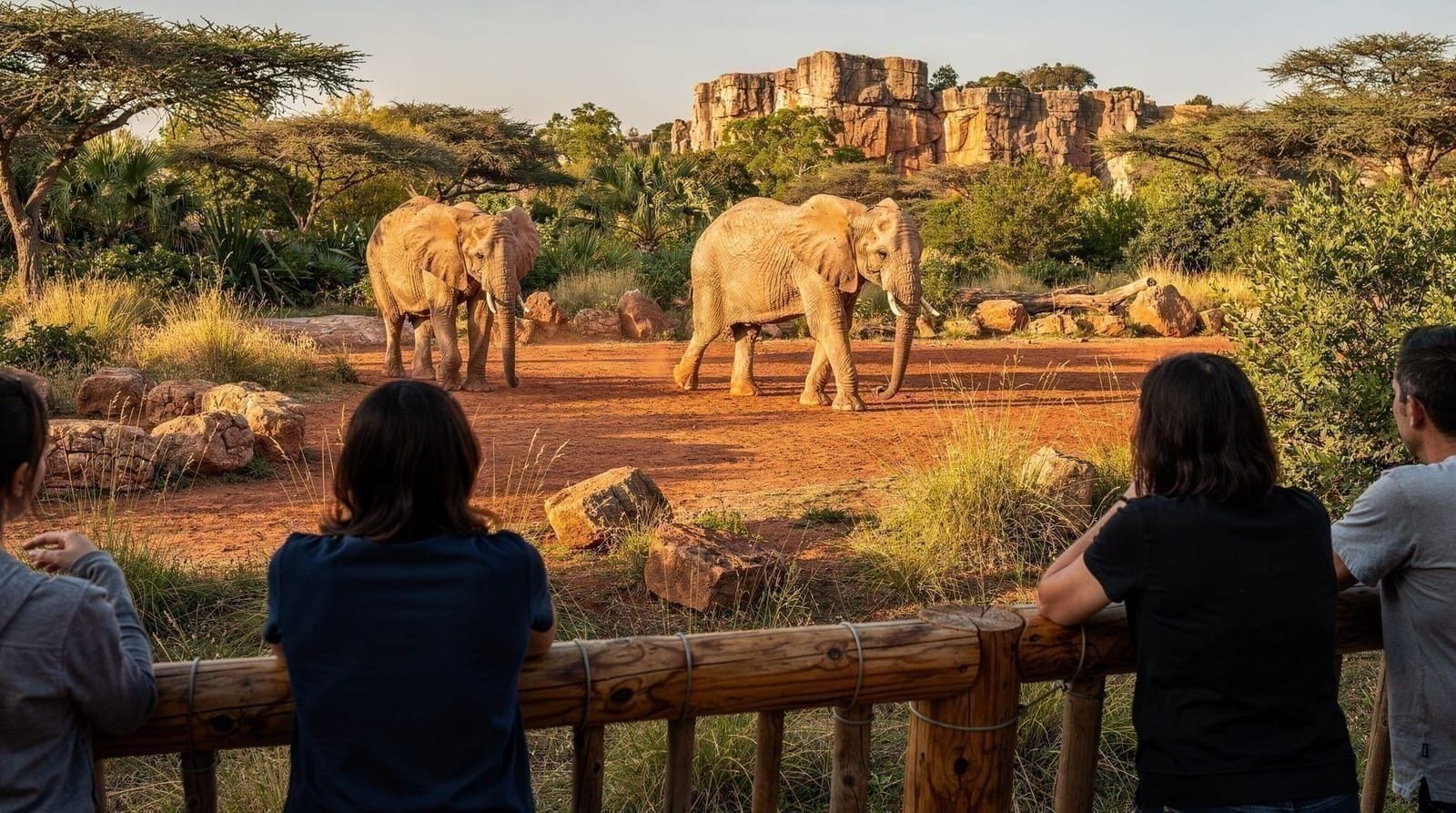
Bioparc Valencia opened in 2008 with an unusual design premise: no visible barriers between visitors and animals. In practice, this means cleverly engineered moats, sunken paths, and glass walls that remain out of the sightlines in most areas, creating genuine immersion in ways that traditional zoos with chain-link fencing simply cannot achieve. Walking through the savannah section, with white rhinos grazing 20 metres away across a moat that is invisible to you at ground level, produces a different quality of experience from any conventional zoo.
The four ecosystem zones
Bioparc is organised around African ecosystems, which gives the whole experience a coherent geography rather than the animal-catalogue feel of many zoos.
Savannah
The largest section. White rhinos, giraffes, zebras, and ostriches share an open space designed to evoke East African grassland. The observation terraces are set low so children can see the animals at eye level. Giraffe feeding is one of the scheduled events that draws a crowd — worth timing your visit to catch it.
Equatorial forest
The gorilla habitat is the emotional centrepiece of Bioparc. Western lowland gorillas move through a large forested enclosure with glass panels at multiple levels. Watching gorilla family dynamics — the silverback’s positioning, juvenile play, the quietness of the whole group — is unlike anything in a standard zoo. The design gives the animals enough space that they behave naturally rather than pacing.
The chimpanzee area is adjacent. Chimpanzees are more active and louder than the gorillas; children tend to find them funnier, adults often find the gorillas more affecting.
Madagascar
A separate walk-through aviary hosts a rotating collection of Malagasy species. Ring-tailed lemurs, crowned lemurs, and red-ruffed lemurs move freely in the vegetation. This section has the most physical proximity to animals of any zone in the park — lemurs occasionally walk alongside the path.
Wetlands and hippos
The Nile hippopotamus habitat includes underwater viewing through curved glass panels. Watching hippos move through water at eye level — these are 1,500 kg animals — is genuinely astonishing. Feeding times for the hippos draw a crowd and are worth attending.
The flamingo lake and crocodile area border the hippo section, creating a full wetland narrative.
 Bioparc Valencia admission ticketCheck availability
Practical family information
Opening hours: open every day of the year from 10:00 (11:00 on 25 Dec and 1 Jan); closing time varies through the year. Last entry 1 hour before closing — check the official site for current hours.
Ticket prices (2026 approximate):
- Adult: from about €29.50
- Child (5–12): from about €23.50
- Under-5: free
- Senior (60+): from about €23.50
Timed events: A daily schedule of keeper presentations and feeding times is posted at the entrance. Gorilla feeding, hippo feeding, giraffe feeding, and the chimpanzee keeper talk are the main events. These typically run in the morning and early afternoon. Ask for the programme at the entrance turnstile.
Pushchair access: Good throughout. Most paths are paved or compacted gravel. Pushchair rental is available at the entrance (approximately €5–7) if you arrive without one.
Shade: Limited in the savannah section during peak summer afternoons. The forest and Madagascar sections are more shaded. Schedule the open sections for morning visits.
Food: The Boma restaurant at the park serves acceptable café food at predictably high attraction prices (€12–18 for main dishes). The park prohibits bringing in food from outside, which is worth knowing before you arrive. There are smaller kiosk points throughout the park for snacks and drinks.
Planning your route through the park
The layout rewards a little forethought. Because the zones are themed as African ecosystems, the walk follows a loose geographic story, and families who treat it as one continuous loop tend to enjoy it more than those who zigzag back to chase a particular animal. Pick up the programme at the entrance, mark the two or three events that matter most to your children, and let the rest of the route fall around them. If you want the broader context for the species and the park’s design, the separate Bioparc overview goes deeper on the animals themselves, while this page stays focused on what works for families.
Children set the pace here. Stop for the underwater hippo glass when they want to linger, and don’t feel obliged to see every enclosure. A relaxed visit where the kids remember the gorillas and the lemurs beats a rushed one that ticks off everything. Keep a snack and a water bottle accessible, and plan a sit-down break around the middle of the loop, ideally in one of the shaded sections rather than the open savannah.
For families who prefer to arrive without driving, the Valenbisi bike-share guide explains how the stations work, and the overview of getting around by metro and EMT bus helps you decide between bus and bike for the day.
Getting to Bioparc
Bus: Route 98 from Valencia city centre runs to Calle Doctor Manuel Candela, a 5-minute walk from the Bioparc entrance. Journey time approximately 20–25 minutes from Plaça de la Porta de la Mar.
Bike: Follow the western section of the Turia Gardens cycle path toward the park. The Bioparc is near the western end of the Turia Gardens, at the intersection with Avenida de Pío Baroja. Valenbisi stations are located nearby.
Car: Parking is available in the Bioparc car park on Calle Doctor Manuel Candela. Approximately €3–4 per hour. Limited spaces during summer weekends — arrive early or use public transport.
Hop-on hop-off bus: Stop 12 on the tourist bus circuit serves the Bioparc area. If you have a tourist bus pass, this is the most straightforward connection.
 Bioparc — discover the Heart of AfricaCheck availability
Combining Bioparc with other activities
Full family day with Gulliver Park: Bioparc in the morning (opens 10:00), lunch at the Boma, then cycle or walk east along the Turia Gardens to Gulliver Park in the late afternoon. Gulliver is free and provides a very different energy after the calm of the zoo.
Two-day family plan: Day 1 at Bioparc; Day 2 at L’Oceanogràfic and the Science Museum. This is less exhausting than trying to cover both in one day and lets children absorb each experience properly.
Combining with hop-on hop-off: The tourist bus combo ticket that includes Bioparc admission is worth checking if you plan to cover multiple city areas on the bus. Do the price comparison — the bus-only ticket is around €20–25; the Bioparc admission alone is from about €29.50, so the combo often represents real savings.
Honest observations
Not a substitute for African wildlife: Bioparc is excellent for what it is, but it is still a captive collection. The gorilla and hippo habitats are generous by any zoo standard, but they are not wild spaces. Children who visit and then encounter African wildlife on safari will find the comparison illuminating, not disappointing. But Bioparc is an honest and well-executed approximation.
The “no barriers” concept has limits: In the savannah section, the moats are genuinely invisible from most vantage points. In some indoor sections, the glass panels are quite apparent. The concept holds in the parts of the park where it matters most — around the large animals — which is where you spend most of your time.
Cost versus Oceanogràfic: Bioparc from about €29.50/adult and €23.50/child costs less than L’Oceanogràfic. For a family of four (two adults, two children), the total is around €106 versus €146. If you can only choose one attraction, the choice is genuinely difficult and depends on your children’s interests. Children who respond to animals tend to prefer Bioparc; children who are drawn to marine life tend to prefer the Oceanogràfic.
Choosing the right season and weather
Bioparc is an outdoor attraction, so the season shapes the day. Spring and early autumn are the gentlest times for families: the animals are active, the paths are comfortable and the savannah section is bearable at any hour. Our notes on Valencia in spring and the general best time to visit Valencia help you fit the park into a wider trip. In high summer, the advice is simple: arrive at opening, finish the exposed sections first and keep the shadier forest and Madagascar zones for later. The Valencia in summer guide covers heat management for the whole city.
If rain is forecast, the park is still doable with waterproofs, but it is less pleasant with very young children. A wet day is often better spent indoors, and the rainy-day ideas for kids list gives you alternatives, including the Science Museum for kids and the Hemisfèric.
Pairing Bioparc with the rest of a family trip
Many families build a trip around two or three big attractions and fill the gaps with free or cheap activities. Bioparc fits neatly into that pattern. On a different day, the City of Arts and Sciences complex offers a very different, more indoor and more hands-on experience, and the honest verdict on L’Oceanogràfic will help you decide whether to add it. After a morning of animals, an afternoon on the sand is a good counterweight; see beaches with kids and family-friendly beaches in Valencia for calm, shallow options.
If you are watching the budget, the Valencia on a budget guide shows where to save so that an admission-based day like this one stays comfortable. For a ready-made schedule that already includes the zoo, the Valencia with family itinerary strings the highlights together at a child-friendly pace, and the hop-on hop-off verdict tells you whether the bus option is worth it for your group.
Access and comfort for different family needs
Families with mixed abilities, grandparents or a child who tires quickly will find the generally paved paths helpful. For wider planning around mobility, the accessible Valencia guide is a useful companion. Whatever your group, build in unhurried stops, accept that not everyone will want to see everything, and treat the timed feedings as optional highlights rather than obligations. A calm, flexible approach is what turns a zoo visit into a good family memory rather than a tiring march.
In the wider Valencia with kids context
Bioparc sits at the western end of the Turia Gardens, about 25 minutes by bike from the Ciudad de las Artes y las Ciencias complex. A family spending 3–4 days in Valencia can reasonably cover both Bioparc and the Oceanogràfic as separate half-days, with Gulliver Park as a free addition on either day.
For detailed day-by-day planning, see the 3-day family itinerary for Valencia.
Bioparc by age group
| Age | Experience | Notes |
|---|---|---|
| Under 4 | Enjoyable but shallow | Misses the ecosystem storytelling; treat as a pleasant walk |
| 4-6 | Good | Responds well to gorillas, hippos, and lemurs at close range |
| 6-12 | Best fit | Most engaged age group; timed feedings hold attention well |
| Teens | Mixed | Some find it “for kids”; the gorilla and hippo sections still land |
| Adults without kids | Genuinely worthwhile | The design quality is appreciated independently of having children along |
Making the most of a visit with very young children
Prams and pushchairs move easily through most of the park, but a few adjustments help with under-5s specifically. Arrive at opening (10:00) rather than midday — the crowds are thinner, the animals are more active in the cooler morning hours, and a tired toddler by 13:00 is less of a problem if you’ve already covered the highlights. The Madagascar section, with lemurs at close range and a shorter loop, works well as a first stop before attention spans fade.
Nap timing matters more here than at most Valencia attractions, since the full loop genuinely takes 3-4 hours. If your child naps in a pushchair, planning the visit around that window — rather than fighting it — makes for a smoother day than trying to power through.
Frequently asked questions about Bioparc Valencia with kids
How much does Bioparc Valencia cost?
From about €29.50 per adult and €23.50 for children aged 5–12. Under-5s are free. Prices vary by date, so check the official site for door prices; online booking avoids queues. Combo tickets with the hop-on hop-off tourist bus are available and worth checking if you plan to use the bus.What age is Bioparc best for?
Children aged 4 and above get genuine value. Under-4s enjoy the animals but miss the storytelling and ecosystem narrative that makes Bioparc special. Children aged 6–12 tend to be the most engaged, particularly in the gorilla and hippo sections.Are there feeding times or animal encounters at Bioparc?
Yes. A daily programme of feeding times and keeper presentations is posted at the entrance. Gorilla and hippo feeding are the most popular. Check the schedule at the entrance gate and plan your route around at least two or three timed events.How long does a Bioparc visit take?
Allow 3–4 hours for a thorough visit. The park covers around 10 hectares and is designed to be experienced at a walking pace. With young children or a pram, allow the upper end.How do I get to Bioparc from central Valencia?
Bus 98 from the city centre drops you near the entrance. By Valenbisi or rental bike, follow the western section of the Turia Gardens — about 25–30 minutes from the old town. Parking is available but charges apply. Not accessible by metro directly.Is Bioparc suitable for a child under 3?
Yes, though the value is lower than for older children. Toddlers generally enjoy seeing the animals up close, but they miss the ecosystem storytelling and timed events that make Bioparc distinctive for older kids. Plan for a shorter visit and factor in nap timing around the 3-4 hour loop.
Top experiences
Bookable activities with verified prices and instant confirmation on GetYourGuide.