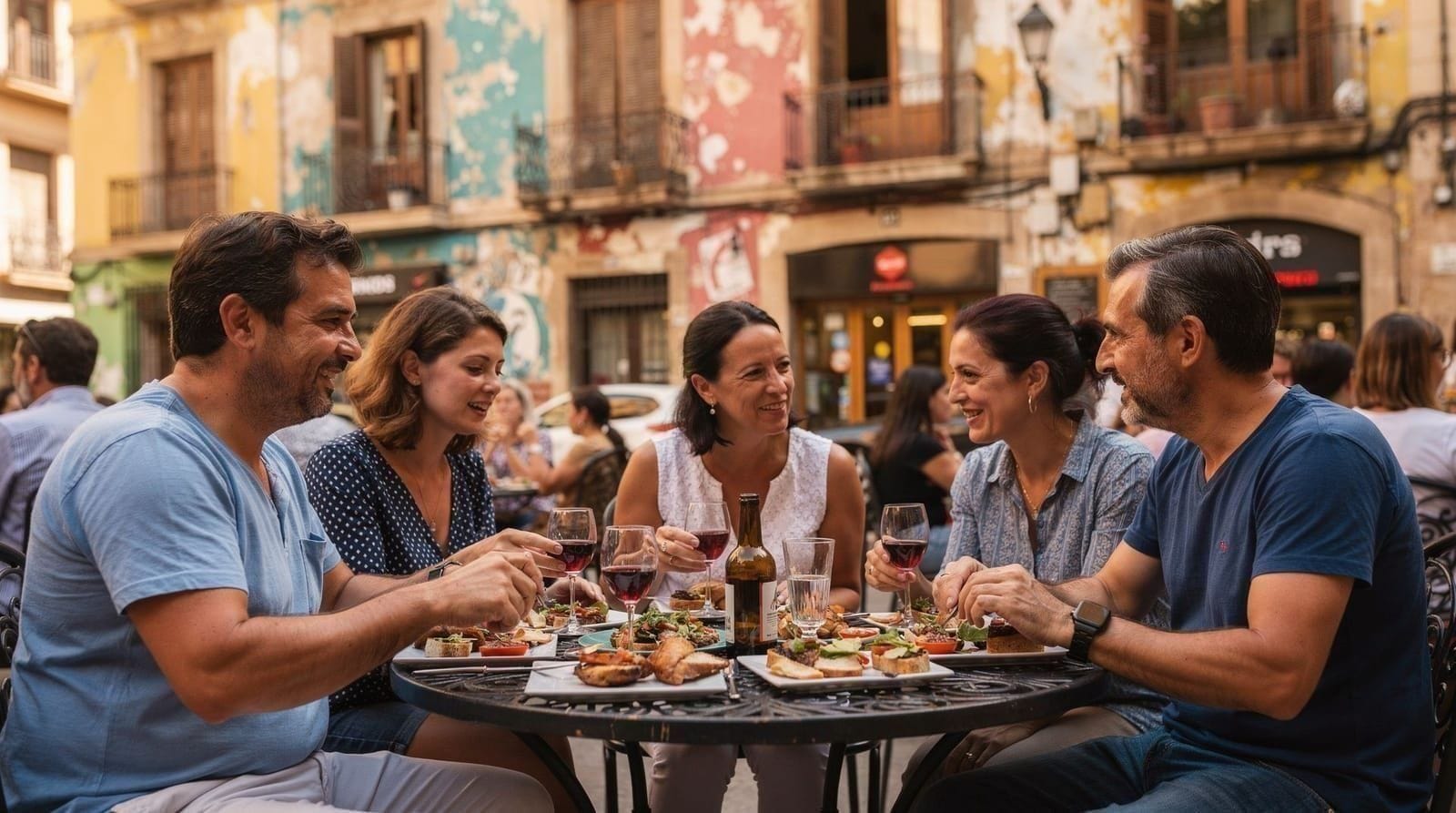
Is Agua de Valencia worth ordering? An honest review
Valencia: sunset boat ride
Duration: 50 min - 1.5 hours
Is Agua de Valencia worth ordering in Valencia?
Order it once, at a proper bar, by the glass. Avoid the large decorative jug versions sold at tourist beach bars and Plaza de la Reina terraces — these are typically watered-down, made with cheap spirits, and charged at €20-35 for a jug you don't need. At a decent bar in El Carmen or Russafa, a glass of well-made Agua de Valencia costs €6-9 and is genuinely pleasant.
| What | Cocktail — cava, gin, vodka, fresh orange juice |
| Cost by glass | Around €6-9 at a proper bar |
| Cost by jug | €20-35 at tourist beach bars — avoid |
| Best areas | El Carmen, Russafa |
| ABV | Roughly 12-15% |
What Agua de Valencia actually is
Agua de Valencia is a Valencian cocktail made from cava (Spanish sparkling wine), vodka, gin, and fresh orange juice. That’s the canonical recipe, and it’s genuinely Valencian — the cocktail was reportedly invented in 1959 by Constante Gil, barman at the Café de las Horas on Carrer del Museu in El Carmen, supposedly as a challenge from a group of Basque customers who asked him to prove that Valencia had something to compare with their Basque drinks.
The name (“Water of Valencia”) is part of the joke — it looks like orange juice but has significant alcoholic content. The proportions vary by establishment, but a well-made version has about 100 ml of cava, 30 ml of vodka, 30 ml of gin, and fresh-squeezed Valencia orange juice.
It’s a legitimate Valencian drink with a real history. The problem is what the tourism industry has done with it.
The tourist version vs the real thing
The tourist version: An oversized glass jug (jarra) at a beach bar or tourist restaurant, containing what looks like a large quantity of orange-coloured cocktail. Served with considerable ceremony. Costs €20-35 per jug.
What’s actually in the tourist jug: often made with cheap cava (Freixenet Basic or supermarket grade), minimal gin and vodka, and heavily padded with orange juice and sometimes a splash of water. The volume is generous, the flavour is diluted, and you’re paying primarily for the vessel and the performance.
The tourist jug trap works because:
- It looks generous — you’re getting “a lot” for your money
- It fits the Instagram brief — oversized, colourful jug in a Valencia setting
- Groups find it easier to share a jug than order individual drinks
- The menus don’t specify what spirits are used
The real version: A glass (copa) at a proper cocktail bar or neighbourhood bar, made with decent cava (Segura Viudas, Codorníu, or a local cava producer), standard gin and vodka, and fresh-squeezed orange juice. Costs €6-9 per glass.
The quality difference is significant. A well-balanced Agua de Valencia has a citrus freshness from the orange juice, a dry, slightly yeasty structure from the cava, and a clean spirit backbone. It’s light (relatively) and very drinkable. A tourist jug version tastes sweet, flat after 10 minutes, and leaves you feeling mildly headachy.
Where to drink it properly
Café de las Horas (Carrer del Museu 1, El Carmen): The original location. Operates as a slightly theatrically Baroque café-bar with gilded mirrors and velvet seating. The Agua de Valencia is made correctly and the setting is worth experiencing. Costs more than a neighbourhood bar but reasonable for the story and quality. Open from late afternoon into the night.
El Carmen neighbourhood bars: The zone around Plaza del Tossal, Calle de la Bolsería, and the internal streets of El Carmen has numerous bars that make Agua de Valencia as a regular item. Less theatrical than Café de las Horas, more local atmosphere. Look for bars without large English-language menus.
Russafa cocktail bars: The bar scene in Russafa (Calle Cádiz, Calle Puerto Rico area) has several cocktail-focused bars that make Agua de Valencia properly. These tend to be younger, more design-forward, and open later.
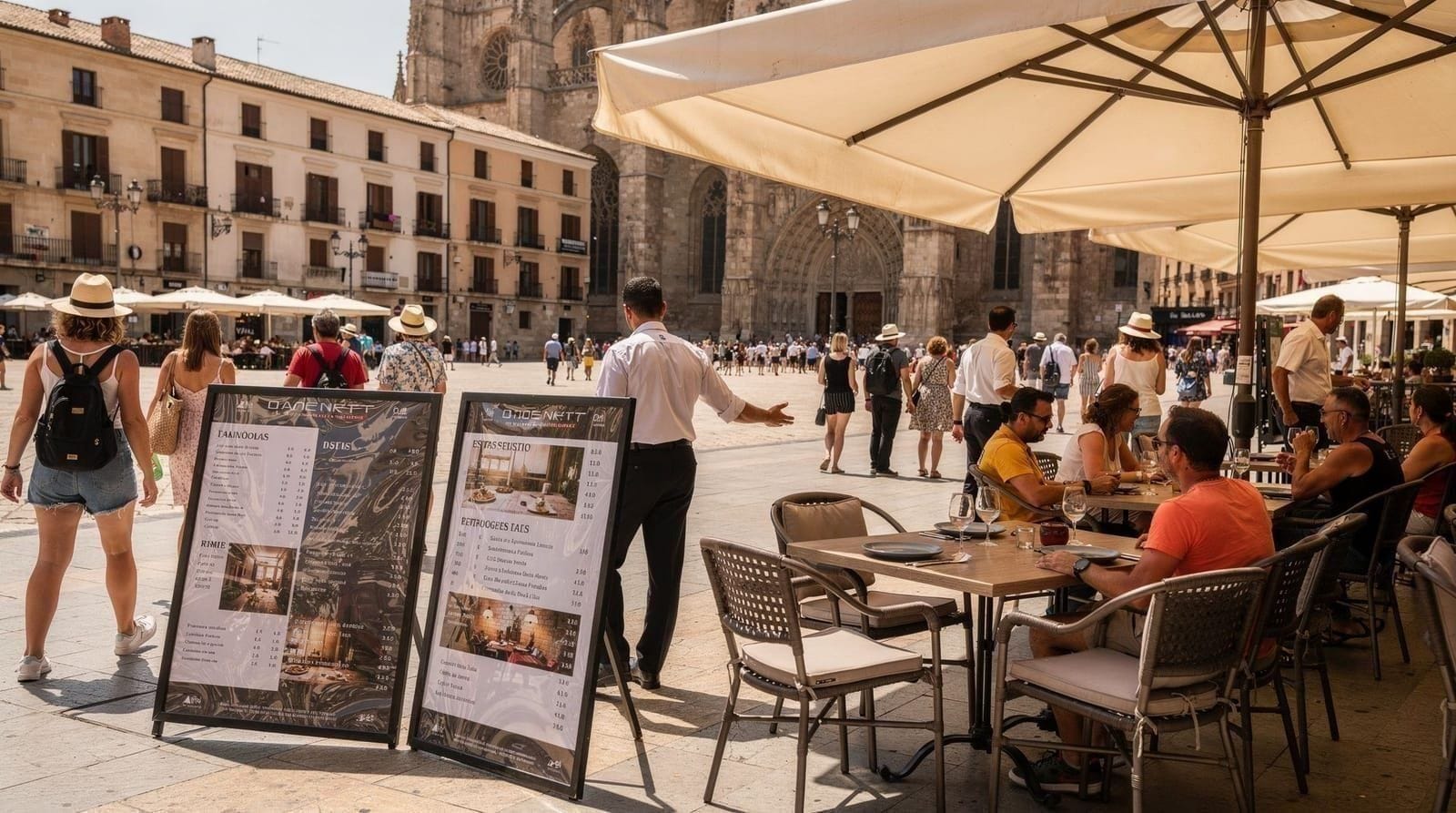
What to avoid: The jug-presenting bars on the Malvarrosa beachfront, the terrace restaurants on Plaza de la Reina, and any establishment where the menu photograph of Agua de Valencia shows a 2-litre decorative jug at the centre of a smiling tourist group. For a broader look at where tourists overpay across the city, see the tourist traps guide.
The price question
A single copa (glass) of well-made Agua de Valencia at a decent El Carmen or Russafa bar: €6-9.
A jarra (1-1.5 litre jug) at a tourist beach bar: €20-35.
A copa from a tourist terrace on Plaza de la Reina: €8-14 (often made to the tourist specification, not the quality specification).
The highest-quality Agua de Valencia in Valencia is probably at upmarket cocktail bars in the Eixample or at hotel rooftop bars — expect €12-16 per glass, but with proper spirits and fresh-squeezed juice.
Is it actually good?
Honestly, yes — when made properly. It’s a summer drink: refreshing, light, slightly boozy, with the specific Valencia flavour of the city’s famous oranges. The cava adds texture and dryness that makes it more interesting than a simple screwdriver.
For a single drink on a warm evening in an El Carmen bar, it’s an enjoyable experience and genuinely a local thing to try. For a 1.5-litre jug on a tourist terrace at €30, the experience doesn’t justify the price and you’ll drink more than you intended.
How to spot a good bar before you sit down
You don’t need to be a cocktail expert to avoid the worst versions. A few cheap checks do most of the work.
Look at the menu first. A bar that lists Agua de Valencia by the glass, next to other cocktails and aperitifs, is treating it as a normal drink. A bar that only shows it as a jug, with a photograph, is selling a prop. If the menu is printed in five languages with pictures of every dish, the same logic applies to the drinks: it is built for passing trade, not for regulars.
Watch the orange juice. A good bar squeezes oranges to order or at least has a visible pile of fruit and a juicer on the counter. Juice from a carton gives the drink a flat, sugary edge that no amount of cava can hide. In a city surrounded by orange groves, there is little excuse for it.
Ask what cava they use. A bartender who answers without hesitation, and names a real producer, usually cares about the result. A shrug, or “the house one”, is not a disaster, but it tells you what to expect. Don’t be shy about asking: in a neighbourhood bar it is a normal question and often starts a friendly conversation about the drink’s history.
Finally, look at who is drinking it. If the other tables are locals having a vermut or a caña and a few people nursing a single glass of Agua de Valencia, you are in the right place. If every table has a jug and a phone pointed at it, you are not.
When to order it, and when to skip it
Timing matters as much as the bar. Agua de Valencia is an evening drink. It suits the hour when the heat has dropped, the streets of El Carmen fill up and nobody is in a hurry. Ordered at midday, in strong sun, on an empty stomach, it is a quick way to lose the afternoon.
Pace yourself. The drink is easy to sip, and the orange juice hides the alcohol. One glass before dinner is a pleasure; a second and third, one after another, turn into a very different evening. If you have a long day planned for the next morning, such as a day trip by train or an early start at the City of Arts and Sciences, keep it to one.
Skip it entirely if you’re after a quiet, food-focused meal. A restaurant lunch, especially a menú del día, is better matched with water, a glass of local wine or a beer. Save the cocktail for later in the day.
Making it part of a wider evening out
Many visitors treat Agua de Valencia as a box to tick. It works better as one stop in a longer evening. Start with a drink in a historic bar, then move on to tapas, then perhaps a walk. The old town is compact enough that you can do all of this on foot, and the Ciutat Vella and El Carmen area rewards wandering with no fixed plan.
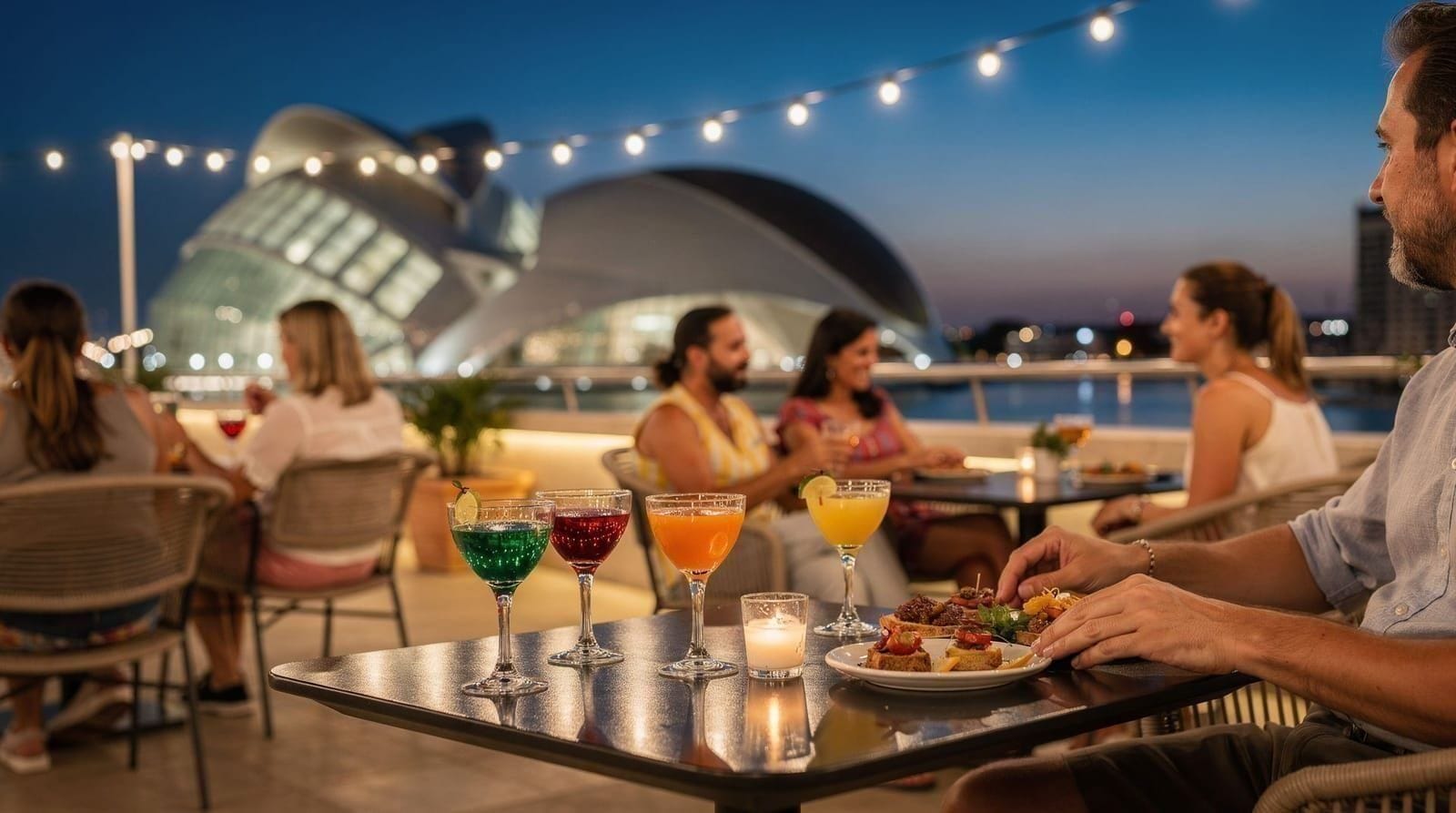
If you prefer to drink with a view, a number of rooftop bars in the city serve the cocktail, usually at a higher price and with a more polished presentation. You pay for the setting as much as the drink, which is fair if you know that going in.
Another option is to take your drink on the water. Some sunset sailing trips include a drink on board, which makes for a relaxed way to end a day without worrying about which bar to choose. A boat outing such as a catamaran sail with a drink on board at sunset is a calmer alternative to a crowded terrace, and our sailing and catamaran guide explains what to expect from these trips.
For more on how locals eat and drink around the city, the eat like a local guide and the wider Valencia hub page are good starting points, and the dedicated Agua de Valencia guide goes deeper into the cocktail itself.
Alternatives for non-drinkers and drivers
If you’re not drinking alcohol, Valencia’s signature drink is horchata — cold tiger nut milk, unique to this region. For a full review of where to drink genuine horchata, see how to eat like a local.
For cocktail drinkers who want something more typically Spanish: vermut (vermouth with ice and orange, Spanish-style) is the local aperitif culture, widely available, cheaper, and more authentically a part of everyday Valencia life than Agua de Valencia. A copa de vermut costs €3-5 at a bar.
Pairing Agua de Valencia with food
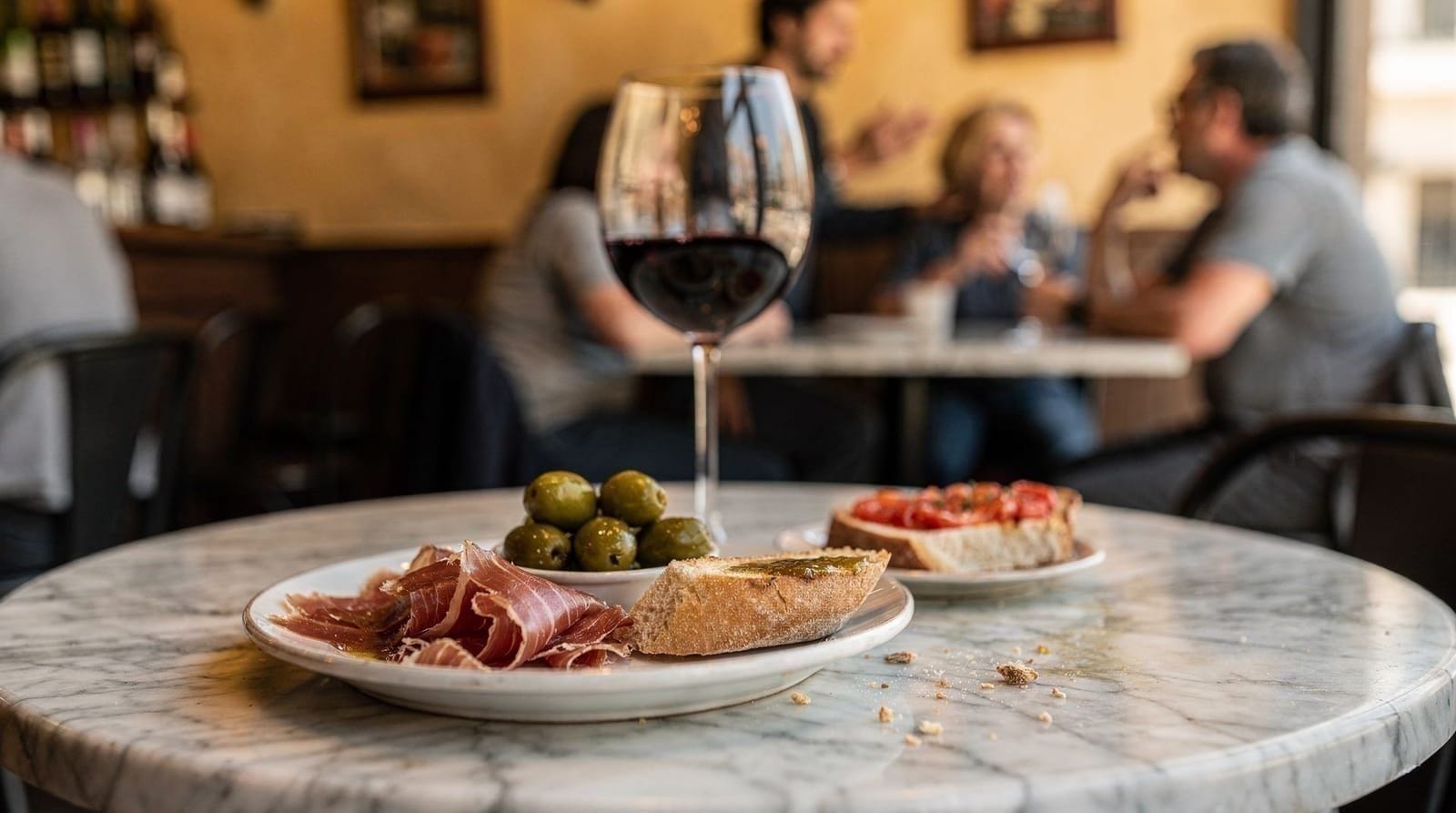
Agua de Valencia is not a food-pairing drink in the traditional sense — it’s too sweet and fizzy to sit alongside a serious paella lunch, which is why most locals order it as a standalone evening drink or with light tapas rather than a full meal. It works well before dinner as an aperitif alongside olives, jamón, or a light tapas spread in Russafa or El Carmen, and it pairs naturally with an evening out rather than daytime sightseeing. If you’re planning a proper rice lunch, save Agua de Valencia for later — order a carafe of Requena wine instead (see the order paella like a local guide for the reasoning).
An easy way to try it without the guesswork
If you’d rather not gamble on which bar makes it properly, a guided tapas or food-and-drink tour through El Carmen or Russafa often includes a stop specifically built around trying Agua de Valencia the right way, alongside other Valencian specialities like horchata and local wine.
Valencia: tapas and drinks evening tourThis removes the risk of ending up at a jug-selling tourist terrace and gives useful context — where the cocktail came from, what’s in it, and why the jug format became a tourist trap in the first place.
Frequently asked questions about Agua de Valencia
How strong is Agua de Valencia?
A properly made Agua de Valencia is approximately 12-15% alcohol by volume — lighter than a straight cocktail but stronger than wine. A large jug shared between four people is roughly equivalent to 2 glasses of wine each. The tourist jug versions are often more diluted; the cocktail-bar versions may be stronger.
Is Agua de Valencia always served in a jug?
No. In bars that make it properly, it’s served by the glass (copa). The jug presentation is specifically a tourist-facing format that maximises visual impact and volume sold. Order by the glass at any serious bar.
Can you make Agua de Valencia at home?
Yes — the recipe is simple: cava, gin, vodka, fresh orange juice. Typical proportions are 60% cava, 20% orange juice, 10% gin, 10% vodka, with ice and a slice of orange. Use the freshest orange juice possible — Valencia’s oranges are available internationally, and the quality of the juice makes or breaks the drink.
Is Agua de Valencia available outside Valencia?
Some bars in Madrid and Barcelona serve it, but it’s genuinely a Valencian drink and most outside Valencia either don’t stock it or make a poor version. This is one of the few things that’s better experienced in its home city.
What glass is Agua de Valencia served in?
Traditionally a wide-mouthed glass similar to a wine glass or a large balloon glass, to allow the aroma to open. The tourist version in a ceramic jug with tumblers is purely decorative. The glass shape doesn’t dramatically affect the taste for a casual drink.
Is Agua de Valencia gluten-free?
Yes, in its standard form — cava, gin, vodka, and orange juice contain no gluten. As with any drink, cross-contamination in a shared bar setup is a separate consideration for those with coeliac disease, but the ingredients themselves are gluten-free.