Tourist menu traps in Valencia — what to avoid and where to eat instead
Valencia: City of Arts full-day combined tickets
Are tourist menus near Valencia Cathedral worth it?
Most aren't. The set menus (€12-18) at restaurants on Plaza de la Reina and the immediate Cathedral zone often use frozen or pre-portioned food, automatic bread charges, and service that prioritises table turnover. A genuine menú del día in Russafa or Benimaclet at the same price is a significantly better meal. A few exceptions exist — this guide separates them.
Knowing the difference between a tourist menu and a genuine menú del día is one of the highest-value pieces of practical knowledge for eating well in Valencia on a budget — it costs nothing to learn and saves both money and mediocre meals.
| Red flag zones | Plaza de la Reina, Calle Navellos, Cathedral-facing streets |
| Tourist menu price | €12–18, often worse value than nearby options |
| Genuine menú del día price | €12–14 in Russafa, Benimaclet, El Carmen side streets |
| Bread/cover charge | Ask first: “¿Es de pago el pan?” / “¿Hay cubierto?” |
| Best fix | Walk 5–10 minutes off the main sightseeing route |
The tourist menu landscape in Valencia
Valencia’s tourist-zone restaurants have developed a standard product: the “tourist menu” (menú turístico), typically priced at €12-18, offering two courses plus a drink in a configuration that looks like the authentic Spanish menú del día but differs in fundamental ways.
This guide is not an argument that tourist-zone restaurants are fraudulent — they’re legal businesses serving a legal product. It’s an argument that the product is frequently poor value relative to what’s available nearby, and that many visitors don’t realise this until they’ve eaten several overpriced, mediocre meals.
How to tell a tourist menu from a genuine menú del día
Tourist menu (menú turístico) markers:
- Laminated card or printed plastic holder that never changes
- Same dishes available every day of the week (a genuine menú del día changes daily with market availability)
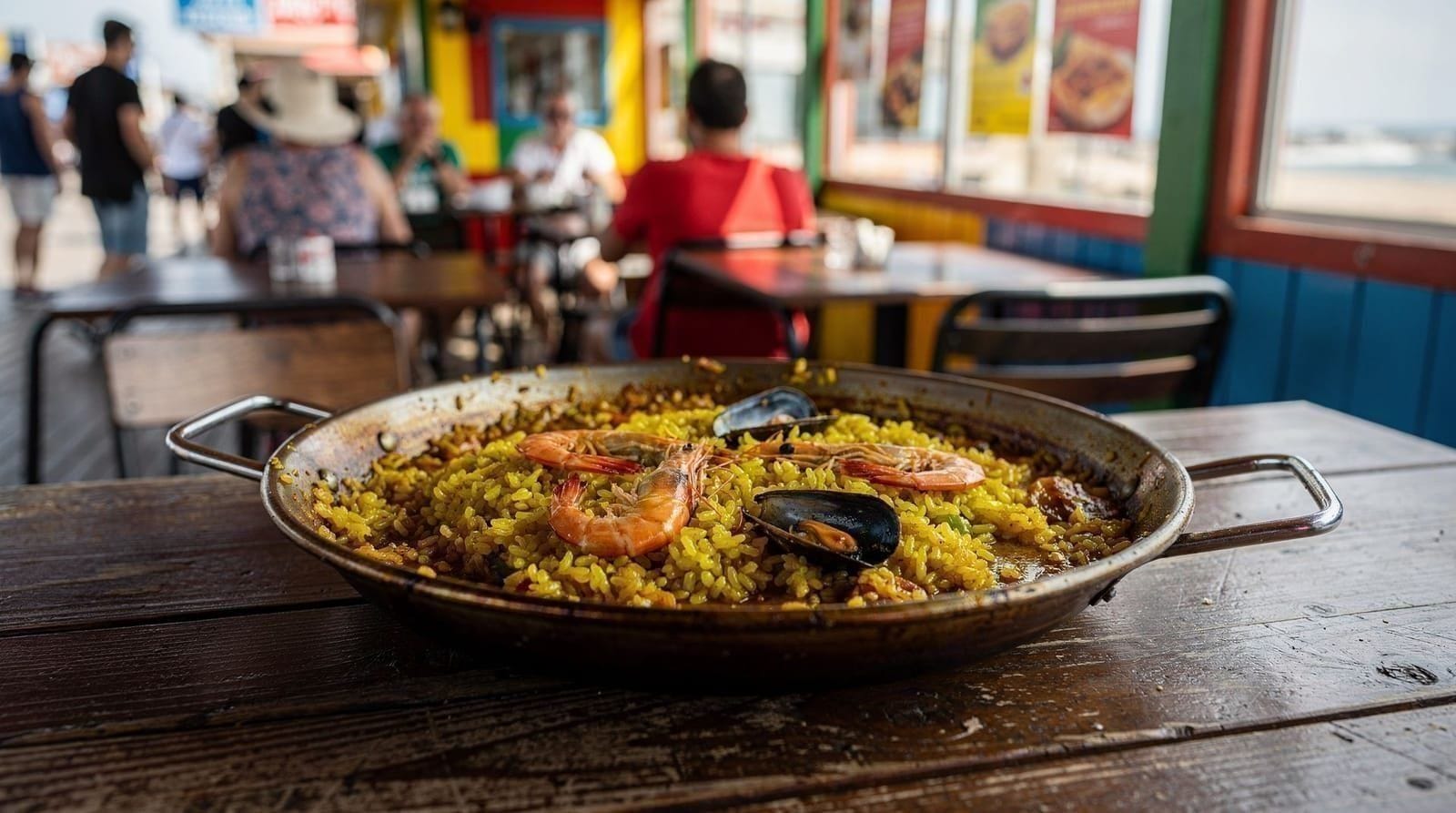
- Paella on the menu — almost always pre-made
- Available at any time from noon to midnight (genuine menús del día run 13:30-15:30 only)
- Multiple language versions prominently displayed (English, French, German, etc.)
- Photos on the menu
- Waiter stationed outside to guide you in
- Location on or directly adjacent to Plaza de la Reina, Calle de la Paz facing the Cathedral, Calle Navellos, or the immediate blocks around Mercado Central
Genuine menú del día markers:
- Written daily on a chalkboard, A4 paper insert, or small chalk board at the entrance
- Changes each day based on what the cook bought at market
- Typically served only at lunch (13:30-16:00)
- Primarily Spanish-speaking customer base
- No waiter outside the door
- In a residential or mixed-use street rather than a primary tourist pedestrian route
The distinction matters not just for authenticity but for food quality. A cook preparing fresh daily dishes based on market availability is almost always producing better food than a kitchen reproducing the same frozen-portion menu indefinitely.
The specific zones with highest tourist menu density
Plaza de la Reina and immediate surrounds
The Plaza de la Reina and the streets feeding it — particularly Calle de la Paz heading south-east, Calle Navellos, and the side streets between the Cathedral and Llotja — have the highest density of tourist menu restaurants in the city.
This area is unavoidable for sightseeing — it’s the geographical centre of the old town — but dining here without research means you’re eating from the tourist menu circuit by default.
The specific problem here: The visibility of the Cathedral and the Micalet tower from these restaurants means the “ambiance” premium is substantial. You’re paying for the view. The food doesn’t match the surcharge.
What to do: Walk here for sightseeing. Walk five minutes in any direction — north towards Plaza de la Llibertat, west towards El Carmen’s interior streets, or east towards Calle Baja — for significantly better eating at lower prices.
Mercado Central surrounds
The restaurants on the streets immediately outside Mercado Central — notably facing the market on Plaza del Mercado and on the side streets — benefit from the market’s tourist traffic and charge a premium for proximity. Some are genuinely good (being opposite a fresh food market is not automatically a trap); many are mediocre.
Indicator: If the restaurant has a photograph of the Mercado Central building in its window and “Traditional Valencia cuisine” in three languages, it’s marketing itself to tourists rather than to the locals who shop at the market.
What to do: Use the market for produce and atmosphere. Eat lunch 2-3 streets away in the El Carmen streets to the north or the streets south towards Russafa.
Calle Navellos
This short street connecting the Cathedral area to Calle de la Paz has an almost unbroken line of tourist restaurants on both sides. The menus are similar across establishments, the prices are similar, and the quality is generally similar — mediocre, with automatic bread charges and pre-made paella.
This street is a useful shortcut on foot. Don’t eat there.
Malvarrosa beachfront
The first row of restaurants directly on the beach — particularly the stretch between the main beach entrance at Passeig Neptú and the northern end near La Patacona — charges significant beachfront premiums. A rice dish or seafood plate costs 30-50% more here than in the surrounding streets.
The legitimate exception: The older, established paella restaurants on this strip — including La Pepica (founded 1898, supposedly a favourite of Ernest Hemingway and many others over the decades) and similar long-standing venues — are expensive but genuinely good. La Pepica charges tourist prices; it also serves real paella to high standards. If you want the beachfront paella experience and are willing to pay €30-45 per person, it’s a legitimate choice. If you want good paella at non-tourist prices, go to El Palmar — see the authentic paella guide for specifics on where and why.
Bread charges: the automatic add-on
Already covered in tourist traps in Valencia, but worth repeating for restaurant-specific context:
In tourist-area restaurants throughout Valencia, bread appears automatically. It is charged. In most tourist-menu restaurants, this is €1.50-3 per person (€6-12 for a table of four). The charge is on the menu; you don’t always notice until the bill arrives.
Procedure: When the bread arrives, before touching it: “¿Es de pago el pan?” (Is the bread charged?). If yes: “No gracias.” The waiter takes it back. You pay zero. If you’ve already eaten any of it, the charge stands.
Genuine menú del día restaurants typically include bread in the set menu price. One more marker of quality: included bread versus charged bread.
Cover charges and small print
Some tourist-area restaurants add a “cover charge” (cubierto) of €1-2 per person for table setting, in addition to bread charges. This is legal if listed on the menu. In tourist zones, you can be paying €3-5 before you’ve ordered anything.
Check: “¿Hay cubierto?” (Is there a cover charge?) when you sit down.
Tipping and the bill
Spain does not have a mandatory tipping culture, and this applies in Valencia’s tourist zones too — but the two are sometimes conflated by visitors used to US-style service charges. A genuine menú del día in Russafa or Benimaclet expects no tip beyond rounding up small change, if anything. In tourist-zone restaurants, be alert to a “service charge” or “servicio” line added to the bill on top of the menu price — this is different from the cover charge and, if present, should be listed clearly rather than added silently. If the total doesn’t match what you expected from the printed prices, ask for an itemised breakdown (“¿Me puede desglosar la cuenta?”) before paying. This single question resolves most tourist-menu billing surprises.
What “house paella” on a tourist menu actually means
When a tourist menu lists “house paella” or “Valencia paella” as a first course at €12 for the full menu, the economics make clear what you’re getting.
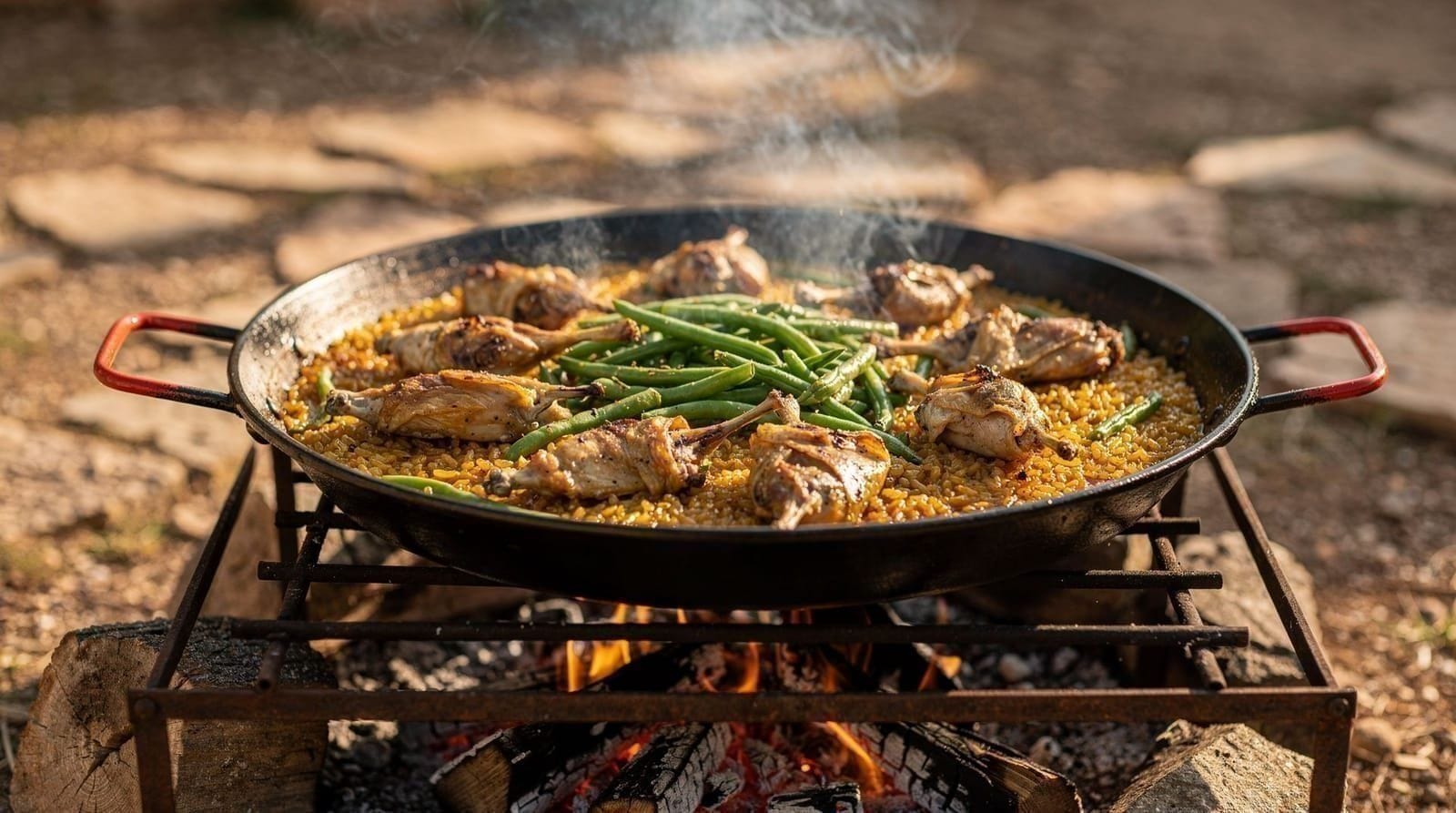
A genuine paella valenciana uses:
- Arroz bomba rice (more expensive than standard rice)
- Fresh rabbit and chicken (significant ingredient cost)
- Ferraura and garrofó beans (specialty Valencian varieties)
- Real saffron (expensive)
- Wood fuel or equivalent
At €12 for the full menu including a second course and drink, there is no food cost margin for properly prepared rice dishes. The paella in a tourist menu at this price is made with whatever produces a yellow-coloured rice dish at minimum cost. This is a specific case of the wider pattern covered in paella traps in Valencia — worth reading if rice dishes are a priority on your trip.
The better alternatives: where locals actually eat lunch
Russafa (Ruzafa): The neighbourhood’s grid of streets — around Calle Cádiz, Calle Puerto Rico, Plaza de España, and the blocks toward Mercado de Russafa — has the highest density of good-value menú del día restaurants in central Valencia. These are places serving to a daily local lunch crowd; the food is seasonal, the menu changes daily, and the prices are €12-14 for a complete lunch. Bar Palacio, Bar Restaurante Universal, and dozens of others in this area fit this description. For evening eating in the same neighbourhood, see the tapas in Ruzafa guide — the same streets that do good lunches do good tapas at night.
Benimaclet: The university neighbourhood north-east of the old town has student-priced menús (sometimes €9-11, often €12) in a mix of Valencian traditional and international restaurants. Getting there requires 15 minutes on the metro (Benimaclet stop on L5) but the savings and quality justify it on a longer stay. The Benimaclet guide covers the neighbourhood beyond lunch, including its bars and student atmosphere.
El Carmen interior streets: Away from the main tourist circuit, the streets north of the Cathedral around Plaza de la Llibertat, Calle de l’Espasa, and Calle de les Carabasses have neighbourhood-facing bars and restaurants with proper daily menus. Harder to find on a map (no well-known “addresses”) but consistent quality.
Grau (port area): For rice dishes specifically, the streets in the El Grau neighbourhood — Valencia’s working port area, about 20 minutes by bus 4 from the city centre — have traditional arrosseries serving to dock workers and local families. The tourist infrastructure is minimal; the food is genuine.
The “authentic Valencia” marketing tell
Any restaurant that uses the phrase “authentic Valencia cuisine” or “traditional Valencian recipes” prominently in its marketing is, with some exceptions, marketing its authenticity rather than producing it. Genuinely traditional restaurants in Valencia don’t need to assert it — their clientele knows.
This is not universal — there are good restaurants with this language — but it’s a useful filter. When a restaurant needs to tell you it’s authentic, ask why.
Planning lunch around your sightseeing days
The easiest way to fall into a tourist menu is to arrive hungry at an attraction with nothing planned. Big-ticket sights tend to be surrounded by restaurants that depend on passing visitors rather than repeat local customers, so the same logic that applies around the Cathedral applies there too.
If you’re spending a full day at the City of Arts and Sciences, decide in advance where lunch happens rather than eating at the first terrace you see. A single ticket covering several of the venues, such as a full-day combined ticket for the City of Arts and Sciences venues, keeps the day simple, and leaves you free to step away for a proper sit-down lunch in a neighbourhood place instead of grabbing a rushed tourist menu. The area guide and the Ciudad de las Artes y las Ciencias destination page help you work out what’s nearby and what isn’t.
Likewise, if you plan to cover several museums over a couple of days, a multi-day tourist card covering public transport and attractions makes the metro and bus rides to Russafa or Benimaclet effectively painless, which removes the main excuse for eating next to the sight. Whether a card pays for itself depends on your itinerary — the honest tourist card guide and getting around by metro and EMT explain how to judge that. For the neighbourhood side of the decision, see where to stay in Valencia and the Russafa guide, since sleeping near good lunch streets makes the habit automatic.
A few habits make this easier on any day:
- Pick your lunch street the evening before, not at 14:30 when you’re tired.
- Treat the sight and the meal as two separate decisions.
- Use the Valencia food markets guide when you want a casual, flexible lunch instead of a sit-down menu.
- Keep the full eating-like-a-local guide open on your phone for the markers listed above.
If you’d rather not guess: guided food tours
Learning the local markers takes a day or two of trial and error. If you’re only in Valencia briefly and would rather skip the learning curve, a guided food tour built around genuine local spots — Mercado Central tastings, neighbourhood bars, real menú del día venues — solves the same problem faster, at the cost of flexibility.
Valencia morning food tour through Mercado Central and local eating spotsThis isn’t necessary if you’re staying more than a few days — by then you’ll have found your own Russafa or Benimaclet spot — but for a short trip it removes the guesswork covered in this guide.
Frequently asked questions about tourist menu traps
What should a proper menú del día cost in Valencia in 2026?
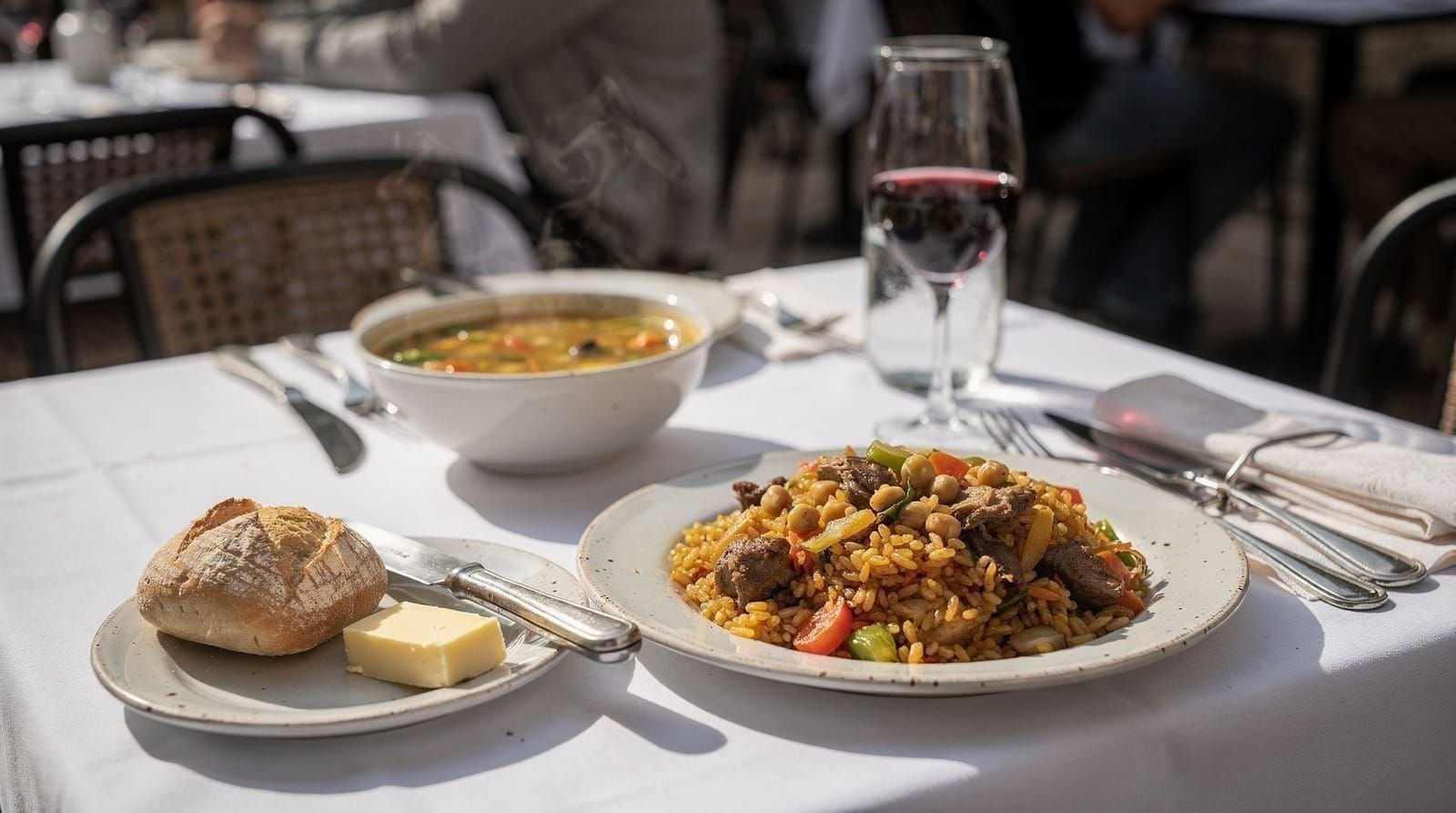
In residential neighbourhoods (Russafa, Benimaclet, El Carmen side streets): €12-14 for two courses plus bread and drink. In mixed tourist-residential areas: €14-16. In the primary tourist zones (Plaza de la Reina, beachfront): €16-20. The price difference between a tourist menu and a genuine menú del día is often €2-4, but the quality difference is larger.
Is it rude to refuse the bread that’s brought automatically?
No — it’s a normal and accepted thing to do. Spanish restaurant staff are used to this request. Simply say “No queremos pan, gracias” (We don’t want bread, thank you) when it arrives. No explanation needed.
Are all restaurants near the Cathedral tourist traps?
Not all, but many. There are good restaurants within a block of the Cathedral — they tend to be ones that have been there for decades (pre-tourism-boom) with established local clientele. If you see a high proportion of local Spanish-speakers eating there, that’s the indicator. The exclusively tourist-facing restaurants near Plaza de la Reina are the consistent problem.
Why don’t I just check Google or TripAdvisor reviews?
Reviews are useful but have known issues for tourist-area restaurants: tourists reviewing tourist restaurants create a self-reinforcing feedback loop. Someone who has never had genuine paella gives a tourist-paella restaurant 4 stars because they didn’t know any better. Local Spanish-language review platforms (or asking the hotel concierge specifically for menú del día recommendations) yield better results for this type of eating.
What’s the best way to find a good lunch in Valencia?
Walk to Russafa. Walk around the streets near Mercado de Russafa and look at the handwritten blackboards outside each bar and restaurant. Find one that has changed its menu from yesterday (you can often tell by whether the board looks freshly written or been up for a week). Sit down. Order the menú del día.