How to eat like a local in Valencia — timing, customs and real restaurants
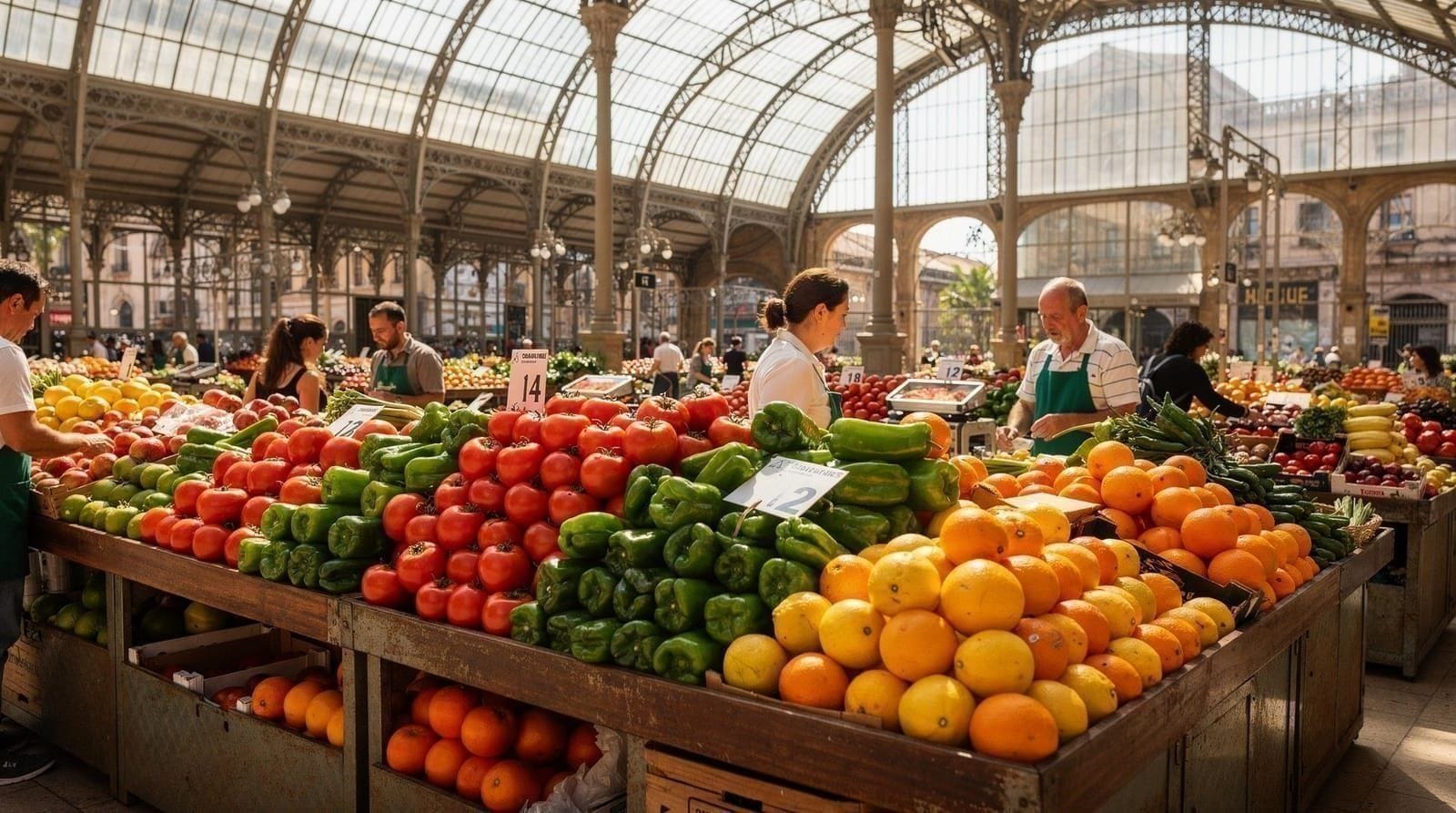
Valencia: daytime tapas tasting tour with Central Market visit
Duration: 3 hours
How do locals eat in Valencia?
Valencianos eat on a schedule that differs significantly from northern European customs. Breakfast is light and early, the main meal is lunch (14:00-16:00), dinner is late and often small. The esmorzaret (mid-morning snack) is a local institution. Paella is a Sunday lunch ritual, not a dinner dish. Knowing this schedule turns you from a confused tourist into someone eating well at the right times.
The Valencian food day, explained
The first thing to understand about eating in Valencia is that the schedule is not what you’re used to. Northern European and North American visitors routinely eat lunch at 12:30, dinner at 19:30, and wonder why Valencia’s restaurants seem half-empty at those times. They’re not empty — they’re waiting for you to arrive at the right hour.
The local eating day runs roughly:
07:00-09:00 — breakfast (desayuno): Coffee and something small at a bar counter. A café con leche and a tostada con tomate (toasted bread with tomato, olive oil, salt) costs €2-3 and constitutes a full Valencian breakfast. Some people eat nothing until the esmorzaret.
10:00-11:30 — esmorzaret (mid-morning snack): A social and caloric refuelling. More substantial than breakfast; less formal than lunch. Sandwich, small plate, coffee or cerveza.
14:00-16:00 — lunch (comida): The main meal of the day. Two or three courses at a restaurant or bar, or a substantial home-cooked meal. The menú del día dominates weekday lunch culture. Sunday lunch is the ceremonial meal — longer, with more elaborate dishes, often with family.
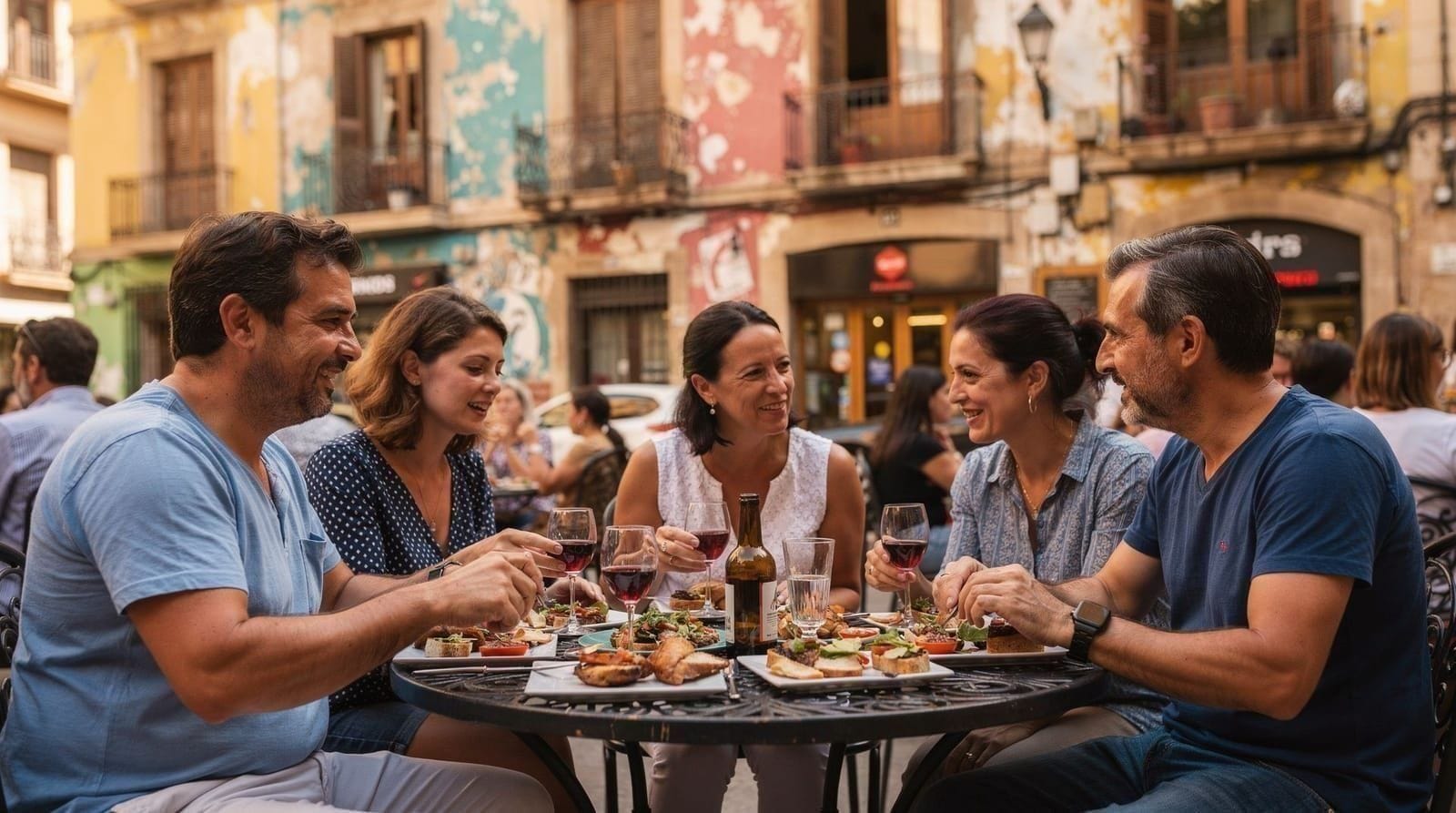
20:00-21:00 — tapas and aperitivo: Light snacking at a bar before dinner. Olives, crisps, a small bocadillo. Beer or wine.
21:30-23:30 — dinner (cena): Late, lighter than lunch. Often at a bar or a restaurant with a shorter menu than the lunch service.
If you try to eat lunch at noon or dinner at seven, you’ll be eating alone and eating worse — the kitchen isn’t fully prepared, the daily specials aren’t ready, and the atmosphere that makes these places good is absent.
The practical consequence is that your day should be planned around meals rather than the other way round. Book the big sights for the morning, let the esmorzaret carry you through, and treat 14:00 as the moment you sit down properly. If you are still working out how long to stay and how to pace your visit, the guide on how many days in Valencia helps you decide how many lunches you actually get, and where to stay matters more than you would think: sleeping near a working neighbourhood means local bars on your doorstep.
The esmorzaret: Valencia’s most underrated meal
The esmorzaret (pronounced ess-mor-zah-RET; “almuerzo” in Castilian Spanish) is the mid-morning meal that separates Valencia’s food culture from other Spanish regions.
It’s not a coffee break. A proper esmorzaret is a substantial affair:
Classic esmorzaret combinations:
- Bocadillo de calamares: A crispy fried squid ring sandwich, usually in a fresh roll (barra). Simple, hot, better than it sounds.
- Bocadillo amb mongetes i cansalada: A bean and bacon sandwich — a Valencian rural tradition that’s been adopted by city bars.
- Entrepà d’embotit: Cured meat sandwich (jamón, sobrasada, longaniza de Pascua).
- Tortilla española: Spanish omelette slice, either on bread or on its own.
- Croquetes: Bechamel croquettes, fried fresh, served piping hot.
- Migas: Pan-fried breadcrumbs with meat and egg — a traditional dish that appears in old-school esmorzaret bars.
Where to find a genuine esmorzaret: The esmorzaret bars are found in residential neighbourhoods, near markets, and in old-town streets not on the tourist circuit. Look for:
- Tiled bar interiors, no table service, bar stools
- Handwritten or chalkboard menus
- A local crowd eating from 10:00-11:30
- Reasonable prices (€3-6 for a bocadillo, €1.20-1.60 for coffee)
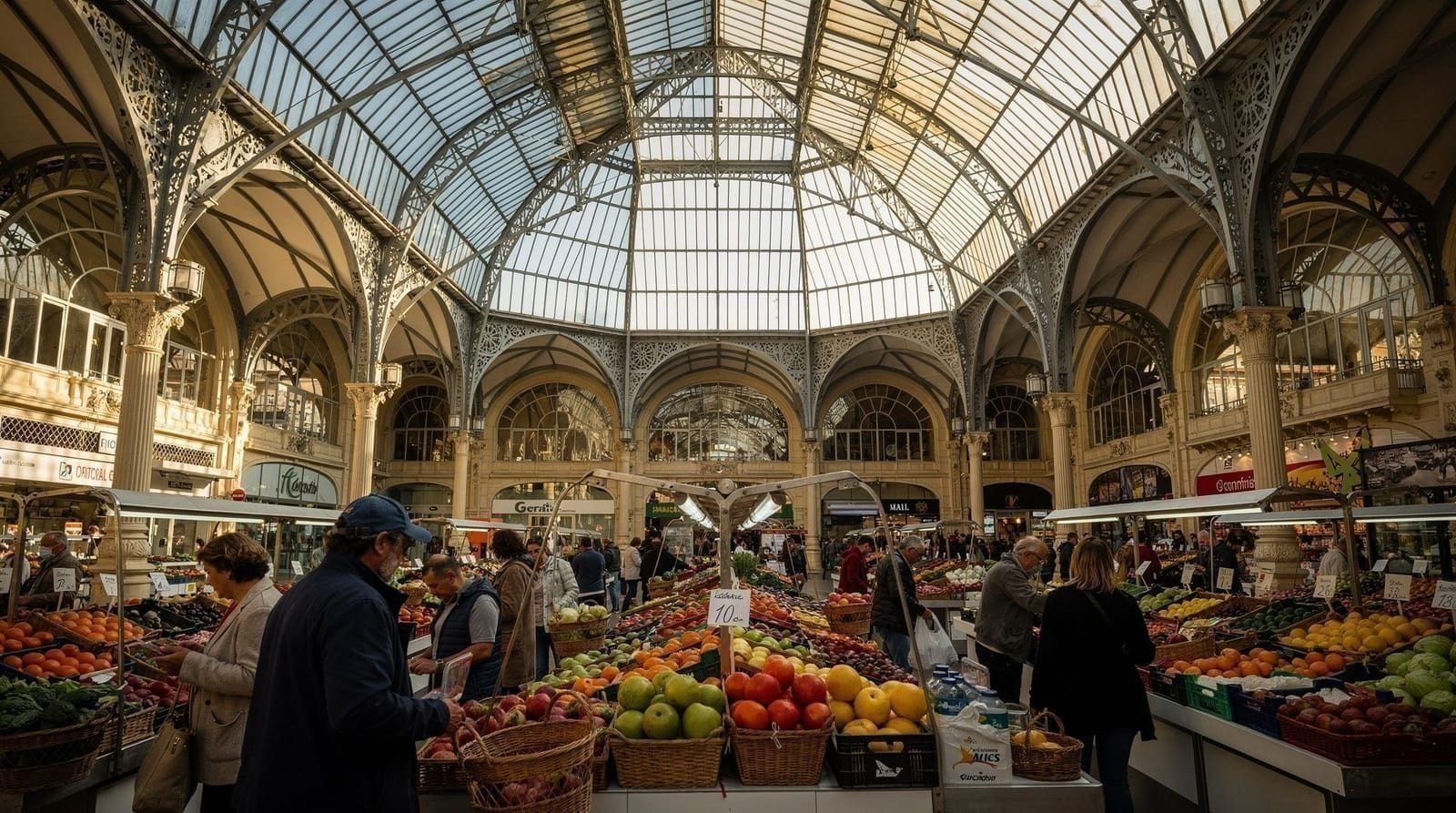
Specific areas: the streets around Mercado Central (the market itself opens for buying at 07:30 — the bars nearby cater to market workers and neighbourhood residents before tourist hours); the streets off Calle de la Paz in the old town; the Russafa barrio around Calle Cadiz; the El Cabanyal neighbourhood near the market.
A few habits make the esmorzaret easier for a first-timer. Stand at the bar rather than hunting for a table, say what you want clearly and politely, and do not be shy about pointing at what the person next to you is eating. Bar staff in these places are fast and unceremonious, and that is not rudeness, just rhythm. The same logic applies to the esmorzaret and almuerzo guide, which goes deeper into the order of things. If your morning starts at the market, the Central Market food guide and the general Central Market guide show what to look at before you sit down for a bite.
The menú del día: how locals eat well cheaply
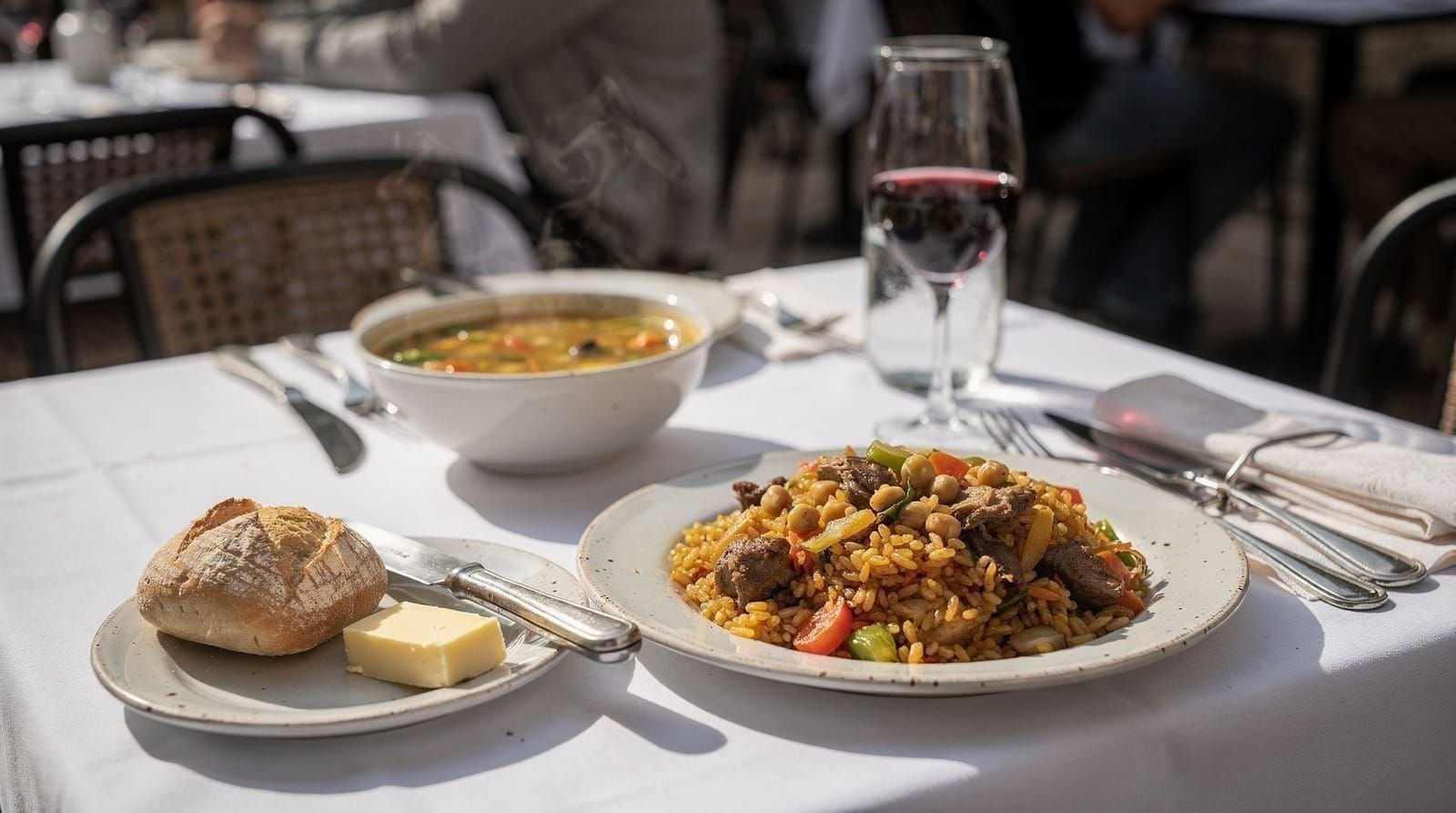
The menú del día is Spain’s contribution to civilised working life. It’s a fixed-price set lunch of two courses (primer plato, segundo plato), bread, a drink (water, wine, or beer), and sometimes coffee or dessert. Available Monday-Friday at most restaurants, and some on Saturday.
In Valencia, a menú del día costs €12-16 in the non-tourist areas. In tourist zones, the “menú turístico” often charges the same price for significantly inferior food.
How to identify a good menú del día:
- Written daily on a chalkboard or typed paper insert — not a laminated permanent menu
- Changes every day (if it never changes, it’s not seasonal)
- Offers 2-3 choices per course (a kitchen cooking fresh has flexibility)
- Typically includes a soup or salad, a fish or meat main, and bread/drink
- Served between 13:30-15:30 only
Good menú del día neighbourhoods: Russafa is the most consistent. Streets around Calle Cádiz, Calle Puerto Rico, and the blocks north of the Mercado de Russafa have a high density of working restaurants serving genuine menús. Benimaclet (university area) has cheap, student-priced menús. The streets of El Carmen off the tourist circuit (north of the Cathedral, away from Calle de la Paz) have several long-standing bar-restaurants.
What to order: The primer plato (first course) in Valencia is often a rice-based dish — arròs al forn (oven rice), arròs amb fesols i naps (rice with beans and turnips), or a simple salad. The segundo (second course) is typically meat or fish. The combination is designed to be filling and nutritious for people who work physically.
Two things help when the menu arrives. First, ask what the day’s rice dish is before anything else: it is usually the heart of the kitchen’s effort. Second, do not expect to order à la carte at a menú del día table without the staff noticing; the set menu is the reason the place is full, and following it is the easiest way to eat what the cook is proudest of. For a fuller walk-through, the dedicated menú del día guide covers how the format works, and the tourist menu traps article shows what to avoid when the boards are in five languages.
Vermouth culture: Sunday morning ritual
Vermouth hour (la vermutada) on Sunday morning is possibly Valencia’s most pleasant social ritual.
From roughly 11:30 to 14:00 on Sunday, locals gather at bar terraces for a glass of vermouth (sweet or dry, Spanish rather than Italian brands — Yzaguirre, Miró, and Font Canem are Valencian-region producers), accompanied by snacks. This is the aperitivo hour — the warm-up to Sunday’s main event, the midday meal.
Best vermouth bar areas:
- Russafa: The terraces on Plaza de la Cruz (Plaça de la Creu) and the surrounding streets are lively on Sunday mornings. Bar Mundillo (Calle de Literato Azorín) and the surrounding Russafa bar cluster are consistently good.
- El Carmen: Plaza del Tossal and Plaza del Negrito have shaded terraces and a calmer vibe than the evening bar scene in the same area.
- Mercado de Colón: The renovated 1914 market building has upmarket food stalls and bar counters. More expensive than neighbourhood options but elegant.
What to order: A copa de vermut (glass of vermouth, sweet or dry, with ice and a slice of orange), a clara (beer with lemon), or a glass of Agua de Valencia. Standard accompaniments: olives (aceitunas), crisps, banderillas (pickled vegetables on a skewer). Sometimes a small free tapa comes with the drink.
Treat the vermouth hour as a warm-up, not a meal. Order a small round, share a few snacks, and let the conversation set the pace. If Russafa is on your list for the morning, the Russafa neighbourhood guide and the Ruzafa tapas guide give you the streets to wander afterwards, and the Agua de Valencia guide explains why that famous cocktail is more of a visitor order than a local one.
Horchata and fartons: the afternoon snack
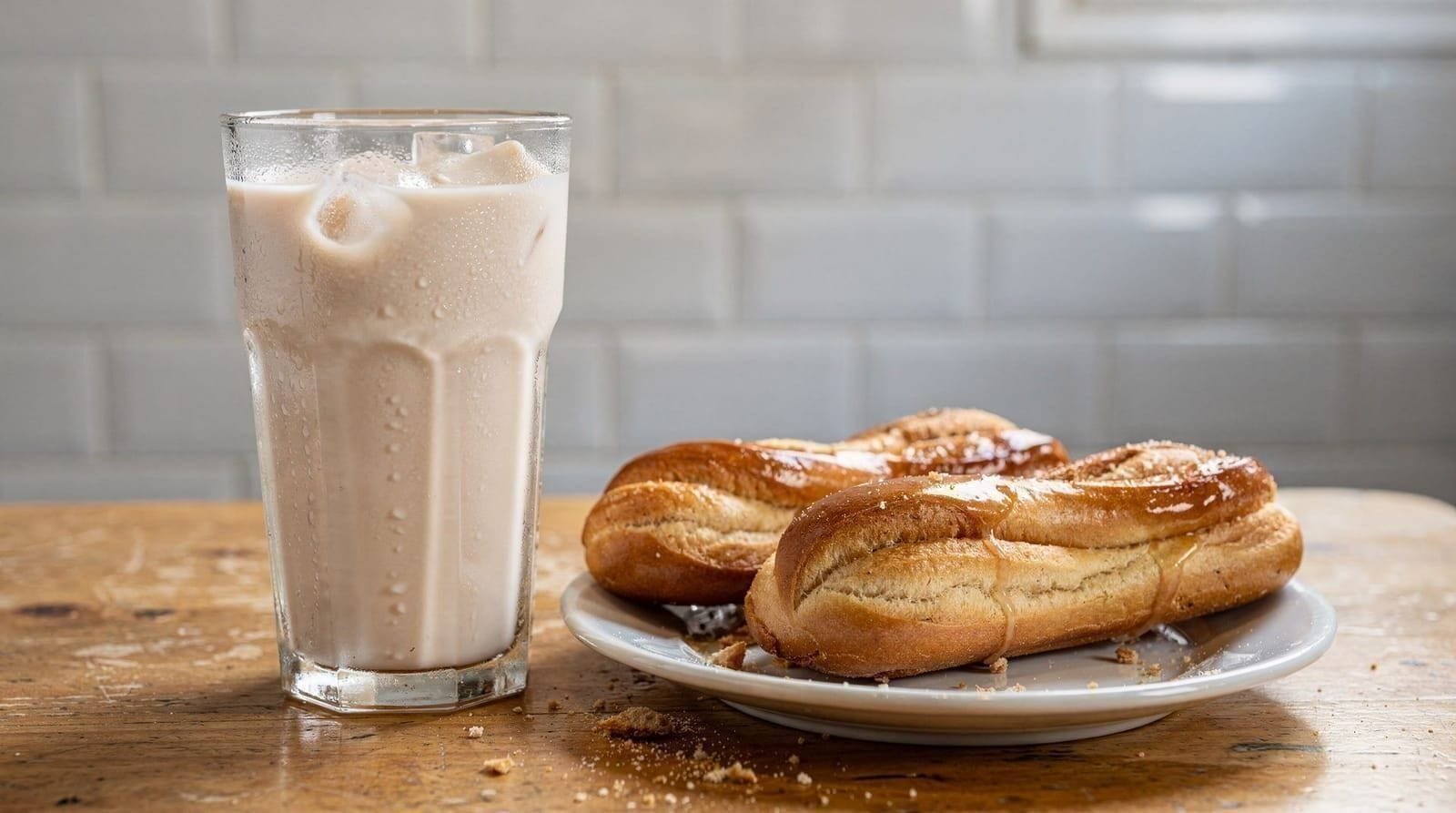
Horchata (orxata in Valencian) is Valencia’s defining cold drink — made from tiger nuts (chufas), water, and sugar, it’s creamy, cold, and unlike anything else in European food culture. Fartons are elongated sweet glazed pastries served alongside for dipping.
This is a genuine local institution, not a tourist gimmick. The best horchata is in Alboraia (the village north of Valencia where most of the chufas are grown), but excellent versions are served in Valencia city throughout summer.
Where to drink horchata in Valencia:
- Horchatería Santa Catalina (Plaza de Santa Catalina) — an 18th-century horchatería with original tiled decor. Tourist-busy but genuine, and the horchata is real. A glass with two fartons costs €3-4.
- El Siglo (Plaza del Mercado) — another historic venue, slightly less crowded than Santa Catalina.
- Any summer kiosk or traditional bar in the old town during June-September — ask for “una de horchata.”
Horchata is seasonal — it’s a cold drink and the chufa harvest is autumn, so the product peaks in quality from September-October. Many establishments now serve it year-round (stored and refrigerated), which is fine but slightly less fresh.
Paella: the rules locals follow
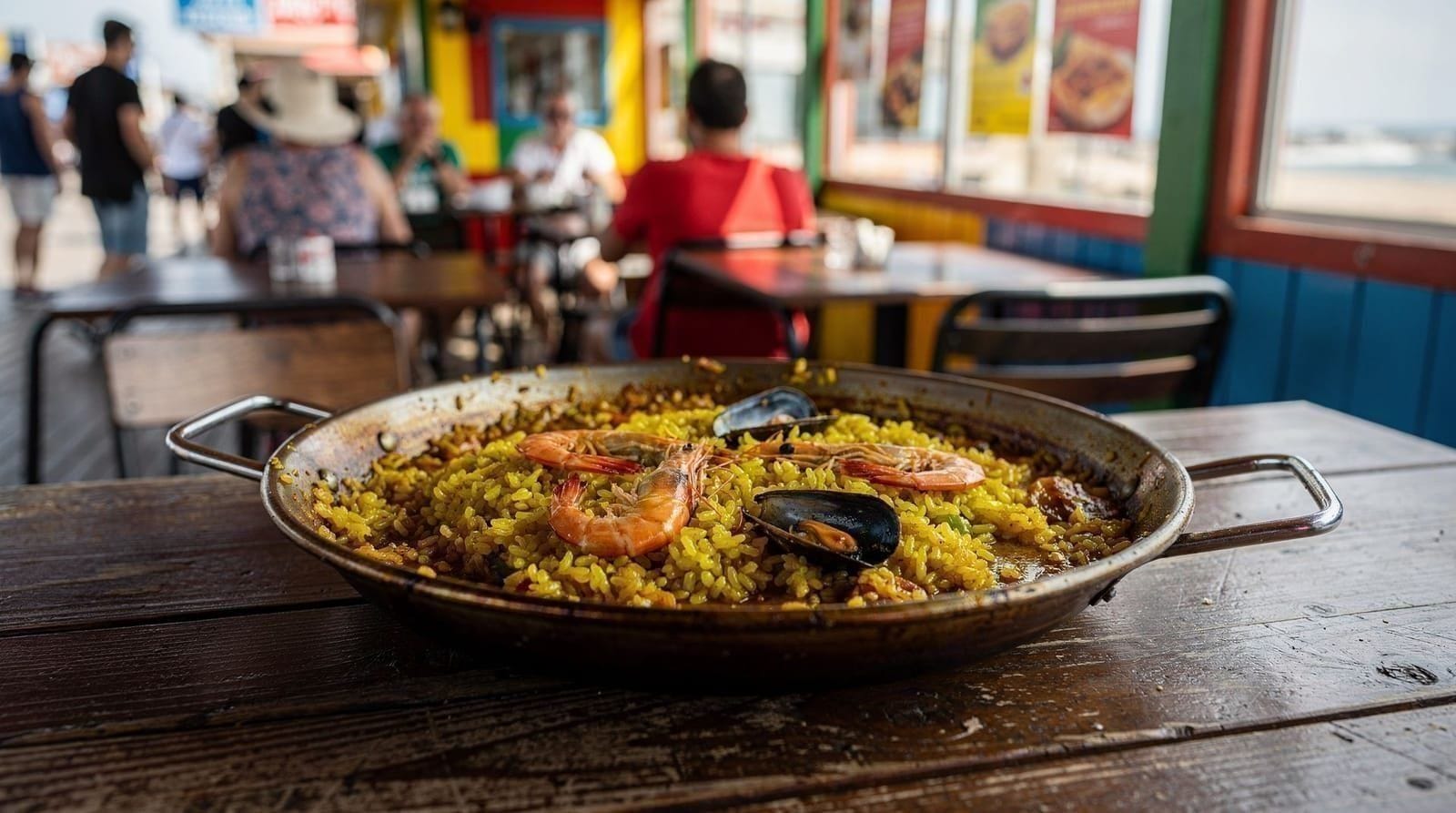
For the full breakdown of paella culture and where to eat it authentically, see authentic paella where to eat and the paella traps guide. The key points:
- Paella is lunch, not dinner. Sunday lunch specifically, or lunch on any day at dedicated arrosseries.
- Real paella takes 45-60 minutes. Any restaurant that produces it in 15 minutes did not cook it fresh.
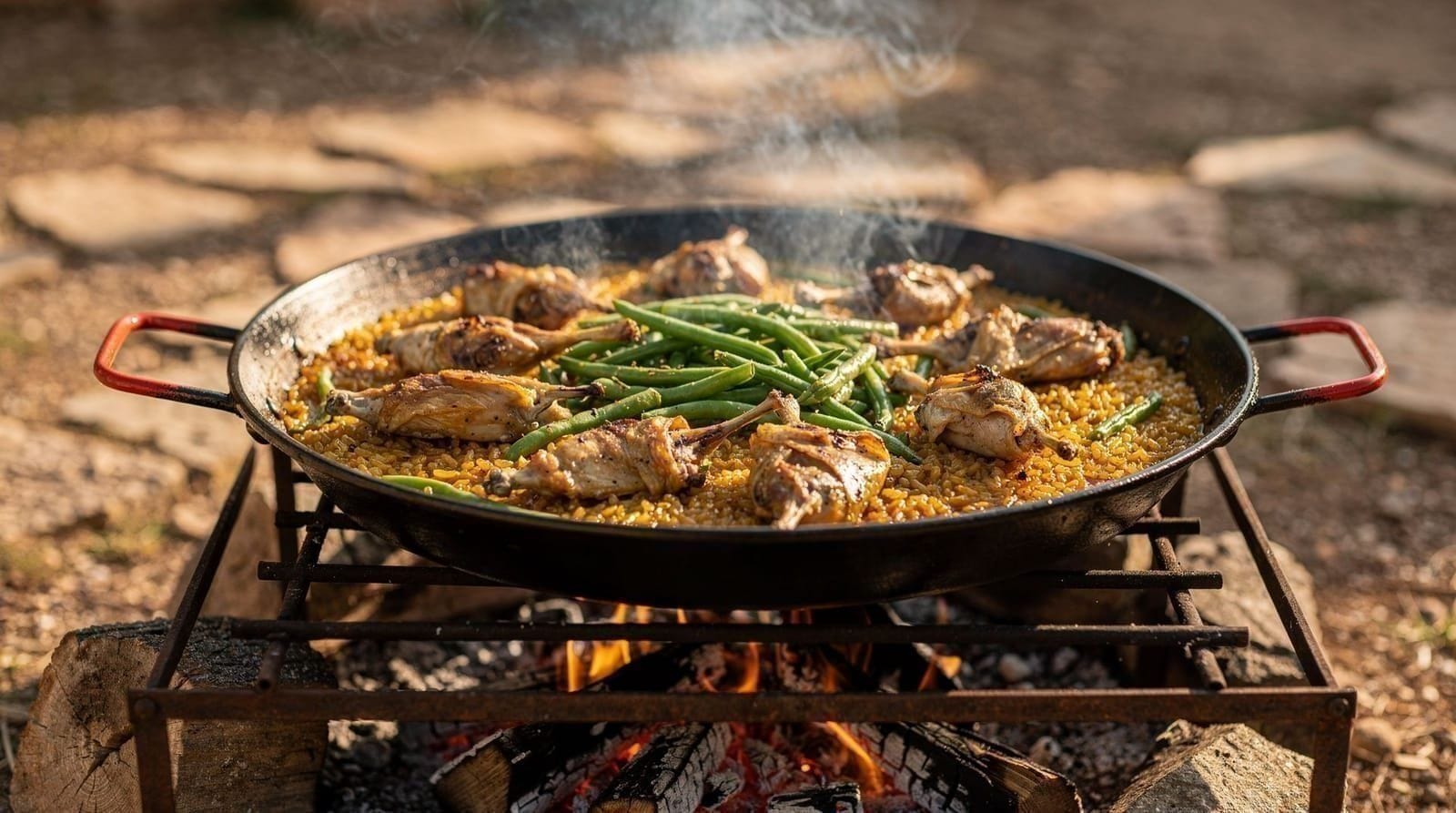
- No chorizo. Valencian paella valenciana has chicken, rabbit, ferraura beans, garrofó beans, tomato, saffron, and rosemary. No seafood (that’s paella de marisco, different category), no chorizo, no peas.
- Socarrat matters. The prized crispy bottom layer of rice is the sign of skilled fire management. Ask to see the pan before serving.
If you want to see how the dish is made rather than just eat it, a hands-on session is a good way to understand the rules above. a paella cooking class that starts at the central market lets you handle the ingredients and learn why the socarrat matters, which makes your next restaurant lunch far easier to judge.
Rice is also at the centre of the region’s wider table. The all i pebre guide covers the eel stew of the Albufera, and the paella versus fideuà guide explains the difference between two dishes that visitors often confuse. For the wider picture of what to order and where to sit, how to order paella is the practical companion to this section.
Dining with locals: practical etiquette
Pace: Spanish restaurant meals are not rushed. A proper lunch is 1.5-2 hours. Asking for the bill (la cuenta) too early signals you’re not comfortable; Spanish diners typically linger over coffee and dessert. However, tourist-area restaurants operating at volume do turn tables faster — adjust expectations accordingly.
Splitting: “Spliting the bill” is less common among Spanish groups, who typically take turns to pay (te invito), but there’s no cultural barrier to asking for the total and dividing it among yourselves. Itemised splitting between couples is entirely normal.
Tipping: Not obligatory in Spain. A common local practice is rounding up the bill or leaving coins (€1-2 on a €30 bill). At mid-range restaurants where you’ve been well served, 10% is appreciated and uncommon enough to be noticed positively. No one will object if you don’t tip.
Ordering water: Ask for “agua del grifo” (tap water) to get a free glass rather than bottled water (€1.50-3). In most Spanish restaurants, tap water is perfectly safe and normal to request.
Putting a local food day together
A well-built eating day in Valencia follows the rhythm above without trying to cram everything in. Start with a coffee and tostada, spend the morning on one sight, and take your esmorzaret at a counter bar away from the main squares. Keep lunch for the menú del día or a proper rice restaurant, and leave the afternoon slow: a walk, a siesta, or a horchata when the heat eases. Evening is for a few tapas and a late, light dinner.
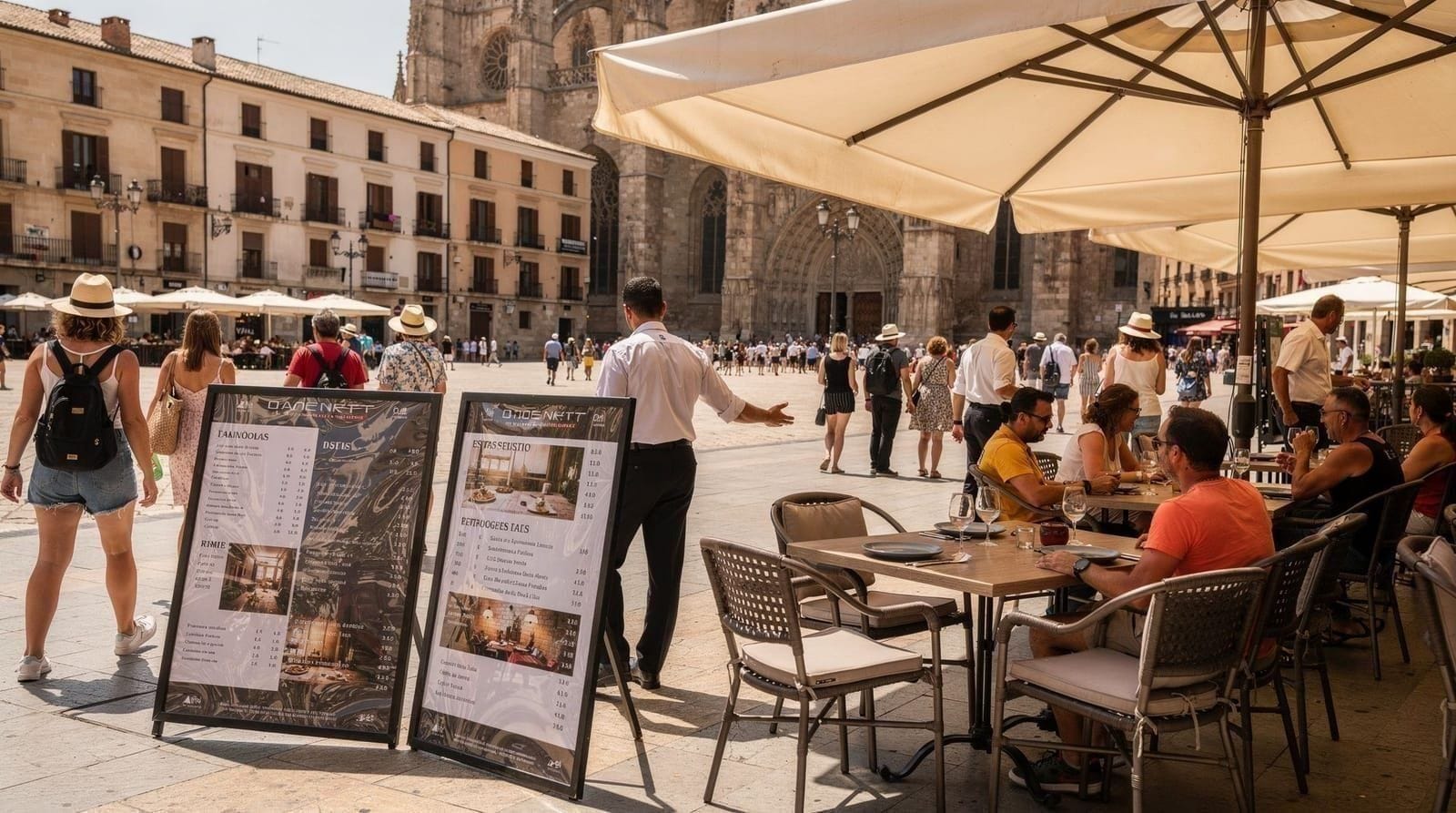
The mistakes visitors make are almost always about timing, not about choosing the wrong restaurant. Eating early, ordering paella at night, and sitting down in a square with a multilingual menu board are the three that cost the most. The tourist traps guide and the honest restaurant picks cover what to skip and where to go instead. If you are building a whole trip around eating, the Valencia for foodies itinerary strings these meals into a sequence, and the food markets guide adds the market side of the story.
Food tours: when guided makes sense
If you want structured introduction to the local food scene rather than figuring it out independently, a guided food tour gives you context and takes you to places a solo visitor wouldn’t discover on a first visit.
Valencia daytime tapas tasting tour with Central Market visit — covers the market, local bar culture, traditional dishes, and the historical context of Valencian food.
Secret Food Tours Valencia — 10 tastings — a well-regarded food tour covering tapas, market food, and neighbourhood eating across multiple stops.
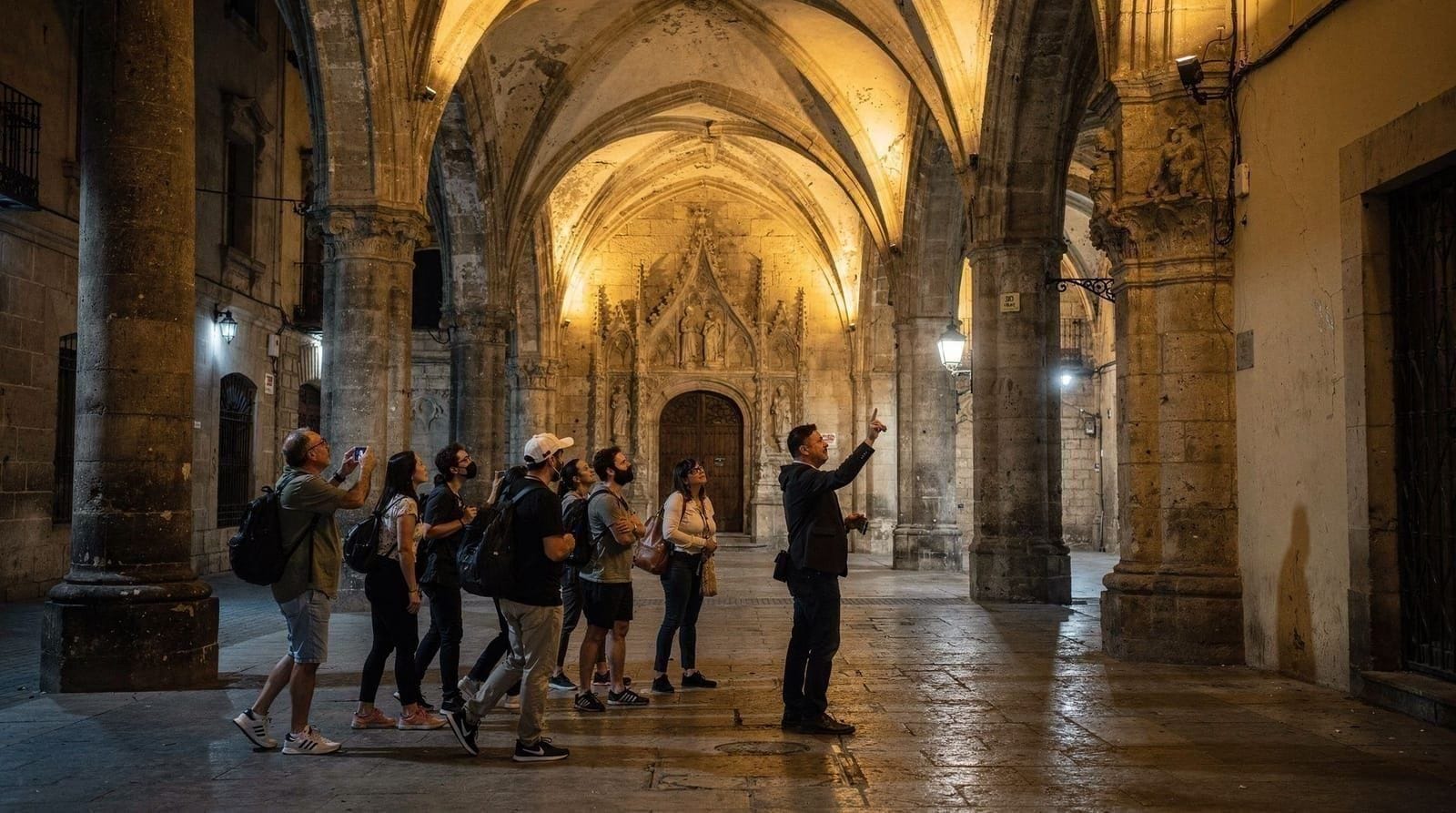
For the evening side of the food day, an evening tapas and drinks tour through the old town bars shows how a late, light dinner works in practice, and it is a gentle way into the bar-hopping habit without worrying about where to start.
These tours are not necessary — you can eat well in Valencia independently — but they’re useful for visitors who want to maximise a short stay or who specifically want the local narrative around what they’re eating.
Frequently asked questions about How to eat like a local in Valencia
When do locals eat lunch in Valencia?
The main meal (comida or almuerzo) runs from 14:00 to 16:00, with 14:30 being the peak. Restaurants serving a menú del día typically open at 13:30 and close the lunch service around 15:30-16:00. Arriving at 12:30 for lunch marks you immediately as a tourist — the restaurant may technically be open, but you'll be eating alone and the staff will be in pre-service setup mode.What is the esmorzaret in Valencia?
The esmorzaret (also called almuerzo in Castilian) is Valencia's mid-morning snack culture, typically eaten around 10:00-11:30. It's a serious institution — workers and locals stop at a neighbourhood bar for a substantial bocadillo (sandwich), a small plate of migas or croquetas, and a coffee or cerveza. The classic esmorzaret is a bocadillo de calamares (fried squid sandwich) or one with jamón, sobrasada, or cheese. This is not a tourist product — most esmorzaret bars are simple, tile-covered local establishments, not cafés.Where do locals eat paella in Valencia?
Locals eat paella at Sunday lunch with family, usually at a restaurant in El Palmar (Albufera village), Alboraia, or other traditional areas outside the tourist centre. During the week, a good traditional rice (arròs) dish appears on menú del día boards. For visitors, the best authentic paella is at the restaurants in El Palmar village or at dedicated arrosseria (rice restaurant) establishments that serve it properly — at lunch, wood-fire cooked, minimum 2 portions. See /guides/authentic-paella-where/ for named recommendations.What is vermouth hour (la hora del vermut) in Valencia?
Vermouth hour (la vermutada or hora del vermut) runs approximately 12:00-14:00 on weekends and Sunday mornings, and some weekday lunchtimes. Valencianos gather at terrace bars for a glass of vermouth (vermut, typically from Martini, Cinzano, or local brands), a beer, or a cava, accompanied by small snacks — olives, crisps, pickles (banderillas), small portions of patatas bravas or tortilla española. It's a social ritual, not a drinking session. The best vermouth bars are in Russafa, El Carmen (particularly around Plaza del Tossal and Plaza del Negrito), and the Mercado de Colón area.What do Valencianos actually eat every day?
Daily eating in Valencia revolves around the menú del día for lunch — a rotating set menu based on what the cook bought at market that morning. Breakfast is typically a café con leche and a tostada con tomate (toasted bread with grated tomato and olive oil) at a bar counter. Dinner (cena) is late — 21:00 to 23:00 — and lighter than lunch, often tapas, pinchos, or a simple plate at a neighbourhood bar. Sunday is the exception when lunch becomes the main social and ceremonial meal.What is the difference between a tapas bar and a restaurant in Valencia?
In Valencia, tapas bars (or bares de tapas) serve small plates, usually ordered freely at the bar or from a simple menu. Restaurants (restaurantes) serve full meals with a more formal structure. Many bars blur the line — they serve full meals at the bar counter (eating at the barra is cheaper than table service in many places) as well as small plates. "Tapas culture" in Valencia is less formalised than in Sevilla or San Sebastián — you order what you want rather than receiving tapas automatically with drinks.What time should I eat lunch in Valencia?
Arrive at the restaurant at 13:30-14:00 to get the first service of the menú del día. By 14:30, the best seats and the most popular daily dishes are often taken. The lunch service typically runs until 15:30 or 16:00. Arriving at noon puts you in an empty, unprepared restaurant.What is the most typically Valencian dish besides paella?
After paella valenciana, the most distinctively Valencian dishes are: all i pebre (eel and potato stew with garlic and paprika, from the Albufera fishing tradition), arròs al forn (oven-baked rice with pork ribs, blood sausage, and chickpeas), fideuà (a paella-style dish made with thin noodles instead of rice, from the Gandia coast), and esgarraet (roasted red pepper and salted cod salad). All appear on menú del día boards throughout the city.Is tapas culture strong in Valencia?
Moderate rather than strong. Valencia has tapas bars, but the culture is less formalised than in Sevilla (where tapas come free with drinks) or San Sebastián (where pintxos bars are the central social institution). In Valencia, tapas are ordered and paid for individually. Russafa has the most developed tapas bar scene for quality eating.Can I eat vegetarian or vegan food in Valencia?
With increasing ease. Traditional Valencian cooking is meat and fish-heavy, but the food scene has diversified significantly. Russafa has the most vegetarian/vegan restaurant options. Mercado Central has vegetable stalls for self-catering. Most menú del día restaurants can accommodate vegetarian requests with advance warning.What is all i pebre?
All i pebre (pronounced "allee-ee PEB-ray") is a traditional Albufera fishermen's stew — eel (anguila), potato, garlic (all), and paprika (pebre), cooked slowly in a terracotta pot. It's one of Valencia's most distinctive local dishes and rarely found outside the Valencia region. The best versions are served in El Palmar village in the Albufera, where the eels come from the lagoon. A warning for the squeamish: the eel pieces include bones.
Top experiences
Bookable activities with verified prices and instant confirmation on GetYourGuide.