Valencia paella cooking class review: which one is actually worth it?
Valencia: master the art of paella in an authentic Valencian kitchen
Duration: 2 hours
Learning to make paella in Valencia — the city where the dish was invented — is one of the most genuinely useful cooking experiences available to a traveller. Not “useful” in an abstract sense: you will go home knowing how to make an authentic Valencian paella that bears no resemblance to the soggy mixed-rice versions served in tourist restaurants worldwide. This review compares the main options honestly, flags the tourist-trap classes, and identifies which experiences actually deliver.
| Where | Central kitchens, some starting at Mercado Central |
| Cost | around €45–95/person depending on format |
| Time needed | around 2–4 hours |
| Getting there | most meeting points are walkable from Ciutat Vella |
| Best time | any day; classes run year-round |
What separates a good class from a bad one
Before booking, understand what authentic Valencian paella is — and what it is not.
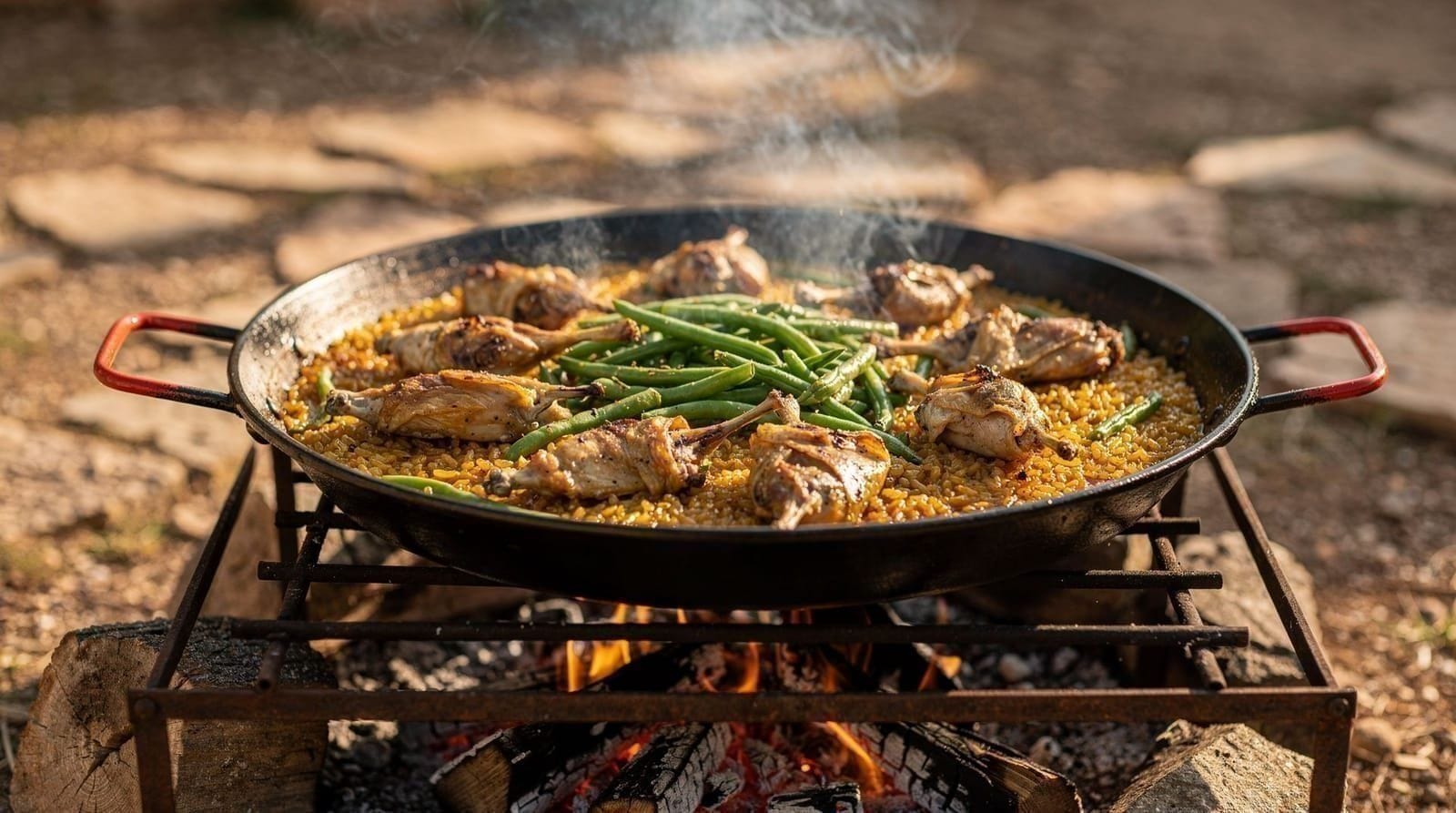
Authentic Valencian paella contains: chicken, rabbit (and sometimes duck), flat green beans (ferradura or bajoqueta), garrofó (a large flat white bean), tomato, garlic, olive oil, saffron, and medium-grain rice. It is cooked in a wide shallow pan (also called paella, which is where the dish got its name) over a wood fire, or on gas if the class is run in an urban kitchen.
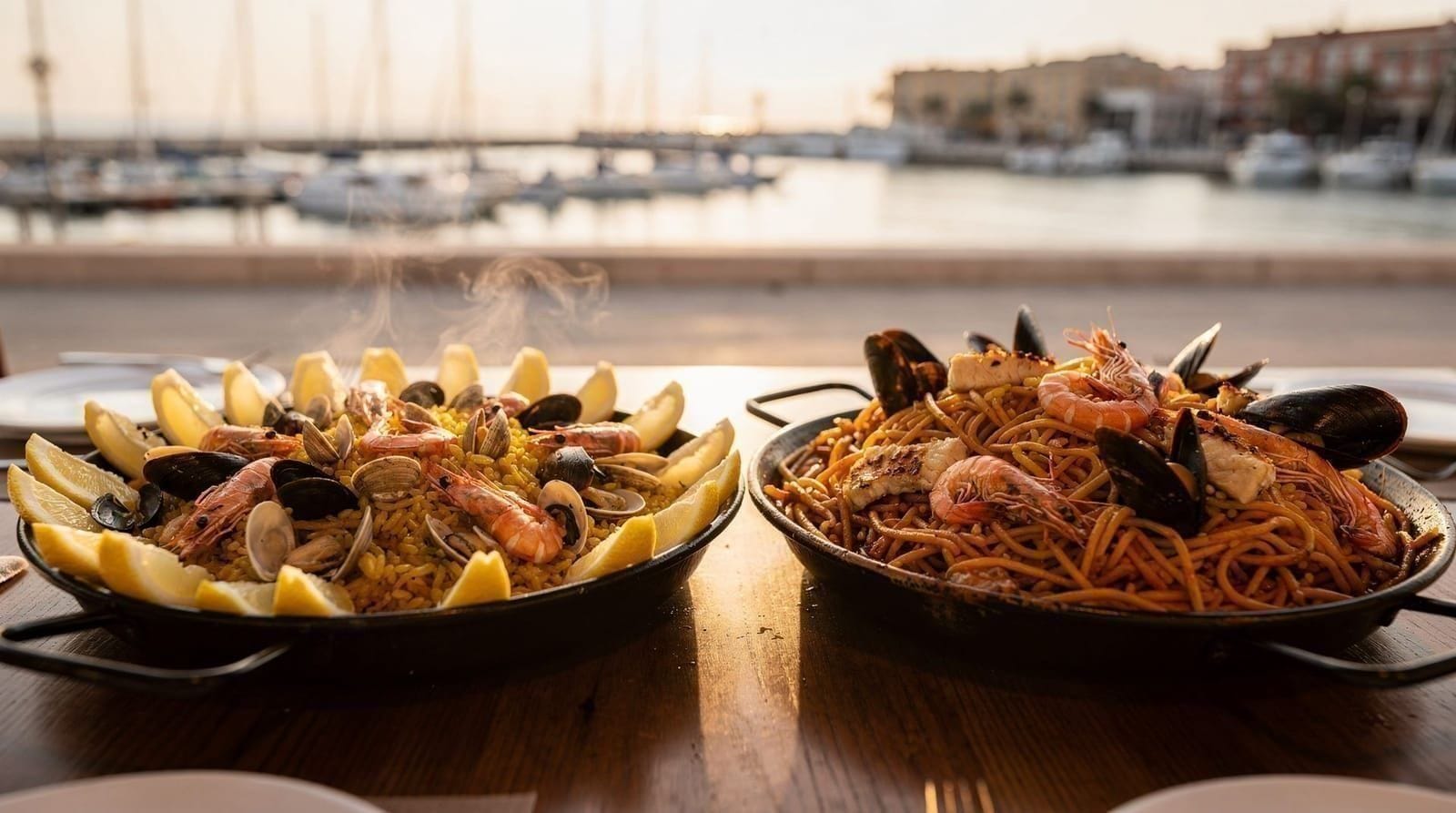
What authentic paella does NOT contain: seafood of any kind, chorizo, peas, onion (though this is disputed), or stock instead of water. If a class teaches “seafood paella” as its main recipe, it is teaching a different dish. Arroz a banda (rice with seafood in fish stock) is delicious but it is not Valencian paella.
A good class will teach you:
- Sofregit technique (the tomato-based sofrito that forms the flavour base)
- Correct rice-to-water ratio for your pan size
- How to achieve socarrat — the prized crispy layer at the bottom
- Why to never stir the rice once added
- The correct rest time before serving
Classes compared
Master the art of paella in an authentic Valencian kitchenThis 2-hour class focuses entirely on the paella itself. Small groups (typically 8–12 participants), an experienced chef-instructor, and a well-equipped kitchen in the city centre. You leave with the recipe and technique. Includes wine and the meal you cooked. Price: approximately €55–70 per person. Best choice if you have limited time or are not interested in the market visit.
Authentic Valencian paella cooking classA longer format (4 hours) that includes more background on Valencian culinary culture, additional starter preparation, and a more leisurely pace. Suitable for food enthusiasts who want to slow down and learn properly rather than rush through the technique. Similar pricing to the above.
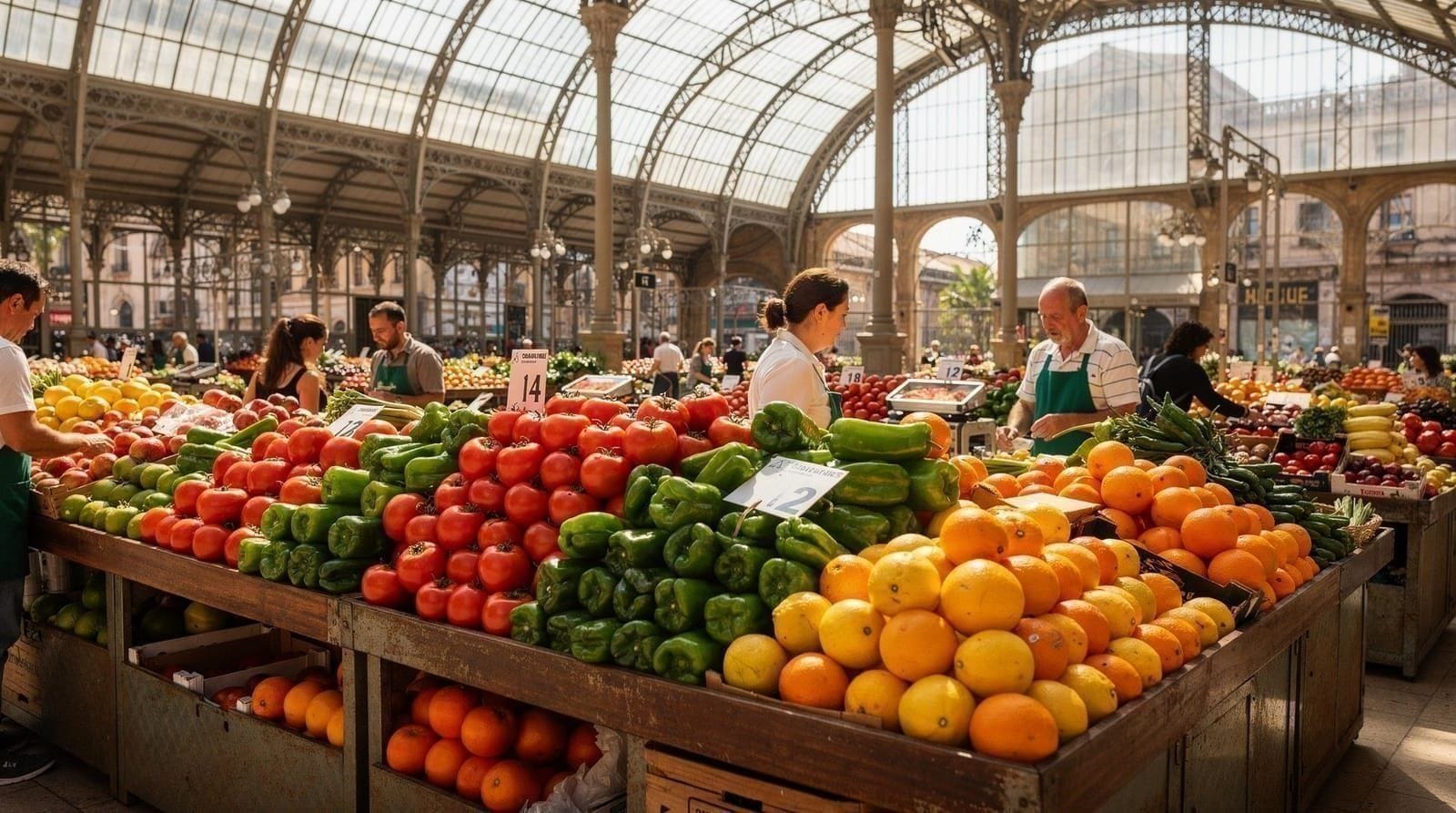
Paella cooking class with Central Market tourThe most immersive option. The class starts at the Mercado Central, where you shop for ingredients with the chef — saffron from a trusted stall, the right variety of rice, fresh vegetables. Then you cook in a nearby kitchen. Runs 4 hours and costs €70–90. The market component alone is valuable: you learn how to identify quality Valencian saffron (never buy the bright orange powder sold in glass tubes near the cathedral), how to choose bomba or sénia rice, and which stalls are worth returning to.
Paella cooking class with tapas and drinksAdds tapas preparation to the paella class — typically a few small dishes served as appetisers before the main event. Good for groups who want a fuller social experience and more variety. Runs 3–3.5 hours.
Classes at a glance
| Class | Length | Price | Best for |
|---|---|---|---|
| Traditional (standard) | ~2 hours | around €55–70 | Time-pressed visitors who want the core technique |
| Authentic (extended) | ~4 hours | around €55–70 | Food enthusiasts who want to slow down |
| Central Market tour + class | ~4 hours | around €70–90 | Serious cooks wanting ingredient sourcing skills |
| Tapas and drinks add-on | 3–3.5 hours | similar to standard, plus extras | Groups wanting a fuller social meal |
Honest assessment of the tourist-trap end of the market
Some cooking class operators in Valencia run what are essentially expensive restaurant experiences with minimal instruction: you watch a chef make paella, stir it once for a photo, and then eat. These typically run in large groups (25+ people), move quickly, and leave you with nothing useful to replicate at home. The price differential is not obvious from the listing — look for class sizes of 8–15 and descriptions that mention “hands-on” and “small group.”
Avoiding the tourist-trap versions:
- Classes near Plaza de la Reina with walk-in sign-up boards are generally not the right format
- Groups over 20 people rarely allow genuine instruction
- If the description mentions “see the cook make paella” rather than “you cook paella,” avoid it
What to bring and expect
Classes are held in properly equipped kitchens — you do not need to bring anything. Wear comfortable clothes you do not mind getting slightly splattered with soffrito. The instructor will likely be bilingual (Spanish and English). Most classes accommodate dietary restrictions if notified at booking.
Expect to eat your cooked paella as the main event. Wine or beer is usually included. It is a social experience as much as a culinary one — the best classes have the group cooking around a single large pan, trading techniques and stories.
The Central Market option: why it adds value
The Mercado Central is one of Europe’s largest and most beautiful covered markets — a 1920s modernist building near the Cathedral that operates Tuesday to Saturday, mornings only (closes around 15:00). Visiting it with a local chef who shops here regularly unlocks a different experience than a solo tourist walk-through.
You learn:
- Which saffron vendors sell real azafrán de La Mancha vs the cheap Spanish-labelled Indian imports
- How to distinguish bomba rice (round, absorbs flavour well) from sénia (less firm, needs more care)
- Why Valencian orange juice is so different from what you buy at home
- Which vegetable varieties are seasonal and which stalls are most reliable
The market component costs time (1.5–2 hours) but justifies the higher class price if you cook at home regularly and want skills beyond Valencia-specific recipes. It is also simply a good way to see a working Valencian market rather than a tourist-oriented one — the Mercado Central closes by mid-afternoon and stallholders are busiest, and most themselves, in the morning hours a class typically uses.
If you would rather just eat it than cook it
A cooking class is not the only way to understand Valencian paella properly. The how to order paella guide covers restaurant etiquette — paella is a lunch dish, never a dinner order, as the never eat paella for dinner guide explains in more detail. Read authentic paella: where to find it for restaurant picks beyond the tourist strip, and order paella like a local for the phrasing and timing that gets you a better table. For the eel-and-paprika alternative that locals order alongside or instead of paella, see the all i pebre guide, and for the ongoing rivalry between the two most-discussed Valencian rice dishes, paella vs fideuà settles the difference. If you finish your class hungry for more tapas, Ruzafa and the Ruzafa tapas guide are a short walk away.
Verdict
The Central Market class is the best version for food-serious travellers. The standard 2-hour class is the right choice for time-pressed visitors who want to learn the core technique and eat well. Either way, a paella cooking class in Valencia is a better souvenir than anything you will buy at a tourist shop.
One key rule for the class: ask your instructor about socarrat. If they do not teach you how to achieve it deliberately, ask directly. The crispy bottom is the part that separates competent paella from great paella — and it is the skill most easily replicated at home.
Compare alternative tours
Frequently asked questions about Valencia
What do you learn in a Valencia paella cooking class?
A good class covers the authentic ingredients (chicken, rabbit, garrofó beans, ferradura, tomato, saffron), the socarrat technique for the crispy bottom layer, proper pan ratios, fire or gas heat management, and why paella is always a lunch dish. You cook and eat your own pan.How long does a paella cooking class take?
Between 2 and 4 hours depending on the class. Shorter classes (2 hours) focus only on the rice. Longer classes (4 hours) typically include a Central Market visit and preparation of starters.What is socarrat?
Socarrat is the slightly caramelised, crispy layer of rice at the bottom of the paella pan. It is considered the best part by Valencians and is achieved by raising the heat at the end of cooking. Learning this technique is one of the main skills in a good class.Is a paella cooking class suitable for beginners?
Yes. No cooking experience is required. Classes are designed for tourists with no prior paella experience. All ingredients and equipment are provided.Do paella cooking classes accommodate vegetarians?
Most established classes offer a vegetarian version on request. Valencian paella is traditionally meat-based, so a vegetarian version will differ from the authentic recipe. Alert the organiser when booking.How much does a paella cooking class cost in Valencia?
Classes range from €45-95 per person. The difference in price mainly reflects whether a Central Market visit is included, group size, and whether wine or drinks are provided. The mid-range €55-75 classes typically offer the best value.Are there cooking classes near the Central Market?
Yes. Several operators combine a shopping trip to the Mercado Central with the cooking class — you buy ingredients from market stalls with the chef, then cook in the class kitchen. This version is more immersive and usually runs 4 hours.What is the minimum age for a paella cooking class?
Most operators welcome participants from age 12 upwards. Younger children can attend family-oriented classes — check the listing. The cooking involves open flames and sharp knives, so younger children need adult supervision.Do I get a recipe to take home?
Yes. All reputable classes provide a printed or digital recipe card at the end. The recipes are adapted for home kitchens where a proper wood-fire setup is usually not available.Can I do the cooking class in Spanish?
Yes. Most operators offer classes in both English and Spanish. Classes conducted entirely in Spanish are sometimes cheaper and allow you to practise your language skills alongside cooking.Is it worth buying a paella pan at the class?
Some operators sell paella pans (the wide, shallow steel pans) after the class. They are genuinely useful. A 40-centimetre pan (for 2–4 people) costs €12–20 in Valencia's kitchen supply shops — compare before paying class prices. La Confianza in the old town stocks them reliably.How is paella different from arroz al horno?
Arroz al horno (oven-baked rice) is a different Valencian dish — cooked in a ceramic dish in the oven with blood sausage, chickpeas, tomato and garlic. Equally authentic, equally delicious, much less internationally known. It is not typically taught in cooking classes but is worth ordering in local restaurants.What happens if I overcook the rice?
In class, the instructor monitors this and intervenes. At home, overcooked paella (where the rice absorbs too much liquid and becomes mushy) is the most common mistake. The fix is to cook slightly less liquid at first and add more rather than starting with too much.Are group cooking classes or private classes better?
Group classes (8–15 people) are more social and often more fun — the competition to achieve the best socarrat drives engagement. Private classes offer more personalised instruction and flexible timing. Private classes cost significantly more — typically €120–180 per person — but are worth it for serious cooks or honeymoon/special occasion visitors.