Where to eat authentic paella in Valencia
Valencia: master the art of paella in an authentic Valencian kitchen
Duration: 2 hours
Where can I find authentic paella in Valencia?
The most authentic paella is found in El Palmar village at the Albufera lagoon (30 min from city) and along Malvarrosa beach. In the city, Casa Carmela and La Pepica are the benchmark. Always eat paella at lunch — never dinner — cooked over a wood fire.
Paella is Valencia’s most famous export and its most frequently abused dish. The version you will find near the cathedral — served at any hour, in a tiny individual portion, for 9€ — bears no meaningful relationship to what Valencians actually cook. This guide tells you where to find the real thing.
| When | Lunch only — never dinner |
| Fair price | 15–25€/person at a serious restaurant |
| Best zones | El Palmar (village), Malvarrosa (beachfront), select city spots |
| Booking | 3–4 days ahead for weekend lunch at the top names |
| Red flag | Individual “paella for one” under 10€ near the cathedral |
The fundamental rule: paella is a lunch dish
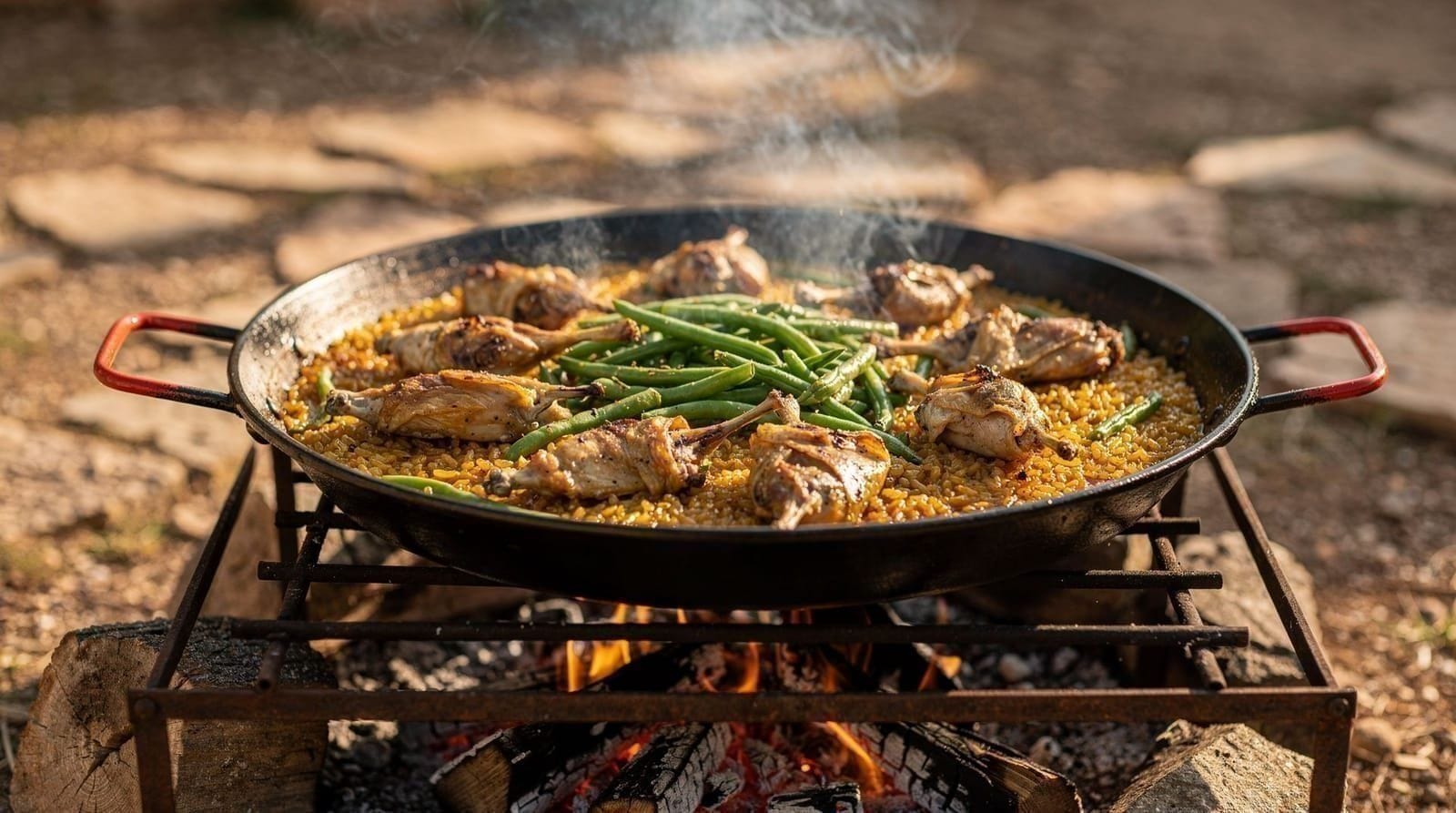
Before any restaurant recommendations, one rule needs to be clear: authentic paella is served at lunch, never dinner. This is not a preference or a tradition for the sake of it — it reflects the cooking method. Proper Valencian paella is cooked over a wood fire (traditionally orange, pine or vine wood) for 20-30 minutes at high heat. The fire must be managed carefully, the rice must be added at the right moment, and the socarrat must form without burning.
Restaurants that do this correctly do not run that process during evening service. If a restaurant in Valencia is offering paella for dinner, they are either reheating a pre-cooked batch or using shortcuts that make the dish something else entirely. This includes many restaurants in the historic centre that have paella on their dinner menus for tourists who do not know better.
El Palmar: where paella was born
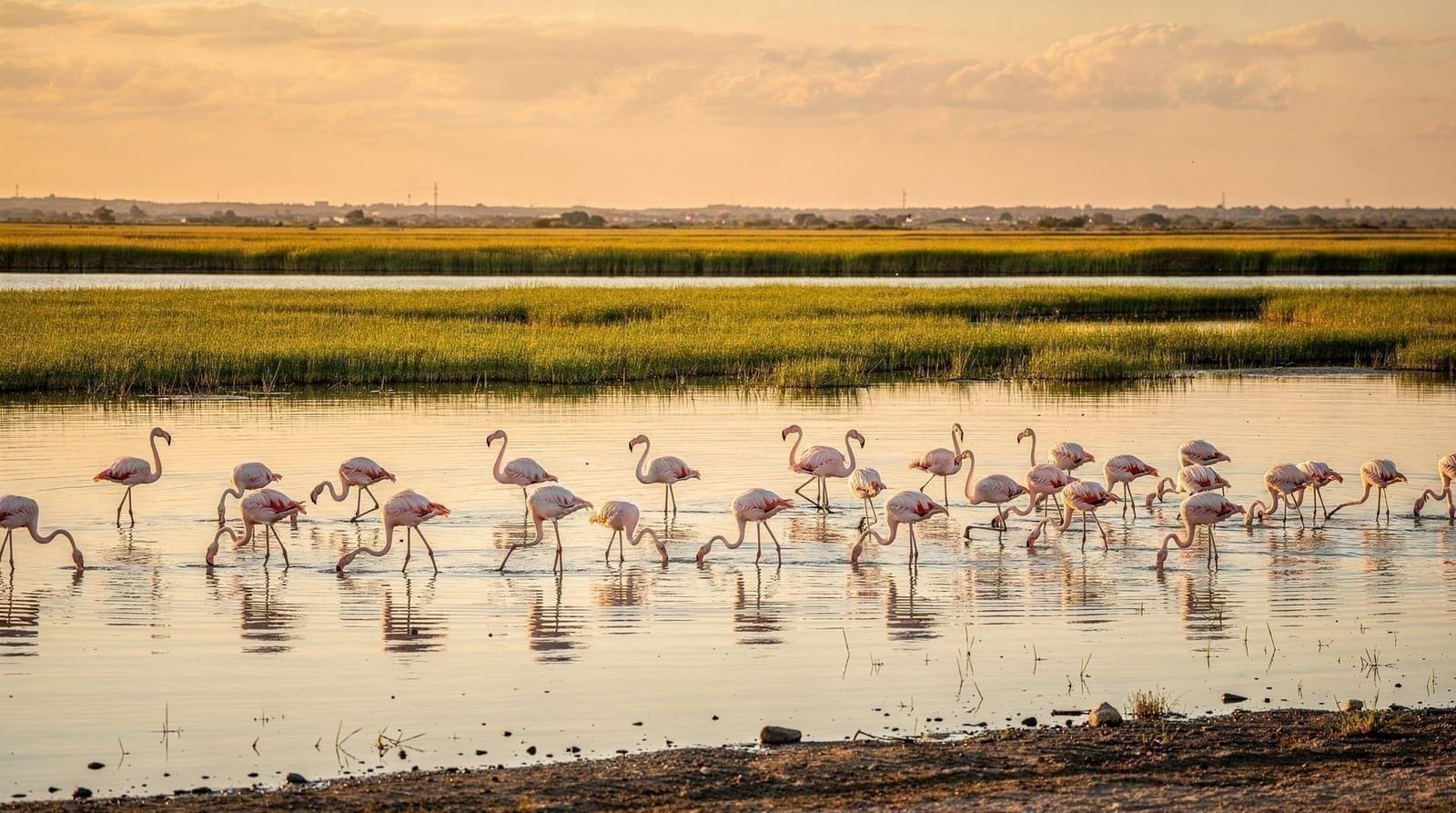
El Palmar is a small fishing village on the edge of the Albufera natural park, about 12 km south of Valencia. This is where Valencian paella developed as a practical farmworker and fisher’s meal, using rice from the lagoon fields, rabbit from the surrounding land, and vegetables from the garden.
Several family-run restaurants in El Palmar have been cooking paella the same way for three or four generations. The names you should know are Restaurante El Palmar, Casa Carmela’s El Palmar cousin (the same family operates in both locations), and La Matandeta. Expect to pay 16-22€ per person including the house wine. Portions are generous. Booking for Sunday lunch is essential — Valencian families drive out here in force on weekends.
The practical route: take bus 25 from Valencia’s Estació del Nord (around 40 minutes, under 2€) or combine with an Albufera boat trip — the boat operators drop you near the village and you can walk to lunch. The combination of a morning on the water and a proper paella under a pergola is genuinely one of Valencia’s best days out.
Malvarrosa beach: established institutions
La Malvarrosa has several restaurants with actual credentials. The most famous is La Pepica, founded in 1898 and located at Passeig de Neptú 6. Ernest Hemingway ate here and wrote about it in a letter to Scott Fitzgerald. That historical detail aside, La Pepica continues to cook paella valenciana over wood fire at lunch, and the quality remains high. Book ahead, particularly on weekends.
Las Arenas is the other long-established option at the northern end of Malvarrosa, set in a converted bathing establishment from the early 20th century. It is more expensive (paella around 22-28€ per person) but the quality justifies it. The terrace setting is exceptional.
L’Estimat at Avenida de Neptú 16 is another solid choice — family-run, less famous than La Pepica, and sometimes easier to book. Their arroz a banda (a related rice dish) is particularly good.
What to avoid: the 15-20 undistinguished terraza restaurants between La Pepica and the marina. They serve tourist versions of paella with mixed seafood at inflated prices, often pre-cooked. If you see photographs of paella on a laminated menu outside, walk on.
In the city: Casa Carmela and Restaurante Navarro
For those who do not want to travel to the beach or El Palmar, Casa Carmela at Carrer d’Isabel de Villena 155 (between the city and Malvarrosa) is the standard reference. Founded in 1922, it specialises exclusively in rice dishes. The paella valenciana is cooked to order over orange wood. They do not accept walk-ins for large groups — book via their website. Budget 20-25€ per person.
Restaurante Navarro in the old city (Carrer de l’Arzobispo Mayoral 5) has been serving paella since 1949. It is one of the few historic-centre restaurants where the paella is genuine. Less fashionable than Casa Carmela, which means less crowded and slightly more reasonable prices (15-20€ per person).
La Riua in El Carmen neighbourhood is a smaller, quieter option popular with locals. No terrace, no tourist trap positioning, and a very good arroz al forn (oven-baked rice, the cold-weather cousin of paella).
What to order and what to avoid
Traditional paella valenciana contains chicken, rabbit, bajoqueta (flat green beans), garrofó (large butter beans), tomato, olive oil, salt, and saffron. That is it. There is no chorizo in authentic paella. There are no peas, no red peppers, no mixed seafood.
Arroz a banda is a separate dish — rice cooked in fish stock, served with the fish on the side. Also traditional, also cooked over wood fire, also excellent.
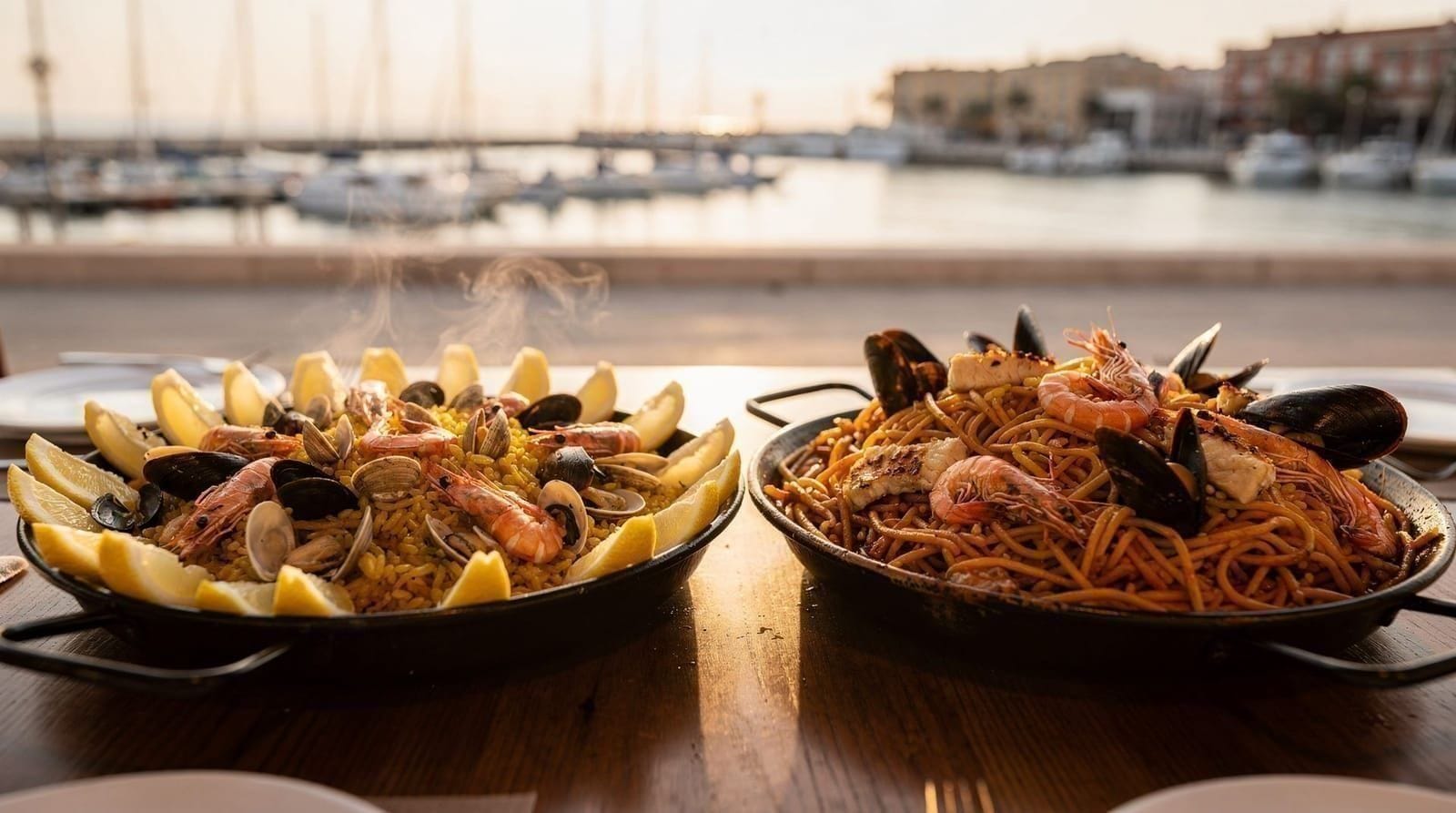
Paella negra (black rice with cuttlefish ink) and fideuà (noodle version of paella) are distinct dishes with their own traditions — see the paella vs fideuà guide for details.
If a menu offers paella valenciana with any of the following, it is not authentic: chorizo, mussels, clams, shrimp, mixed seafood, or chicken and seafood combined. Ask “¿tiene socarrat?” — if the waiter does not know the word, that tells you something.
Reading the room before you sit down
A few signals tell you more than any review site. Look at the kitchen: a serious restaurant has a visible fire or a dedicated outdoor cooking area, and the smell of burning wood reaches the street around lunchtime. Look at the clientele: if the tables are full of local families lingering over coffee at three in the afternoon, you are in the right place. Look at the menu: a short list of rice dishes, each with a clear note that it is cooked to order, beats a long page that also offers pizza, burgers and sangria by the jug.
Time matters as well. Valencians sit down to lunch late by northern European standards, and the best kitchens start the pans only once the table is confirmed. Arriving very early and asking for paella immediately often means waiting, while arriving after the lunch rush can mean the kitchen has finished. If you are unsure, read the guide to ordering paella before you go, and the longer blog piece on ordering like a local for the phrases that make the waiter take you seriously.
Making a day of it
Paella is better as the centre of a day than as a box to tick. Three combinations work well:
- A water-and-rice day. Spend the morning on the lagoon, then eat in the village. The Albufera natural park guide explains the landscape you are passing through, and the sunset boat guide covers the evening alternative, although the paella itself should still be a lunch.
- A beach day. Swim first, eat late, and stay on the sand afterwards. The Malvarrosa beach guide and the neighbouring Cabanyal are the natural companions, with the old fishermen’s streets only a short walk away.
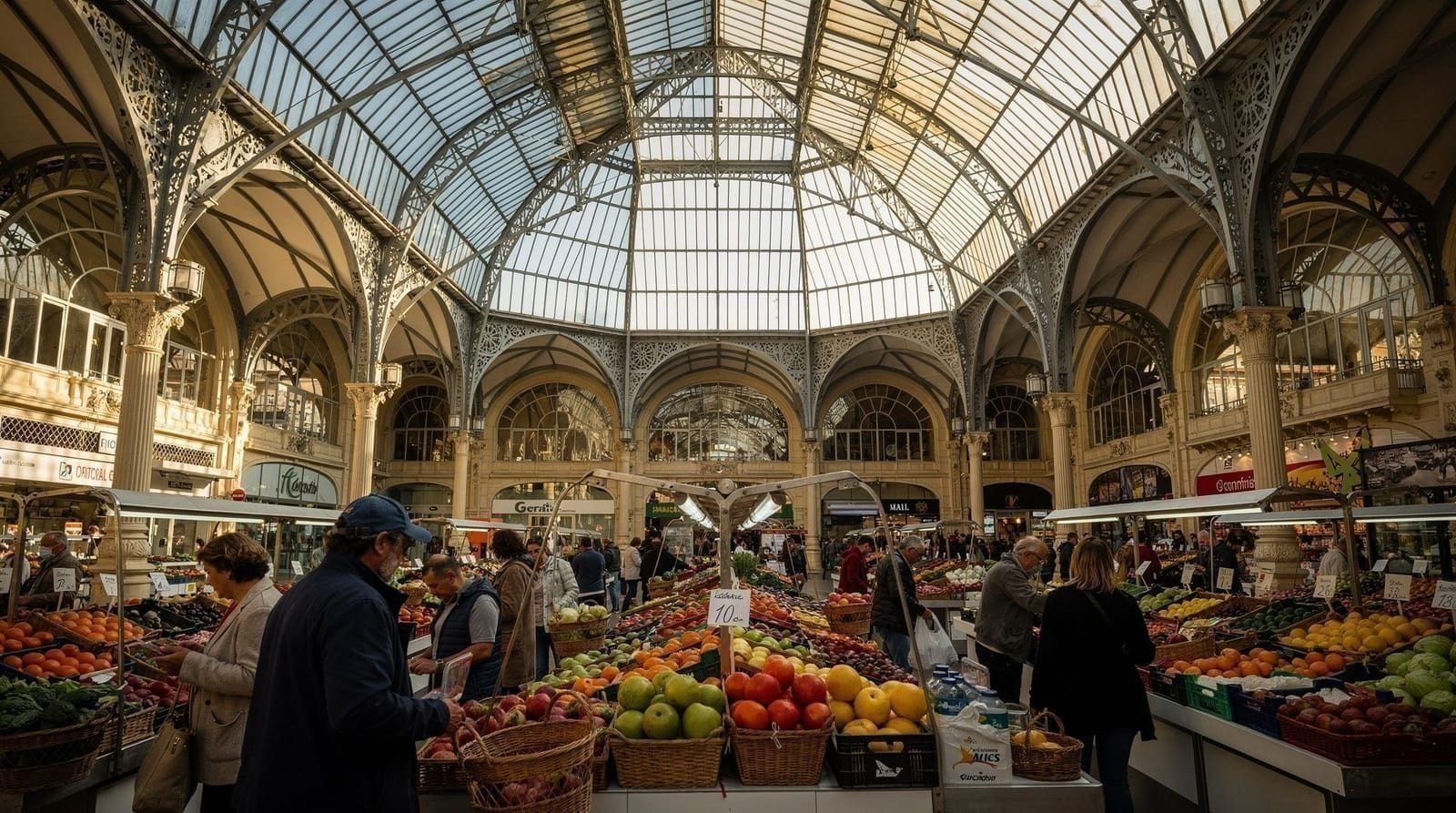
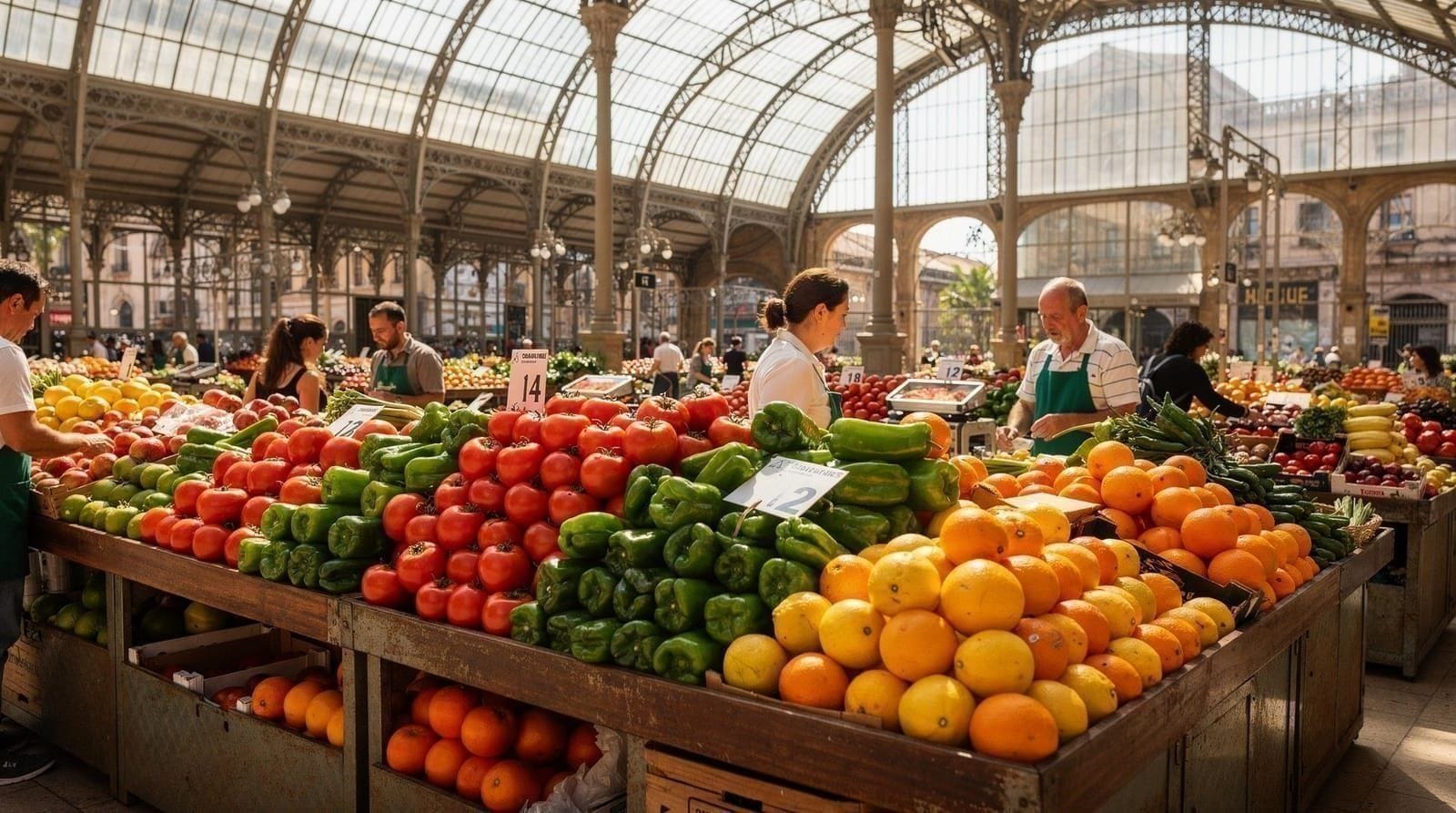
- A market-to-table day. Start at the stalls, learn what goes into the pan, then eat the result. The Mercado Central guide is the place to begin, and a morning food tour fits neatly before a late lunch.
a morning food tour through the Mercado Central is a sensible way to build an appetite and recognise the ingredients before lunch, especially if you want context without committing to a full class.
Cooking classes: an excellent alternative
Valencia: master the art of paella in an authentic Valencian kitchenIf you want to understand paella rather than just eat it, a cooking class is worth considering. Several operators offer classes that begin with a walk through the Mercado Central to buy ingredients, followed by a 2-4 hour class in a professional kitchen. You eat what you make. This is the most effective way to learn why the dish requires specific techniques.
Valencia: authentic Valencian paella cooking classClasses run 2-4 hours and cost 45-75€ per person. The quality varies considerably — look for classes that specify wood-fire cooking and include the Mercado Central visit.
El Palmar vs. Malvarrosa vs. city: which to choose
| El Palmar | Malvarrosa | City (Casa Carmela, Navarro) | |
|---|---|---|---|
| Setting | Rural fishing village, pergolas | Beachfront terraces | Neighbourhood dining rooms |
| Price | 16–22€/person | 20–28€/person | 15–25€/person |
| Getting there | Bus 25, ~40 min, or tour | Tram line 6, ~20 min | Walkable/short taxi |
| Best paired with | Albufera boat trip | A beach morning | No travel needed, easiest to fit in |
| Character | Most connected to the dish’s origin | Historic institutions, sea views | Convenient, still genuinely wood-fired |
None of the three is objectively “better” — El Palmar wins on authenticity and setting, Malvarrosa on atmosphere and history, the city on convenience if you don’t want to travel for lunch.
Price expectations
- El Palmar restaurants: 16-22€ per person, including house wine
- Malvarrosa institutions (La Pepica, Las Arenas): 20-28€ per person
- City restaurants (Casa Carmela, Restaurante Navarro): 15-25€ per person
- Tourist-centre restaurants near the cathedral: 9-14€ — avoid
A paella for two at a reputable restaurant plus a carafe of house wine will cost 40-60€ total. That is not cheap, but it is significantly better value than the inflated tourist version at a quarter of the quality.
Minimum orders matter here too: most wood-fire kitchens require a minimum of two portions per pan, since cooking a single-serving paella properly over fire isn’t practical. Solo travellers should either find a restaurant with a stated single-portion policy (some exist, usually at slightly higher per-person cost) or plan to eat paella as part of a group meal rather than alone.
The Albufera day trip pairing
Valencia: Albufera boat ride with food and paella includedThe most complete paella experience in Valencia combines an Albufera boat trip with lunch at El Palmar. Some organised tours include both the boat and the meal. This is particularly good for visitors with limited time — you experience the landscape where rice is grown and the village where the dish was developed, all in half a day.
Getting to El Palmar without a car
Bus 25 from Valencia’s Estació del Nord runs to El Palmar approximately every 30-40 minutes. The journey takes around 40 minutes and costs under 2€. The bus stops near the centre of the village. Taxis from the city cost approximately 20-25€.
For the Malvarrosa beach restaurants, tram line 6 from Torres Serranos runs to Malvarrosa in about 20 minutes.
What serious paella looks like
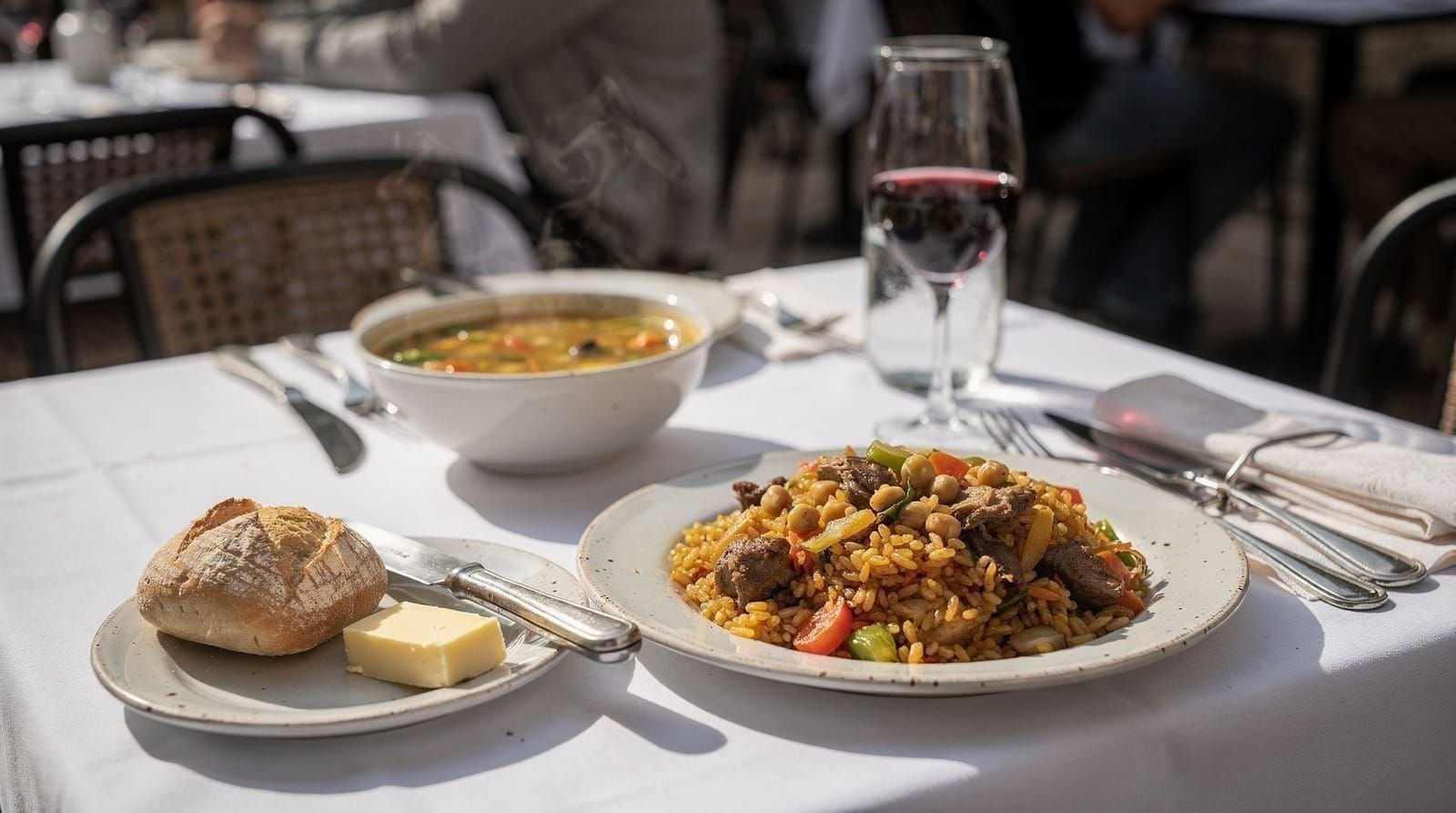
A proper paella arrives in the pan it was cooked in. The rice should be dry and separate — not creamy, not wet, not like risotto. The bottom layer should show socarrat: a slightly caramelised, slightly toasted crust that adds a smoky, nutty dimension. The colour comes from saffron alone, not food colouring. The chicken and rabbit pieces should be browned before the rice is added.
You will be given a lemon wedge. Squeeze it over your portion. You will not be given bread (and if bread arrives uninvited, it will be added to your bill at 3-5€ — see tourist traps Valencia).
After the plates are cleared
Paella is a heavy meal, and the sensible plan is a gentle afternoon. Walk it off along the old riverbed in the Turia gardens, or keep it light with a few hours at the Ciudad de las Artes y las Ciencias if you are staying central. If rice is becoming the theme of your trip, the Valencia for foodies itinerary strings together the best meals, and the guide to eating like a local covers the other dishes worth ordering, from the esmorzaret to the menú del día.
For a longer stay, the best restaurants in Valencia guide and the blog list of paella restaurants offer more choice than a single lunch can use, while the blog post on why paella is never a dinner dish gives the full argument behind the rule at the top of this page. Visitors with only a day can fit the essentials into the one-day itinerary.
Frequently asked questions about Where to eat authentic paella in Valencia
What makes paella authentically Valencian?
Authentic Valencian paella contains chicken, rabbit, flat green beans (bajoqueta), white butter beans (garrofó), tomato, and saffron — cooked in a wide, shallow pan over orange or pine wood. No chorizo, no seafood, no mixed ingredients in traditional Valencian paella. The socarrat (toasted rice crust at the bottom) is the sign of proper technique.Should I eat paella for lunch or dinner?
Lunch only. Paella is a traditional midday meal cooked over open fire. Any restaurant serving "paella" in the evening is almost certainly reheating or using shortcuts. The dish requires 20-30 minutes minimum cooking time on proper fire — restaurants that do it right simply don't offer it for dinner service.Is paella on Malvarrosa beach authentic?
The established institutions on Malvarrosa — La Pepica (open since 1898), Las Arenas, and L'Estimat — cook proper paella over wood fires for lunch. Avoid the tourist traps in between. Stick to restaurants with a history. La Pepica had Ernest Hemingway as a regular; that is not marketing language, it is a verifiable fact that speaks to its longevity.How much should authentic paella cost?
Between 15€ and 25€ per person at a serious restaurant. If you see a fixed-price "paella for one" for 8-10€ near the cathedral, it is frozen and microwaved. Paella is traditionally a shared dish for two or more — a proper serving at El Palmar or Malvarrosa runs 15-20€ per person minimum.Is it worth going to El Palmar just for paella?
Yes, particularly if you combine it with a boat trip on the Albufera. El Palmar is a small fishing village where the dish was born, and several family restaurants there have been making it the same way for three generations. The combination of a morning boat trip and a paella lunch in the village is one of Valencia's genuinely great experiences.What is socarrat and why does it matter?
Socarrat is the caramelised, slightly toasted layer of rice that forms at the bottom of the pan when paella is cooked correctly over wood fire. It has a nutty, smoky flavour. If a restaurant's paella has no socarrat, it was not cooked at high enough heat — a sign of corners being cut. Ask the waiter "tiene socarrat?" if you want to check.Can I take a paella cooking class instead of (or as well as) eating out?
Yes, and it is one of the better ways to understand the dish. Several cooking classes include a visit to the Mercado Central to buy ingredients, then hands-on cooking. You eat what you make. Classes run 3-4 hours and cost 45-75€ per person depending on the operator. See the tours section below.Are there any tourist-trap paella restaurants I should specifically avoid?
Any restaurant on or immediately around Plaza de la Reina advertising a "menú del día with paella" should be treated with suspicion. Walk 10 minutes in any direction and prices drop by 30-40%. Near the cathedral, the paella is almost universally frozen and reheated. The honest-planner guide to paella traps has more detail.How far in advance should I book?
For weekend lunch at La Pepica, Las Arenas, or Casa Carmela, book at least 3-4 days ahead. For weekday lunch, calling the day before is usually sufficient. El Palmar restaurants can sometimes accommodate walk-ins on weekdays but not on Sundays.Is Malvarrosa beach paella better than El Palmar paella?
Different contexts. El Palmar is the village where the dish was born, and the family restaurants there have a particular connection to the tradition. Malvarrosa offers the beachfront setting. Quality at the best establishments in both locations is comparable. El Palmar is less touristy; Malvarrosa is more convenient from the city.Can I eat paella at the Mercado Central?
Not authentic paella. The Mercado Central has its Central Bar (run by chef Ricard Camarena) which serves excellent Valencian food including rice dishes, but it is not the place for a traditional wood-fire paella lunch. The market is best for breakfast, a morning food tour, or buying ingredients.Do vegetarian or vegan paellas exist?
Yes, but they are not traditional Valencian paella — they are rice dishes in the paella pan. Some restaurants offer arroz de verduras (vegetable rice) which can be very good. Do not order "vegetarian paella" expecting the traditional dish.What wine goes with paella?
Locally, a cold bottle of Requena wine (typically a young, light Bobal red or a white from the Utiel-Requena DO) is the natural pairing. Many restaurants serve a house carafe for 6-10€. A cold Valencian beer also works perfectly.Ordering for a group with different preferences
Paella is traditionally ordered per person for the whole table rather than individually, which can be awkward if your group has mixed tastes. Most serious restaurants will accommodate one pan of paella valenciana and one of arroz a banda or a vegetable rice for a mixed group, as long as everyone orders the same dish within each pan — ask when booking rather than at the table, since kitchens plan portions around advance orders for wood-fire cooking. Splitting a table between two different rice dishes is completely normal in Valencia and not treated as a special request.
Top experiences
Bookable activities with verified prices and instant confirmation on GetYourGuide.