Buñol
Buñol hosts La Tomatina, the world's largest tomato fight — last Wednesday of August, 38 km from Valencia. Tickets required since 2013. Here's what's real.
Valencia: La Tomatina 2026
Duration: ~10 hours
Quick facts
- Distance from Valencia
- 38 km west
- Travel time
- ~40 min by Cercanías train (C3 line)
- Getting there
- Train from Valencia Joaquín Sorolla (C3 line) — strongly recommended over driving
- Best for
- La Tomatina festival (last Wednesday of August only)
- Don't miss
- The 11:00 tomato fight (60 min), the cañón del Buñol gorge walk (year-round)
Buñol is a small town of around 9,000 residents in the interior of the Valencia region, unremarkable for 364 days of the year and one of the world’s most visited places on the 365th. La Tomatina, the annual tomato fight held every last Wednesday of August, draws upwards of 20,000 participants (capped by ticket system since 2013). The fight itself lasts exactly 60 minutes. Everything around that 60 minutes — the crowds, the logistics, the post-fight chaos — requires more planning than the event itself suggests.
| Where | 38 km west of Valencia |
| Cost | Around €10–12 (direct) or €45–90 (tour package) |
| Time needed | Half day (6–8 hours including travel) |
| Getting there | Cercanías C3 train from Joaquín Sorolla (~40 min) |
| Best time | Last Wednesday of August only, for the fight itself |
What La Tomatina actually is
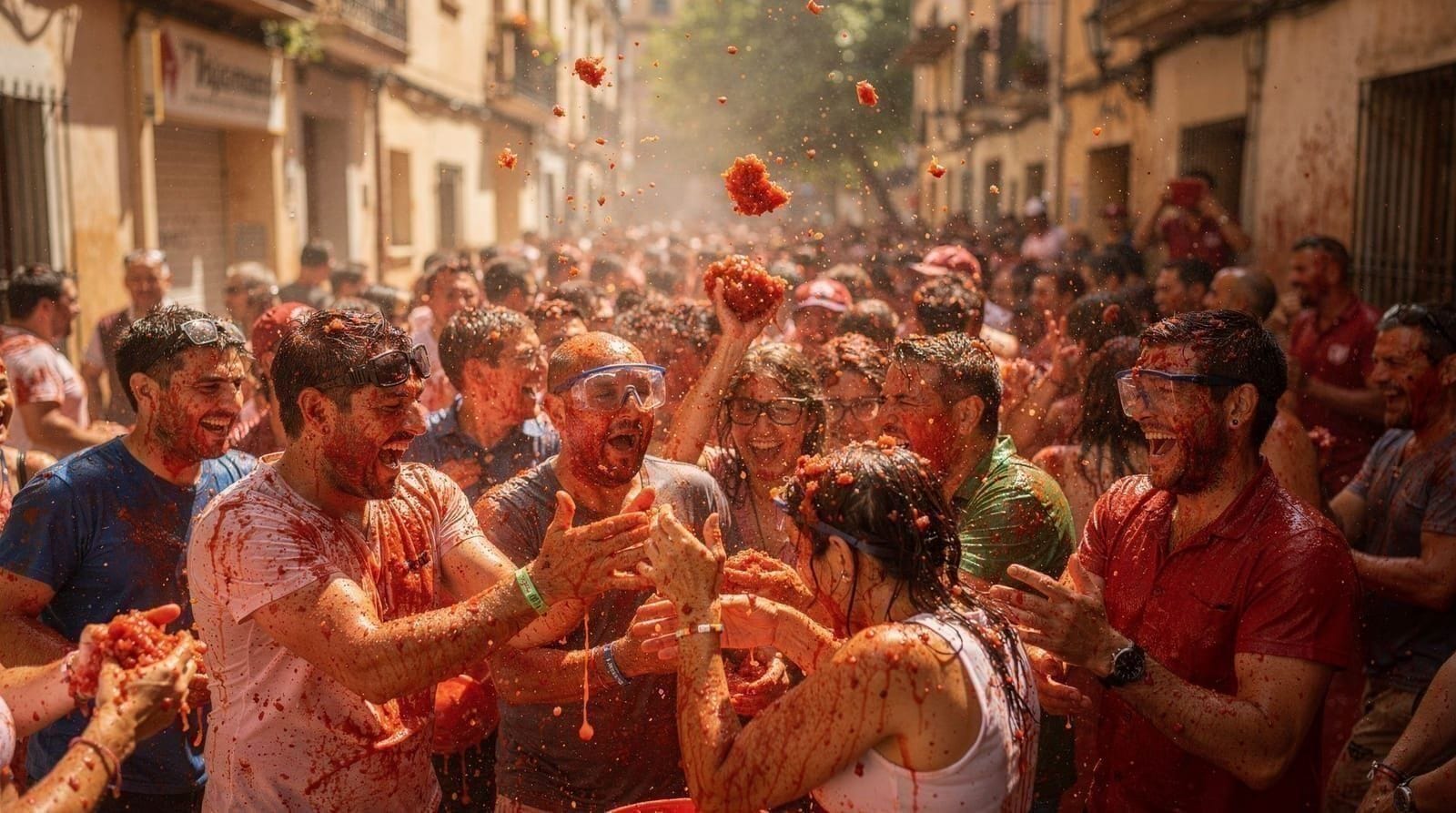
At 11:00 on the last Wednesday of August, lorries move through Buñol’s main street (Calle Doctor Peset Aleixandre) and participants throw approximately 150 tonnes of soft, overripe tomatoes at each other. The fight is bounded by a starting signal (a ham is retrieved from the top of a greased pole — when it comes down, the lorries arrive), and it ends exactly 60 minutes later when a second signal sounds.
The tomatoes are grown specifically for the event — they are cheap processing-grade fruit, not eating quality. They are also not as painful as they look in photos. Most injuries are minor cuts from rings or watches; participants are advised to remove jewellery and wear goggles.
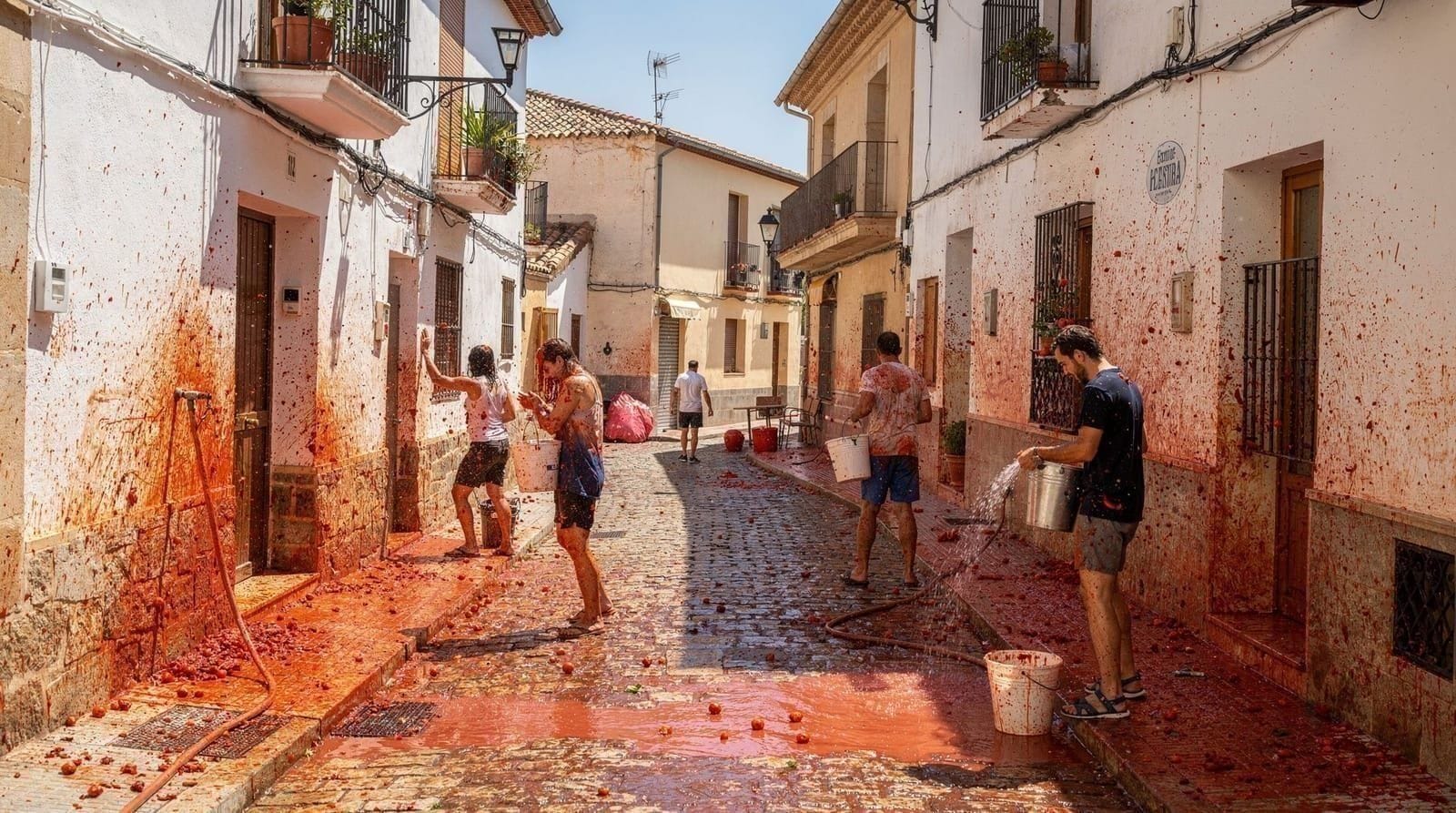
The streets are hosed down within hours; by mid-afternoon, Buñol is quiet.
Getting tickets: the changed reality since 2013
Prior to 2013, La Tomatina was free and unlimited. Since then, the Buñol council has imposed a cap of approximately 22,000 tickets at around €10–12 per person (price has increased annually). Tickets sell out months in advance for popular years — by January or February for the August event. If you do not have a ticket, you will not pass the barriers on the main street.
Several tour operators sell tickets bundled with bus transport from Valencia:
La Tomatina 2026 from Valencia — includes transport from Valencia (bus), ticket entry to the fight zone, and typically a bus wash-down stop on the return. This is the most straightforward option for non-Spanish speakers who don’t want to navigate ticket portals.
La Tomatina Festival day trip (Valencia) is a similar combined option.
Note: tour packages cost €45–90 per person depending on what’s included (transport, ticket, meal). Buying just the entry ticket directly from the Buñol council website is cheaper (€10–12) if you can handle the booking yourself — but it requires booking well in advance.
Getting there independently
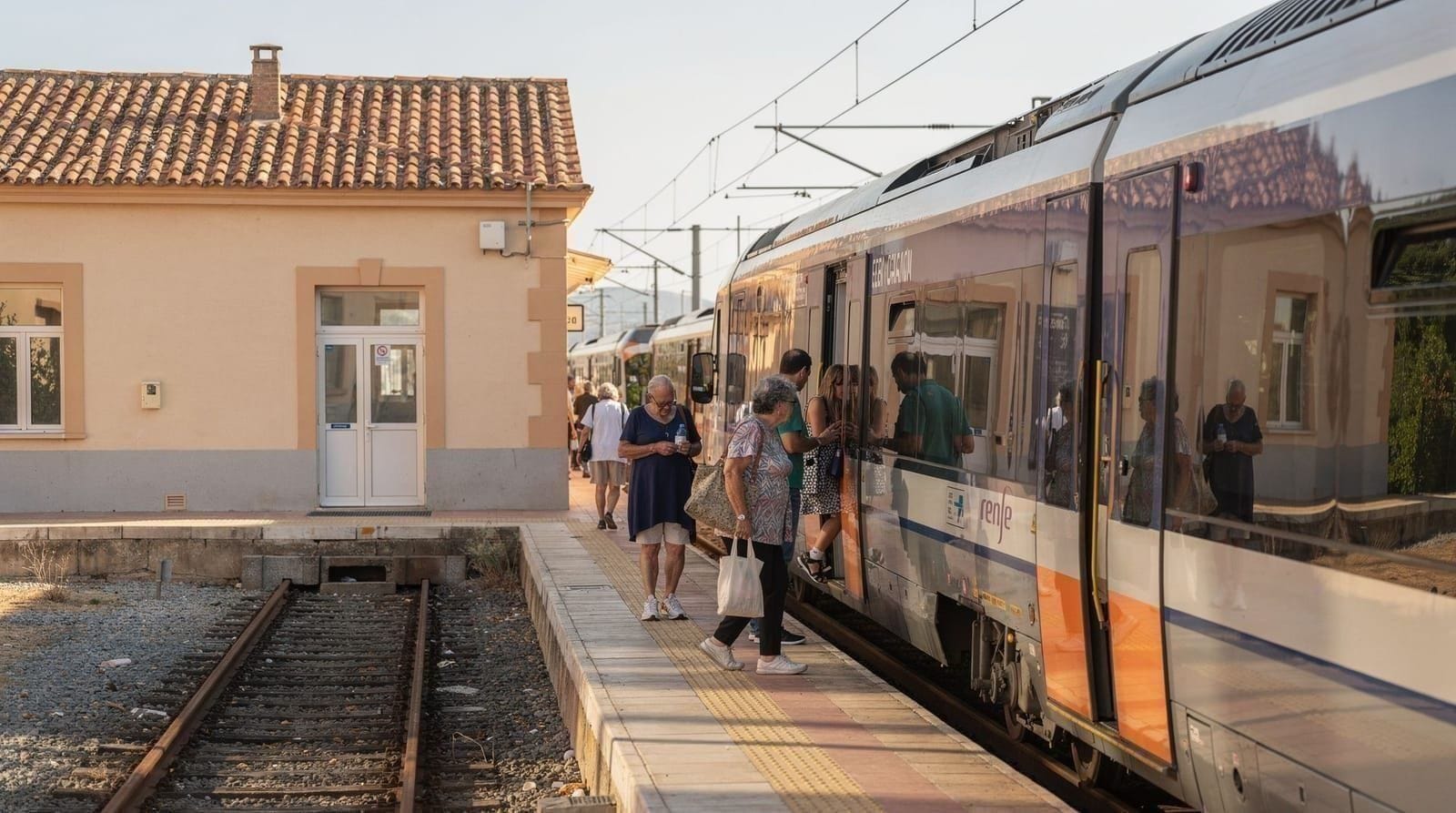
The C3 Cercanías train from Valencia’s Joaquín Sorolla station runs to Buñol in approximately 38–42 minutes. On La Tomatina day, RENFE runs additional services; trains are packed. Buy your ticket to Buñol the day before (from a Cercanías ticket machine at the station) — buying on the day is a scramble.
Driving to Buñol on Tomatina day is inadvisable — town roads are closed or gridlocked, parking is non-existent near the fight zone. If you drive, park at the motorway service area on the A-3 and walk or take a shuttle.
What to wear and bring
This advice is given in every Tomatina guide and is genuine:
- Wear old clothes you will throw away — tomato pulp stains permanently
- Wear closed-toe shoes, secured with laces (sandals are pulled off in the crowd; flip-flops are dangerous)
- Remove rings, watches, earrings — the crowd is dense and jewellery causes scratches
- Wear swimming goggles or wrap-around sunglasses — tomato juice in the eyes is unpleasant and unavoidable
- Bring nothing you cannot afford to lose; phones in a waterproof case only
- The entire fight zone is standing-room; you cannot put bags down
After the fight: what Buñol offers
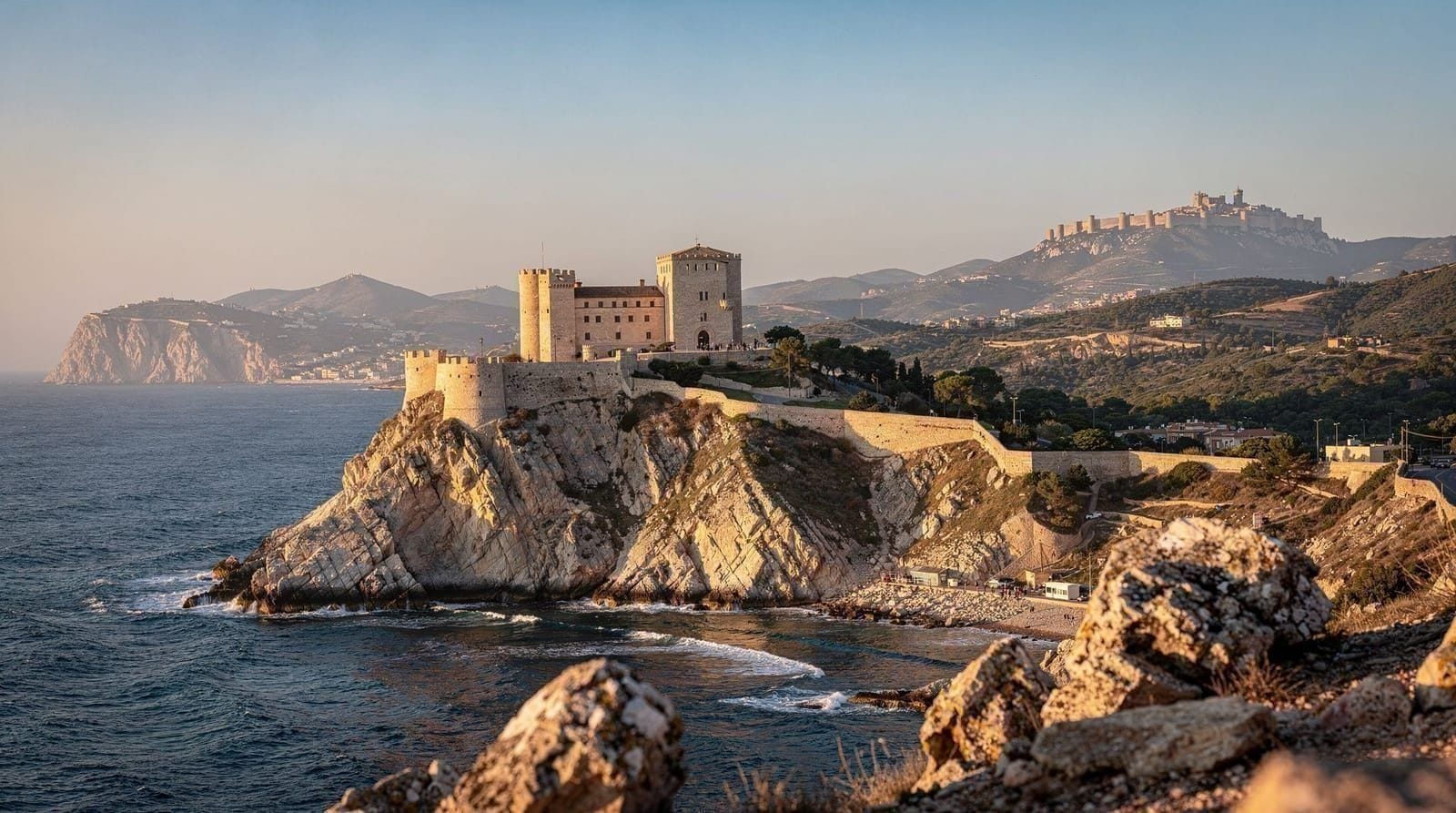
Almost nothing, honestly. The town centre has a few cafés for post-fight beverages, and a medieval castle (Castillo de Buñol) is visible from the main street. The castle has limited opening hours and is less impressive than Xàtiva’s. Most visitors return to Valencia within 2–3 hours of the fight ending.
There is one natural attraction worth knowing about: the Cañón del Buñol, a limestone gorge with a river walk, 3 km from the town centre. Accessible year-round (not just Tomatina day), the gorge walk takes 2–3 hours return and involves river crossings. It is not connected to Tomatina tourism and is largely visited by local Spanish walkers.
For a deeper look at the festival experience, the La Tomatina complete guide covers safety, logistics and what tour operators don’t mention. For train-based day trips in general, see the day trips by train guide.
Planning your Valencia stay around the fight
Because the fight happens on a Wednesday morning and the train back is crowded, most people are happiest sleeping in Valencia the night before and the night after. Our where to stay in Valencia guide helps you pick a neighbourhood with an easy walk or metro hop to the station, and the getting around by metro and EMT guide explains how to reach it without taxis. Late August is peak summer, so it is worth reading Valencia in summer for what the heat does to your plans, and the best time to visit Valencia page if you are still choosing your dates.
If Tomatina is only one stop on a longer trip, fold it into a wider plan rather than building the trip around it. The three days in Valencia itinerary and the first weekend itinerary both leave room for a half-day excursion, and the Valencia festivals calendar shows what else is happening around the same dates. Our blog write-up, the La Tomatina 2026 guide, gives a more personal account of the build-up.
Choosing between a tour and doing it yourself
The honest trade-off is effort against comfort. Going independently means handling the ticket, the train and the return crush on your own, which suits confident, flexible travellers. A packaged trip takes those decisions away: someone else holds the plan, you follow the group, and you know where the bus waits afterwards. If you have never been to a Spanish street festival, or you are travelling alone and would like company, the packaged route removes much of the stress.
There is also a middle path. You can buy your own entry ticket, take the train, and still meet friends on the day. If you would rather spend the rest of your stay with a guide who builds the day around your interests, a private tailored tour of the city fits neatly on a day before or after the fight, when you want something calmer.
For those without a car, the day trips without a car guide and the day trip by train blog post explain why the rail option is the sensible default. If you are thinking of hiring a vehicle for the wider region, the car rental for day trips guide covers when it genuinely helps — and Tomatina morning is not one of those times.
Looking after yourself in the crowd
A dense crowd rewards a little preparation. Agree a meeting point with your group before you go in, because phone signal is unreliable when thousands of people are in one street and phones are best kept sealed away. Charge your phone fully beforehand, and see the eSIM and connectivity guide if you want mobile data sorted before you arrive. Keep your return ticket and a little cash in a sealed bag against your body rather than in a loose pocket, and read pickpockets and safe areas for general habits that apply in any crowd, including on the packed trains.
Drink water before you go in, eat something sensible at breakfast, and know where you will rinse off afterwards. Take a change of clothes in a sealed bag and a plastic bag for the wet ones. These small things make the journey home far more pleasant than the stories of soggy train rides suggest.
Eating and drinking after the fight
After the fight, appetite tends to arrive suddenly. Buñol’s cafés fill up fast, so many visitors wait until they are back in the city. The eat like a local guide and the menú del día guide help you find a proper lunch without falling into the traps described in tourist traps in Valencia. If you want to browse and graze, the Central Market is a good place to recover the next morning, and a cold glass of horchata is a classic way to cool down.
Travelling on a tight budget? The Valencia on a budget guide shows how to keep the rest of the trip affordable, which matters when the festival day itself is the main expense.
Other inland trips worth pairing
Tomatina is a single morning, so you may have days to fill. Valencia city itself rewards lingering, and the inland towns described above all make good follow-ups. Families should read Valencia with kids before deciding whether the festival is right for the youngest members of the group, since a gentler day elsewhere may suit them better.
Honest assessment: is it worth it?
La Tomatina is a 60-minute experience requiring advance planning, travel, and a tolerance for extremely close-proximity crowds and mild physical contact. If you find crowd-based participatory festivals appealing, it is genuinely fun and memorable — a level of physical absurdity difficult to replicate elsewhere. If you are ambivalent about crowds, the logistics may exceed the reward. Several travellers describe the post-fight cleanup (cold outdoor showers, wet clothing for the train back) as less enjoyable than the fight itself.
The event is not dangerous if you follow basic precautions (no jewellery, goggles, closed shoes). Incidents are rare. The local police manage the crowd effectively.
Practical information
- Tomatina date: Last Wednesday of August (2026: 26 August; confirm on bunyol.es)
- Fight zone hours: ~10:00–12:30 (fight itself is 11:00–12:00)
- Ticket price: ~€10–12 (council direct) or €45–90 (tour packages with transport)
- Train: Valencia Joaquín Sorolla → Buñol, C3 line, ~40 min, ~€4 each way
- Nearest large town: Chiva (10 km north), with better restaurant options year-round
What a Tomatina day actually looks like, hour by hour
| Time | What’s happening |
|---|---|
| ~09:00 | Arrive Buñol by train; streets already filling near the barriers |
| ~10:00–10:45 | Wait in the fight zone; greased-pole ham climb attempts begin |
| 11:00 | Lorries arrive, tomato throwing starts |
| 12:00 | Second signal, fight ends; streets hosed down begins |
| 12:30–14:00 | Rinse off (public hoses/showers), change clothes, find food |
| 14:00–15:00 | Return train to Valencia, typically crowded |
Budget the whole morning and early afternoon rather than planning anything else for the day. For train-based day trips generally, the day trips by train guide covers ticket logistics beyond Tomatina.
If you’re not going for La Tomatina
Outside the festival, Buñol is a minor stop at best, and most visitors are better served by one of the region’s more substantial inland towns. Xàtiva, Requena and Bocairent all offer more to see on a non-festival day — a castle, a wine region, and a medieval cliff village respectively. The Cañón del Buñol gorge walk is a legitimate reason to visit outside August if you specifically want a quiet river walk with no crowds and no ticket required.
Frequently asked questions about Buñol and La Tomatina
When exactly is La Tomatina?
Always the last Wednesday of August. In 2026, this falls on 26 August. The event has been held every year since 1945, with a brief suspension in the Franco era (late 1950s to early 1970s). Check bunyol.es for annual confirmation.
How far in advance should I book?
Tickets through the council portal often sell out within weeks of going on sale (typically in spring). Tour operator packages (which bundle transport and ticket) sometimes have availability later but at higher prices. If you are planning a Valencia trip around Tomatina, book both tickets and accommodation by March at the latest.
Is La Tomatina free?
No, not since 2013. Entry to the fight zone requires a paid ticket (~€10–12). The surrounding streets outside the barriers are accessible without a ticket, but you will not be in the tomato fight itself. The outdoor street party before and after the fight is free to attend in peripheral areas.
Is it safe?
Generally yes, with appropriate precautions. The main risks are minor: eye irritation from tomato juice (goggles mitigate this), twisted ankles on slippery surfaces (proper shoes mitigate this), and loss of belongings in the crush (secure everything before entering). There have been isolated incidents of rowdy behaviour, but the event has a strong local police presence.
Is Buñol worth visiting outside La Tomatina?
Marginally. The castle and the Cañón del Buñol gorge walk are pleasant, but Buñol doesn’t compete with Xàtiva, Requena or Bocairent as an inland day trip destination in its own right. Visit on a non-Tomatina day only if you’re specifically interested in the gorge walk.
Can children attend La Tomatina?
There is no minimum age set by the organisers, but the event involves very dense crowds, physical contact, and flying tomato pulp. Children under approximately 10 would find the experience frightening rather than fun. Most family travel guides recommend leaving young children at home for this particular event.
Top experiences
Bookable activities with verified prices and instant confirmation on GetYourGuide.