La Tomatina guide: the tomato fight at Buñol explained
Valencia: La Tomatina 2026
Duration: ~10 hours
When is La Tomatina 2026 and do I need a ticket?
La Tomatina 2026 is on Wednesday 26 August — always the last Wednesday of August. Tickets are mandatory since 2013 with a strict capacity cap of 22,000 participants. Buñol is 38 km west of Valencia; organised tours from Valencia include transport, ticket, and guidance. Independent access requires a ticket purchased in advance.
La Tomatina is the world’s largest food fight: one hour of tomato-throwing in the streets of Buñol, a small town 38 km west of Valencia. The event takes place on the last Wednesday of August every year — in 2026, that is 26 August. It draws participants from across Europe and beyond, and the combination of warm August weather, a Mediterranean town, and large quantities of tomatoes makes it genuinely unlike any other event.
Here is everything you need to know to attend safely and intelligently.
| When | Last Wednesday of August (26 August 2026), 12:00-13:00 |
| Where | Buñol, 38 km west of Valencia |
| Cost | Ticket required — tour packages typically 40-70€ |
| Getting there | Organised tour (easiest) or Renfe train + walk |
| Booking | Tickets sell out by late spring — book as early as possible |
The history of La Tomatina
The origin of La Tomatina is disputed — the most commonly repeated story involves a street fight during a town festival in 1945 that escalated into a spontaneous tomato-throwing incident when a nearby vegetable stand got overturned. The authorities initially banned it, then permitted it, and over the following decades the event became official and increasingly international.
By the early 2000s, the crowd had grown to 40,000+ with no controls, creating genuinely dangerous crush conditions in the main street (Calle del Pueblo). In 2013, the Buñol town council introduced a ticket cap of 20,000 participants and an entry fee. The change was controversial locally but has made the event substantially safer and somewhat more manageable.
Today, La Tomatina is one of Spain’s most internationally known events alongside Las Fallas and San Fermín. The town of Buñol (population approximately 9,000) temporarily triples its population for a single morning each August.
How La Tomatina works
The event follows a fixed structure:
08:00–09:30: Participants gather in Calle del Pueblo, the main street where the fight takes place. Food stalls serve breakfast; the atmosphere is festive.
From 11:00 — the palo jabonado (greasy pole): Before the tomatoes are released, a competitive ritual takes place: a ham is placed at the top of a greased pole, and participants attempt to climb it. When someone reaches the ham (or comes close enough), the cannon fires and the tomatoes begin. This is the authentic traditional opening.
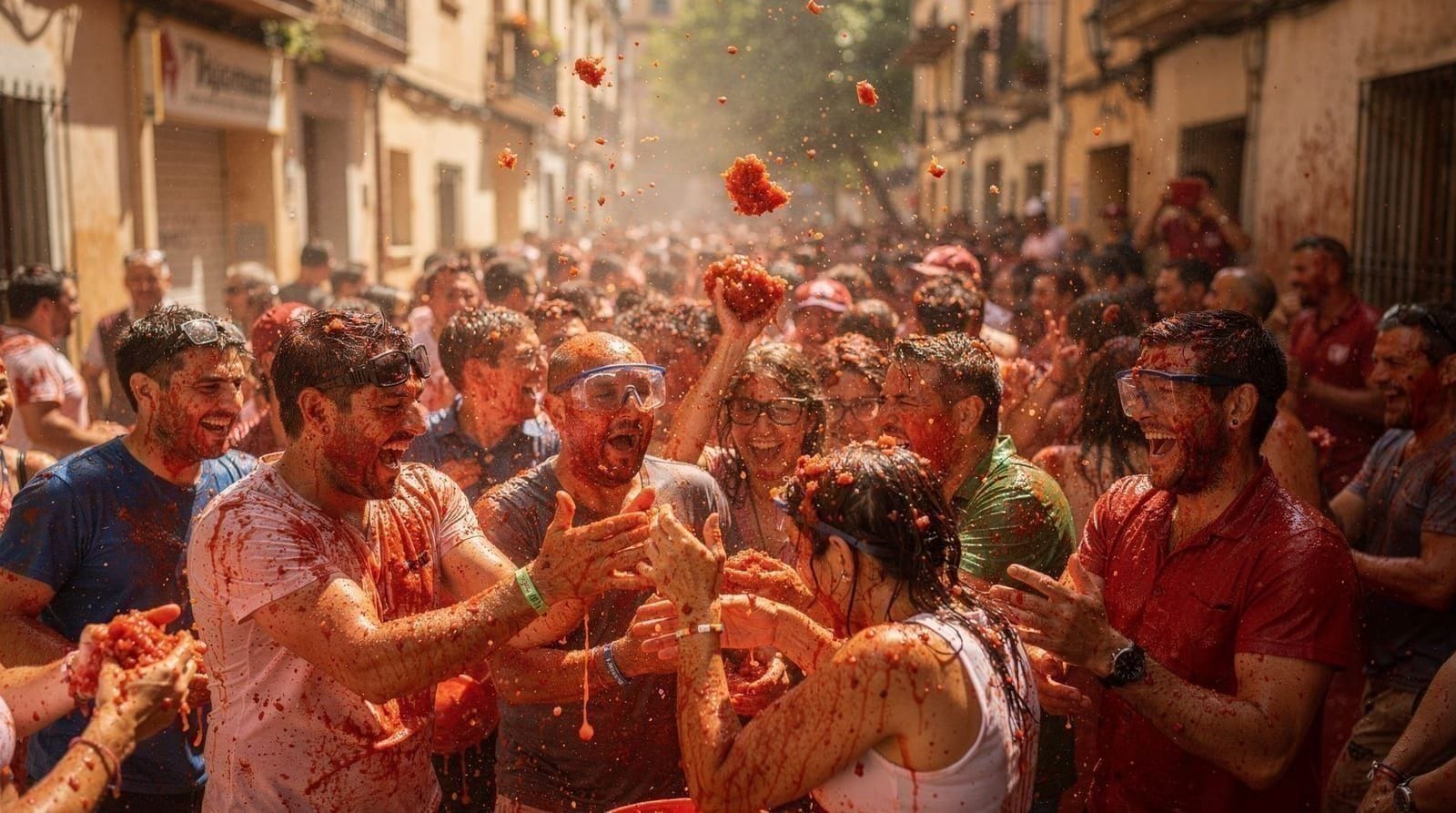
12:00–13:00 — the tomato fight: Lorries drive slowly through Calle del Pueblo distributing tomatoes (roughly 125,000 kg are used each year). Participants take the tomatoes and throw them at each other. The street quickly becomes a river of red pulp. The fight ends on the second cannon shot at exactly 13:00. Stopping on the cannon signal is a safety norm — throwing continues after the cannon is a violation of the rules and not tolerated.
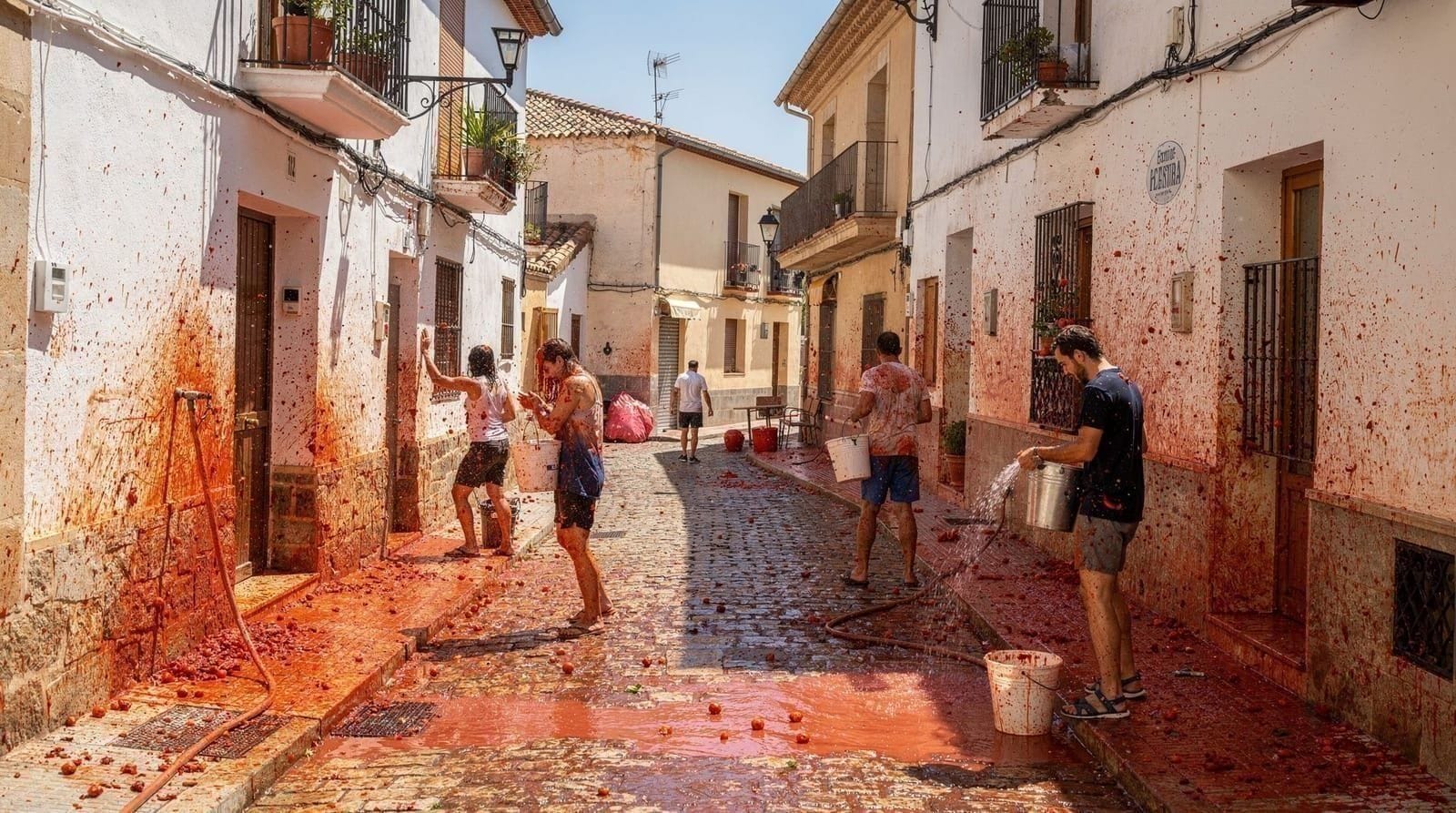
13:00–15:00 — washing and aftermath: The town deploys water trucks and hoses. Local businesses open their yards and bathrooms (often for a small fee). The main plaza has a washing area. Getting relatively clean takes 20–30 minutes.
Afternoon: Most tour groups return to Valencia by early afternoon. Independent travellers can explore Buñol’s old town or take a taxi to Cueva de Turche for a swim (highly recommended in August heat).
Getting to Buñol: your options
Option 1: Organised tour from Valencia (recommended)
The simplest and most reliable approach. Guided day trips from Valencia include:
- Round-trip bus transport from central Valencia
- Guaranteed ticket for La Tomatina (critical — finding individual tickets close to the date is difficult)
- Guide assistance for navigating the event
- Optional lunch in Buñol
Tours depart early morning (typically 07:30–08:30 from central Valencia) and return by 15:00–16:00.
La Tomatina 2026 organised tour from Valencia: bus + ticket + guide, departing central Valencia
Option 2: Independent travel
For independent attendance, you need:
-
A ticket: available from the official website (tomatina.es) and a small number of authorised resellers. Go on sale in February–March; book immediately when released.
-
Transport: Renfe Cercanías line C-3 from Estació del Nord Valencia to Buñol station (approximately 45 minutes, departures from around 06:30 on the day). From Buñol station, the walk to the town centre is approximately 30 minutes uphill. Special buses are added on the day.
-
Return: Trains back to Valencia from Buñol are heavily crowded after 13:00. Expect waits and standing. The first clear trains are usually around 13:00–14:00.
Driving is strongly inadvisable. The road into Buñol is closed to private vehicles for several kilometres on the event day; parking is essentially non-existent within a reasonable walk.
Alternative La Tomatina day trip option from Valencia with transport included
What to bring and what to leave behind
Bring:
- Old clothes (T-shirt, shorts) you won’t care about losing
- Old shoes or sandals — comfortable and expendable. Flip-flops will be sucked off in the tomato pulp.
- Swim goggles or cheap glasses — tomato juice in the eyes is genuinely unpleasant
- Waterproof phone case if you must bring a phone
- Small amount of cash in a waterproof bag (for food, lockers, washing)
- Sunscreen applied in advance (it will be washed off, but good for the bus)
Leave behind:
- Your actual clothes, shoes, and anything with sentimental or monetary value
- Non-waterproofed phones, cameras, and electronics
- Large bags or backpacks (storage lockers near the event area are available for a fee)
Optional: some participants bring a disposable poncho to wear on the walk to the fight, discarding it at the start. This keeps you dry during the wait but won’t survive the fight itself.
During the fight: practical tips
Position: The centre of Calle del Pueblo is most intense — densest crowd, most tomatoes. Side sections near the buildings have more space. First-timers should try a mid-section position to balance experience and comfort.
The lorries: The tomato-distribution lorries drive slowly through the street. Do not approach or grab the lorries — this is a safety rule. Tomatoes roll off and can be picked up from the ground.
Tomato etiquette: The official rules require squeezing or crushing tomatoes before throwing to reduce impact. Throwing whole tomatoes at high velocity is against the rules and genuinely hurts. Most participants follow the etiquette.
Stopping: When the cannon fires at 13:00, throwing must stop immediately. Anyone continuing after the signal is behaving dangerously and against the rules.
After the fight: Your clothes will be stained permanently — tomato juice contains lycopene, which does not wash out of fabric. Change into dry clothes as soon as possible; the dry heat of a Valencia August afternoon means getting cold is not a risk but staying in wet clothes is uncomfortable.
Weather and physical demands on the day
August in Buñol is hot — daytime temperatures regularly reach 30-35°C, and the walk from the train station or bus drop-off to the fight area adds to the exertion before the tomatoes even start. Hydration matters more than most visitors expect: drink water in the hours before the event, since once the fight begins there’s no practical way to access a drink until the water trucks arrive afterward. The fight itself is physically demanding in a way that surprises some participants — an hour of pushing through a dense, slippery crowd while throwing and dodging tomatoes is a genuine workout, not a passive spectacle. Anyone with mobility limitations, claustrophobia in dense crowds, or heat sensitivity should think carefully about whether the main fight area is the right choice, versus watching from a side street with more space.
Buñol beyond La Tomatina
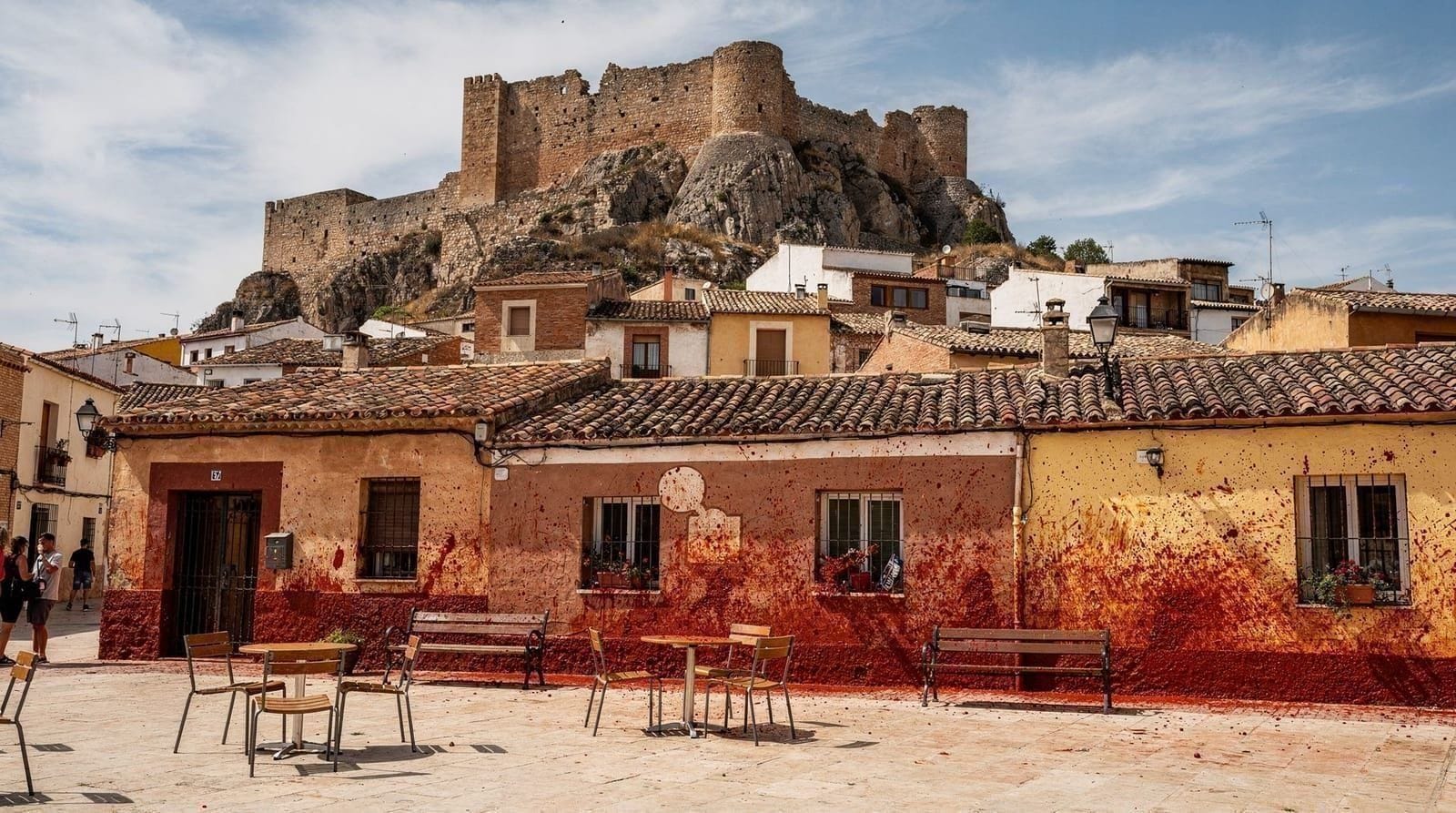
The town of Buñol itself is worth exploring. The Castillo de Buñol (castle) dates from Moorish occupation and offers views over the town and the surrounding almond and orange orchards from its partially accessible battlements.
The real gem near Buñol is the Cueva de Turche — a natural swimming hole formed by a stream flowing through wooded gorge, about 4 km from the town centre by road. In August, the water temperature is cool enough to be refreshing (around 18°C). A taxi from Buñol centre costs around €8. This is an excellent post-Tomatina destination: wash off the tomatoes, recover in cool water, and dry out before the trip back to Valencia.
See the Buñol destination guide for full details.
Combining La Tomatina with a longer Valencia stay
Because La Tomatina is a single morning, most visitors treat it as one day within a longer Valencia trip rather than the entire reason for visiting. A practical pattern: spend two or three days on the city’s core sights — old town and Mercado Central, the City of Arts and Sciences, a beach afternoon — then add the Tomatina day trip if your dates align with the last Wednesday of August. Since the fight ends by 13:00 and most tours return by mid-afternoon, the rest of the Tomatina day is effectively free; some visitors use it to recover with an early dinner and an easy evening rather than planning further activities. If your trip doesn’t land on Tomatina dates, Bocairent or Xàtiva Castle make comparably interesting day trips west and south of the city.
La Tomatina 2026: bus, ticket and guide from ValenciaPlanning the days around La Tomatina
The morning itself is short, so the real planning question is what surrounds it. The evening before is best kept quiet: an early night matters more than a late dinner when your bus or train leaves at dawn. If you are staying in the city, a base close to the Estació del Nord makes the early start easier, and the where to stay in Valencia guide and the best area for first-timers page explain which neighbourhoods work well for early departures. Getting around on the day before is simple with the metro and EMT guide, which helps you check how to reach the station without a taxi.
Meals around the event deserve a thought too. A tomato fight leaves you hungry, and the temptation is to eat the first thing you see in Buñol. Back in Valencia, it is more rewarding to save your appetite for a proper sit-down meal; the guides to how to order paella and to eating like a local will help you avoid the usual traps, and paella traps is worth a read before you pick a restaurant in a hurry. If you would rather start the day with something light and local, the esmorzaret and almuerzo guide explains the Valencian mid-morning tradition that suits the pace of a festival day.
Staying safe and connected
Crowds, heat and a phone sealed in a pouch make a poor combination if you lose your group. Agree a meeting point before the fight starts, somewhere outside the main street, and make sure everyone knows which train or bus they are aiming for afterwards. Keep valuables to the bare minimum, and read the pickpockets and safe areas guide before you travel, since busy trains and stations on a festival morning attract opportunists. If you want mobile data without hunting for a shop, the eSIM and connectivity guide covers the options for visitors. Visitors from outside the Schengen area should also check the entry requirements and ETIAS guide well before booking flights.
Where La Tomatina fits in the year
La Tomatina belongs to a busy festival calendar. Many visitors build a whole trip around one of the big events and add the others when dates allow. The Valencia in summer guide gives context for what August feels like in the city, from beach days to the quieter streets in the afternoon heat, while the Valencia beach season page helps you plan a seaside day before or after the fight. If your dates are flexible, the best time to visit guide compares the seasons, and the Las Fallas day-by-day guide shows how different the March festival is. For readers who prefer a first-person account, the La Tomatina 2026 blog guide offers another angle on the same event.
If you decide not to fight
Not everyone wants to be covered in pulp, and that is a perfectly reasonable choice. You can spend the day in Valencia instead and enjoy a calmer morning at the City of Arts and Sciences or a visit to the aquarium, and those who want to book ahead can look at entry to the Oceanogràfic aquarium. Families with younger children, who are better off away from the main fight area, will find more ideas in the Valencia with kids guide. A city overview on the Valencia destination page rounds out the options for the rest of the trip.
Frequently asked questions about La Tomatina guide
Is La Tomatina still worth going to as a tourist?
Yes — the event is genuinely fun and unlike anything else in Europe. The tomato fight itself lasts exactly one hour (12:00–13:00), preceded by a competitive greasy pole-climbing ritual (the palo jabonado). The hour of fighting is intense, messy, and communal. The experience has become more managed since the ticketing system was introduced in 2013, which has actually improved safety and atmosphere compared to the uncontrolled early years.How do I get to Buñol for La Tomatina?
The easiest option is an organised tour from Valencia that includes bus transport both ways and a ticket — these solve the logistics in one booking. Independent access: Renfe regional train from Estació del Nord Valencia to Buñol station (about 45 minutes), then a 30-minute walk to the town centre. Buses from Valencia also run. Driving is inadvisable — parking is extremely limited and the road is blocked. For tickets without a tour, check the official Tomatina website (tomatina.es) from January–February.What should I wear to La Tomatina?
Old clothes you are willing to throw away afterwards — tomato juice permanently stains. Old shoes that can be discarded or thoroughly cleaned. Goggles or swimming glasses (tomato juice in eyes is painful). Consider a disposable poncho for before the fight. Bring nothing you cannot afford to lose — phones, bags, and valuables are targets for loss in the crush. Use a waterproof phone pouch if bringing a phone.Is La Tomatina safe?
With the ticketing cap (22,000 participants), it is substantially safer than the uncapped years. However, the crush in the main Calle del Pueblo is intense — avoid the direct centre of the fight area if you want more space. The tomatoes are slightly crushed before throwing (a rule to reduce impact). Listen for the starting and ending cannon — the fight begins and ends on the second cannon shot at 13:00. Respecting the stop signal is a safety norm.What happens after the tomato fight?
The town provides open-air hoses and water trucks for washing off. Local restaurants and bars serve traditional Valencian food. The town of Buñol is pleasant — a small historic centre with a castle above and a gorge (the Cueva de Turche) nearby. Most tour groups return to Valencia by early afternoon. The day trip is typically 08:00–16:00 from Valencia.Can children attend La Tomatina?
La Tomatina is technically open to all ages. In practice, the crush in the main fight area is too intense for young children. Children aged 10+ who enjoy rough play and are comfortable in crowds can have a good experience. Under 8 is not recommended in the main fight area — the crowd pressure and noise are overwhelming.Is Buñol worth visiting outside La Tomatina?
Yes. Buñol has a medieval castle (Castillo de Buñol, partially accessible), a picturesque old town, and the nearby Cueva de Turche — a natural swimming hole in a wooded gorge, one of the best swimming spots in the Valencia region. As a day trip from Valencia combined with a swim at Cueva de Turche, it is worth visiting outside the festival period. See the Buñol destination page for details.Do I need to book the Tomatina experience far in advance?
Tickets and tours for La Tomatina typically go on sale in February–March and sell out by late May–June for the most popular packages. Book as soon as tickets are available — the cap of 22,000 sounds large but fills quickly given global demand.Is La Tomatina included in Las Fallas?
No — La Tomatina is a completely separate event in a different town. Las Fallas is in Valencia in March; La Tomatina is in Buñol in August. The only connection is that both are among the most famous festivals in the Valencia region.Can I get tickets at the gate?
No — since 2013, La Tomatina is ticket-only with a hard cap. There is no walk-up entry. Anyone arriving without a ticket will not be admitted. Tickets must be purchased in advance, either directly from tomatina.es or through an authorised tour operator.Is the tomato fight dangerous?
The main risks are crowd crush (managed by the 22,000 cap), eye injury from tomato pulp (wear goggles), and slipping in the wet pulp-covered street (wear shoes with grip). Heat exhaustion is a risk in August — drink water before the event. Medical teams are present. Serious incidents are rare when participants follow the rules.What time should I arrive in Buñol?
Tour groups typically arrive by 08:00–08:30. Independent travellers should aim for the 06:30–07:30 trains from Valencia. Arriving later than 09:30 means missing the palo jabonado and potentially not getting into the main fight area.Are there other things to do in the Valencia region in August?
August is high season for beaches. See the day trips guide for train-accessible coastal options near Valencia. La Tomatina also makes a natural one-day add-on to a longer Valencia trip rather than the sole reason to visit.How does La Tomatina compare to Las Fallas for a first-time visitor?
They're very different experiences and not really comparable head to head. Las Fallas is a multi-day citywide festival in March with fireworks, elaborate sculptures, and a strong local cultural dimension; La Tomatina is a single one-hour event built around a single, highly physical activity. Visitors who want cultural depth and don't mind crowds over several days should prioritise Las Fallas; those who want one intense, memorable morning with less planning commitment lean toward La Tomatina. See the Valencia festivals calendar for how both fit into the yearly rhythm.
Top experiences
Bookable activities with verified prices and instant confirmation on GetYourGuide.