Where to stay in Valencia: honest neighborhood guide 2026
Valencia: medieval guided walking tour
What is the best area to stay in Valencia?
For most first-timers, Ruzafa (Russafa) offers the best balance: safe, walkable, excellent restaurants, 15 minutes on foot from the old city. El Carmen suits travelers who want to be in the medieval streets. Eixample is quieter and better value. Near the City of Arts and Sciences only makes sense if Oceanogràfic is your main reason for visiting.
Valencia has seven genuinely distinct neighborhoods that draw tourists, and each suits a different travel style. This guide gives you an honest comparison — not a listicle of “amazing” areas, but a practical breakdown of what each zone actually delivers in terms of walking distances, restaurant quality, noise levels, safety, and value.
| Best overall | Ruzafa — walkable, best food, moderate noise |
| Most central | El Carmen — inside the old walls, loudest at night |
| Best value | Eixample — calm, mid-range hotels, good transport |
| Cost | €70–140/night mid-range outside Las Fallas |
| Avoid in March | booking late — Las Fallas prices triple by mid-month |
What to know before choosing
Two things shape where you should sleep in Valencia more than anything else: how much you care about walkability to the old city monuments, and whether you plan to use the Turia Gardens park as your daily artery.
The historic center (Ciutat Vella, which contains El Carmen and the area around the Cathedral) is compact enough that you can walk from the Mercado Central to the Torres de Serranos in 12 minutes. This makes almost all of central Valencia walkable to the monuments. Transport is excellent — metro line 5 (Alameda station) and trams on Avenida del Cid cover most gaps.
Bear in mind that Spanish cities have genuine neighborhood culture. Staying in Ruzafa does not mean you’ve “missed” El Carmen; it means you’ll likely eat better and sleep more quietly, then walk or cycle to the old city during the day.
Pick the neighbourhood first, then filter the listings by the metro or tram stop nearest to the door, such as Alameda on line 5 or a stop along Avenida del Cid. Check the street, not just the district, because a quiet Ruzafa block and a lively one can be a few doors apart, so read recent guest comments about night noise before paying. From there you can compare Valencia rooms on Booking.com with free cancellation in the area you chose.
El Carmen and Ciutat Vella — the medieval heart
For: History lovers, medieval architecture enthusiasts, travelers who want to step out the door directly into the labyrinth.
Against: Noise (narrow stone streets amplify sound), lack of private parking, variable apartment quality, some genuinely sketchy late-night corners.
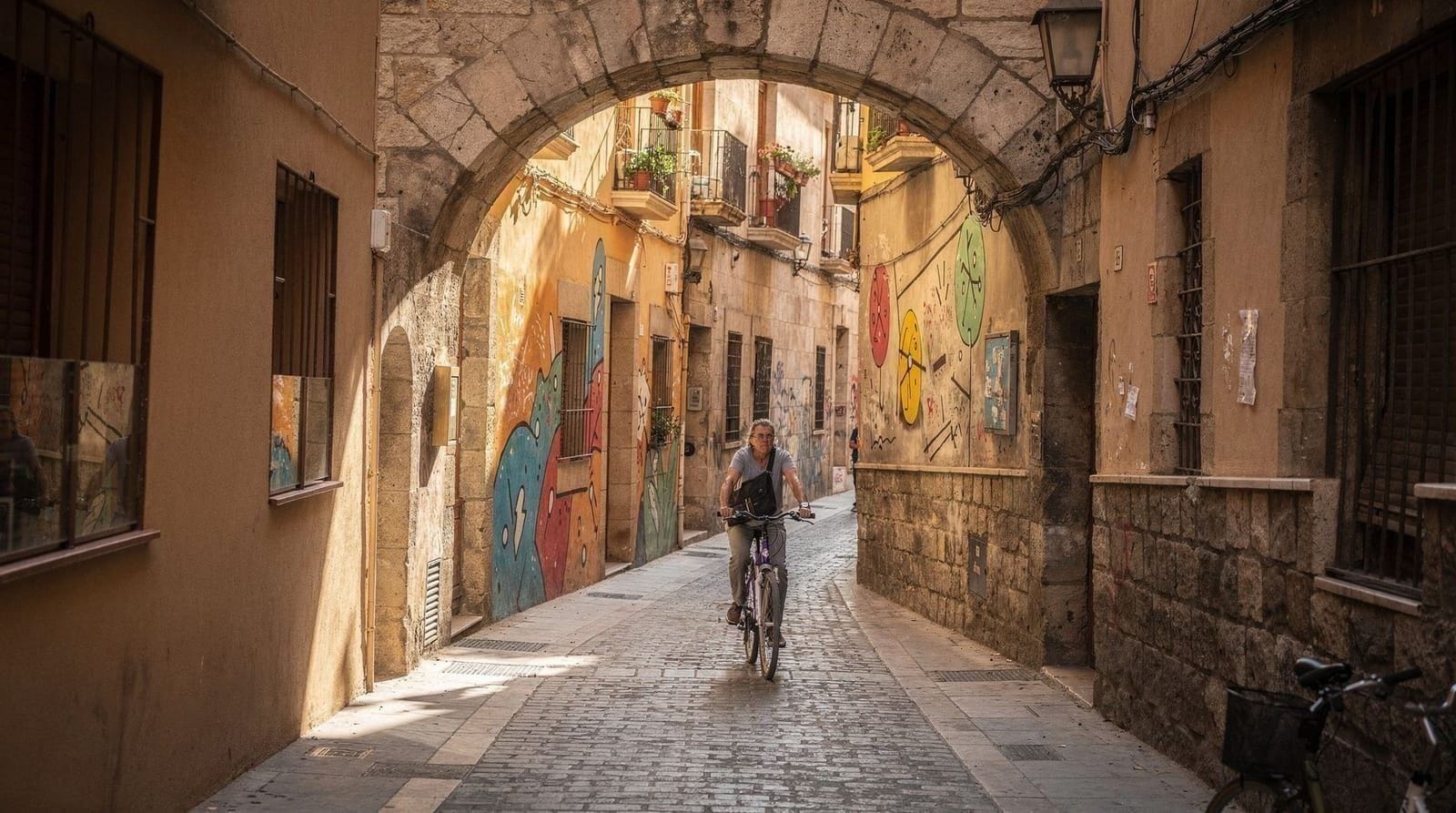
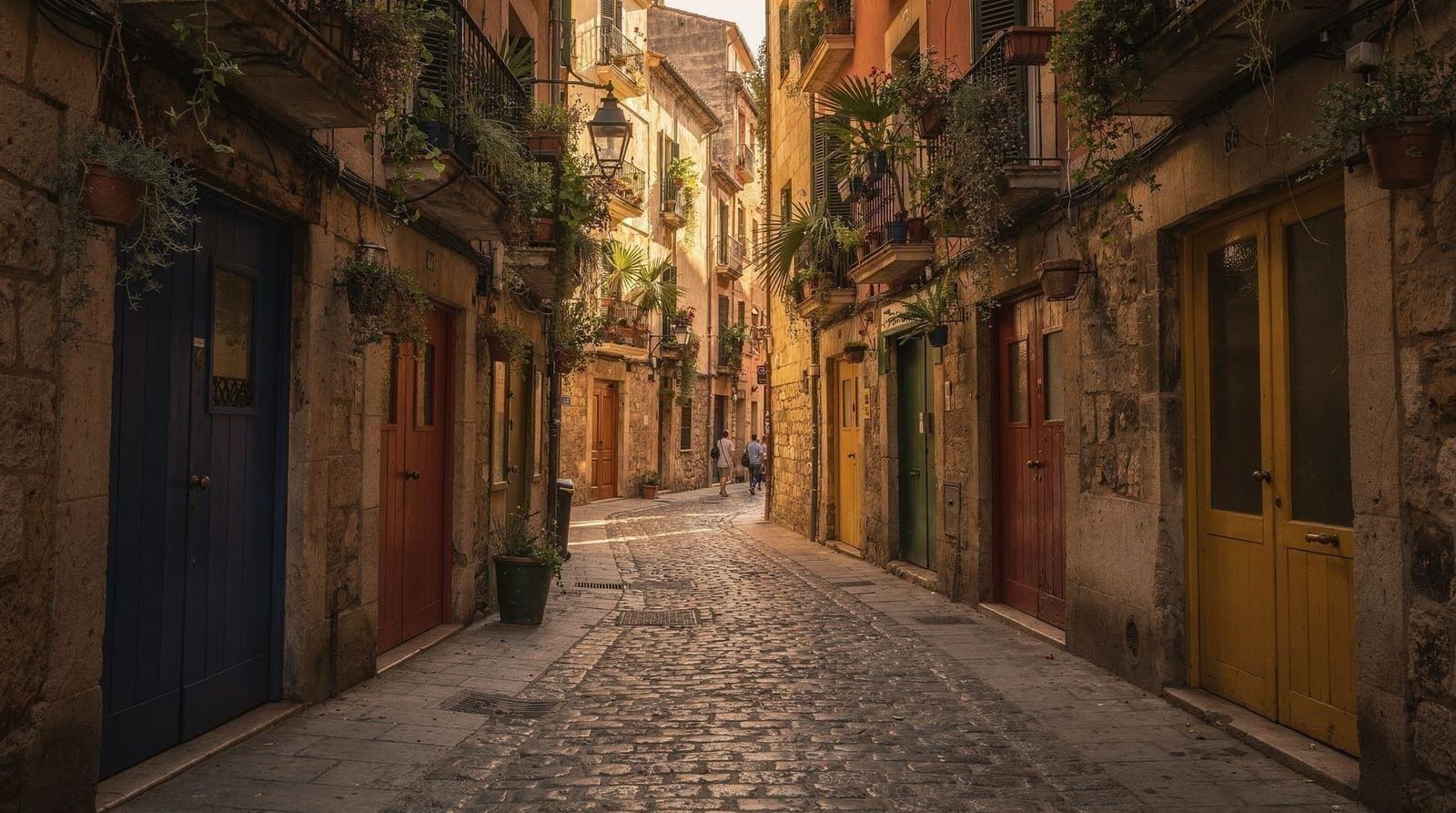
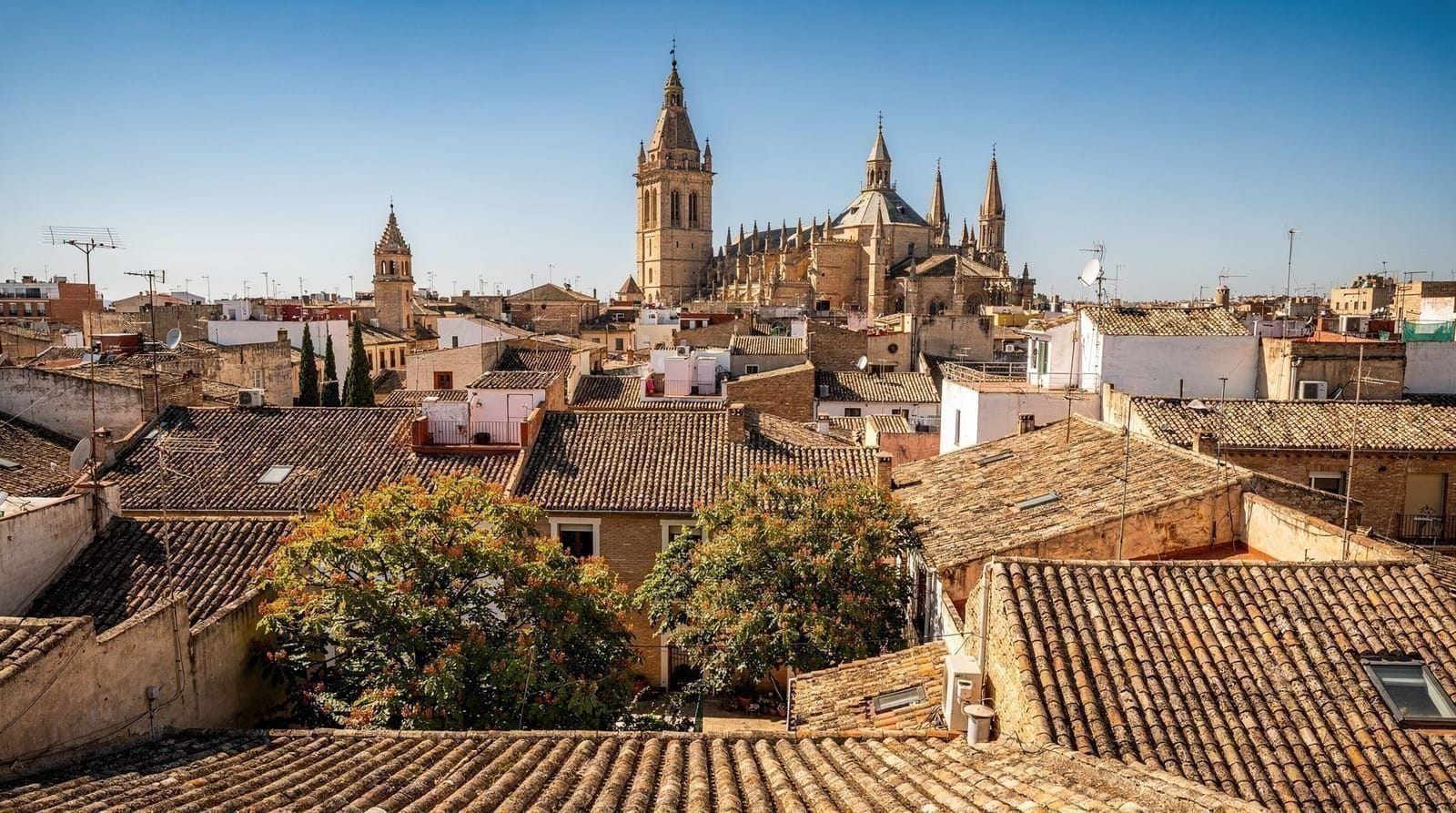
El Carmen is the oldest surviving urban fabric in Valencia — a roughly square kilometer of narrow lanes, medieval gates, and Baroque churches that date from the 9th to 18th centuries. The neighborhood runs from the Torres de Serranos in the north to the Calle de Quart towers in the south, bounded by the Turia Gardens to the north and the Av. del Guillem de Castro on the west.
Hotels and apartments here are centrally located by definition. You’re literally inside the 14th-century walls. The Lonja de la Seda (Silk Exchange) and the Mercado Central are a 5-minute walk. The cathedral and Miguelete tower are 8 minutes. The IVAM modern art museum is adjacent to the northern wall.
The honest downsides: medieval street geometry means most buildings have no lift. Rooms can be small and dark, especially in converted apartments. The Plaça del Tossal area has a cluster of late-night bars that run until 04:00; if you’re sleeping above one, expect noise Friday and Saturday nights. Bag theft from poorly secured apartments and from people walking while looking at their phones is the most common crime in this area.
Good options at different price points: Hotel Westin Valencia (luxury, Calle d’Amadeu de Savoia, €180-280/night), Hotel Vincci Palace (mid-range, very central, €100-150), and numerous apartments on quiet interior streets via Booking.com in the €80-120 range. Avoid any apartment directly above Plaça del Tossal or Calle de Bolseria unless you’re checking guest reviews for noise.
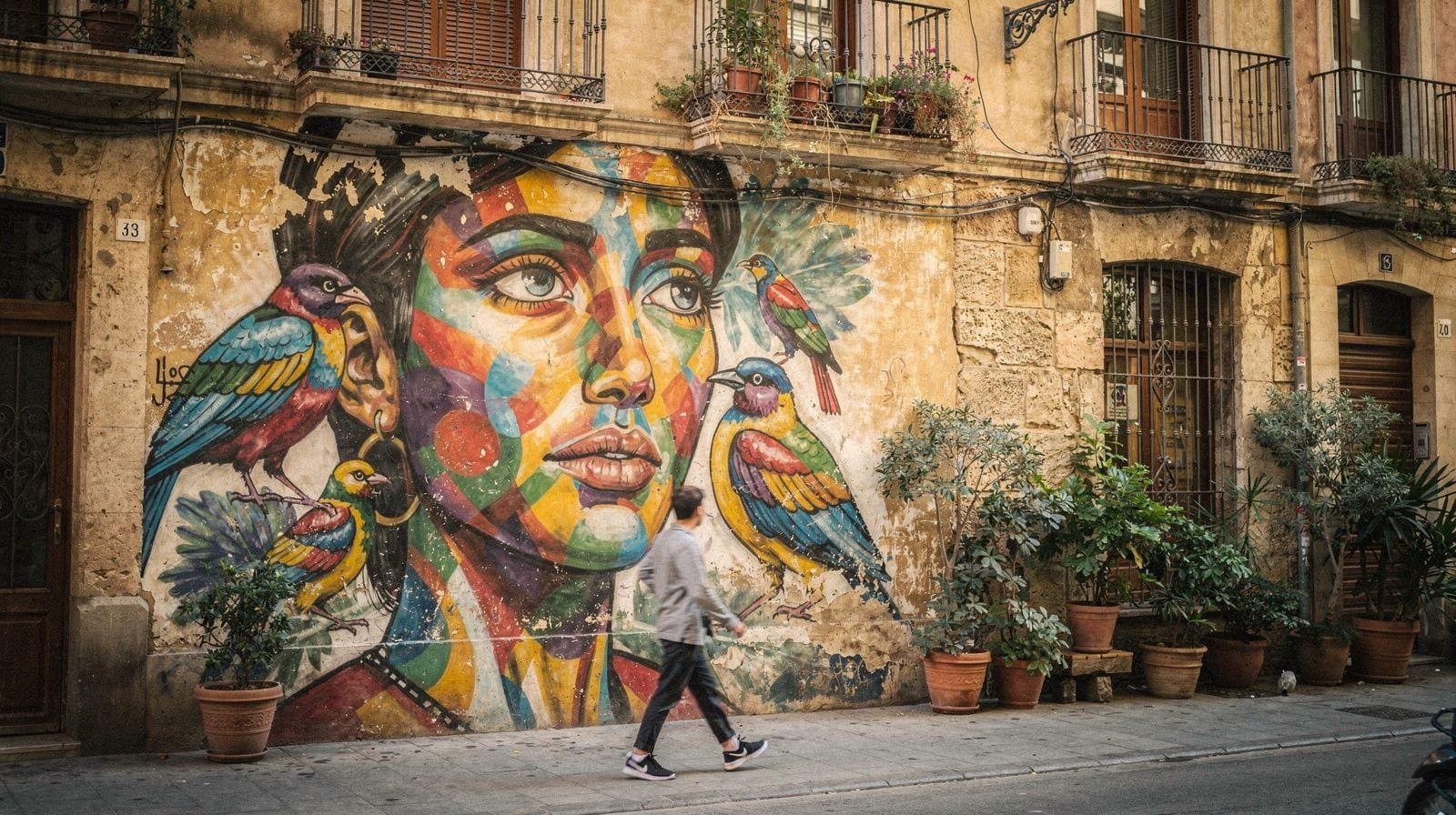 medieval guided walking tourCheck availability
Ruzafa (Russafa) — the neighborhood with the best food scene
For: Travelers who eat well, 25-45 age group, couples, people wanting a local atmosphere without the tourist circus.
Against: 15-minute walk from the cathedral (not a major issue), slightly fewer budget hostels than the old city.
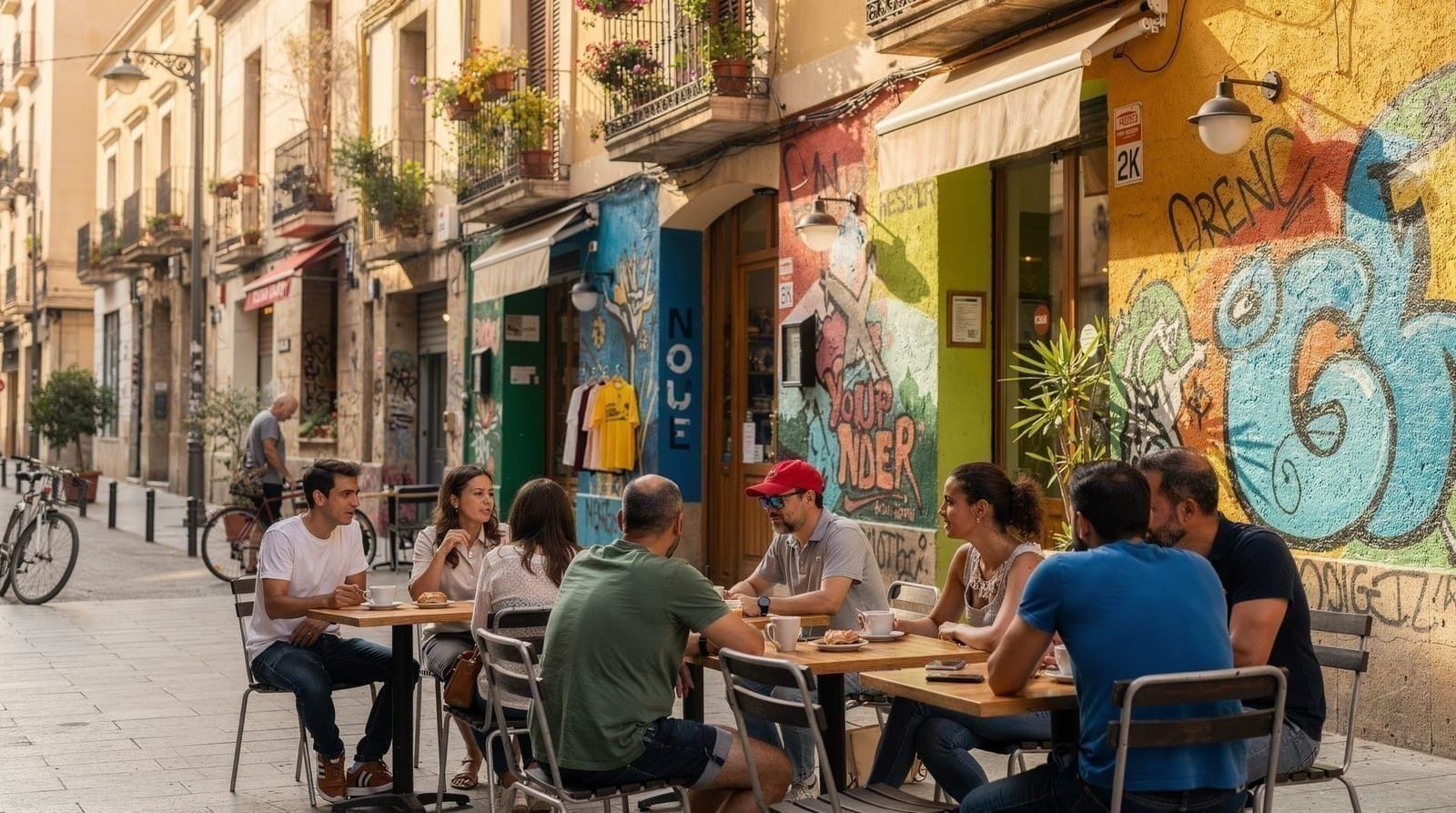
Ruzafa is Valencia’s most written-about neighborhood, and for once the reputation is broadly deserved. The area — roughly bordered by the Calle de Cuba to the north, Avenida del Puerto to the east, the train tracks to the south, and Calle de Bailén to the west — was a working-class immigrant neighborhood through the 1990s, became Valencia’s arts and café district in the 2000s, and has settled in the 2010s and 2020s as a genuinely high-quality food and bar area without becoming a theme park.
Calle dels Literats, Calle Cadis, and the area around Plaça del Doctor Landete contain some of the city’s best mid-range restaurants: Canalla Bistro (Ricard Camarena’s casual concept, always busy), Dulce de Leche (Argentine bakery beloved by locals), La Pascuala (cocktail bar, no gimmicks), Bar Berlín (excellent pintxos counter). The Mercado de Ruzafa on Calle del Doctor Serrano is one of the city’s working food markets — a proper covered market with good produce, fish, and a handful of bar counters for a morning almuerzo.
Hotels and apartments in Ruzafa offer better value than equivalent quality in El Carmen. Decent mid-range options: Caro Hotel (technically at the border with Ruzafa and Eixample, €120-180), various boutique apartment hotels on Calle dels Literats (€80-120), and a good spread of Airbnbs and Booking.com apartments in the €70-100 range for a one-bedroom flat.
Noise: much better than El Carmen. The bar scene runs late but the streets are wider, and most apartments have double-glazed windows. The area around Plaça de Mossén Sorell (northwest Ruzafa) is the quietest.
Eixample — the calm, walkable alternative
For: Longer-stay visitors, business travelers, families, people who want a city feel without tourist noise.
Against: Less atmosphere than Ruzafa or El Carmen for short-stay first-timers.
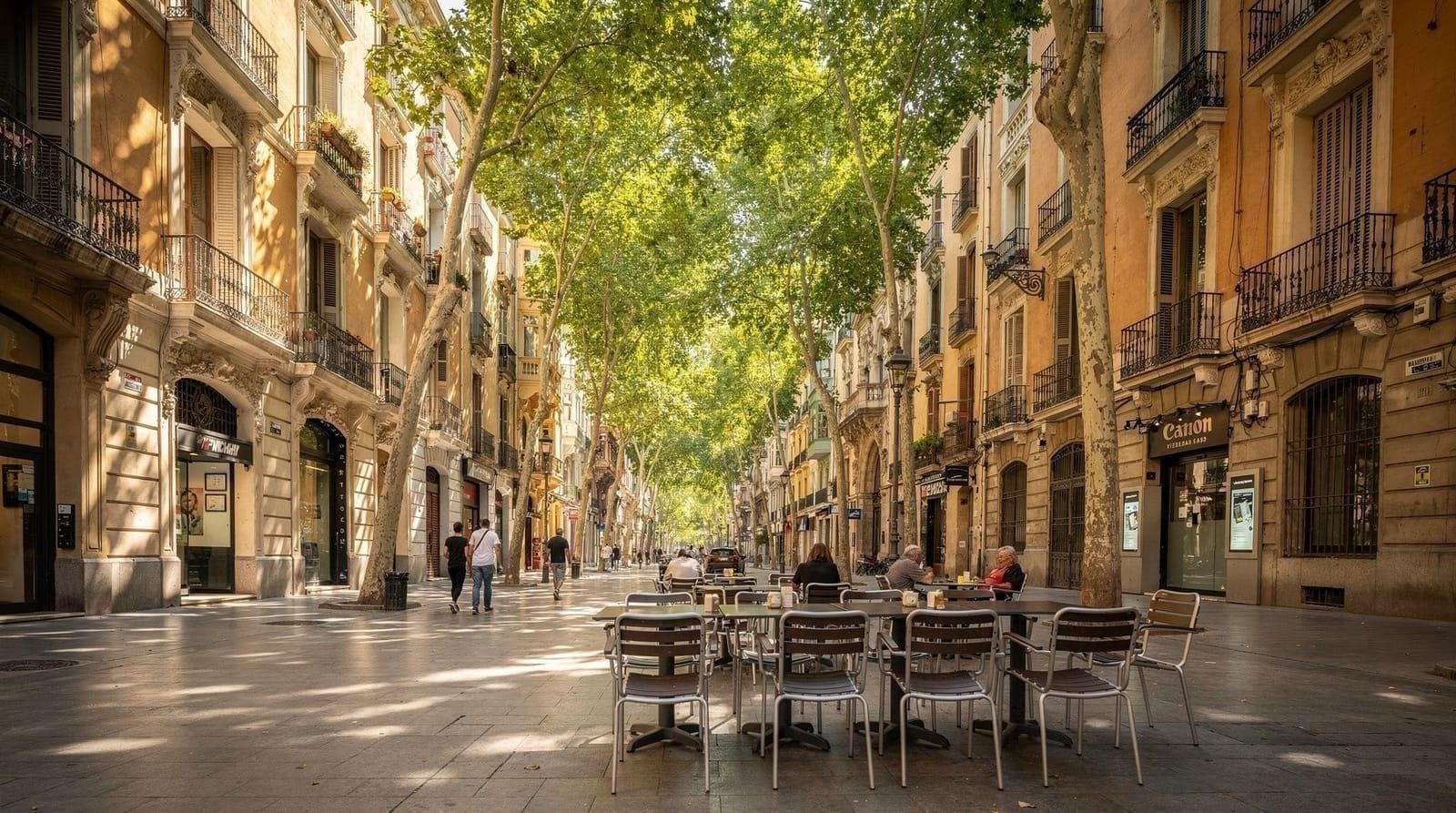
Eixample (the Ensanche, or expansion) is the 19th-century grid district that expanded Valencia beyond its medieval walls. Wide tree-lined boulevards, ornate facades, and a gentler pace define it. The area between the Calle de Colón, Calle de Xàtiva, the Gran Via del Marqués del Túria, and the Av. del Regne de València is the core of this zone.
The dining options on Gran Via are excellent — this is where you find some of the city’s most reliable mid-range restaurants and tapas bars without the tourist markup of the cathedral area. The covered Colón market (on Calle de Colón) anchors the neighborhood’s food scene. The metro at Colón station (line 3/5) puts you at the Alameda stop (Turia Gardens access) in 4 minutes.
Hotels: the Hotel NH Collection las Artes (converted textile factory, €130-190), the Casual Valencia del Cine (budget-friendly, €70-90), and numerous new apartment hotels opening in the area.
Cabanyal — beaches, fishing village culture, and the authentic market
For: Travelers who want beach access from their hotel, food market enthusiasts, those interested in the city’s fishing and maritime heritage.
Against: 30 minutes on foot from the cathedral (or 15 minutes by metro/tram), the neighborhood is still partially undergoing renovation (some street blocks are visibly dilapidated).
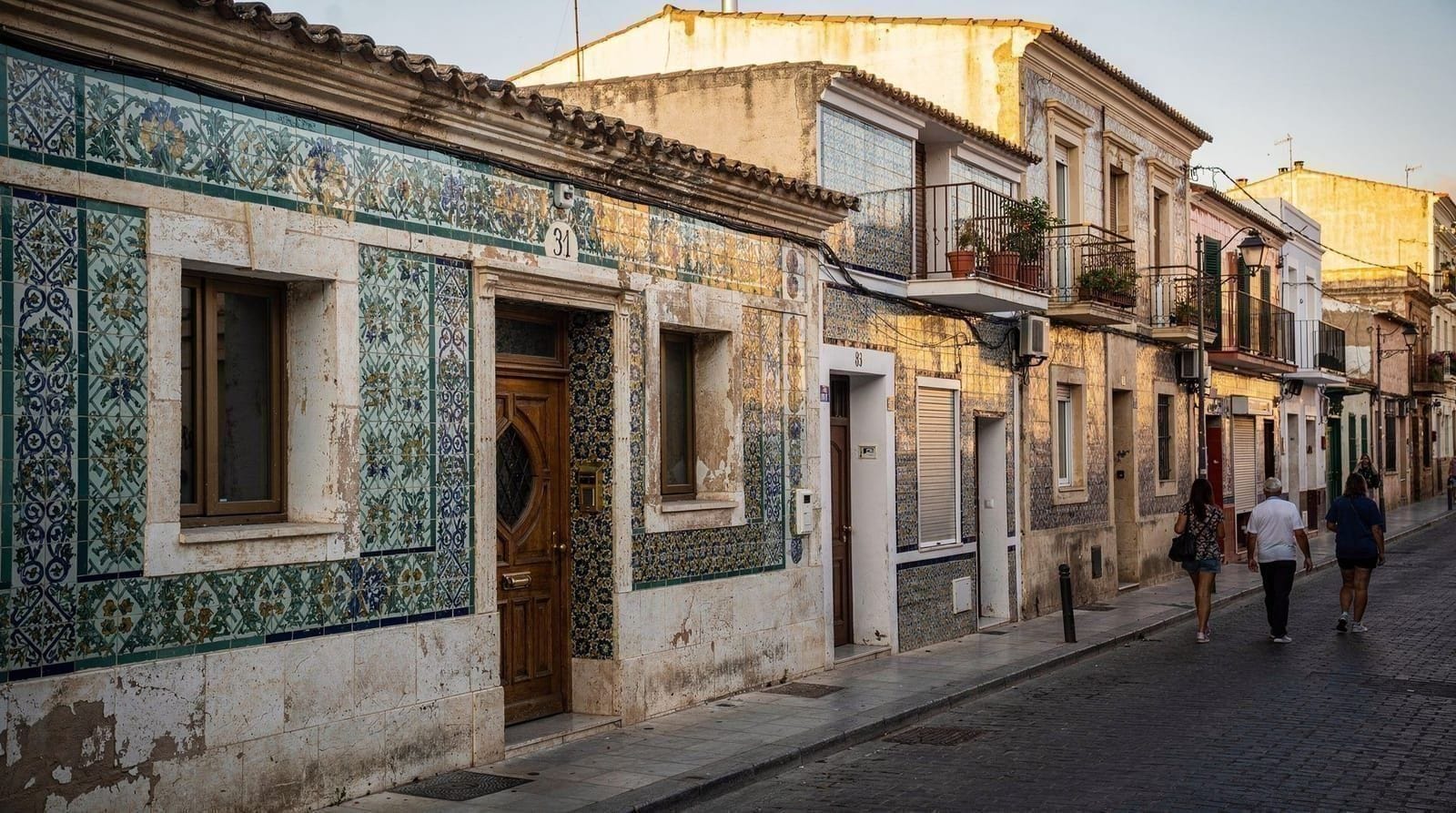
El Cabanyal is a neighborhood in transition. The 19th-century fishermen’s district — visible in the small modernista tiled facades on narrow streets — was partly threatened with demolition in the early 2000s and has been fighting its way back since. The renovation process is ongoing: some blocks look excellent, others are still raw.
The reward for staying here: La Malvarrosa and Patacona beaches are 10 minutes on foot. The Cabanyal covered market is excellent, with some of the best seafood in the city. Restaurant options on Calle del Rosari and Calle de Sant Pere are very good — the area has attracted some talented chefs precisely because rents are lower than Ruzafa.
Good options: Hotel Neptuno (beachfront, €100-160, genuine sea views), boutique apartments in renovated Cabanyal houses (Booking.com, €70-100).
Near the City of Arts and Sciences — best for families
For: Families with children visiting Oceanogràfic and Bioparc, visitors with limited mobility who need flat routes, those who specifically want to be near the City of Arts complex.
Against: Little neighborhood character, restaurants in the immediate area are mostly tourist-focused, long walk to the old city (35-40 minutes on foot).
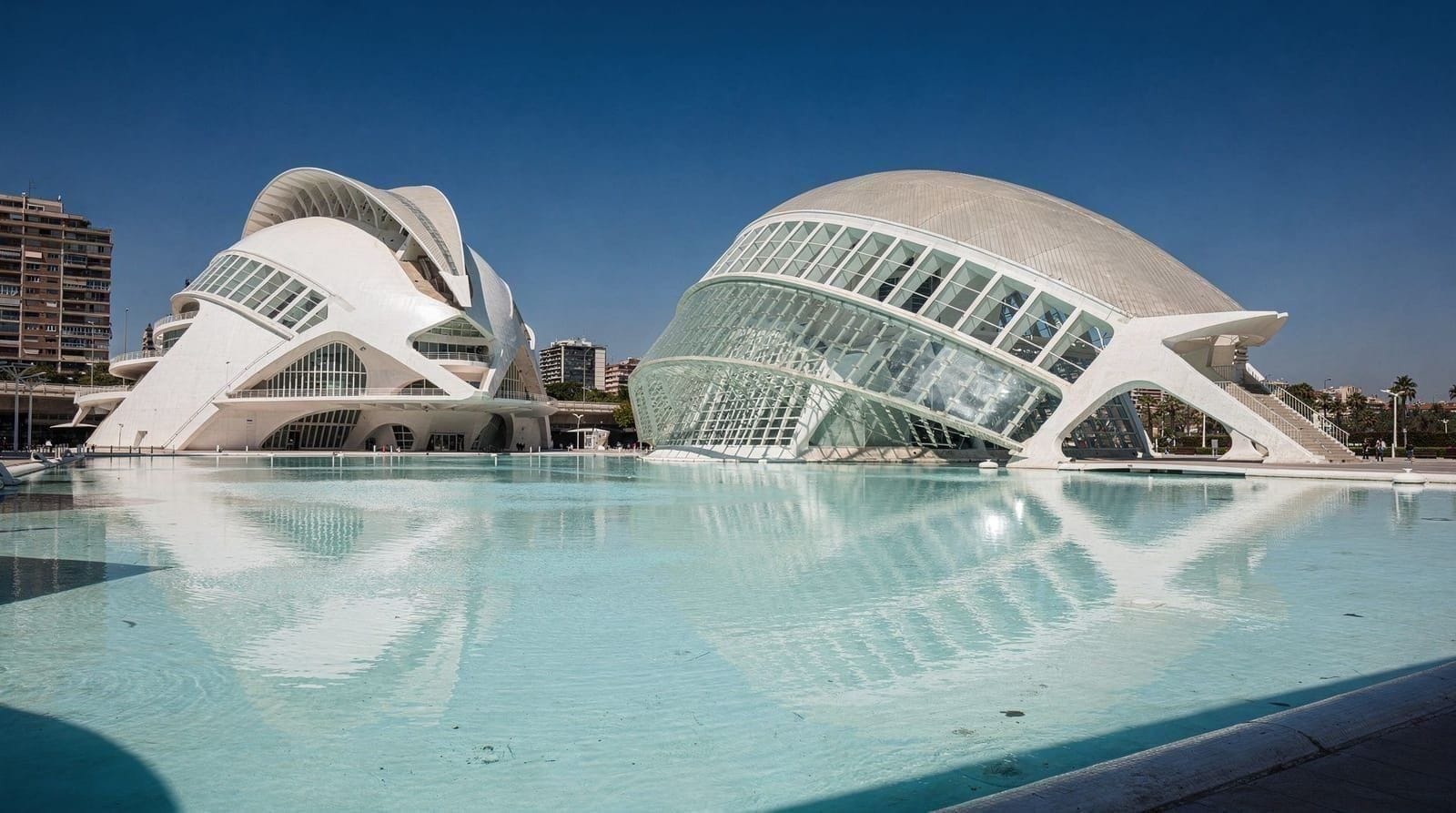
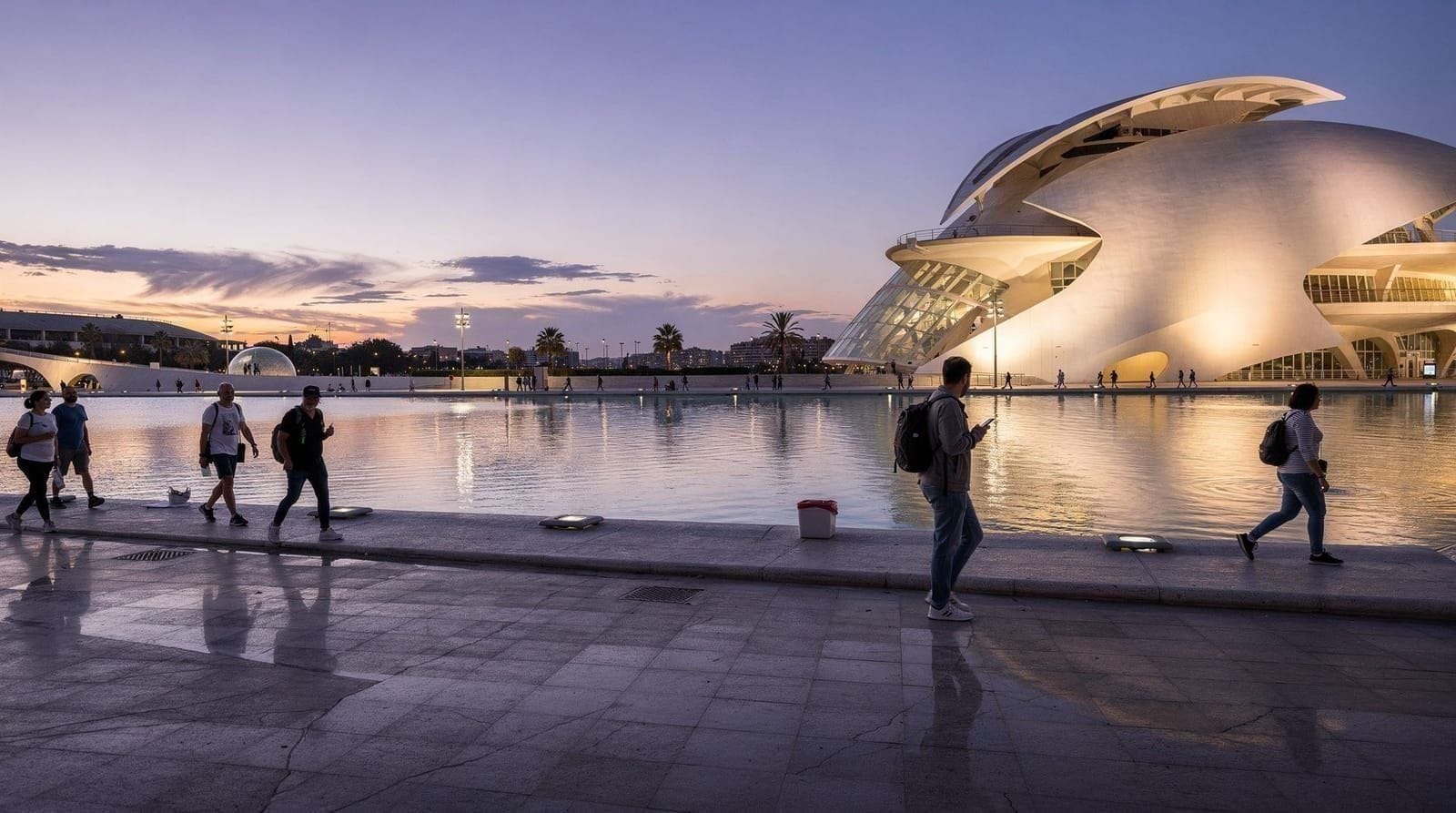
The area around the Ciudad de las Artes y las Ciencias — roughly Av. del Professor López Piñero, Av. de Tarongers, and the streets immediately south of the Turia Gardens tramos 15-18 — has seen significant hotel development since the complex opened in 2000. The hotels here tend to be larger, more modern, and somewhat soulless compared to the central neighborhoods.
The genuine advantage: the Turia Gardens cycle path connects you to the old city in 25 minutes by bike (flat, no cars). Oceanogràfic, Hemisfèric, and the Science Museum are all within walking distance. The Bioparc is a 20-minute bus ride (lines 7, 81). Children who are spending full days at these attractions will benefit from not having to commute across the city.
Hotels: Melia Valencia (large, business-hotel feel, €120-180), Vincci Lys (central, good value, €90-130 near Colón, technically Eixample but convenient for both zones).
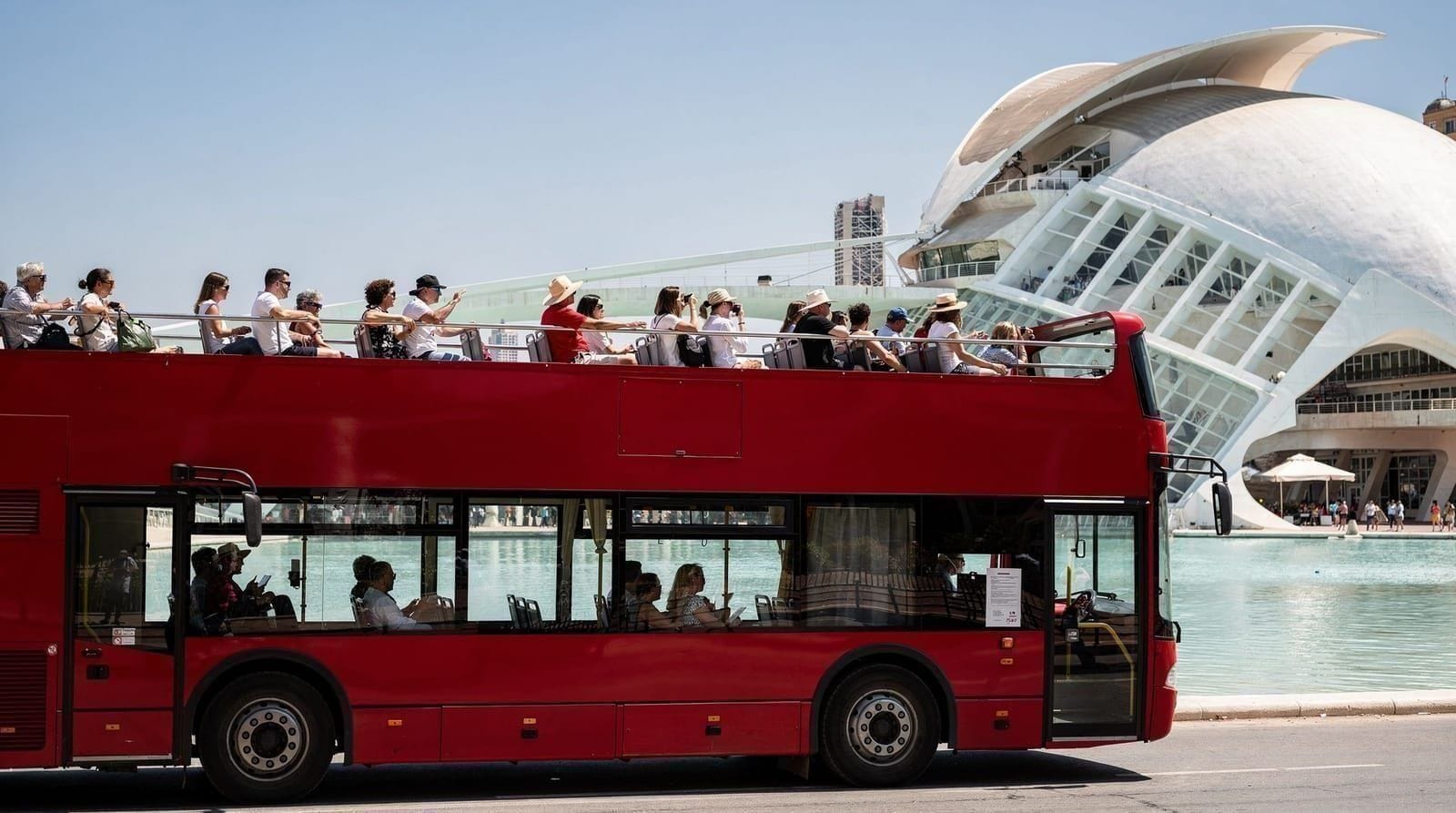 hop-on hop-off bus tourist and maritime routeCheck availability
Port and Marina area — if you’re arriving by cruise
For: Cruise passengers, sailing enthusiasts, people wanting a different Valencia experience near the water.
Against: Isolated from the city center (20 minutes by metro or bus), limited food and nightlife options compared to other zones, very touristy near the America’s Cup zone.
The Port and Marina district is connected to the city by metro (line 5, stations Maritima-Serreria or Doctor Lluch) and by the high-frequency No. 19 bus along Av. del Port. The actual marina area is beautiful — the America’s Cup infrastructure has left behind a well-designed waterfront — but it lacks day-to-day neighborhood character.
If you’re arriving by cruise ship, this is your arrival point anyway. Otherwise, it’s a niche choice.
Benimaclet — the student village at the edge of the city
For: Budget travelers, students, people who want a genuinely local neighborhood without tourists.
Against: 25 minutes on foot from the cathedral, no direct easy connection to the beach, distinctly ordinary if you’re not connecting with the student social scene.
Benimaclet is Valencia’s university neighborhood — a former village swallowed by the city’s expansion, now home to the Politechnic and a dense student population. It’s cheap, the bars are casual and friendly, and the Mercat Municipal de Benimaclet is an excellent working market. It’s not a tourist neighborhood, which is either an advantage or a disadvantage depending on your preferences.
Practical comparison table
| Neighborhood | Walk to Cathedral | Beach access | Best restaurant scene | Safety score | Price range |
|---|---|---|---|---|---|
| El Carmen | 5-8 min | 35 min | Tapas, traditional | Good (watch at night) | €€-€€€ |
| Ruzafa | 15 min | 30 min | Excellent variety | Very good | €€-€€€ |
| Eixample | 12 min | 35 min | Reliable mid-range | Excellent | €€ |
| Cabanyal | 30 min | 10 min | Seafood, local | Good | €-€€ |
| Near CdA&C | 40 min | 20 min | Tourist-focused | Excellent | €€-€€€ |
| Port/Marina | 35 min | 15 min | Limited | Good | €€-€€€ |
| Benimaclet | 25 min | 30 min | Student bars | Very good | € |
When to book — the Las Fallas warning
Las Fallas runs from 1-19 March, with the most intense days 15-19 March (Nit del Foc on the night of the 18th). During this period, hotel prices in Valencia multiply by 2-4x and virtually all accommodation in the city center is fully booked by October of the previous year. If you’re visiting for Las Fallas, set calendar reminders to book in September. If you’re visiting in March but NOT for Las Fallas, consider whether the noise and crowds are worth it — or shift your dates slightly to avoid the peak.
For a detailed guide on accommodation during the festival specifically, see the Las Fallas guide.
Matching a neighbourhood to your trip length
For a first visit of 2–3 days focused on the old town monuments, El Carmen or Ruzafa gets you everywhere on foot with minimal transport planning. For 4–5 days that add the City of Arts and Sciences and a beach afternoon, Eixample balances access to both without a long commute either way. For a week or more, Cabanyal or Benimaclet let you live a bit more like a resident — lower prices, real neighbourhood life — while remaining a manageable metro or tram ride from the centre.
If your trip is built around Las Fallas specifically, the calculus changes entirely — see the dedicated Las Fallas accommodation guide rather than treating this guide’s prices as a baseline.
Frequently asked questions about Where to stay in Valencia
Is El Carmen safe to stay in Valencia?
El Carmen is generally safe for tourists, though the area around Calle del Dau and the Plaça del Tossal can feel edgy late at night. Street theft (bag snatching) does occur. Avoid walking alone with your phone out after midnight in the narrowest lanes.How far is Ruzafa from the old city?
Ruzafa's main bar and restaurant strip (Calle Cadis, Calle dels Literats) is roughly 15 minutes on foot from the Plaza de la Reina. A tram or EMT bus reduces this to 5 minutes.Is Cabanyal good for tourists?
Cabanyal is excellent for food (the covered market, Calle del Rosari restaurants), beach access, and atmosphere, but it is farther from the main monuments — roughly 30 minutes on foot from the cathedral. It works well if you're spending serious time at La Malvarrosa beach.What is the best area for nightlife in Valencia?
Ruzafa has the most concentrated restaurant and bar scene for a 28-40 age group. El Carmen has more late-night clubs and bars, especially around Plaça del Tossal. The port-marina area (Blasco Ibáñez strip) is more for summer club nights.How much does a hotel in Valencia city center cost?
A solid mid-range hotel in El Carmen or Ruzafa costs €80-140/night in low season (Oct-Mar), €120-200 in high season (Apr-Jun, Sept). During Las Fallas (March), prices triple and availability disappears by October. Budget hostels start at €20-35 per dorm bed.Should I stay near the City of Arts and Sciences?
Only if you're visiting Oceanogràfic for 2+ days. The area is quiet, well-served by bus (lines 19, 35), and generally cheaper than the old city, but it's 30-40 minutes on foot from the cathedral and central market.Is Eixample a good place to stay in Valencia?
Eixample (Ensanche) is Valencia's equivalent of a calm business district — wide tree-lined boulevards, good café options, less tourist noise than El Carmen. It works well for longer stays. It borders Ruzafa and is a 10-minute walk to the old city.What is Valencia's best neighbourhood for families?
Near the City of Arts and Sciences or the Turia Gardens (tramos 8-10) for families with young children — easy access to Oceanogràfic, Bioparc, Gulliver Park, and the park cycle paths. Ruzafa also works well for families who want good restaurants in walking distance.Which Valencia neighbourhood is quietest for light sleepers?
Eixample and the northwest corner of Ruzafa around Plaça de Mossén Sorell are the calmest options within walking distance of the centre. El Carmen is the loudest, especially around Plaça del Tossal on weekend nights. Benimaclet and Cabanyal are quieter still but further from the main sights.Is it better to book a hotel or an apartment for a week-long stay?
For stays of five nights or more, an apartment usually offers better value and the convenience of a kitchen, particularly in Ruzafa or Eixample where good markets are nearby. For shorter stays, a hotel's flexibility and daily cleaning tend to outweigh the space advantage of an apartment.Is Valencia safe for tourists?
Valencia is one of the safer large Spanish cities. The main risks are bag snatching and pickpocketing, concentrated in tourist areas (Plaza de la Reina, Mercado Central, La Malvarrosa beach in summer) and on crowded metro lines during Fallas. Violent crime against tourists is rare. The safety and pickpockets guide covers this in more detail.Do I need a car in Valencia city center?
No. The city center is compact and walkable, the metro is fast and cheap (€1.50/single), and the Valenbisi bike share covers all central neighborhoods. A car is actively unhelpful in El Carmen and Ruzafa (no parking, narrow streets). Cars are useful only for day trips to destinations poorly served by train: Bocairent, Montanejos, Morella.How many days do I need in Valencia?
Three days covers the main monuments, one meal at a serious paella restaurant, and the City of Arts and Sciences. Five days adds day trips and more neighborhood exploration. The how many days guide has day-by-day frameworks.Is it worth staying near the beach in Valencia?
La Malvarrosa beach is fine but not exceptional by Mediterranean standards. Unless you specifically want beach-hotel access (summer families), it's better to stay centrally and take the 25-minute tram ride to the beach when you want it. The best beaches guide covers the full range of beaches within day-trip distance.What about apartments vs hotels in Valencia?
Both work well. Apartments offer more space and kitchen access (useful for eating market produce). Hotels offer cleaning and reception. For Las Fallas specifically, hotels and apartment hotels are more reliable — many private landlords in El Carmen raise prices aggressively during the festival and the quality is unpredictable. Use Booking.com with free cancellation for flexibility.
Top experiences
Bookable activities with verified prices and instant confirmation on GetYourGuide.