Best area to stay in Valencia for first-timers: honest guide
Valencia: historical city tour
Where is the best place to stay in Valencia for a first visit?
Ruzafa is the best choice for most first-time visitors who want a balance of atmosphere, food quality, and walking access to the monuments. El Carmen is better if being inside the medieval streets matters more than restaurant quality. Both are within 15 minutes on foot of the main sights.
First-time visitors to Valencia typically arrive with three neighborhood names on a list and no clear way to choose between them. This guide cuts through the hedging: here is a direct recommendation for your first visit, followed by the honest reasoning behind it, and the specific scenarios where a different choice makes more sense.
| Recommended base | Ruzafa (most trips), El Carmen (short, monument-focused) |
| Typical cost | Around €80-140/night mid-range, low season |
| Walk to Cathedral | 15 min from Ruzafa, 5-8 min from El Carmen |
| Book ahead | 4-8 weeks low season; 2-3 months Apr-Jun & Sep |
| Avoid booking late for | Las Fallas (mid-March) |
The direct answer
For most first-time visitors: stay in Ruzafa.
Here’s why. The old city monuments are 15 minutes on foot from the center of Ruzafa — close enough that you’ll spend most of your time in El Carmen anyway, but you’ll sleep and eat somewhere better. Ruzafa’s restaurant density and quality significantly exceed what’s available in the tourist-facing streets of El Carmen. It’s quieter at night. It has better coffee. The walking commute to the Cathedral is not a sacrifice; it’s a pleasant walk through the Eixample grid.
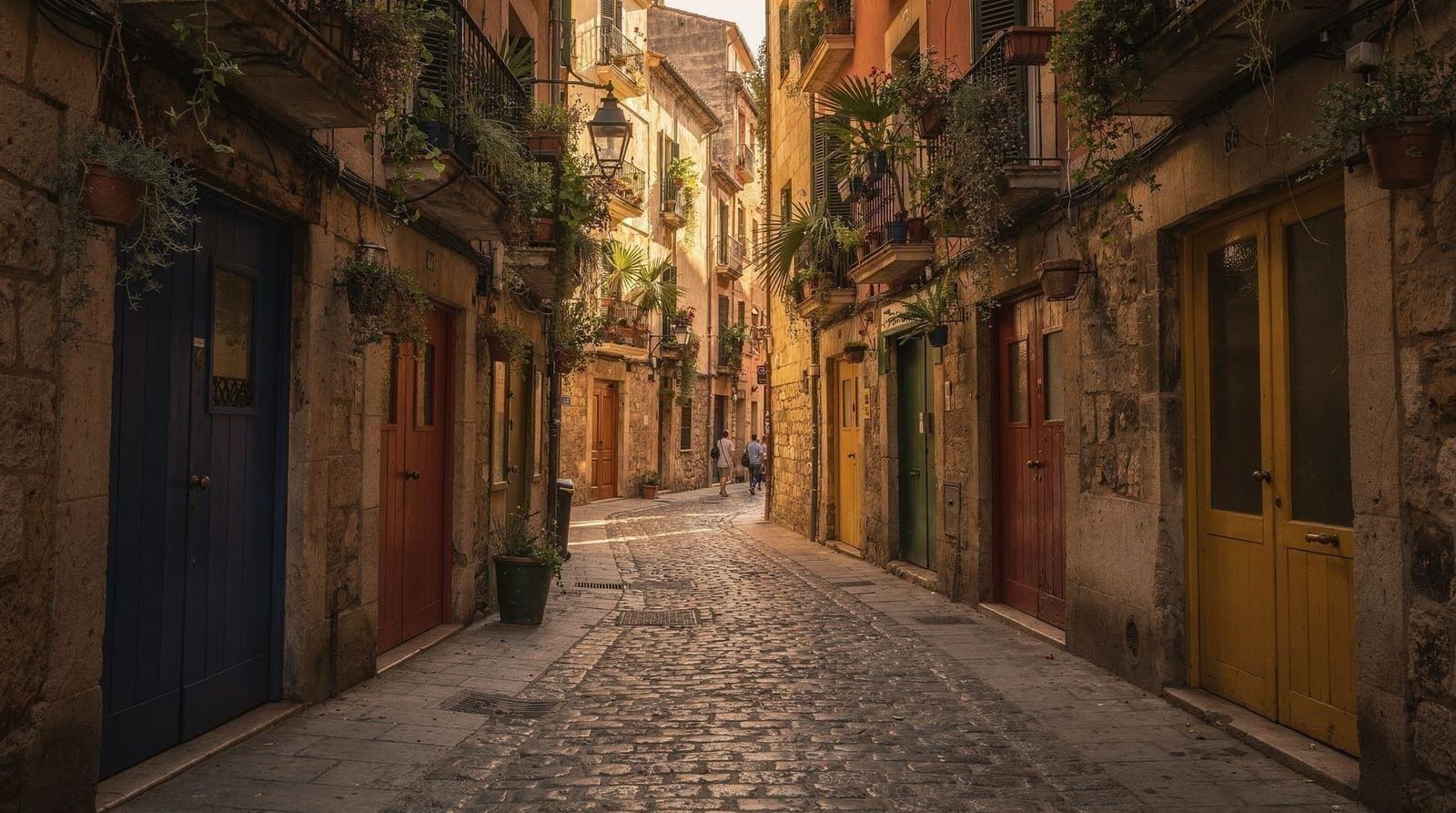
The only strong reason to stay in El Carmen instead is if the medieval atmosphere is your primary draw — if you specifically want to open your hotel door into a narrow stone lane and be inside the labyrinth immediately. That experience is real and it has value; it’s just not the optimal base for most trips.
The case for each option
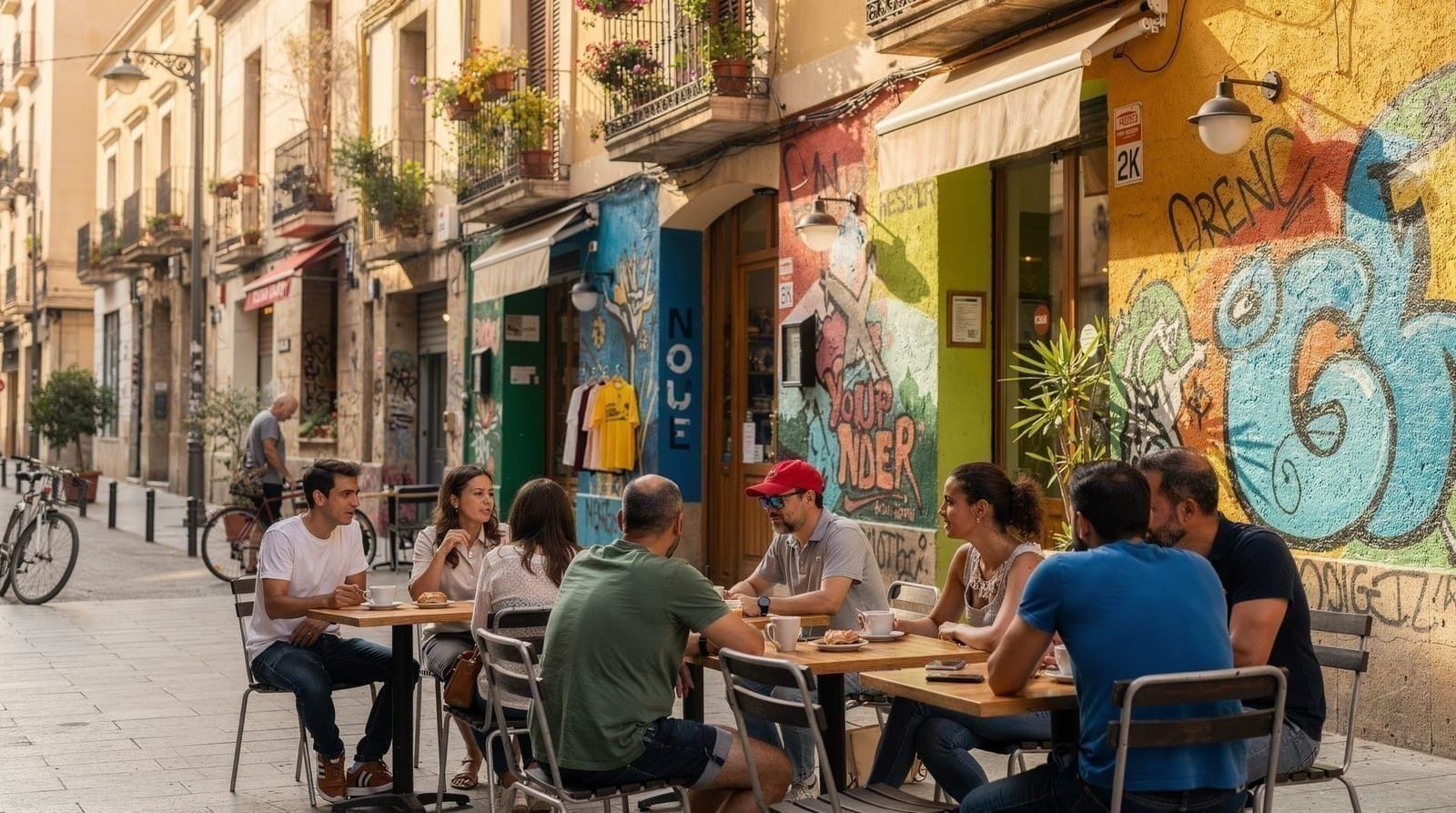
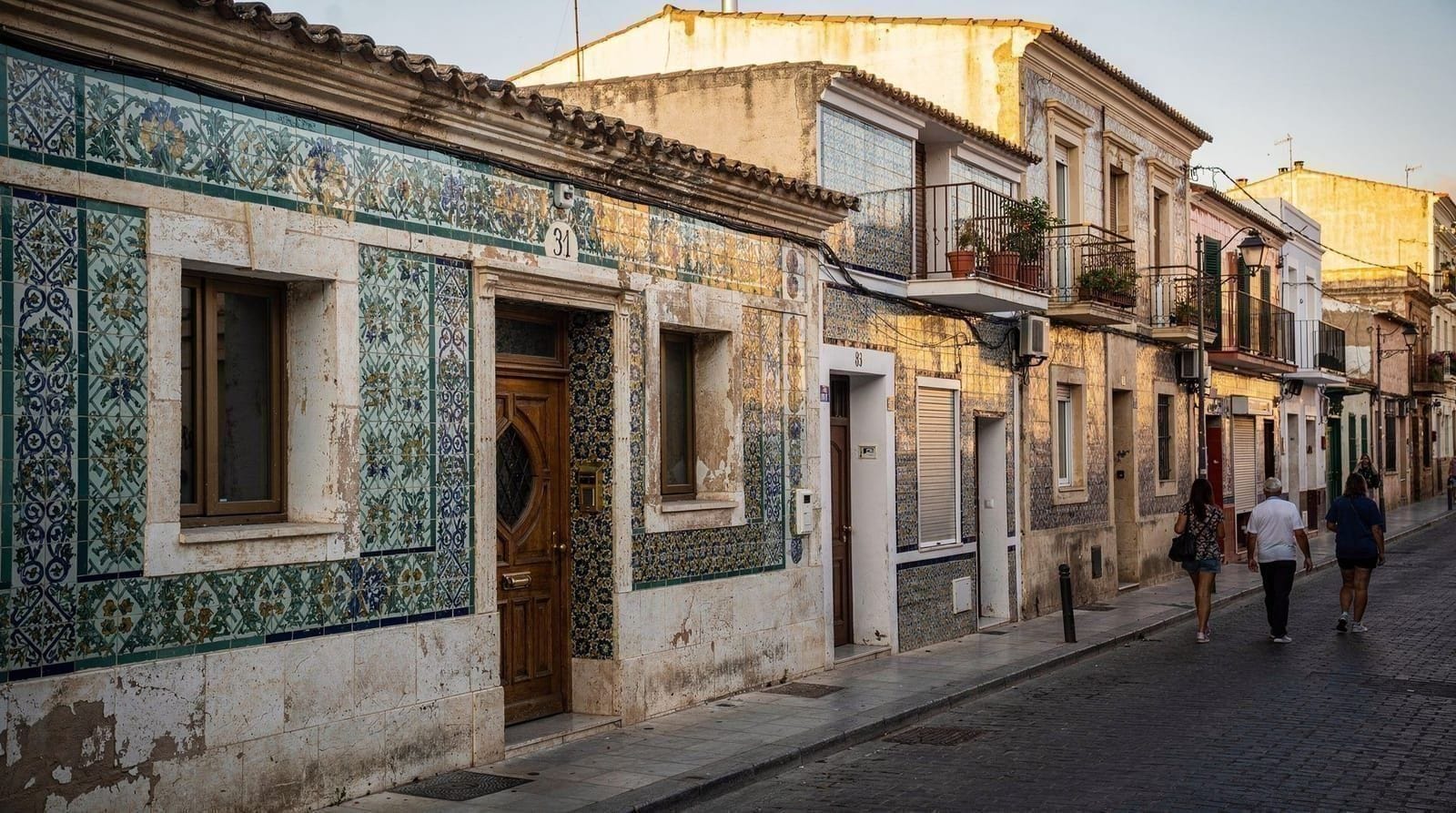
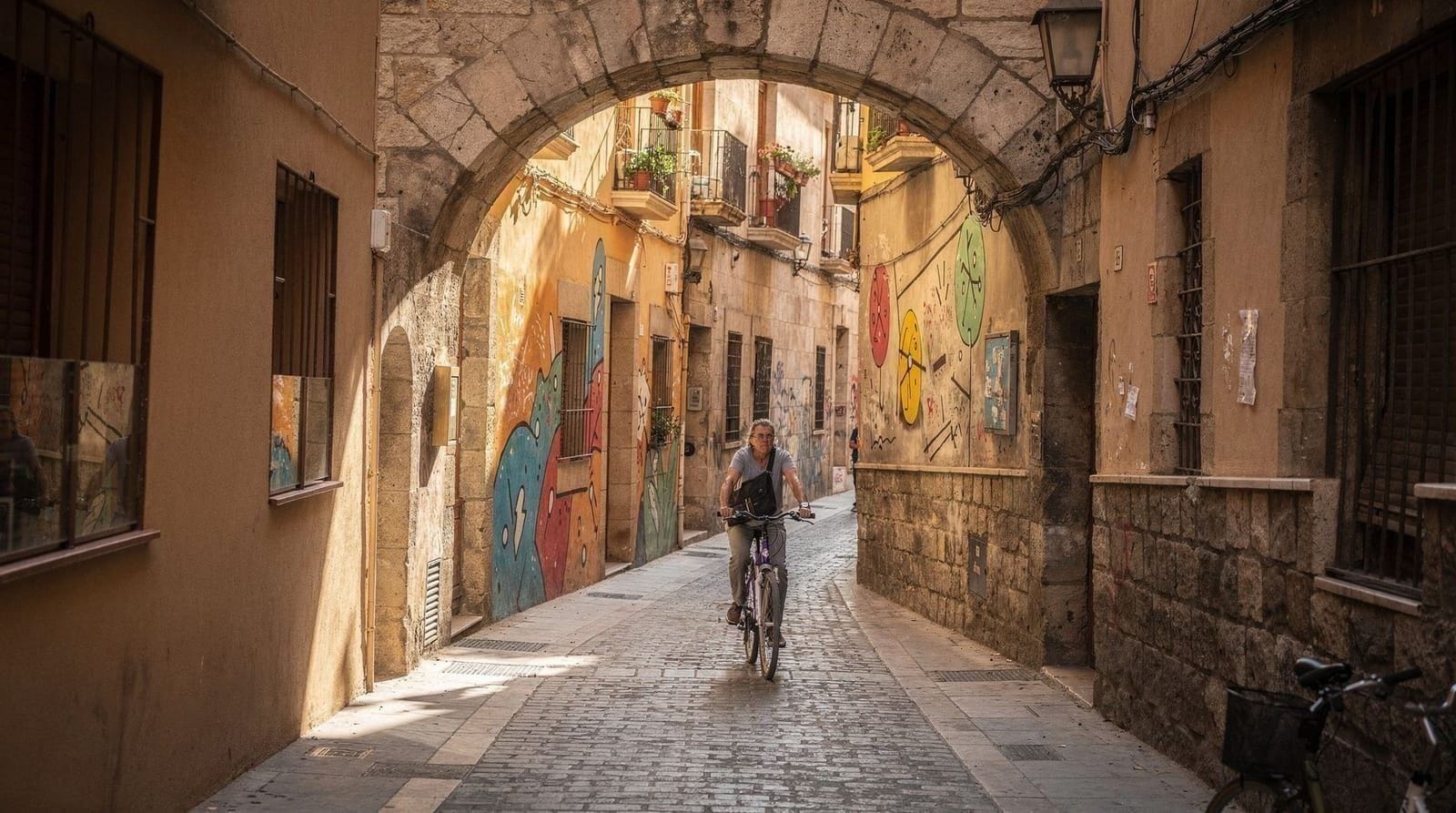
El Carmen and Ciutat Vella
Distance to Cathedral: 5-8 minutes on foot.
Best for: History lovers, architecture enthusiasts, travelers doing only 2-3 days focused on the old city, people who want to be inside the medieval fabric.
Honest drawbacks: The concentration of tourist-facing restaurants near the Cathedral (menus in 6 languages, photos of dishes, staff calling pedestrians in from the street) means you need to navigate carefully to eat well. Noise from late-night bars in the Plaça del Tossal area on Fridays and Saturdays. Some lanes are dark and atmospheric at 23:00 but feel slightly unsafe at 03:00. Variable apartment quality in converted medieval buildings.
Accommodation: Hotel Westin Valencia (€180-280, excellent), Hotel Vincci Palace (€100-150, well-located), budget apartments (€60-100, quality varies enormously — check reviews carefully).
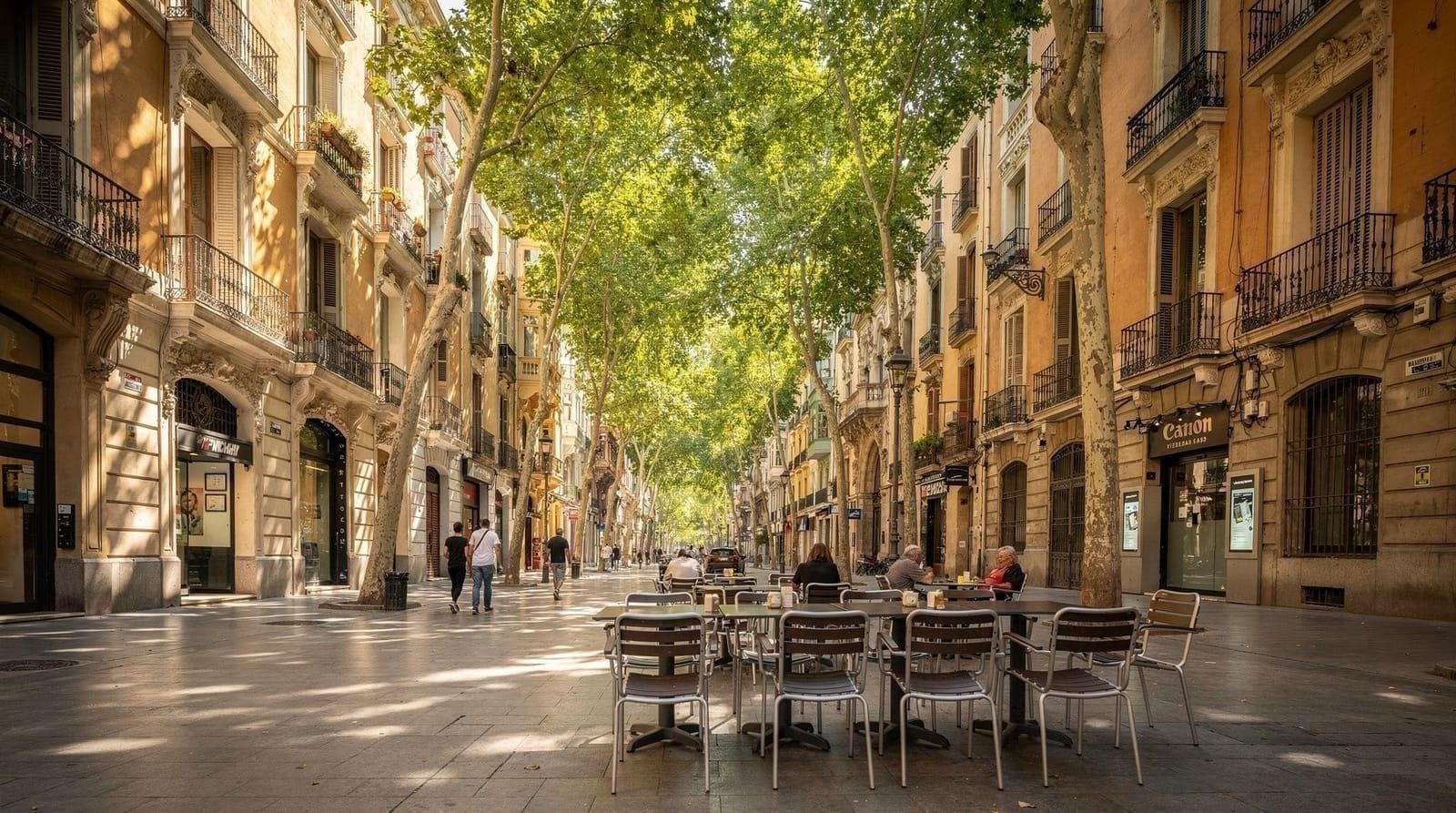
Ruzafa
Distance to Cathedral: 15 minutes on foot.
Best for: Food-focused travelers, couples, solo travelers who plan to eat out every evening, people staying 4+ days, anyone who wants a genuine neighborhood experience.
Honest drawbacks: The extra 15 minutes each way to the monuments adds up over a multi-day visit — it’s not a big deal but it’s real. Some streets in southern Ruzafa (near the railway viaduct) are less atmospheric.
Accommodation: Caro Hotel (€170-250, exceptional), mid-range apartments (€80-120), budget options at the Eixample/Ruzafa border (€65-85).
 historical city tourCheck availability
Eixample
Distance to Cathedral: 12 minutes on foot.
Best for: Longer stays, business travelers, families with pushchairs (flat grid, no cobblestones), people arriving by train who want to be near the station.
Honest drawbacks: Less atmospheric than El Carmen or Ruzafa. Better as a base for repeated visits than as an immersive first experience.
Accommodation: Best value for the central location, particularly during high season when El Carmen and Ruzafa are fully booked.
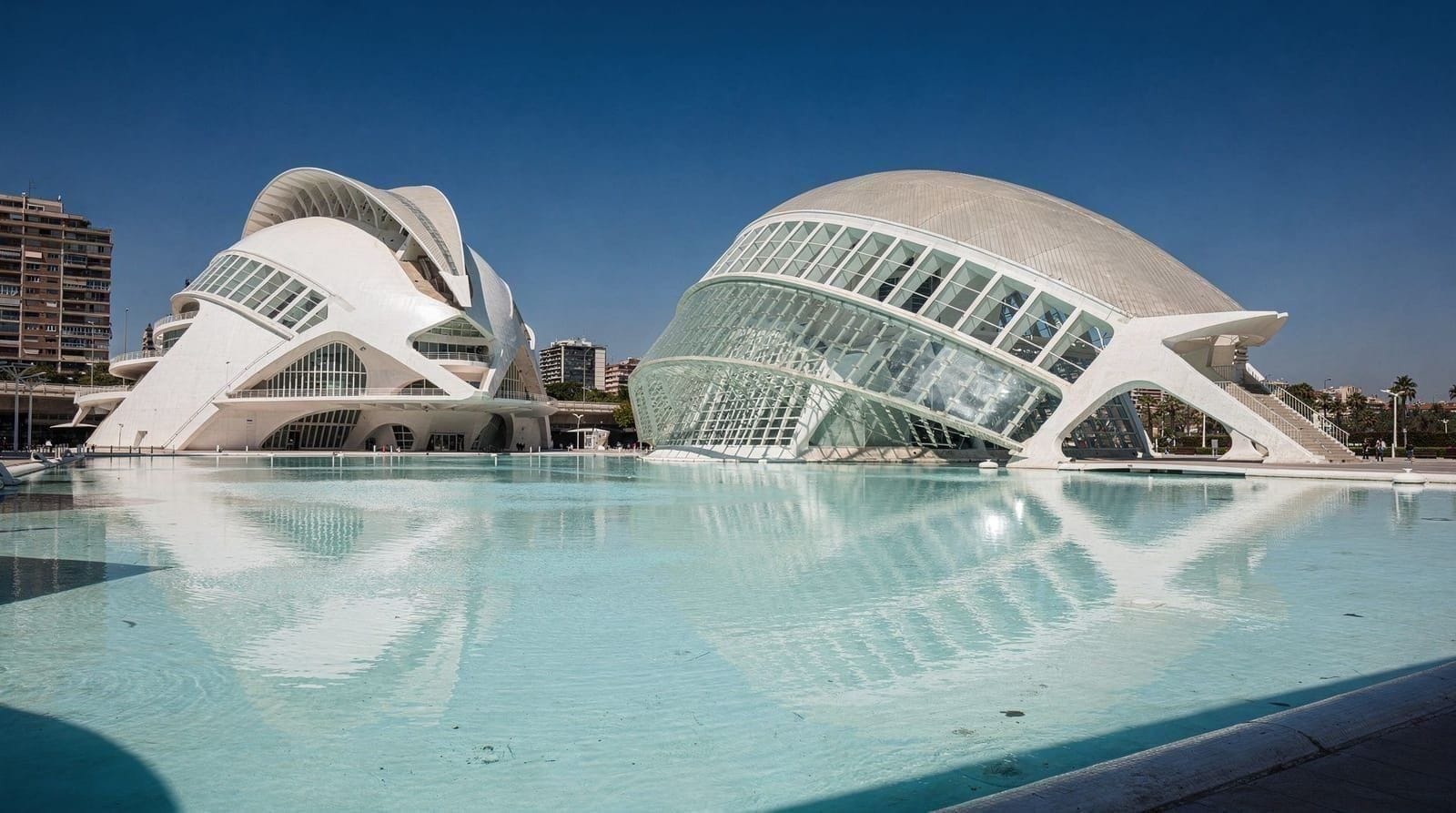
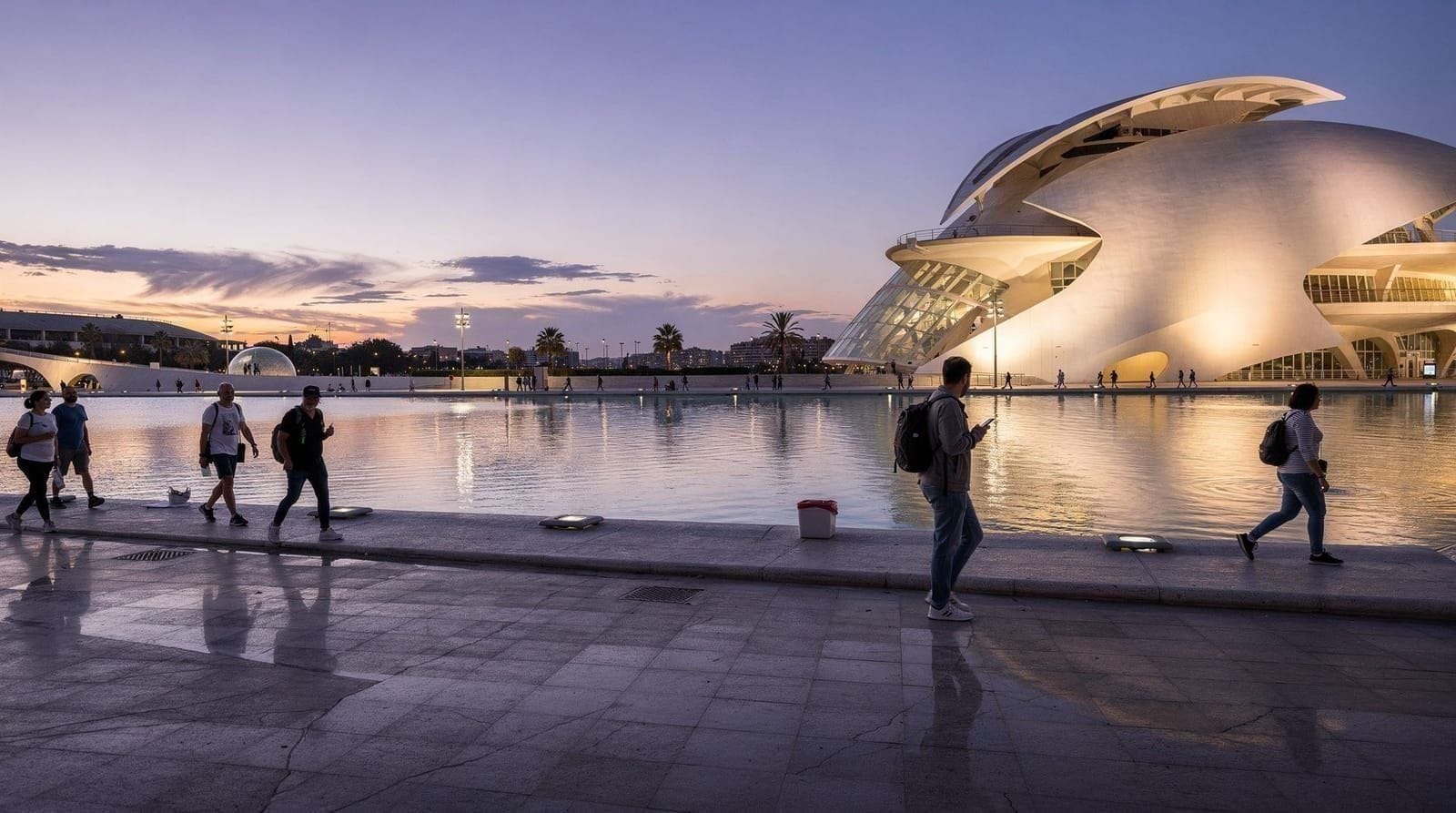
Near the City of Arts and Sciences
Distance to Cathedral: 35-40 minutes on foot, 15 minutes by bus or bike.
Best for: Families spending 2+ days at Oceanogràfic and the Science Museum, visitors with limited mobility who need flat accessible routes.
Not recommended for: General first-time visitors who want to see all of Valencia — the commute to the old city is real and adds up.
The four areas side by side
| Area | Walk to Cathedral | Typical night (mid-range) | Vibe | Best for |
|---|---|---|---|---|
| El Carmen | 5-8 min | €100-150 | Medieval, busy, some late-night noise | Short stays, history focus |
| Ruzafa | 15 min | €80-120 | Local, food-forward, quieter | Most first-timers, 4+ nights |
| Eixample | 12 min | €75-110 | Grid streets, calmer, less atmosphere | Longer stays, families, train arrivals |
| City of Arts area | 35-40 min | €90-130 | Modern, spacious, isolated from old city | Families focused on Oceanogràfic |
Read this table as a starting filter, not a final answer — the write-ups above cover the trade-offs each row compresses.
Decision framework by trip type
Weekend break (2-3 days): El Carmen or Ruzafa. The proximity advantage of El Carmen is most significant for short trips. If you’re prioritizing food, Ruzafa is worth the 15-minute walk.
One week: Ruzafa. You’ll appreciate having a quality neighborhood base for evenings after full days of sightseeing.
Families with young children: Near the City of Arts and Sciences (if Oceanogràfic is a major focus) or Ruzafa (if beach and food are priorities). The Gulliver Park in the Turia Gardens is free and excellent — any central neighborhood puts you within 15-20 minutes of it.
Solo backpacker: El Carmen hostels for the social scene (Calle de la Bolseria area), or budget options in Eixample near the Colón metro.
Couple focused on food and local experience: Ruzafa, no question.
Fallas visit (March): Book anywhere central in September of the previous year. Prices are 2-4x normal and availability is extremely limited. See the Las Fallas guide.
Practical orientation: what’s where
Valencia’s geography is helpful for first-timers: it’s compact. The old city (Ciutat Vella) is roughly circular, about 1.5 km in diameter. The Turia Gardens park forms a green arc along its northern edge. Ruzafa is directly south, Eixample directly south-west, the beach is due east (3 km). The City of Arts and Sciences is at the eastern end of the Turia Gardens, 3.5 km from the old city center.
This means you can comfortably cycle across the entire central area in 20 minutes, or walk it in 45. Valencia doesn’t require strategic accommodation positioning in the way that Paris or Rome do — the city is simply not large enough for that.
 hop-on hop-off bus tourist and maritime routeCheck availability
Getting around from any central neighborhood
Metro: Lines 3 and 5 cross the city center with stations at Colón (Eixample), Alameda (by the Turia/old city), and Xàtiva (train station area). Single ticket: €1.50. The 10-trip SUMA 10 card (€5.40 for zone A in 2026, after the temporary 40% discount; check the official Metrovalencia site for 2027) is worth it for 4+ days.
Bike: The Turia Gardens cycle path is free, flat, and connects all central neighborhoods. Valenbisi bike share: the first half hour of each trip is free (current subscription prices on valenbisi.es). Private rental: €15-20/day. See the Valenbisi guide and the cycling in Valencia guide.
Tram: Lines 4 and 6 connect the old city (Pont de Fusta stop) directly to El Cabanyal and La Malvarrosa beach. Essential for beach days.
Walking: Most of the central city is walkable. A good pair of walking shoes is more useful than any transport plan.
The getting around Valencia guide covers all options including the EMT bus network.
What not to do on your first visit
Don’t eat paella for dinner. Authentic Valencian paella is a midday dish cooked on wood fire for a 2-hour lunch. The paella served at tourist restaurants in the evening (especially near the Cathedral) is a different, inferior product. Book a proper lunch at a specialist arrocería — the authentic paella guide has specific names.
Don’t try to cover everything. The City of Arts, the old city, the Albufera, and the beaches are each worth half a day or more. Trying to tick all four in 2 days means rushing everything.
Don’t miss the menú del día. The fixed-price lunch (two courses + drink + coffee, €12-15) is how Valencians eat midday and it’s by far the best value in the city. Available Monday to Saturday at lunch, 13:30-15:30 in most restaurants. The menú del día guide explains how it works.
Don’t assume Mercado Central restaurants are good. The market itself is extraordinary. The restaurants immediately outside it are, with some exceptions, tourist traps. Eat inside the market (at the bar counters), not at the restaurants around the perimeter.
How Valencia compares to Barcelona and Madrid for neighborhood navigation
First-time visitors to Spain sometimes expect Valencia to require the same navigational strategy as Barcelona (where the Gothic Quarter, Eixample, Gràcia, and Barceloneta are genuinely distant from each other and require metro or taxi to connect) or Madrid (where the Prado area, Malasaña, and Chueca are spread across a large city grid).
Valencia is much more compact. The full distance from the top of El Carmen (Torres de Serranos) to the bottom of Ruzafa (railway viaduct) is about 2.5 km — 30 minutes on foot at a comfortable pace. The City of Arts and Sciences, which feels distant from the old city, is 3.5 km away via the Turia Gardens — 25 minutes by bike, 40 minutes on foot.
This compactness means that the accommodation location decision matters less than in larger cities. Wherever you stay in the central zone, you can access everything within a reasonable walking or cycling time.
The tourist trap geography
First-time visitors should know where the tourist-facing restaurant concentration is highest, so they can consciously choose to eat around it:
High tourist density (avoid for meals):
- Plaza de la Reina and the streets immediately surrounding the Cathedral
- Calle de San Vicente Mártir (main pedestrian street between the station and the Cathedral)
- The street front around the Mercado Central’s exterior
- Av. del Port between the old city and the beach
Better options within the same distance:
- Calle del Mar and Calle dels Cavallers in El Carmen (2 minutes from Plaza de la Reina, dramatically better food)
- The interior of Ruzafa (any restaurant not on Calle de Cuba or the tourist perimeter)
- The Mercado de Ruzafa bar counters for lunch
- Any restaurant with a handwritten menu in Spanish or Valencian on a chalkboard
The tourist traps guide gives a complete breakdown. The eat like a local guide provides the positive framework for finding the good stuff.
Accommodation booking strategy
Best time to book: For general travel, 4-8 weeks ahead is sufficient in low season (October-March outside Las Fallas). For April-June and September, book 2-3 months ahead for the best options in Ruzafa and El Carmen.
Free cancellation: Always book with free cancellation for flexibility. Weather surprises and trip changes are common; the price difference between refundable and non-refundable is rarely worth the risk.
Las Fallas exception: If you are visiting during Las Fallas (any time in March, especially 15-19), book by the previous October. The demand is unlike any other period and availability genuinely disappears. See the where to stay during Fallas guide.
Apartments vs hotels: For stays of 3+ nights, a well-reviewed apartment in Ruzafa often offers better value than a hotel of equivalent price — more space, kitchen access for breakfast and market purchases, and a more local feel. The key is reading reviews carefully for noise (Ruzafa apartments near the bar strips) and cleanliness.
First-timer’s 3-day itinerary by neighborhood
Day 1 — El Carmen and the old city (staying in Ruzafa, walking to the monuments):
- 09:00: Mercado Central (arrive early for the market energy and a bar counter breakfast)
- 10:30: Lonja de la Seda (UNESCO World Heritage, €2, morning light excellent)
- 11:30: Cathedral (€12) and Miguelete tower (climb for city views, separate €3 ticket)
- 13:00: Lunch — Calle dels Cavallers or Calle del Mar restaurants (menú del día, €12-14)
- 15:00: Street art exploration in El Carmen lanes
- 17:00: Torres de Serranos (climb to viewpoint; check current entry price on the official Valencia tourism site)
- 19:30: Walk south to Ruzafa for aperitivo
- 21:30: Dinner in Ruzafa
Day 2 — City of Arts and Turia Gardens:
- 09:30: Cycle from old city via Turia Gardens to City of Arts (25 minutes)
- 10:00: Oceanogràfic (pre-booked ticket, 3-4 hours)
- 14:00: Lunch at the complex or take the cycle path back to Ruzafa
- 16:00: Hemisfèric film or Science Museum
- 20:30: Return to city center; evening at the illuminated complex before cycling back
Day 3 — Albufera or beach day:
- Bus 24/25 to El Palmar in the Albufera (30-40 minutes, €2). Boat tour, lunch with paella.
- Or: tram to La Malvarrosa beach, afternoon on the beach, dinner in El Cabanyal.
This framework works from any central base (El Carmen, Ruzafa, or Eixample). If you’re staying in Ruzafa, simply add 10-15 minutes to any transition to or from the old-city stops; if you’re in Eixample, most transitions land close to the times shown as written, since it sits roughly between the two.
How you’re arriving should factor in
Arriving by train (Estació del Nord): The station sits at the edge of the old city, an easy 10-15 minute walk or short taxi to El Carmen, Ruzafa, or Eixample alike. Arrival point doesn’t strongly favor any one area here — pick based on the trip-type framework above rather than the station location.
Arriving by plane (Valencia Airport, VLC): The metro (line 3 or 5) runs directly from the airport to Xàtiva, Colón, and Alameda stations, all central. Journey time is about 25 minutes and costs a few euros. Ruzafa and Eixample are marginally more convenient from these metro stops than El Carmen, which requires a short walk from Alameda through the Turia Gardens.
Arriving by cruise ship: The port is genuinely distant from every neighborhood covered here — 20-30 minutes by taxi or bus to the center. If you’re only in Valencia for a shore day, this affects planning more than accommodation, since most cruise passengers aren’t overnighting. See the port and marina guide for shore-excursion logistics.
 private walking tour with a localCheck availability
If you’re torn between two areas
A common situation: you like the sound of both Ruzafa and El Carmen and can’t decide. Two practical tie-breakers that work better than agonizing over guidebooks:
Check what’s actually bookable first. If your preferred dates fall in April-June, September, or around Las Fallas, availability — not preference — often makes the decision for you. Book whichever of the two has good, well-reviewed options left with free cancellation, and don’t hold out for a specific street.
Split the difference with a short stay in each. For trips of 5+ nights, two or three nights in El Carmen followed by the remainder in Ruzafa gives you the medieval-doorstep experience up front and the better food scene for the balance of the trip, without a meaningful increase in logistics — both areas are a short walk or a five-minute taxi apart. This works less well for 2-3 night trips, where changing accommodation eats into limited time.
Frequently asked questions about Best area to stay in Valencia for first-timers
Is Ruzafa or El Carmen better for a first visit to Valencia?
Ruzafa for most people: better restaurants, safer at night, similar walking distance to the monuments (15 minutes). El Carmen if you specifically want the medieval atmosphere from your hotel door — narrower streets, more history, but also more noise and some sketchy late-night corners.How many days do I need in Valencia for a first trip?
Three days is the minimum to cover the old city, the City of Arts and Sciences, and one proper paella lunch. Five days adds the Albufera, the beaches, and time to explore Ruzafa and El Carmen at a relaxed pace.Is Valencia expensive to stay in?
Less expensive than Barcelona or Madrid. A solid mid-range hotel in Ruzafa or El Carmen costs €80-140/night in low season. Budget hostels start at €20-30. During Las Fallas (March), prices triple.Should I stay in the old city or outside it?
The old city (El Carmen) has the best location for monuments but the most noise and tourist-facing restaurants. Ruzafa is 15 minutes away with better food and quieter streets. For most first-timers, staying in Ruzafa and visiting El Carmen during the day is the better combination.What is the safest area to stay in Valencia?
Eixample and Ruzafa are the safest central neighborhoods for tourists. El Carmen is generally safe but has more late-night incidents than the others. The main risks citywide are petty theft and bag snatching, not violent crime.Is Valencia good for solo travelers?
Excellent. The city is safe, walkable, and has a good range of hostel accommodation in El Carmen and Eixample. The bar culture in Ruzafa is easy to navigate alone. Public transport is reliable for day trips.Can I see Valencia in 2 days?
Two full days covers the main monuments (Cathedral, Mercado Central, Lonja, Torres Serranos) and the City of Arts and Sciences. You won't see much of Ruzafa's food scene, won't have time for the Albufera, and won't be able to do a proper day trip. Three days is meaningfully better.Is Valencia good for families with young children?
Very good. The Oceanogràfic is genuinely excellent, the Gulliver Park playground in the Turia Gardens is free and unique, the Bioparc is a half-day, and the beaches are accessible and clean. Staying near the City of Arts and Sciences makes sense specifically for this type of family visit.How far is Ruzafa from the old city, really?
The distance from Ruzafa's main restaurant street (Calle Cadis) to the Mercado Central is approximately 1.2 km. At a comfortable walking pace, that's 12-15 minutes. Via the Calle de Xàtiva artery, it's flat the whole way.Is there a neighborhood that covers everything?
No, and that's a feature not a bug. Valencia's neighborhoods have distinct characters; staying in one and spending time in others is the natural way to see the city. If you could only visit one, Ruzafa in the evenings and El Carmen during the day is the practical combination.What about staying near the port?
The port and marina area is interesting but isolated from the city center. It works for cruise passengers (this is where cruise ships dock) or sailing visitors. For a general first-time visit, it's not recommended — the commute to the old city and Ruzafa is 20-30 minutes.Is Benimaclet a good area for first-timers?
Benimaclet is a student neighborhood at the north edge of the city — authentic and cheap, but 25 minutes from the monuments and with limited tourist infrastructure. For a first trip, it's not recommended. It works well for returning visitors who want to see a genuinely local Valencia.
Top experiences
Bookable activities with verified prices and instant confirmation on GetYourGuide.