El Cabanyal — Valencia's historic fishing village
Honest guide to El Cabanyal, Valencia's historic fishing neighbourhood — tiled architecture, seafood restaurants, beach access, and the Semana Santa
Valencia: all-in-one beaches, old town and City of Arts by e-bike
Quick facts
- Best for
- Architecture, seafood, beach access, authentic neighbourhood
- Time needed
- 2–4 hours, or half day with beach
- Getting there
- Tram L8 to Serrería or Cabanyal stop
- Don't miss
- Casa Carmela for paella; the tiled façades on Calle Escalante
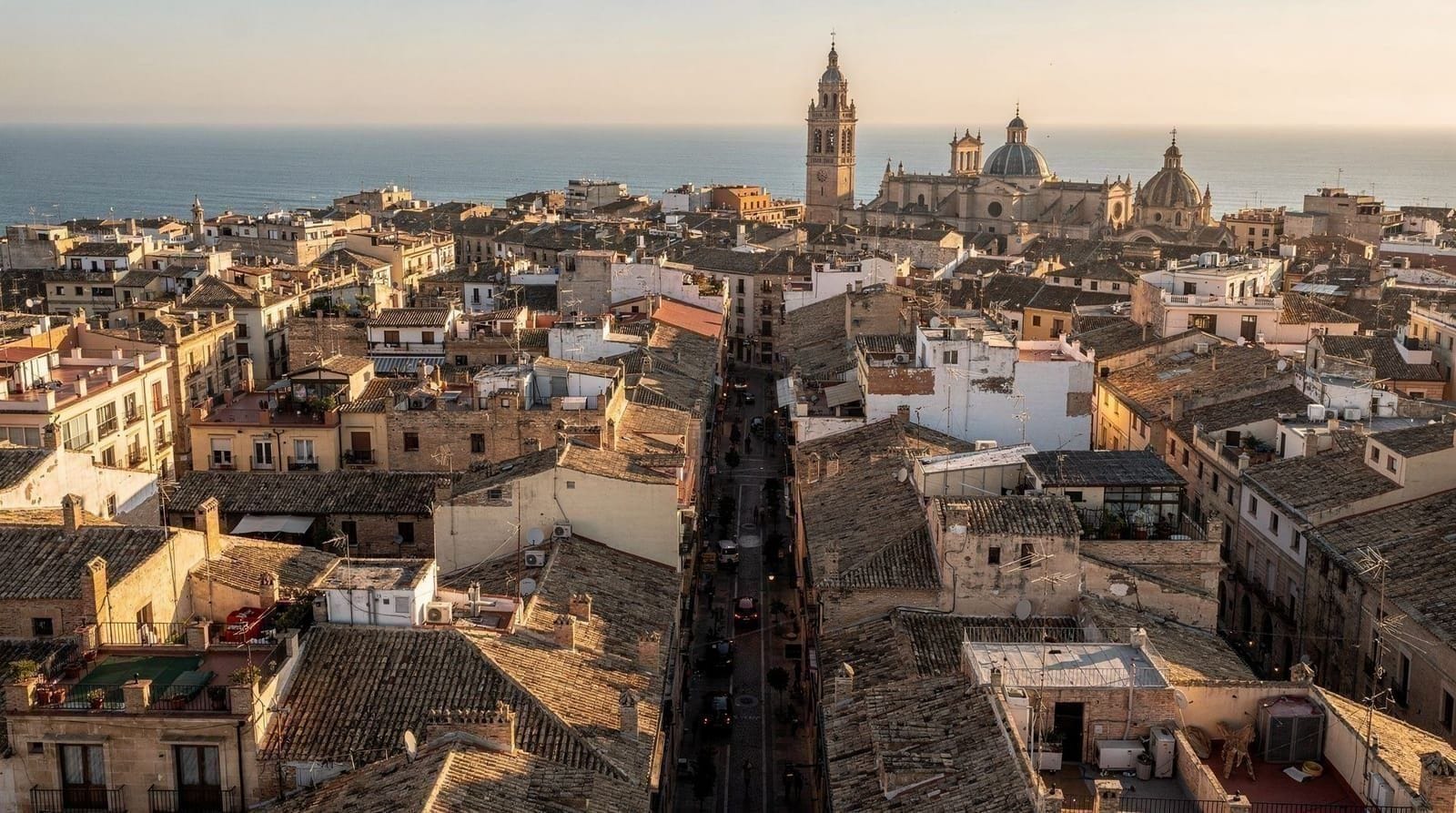
El Cabanyal is a former fishing village on the Mediterranean coast, 3 km east of Valencia’s old town, incorporated into the city in 1897 but maintaining a distinct identity. The neighbourhood is known for three things: its extraordinary inventory of Modernista and Art Nouveau tiled house façades, its traditional seafood restaurants serving freshly caught fish, and a long, complicated urban history involving a contested highway extension project that galvanised preservation activists for two decades.
| Where | 3 km east of Ciutat Vella, next to La Malvarrosa beach |
| Time needed | 2–4 hours, or half a day combined with the beach |
| Getting there | Tram L8 to Serrería or Cabanyal (~15 min from Pont de Fusta) |
| Cost | Free to walk; paella lunch around €18–35 per person |
| Best time | Weekday mornings for the market; Sunday for Casa Carmela |
The architecture
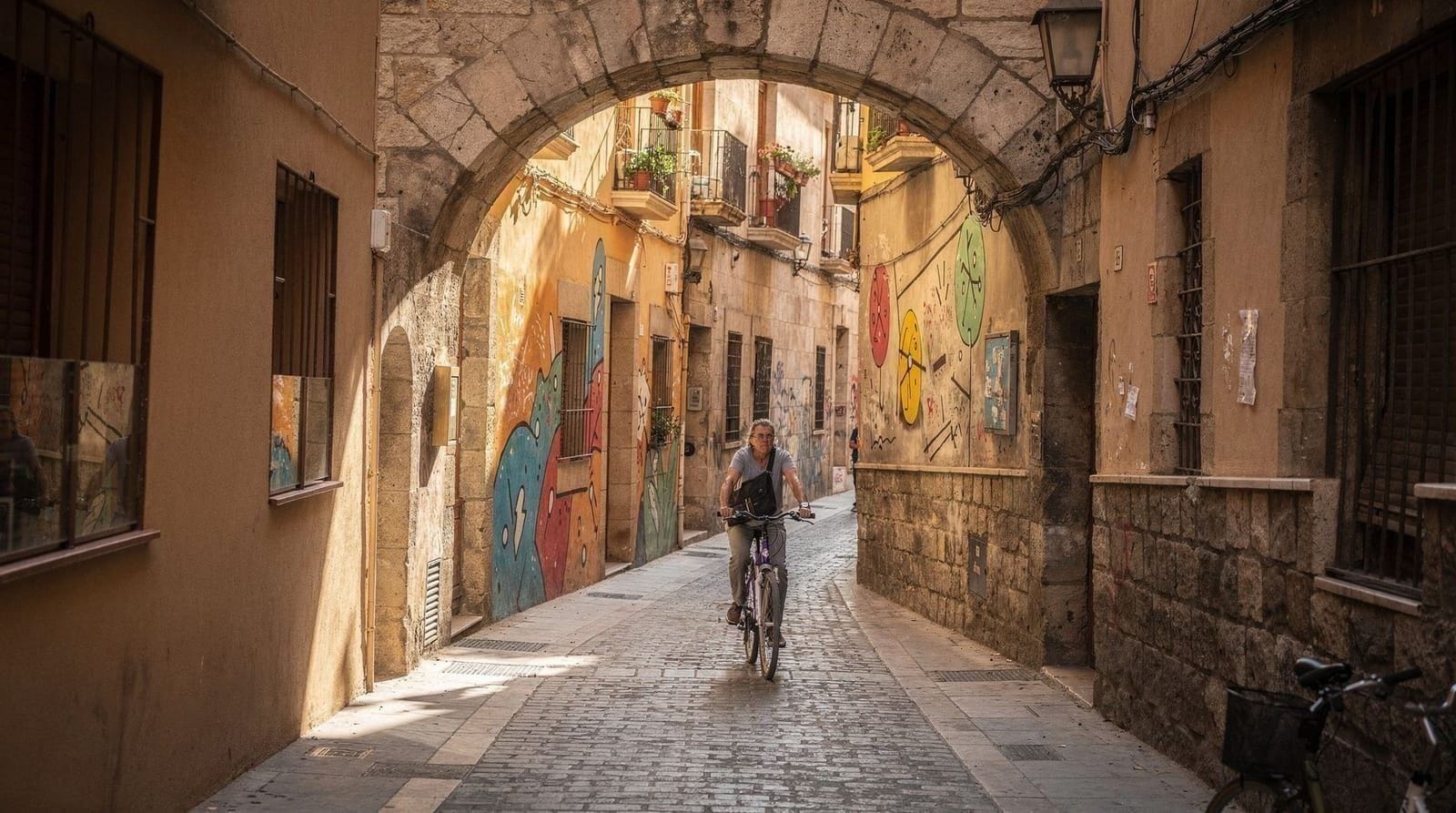
Between the late 19th and early 20th centuries, prosperous fishermen built elaborately decorated houses along the streets of El Cabanyal. Many façades are covered in azulejo tiles (the Valencian ceramic tile tradition), often in geometric patterns using deep blue, green, yellow, and white. The density of this tiled vernacular architecture makes Cabanyal something like an outdoor architectural museum — unlike the tiled buildings of Lisbon or Porto, these are relatively unknown outside Spain.
The most rewarding streets for architecture: Calle Doctor Lluch, Calle Escalante, and Calle José Benlliure. The best façades are on the side streets running perpendicular to the beach. The area roughly bounded by Calle de la Reina, Calle del Progreso, and the beachfront has the highest concentration of preserved Modernista houses.
Not all the buildings are in good condition — the neighbourhood’s economic difficulty and the long uncertainty around the highway project left some buildings in disrepair. But the walking circuit along these streets, even noting the decay, gives a sense of the original coherence of the neighbourhood’s design.
Food and restaurants
El Cabanyal has some of the best seafood in Valencia, eaten by locals who live minutes from the fishing port.
Casa Carmela (Calle de Isabel de Villena 155): widely regarded as one of the three or four best places in the Valencia region for authentic paella valenciana, cooked over orange wood fire. Tables fill by 13:30 on weekends — book ahead. Menú around €35 per person including first course and paella. This is not a tourist restaurant; it is where Valencians celebrate.
La Pepica (Passeig Neptú 6, on the Malvarrosa promenade, technically at the Cabanyal–Malvarrosa boundary): famous since 1898, visited by Hemingway on his Valencia trips, still run by the same family. Paella €18–24 per person, marine environment, reliable quality.
Bar Mister Plaça (Plaça de la Llibertat): neighbourhood bar with excellent calamar frit (fried squid) at €6–8 and a cold Valencia beer. This is the kind of bar Cabanyal residents use, not a restaurant.
The Cabanyal fish market (Lonja de Pesca, near the fishing dock) sells fresh catch weekday mornings — not accessible to the general public for purchase, but the activity visible from outside gives context to the neighbourhood’s fishing heritage.
Semana Santa Marinera
Every year in the week before Easter, El Cabanyal hosts the Semana Santa Marinera — a Holy Week procession tradition distinct from Valencia’s main city processions. The maritime brotherhood (cofradía) here maintains traditions tied specifically to the fishing community. The processions on Wednesday night (Procesión del Mar) and on Good Friday include penitential figures, antique religious images carried on floats, and the unique presence of fishermen in traditional dress. The neighbourhood is not set up for tourists during this week — the processions are genuine religious and community events. This is one of the most authentic Spanish Holy Week experiences accessible from Valencia.
Read more in the Semana Santa Marinera guide.
Getting to El Cabanyal
Tram L8: from the Pont de Fusta stop (near the old town), tram L8 runs east to the beach. The Serrería stop deposits you at the western edge of the neighbourhood; Cabanyal stop takes you closer to the central streets. Journey: 15 minutes.
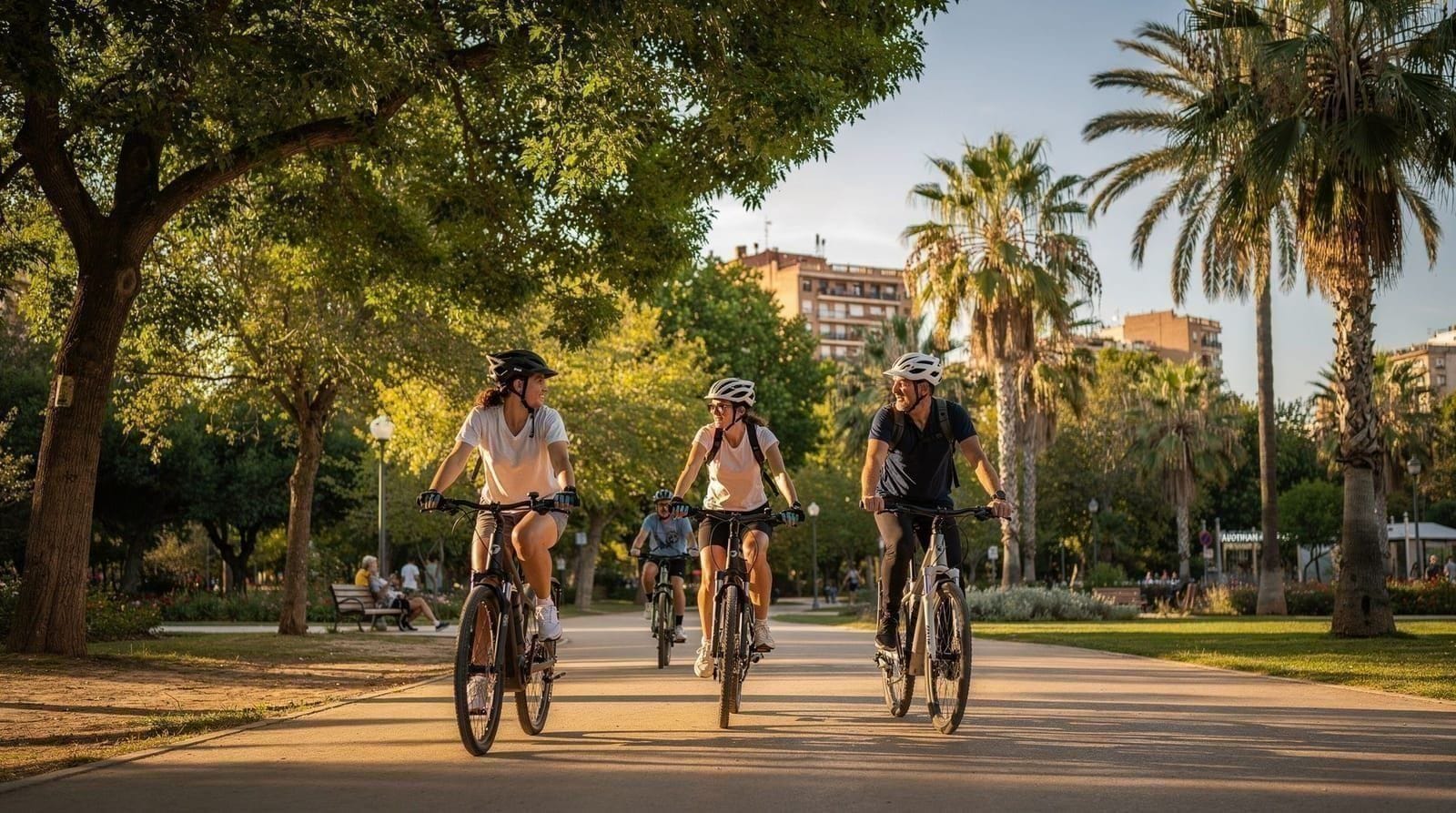
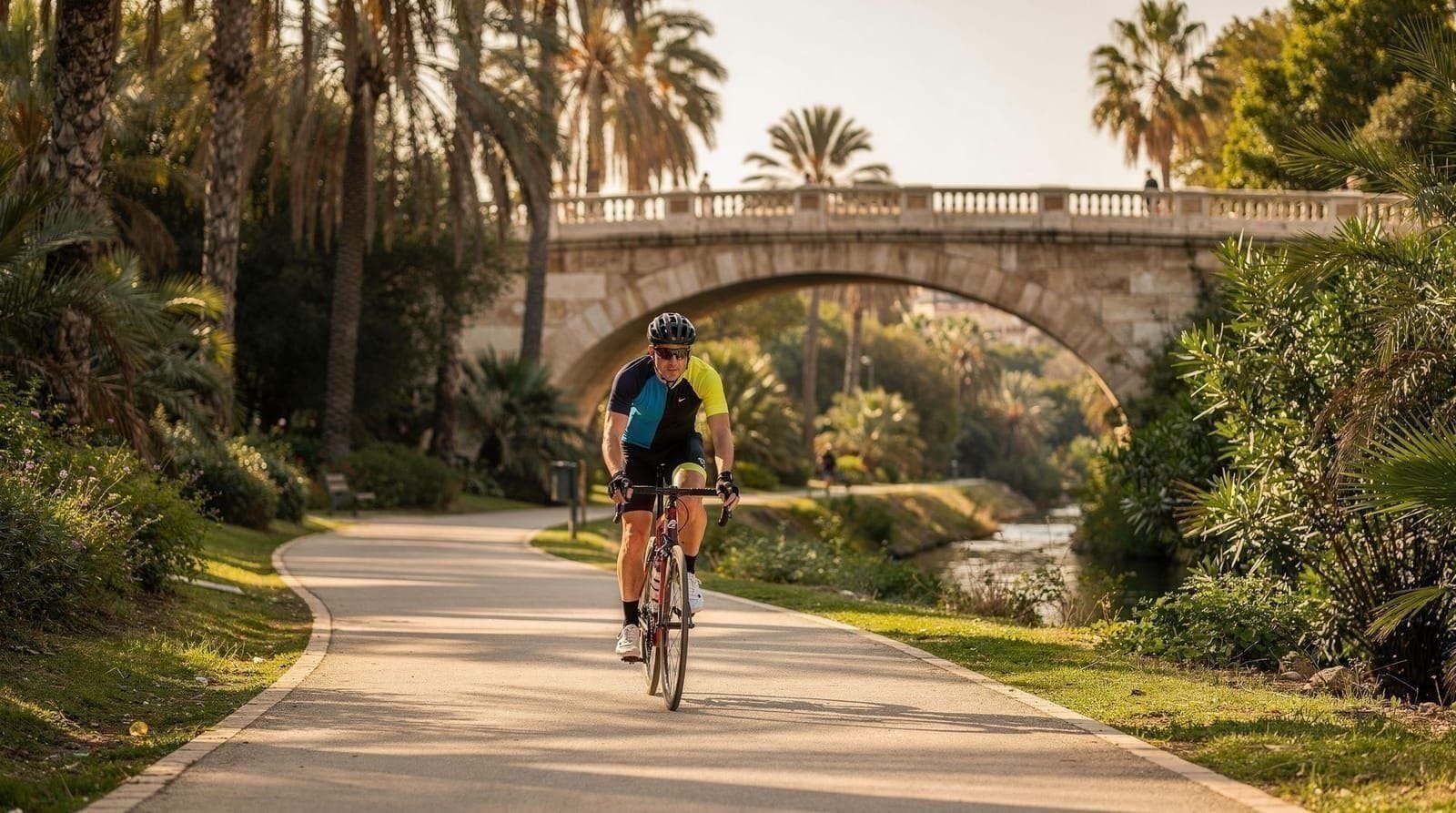
Bike: the Turia park cycling path passes close to the neighbourhood. A bike tour from the old town to El Cabanyal and continuing along the beachfront promenade to Malvarrosa is a natural route.
On foot: about 45 minutes from the Cathedral through the Turia park. A pleasant walk but not practical for a quick visit.
Paella and beach e-bike tour — combines El Cabanyal, the beachfront, and a traditional paella lunch.
The urban history: what nearly happened
El Cabanyal’s present-day character is partly shaped by what was proposed but ultimately did not happen. In 1998, the Valencia city government proposed extending the Avenida de Blasco Ibáñez — a major urban boulevard from the city centre — directly through the neighbourhood to the seafront. The route would have demolished around 1,651 buildings in the central section of Cabanyal’s historic tiled streets.
The opposition campaign — residents, architects, preservation organisations, and international heritage bodies — ran for over a decade. UNESCO repeatedly warned that the plan would destroy an irreplaceable example of Valencian architectural heritage. The Spanish government eventually froze the plan in 2010 and a subsequent court ruling definitively stopped it.
The result is that the neighbourhood exists intact — architecturally dense, economically uneven, and now slowly gentrifying from a position of survival rather than reconstruction. Walking through the more damaged blocks (some buildings partially demolished before the plan was halted, others in long-term disrepair) is a reminder of how close this area came to significant loss.
Bars and nightlife
El Cabanyal has its own bar scene, distinctly lower-key than El Carmen or Russafa. The main area is around Plaça de la Llibertat and the surrounding streets. La Fabrika (Calle del Progreso 68) is a cultural centre in a former industrial building with occasional live music and cinema. Several bars on Calle de la Reina and Calle del Doctor Lluch serve local residents in a way that feels genuinely neighbourhood rather than performatively authentic.
The neighbourhood is largely empty of tourists in the evening, which is either a feature or a limitation depending on what you want.
Practical notes for visitors
Best time to visit: weekday mornings to see the market activity near Plaça de la Llibertat; Sunday lunchtime for Casa Carmela (book ahead). Spring for the Semana Santa Marinera. Summer for combining the beach with a seafood lunch.
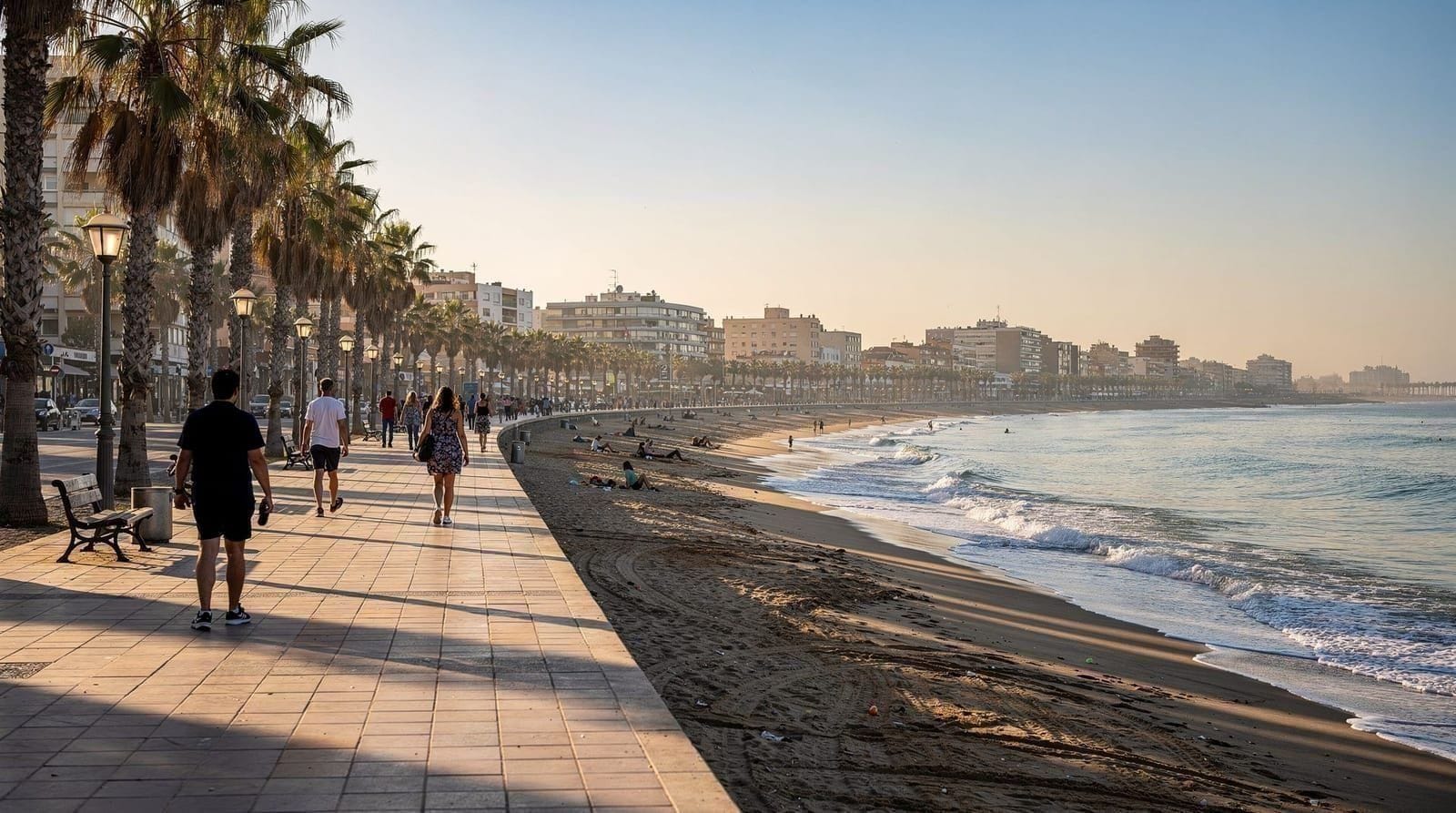
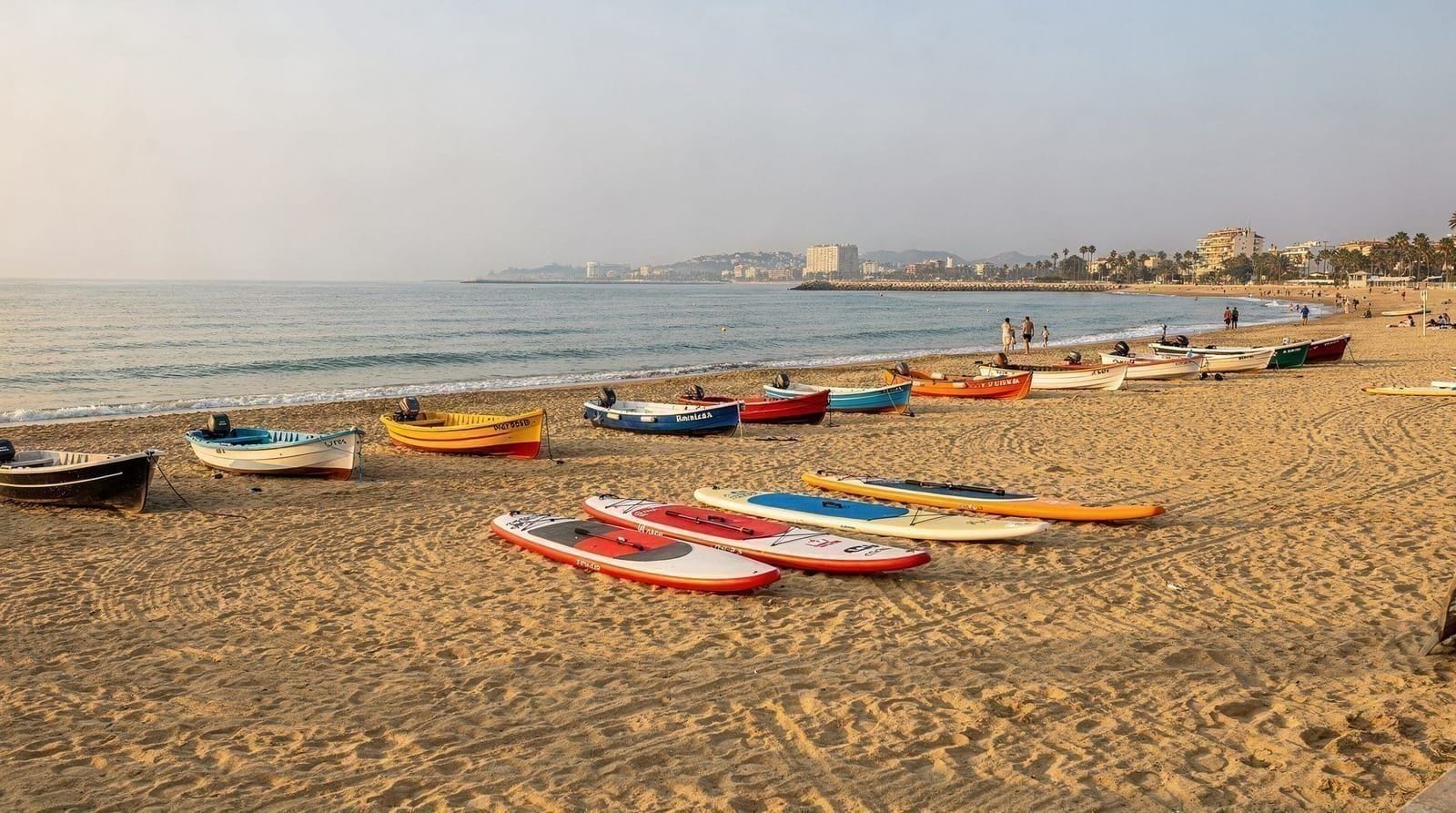
Combining with Malvarrosa: the beach begins immediately east of the neighbourhood, a 5-minute walk through the tiled streets. The Passeig Neptú promenade with its restaurant strip (La Pepica, La Marcelina) is part of the Malvarrosa–Cabanyal continuum. See the La Malvarrosa guide.
Walking circuit: from the Cabanyal tram stop, walk north on Calle Escalante (architecture), west on Calle del Doctor Lluch (bars), south on Calle José Benlliure (more architecture and Bodega Casa Montaña), then east to the beach for a swim. The full loop takes about 90 minutes including stops.
Food beyond paella
The neighbourhood’s proximity to the fishing dock means seafood is consistently fresh. A few specific recommendations:
El Racó del Foc (Calle de la Reina 61): arroz a banda (rice cooked in fish stock, the base of what becomes paella de marisco) served in traditional format — first the rice, then the fish that flavoured the stock separately. Budget €16–20 per person.
Bar La Piscina (Calle de Isabel de Villena): no tourist menu in sight, a counter with fried anchovies and boquerones (marinated anchovies) for €5–7 per plate, outdoor tables on a quiet square.
Horno de San Buenaventura (Calle del Progreso): a neighbourhood bakery open from 07:00 making pan de cristal (a Valencian style of thin, crispy bread), used as the base for local breakfast toasts.
Events beyond Semana Santa
Fiestas del Cabanyal-Canyamelar (end of October/early November): the neighbourhood’s main annual festival, with street parties, traditional music, and the opening of private patios and houses to the public. The patio-opening element is particularly interesting — Cabanyal residents open their homes to show the tile work, interior gardens, and architectural details not normally visible from the street.
Cabanyal Intim (autumn): a chamber music festival using private homes and courtyards as concert venues — an intimate format that uses the neighbourhood’s domestic architecture as a feature rather than a backdrop.
The neighbourhood connects naturally to the beach and port area — see the El Cabanyal neighbourhood guide and the full Valencia beach overview for connections between Cabanyal, Malvarrosa, and Patacona.
Best time to visit, by season
| Season | What it’s like | Notes |
|---|---|---|
| Spring (Mar–May) | Mild, quiet streets, Semana Santa Marinera in April | Best light for photographing the tiled façades |
| Summer (Jun–Aug) | Warm, beach crowds spill in from Malvarrosa nearby | Casa Carmela and La Pepica get busy at lunch — book ahead |
| Autumn (Sep–Nov) | Comfortable temperatures, Fiestas del Cabanyal-Canyamelar in late Oct/early Nov | Cabanyal Intim chamber music festival in private courtyards |
| Winter (Dec–Feb) | Cool, quiet, few tourists | Restaurants less crowded, but some close for short breaks |
A short walking itinerary
If you only have two hours, start at the Cabanyal tram stop and walk north on Calle Doctor Lluch, pausing for the tiled façades. Cut across to Calle de la Reina for a coffee at one of the neighbourhood bars used by residents rather than visitors, then continue to the beachfront for a look at the Passeig Neptú restaurant row before turning back. This loop takes about 90 minutes at an unhurried pace and covers the architecture, a taste of local life, and the sea in one go — a useful add-on if you are already spending a day at La Malvarrosa or exploring Valencia’s Ciutat Vella.
For visitors who prefer to see the neighbourhood by bike rather than on foot, the coastal cycling route from the old town continues through Cabanyal and on to Patacona beach, making it easy to combine architecture, lunch, and a swim in a single outing.
Valencia bike tour — city highlights, with a route that passes through the old fishing neighbourhoods toward the sea.
Frequently asked questions about El Cabanyal
Is El Cabanyal safe to visit?
Yes. Like many formerly working-class neighbourhoods now attracting visitors, some streets away from the main architectural circuit look rundown, but the area is generally safe for a daytime walk. Use normal city awareness in the evening, when the neighbourhood empties of tourists faster than the old town does.
How does El Cabanyal compare to El Carmen for a Valencia visit?
They’re different experiences. El Carmen is the old town’s dense historic core with nightlife and street art; El Cabanyal is a former fishing village with tiled architecture and a quieter, more residential feel. Both are walkable in half a day, and combining them across two visits gives a fuller picture of Valencia beyond the Ciutat de les Arts i les Ciències.
Top experiences
Bookable activities with verified prices and instant confirmation on GetYourGuide.