El Cabanyal neighborhood guide: Valencia's fishing village
Valencia: all-in-one beaches, old town and City of Arts by e-bike
What is El Cabanyal in Valencia?
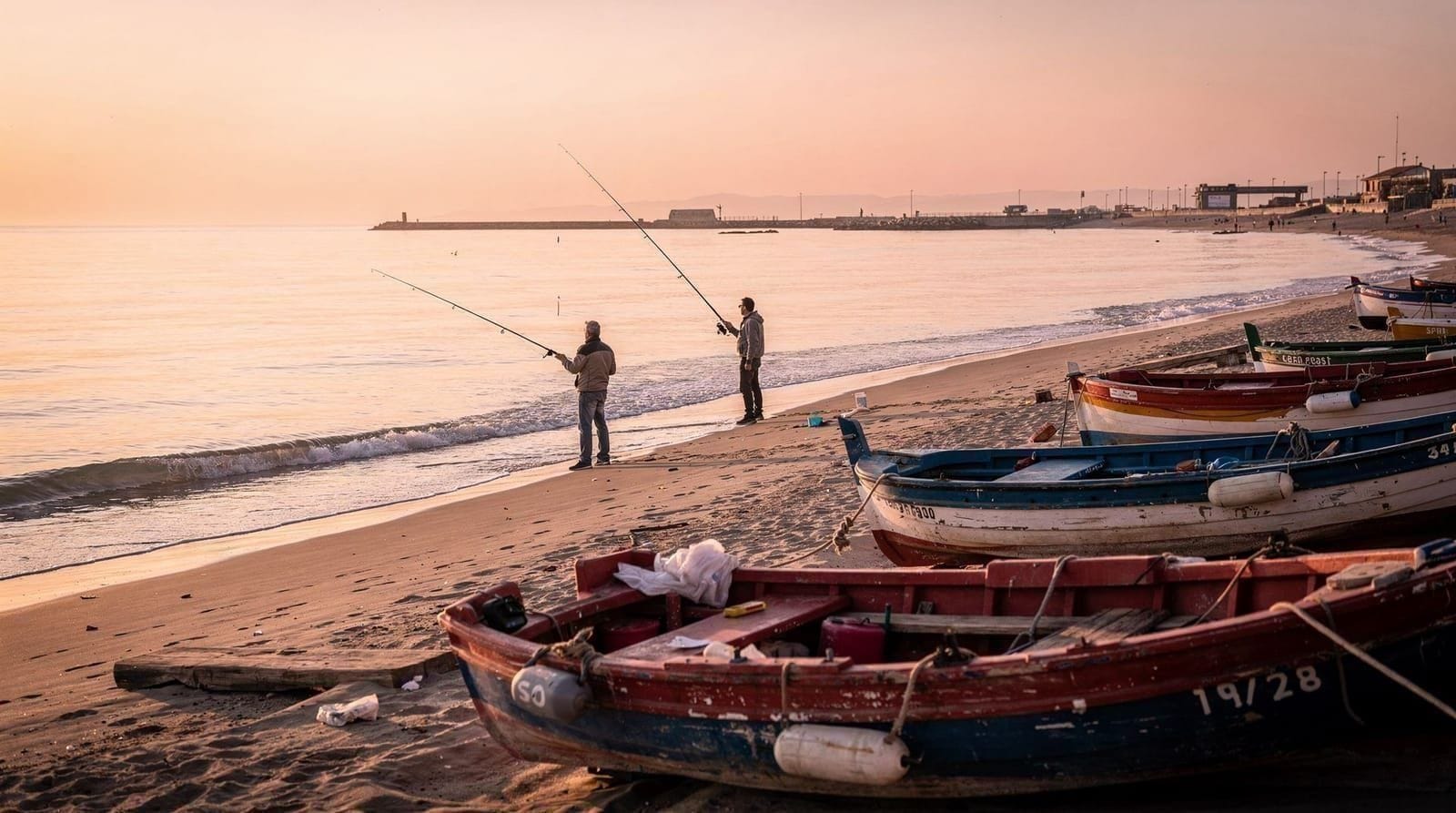
El Cabanyal is Valencia's historic fishing neighborhood, located between the old city and La Malvarrosa beach. Known for its 19th-century modernista tiled house facades, its covered market, and a growing restaurant scene, it's in a long renovation process that makes it genuinely interesting but also visibly uneven.
El Cabanyal’s survival is a minor urban miracle. In the early 2000s, a proposed road extension (the Prolongación de Blasco Ibáñez) would have driven a boulevard straight through the neighborhood’s historic heart, demolishing hundreds of the 19th-century fishermen’s houses with their distinctively decorated tile facades. A ten-year civic campaign involving architects, historians, residents, and eventually UNESCO eventually halted the project. The neighborhood was declared a protected zone in 2010 and the demolition plan was abandoned in 2015.
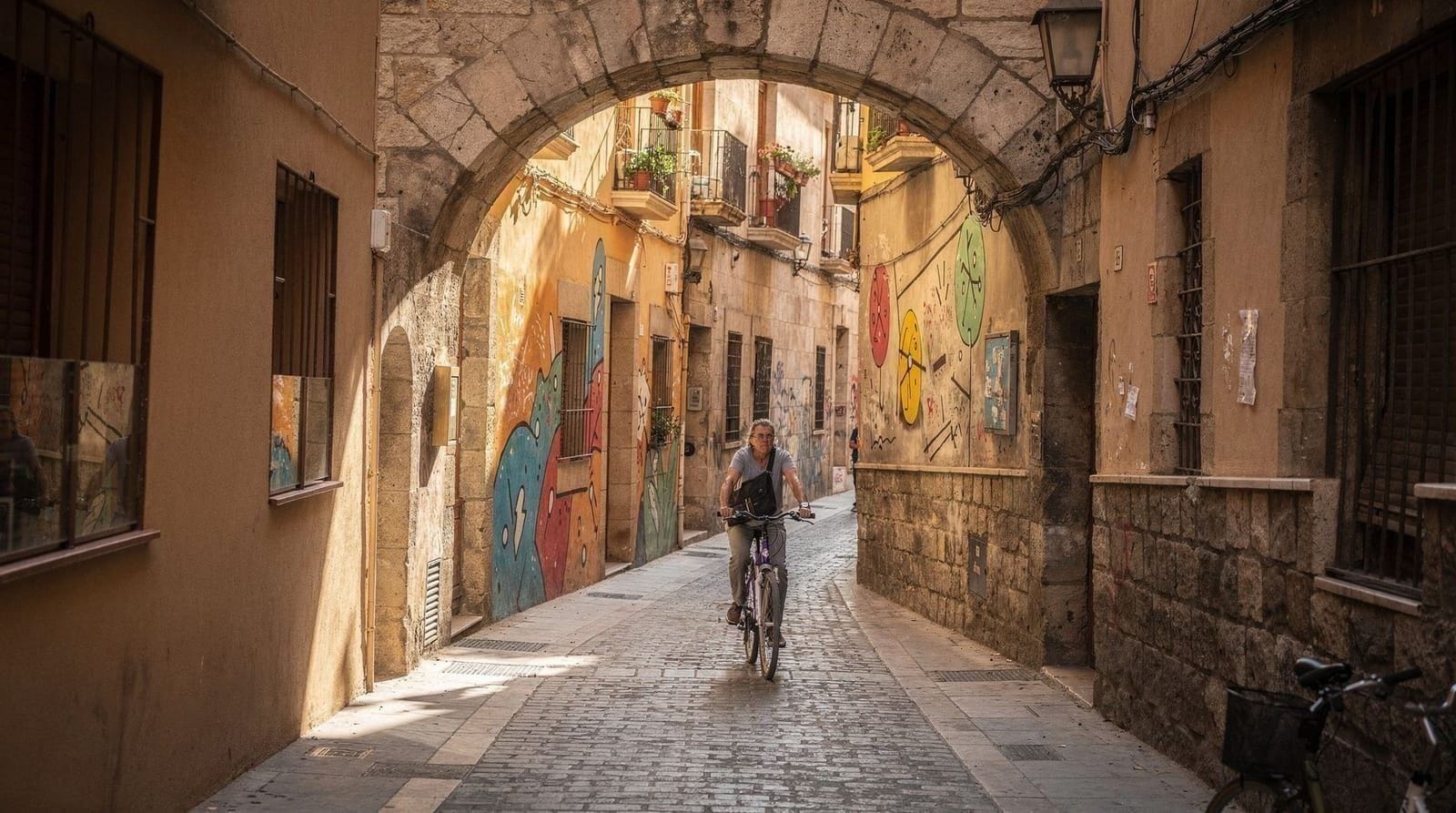
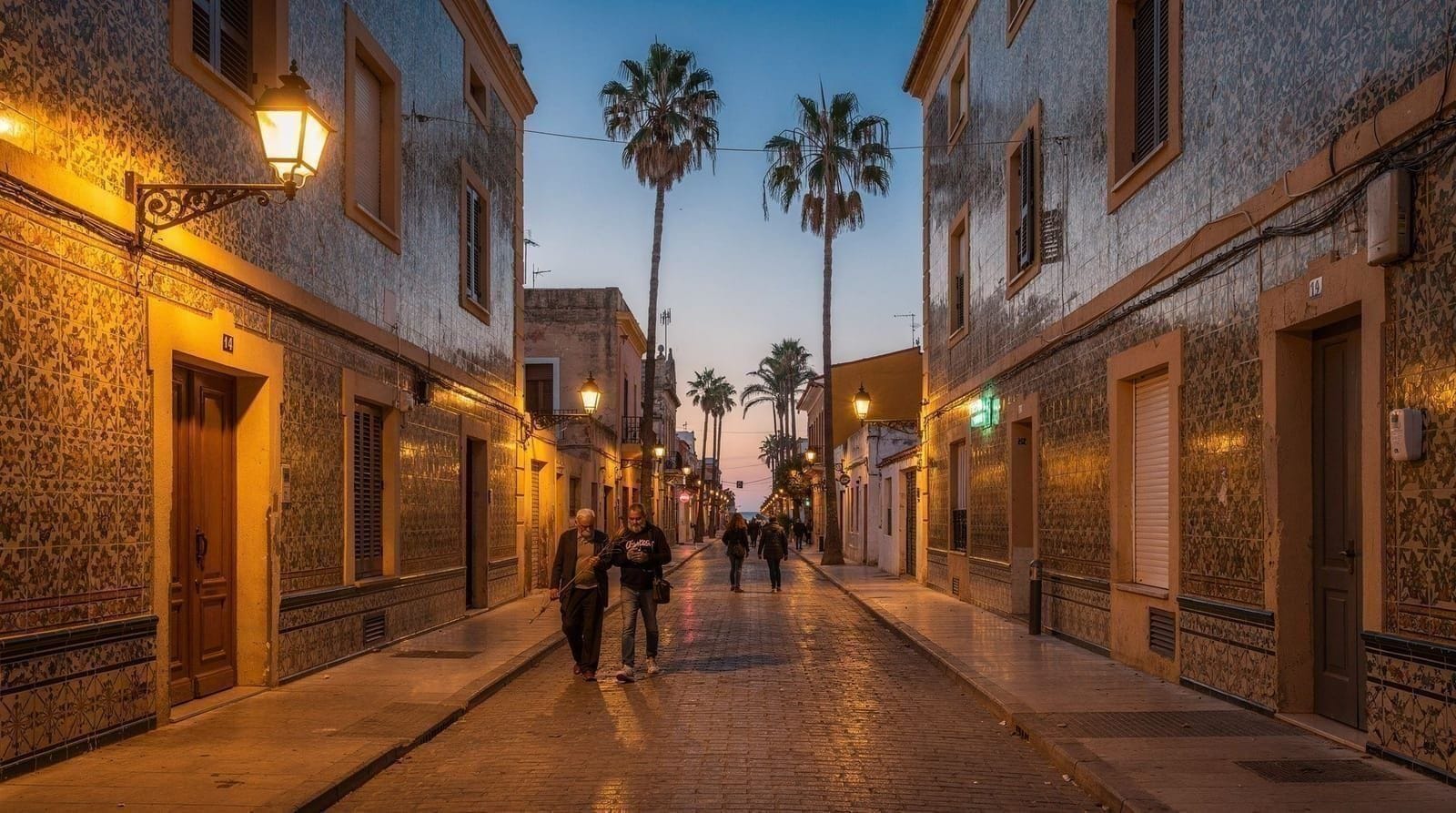
The result of this fight — and of decades of neglect that preceded it — is a neighborhood that is simultaneously beautiful, uneven, and genuinely interesting. Walking through El Cabanyal, you pass rows of restored modernista facades with intricate ceramic tile decorations, then turn a corner into blocks still marked by vacancy and decay. This is not a cleaned-up heritage district; it’s a neighborhood in active recovery.
| Where | Between Valencia’s old city and Malvarrosa beach |
| Cost | Free to walk; almuerzo at the market €3–5 |
| Time needed | 1.5–2 hours for facades and market, half a day with the beach |
| Getting there | Tram T4/T6 from Pont de Fusta, 10 min, €1.50 |
| Best time | Weekday mornings, 09:00–13:00 |
The tiled houses and street architecture
The defining visual element of El Cabanyal is the tiled façade — the rajoles ceramic decoration on the narrow house fronts that were applied between roughly 1870 and 1940. This tradition grew out of Valencia’s historic ceramic industry (the tile workshops of Manises and Paterna, 10 km to the west, produced tiles for the whole Mediterranean region) and the specific prosperity of the fishing families who built these houses.
Each house front was decorated individually, meaning no two facades are the same. The patterns range from geometric azulejo in blue-and-white to floral Art Nouveau compositions in deep greens and yellows, to the more geometric Art Deco work of the 1930s. The best concentrations are on Calle del Rosari, Calle de la Reina, Calle de la Mare de Déu del Pàliu, and the streets running parallel to the beach between Calle del Pintor Ferrandis and Calle del Progrés.
Walking the tiled facades takes about 1.5 hours at a comfortable pace. There is no admission charge. The late afternoon light from the west (around 17:00-19:00) catches the tile decoration best.
The Cabanyal market
The Mercat Municipal del Cabanyal (on Calle de la Reina, two blocks from the seafront) is one of Valencia’s best working markets and substantially undervisited by tourists compared to the Mercado Central. This is an advantage — the fish counter operates without a crowd of cameras, the prices are lower, and the atmosphere is entirely local.
The fish counter is the reason to come: El Cabanyal’s proximity to the port means the fish is genuinely fresh and the selection reflects what was actually caught. Cuttlefish, clochinas (small local mussels), sea bass, bream, and squid are the staples. The produce stalls sell the full range of Valencian vegetables and citrus at prices below the Ruzafa market.
Several bars inside the market serve morning coffee and the Valencian almuerzo (mid-morning snack) from around 08:30. This is worth knowing: an almuerzo at the Cabanyal market — a coffee, a bread roll with jamón or a cremat (small local sausage), and a glass of orxata in summer — costs €3-5 and is one of the most local food experiences available in Valencia.
The market closes at 14:30. Most stalls pack up by 13:30.
Eating in El Cabanyal
The restaurant scene in El Cabanyal is growing and becoming more interesting as the neighborhood renovates. Several notable chefs have opened here precisely because rents are lower than in Ruzafa.
Arrocería Casa Carmela (Av. del Institut Obrer 4, near the beach) is one of the most respected arrocerías in the city for traditional paella over a wood fire. Lunch only. Book ahead. Expect €20-30 per person for a full rice dish. This is serious Valencian rice cooking.
El Racó del Tros (Calle del Rosari) — a neighborhood bar with excellent fried fish and a good lunchtime menú del día for €13.
La Mar de Bé (Calle de Baró de Càrcer) — fresh fish at the straightforward end of the price scale. Popular with fishermen and locals.
La Más Bonita (beachfront Malvarrosa) — technically at the beach end, very popular for brunch and is photogenic. Expect waits on weekend mornings. The food is good; the Instagram component is unavoidable.
For the full picture of where to eat authentic Valencian rice, see the authentic paella guide.
The beach
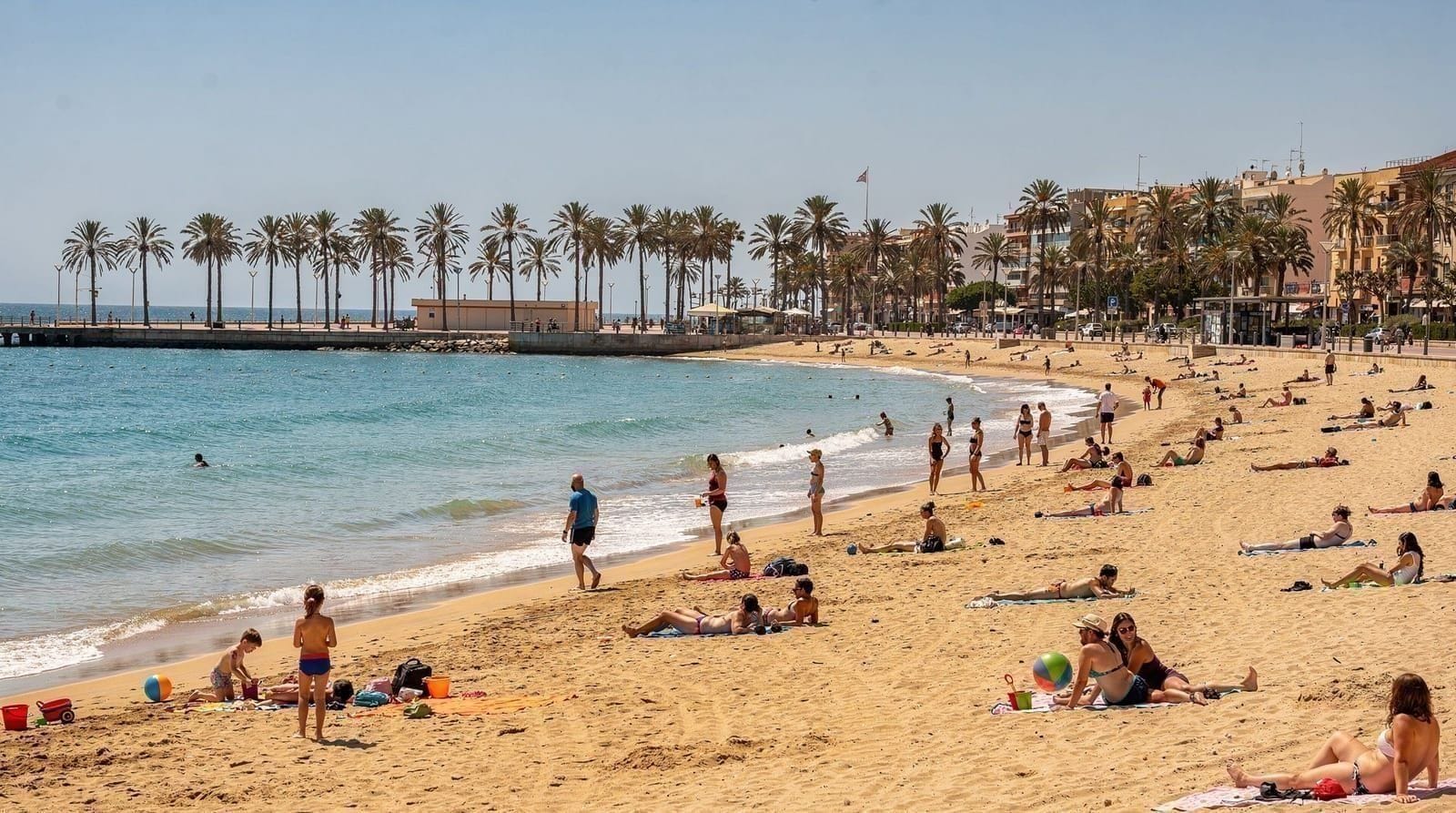
La Malvarrosa beach is 10 minutes on foot east from the center of El Cabanyal. The Malvarrosa beach guide covers it in detail, but briefly: it’s a long sandy beach (approximately 1.5 km), clean, with good facilities (showers, sun lounger rental, lifeguards in summer), and it’s busy in July and August. The Patacona beach immediately to the north is slightly less crowded and has a longer stretch of open sand.
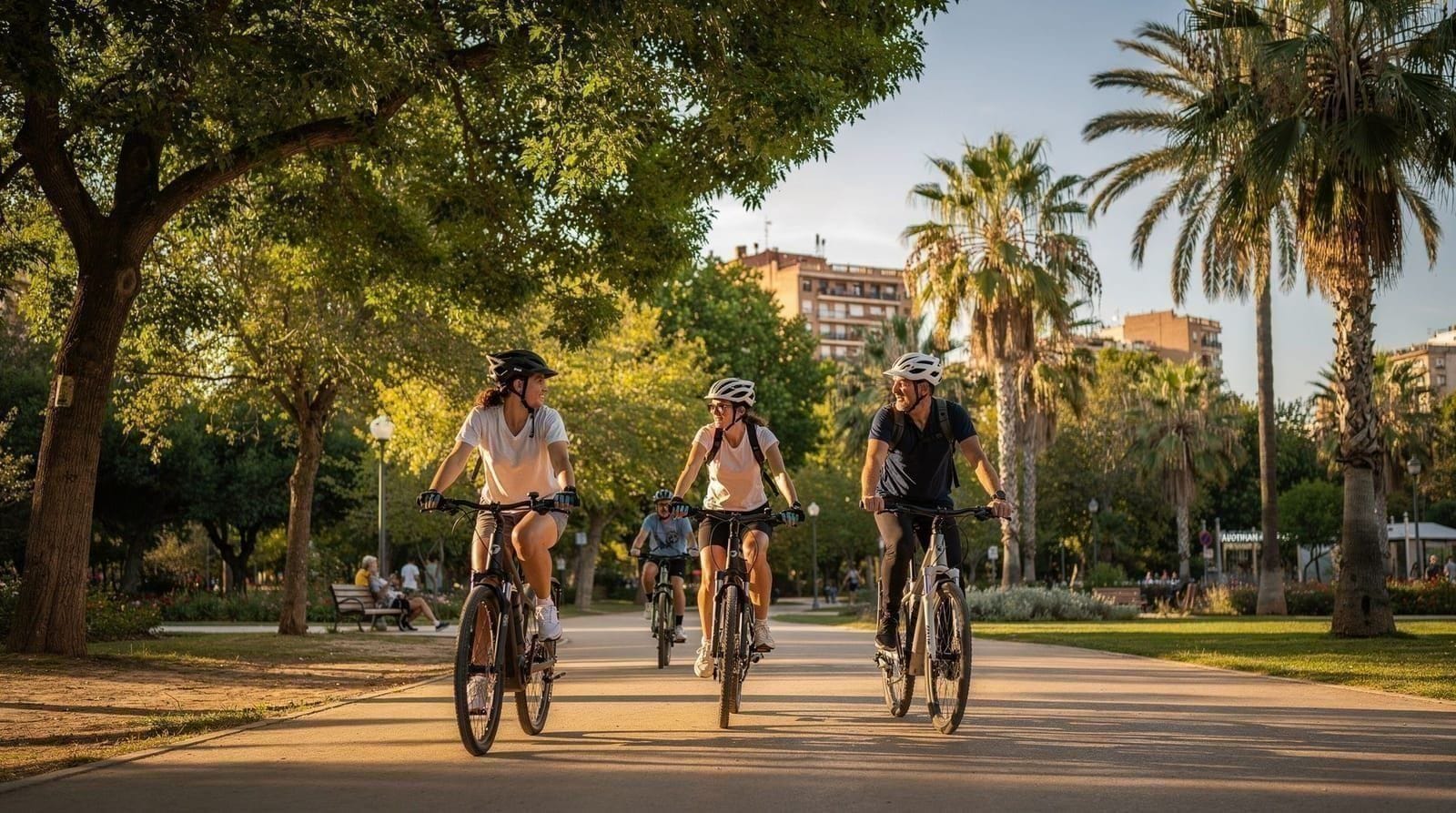 paella and beach tour by e-bikeCheck availability
The Semana Santa Marinera
El Cabanyal has its own Holy Week procession — the Semana Santa Marinera — which is distinct from the standard Easter processions and directly connected to the neighborhood’s fishing heritage. The processions move through the neighborhood streets with boats, fishing nets, and traditional maritime symbols alongside the religious imagery. It runs from Palm Sunday to Easter Sunday. If you’re in Valencia in Holy Week, this is significantly more interesting than the generic Semana Santa.
For full details, see the Semana Santa Marinera guide.
El Cabanyal’s beach neighbourhoods compared
| Neighbourhood | Character | Best for |
|---|---|---|
| El Cabanyal | Historic fishing core, tiled facades, market | Architecture, food, atmosphere |
| El Canyamelar | Working-class extension, less renovated | Seeing the neighbourhood pre-restoration |
| El Grau | Port-facing, utilitarian | Passing through, not a destination |
| La Malvarrosa | Residential beach strip, restaurants | Classic beach day |
| La Patacona | Quieter beach extension | Fewer crowds, more open sand |
If you only have time for one of these, El Cabanyal itself gives the best combination of things to actually do — the market, the facades, and a short walk to the beach — rather than being purely a beach strip like Malvarrosa or Patacona.
Getting there
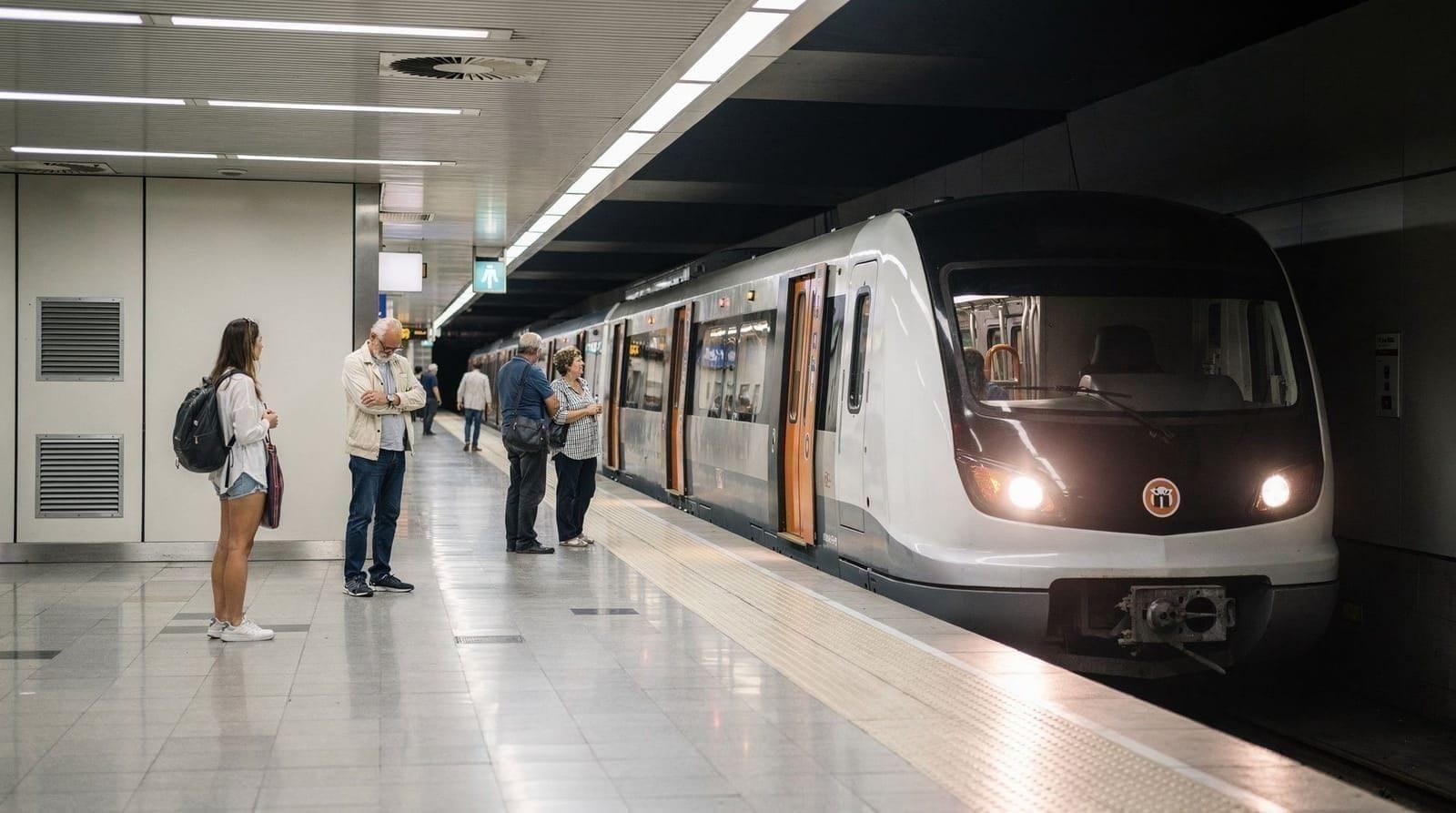
By tram: Tram line 4 (green) and line 6 (orange) run from Pont de Fusta (north edge of the old city, near the Turia Gardens) directly to El Cabanyal and continue to La Malvarrosa beach. Journey time: 10 minutes from Pont de Fusta to Cabanyal. Cost: €1.50 single. This is the best option.
By metro: Metro line 5 stops at Doctor Lluch (15 minutes from the center), which puts you in the southern part of the neighborhood near the port. Less convenient than the tram for the center of Cabanyal.
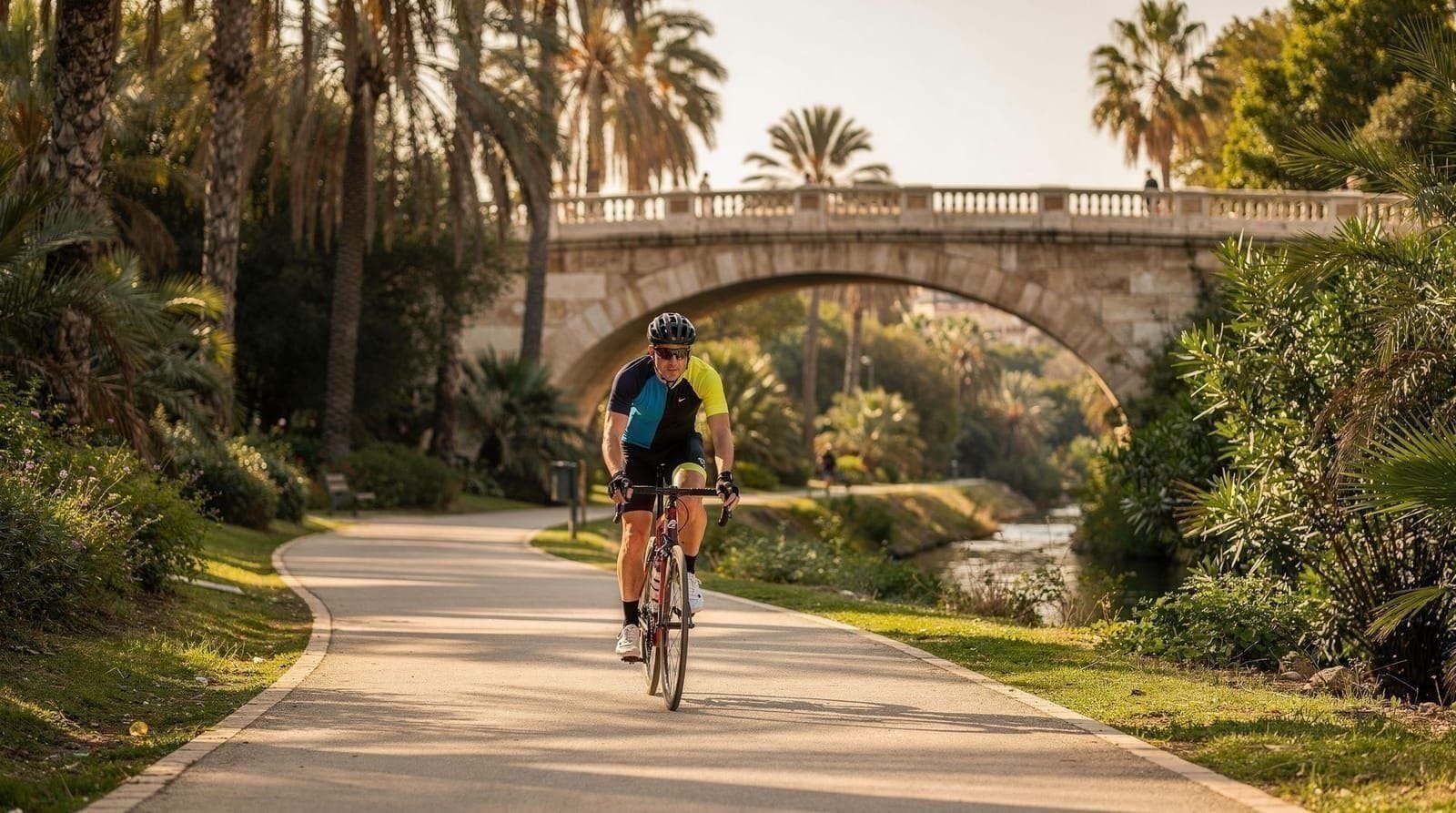
By bike: The cycle route from the old city to La Malvarrosa passes through Cabanyal and takes about 20 minutes. The Turia Gardens to coast route describes the full path.
By foot: 30-35 minutes from the Plaza de la Reina. Flat and straightforward along Av. de Blasco Ibáñez.
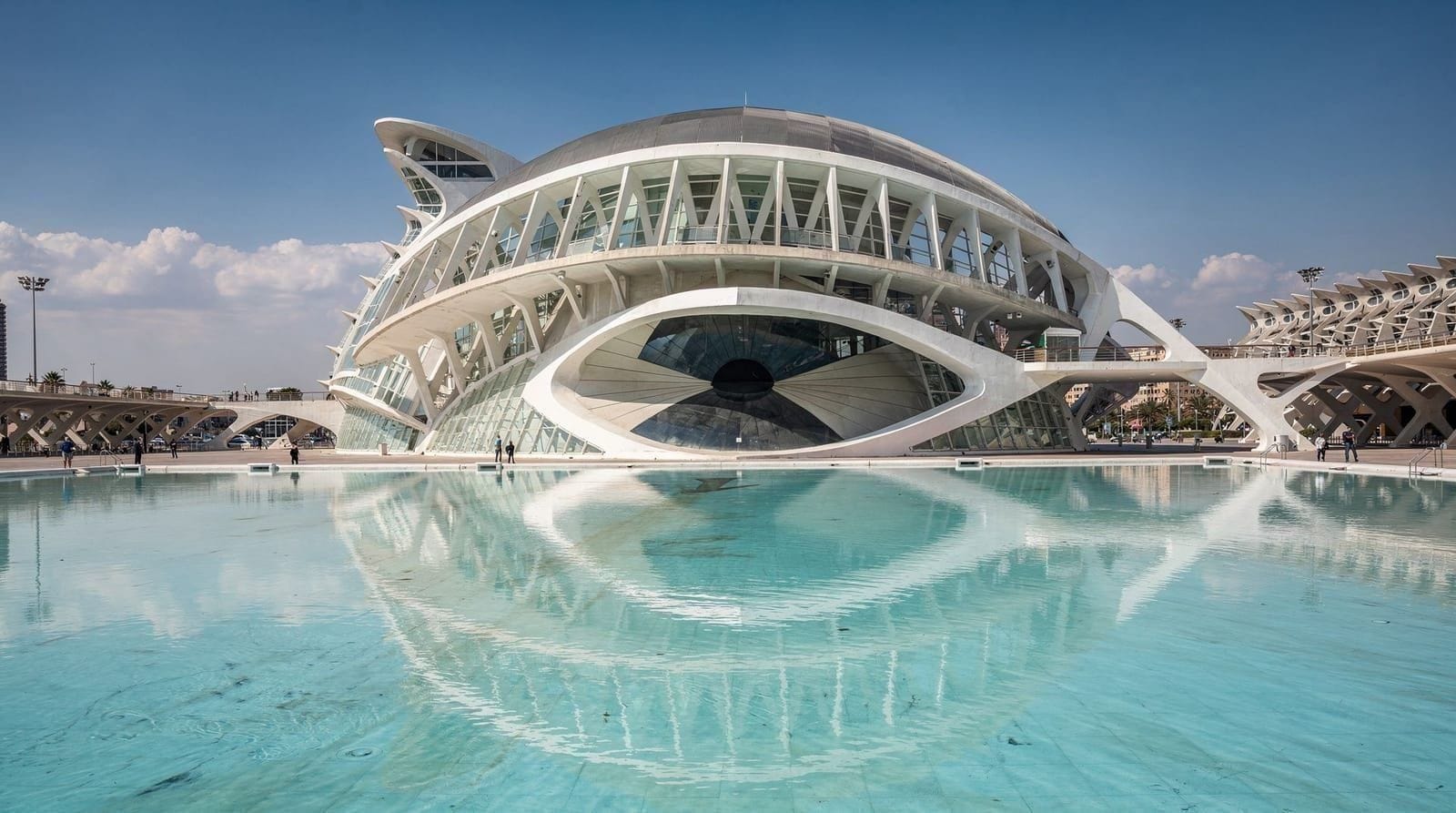 all-in-one beaches, old town and City of Arts by e-bikeCheck availability
Staying in El Cabanyal
El Cabanyal is a practical base if you’re spending time at the beach or want to eat at the neighborhood restaurants for multiple days. The main limitations are the distance from the old city monuments (30 minutes on foot) and the variable quality of apartments in the renovation zone — check photos carefully before booking.
The beachfront hotels (Hotel Neptuno, Hotel Balneario, several apartment hotels on Av. de Neptú) offer genuine sea views and beach proximity. Prices are comparable to mid-range hotels in the old city. See the where to stay in Valencia guide for a full neighborhood comparison.
Combining El Cabanyal with other Valencia neighbourhoods
El Cabanyal pairs naturally with a beach day, but it also works as a contrast to Valencia’s other distinctive districts. If you have several days in the city, compare it against Ruzafa — Ruzafa is the trendier, more finished version of neighbourhood regeneration, with higher rents and a more polished restaurant scene, while Cabanyal is still visibly in progress. Seeing both in the same trip gives a much clearer picture of how Valencia’s neighbourhoods have developed differently over the past two decades. For a full base-of-operations decision, the where to stay in Valencia guide and the best area for first-time visitors guide both weigh Cabanyal against the old city and Ruzafa directly.
The beach neighborhoods — understanding the geography
El Cabanyal sits within a cluster of adjacent beach neighborhoods that are sometimes confusingly grouped together. Understanding the geography helps:
El Cabanyal is the historic fishing village core, with the covered market and the tiled facades as its defining elements. It runs roughly from Calle del Pintor Ferrandis in the north to the port’s northern edge in the south.
El Canyamelar (to the south of Cabanyal, toward the port) was the more working-class extension of the fishing community. Less visually dramatic than Cabanyal proper, it is even more in the process of renovation.
El Grau (furthest south, by the port gates) is the commercial neighborhood serving the port workers. It has a different, more utilitarian character.
La Malvarrosa (to the north of Cabanyal) is the residential beach neighborhood — the strip of apartment buildings, restaurants, and the beach itself that most tourists associate with the “Valencia beach.” The Malvarrosa beach guide covers the beach in detail.
La Patacona (furthest north from the port, extending into Alboraya municipality) is a quieter beach extension with fewer facilities and a more local character. See the Patacona beach guide.
Practical food culture
The food culture of El Cabanyal is inseparable from the sea. The proximity of the Lonja del Pescado (fish auction house, at the port) means that the freshest fish in Valencia arrives here first. This has historically made the neighborhood’s rice and fish cooking some of the most genuine in the city.
Clochinas and mussels: The small local cloïsses (clams) and cloïssos (local small mussels, different from Mediterranean farmed mussels) are seasonally available and best eaten with a squeeze of lemon and a glass of wine at a market bar counter. The season runs roughly October to March.
All i pebre: The traditional eel stew (all i pebre — garlic and paprika) is the signature dish of the Albufera fishing communities and the Cabanyal. The eel comes from the lagoon, 8 km south; the recipe is ancient. Several neighborhood restaurants cook it properly. See the all i pebre guide.
Fideuà: The noodle-based alternative to paella — cooked in the same flat pan with seafood and stock — is particularly associated with the coastal towns of the Valencia region and is claimed to have been invented in Gandia. It’s excellent in El Cabanyal when made with fresh catch. The paella vs fideuà guide explains the difference.
What’s changing — renovation and gentrification
El Cabanyal’s renovation process has accelerated significantly since 2015. The pattern of change is visible on almost any street: a perfectly restored tile facade next to an abandoned building, a new restaurant next to a hardware shop that’s been there since 1960.
The city has invested in infrastructure improvements (new paving, improved lighting, facade restoration grants) and a cultural program designed to attract visitors and investment without displacing all existing residents. The tension between these goals is not resolved — some long-term residents have been priced out as rents have risen, while others have benefited from improved conditions.
For visitors, this means visiting now offers something that will look different in 5-10 years. The current mixture of the original neighborhood and the incoming renovation is more interesting than either the pre-restoration decay or the fully gentrified version that will eventually follow.
Practically, this shows up in small ways: a decade-old hardware shop next to a specialty coffee roaster, a fisherman mending nets on a street where a new design studio just opened, rent notices in Valencian alongside menus in English. None of this is staged for visitors — it’s simply what a neighbourhood in the middle of a slow, contested recovery looks like, and it’s worth paying attention to rather than treating the tiled facades as the whole story.
Walking the neighborhood
A practical 2-hour route:
Start: Tram stop Cabanyal (line 4/6 from Pont de Fusta, 10 minutes, €1.50).
Walk north along Calle de la Reina toward the market (10 minutes). Enter the market and spend 20-30 minutes.
Head west along Calle del Rosari toward the tiled facades — the densest concentration is in the grid bounded by this street and Calle del Pintor Ferrandis to the north.
Continue east toward the beach via the lanes around Calle de la Mare de Déu del Pàliu. The transition from the dense neighborhood to the open beach road takes about 5 minutes.
Malvarrosa beach: Walk 10 minutes north along the beach to the restaurant strip on Av. de Neptú. Lunch or coffee.
Return via tram from the Neptú stop (line 4/6 south to Pont de Fusta, 15 minutes).
Frequently asked questions about El Cabanyal
Is El Cabanyal safe?
El Cabanyal is generally safe, though as with any neighborhood in transition, some streets are better maintained than others. The area around the market and the main tiled-facade streets is active and safe. The approach from the metro station through the southern end of the neighborhood is less visually attractive. Use the tram from Pont de Fusta rather than walking from the central station.
Why does El Cabanyal look so uneven?
The neighborhood went through decades of neglect when the demolition project was pending — landlords didn’t invest in buildings that might be knocked down. Since 2015, renovation has accelerated, but it’s a large neighborhood and the process takes time. The unevenness is genuine and will likely persist for another 5-10 years.
What is the best time to visit El Cabanyal?
Any weekday morning between 09:00 and 13:00 is ideal — the market is in full operation, the facades are lit from the east, and the neighborhood is doing its daily business without significant tourist crowds. Sunday mornings in summer can be busy around the beach end. The Semana Santa Marinera (Holy Week) is the neighborhood at its most festive.
Can I see the tiled facades as part of a walking tour?
Yes. Several Valencia walking tours include the tiled facades of El Cabanyal, though most focus on the old city. A dedicated Cabanyal walking tour can be found through local guides via GetYourGuide, or you can use the street art and architecture guides to plan your own route.
Is there parking in El Cabanyal?
Street parking is available on the wider streets in El Cabanyal and is generally easier than in the old city. However, the tram from Pont de Fusta is so fast and cheap (10 minutes, €1.50) that driving from the city center to El Cabanyal is unnecessarily complicated.
How does El Cabanyal compare to Ruzafa for a neighbourhood visit?
They offer different experiences. Ruzafa is more finished — higher rents, a denser and more polished restaurant and bar scene, closer to the old city. El Cabanyal is still visibly in transition, with a working fish market, lower prices, and a stronger sense of the original fishing community alongside the restoration. Visiting both gives the clearest picture of how differently Valencia’s neighbourhoods have regenerated.
Top experiences
Bookable activities with verified prices and instant confirmation on GetYourGuide.