Semana Santa Marinera: Valencia's maritime Easter processions
Valencia: historical city tour
What is Semana Santa Marinera and when does it take place?
Semana Santa Marinera is a UNESCO-recognised Holy Week (Easter) celebration centred in the maritime neighbourhoods of Valencia — primarily El Cabanyal, El Canyamelar, and La Malva-rosa. The processions take place from Palm Sunday to Easter Sunday (dates vary; in 2026, Holy Week runs 29 March–5 April). The event is distinct from Seville's more famous processions: smaller, community-driven, and atmospheric without the crushing tourist crowds.
Valencia’s Semana Santa Marinera occupies a distinct place among Spain’s Easter celebrations. While Seville’s Semana Santa draws international tourists in the hundreds of thousands, Valencia’s maritime neighbourhood processions remain substantially local — rooted in the fishing community of El Cabanyal and the adjacent coastal barrios, with an atmosphere that prioritises solemn religious observance over spectacle.
The event was declared a Festival of National Tourist Interest in Spain and recognised as part of the Valencian Community’s Intangible Cultural Heritage. It is one of several in Spain collectively registered as UNESCO Intangible Heritage.
| Where | El Cabanyal, El Canyamelar and La Malva-rosa neighbourhoods |
| Cost | Free to watch from the street; grandstand seats around €5–15 |
| Time needed | 2–3 hours for the main Good Friday procession |
| Getting there | Tram lines 4 or 6 from Pont de Fusta, around 12 minutes |
| Best time | Good Friday evening for the largest, most solemn procession |
El Cabanyal: the setting
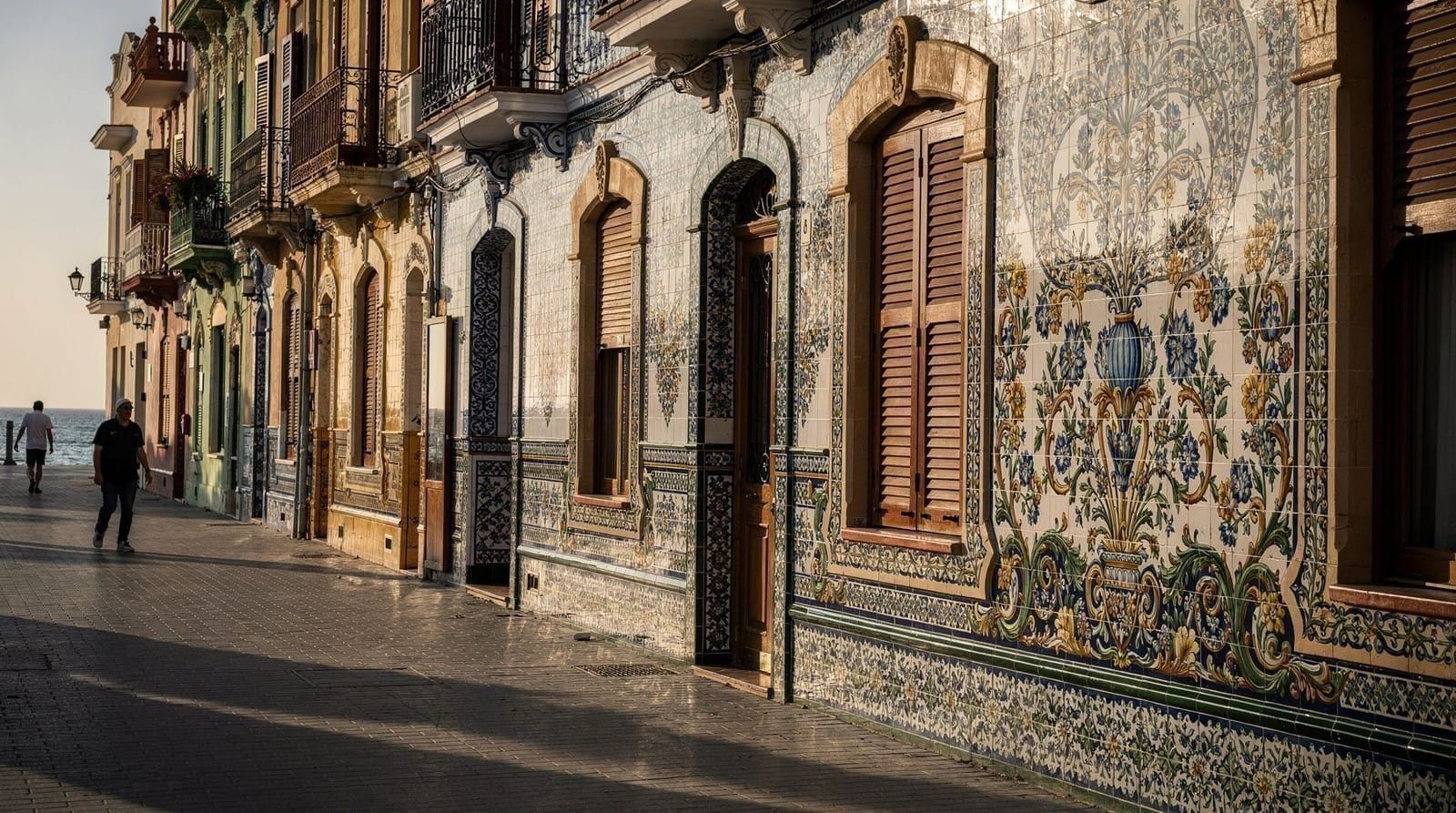
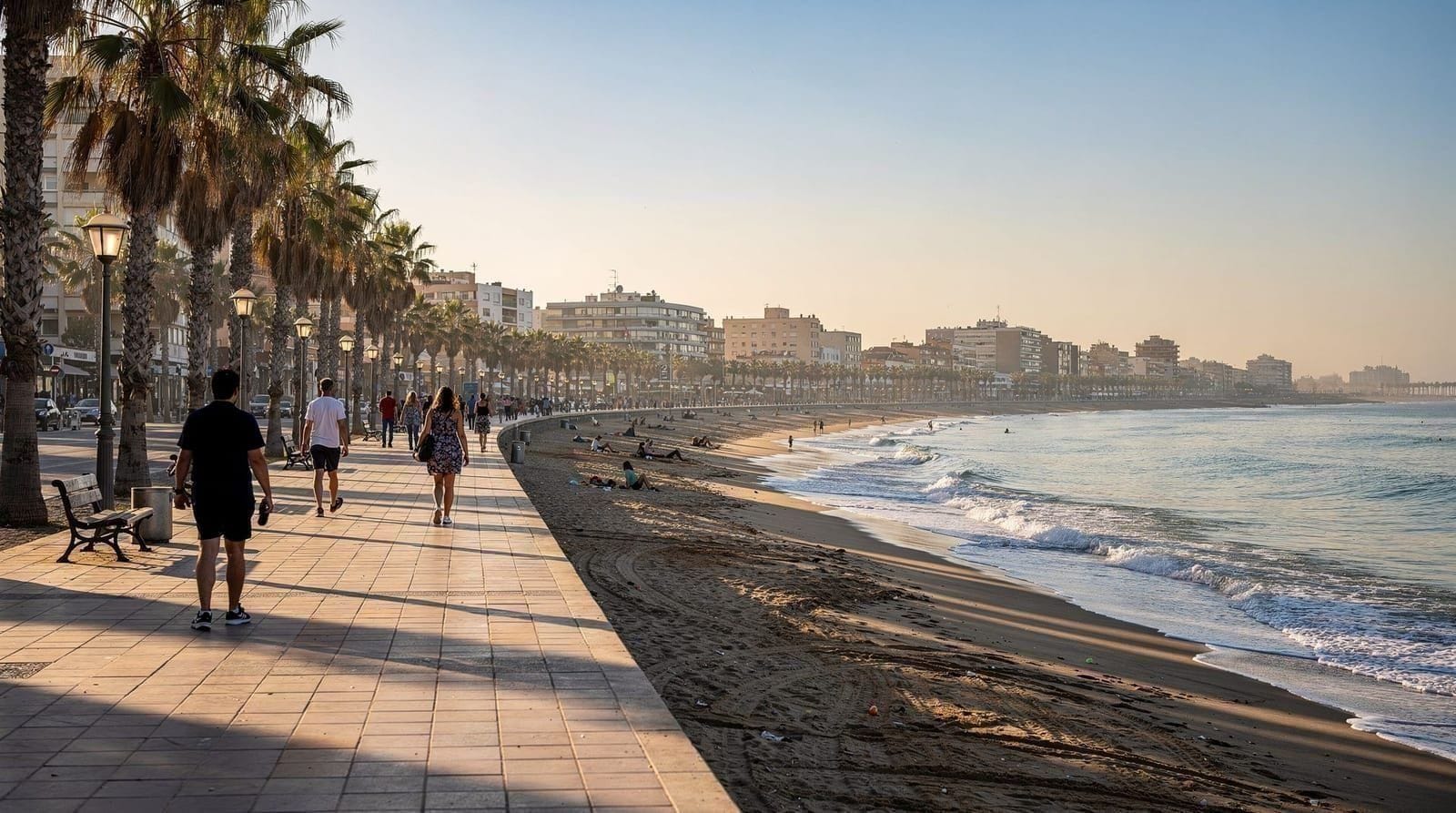
Semana Santa Marinera takes place primarily in El Cabanyal — Valencia’s former fishing quarter, about 4 km from the city centre near the beach. The neighbourhood’s low-rise 19th and early 20th-century architecture, including its distinctive tiled modernista facades, forms the backdrop for the processions.
El Cabanyal has a strong community identity distinct from central Valencia. The neighbourhood was built by fishermen and has maintained its working-class maritime character despite gentrification pressure. Semana Santa Marinera reflects this: the confraternities (brotherhoods organising the processions) are predominantly local neighbourhood associations, not the formal religious institutions common in Seville.
How Semana Santa Marinera is organised
The processions are run by approximately 10–12 confraternities (confraries or hermandades in Valencian/Spanish), each associated with a religious image (paso) and a specific neighbourhood or church. The images are elaborate carved and painted figures — typically a Christ on the cross, a sorrowful Virgin, or scenes from the Passion — mounted on ornate floats and carried manually by members (portadores).
The confraternities march in penitential robes (túnicas) of different colours — black, purple, white — with pointed hoods (capirotes). The imagery of hooded penitents carrying candles through narrow streets at night is visually powerful and historically rooted in medieval religious theatre.
The main processions
Palm Sunday (Diumenge de Rams)
The opening procession of Holy Week, following the palms blessed in the church and carried by participants through the neighbourhood streets. This is the most family-oriented procession, with children participating. It typically takes place in the afternoon.
Holy Thursday night (Dijous Sant — Processó del Crist de la Mar)
The Thursday procession is evening-to-night. The maritime character of Semana Santa Marinera is most visible here: one of the primary images carried is the Cristo de la Mar (Christ of the Sea), a carved figure historically associated with the fishing fleet. The procession begins from the Iglesia de la Virgen del Carmen del Cabanyal and moves through El Cabanyal’s streets.
The route passes along Calle de Escalante, Calle de la Reina, and the streets near the old fish market. The narrow streets, candlelight from participants’ candles, and the sound of the accompanying band (banda de música) playing funerary marches make this one of the more atmospheric events of Holy Week in Valencia.
Good Friday (Divendres Sant)
The most solemn and largest procession. Good Friday in Spain is a day of mourning, and the procession reflects this — muffled drums, slow march pace, and the carrying of the principal images of the Passion. The Virgen de los Desamparados (Our Lady of the Forsaken), Valencia’s patron saint, has a significant role in the Good Friday procession.
The procession begins around 20:00 from the neighbourhood churches and moves through the major streets of El Cabanyal and El Canyamelar. It typically concludes around 22:30–23:00. This is the procession most worth planning around — it is the emotional heart of Semana Santa Marinera and draws the largest local crowds.
Easter Sunday (Diumenge de Pasqua)
The final procession marks the end of Holy Week. The atmosphere shifts from solemn to celebratory — the bands play more upbeat music, the mood lightens. This procession is shorter and less intense than Good Friday’s but provides a satisfying conclusion to the week.
Attending the processions: practical guidance
How to find the route: The Junta de Semana Santa Marinera (the festival’s governing body) publishes official route maps annually, available from the El Cabanyal neighbourhood centres and the Valencia tourist office from early March. Routes follow the main streets of the barrio — Calle de la Reina, Calle del Progreso, Calle de Escalante.
Getting to El Cabanyal: Tram line 4 or 6 from Pont de Fusta (near the old town) takes approximately 12 minutes. Bus lines 19, 31, and 32 also serve the neighbourhood. On Good Friday evening, public transport is more frequent but also more crowded. See the El Cabanyal guide for full transport details.
Viewing positions: The procession routes are public streets — find a position along the route well before the start time (at least 30 minutes ahead for Good Friday). The sections near the churches of departure and arrival are most dramatic but most crowded. Side streets provide easier viewing with less competition for position.
Dress code: There is no formal dress requirement for spectators. Locals dress respectfully — casual but not beachwear. The events are solemn religious occasions and loud talking, drinking, and disrespectful behaviour are frowned upon.
Photography: Photography is generally tolerated but should be done discreetly and without flash during the procession itself. The candlelit light of the night processions is challenging for smartphone cameras — a phone with good low-light performance, or simply accepting you will experience it without capturing it perfectly, is the sensible approach.
Semana Santa Marinera vs. Seville: a frank comparison
Valencia’s Semana Santa is not as visually spectacular as Seville’s. The floats are smaller, the confraternities fewer, the crowds less intense. If you are primarily interested in the maximum visual impact of Spanish Semana Santa, Seville is the destination.
What Valencia offers instead is proportionality: the event is human-scale, the streets are navigable, the atmosphere is genuinely local rather than tourist-facing, and the prices do not spike the way Seville’s do during Holy Week. For a traveller who wants to experience Spanish Easter traditions without the commercial apparatus that surrounds them in Andalusia, Semana Santa Marinera is a compelling alternative.
Valencia historical walking tour — combine with Semana Santa Marinera for a deeper understanding of the city’s religious heritage
Other Easter activities in Valencia
Beyond the Marinera processions, Holy Week in Valencia includes:
Easter services at Valencia Cathedral: The cathedral at Plaza de la Reina holds traditional Mass services throughout Holy Week, including a Tenebrae (darkness) service on Good Friday morning. The cathedral’s Gothic interior and its famous Holy Grail chalice are particularly moving in the context of Holy Week.
El Carmen neighbourhood flair: The city centre (El Carmen) has its own smaller Holy Week activities — visit the El Carmen guide for what’s on.
Beach weather: March–April in Valencia typically brings mild temperatures (15–20°C). The beaches are not yet in summer mode but are pleasant for off-season walks. La Malva-rosa and El Saler beaches are quiet in Holy Week.
Medieval guided walking tour of Valencia — a close alternative if you want context on the historic centre, El Carmen included, and its religious architecture alongside a Holy Week visitWhere to watch: choosing your spot
Not all viewing positions along the route offer the same experience. A rough comparison for first-time visitors:
| Location | Atmosphere | Crowd level | Best for |
|---|---|---|---|
| Near the departure church | Most dramatic, ceremonial start | Very crowded | Photographers, arrive 45+ min early |
| Calle de la Reina (main route) | Full procession flow, bands audible | Crowded | First-time visitors wanting the classic view |
| Side streets off the main route | Quieter, closer contact with participants | Moderate | Families, those wanting to avoid crushes |
| Near the arrival church | Emotional conclusion, tired participants | Moderate–crowded | Those who prefer a shorter wait |
A practical half-day around the processions
For visitors combining Semana Santa Marinera with the rest of El Cabanyal, a natural half-day runs: arrive by tram in the afternoon, walk the neighbourhood’s modernista streets and the beachfront promenade, an early dinner in one of the local seafood restaurants, then find a viewing position at least 30 minutes before the Good Friday procession begins. This avoids the common mistake of arriving right at the announced start time, when the best spots near the departure churches are already taken.
Visitors combining this with a wider Valencia trip should note that Holy Week falls in the shoulder season for tourism generally, which means accommodation prices in the city are noticeably lower than during summer or Las Fallas — a practical bonus alongside the cultural experience itself.
Reading the processions as a first-time visitor
Part of what makes Semana Santa Marinera rewarding is that it asks something of the spectator: patience, quiet, and a willingness to simply stand in a street and watch. There is no commentary and no programme read aloud. The meaning is carried by the slow pace, the rhythm of the drums, the swaying of the floats on the shoulders of the bearers and the long pauses when the procession halts. If you go in expecting a show, you may be underwhelmed; if you go expecting an act of community devotion that happens to take place in public, it tends to land much harder.
It helps to watch the people as much as the images. Families line the pavements, grandparents point out relatives among the penitents, and children collect wax from the candles. These small scenes are the real subject of the festival, and they explain why the neighbourhood treats it as its own rather than as a tourist attraction.
Combining the processions with the rest of Valencia
Because the processions happen in the evening, the daytime is free for the rest of the city. A sensible rhythm is to spend the morning on the old town, then head out to the coast as the light drops.
- Old town and religious heritage: the Cathedral and Miguelete and the Holy Grail chalice give useful context for the imagery you will see later at night, and the Lonja de la Seda is a calm stop away from the busiest streets.
- A neighbourhood walk: the El Carmen guide covers the medieval core, and the Cabanyal neighbourhood guide is the natural companion to this page if you want to know the streets before the crowds arrive.
- Sea air before dark: the Malvarrosa beach guide is a pleasant walk to fill the hours before the evening procession, and the Cabanyal beach guide suits the same plan.
- Wider festival context: if you are weighing Easter against other dates, the festivals calendar and the Las Fallas complete guide show how differently Valencia celebrates in spring.
Practical comfort during a long evening
Holy Week evenings can turn cool once the sun is down, particularly near the sea, so a light jacket is worth carrying even if the afternoon feels warm. Comfortable shoes matter more than anything else: you will be standing on pavements for a long stretch, and the streets are not designed for sitting. If you are travelling with children, the side streets mentioned above are the better choice, and the lighter Palm Sunday procession is a gentler introduction than Good Friday.
Plan your meal around the procession rather than after it. Local restaurants fill up and kitchens can close early on solemn nights, so eating before you take your place is the more reliable approach. For ideas on where and how to eat well in the area, the eat like a local guide and the getting around by metro and EMT guide help you sort out food and the journey back. Travellers staying overnight can compare areas in the where to stay guide.
Respect and etiquette on the route
Treat the route as a place of worship that happens to be outdoors. Keep conversation low, silence your phone, and never step into the path of a float or between bearers. Do not touch the images or the robes, and do not ask penitents to pose. If a procession stops in front of you, stay still until it moves again. Following these simple habits is what separates a welcome visitor from an intrusive one, and locals generally respond warmly to people who clearly respect the occasion.
Planning your Holy Week around the dates
Because the dates of Easter change from year to year, check the official programme before booking flights or accommodation. The processions follow the liturgical calendar, so the main evenings always fall in the final days of Holy Week, but exact times and routes can shift between years. The best time to visit guide and the spring in Valencia guide explain what the season feels like, and the Valencia in 3 days itinerary is an easy base for fitting the processions into a longer stay.
Frequently asked questions about Semana Santa Marinera
When is Semana Santa Marinera in 2026?
Holy Week (Semana Santa) in 2026 runs from Palm Sunday 29 March to Easter Sunday 5 April. The main Semana Santa Marinera processions in El Cabanyal take place on Holy Thursday (2 April) and Good Friday (3 April) evening and night. The Good Friday procession (Viernes Santo) is the largest and most solemn.What is the difference between Semana Santa Marinera and Semana Santa elsewhere in Spain?
Valencia's Semana Santa Marinera is a neighbourhood community event rooted in the fishing community of El Cabanyal. It lacks the mega-budget floats and mass tourism of Seville or Málaga. The processions are intimate, taking place through narrow maritime streets at night with candlelight. The confraternities are neighbourhood associations with deep family roots. This makes it more authentic and accessible, if less visually overwhelming than Andalusian Semana Santa.Is Semana Santa Marinera free to attend?
Yes — all processions are free to watch from the streets. Some grandstand seating (sillas) is sold along the main routes, typically €5–15 per seat. No admission is required to stand and watch.What are the main events of Semana Santa Marinera?
The key events are the Palm Sunday procession (Diumenge de Rams), the Holy Thursday night procession (Dijous Sant), the Good Friday procession (Divendres Sant) — the most important, featuring the Virgen de los Desamparados — and the Easter Sunday procession (Diumenge de Pasqua). The Good Friday procession begins around 20:00 and continues for 2–3 hours through El Cabanyal's streets.Is Semana Santa Marinera only in El Cabanyal?
The main processions are in El Cabanyal and the adjacent maritime barrios (El Canyamelar, La Malva-rosa). Valencia's other neighbourhoods — El Carmen, Ruzafa, Eixample — hold their own smaller Holy Week activities, but the Marinera designation specifically applies to the maritime neighbourhood processions.What does "Marinera" mean in the festival name?
"Marinera" means maritime or seafaring. The name distinguishes these processions from the general Semana Santa (Holy Week) celebrations and reflects the historic fishing community identity of El Cabanyal.Are the processions cancelled if it rains?
Yes — processions are typically cancelled or postponed in rain to protect the historic carved images. Valencia's spring weather is variable; the forecast for Holy Week determines whether processions run as scheduled. The Junta de Semana Santa Marinera announces any changes the day before.How do I get between El Cabanyal and Valencia's city centre during Holy Week?
Tram lines 4 and 6 run frequently and are the most reliable option. On Good Friday evening, the tram is crowded — build extra time into your plans.
Top experiences
Bookable activities with verified prices and instant confirmation on GetYourGuide.