Accessible Valencia — mobility, disability and inclusive travel guide
Valencia: Oceanogràfic ticket with immersive experience
Is Valencia accessible for wheelchair users and visitors with mobility needs?
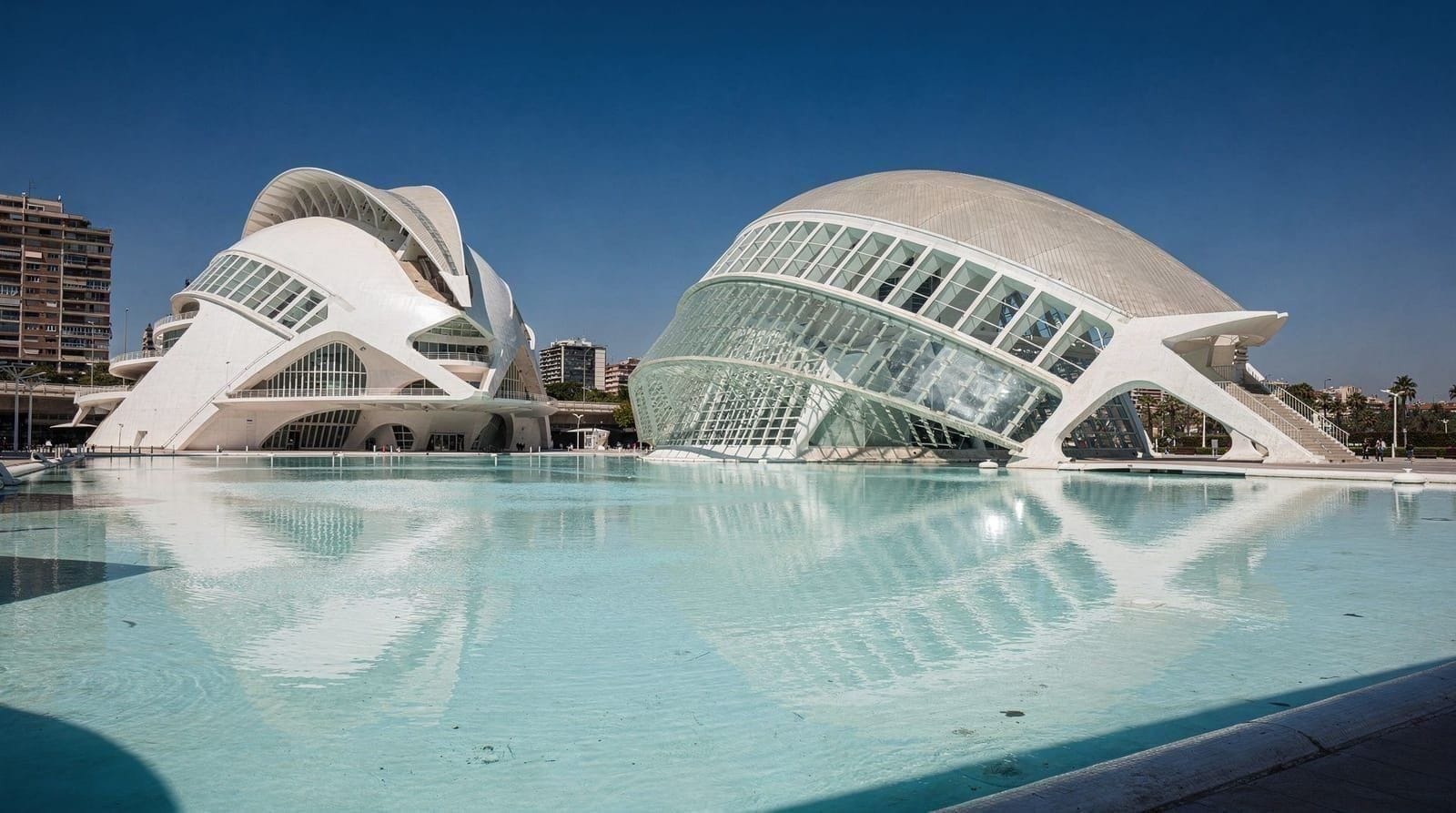
Valencia has made significant accessibility improvements in recent years. The metro has lifts at most central stations. Malvarrosa and El Saler beaches have adapted access. The old town's cobbled streets remain challenging in places. The City of Arts and Sciences complex is fully accessible. With planning, a wheelchair-user or visitor with mobility needs can have a good trip — but some zones require care.
Planning around mobility needs shouldn’t mean guessing until you arrive. Valencia rewards a bit of route-planning: compact, mostly flat by Spanish-city standards, with a genuinely accessible new town and a medieval core that needs more care. Deciding how many days to spend in Valencia is easier once you know which zones are effortless and which require detours.
| Easiest zones | City of Arts and Sciences, Turia Gardens, beachfront promenades |
| Hardest zone | El Carmen old town (cobblestones, narrow lanes) |
| Metro | Lifts at most central stations, not all — check before relying on one |
| Adapted beach kit | Free amphibious wheelchair at Malvarrosa, June–September |
| Best base | Near Colón or the beachfront for level access to transport |
Valencia’s accessibility landscape
Valencia is a relatively accessible destination by Spanish city standards. The city has invested in infrastructure improvements since the 1990s, and the 2007 America’s Cup and subsequent urban regeneration accelerated improvements in the port and beachfront areas. That said, accessibility is uneven — the medieval old town is genuinely challenging in places, while the City of Arts and Sciences complex and the beach promenades are excellent.
This guide is honest about what works and what doesn’t, so you can plan a trip that works for your specific needs rather than discovering limitations on arrival.
Metro and public transport
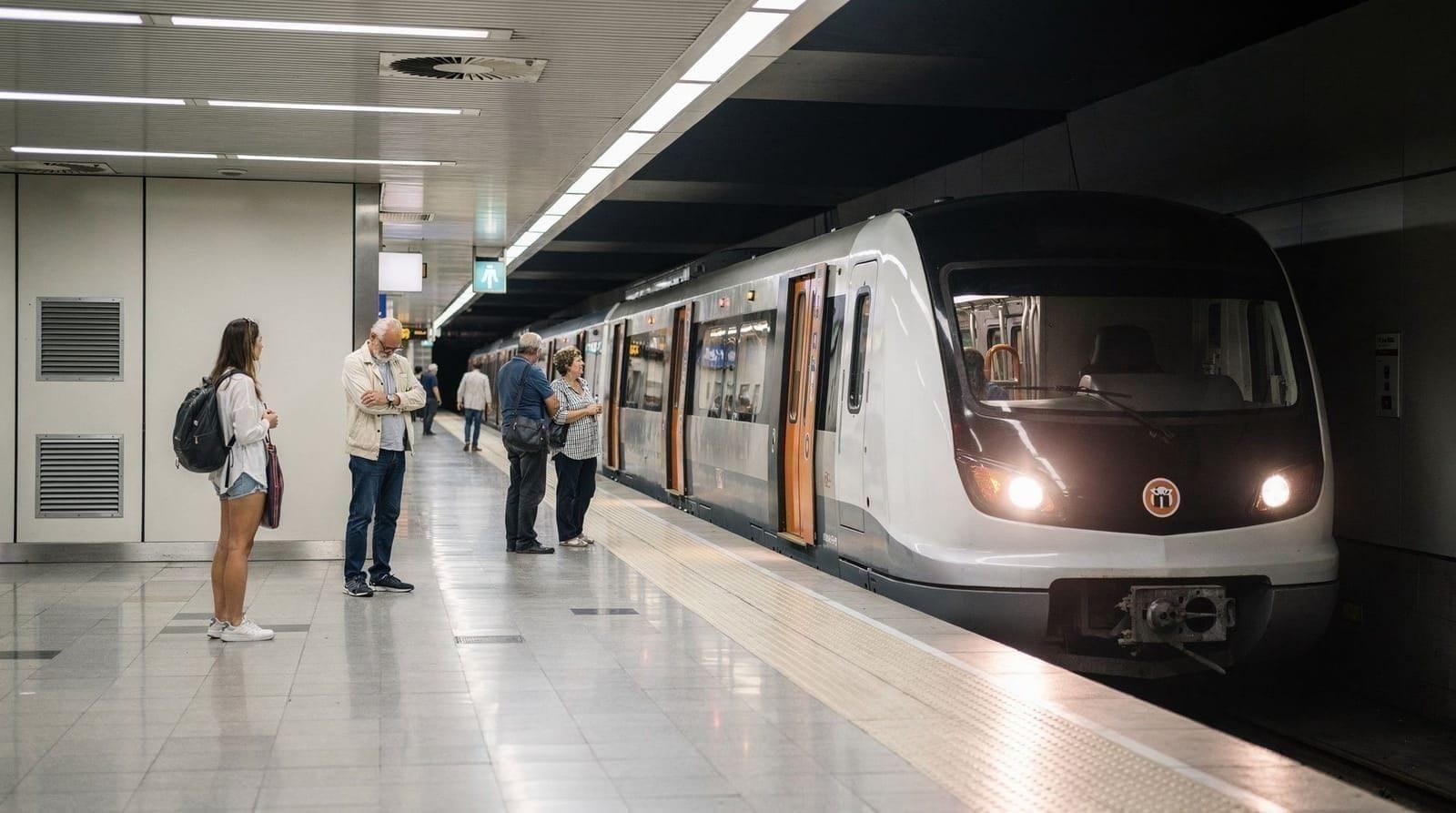
Valencia Metro: Most central stations have lifts, but coverage isn’t universal. Key accessible stations:
- Xàtiva (interchange, city centre) — lifts to all platforms
- Colón (central station) — fully accessible
- Alameda (city centre/riverbed area) — accessible
- Marítim-Serreria (City of Arts & Sciences) — accessible
- Joaquín Sorolla (AVE station) — fully accessible (modern station)
- Bailèn (El Carmen edge) — accessible
Stations requiring confirmation: some older L3/L5 stations have had lift retrofits that occasionally malfunction. The Valencia Metro app and the Metro website (metrovalencia.es) list current accessibility status per station. Check before a specific journey if you’re relying on lifts. For the full network map and how tickets and zones work, see the getting around Valencia by metro and EMT guide.
EMT city buses: Valencia’s bus fleet is substantially low-floor with ramp deployment. The driver lowers the ramp on request; there is a dedicated wheelchair space. Route information is announced audibly and displayed on interior screens. All major tourist routes (95 to City of Arts, 31/32 to beach) operate low-floor vehicles.
Tram (TRAM): The Malvarrosa-El Cabanyal tram is fully low-floor and accessible. Stops have level boarding. This is the recommended route to the beach for mobility-impaired visitors.
Taxis and ride-hail: Valencia’s taxi service is required by law to include a proportion of adapted vehicles. Pre-booking an adapted taxi (taxi adaptado) is possible through the municipal taxi service (Radio-Taxi Valencia: 963 703 333) or apps like MyTaxi (now FREE NOW). Book in advance, especially at peak times.
VLC Airport: Fully accessible. Assistance services are available at check-in and the arrivals hall. Pre-notify your airline for PRM (Person with Reduced Mobility) assistance, which triggers airport-side support from kerb to gate.
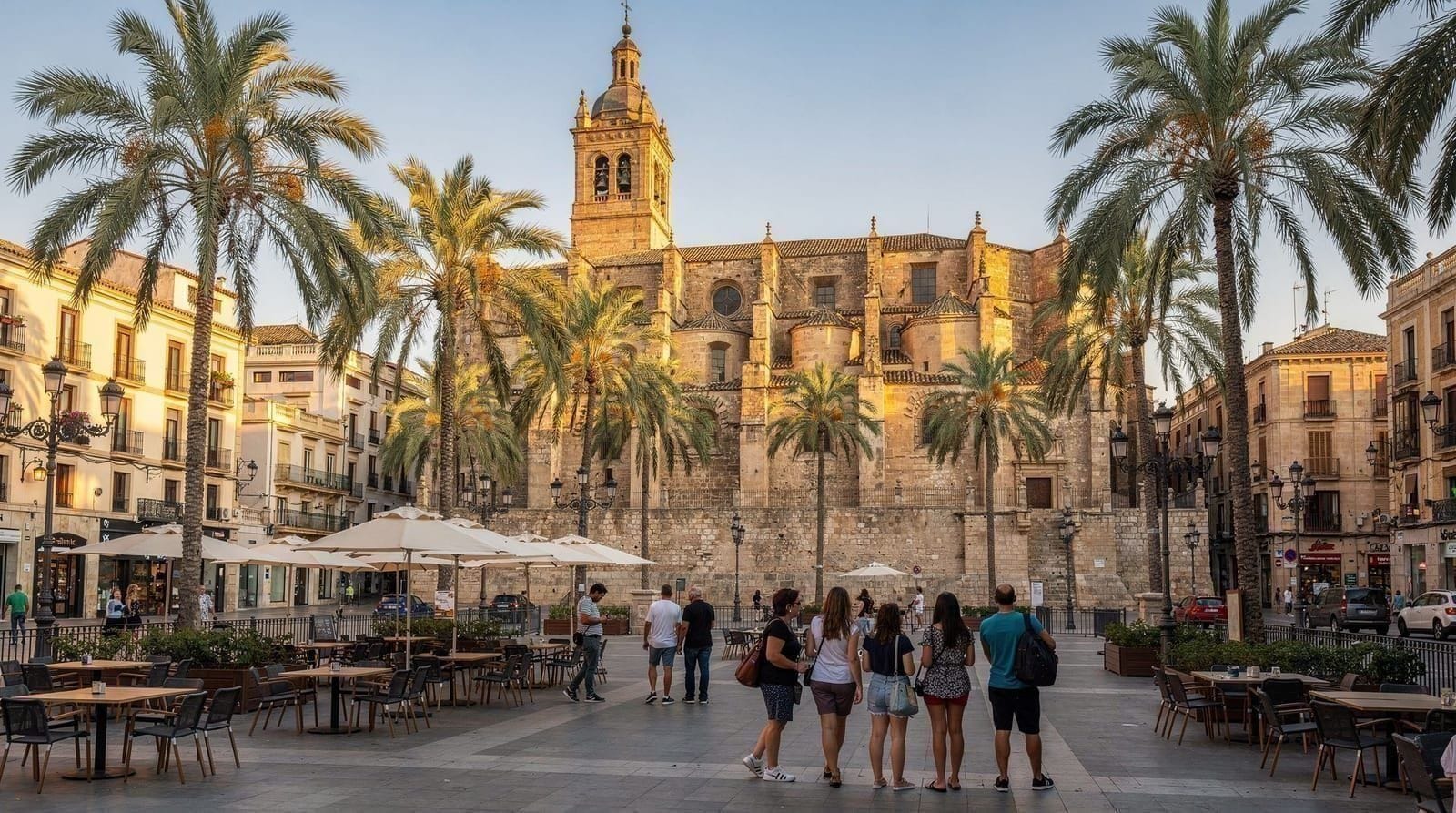
Old town (El Carmen and Cathedral area)
The medieval old town is the most challenging area for wheelchair users and those with mobility difficulties. Be realistic:
Challenges:
- Many old-town streets are paved with original cobblestones (adoquines) — uneven, sometimes deeply grouted, and wet-slippery after rain
- The streets within the Barri del Carme can be narrow and have limited turning space for wider wheelchairs
- The Cathedral interior has some steps; Micalet tower access requires narrow spiral stairs (inaccessible for wheelchair users)
- Torres Serranos: the tower interior is not accessible (stairs only), but the base and surrounding plaza are level
- Llotja de la Seda (Silk Exchange): the main hall is ground-floor accessible; upper galleries have stairs
What works well:
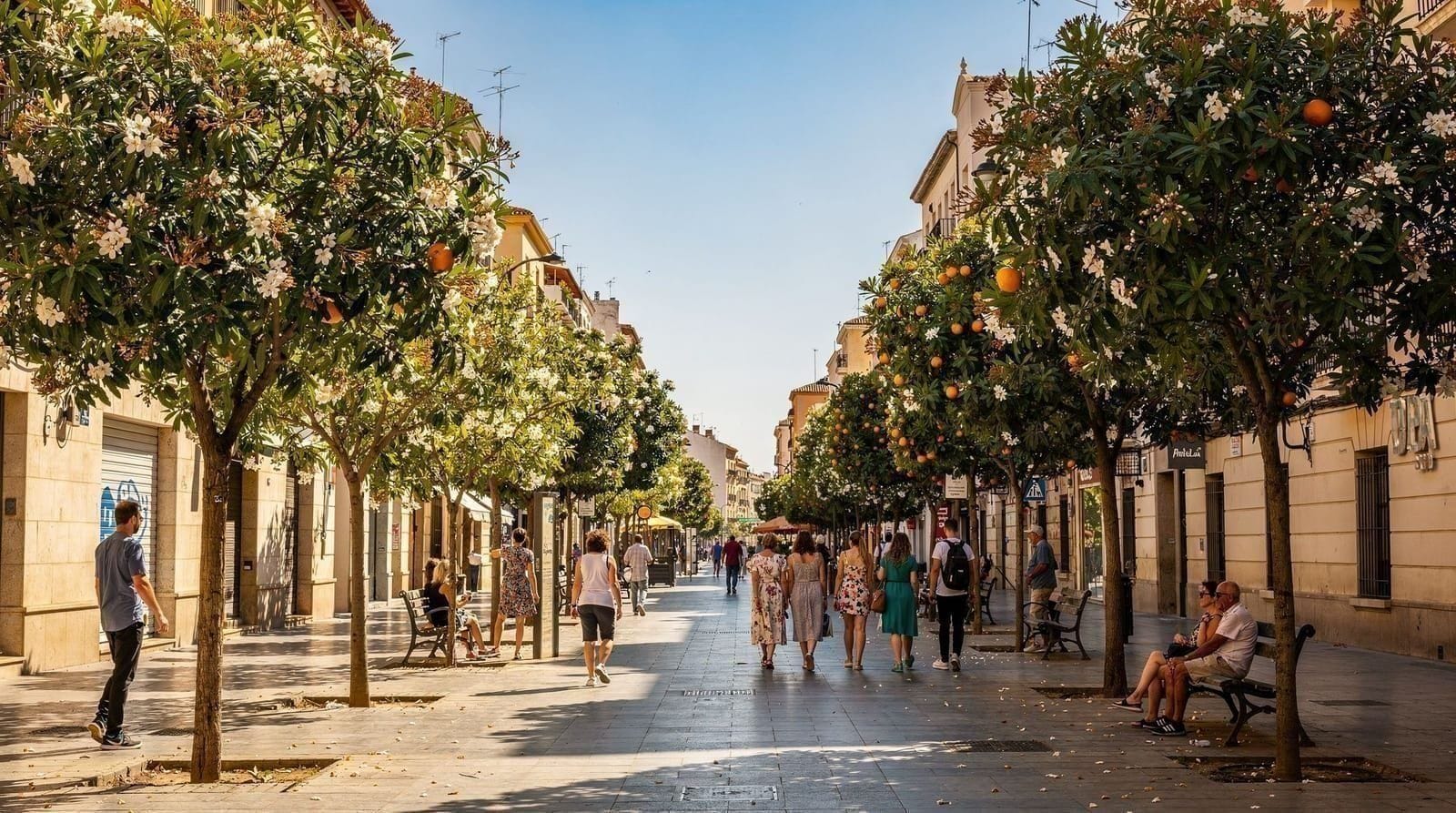
- The major pedestrian streets (Calle de la Paz, Avenida del Marqués del Turia) are smooth, wide, and level
- Plaza del Ayuntamiento (City Hall square) is flat and open
- Mercado Central: the main hall entrance is level; there is accessible entry via the main portal on Plaza del Mercado
- Plaza de la Reina: level, open, café terraces generally accessible for pavement access
Practical tip: Electric wheelchairs and scooters handle cobblestones better than manual chairs in many cases. The smoothest route through the old town uses the main avenues rather than the internal lanes. Navigation apps (Google Maps accessibility mode) can route around steep or cobbled sections. If you’d rather have someone else plan the route, a private guide can build the day around step-free streets — see the note on tours below. Read the El Carmen neighbourhood guide for a fuller picture of the area’s layout before you commit to a walking route.
Renting mobility equipment locally: Several medical supply shops in Valencia rent wheelchairs, scooters, and walking aids by the day or week, generally with delivery to central hotels available on request. Booking a rental in advance (rather than on arrival) avoids a wasted first day, especially in peak season when stock runs low.
Sights in this area each have their own access notes: the Cathedral and Micalet guide, the Silk Exchange guide, the Serranos and Quart towers guide and the Central Market guide are worth a glance before you decide which of them fit your route.
City of Arts and Sciences
The Ciudad de las Artes y las Ciencias is one of Valencia’s most accessible areas. The complex was purpose-built on the former Turia riverbed with modern accessibility standards:
Oceanogràfic: Fully accessible. Ramps throughout, wide corridors, accessible toilets on each level. The shark tunnel is reached by a flat ramp. Inform staff at entry if you need assistance with specific exhibits.
Hemisfèric: The IMAX cinema is accessible — lifts to all viewing levels, dedicated wheelchair seating positions. The film itself is recommended for visitors with mobility limitations as it’s a seated, non-physical experience.
Príncipe Felipe Science Museum: Largely accessible with lifts and ramps. Some interactive exhibits are at standing height; staff can adjust. The building’s ramp-heavy interior architecture was part of Calatrava’s original design.
Palau de les Arts (opera house): The concert hall is accessible with lifts and adapted seating. Pre-notify the box office when booking tickets for accessibility seating allocation.
The outdoor complex: The esplanade around the buildings is entirely flat and smooth — excellent for wheelchair users and pushchairs. The famous bridge over the moat has a ramped approach. The gardens and water features are accessible from the surrounding paths.
For a fuller picture of the complex beyond access, the City of Arts and Sciences guide and the Oceanogràfic guide cover each building, while the Hemisfèric guide and the Science Museum guide help you decide how much to fit into one day. Because the esplanade is flat and the buildings sit close together, it works well to pick one or two and leave the rest for another visit rather than pushing through. Booking ahead for entry to the aquarium also means you can arrive at your own pace and spend less time waiting in a queue.
Private walking tour of Valencia’s old town (route tailored to your pace)A private guide can plan the walking route around step-free streets and set a realistic pace, which is usually a better fit for mobility needs than a fixed-departure group tour.
Turia Gardens
The former Turia riverbed, now a 9 km linear park, has been adapted for accessibility at most sections:
- The main path through the park is smooth tarmac or compressed gravel — manageable for most mobility aids
- Access ramps from street level to the riverbed park exist at major crossing points (Pont de l’Exposició, Pont de Fusta, Pont de la Trinitat)
- Some sections near the old town have steeper ramp access — the newer sections near the City of Arts are fully graded
- The Gulliver play park has partial accessibility — the main viewing platform is reachable but the slides themselves are inaccessible for mobility users
- Cycling paths run alongside the walking path — be aware of fast cyclists
The Turia Gardens is genuinely one of Valencia’s best accessible green spaces.
Malvarrosa beach and other adapted beaches
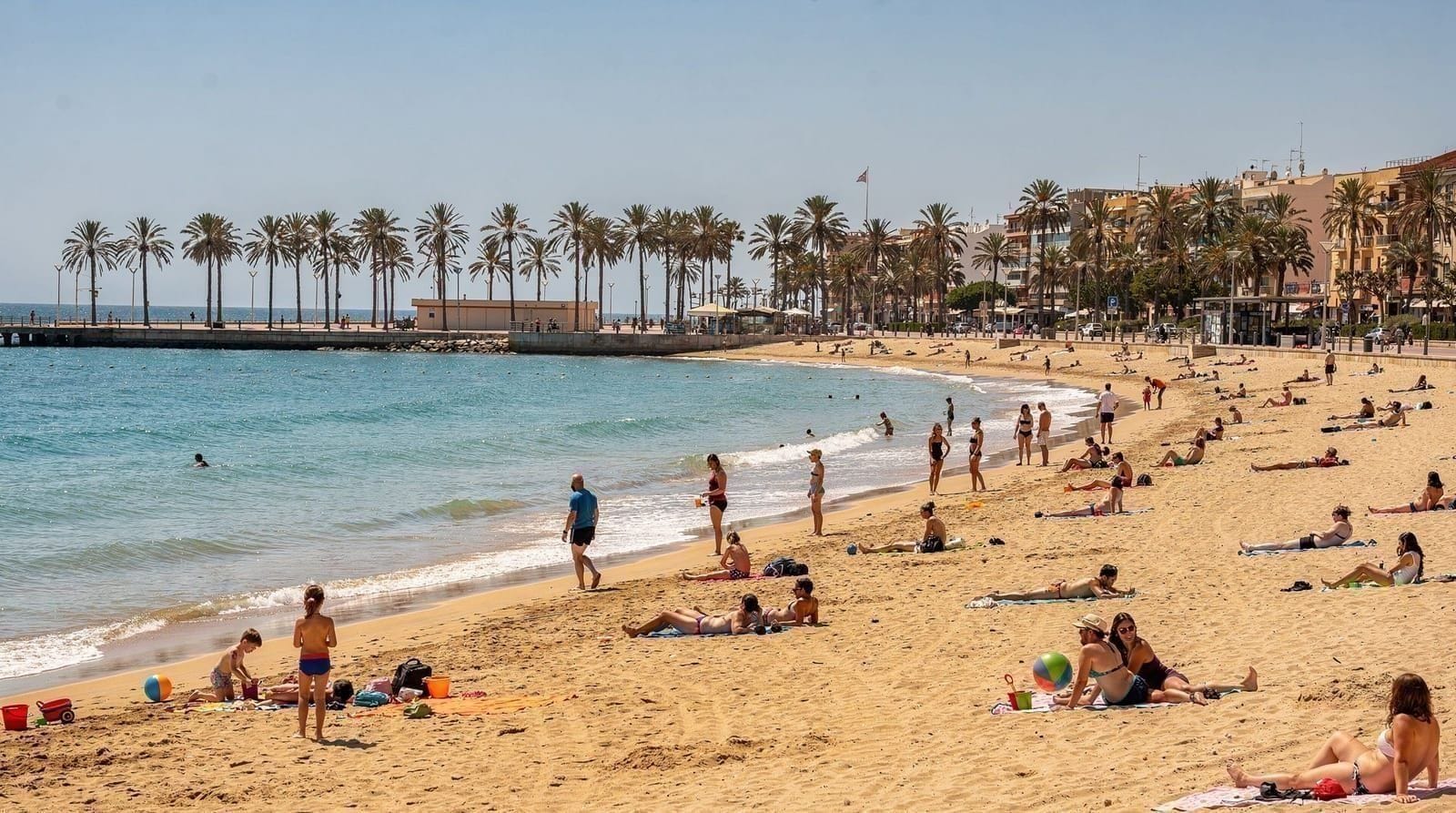
Malvarrosa (Platja de la Malvarrosa): Valencia’s main urban beach has adapted access infrastructure:
- A dedicated paseo accesible (accessible beach path) runs parallel to the main promenade, with a firm surface extending onto the beach
- Adapted sun loungers (ancladas, anchored on firm ground) are available through the Red Cross beach service (Cruz Roja, free of charge, June-September) — reservation is recommended
- Silla anfibia (amphibious wheelchair): a floating wheelchair that allows users to enter the sea, available from the Red Cross service at Malvarrosa. Volunteer assistance is provided. Book in advance through the Red Cross Valencia (croizvalencia.org)
- Accessible toilets and changing facilities are available at the main beach services building
El Saler beach (15 km south, within the Albufera Natural Park): also has adapted access, with a firmer sand surface and accessible facilities. Less crowded than Malvarrosa. Reached by bus 24/25 from Valencia (accessible low-floor bus) or taxi.
Patacona beach (just north of Malvarrosa): similar accessibility to Malvarrosa, slightly quieter. The promenade access is level. Read the Malvarrosa beach guide for the full layout of the promenade, and the Patacona beach guide for how it compares.
If you are arriving by air, the airport to city guide explains the options for reaching the centre, and the El Saler beach guide is useful if you want to compare it with Malvarrosa before choosing a beach day.
Sensory and cognitive accessibility
Beyond mobility, a handful of Valencia venues plan for sensory needs. The City of Arts and Sciences has quieter viewing slots at the Oceanogràfic on request, and staff can advise on the least crowded times for visitors sensitive to noise or crowds. The Palau de la Música and some museums offer induction loops for hearing aid users — confirm directly before visiting. For blind and low-vision visitors, ONCE’s Valencia branch (listed below) can arrange orientation assistance and tactile-map information for the main sights. If a packed itinerary would be overwhelming, building in unstructured time in the Turia Gardens — flat, quiet in stretches, and easy to leave whenever needed — is a good pressure valve between busier attractions.
Traveling with children and mobility needs together
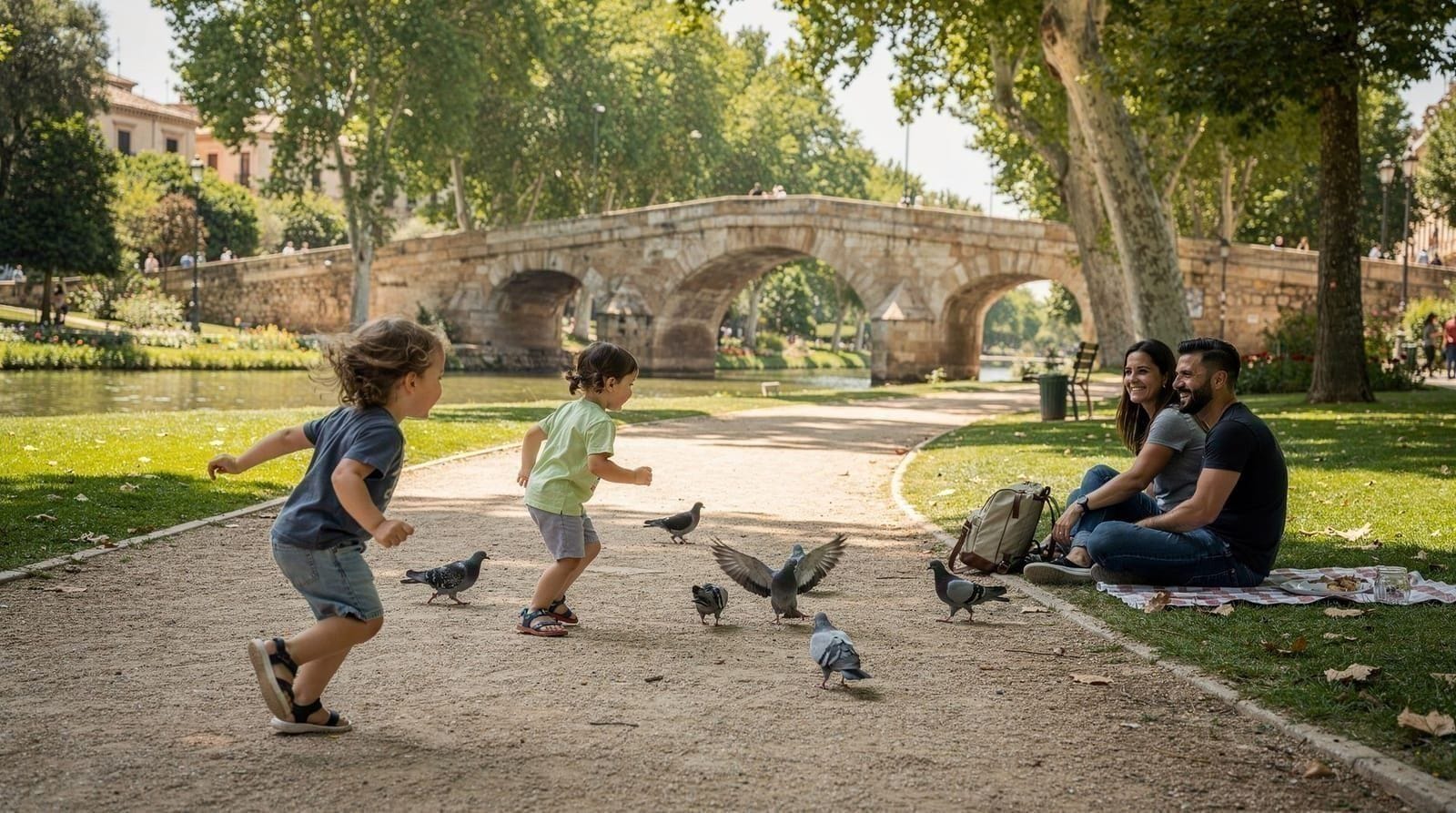
Families combining a wheelchair user or a stroller with young children will find much of the same infrastructure serves both: low-floor trams and buses, ramped access at the City of Arts and Sciences, and the flat Turia Gardens paths. The Valencia with kids guide covers family logistics more broadly, and pairs well with this guide when planning a trip for a mixed group with different needs.
Restaurants and eating accessibility
Most central Valencia restaurants have pavement or ground-floor seating. However:
- Traditional taberna-style restaurants in El Carmen often have a single step (escalón) at the entrance — call ahead if this is a barrier
- Terrace seating on pedestrian streets in Russafa is generally level
- Mercado Central food stalls: standing-height bars are the norm; seating is limited in the market itself. The market café areas near the main entrance have some accessible seating
- The tourist-belt restaurants near Plaza de la Reina generally have level access to their main dining areas
Spanish law (Real Decreto 505/2007) requires new establishments and renovated venues to meet accessibility standards. Compliance among older establishments varies.
Hotels and accommodation accessibility
Valencia’s accommodation market includes accessible options at most price points:
Large 4-5 star hotels (Hotel SH Valencia Palace, Las Arenas Balneario, Meliá Valencia): all have adapted rooms, roll-in showers, and accessible facilities. Contact the property directly to confirm specific features and request ground-floor or lift-accessible room allocation.
Boutique hotels (Caro Hotel, Palacio Vallier, ad hoc Monumental): older buildings with accessibility retrofits. Quality varies. The Caro Hotel is in a converted medieval palace — some areas are inaccessible, but they have adapted rooms. Always call to confirm specific accessibility features; hotel websites frequently omit details.
Hostels: Most hostels are in converted old-town buildings with stairs and limited lift access. The few genuinely accessible hostel options in Valencia have limited availability — book early and confirm directly.
Airbnb/short-term rentals: The Airbnb platform has accessibility filters (step-free access, wide doorways, roll-in shower, etc.). Valencia’s stock of genuinely adapted apartments is growing but still limited; filter and verify before booking.
Useful contacts and resources
- Valencia City Accessible Tourism Office: Oficina de Turisme, Plaça de la Reina 19 — staff can advise on accessible routes and services
- Red Cross Malvarrosa Beach Service: amphibious wheelchair and adapted lounger booking — croizvalencia.org
- Metro Valencia accessibility information: metrovalencia.es/accesibilidad
- Municipal adapted taxi: 963 703 333 (Radio-Taxi Valencia)
- ONCE (Spanish national organisation for the blind): once.es — Valencia branch offers orientation assistance for visually impaired visitors
Frequently asked questions about accessible Valencia
Is the Valencia Metro accessible for wheelchairs?
Most central stations have lifts, but coverage isn’t 100%. Key tourist-route stations (Xàtiva, Colón, Alameda, Marítim-Serreria for City of Arts, Joaquín Sorolla for AVE) are accessible. Check the Metro’s own accessibility map before planning a journey that relies on a specific station’s lift.
Are Valencia’s beaches wheelchair accessible?
Malvarrosa beach has the best adapted infrastructure — firm beach access path, adapted loungers, and an amphibious wheelchair available via the Red Cross during summer months (June-September). El Saler is also adapted. Book the amphibious chair (silla anfibia) in advance for July-August.
Is the old town of Valencia accessible?
Partially. The main pedestrian avenues and major squares are level and smooth. The internal streets of El Carmen have cobblestones that are difficult for wheelchairs and challenging for those with limited mobility. The Cathedral interior has accessible entry but the tower is stairs-only. Planning a route that uses main avenues rather than internal lanes significantly reduces barriers.
Can wheelchair users visit the City of Arts and Sciences?
Yes — the City of Arts and Sciences complex is among Valencia’s most accessible tourist zones. The Oceanogràfic, Hemisfèric, and Science Museum all have ramps, lifts, and wide corridors. The outdoor esplanade connecting the buildings is entirely flat. This is one of the most wheelchair-friendly major attractions in Spain.
Are there accessible restaurants in Valencia?
Most central restaurants have level pavement access or at most one step. Terrace seating in Russafa and on pedestrianised streets in the old town is generally accessible. Call ahead to any specific restaurant if a step-free entrance is essential. The Mercado Central has limited accessible seating inside; the surrounding cafés and restaurants generally have better access.
Is it easy to rent a wheelchair or mobility scooter in Valencia?
Yes. Several medical supply and orthopaedic shops in the city rent manual wheelchairs, mobility scooters, and walking aids by the day or week, and some deliver to central hotels. Reserve ahead rather than arriving and searching, particularly in July–August when demand is higher and stock is limited.