Albufera Natural Park: the complete visitor guide
Valencia: Albufera boat ride with food and paella included
What is the Albufera Natural Park and why should you visit?
Albufera is a freshwater lagoon 15 km south of Valencia, surrounded by rice fields and reed beds. It is one of Spain's most important bird sanctuaries (over 250 species recorded), the birthplace of Valencian paella, and the site of traditional boat rides at sunset. A day trip from Valencia takes 1.5–2 hours each way by bus or 45–60 minutes by car.
The Albufera is the body of water that made Valencia. The rice fields surrounding this freshwater lagoon are where Valencian paella was invented — not as a restaurant creation but as a field worker’s lunch cooked in a flat pan over burning orange wood. The lagoon itself is one of Spain’s most important wetland ecosystems and the largest lake on the Iberian Peninsula, covering 2,800 hectares and surrounded by 21,000 hectares of protected rice fields and wetland.
Fifteen kilometres south of Valencia, it is a day trip that most visitors underestimate. They expect scenery; they get an entire landscape that explains the city.
| Where | 15 km south of Valencia, around El Palmar village |
| Entry fee | None — boat rides charged separately |
| Getting there | Bus 24/25 (~40–50 min, €2) or car (20–25 min) |
| Boat ride | €5–8/person, 30–45 min, from El Palmar pontoon |
| Best time | Sunset for light; autumn for birdwatching |
What the Albufera is
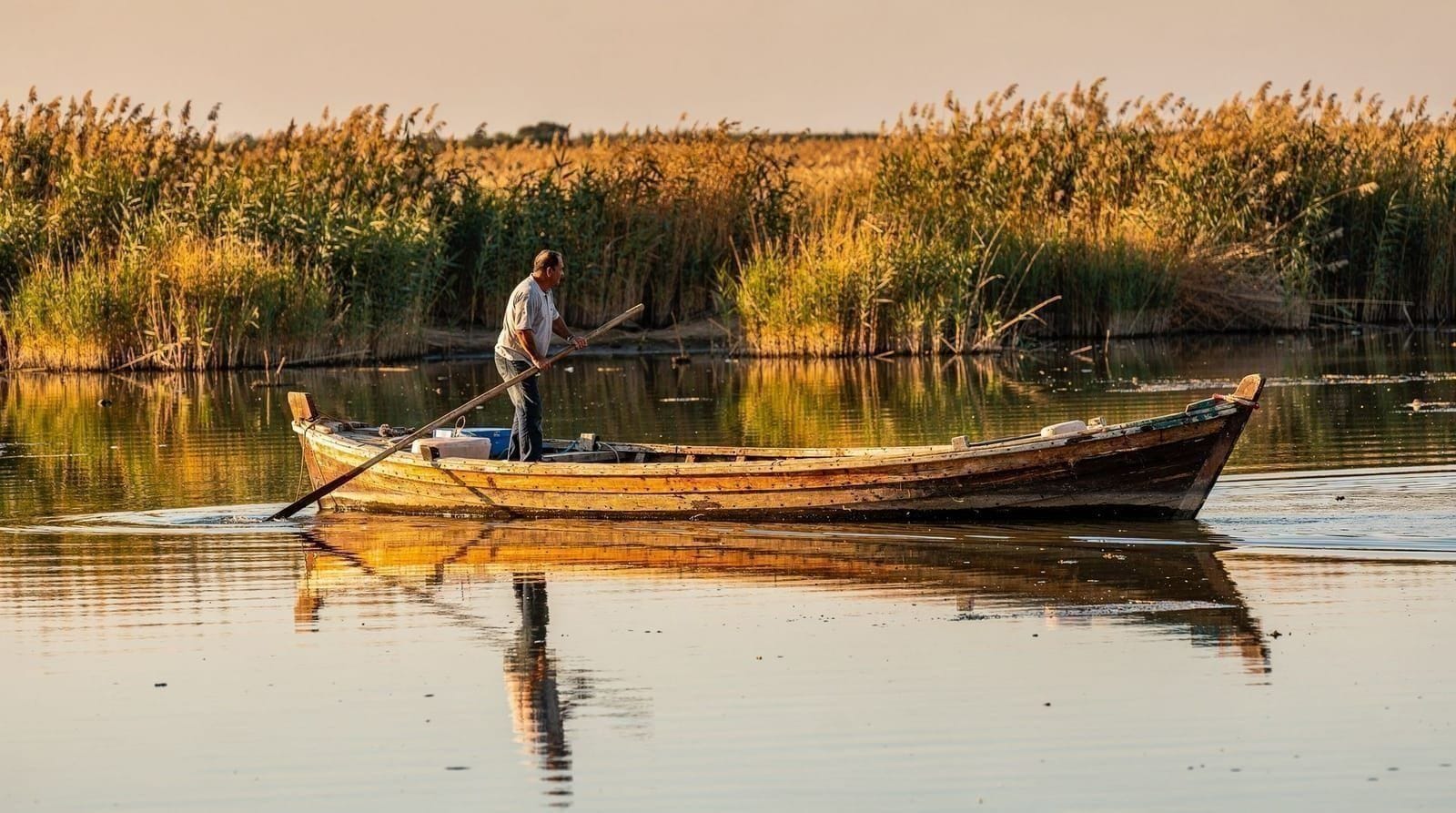
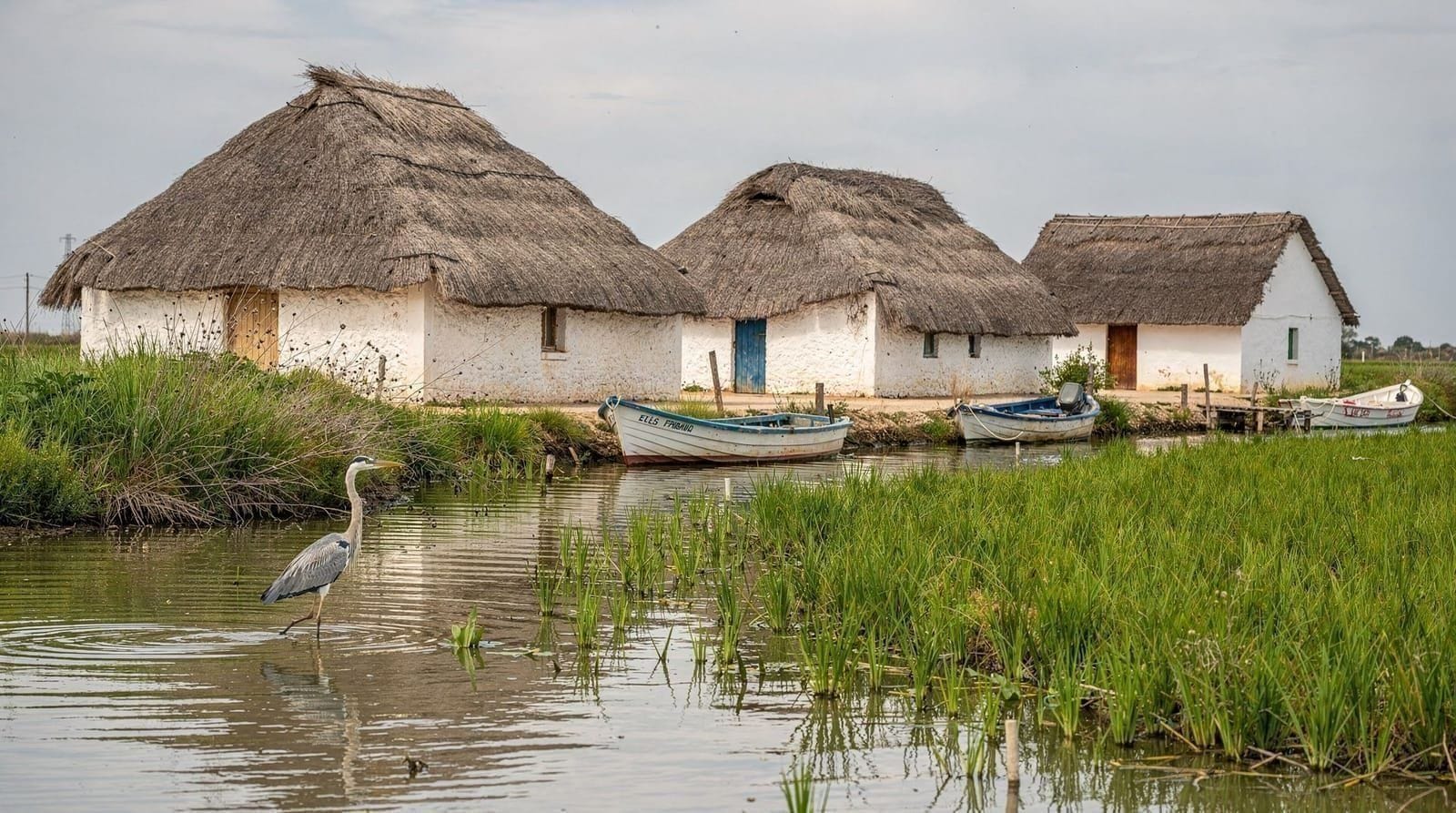
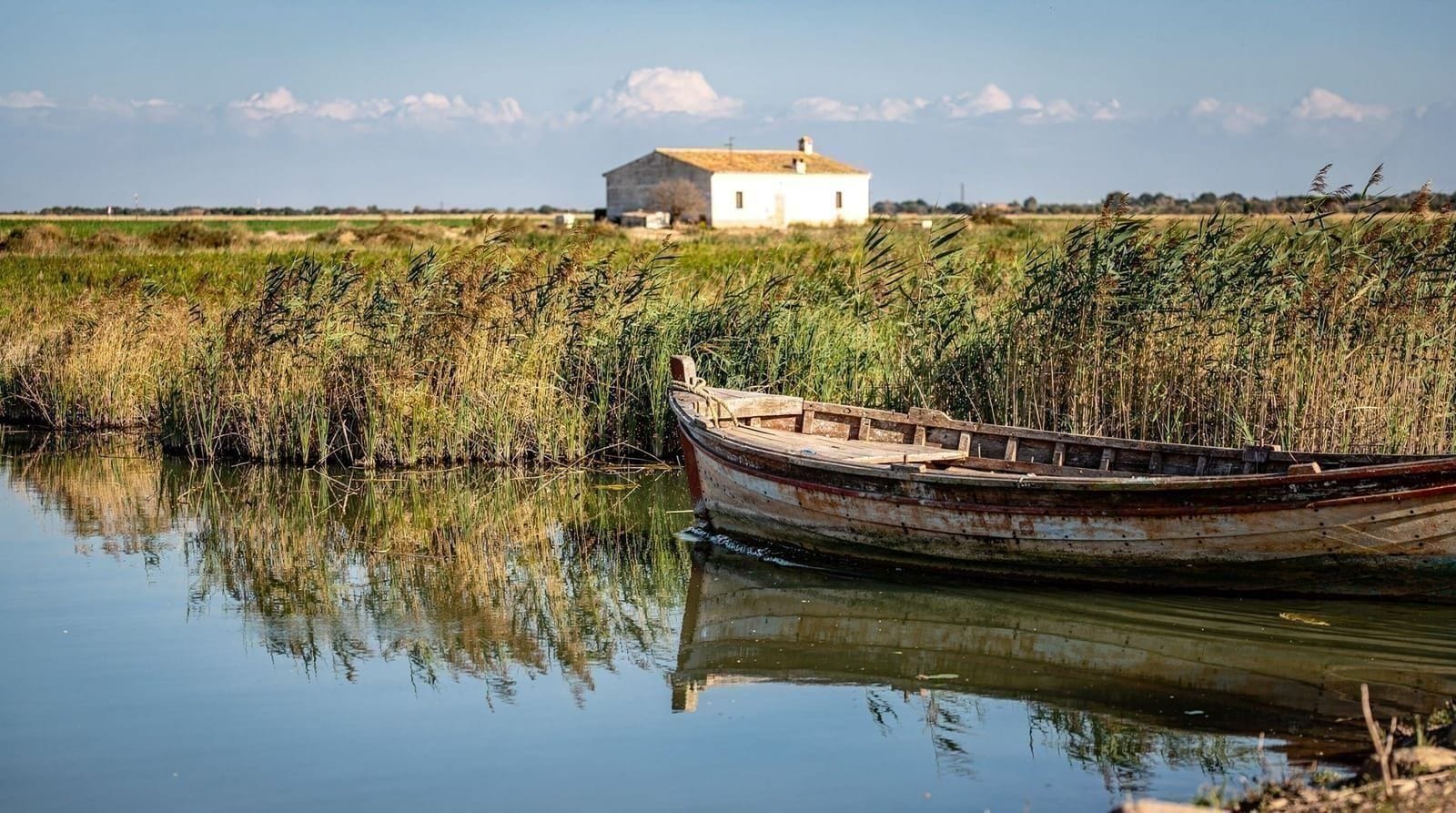
The lagoon sits between the city’s coast and the sea. The Devesa pine forest to the east separates it from the Mediterranean. Rice fields stretch in all directions from the village of El Palmar, which sits on a small island in the southern part of the lagoon. Traditional wooden flatboats, the barcas de vela llatina (lateen-sail boats), once worked the lagoon commercially; today they carry tourists at sunset.
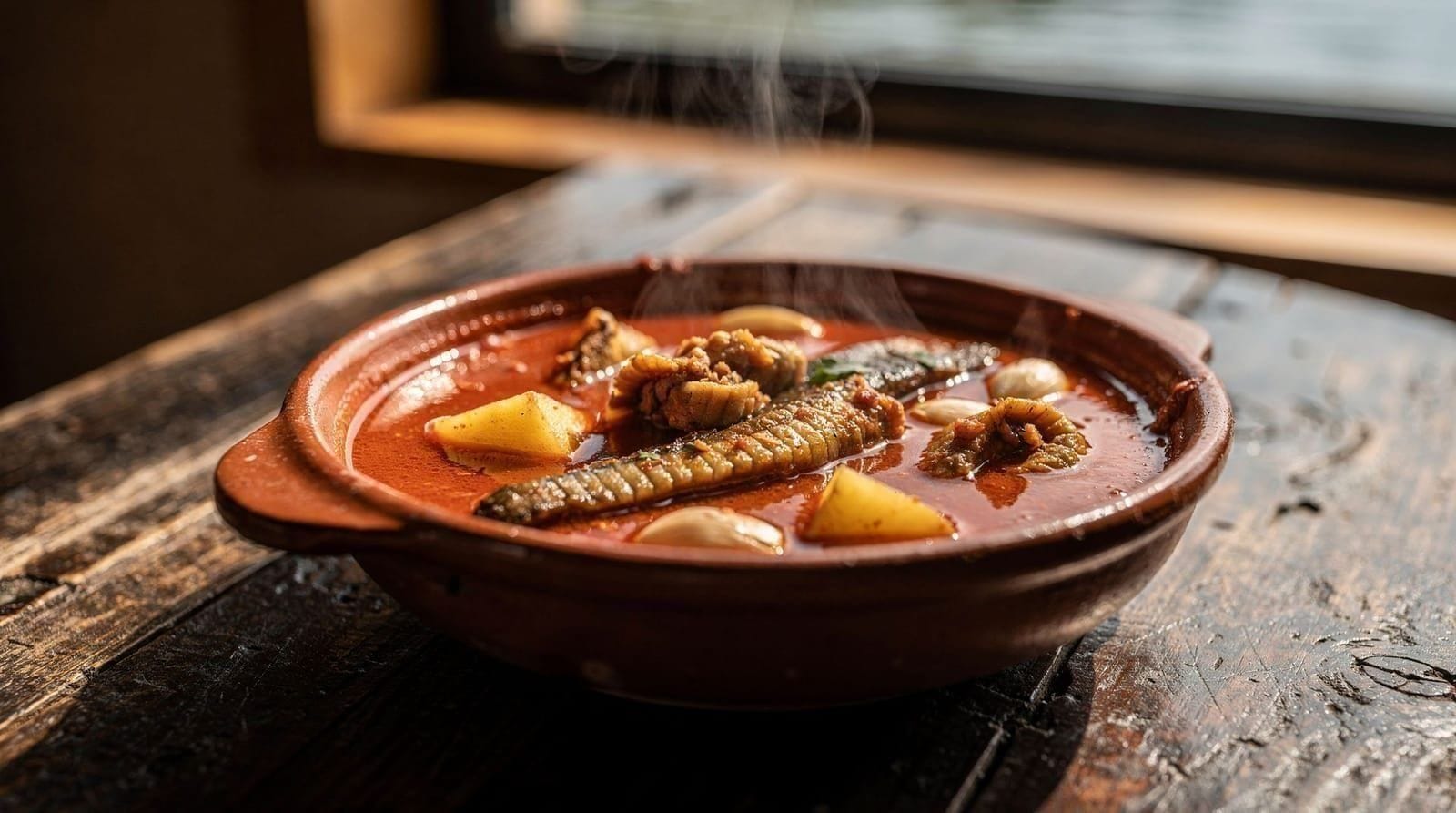
The lagoon connects to the sea through three channels (golas), which historically regulated water levels for rice agriculture. The water is brackish — not fully fresh, not fully salt — which creates the precise ecological conditions for the endemic species that live here: the European eel (the ingredient in all-i-pebre), the fartet fish (Aphanius iberus), and the characteristic reed beds (carrizales) that ring much of the shoreline.
Getting there
Bus: EMT line 24 and 25 from Plaça de la Porta de la Mar in central Valencia run to El Palmar. Journey time approximately 40–50 minutes. Frequency: every 30–60 minutes depending on the time of day. Fare: approximately €2 each way. The bus is the most affordable option but requires checking current schedules (services are reduced on Sundays and in winter).
Car: The A-38 motorway connects Valencia to El Palmar in 20–25 minutes. Parking in El Palmar village is limited in summer — arrive before 11:00 or after 18:00. Parking is free but the village is small.
Organised tours: Several tour operators offer day trips from Valencia including transport, a guided boat ride, and in some cases a paella lunch. These cost more than the bus (typically €35–70 per person depending on what is included) but remove all logistics and add guide narration.
 Albufera boat ride with food and paella includedCheck availability
By bike: The cycle route from Valencia to El Palmar runs approximately 20 km along the coastal path. On a standard bike this is a 90-minute ride; on an e-bike, about 50–60 minutes. See the Albufera cycling section for the route detail.
 Albufera Natural Park bike and boat tourCheck availability
The boat ride
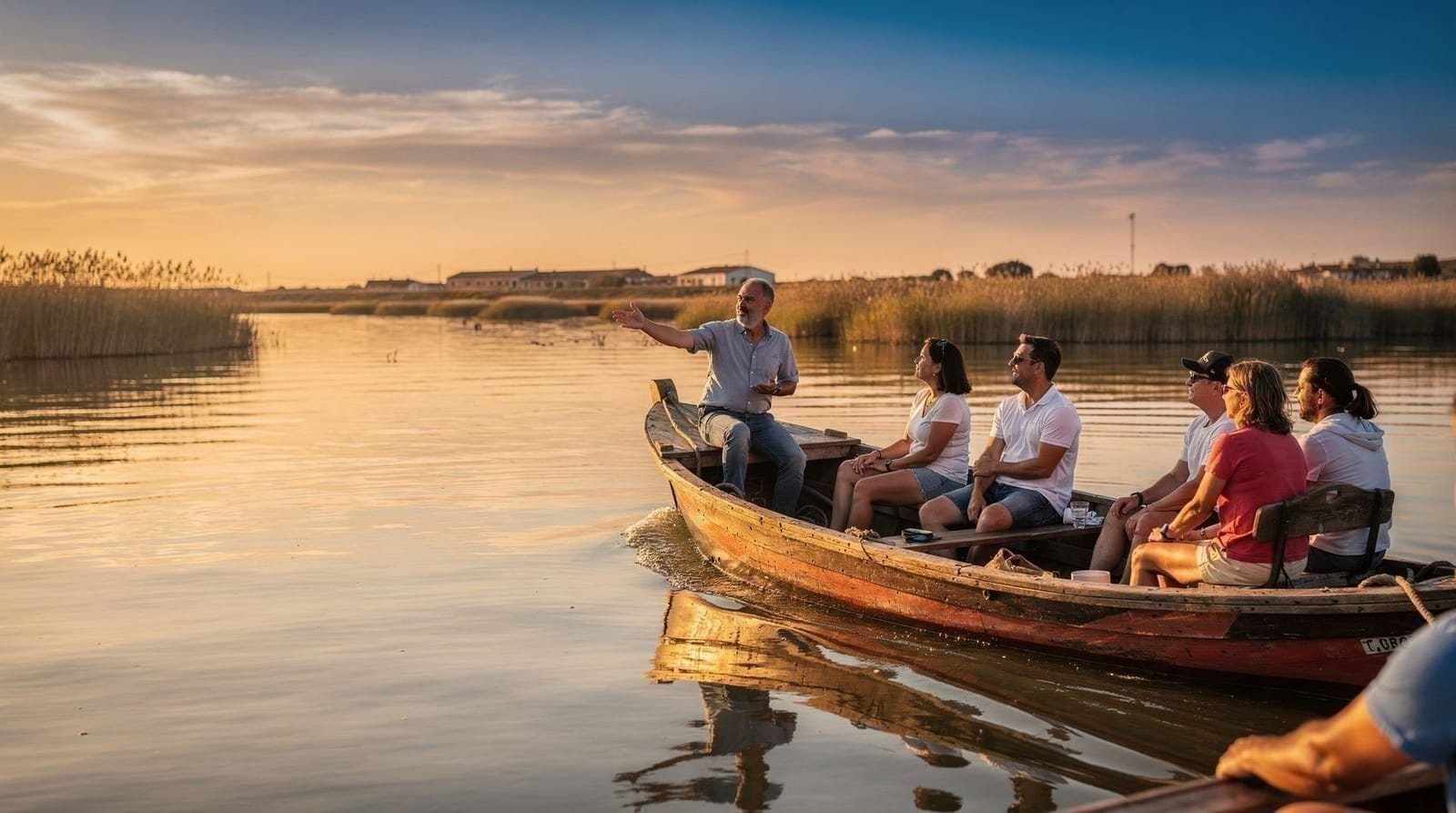
The traditional boat experience at Albufera uses wooden flatboats similar to the working boats that once harvested reeds and eels from the lagoon. A typical tour lasts 30–45 minutes and departs from El Palmar or from jetties at the northern end of the lagoon.
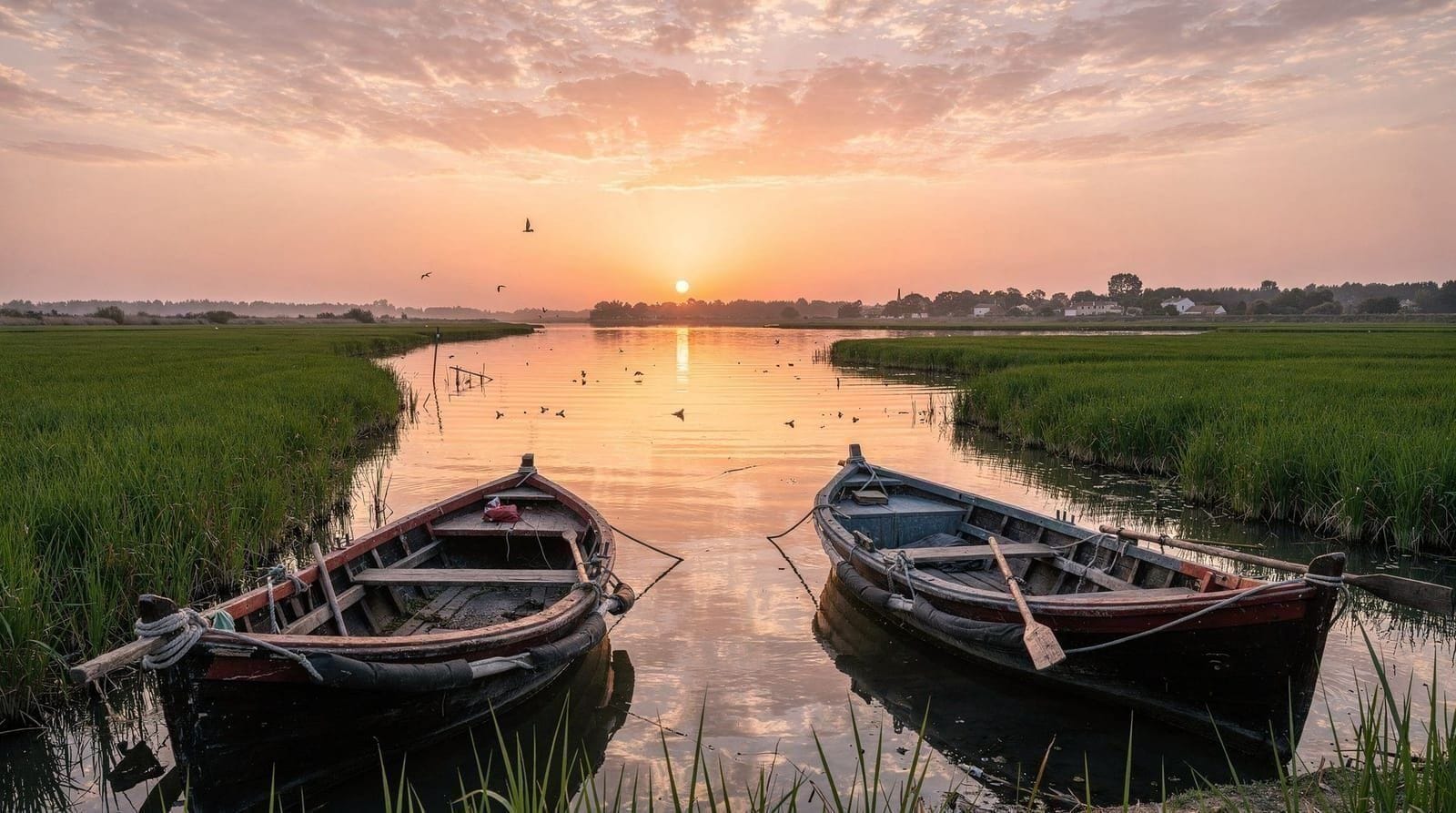
What you see: The reed beds, the open lagoon, other boats, herons and egrets in the vegetation, and — at sunset — one of the most celebrated views in the Valencia region. The sky and water turn orange simultaneously, and the rice fields in autumn (when they are flooded and reflecting the light) create a visual effect that genuinely warrants its reputation.
Private versus group boats: Group boats carry 8–12 passengers with a local boatman who provides a commentary in Spanish (sometimes translated). Private hire of a full boat costs €40–80 and allows you to set your own time and route. For families or couples wanting the sunset experience without a large group, private hire is worth the premium.
Eco-electric boats: Several operators now offer electric boats for the lagoon — quieter and better for birdwatching. They move more slowly, which means longer exposure to each section of the shoreline.
Albufera Natural Park eco boat tour at sunsetCheck availability
Birdwatching at Albufera
The Albufera is one of the most significant wetland bird habitats in the western Mediterranean. Serious birders dedicate entire trips to it. Casual visitors will see egrets, herons, and cormorants from the boat or village waterfront without effort.
What to expect by season:
Spring (March–May): Breeding season for resident wetland species. Purple herons, little bitterns, marsh harriers, and the rare whiskered tern are all present. Dawn hours are best.
Summer (June–August): Heat reduces bird activity in the middle of the day. Early morning visits to the reed bed edges can be productive. The lagoon’s water level drops and birds concentrate on remaining deeper areas.
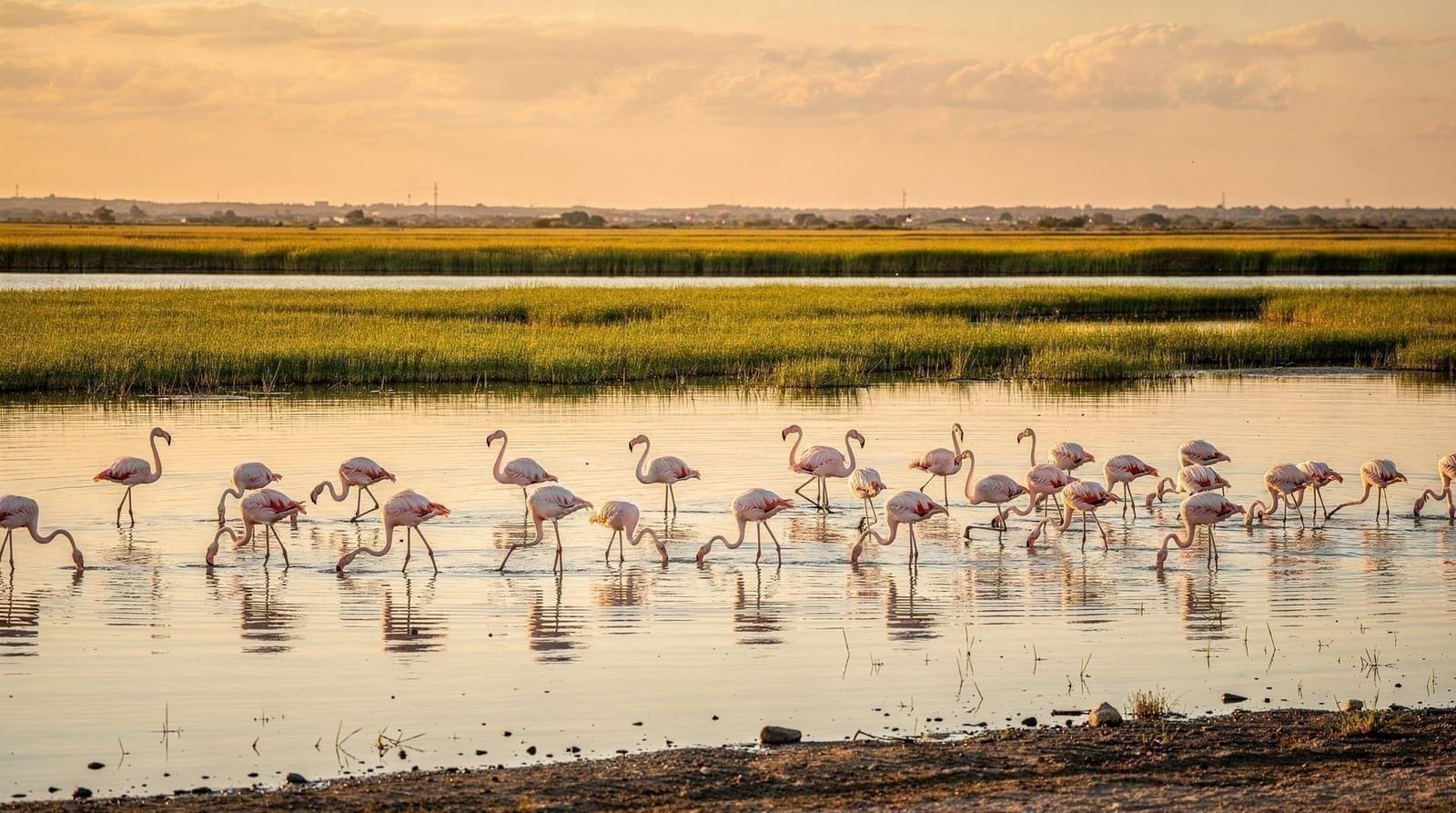
Autumn (October–November): Peak season. Thousands of waders, ducks, and wading birds move through on migration. Flamingos from the Camargue are recorded most years. The rice harvest also floods many fields temporarily, concentrating birds.
Winter (December–February): Large numbers of wintering ducks, coots, and waders. The lagoon is quieter for tourism but excellent for birds. Occasional visits by osprey, hen harrier, and peregrine.
Best viewing points: The observation towers on the western edge of the lagoon (accessible from the road between El Palmar and the park’s western boundary) are the best land-based positions. El Palmar village jetty is good for close-up views of herons and cormorants that have become habituated to people.
| Season | Birdlife | Water conditions | Crowds |
|---|---|---|---|
| Spring (Mar–May) | Breeding herons, bitterns, marsh harriers | Levels rising, paddies filling | Moderate |
| Summer (Jun–Aug) | Reduced activity, concentrated near deep water | Lowest levels of the year | High, especially August |
| Autumn (Oct–Nov) | Peak migration — thousands of waders, ducks, flamingos possible | Paddies re-flooding after harvest | Moderate, best light |
| Winter (Dec–Feb) | Large wintering duck and coot numbers | High water, quiet paddies | Low |
A quieter alternative to El Palmar
If El Palmar’s concentration of restaurants and coach groups feels like more crowd than you want, the western and northern edges of the park — reached by the road toward the observation towers — see a fraction of the visitors. You lose the restaurant options but gain a genuinely quiet birdwatching experience, particularly at dawn. Pairing a quiet morning here with a shorter, later visit to El Palmar for lunch avoids the worst of the midday coach traffic.
The rice fields and the paella connection
The Albufera rice fields are the origin of paella. The dish developed in the 18th and 19th centuries as a field workers’ lunch: rice grown nearby, water from the lagoon’s irrigation channels, the small animals available at hand (rabbit, chicken, land snails), and wood from the surrounding orange groves for fuel. The flat pan (paella or paellera) gave the dish its name.
The rice grown around Albufera is a short-grain variety called Arroz de Valencia, with DOP (designation of origin) protection. If you eat paella in one of the El Palmar restaurants using locally grown rice, you are eating the dish in its geographical source.
The rice fields themselves are spectacular in their own right. Flooded in autumn after the harvest, they mirror the sky and the reed beds. In summer, the green rice plants create a flat, geometric landscape that extends to the horizon. The seasonal flooding and drainage cycles are the same management practices that have shaped the Albufera ecosystem for centuries.
Where to eat near Albufera
El Palmar: The village has approximately 20 restaurants ranging from genuine local cooking to tourist traps catering to day-trip coaches. The most reliable are those that have operated for decades and whose clientele is predominantly local.
La Matandeta (Carretera Albufera, El Palmar): One of the original paella restaurants in the region, family-run for over 50 years. Not the cheapest but worth it. Book ahead.
Nou Raco (El Palmar): Solid traditional cooking with good all-i-pebre. Waterfront location.
What to order: All-i-pebre (eel and potato stew) if you eat eel — this is the original Albufera dish; see the all i pebre guide for what to expect. Paella Valenciana (the authentic version with rabbit, chicken, and flat beans, no seafood) — the authentic paella guide covers how to judge a properly cooked version. Arrós a banda (rice cooked in fish broth, served separately from the fish) is also excellent here.
Price range: €15–22 per person for a rice dish at lunch, plus drinks and bread. Dinner is less the local custom — paella in Valencia is a midday dish, and the best restaurants reflect this by focusing their kitchen effort on the lunch service.
Tourist trap warning: Some restaurants near the main bus stop in El Palmar are specifically positioned for coach-tour groups and serve mediocre food at tourist prices. The better restaurants are set back from the main road or located on the waterfront side of the village.
 Albufera guided electric boat ride at sunsetCheck availability
Combining Albufera with El Saler beach
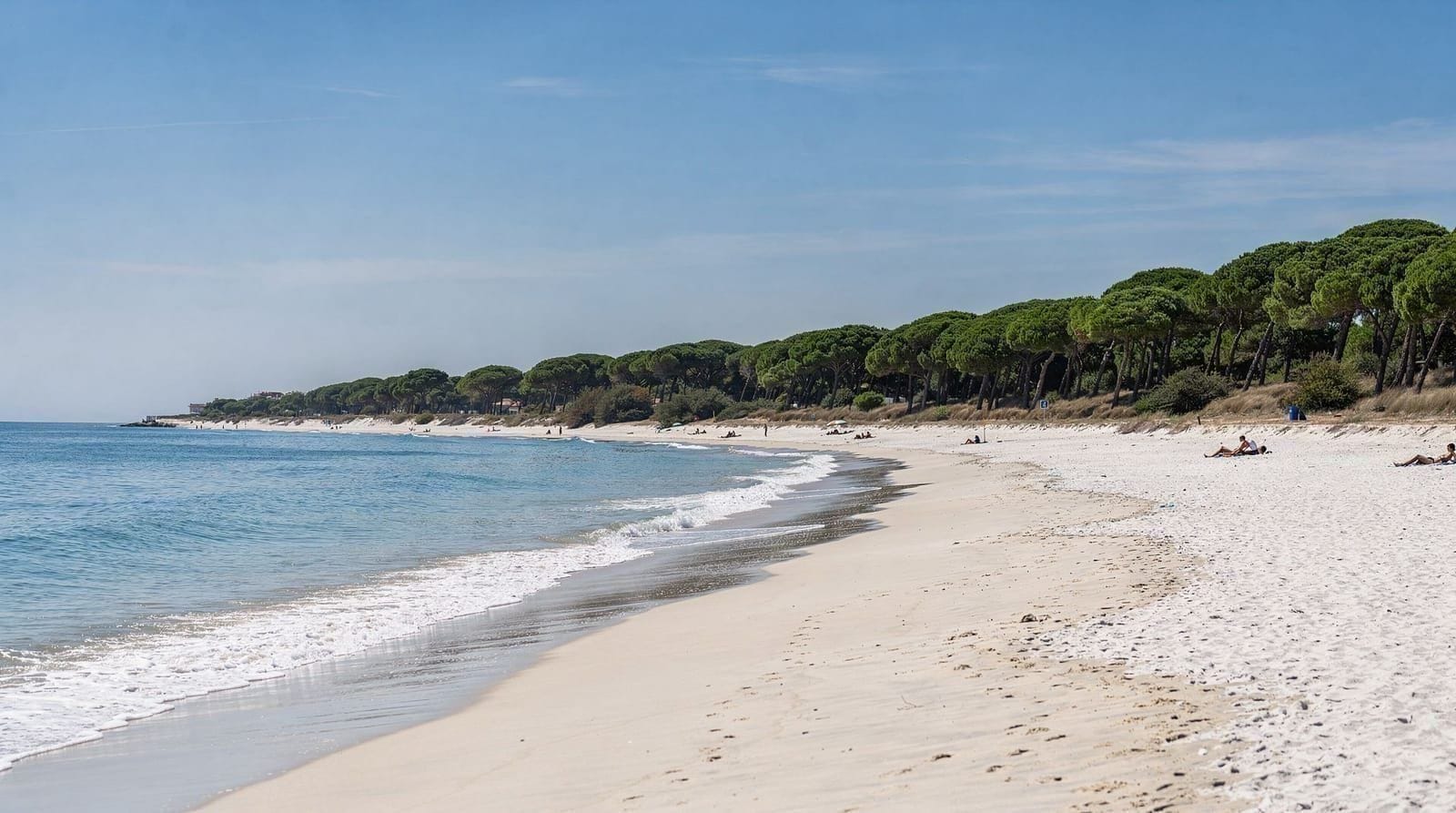
El Saler beach is directly east of the Albufera park, separated from the lagoon by the Devesa pine forest. A natural combination is a morning at the lagoon (bird walk, village, lunch) followed by an afternoon at El Saler beach (swimming, shade in the pines). The distance between El Palmar and El Saler beach is about 4 km by road.
This combination works particularly well in spring and autumn when temperatures are ideal for both a nature walk and a beach swim in a single day.
Getting between the two on foot means crossing the Devesa pine forest, which takes about 45 minutes to an hour at an unhurried pace and is pleasant shaded walking rather than a chore. Drivers can cover the same distance in under 10 minutes via the road that skirts the forest’s inland edge, which is the more practical option if you’re also carrying beach gear and a birdwatching scope on the same day.
Practical information
Entry: The Albufera Natural Park has no entrance fee. The boat rides are charged separately by individual operators.
Opening hours: The park has no official opening hours — the rice field roads and observation points are accessible year-round. El Palmar restaurants are open daily for lunch (13:00–16:00); dinner service is variable and less common. Check ahead in winter.
Photography: The lagoon at sunset is one of the most photographed spots in the Valencia region. For serious photography, arrive 30–45 minutes before sunset and position yourself on the lagoon’s western side for the best light.
What to wear: Comfortable walking shoes for the village and observation paths. Mosquito repellent is essential from May to October — the reed bed edge can be intense at dawn and dusk. A light jacket for boat rides even in summer (the breeze on the lagoon is cool).
For more detail on the destination and accommodation options, see the Albufera destination guide and the Albufera day trip guide.
Frequently asked questions about Albufera Natural Park
How do you get to Albufera from Valencia?
Bus 24 or 25 from Plaça de la Porta de la Mar runs to El Palmar village (about 45 minutes, €2 single). By car, the A-38 motorway reaches the park in 20–25 minutes. Organised tours from Valencia city include transport and are the easiest option if you do not want to manage logistics independently.What is the best time to visit the Albufera?
Sunset is the classic time — the light on the lagoon and rice fields at dusk is justifiably famous. The best birdwatching seasons are autumn migration (October–November) and spring (March–April). Avoid August afternoons: hot, crowded, and the water levels are at their lowest.How much does a boat ride on the Albufera cost?
Boat rides from El Palmar typically cost €5–8 per person for a 30–45 minute traditional wooden punt (barca de vela llatina) trip. Tour operators from Valencia charge €15–25 per person for guided tours including boat ride and sometimes paella.Where is the best paella near Albufera?
El Palmar village, on the lagoon's southern edge, has the highest concentration of paella restaurants in the region. All-i-Pebre (eel and potato stew) is the local specialty that predates paella here. La Matandeta, Restaurante Nou Raco, and El Palmar itself have long-standing reputations for authentic rice dishes.What birds can you see at the Albufera?
Over 250 species have been recorded. Regular residents include purple heron, little bittern, cattle egret, squacco heron, and great crested grebe. Flamingos visit the lagoon in small numbers from the Camargue in France. October–November bring substantial wader and wildfowl migrations. Dawn is the best birdwatching time.Is Albufera suitable for children?
Yes, though young children get more from the boat ride and the village than from birdwatching. A sunset boat ride, followed by dinner in El Palmar, is manageable and enjoyable for children aged 5+. The rice field landscape is less engaging for young children than the lagoon itself.Can you swim in the Albufera lagoon?
Swimming is prohibited in the Albufera lagoon (it is a protected natural space and the water quality is variable). The El Saler beach, immediately east of the park, is excellent for swimming. Many day trips combine a lagoon visit with an afternoon at El Saler.What is all-i-pebre and should I order it at Albufera?
All-i-pebre is the original dish of the Albufera — braised eel with garlic, olive oil, and paprika. It predates paella as the local specialty and is genuinely delicious if you like eel. It is honest Valencian cooking, not a tourist adaptation. Order it if you see it on menus in El Palmar.
Top experiences
Bookable activities with verified prices and instant confirmation on GetYourGuide.