Las Fallas day-by-day: the complete schedule of events
Valencia: the ultimate Fallas tour — celebrate like a local
Duration: 3 hours
What happens on each day of Las Fallas?
Las Fallas runs 1–19 March. The first two weeks are calmer — fallas sculptures go up, daily mascletàs at 14:00, and street festivities begin. The climax runs 15–19 March with late-night fireworks from 15 to 18 March, the Ofrenda de Flores on 17–18 March, the Nit del Foc grand fireworks on 18 March, and La Cremà (the burning) on the evening of 19 March.
Planning Las Fallas is much easier when you understand how the 19 days are structured. The festival is not a continuous party — it has a clear rhythm: a slow build over the first two weeks, a sharp escalation on 15 March, and a compressed final four days that contain the festival’s great events. Here is a day-by-day breakdown of what actually happens and when.
| Where | Plaza del Ayuntamiento (mascletà), Turia riverbed (fireworks), Plaza de la Virgen (ofrenda) |
| Cost | Free to watch; guided tours and paid balconies extra |
| Time needed | Full 19 days ideally, or a focused 3-day window (17-19 March) |
| Getting there | Metro/EMT to city centre; expect crowding and delays near climax nights |
| Best time | 17-19 March for the climax, 1-14 March for a calmer, cheaper visit |
The festival structure at a glance
Las Fallas divides naturally into three phases:
- 1–14 March: installation phase — sculptures go up, mascletàs begin, city enters festive mood
- 15–18 March: climax approach — nightly fireworks, ofrenda de flores, peak crowds
- 19 March: La Cremà — the burning of all 800+ sculptures
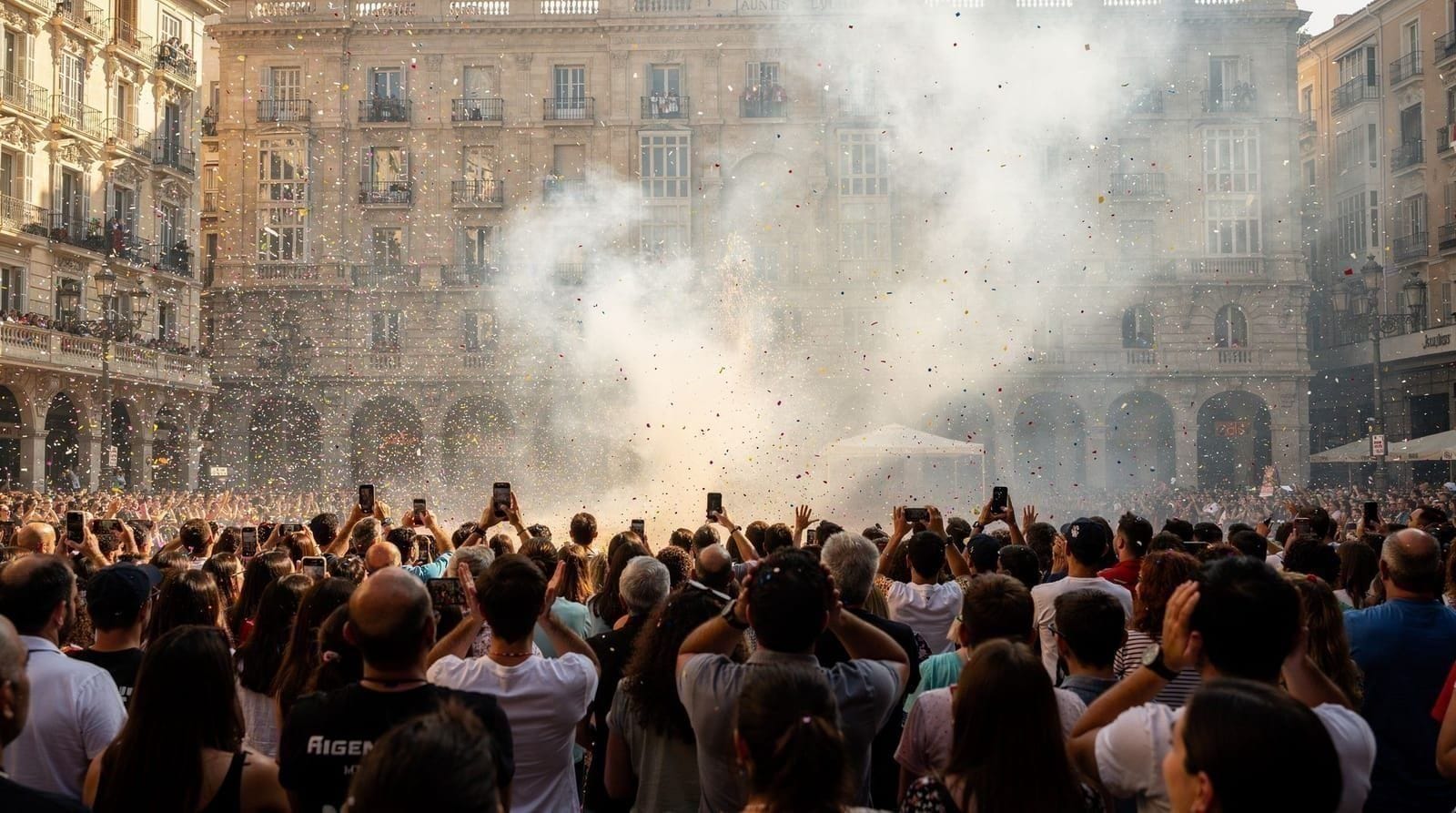
The one constant across all 19 days: the mascletà at 14:00 in Plaza del Ayuntamiento. This daily gunpowder percussion show is the backbone of the festival and the best introduction to what Las Fallas sounds and feels like.
1 March: the festival opens
The official opening ceremony (Crida) takes place on the last Sunday of February (28 February 2027, 19:30) at the Torres de Serranos, but 1 March is when street activities formally begin. The first mascletà of the festival fires at 14:00 in Plaza del Ayuntamiento. This is typically one of the smaller mascletàs of the series — the intensity builds over the 19 days — but still worth attending to establish a baseline for what follows.
The opening ceremony is held at the Torres de Serranos; if you want to see the monument itself in calmer conditions, the Serranos and Quart towers guide explains what is there. For the bigger picture of the tradition, the Valencia festivals calendar and the UNESCO in Valencia guide give useful context.
The sculptures are not all up on 1 March: they go up progressively through the first two weeks, and the plantà deadline is 15 March for the children’s fallas and 8:00 on 16 March for all the main ones.
The Fallas Museum (Museu Faller, Calle San Pío V) is less crowded in early March and worth visiting to understand the competition history and see preserved ninots from previous years.
If you’re still deciding where to base yourself, sort accommodation before the schedule fills up — see where to stay during Las Fallas for neighbourhood-by-neighbourhood pros and cons, since proximity to the mascletà and Cremà routes matters more during this festival than almost any other Valencia trip.
1–14 March: building phase
The daily rhythm in early March:
14:00 — Mascletà, Plaza del Ayuntamiento. The resident mascletero (fireworks company) changes each day; local opinion on which company fires the best mascletà is taken seriously.
Evening — Neighbourhood associations hold dinners, concerts, and street parties. These are primarily for members but street parties spill onto the pavement. The Ruzafa and El Carmen neighbourhoods have particularly active evening programmes.
Throughout — Buñuelo stalls open across the city. The combination of buñuelos de calabaza with thick hot chocolate is the definitive Las Fallas food experience. Stalls on Plaza del Ayuntamiento and in the Mercado Central area are the most established.
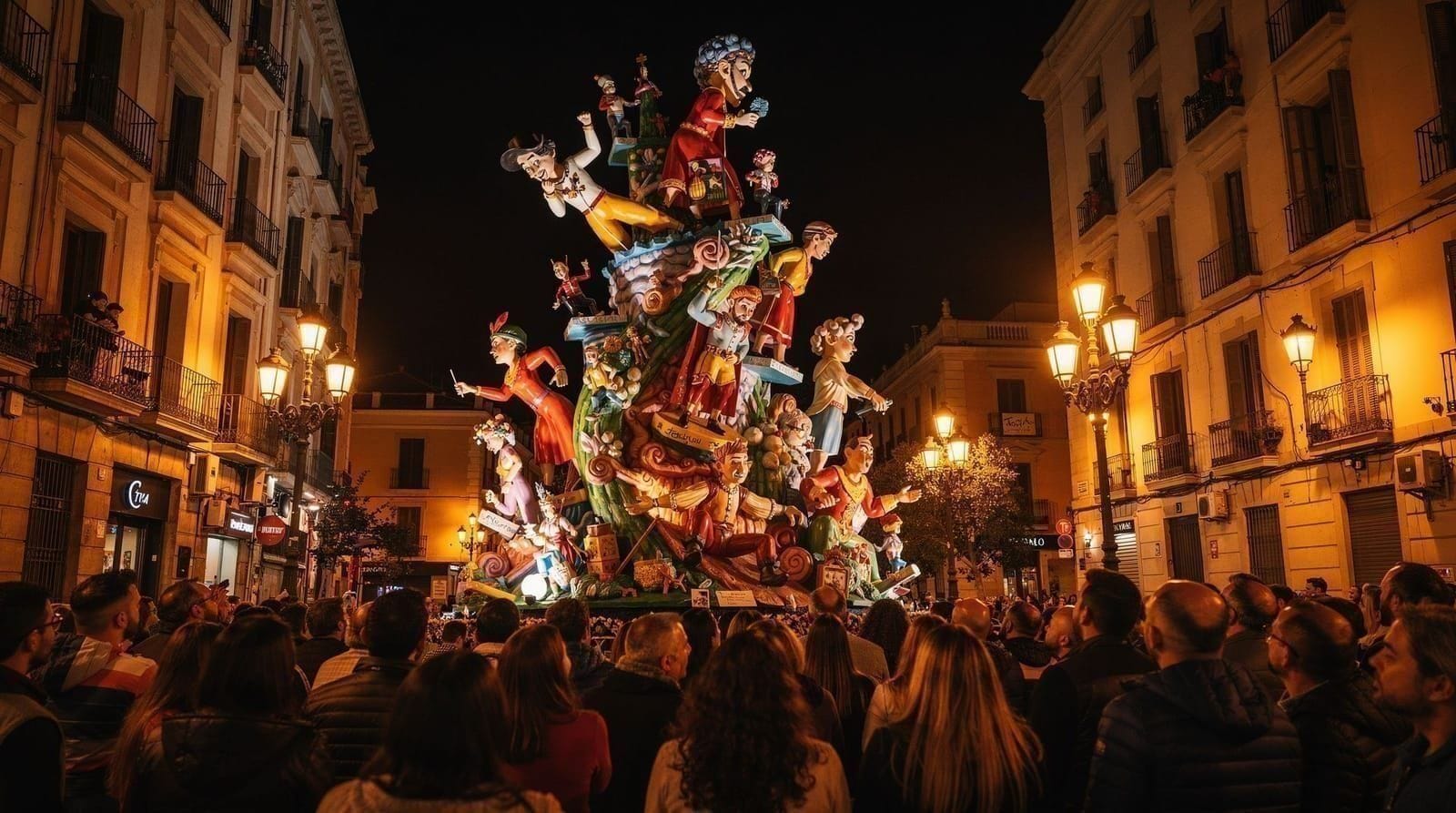
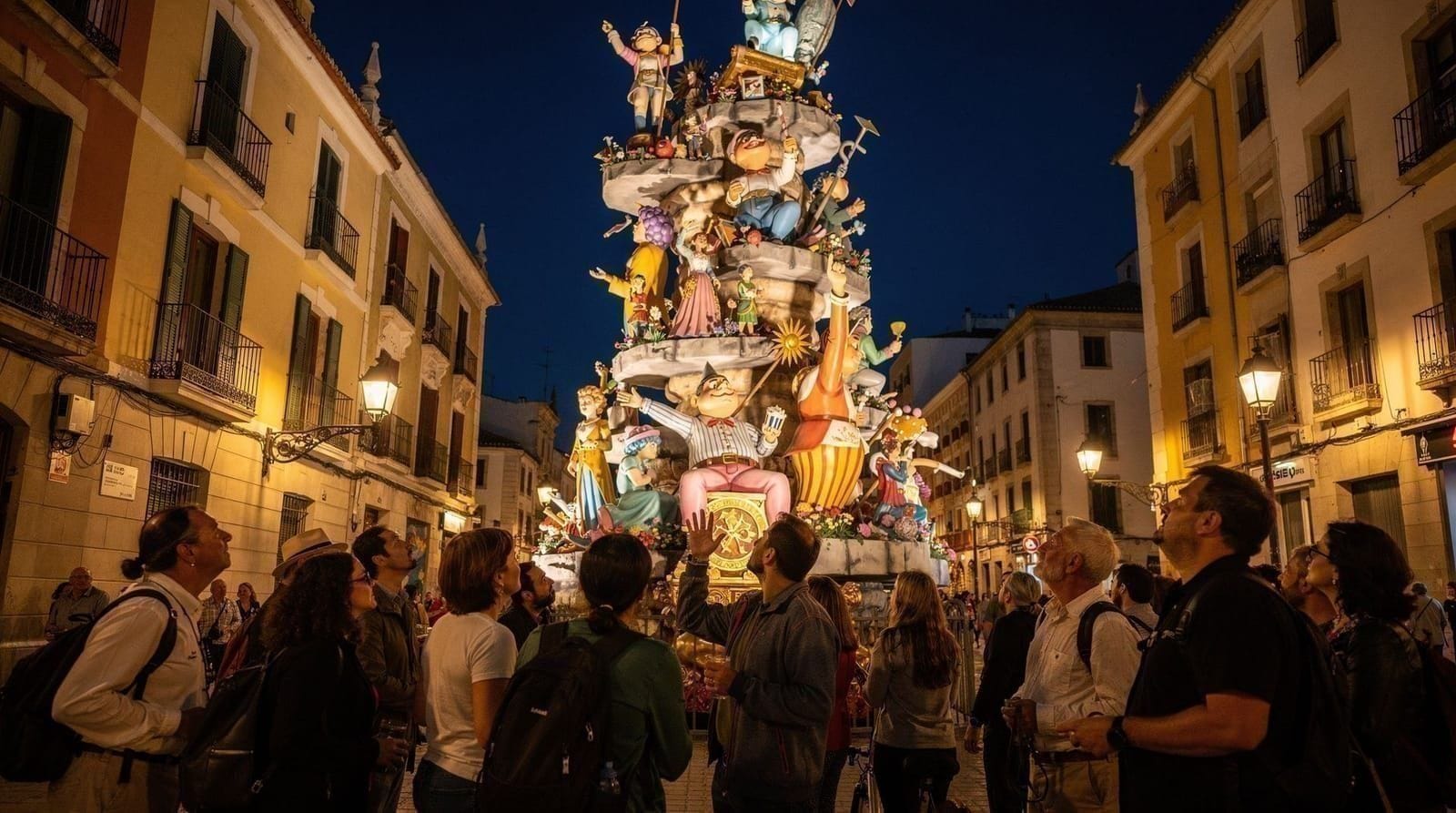
The sculptures are progressively installed in public plazas, pedestrian streets, and widened intersections. By 12–14 March, most are in place and can be viewed freely day and night. Many are lit from the inside or spotlit at night.
15 March: the late-night fireworks begin
A significant step up in intensity. From 15 March, there are fireworks late every night.
14:00 — Mascletà (as daily).
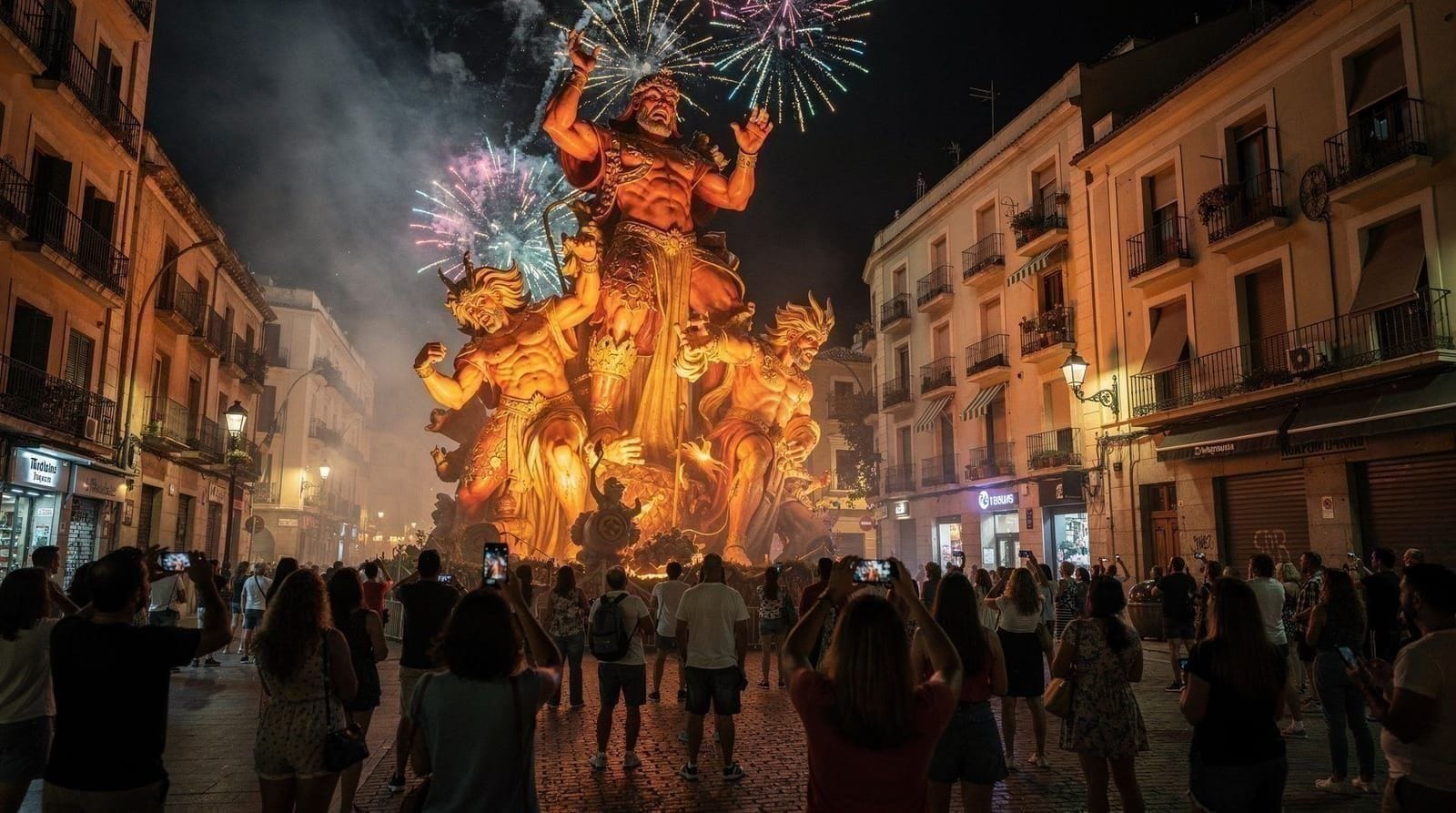
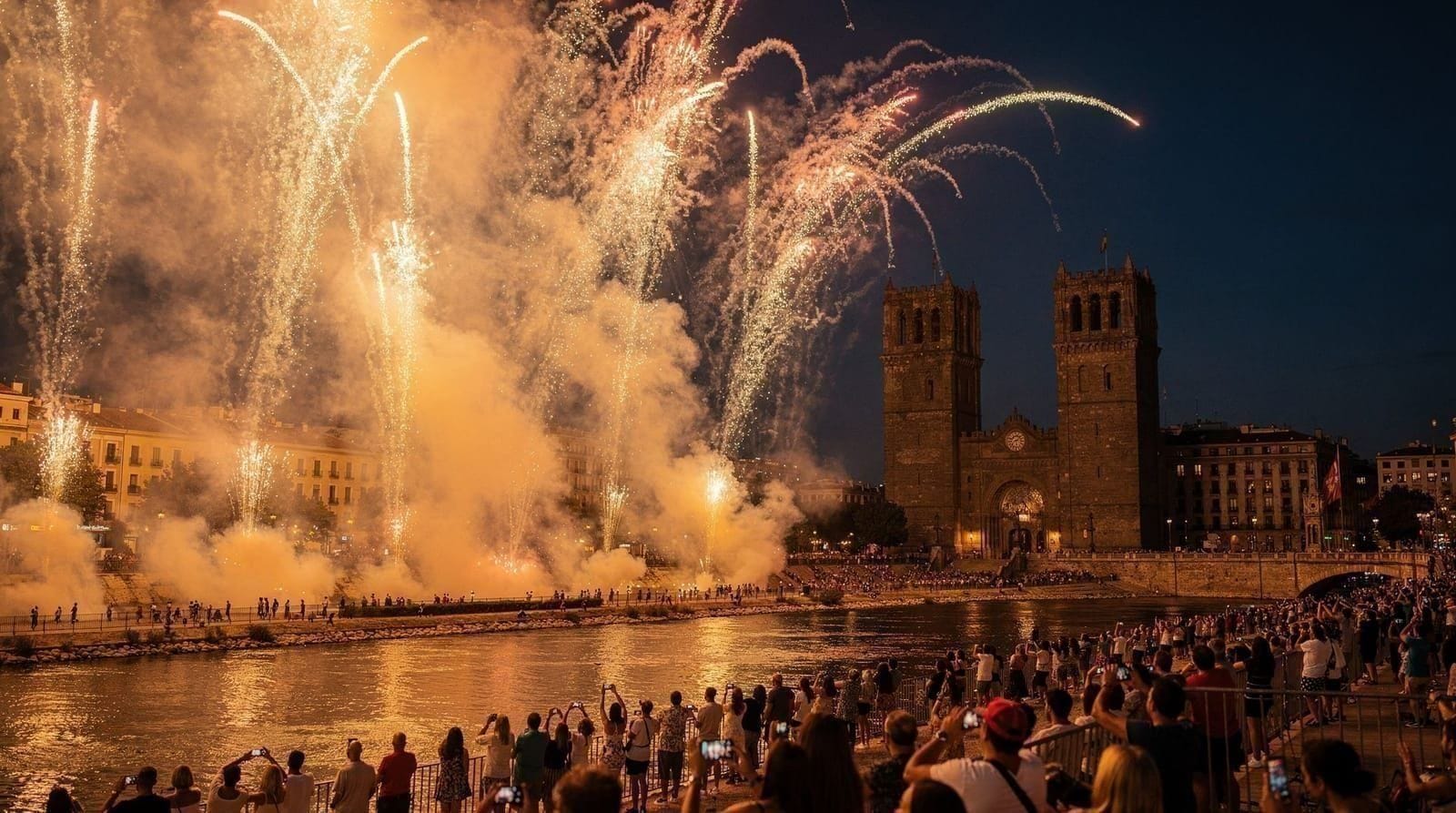
23:59 — On 15 March, L’Alba de les Falles fireworks are fired from Plaza del Ayuntamiento. From 16 March the nightly castillos move to the Monteolivete bridge in the Turia riverbed (the former river channel, now a park), and the best viewing positions are along the gardens nearby, around the City of Arts and Sciences. The displays on 15–17 March are significant but smaller than the 18 March climax.
16–17 March: intensity peaks
16 March follows the same structure as 15 March. The mascletà on 16 March tends to be one of the more elaborate of the series.
17 March: Ofrenda de flores begins
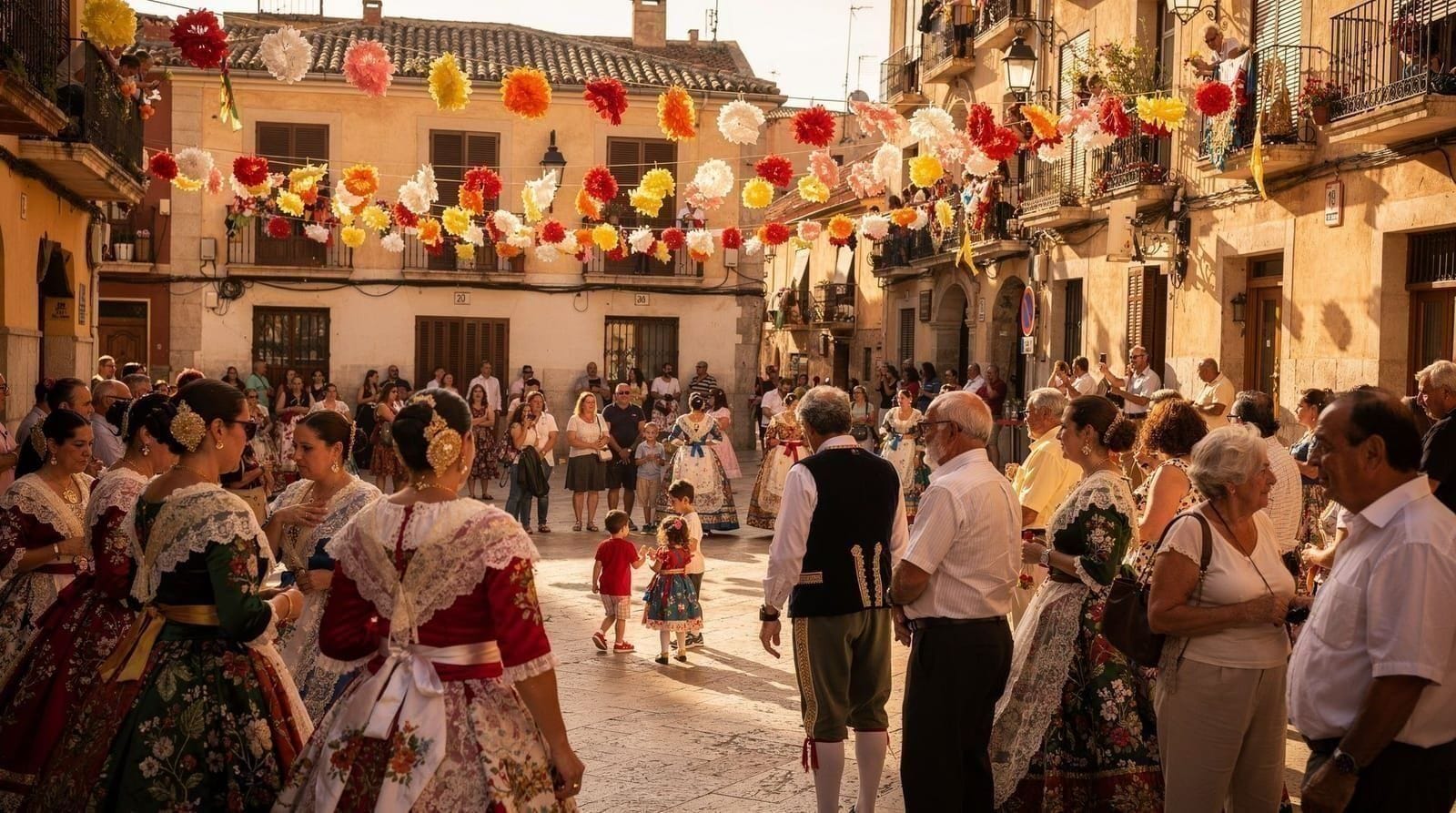
The Ofrenda de Flores runs from 15:30 until around 01:00 (on both 17 and 18 March). Falleras (women participants in traditional Valencian dress — 18th-century style embroidered silk costumes) walk in organised procession from various points across the city toward Plaza de la Virgen, in front of the Basilica de la Virgen (adjacent to Valencia Cathedral).
Each participant carries flowers — typically carnations, roses, or other blooms — that are placed on a wooden frame shaped in the outline of the Virgin’s mantle. The frame, positioned in the plaza, gradually fills with flowers over the two nights until it becomes a massive floral relief sculpture 15 metres tall.
The procession is free to watch. The best positions are on Plaza de la Virgen itself (arrive early — by 15:00 for a central position) or along Calle de la Paz and Calle de los Canos approaching the plaza.
Local guide for the Las Fallas festival — get oriented in the neighbourhood fallas and understand what you’re seeing
23:59 — Fireworks at the Monteolivete bridge.
18 March: the great day
This is the day most visitors rank as the single best of the festival. Three major events converge.
14:00 — Mascletà
If you plan to build your whole evening around the fireworks, the dedicated Nit del Foc guide goes deeper on viewing positions, and the Nit del Foc fireworks blog post adds a first-hand angle.
The 18 March mascletà is typically the most powerful of the series, run by the highest-rated company. Arrive by 13:15 for a decent position inside Plaza del Ayuntamiento. The sound pressure in the final barrage is extraordinary — earplugs are not optional for anyone with hearing sensitivity.
15:30–around 01:00 — Ofrenda de flores (second and final day)
The ofrenda continues for the second and final time. By the end of tonight, the Virgin’s floral mantle frame is fully covered. The light from the illuminated frame and the surrounding cathedral buildings at night creates some of the most photographed imagery of the festival.
23:59 — Nit del Foc (grand finale)
The largest fireworks display of the year. The Nit del Foc display on 18 March is fired from the Monteolivete bridge area of the Turia riverbed.
Viewing positions:
- Turia gardens near the Monteolivete bridge
- Passeig de l’Albereda (elevated position with river view)
- Roof terraces and hotel balconies (often sold as paid viewing — book in advance)
- Most of the city has some line-of-sight to the sky
Crowds at the river start building well before the 23:59 start. Metro platforms are dangerously crowded after the display ends. Walking home or waiting 60–90 minutes is safer than rushing the metro.
19 March: La Cremà
The final day of Las Fallas is structured around the burning. During the day, the city is quiet by Las Fallas standards — the calm before the fire.
14:00 — The final mascletà of the year, traditionally the most intense.
From 20:00 — the Cremàs begin
The children’s fallas burn first (20:00 in 2026), then all the main fallas from 22:00 in sequence across the city; exact 2027 times are on fallas.com. Each association sets fire to its own falla, watched by members and crowds of neighbours. The fires are enormous — a 4-storey falla burns for 15–20 minutes, generating intense heat and a column of sparks. Firefighters (bombers) stand by with hoses at every burning to damp down the edges of the fire and protect surrounding buildings.
A practical strategy for La Cremà:
- Select 2–3 neighbourhood burnings in walkable proximity (Ruzafa, El Carmen, and El Cabanyal each have multiple fallas burning at staggered times)
- Walk between them — the streets are full of people doing the same
- The main city-centre falla (Sección Especial, Plaza del Ayuntamiento area) burns last (23:00 in 2026)
Standing close to a burning falla: the heat is intense beyond about 20 metres in the first 5 minutes. Embers land at considerable distances. Synthetic clothing (polyester, nylon) is a burn risk — cotton is safer.
After the burning: by 02:00–03:00 on 20 March, the city is extraordinarily quiet. Street cleaners are already working. The fallas are gone. This transition — from the chaos of La Cremà to empty streets swept with ashes — is itself a characteristic part of the Las Fallas experience.
Getting between events without losing hours
The festival’s key locations — Plaza del Ayuntamiento, the Turia riverbed, and Plaza de la Virgen — are all within a 15-20 minute walk of each other in the historic centre, so a car is actively unhelpful during Las Fallas; road closures shift daily around the burning schedule. Public transport runs but gets overwhelmed on the climax nights, so budget extra time and don’t count on a quick metro ride right after the Nit del Foc or a neighbourhood Cremà. The Metro and EMT guide explains how the network works, and the pickpockets and safe areas guide is worth a read, since packed crowds are exactly where wallets and phones disappear. Comfortable shoes matter more than almost any other Valencia trip, since most of the festival is experienced on foot, moving between mascletà, sculptures, and burnings across a single evening.
Beyond the fire: the funfair and the food
Las Fallas isn’t only mascletàs and burning sculptures. The Gran Fira de Valencia, the city’s traditional funfair, runs alongside the festival with rides, stalls, and a very different, family-friendly energy — see the Gran Fira guide for dates and location if you want a break from the fireworks. On the food side, buñuelos de calabaza and hot chocolate are everywhere during Fallas, but they’re not the only Valencian tradition worth fitting in — the horchata and fartons guide covers the cold-drink counterpart that’s just as much a fixture of a Valencia visit, festival or not.
Recommended 3-day visit itinerary
If you can only attend for three days, the optimal window is 17–19 March:
- 17 March: morning — explore the fallas sculptures in Ruzafa and El Carmen; afternoon — mascletà at 14:00; evening — attend the ofrenda de flores (from 15:30)
- 18 March: morning — visit the Fallas Museum; afternoon — mascletà (arrive by 13:15); evening — ofrenda second night and/or Nit del Foc from the Turia riverbed
- 19 March: daytime — explore remaining fallas on foot; evening — La Cremà walk through Ruzafa and El Cabanyal; late evening — the main Cremà in the city centre
If you’d rather have the whole trip laid out, the Valencia during Las Fallas itinerary and the Las Fallas first-timer blog post cover the same ground from a different angle.
See the complete Las Fallas guide for full context, and where to stay during Las Fallas for accommodation strategy.
Book a guided Fallas tour to navigate the festival intelligently — guide covers sculpture locations, mascletà positioning, and local context
Frequently asked questions about Las Fallas day-by-day
What is the single best night of Las Fallas?
The night of 18 March (Nit del Foc proper) is the festival's emotional peak: the largest fireworks display of the year, fired from the Monteolivete bridge area of the Turia riverbed at 23:59. For most visitors, this night combined with the 18 March mascletà and the ofrenda creates the complete Las Fallas experience; La Cremà follows the next evening.Is 1–14 March worth attending?
Yes — this is an underrated time to visit. The fallas are installed and can be viewed, the daily mascletàs run, the city is festive, and accommodation costs a fraction of the 15–19 March price. The atmosphere is more local and less tourist-dominated than the climax week.What events require advance booking?
Guided tours for 15–19 March sell out weeks ahead — book well in advance. Accommodation for the climax period (especially 17–19 March) should be booked months ahead. Most street events (mascletàs, ofrenda, La Cremà viewing) are free and require no booking.Can I see the ofrenda for free?
Yes. The ofrenda is a public street procession and plaza event — no ticket required. The plaza itself has limited standing room; arrive early for a central position.Do I need to book the mascletà in advance?
No — the mascletà in Plaza del Ayuntamiento is free and requires no ticket. You simply need to arrive early enough to get a position inside the plaza.What time do the neighbourhood burnings start?
On 19 March the children's fallas burn first (20:00 in 2026), then all the main fallas from 22:00, with the biggest ones last. The schedule varies by neighbourhood and year, so check the official programme on fallas.com in early March.Is the Nit del Foc display only on 18 March?
No — there are late-night fireworks (23:59) on 15 March (L'Alba de les Falles, Plaza del Ayuntamiento) and on 16, 17, and 18 March (castillos at the Monteolivete bridge in the Turia riverbed). The 18 March display is the Nit del Foc proper and by far the largest. Read the Nit del Foc detailed guide for viewing positions and timing.What if it rains during La Cremà?
Rain during La Cremà (19 March) is rare but has happened. Burnings are not cancelled for light rain but may be delayed for heavy rain or strong wind, as fire safety is the primary concern. The festival authority makes day-of decisions.How do I get the official fallas programme?
The Junta Central Fallera (the festival's governing body) publishes the full programme including mascletà contractors, special events, and burning order. It is available at the tourist office on Calle Paz in central Valencia and as a PDF on the official website from late February.How does the schedule compare to Valencia's wider festival calendar?
Las Fallas is Valencia's biggest single event, but it isn't the only festival that reshapes the city's rhythm — Semana Santa Marinera (Holy Week), the Feria de Julio in summer, and local neighbourhood fiestas all follow different patterns of daily events, crowds, and pricing. The Valencia festivals calendar puts Las Fallas in that broader context if you're weighing which dates to fly in for, and it's worth checking before you lock in travel dates purely around 19 March.
Top experiences
Bookable activities with verified prices and instant confirmation on GetYourGuide.