Nit del Foc: Valencia's Las Fallas fireworks explained
Valencia: the ultimate Fallas tour — celebrate like a local
Duration: 3 hours
What is Nit del Foc and when does it happen?
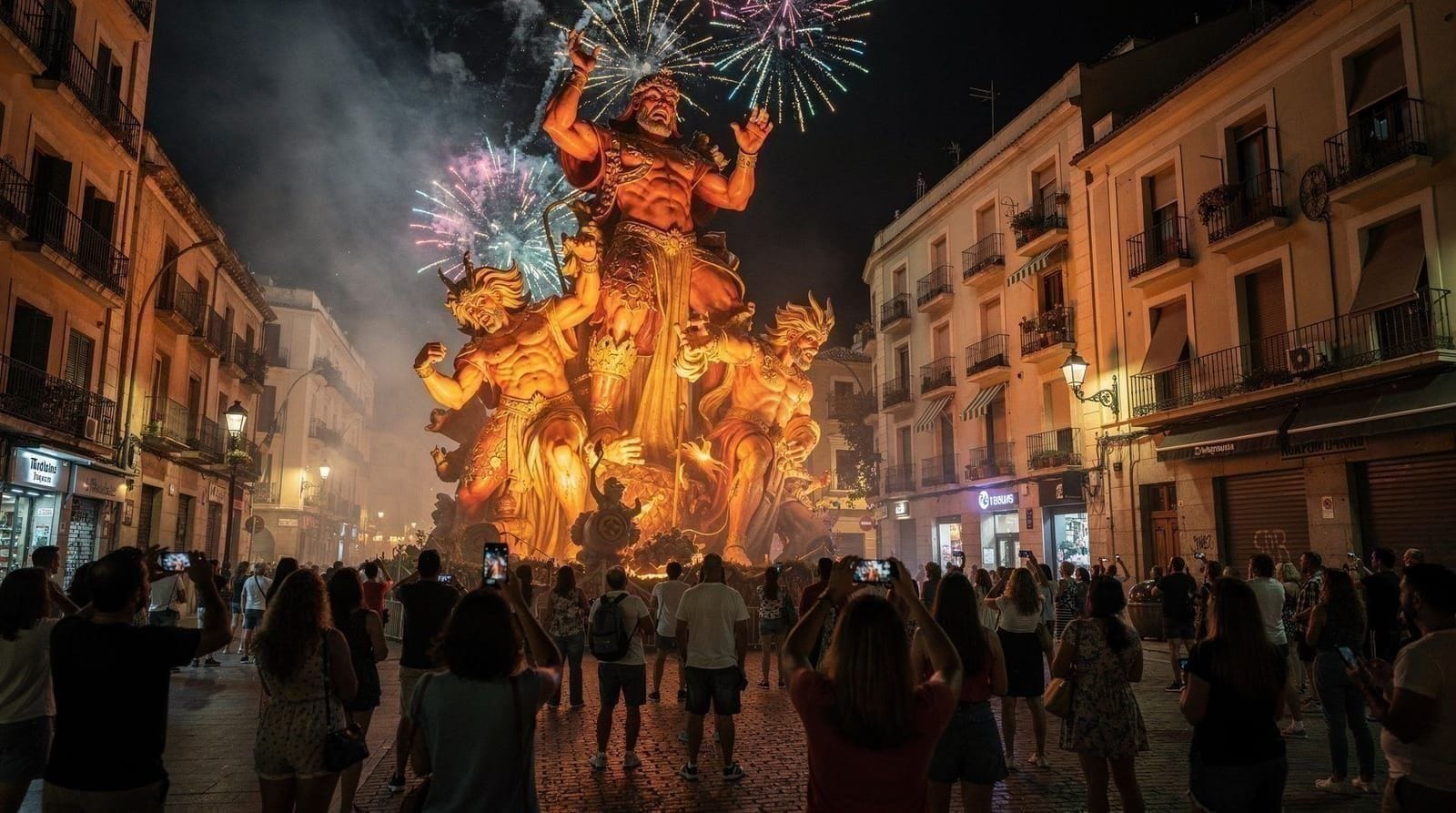
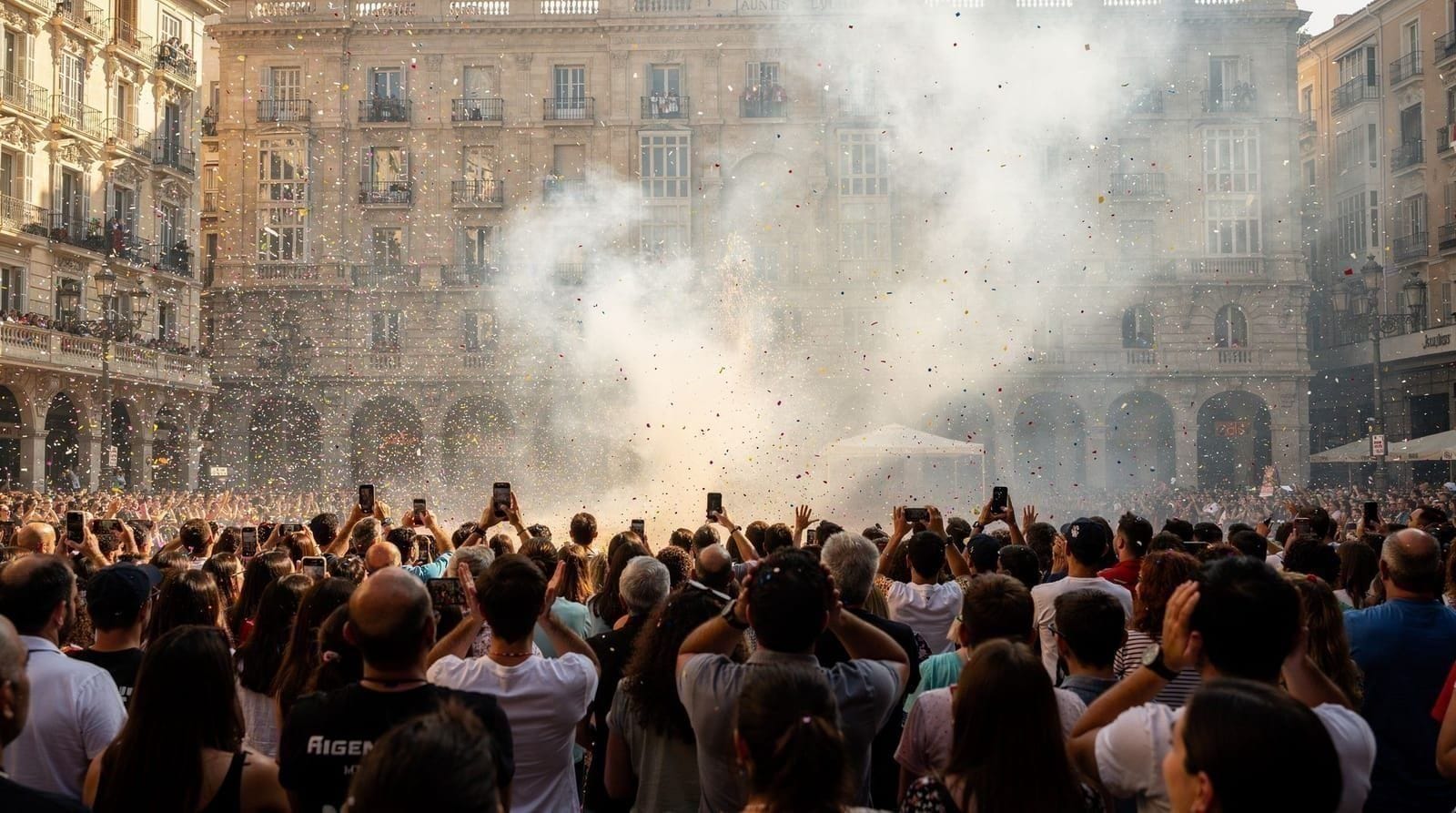
Nit del Foc ('Night of Fire') refers to the fireworks displays during Las Fallas. Late-night fireworks run from 15 to 18 March, all at 23:59, and the Nit del Foc proper is the display on 18 March, launched from the Monteolivete bridge area of the Turia riverbed. It is free to watch from public areas.
The Nit del Foc (Night of Fire) fireworks are the most spectacular event of Las Fallas and among the best fireworks displays in Europe. Understanding where to watch, when to arrive, and what to expect makes the difference between a transcendent evening and an uncomfortable crowd crush.
| Where | Turia riverbed, central Valencia — free public viewing |
| Cost | Free from public areas; hotel terrace packages are extra |
| Time needed | Arrive 21:30–22:30, display at 23:59 |
| Getting there | Walk or metro to Àngel Guimerà, Plaça Espanya, or Colón |
| Best time | 18 March (Nit del Foc proper); 15–17 March for smaller crowds |
What makes the Nit del Foc different
Most major fireworks displays use a single launch point. The Nit del Foc is launched in the former Turia riverbed, at the Monteolivete bridge, a channel running through the heart of the city. The effect is a display that sits low and close to the crowd, in a way that standard displays cannot match.
The pyrotechnics company contracted to run the Nit del Foc changes annually, and local opinion on which company delivers the best display is a genuine topic of debate. The competition between pyrotechnic families (particularly the Caballer and Reyes families, both from Valencia’s pyrotechnic tradition) is taken seriously.
The Nit del Foc schedule
15 March (23:59): “L’Alba de les Falles”, launched from Plaza del Ayuntamiento. A good introduction if you want a preview. Crowds are smaller than on 18 March.
16 March (23:59): Castillo launched from the Monteolivete bridge.
17 March (23:59): Castillo from the Monteolivete bridge; the city is now at full festival intensity.
18 March (23:59): The Nit del Foc proper, launched from the Monteolivete bridge. This is the one that appears in photographs and what most people mean when they say Nit del Foc.
The five best viewing positions
1. Turia gardens central section (Pont de les Flors to Pont de l’Exposició)
The most immersive position. You are in the riverbed itself (the Turia is a dry park — no water), directly beneath the fireworks. The launch ramps are set up along the banks; spectators fill the parkway between them. The experience is intense: the launches are directly overhead, the noise is enormous, and embers fall around you (not dangerously, but noticeably — synthetic clothing is inadvisable).
Arrive by 22:00 for a central position on the main night. The parkway fills to capacity well before the display.
2. Passeig de l’Albereda
The tree-lined promenade running parallel to the north bank of the Turia (the street level above the park). This elevated position gives a wide-angle view of the entire display and slightly more personal space than the riverbed itself. Good option for families with children who need more room.
Arrive by 22:30. The pavement fills but not to the same density as the riverbed.
3. Pont de les Flors and Pont de la Mar
The bridges crossing the Turia between the riverbed sections. Standing on a bridge gives a clear, elevated view along the length of the display. The bridges fill up early on the main night — arrive by 21:30 for a bridge position.
4. Hotel and apartment terraces
Several hotels sell rooftop or terrace viewing packages for the main Nit del Foc. Prices vary and usually include drinks. The comfort and personal space are better than street viewing; the views vary depending on the building’s height and orientation. Look for hotel announcements in February–March for the current year. The NH Collection Las Arenas (near the beach, looking back toward the city) and rooftop venues near the Turia have been popular in recent years.
5. Balconies in the Eixample and Ruzafa
From any balcony with a clear northwest or north view in the Eixample or Ruzafa neighbourhoods, the Nit del Foc is visible without the crowd crush. The fireworks are distant compared to the riverbed positions but the scale of the display is large enough to be impressive at 1–2 km. A building’s top floors are ideal.
Practical advice for the main Nit del Foc (18 March)
Timing: The display is scheduled for 23:59 on 18 March, the second and last day of the Ofrenda de Flores. The crowd flow on the evening of 18 March is:
- 15:30 to about 01:00: Ofrenda de flores (Plaza de la Virgen area)
- From about 22:00: Crowds build along the Turia and Passeig de l’Albereda
- 23:59: Display
What to bring: A phone, water, earplugs (the display is extremely loud inside the riverbed), and comfortable shoes. A light jacket — March nights in Valencia can be cool (12–15°C).
After the display: This is when Valencia’s transport infrastructure is most stressed. The metro platforms at Àngel Guimerà, Plaça Espanya, and Colón are dangerously crowded for 60–90 minutes after the display ends. Options:
- Wait in a bar or café for 60–90 minutes until the rush subsides
- Walk home if your accommodation is within 30–40 minutes on foot
- Check the EMT website for night bus services on the festival nights
- Taxis and rideshare are scarce — queue forms immediately after the display
Children: The Nit del Foc on 18 March is scheduled for 23:59, as are the earlier nights. The noise inside the riverbed is extreme — children attending need proper ear defenders, not just earplugs. For families with young children, watching from a balcony or rooftop at a distance may be more practical than attending the riverbed display.
The display in context
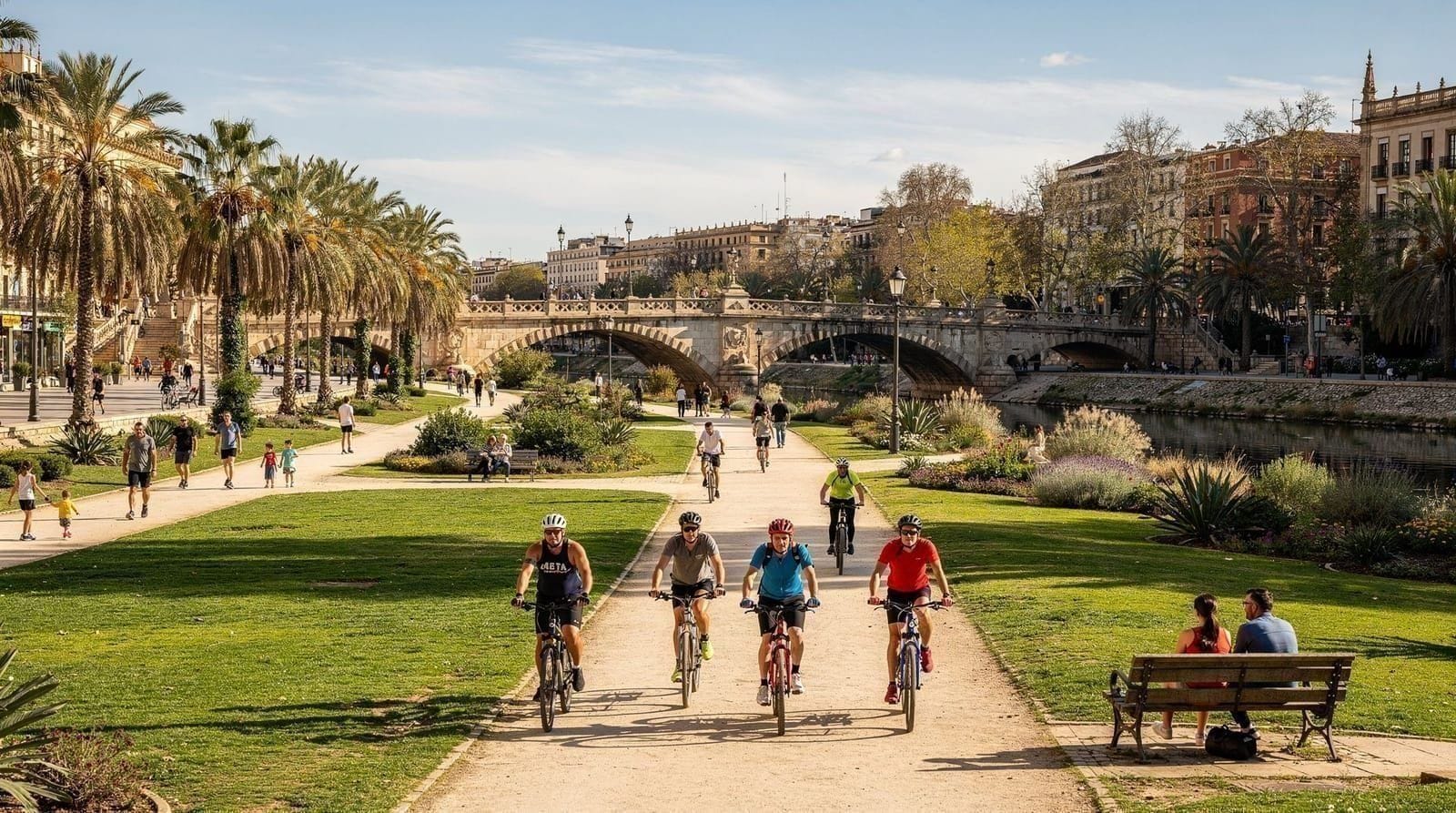
The Turia riverbed became a park after the catastrophic 1957 flood that killed hundreds of people in Valencia. The old river course was diverted south of the city, and the dry channel through the urban core was converted into the Jardí del Turia — a 9-km linear park running from the western edge of the city to the Ciudad de las Artes y las Ciencias. The park is now Valencia’s defining public space, used daily for cycling, running, children’s play areas, and sports.
During Las Fallas, the Turia’s transformation into a fireworks platform is both practical and symbolic. The same stretch of former riverbed that is used for morning runs and bicycle commutes for 11 months of the year becomes the stage for one of Europe’s great pyrotechnic displays for a few nights each March.
See the Turia gardens guide for the full story of the park.
Get a guided Las Fallas tour that covers the history of the festival and the best positions for the Nit del Foc and Cremà
Fitting the Nit del Foc into your festival days
The Nit del Foc is one part of a much larger festival programme. If this is your first Las Fallas, read the day-by-day guide to understand how the fireworks nights fit alongside the daily mascletà, the Ofrenda de flores, and the final Cremà bonfires. Where you stay matters more during Las Fallas than at any other time of year — see the where to stay during Fallas guide for neighbourhoods that give you an easy walk to the Turia without being in the loudest firecracker zones.
Book a small-group Las Fallas guided walk that explains the festival’s traditions before the Nit del Foc crowds build
Building an evening around the display
Because the display starts late at night, the hours before it are part of the experience rather than dead time. A sensible evening starts with a proper sit-down meal early, before the restaurants fill with festival crowds. Valencians eat late, and during Fallas the kitchens near the centre are stretched, so booking ahead or choosing a place away from the main squares saves a lot of frustration. Our eat like a local guide and the best restaurants in Valencia help you pick somewhere that is not a tourist trap, and the paella traps guide is a useful reminder that the festival is exactly when overpriced, reheated menus appear. If you want something lighter, a round of tapas in Ruzafa works well before you start walking towards the river.
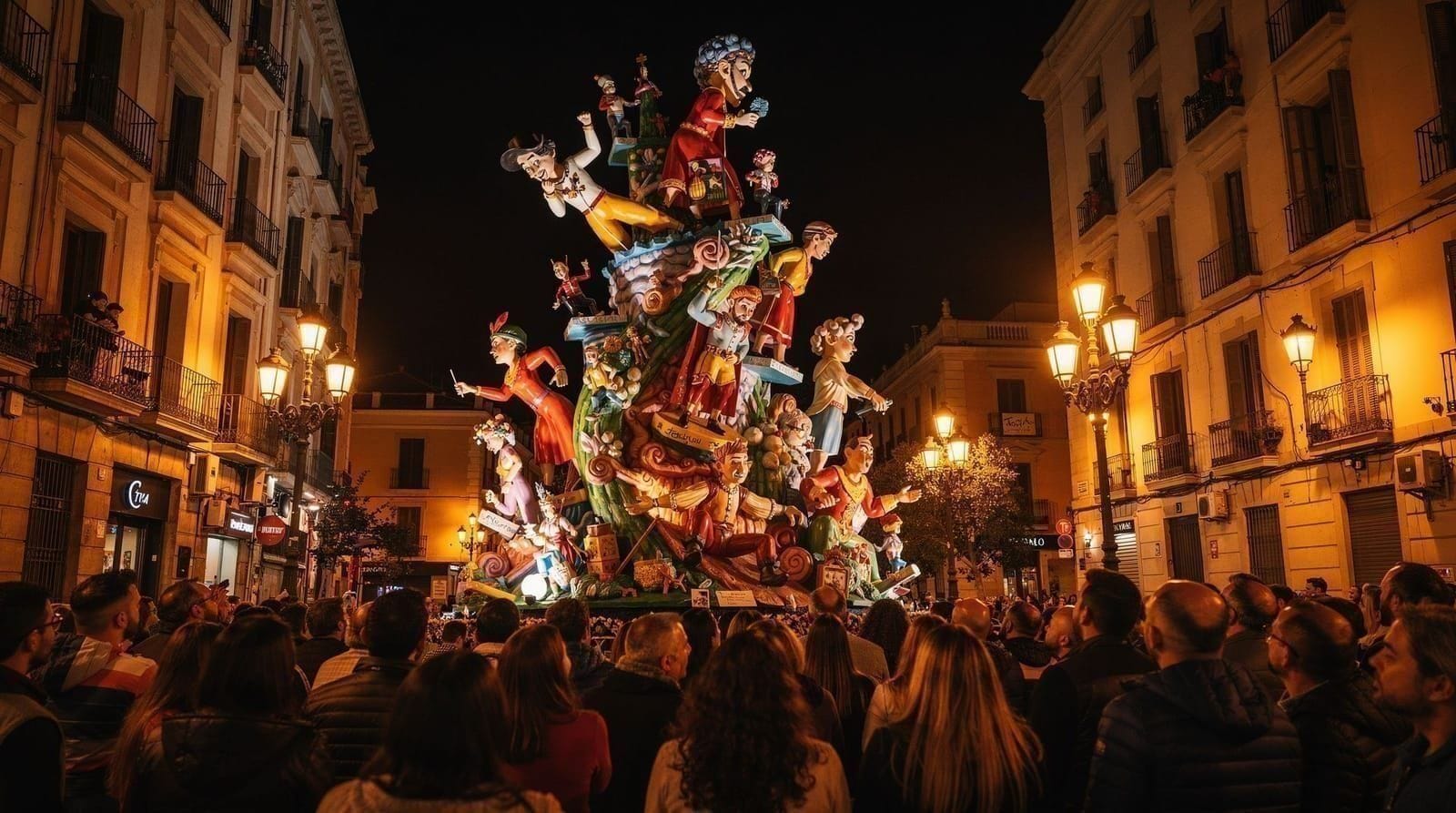
After eating, drift towards the Turia on foot rather than relying on public transport. The streets are part of the show: falla monuments lit up, brass bands passing, firecrackers going off in the distance. Walking also lets you judge how full the riverbed is before you commit to a spot. If the central section already looks packed, the elevated promenade or a bridge is a perfectly good plan B, and you lose nothing by changing your mind.
Choosing between the four nights
Many visitors assume the grand finale is the only night worth the effort, but the earlier displays have real advantages. With smaller crowds you can reach a good riverbed position later, move around more freely, and leave without the long wait at the metro. If you are curious about the format, or travelling with someone who dislikes crowds, an earlier night is an excellent trial run, and you can then decide whether to brave the finale. Those who want the full picture of the programme will find it in the complete Las Fallas guide, and the Fallas planning itinerary shows how to fit the fireworks around the other big moments of the festival without exhausting yourself.
If you only have a weekend in the city, the first weekend itinerary gives a good base for the days around the festival, leaving your evenings free for the riverbed. Remember that the daytime mascletà and the night fireworks are different events with different crowds, so you can enjoy both without repeating yourself.
Making the most of the experience
A few small habits change how the evening feels. Pick your spot, then stay put: wandering in and out of a dense crowd costs you the position you arrived early for. Take turns going for drinks or the toilet if you are with friends, and agree in advance who holds the meeting point. Keep your phone battery in mind, since you will be using it for photographs, and a small power bank is worth carrying.
For photography, the display rewards patience more than gear. Keep your camera steady, expect smoke to build up as the show goes on, and remember that the best moments often come when you stop filming and simply look up. Our photography tours guide is aimed at those who want to take their images further around the city in daylight, when the falla monuments are easier to capture without the crowds.
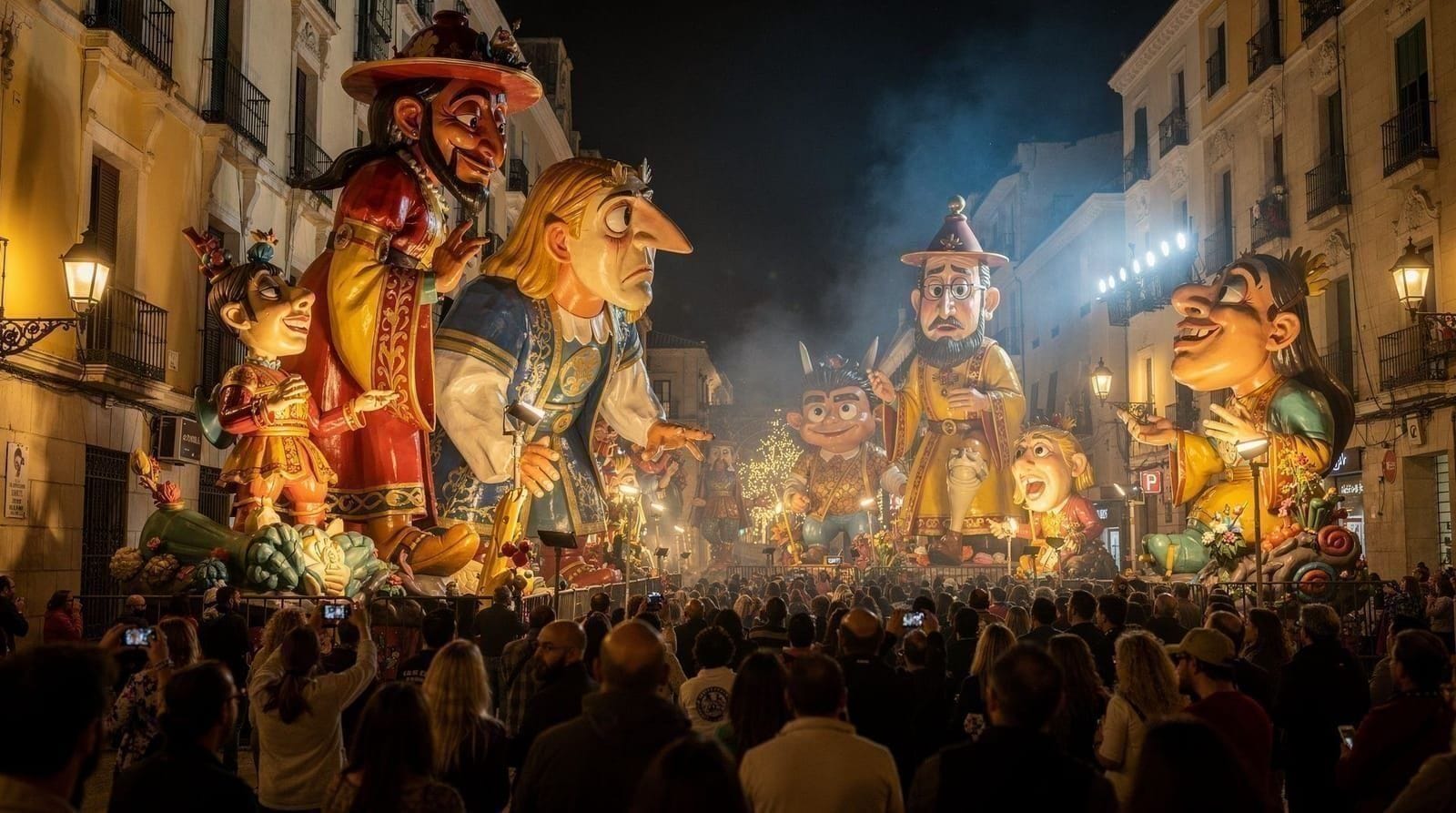
If you prefer a guided approach to the festival as a whole, a themed visit can give you context for what you are seeing at night. A guided tour of the Fallas monuments covers the artistry behind the figures that are later burned, which makes the fire and fireworks of the final nights mean more.
Combining the fireworks with other Valencia highlights
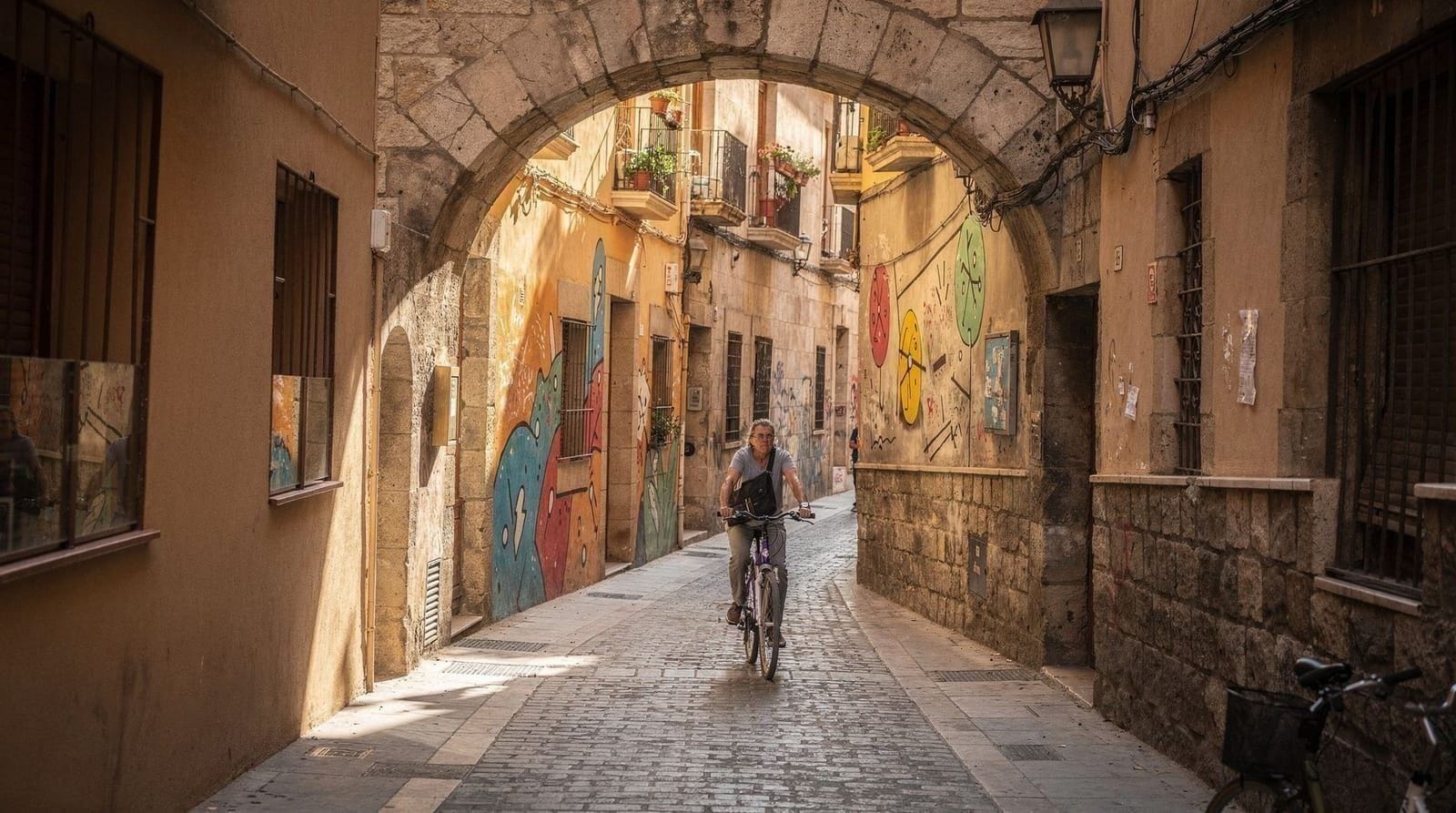
The Turia riverbed that hosts the display runs all the way to the Ciudad de las Artes y las Ciencias, so the days around the festival are a good moment to see the area in daylight. The City of Arts and Sciences guide explains what is worth your time there, and the Turia by bike guide shows how to ride the same park that fills with spectators after dark. Seeing the empty channel in the morning, then returning for the display, gives a striking sense of the transformation.
If the weather turns or you need a calmer day after a late night, the old town offers plenty of low-effort options. The Ciutat Vella and El Carmen district is ideal for slow wandering, and the Valencia festivals calendar places Fallas alongside the other celebrations of the year if you are weighing up when to visit. Travellers who would rather avoid the biggest crowds altogether can compare the seasons in the best time to visit guide.
Crowd safety on the main night
The main Nit del Foc night draws huge crowds into a compact stretch of the city, and the crush around the metro exits afterward is the single biggest safety consideration. The Valencia safety guide covers general precautions, but two points are specific to Nit del Foc: keep valuables in a zipped inner pocket rather than a bag (pickpocketing spikes in dense festival crowds), and agree a meeting point with your group in advance in case phone signal drops under the load of so many people transmitting at once, which can happen in the densest riverbed sections.
Frequently asked questions about Nit del Foc
Where is the best spot to watch Nit del Foc?
The Turia gardens (along the riverbed from Pont de la Mar to Pont de l'Exposició) give the most direct views. Passeig de l'Albereda offers an elevated vantage with a clear line to the sky. The Pont de les Flors bridge is a popular standing spot. Most of central Valencia has some line of sight to the sky — higher ground helps. Hotel terraces with south-west views are excellent if accessible.What time does the main Nit del Foc display start?
The official programme puts the 18 March Nit del Foc at 23:59, with the castillo launched from the Monteolivete bridge. The 16 and 17 March displays use the same time and place; on 15 March "L'Alba de les Falles" is launched from Plaza del Ayuntamiento. Crowds along the Turia start forming well before, from about 22:00 on the main night. Check the current programme on fallas.com.Are there fireworks every night during Las Fallas?
Late-night displays happen on 15, 16, 17 and 18 March at 23:59. Only 18 March is the Nit del Foc proper. There are also shorter neighbourhood fireworks and firecrackers (traques) throughout the festival, but these are not the same as the coordinated Turia displays.Is the Nit del Foc free?
Yes — the Turia riverbed and surrounding areas are public space. Some hotels sell rooftop viewing packages; some restaurant terraces overlook the display zone. But perfectly good views are free from the Turia gardens and Passeig de l'Albereda.Can I see the Nit del Foc from the beach?
Malvarrosa beach is approximately 3 km from the main launch zone — you can see the high bursts but much of the lower display is blocked by buildings. Not recommended as a primary viewing position for the main night. If your accommodation is near the beach and moving into the centre feels impractical with the crowds, watching from a rooftop or upper-floor balcony there is a reasonable fallback, but expect a noticeably smaller-feeling display than at the riverbed.Is the riverbed safe during the fireworks?
Yes — The fireworks are an official part of the Fallas programme, organised for public viewing. Follow the barriers and instructions of the stewards and police on the night. Standard cautions apply: do not approach the launch areas.What is the difference between Nit del Foc and the Mascletà?
The mascletà is a daytime gunpowder percussion event — no visual fireworks, purely sound and pressure. It takes place at 14:00 daily in Plaza del Ayuntamiento. The Nit del Foc is a nighttime aerial fireworks display from the Turia. Both are extraordinary but completely different experiences. Read the full Las Fallas guide for the complete picture.Does rain cancel the Nit del Foc?
Heavy rain or strong wind can delay or modify the display. Light rain does not cancel it. Check Valencia's forecast in the days before the festival — March weather is variable but typically mild. The city has rarely had to cancel the display entirely.Are there viewing tickets for the Nit del Foc?
No tickets are needed — the display is on public land. Some hotels and restaurants sell premium positions with drinks packages, but these are not necessary to see the display.
Top experiences
Bookable activities with verified prices and instant confirmation on GetYourGuide.