Where to stay during Las Fallas: neighbourhood guide and tips
Valencia: the ultimate Fallas tour — celebrate like a local
Duration: 3 hours
Where should I stay during Las Fallas and when should I book?
Book at least 6 months ahead for 15–19 March. Hotel prices triple or quadruple vs normal rates. The best areas are Ruzafa (close to action, walkable), Eixample (quieter streets but easy metro access), or suburban Valencia and nearby towns (Xàtiva, Sagunto) if you want to commute in and sleep. El Carmen is central but extremely loud on Cremà night.
Accommodation during Las Fallas is the most stressful logistical element of the trip — more so than transport, events, or navigation. The demand spike for the 15–19 March climax period is real, prices are high, and inventory genuinely runs out. This guide covers the booking timeline, the tradeoffs between different neighbourhoods, and alternatives that most visitors don’t consider.
| Where | Ruzafa, Eixample, El Carmen, El Cabanyal, or a nearby town |
| Cost | €250–500/night for 17–19 March vs €60–100/night normally |
| Book by | 6–9 months ahead for the climax dates |
| Quietest option | El Cabanyal or staying outside Valencia (Xàtiva, Sagunto) |
| Loudest option | El Carmen, especially on La Cremà night (19 March) |
The accommodation reality: prices and timing
Here is what the numbers actually look like:
A standard 3-star hotel room in central Valencia:
- Normal period (November–February, excluding Christmas): €60–100/night
- Early March (1–14 March): €100–160/night
- Mid-March (15–16 March): €150–250/night
- Climax (17–19 March): €250–500/night, sometimes higher for last-minute bookings
These are not outliers — they are typical for decent mid-range hotels in the city centre. Budget accommodation (hostels, 2-star hotels) shows a similar multiplier, and often sells out entirely for 18–19 March.
The booking window: 6 months in advance for 17–19 March is a reasonable target for mid-range options at tolerable prices. 9–12 months in advance is not excessive if you plan to stay in the city centre. The first two weeks of March (1–14) are significantly more forgiving — book 2–3 months ahead.
Neighbourhood breakdown
Ruzafa (Russafa)
Best for: visitors who want to experience the festival atmosphere fully, eat well, and walk to everything
Ruzafa is the recommended base for Las Fallas. It is one of Valencia’s most active neighbourhoods for the festival — the local fallas are large and well-funded, the streets have excellent street-food stalls, and the neighbourhood is walkable to all major events. The 15-minute walk to Plaza del Ayuntamiento avoids crowded metro platforms.
The downside: Ruzafa is noisy during Las Fallas, especially on 18–19 March. Street-level firecrackers continue until late. Accommodation here is somewhat limited in number — book early.
The Ruzafa neighbourhood guide covers the area in full.
Eixample
Best for: mid-range hotels, quieter sleep, convenient train station access
The Eixample district, centred on the grid streets south of Plaza del Ayuntamiento and around the Estació del Nord, has the densest hotel stock in Valencia. It is 10–15 minutes’ walk from the main events. The streets are wider and calmer than El Carmen or Ruzafa, and the noise levels — while still elevated during Las Fallas — are lower than in the historic centre.
Hotels around Gran Via del Marqués del Turia and Calle Xàtiva are reliable options. The NH Hotels Valencia and the Silken Puerta Valencia are here.
El Carmen (Ciutat Vella)
Best for: atmosphere maximalists who can sleep through noise
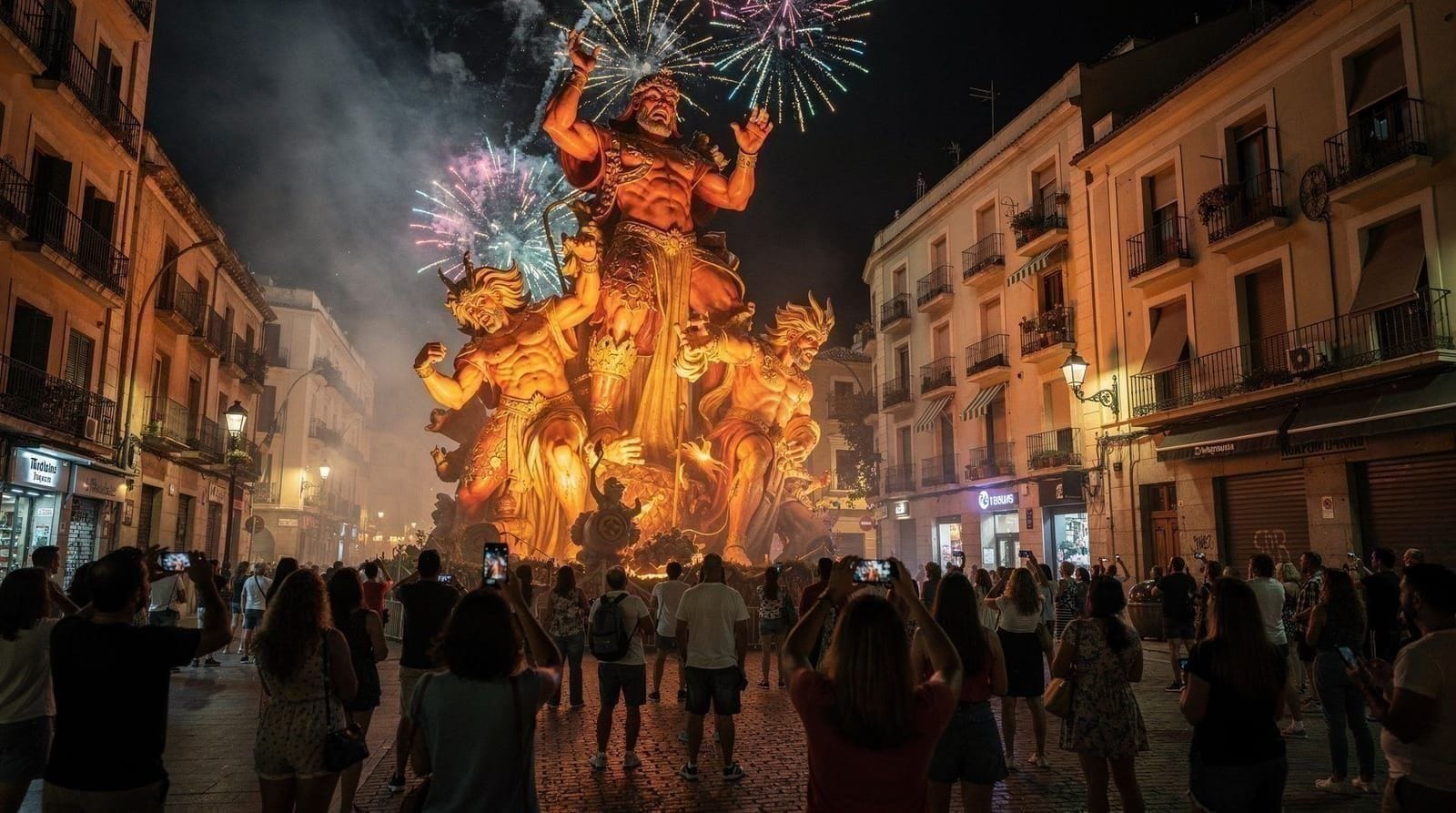
El Carmen is the heart of old Valencia — the most historically atmospheric neighbourhood and the one closest to the cathedral, the ofrenda, and the main fallas. During Las Fallas it is also the loudest and most chaotic.
If you are staying in El Carmen, budget for 4–5 nights of disrupted sleep during the climax week and embrace it. The plus side: you are never more than 10 minutes from any major event, and the streets around Calle Caballeros and Plaza del Tossal are extraordinarily atmospheric during the festival.
See the El Carmen neighbourhood guide for the full picture.
El Cabanyal
Best for: lower prices, local atmosphere, beach proximity
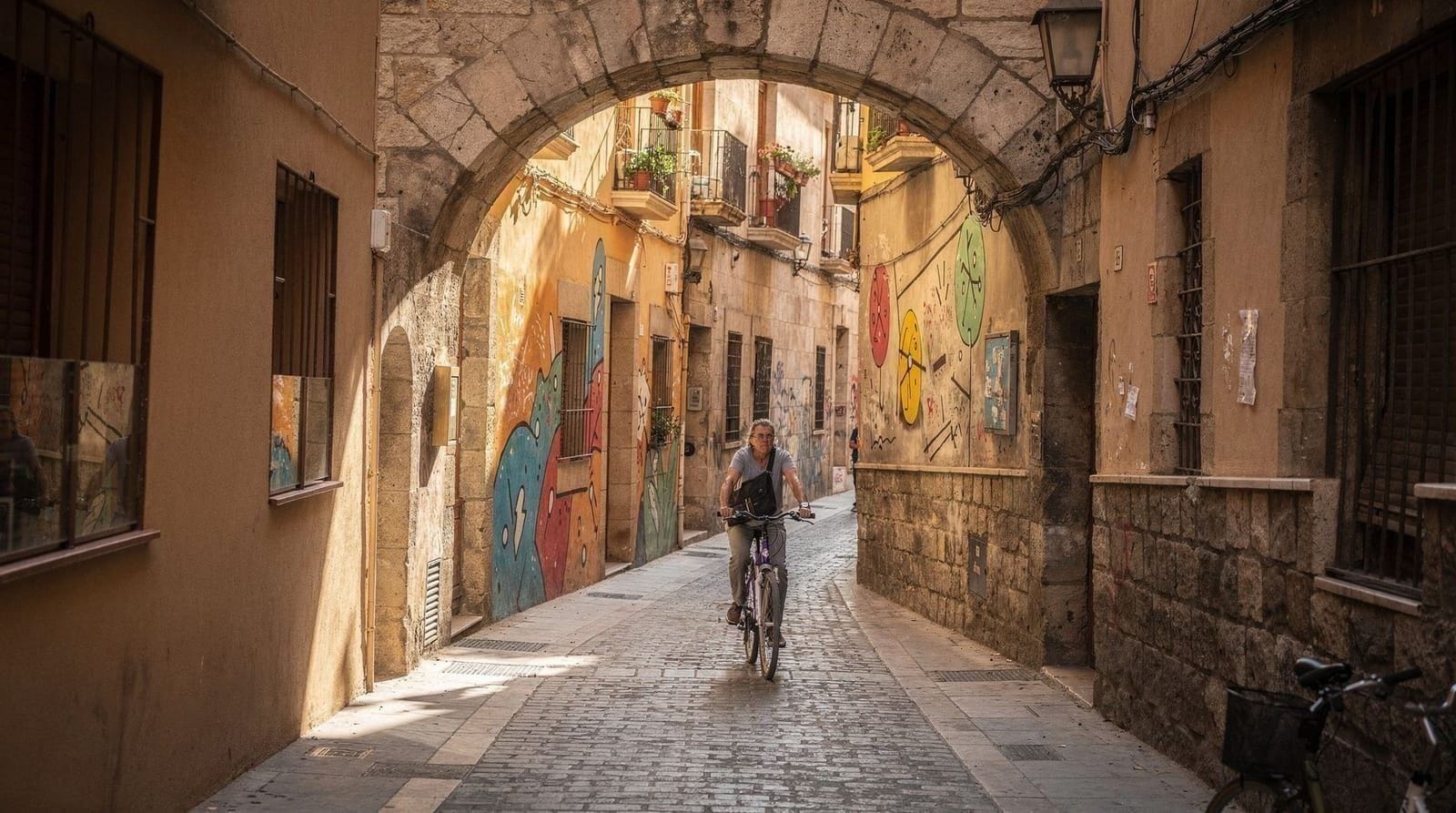
El Cabanyal, the former fishing quarter near the beach, is 30–40 minutes’ walk from Plaza del Ayuntamiento or 15 minutes by tram. It has its own strong Las Fallas culture — the neighbourhood fallas here are locally funded and authentically Valencian — but fewer tourist-oriented hotels. Prices are lower than the city centre, and the neighbourhood has a quieter character outside the festival events.
The trade-off is the journey time to the main events. On 18–19 March, this commute on foot through the crowded city can take 45–60 minutes.
See the El Cabanyal guide for accommodation options.
Choosing by the kind of trip you want
The right base depends less on the hotel and more on what you want your days to look like. A first visit built around the daily fireworks, the big monuments and the late-night burning rewards a central or near-central base, where a short walk replaces every metro queue. A trip that mixes the festival with beaches, long lunches and some quiet evenings suits the coast side, where you can step away from the noise and come back to it when you choose.
If it is your first time in the city altogether, the best area for first-time visitors and the broader where to stay in Valencia guide explain how the districts differ in a normal week. Those differences do not vanish during the festival; they get louder. Couples who want atmosphere and restaurants usually lean towards the Ruzafa guide area, while travellers who value calm streets and easy rail access tend to prefer the Eixample guide district. The El Carmen guide and the El Cabanyal guide cover the two extremes: maximum atmosphere on one side, a more relaxed neighbourhood feel on the other.
Families and light sleepers should read the noise notes twice. Street-level firecrackers do not respect bedtimes, and a room facing a narrow street feels very different from one facing an inner courtyard. When you book, ask for a room away from the street, and read recent guest reviews for any mention of the festival period rather than relying on the overall score.
Getting around once you have a bed
Where you sleep matters partly because of how you will move. Many streets in the centre are closed to traffic during the festival, and the crowds make buses slow, so the practical options are walking and the metro. The metro and EMT guide explains how the network works, and the Mobilis card guide is worth a look if you plan several rides a day. If you arrive by air, the airport to city guide shows the simplest way to reach your hotel before the crowds build.
Staying near a metro stop does more for your comfort than staying a few streets closer to the action. After a long evening among the monuments, you want a short and obvious route back, not a search for a taxi that will not come. Crowds also attract pickpockets, so the pickpockets and safe areas guide is useful reading before you commit to a late return on foot.
Staying outside Valencia
The most underused strategy for Las Fallas is to stay in a town connected to Valencia by Cercanías regional train or the Metro, avoid the accommodation price spike, and commute in for events.
Xàtiva: 45 minutes by regional train (Cercanías C-2 line, roughly hourly from Estació del Nord). Xàtiva has charming accommodation, a spectacular castle, and hotel prices that do not spike during Las Fallas. The last train back to Xàtiva typically runs around 23:00; on the night of 19 March, you may need to take a taxi or wait until the first morning train (around 05:00–06:00).
Sagunto: 30 minutes by Cercanías (C-6 line). Closer to Valencia, more options for late-night return. The Roman theatre and castle make it a worthwhile base in its own right. See the Sagunto day trip guide.
Buñol: 40 minutes by regional train. The town hosting La Tomatina and La Tomatina de Buñol also has budget accommodation.
Alboraia: 15 minutes north by Valencia Metro (line 3). Close enough to commute easily, with lower prices than central Valencia. See the Alboraia destination page for what the town offers.
Each of these bases has its own appeal outside the festival. The Xàtiva destination page and the Xàtiva castle guide show why it makes a pleasant evening retreat, and the day trips by train guide explains how the regional network works. Choosing a town base also lets you enjoy quiet mornings and a proper night’s sleep, which many visitors say is the best part of the strategy.
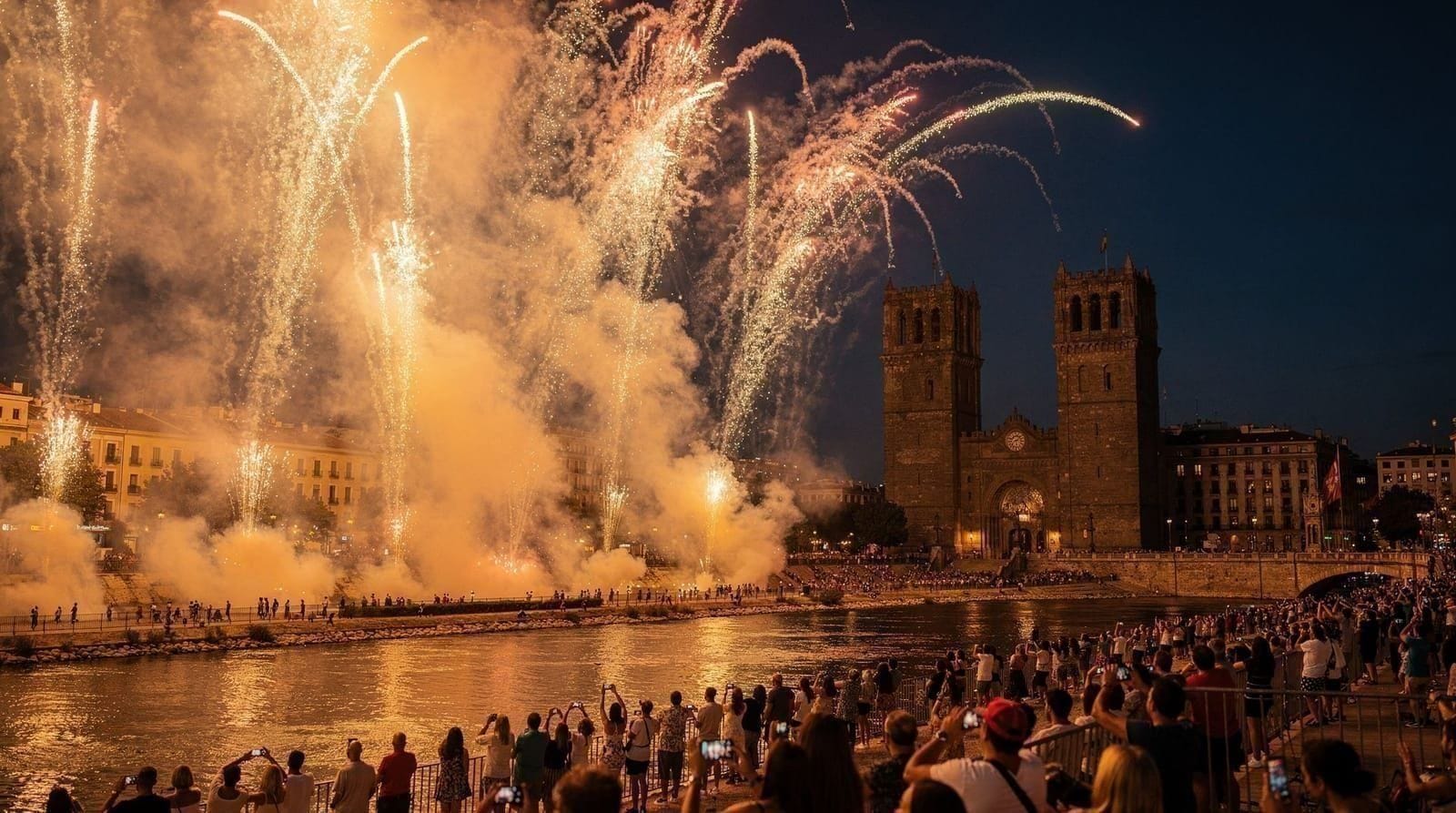
The limitation of all these options: on La Cremà night (19 March), the main burning ends after midnight, and public transport back to suburban towns may not run. Plan either to stay until the first morning service or arrange taxi transport in advance (book a taxi company the week before — individual hailing is very difficult on 19 March).
Practical booking advice
Use platforms with free cancellation: book early with free cancellation, then cancel and re-book if you find better prices 6–8 weeks out (rates sometimes drop slightly after the peak booking rush).
Read the cancellation policy carefully: some hotels apply a 30-day non-refundable policy during festival periods. Some Airbnb hosts have cancelled confirmed bookings and re-listed at inflated prices — this violates platform rules but happens. Look for reviews specifically mentioning the festival period.
Consider checking in 12–14 March: arriving before the climax week means far better prices for the first nights and a calmer context to orient yourself before the intensity of 15–19 March.
Shared accommodation: renting an apartment through Airbnb or similar for a group of 4–6 people is often more cost-effective than individual hotel rooms. A well-located 3-bedroom apartment during Las Fallas climax at €500/night is €167 per room — comparable to mid-range hotel rates.
Book a Fallas guided tour while your accommodation is still available — these sell out faster than hotels
What not to do
Do not book a city-centre hotel expecting quiet: anywhere within a kilometre of Plaza del Ayuntamiento will have significant noise on 18–19 March. If you need uninterrupted sleep, stay further out or use industrial-grade earplugs.
Do not assume you’ll find accommodation on arrival: the 17–19 March window has essentially no walk-in availability at any price. Even for the 15–16 March period, last-minute options are scarce.
Do not use a car: the city centre is closed to vehicles for much of the festival period, parking is unavailable, and the city’s streets are simply impassable for cars during La Cremà and the major events.
Making the most of your base
Once the bed is sorted, the rest of the trip falls into place more easily. Plan your first morning around something calm: a slow breakfast, a wander through the neighbourhood fallas near your hotel, and an early look at the monuments before the streets fill. A guided option helps if you want the stories behind the satirical figures; a guided walk through the Fallas monuments with a local explaining the symbolism pairs well with a base in the centre, since you start and finish close to your hotel.
If you arrive a few days before the climax, use the extra time for the city itself. A walking tour of the historic centre gives you your bearings in the old town while the streets are still manageable, and it makes the later, busier days easier to navigate on your own. Our free walking tours guide lists the no-booking alternatives.
For meals, the festival rewards flexibility. Restaurants near the main sights get crowded and rushed, so eating in your own neighbourhood is usually calmer and better value. The eat like a local guide and the esmorzaret and almuerzo guide show how locals structure the day, and the tapas in Ruzafa guide is handy if you are based south of the centre. Watch out for tourist-menu traps near the busiest squares; the tourist menu traps guide explains what to avoid.
Planning the rest of the week
Accommodation is only one piece. The Valencia during Fallas itinerary shows how to sequence the days, the Nit del Foc guide covers the fireworks night in detail, and the festivals calendar helps if you want to combine the trip with other events. Budget travellers should also look at the Valencia on a budget guide for ways to offset the high room rates. For a more narrative take from a first-timer’s point of view, read Fallas first-timer and the shorter blog companion, where to stay during Fallas.
Neighbourhood comparison at a glance
| Neighbourhood | Atmosphere | Noise level | Typical price premium |
|---|---|---|---|
| Ruzafa | strong, local fallas, walkable | high, especially 18–19 March | high |
| Eixample | convenient, near the station | moderate | high |
| El Carmen | maximum, most central | very high | highest |
| El Cabanyal | authentic, quieter, near beach | low–moderate | lower |
| Outside Valencia | none directly, commute in | low | lowest, but late-return logistics apply |
If you’re not staying in the centre
Commuting in from Sagunto or Xàtiva works well for the daytime and early-evening events, but La Cremà on 19 March runs past midnight — plan the return trip before you commit to that base. If your dates overlap with Las Fallas 2027 planning, book the accommodation stage first; it fills up faster than any single event ticket. For the full festival structure, see the Las Fallas complete guide and the day-by-day breakdown.
Frequently asked questions about Where to stay during Las Fallas
How far in advance should I book accommodation for Las Fallas?
For 15–19 March (the climax period), book 6–9 months in advance for reasonable rates and selection. For the first two weeks of March, 2–3 months ahead is usually sufficient. Don't wait: accommodation inventory in Valencia proper genuinely sells out for the 17–19 March window, and last-minute prices are punishing.What is the realistic cost of accommodation during Las Fallas?
A mid-range hotel room that costs €80–120 per night in normal periods will typically cost €200–400 per night during 17–19 March. Budget options are largely gone. The price spike starts around 14–15 March and peaks on 18–19 March. Some hosts cancel bookings and re-list at higher prices — use platforms with confirmed reservations and read cancellation policies carefully.Is El Carmen a good place to stay during Las Fallas?
El Carmen is atmospheric and central but extremely noisy during Las Fallas, particularly on 18–19 March. The narrow streets amplify firecrackers, music, and crowd noise. If you are a light sleeper or need quiet, El Carmen is a poor choice. If you want to be in the middle of the action at any hour, it is convenient — but bring ear plugs for sleeping.Should I stay in Valencia city or outside?
Staying outside Valencia (Xàtiva, Sagunto, Alboraia, or even Buñol) with commuting by Cercanías regional train is a legitimate and cost-effective strategy. The train connection is reliable and running extended hours during Las Fallas. The trade-off is you cannot walk home after the 01:00 Cremà — you either wait for the first morning train or take a taxi (scarce and expensive on 19 March).Which neighbourhood gives the best balance of atmosphere and sleep?
Ruzafa (Russafa) gives the best Las Fallas atmosphere while being slightly south of the densest noise. The neighbourhood has excellent fallas of its own, good restaurants, and is a 15-minute walk from Plaza del Ayuntamiento. Eixample is calmer and has more mid-range hotels. Both have metro access.Are Airbnb prices also inflated during Las Fallas?
Yes — Airbnb, Booking.com, and all platforms apply the same market rates. Apartments can be worth the premium if you are travelling as a group of 4+, since the per-person cost becomes comparable to a hotel room. Check carefully for Airbnb hosts who list normally and then cancel bookings to re-list at higher prices — look for Superhost status and strong reviews.What about staying near the train station?
The Estació del Nord area (Eixample, near Calle Xàtiva) has good hotel density and is very convenient for arrival, departure, and escaping the city for quieter nights. It is a 15-minute walk from Plaza del Ayuntamiento and well-served by the metro.Can I still find accommodation if I book only 4-6 weeks before Las Fallas?
It's possible but risky and expensive. Some inventory does open up as cancellations occur, and staying outside Valencia (Xàtiva, Sagunto, Alboraia) remains realistic even close to the dates. For central Valencia during 17-19 March specifically, expect very limited choice and top-end pricing at that notice.Is it worth staying near Estació del Nord specifically for the mascletà?
The daily mascletà (fireworks concert) happens at Plaza del Ayuntamiento at 14:00, a short walk from Estació del Nord and Eixample hotels. Staying nearby means you can nap before or after without a long walk, which matters given the late nights during the festival.Is it cheaper to book directly with hotels?
Sometimes marginally. Hotels are not obliged to honour Booking.com best-price guarantees during festival periods. Call the hotel directly after finding rates on OTAs — some will match or beat the online price, particularly for multi-night stays.Are hostels available during Las Fallas?
Yes, but they fill up quickly. Backpacker hostels in the El Carmen area (Valencia has several established hostels on Calle Quart and nearby streets) are booked up for the climax period several months ahead. Prices at hostels increase significantly but remain the cheapest option in the city.What is the noise level in different Valencia neighbourhoods at night?
During La Cremà night: very loud everywhere within 1.5 km of the city centre. From 15–18 March: consistently noisy in El Carmen and Plaza del Ayuntamiento area; moderate but noticeable in Ruzafa and Eixample; quieter in El Cabanyal and north Valencia neighbourhoods. The noise comes from street-level firecrackers (traques) set off by residents and festival-goers, not just official events.Is it worth upgrading to a better hotel during Las Fallas?
Yes, specifically for blackout curtains and noise insulation. Higher-end hotels (NH Collection, Vincci, Meliá portfolio) in Valencia tend to have better acoustic insulation and heavier window treatments — meaningful when you need to sleep before the 14:00 mascletà.
Top experiences
Bookable activities with verified prices and instant confirmation on GetYourGuide.