Las Fallas Valencia: the complete guide to the festival
Valencia: the ultimate Fallas tour — celebrate like a local
Duration: 3 hours
When is Las Fallas and what actually happens?
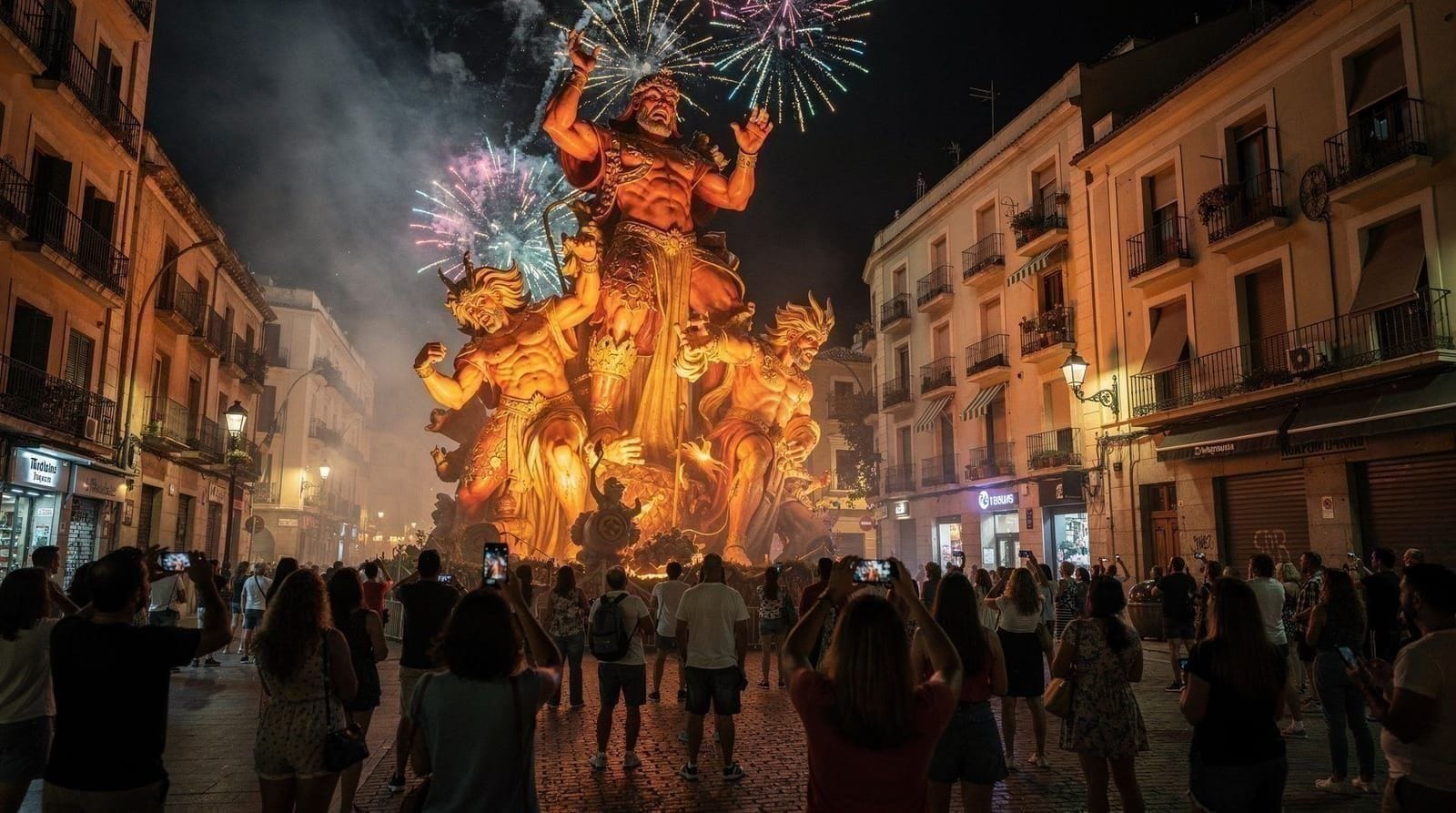
Las Fallas runs 1–19 March every year in Valencia. For 19 days, the city fills with giant satirical sculptures (ninots and fallas), daily gunpowder explosions (mascletàs) at 14:00 in Plaza del Ayuntamiento, the flower offering (ofrenda de flores) on 17–18 March, nightly fireworks at 23:59 on 15–18 March (the Nit del Foc is the 18 March display), and the burning of all the sculptures on 19 March (La Cremà). It is a UNESCO Intangible Cultural Heritage since 2016.
Las Fallas is one of the loudest, most visually overwhelming, and most genuinely local festivals in Europe. For 19 days every March, Valencia transforms into a city of giant sculptures, non-stop gunpowder explosions, late-night music, and spectacular fire. Understanding how the festival is structured — rather than just showing up — makes the difference between a confusing sensory overload and one of the great travel experiences in Spain.
| Dates | 1–19 March every year |
| Cost to attend | Free (mascletàs, ofrenda, Cremà); guided tours €15–30 |
| Climax nights | 15–19 March (book accommodation 6+ months ahead) |
| Best base | Ciutat Vella, Ruzafa, or El Cabanyal for walking access |
| UNESCO status | Intangible Cultural Heritage since 2016 |
What Las Fallas actually is
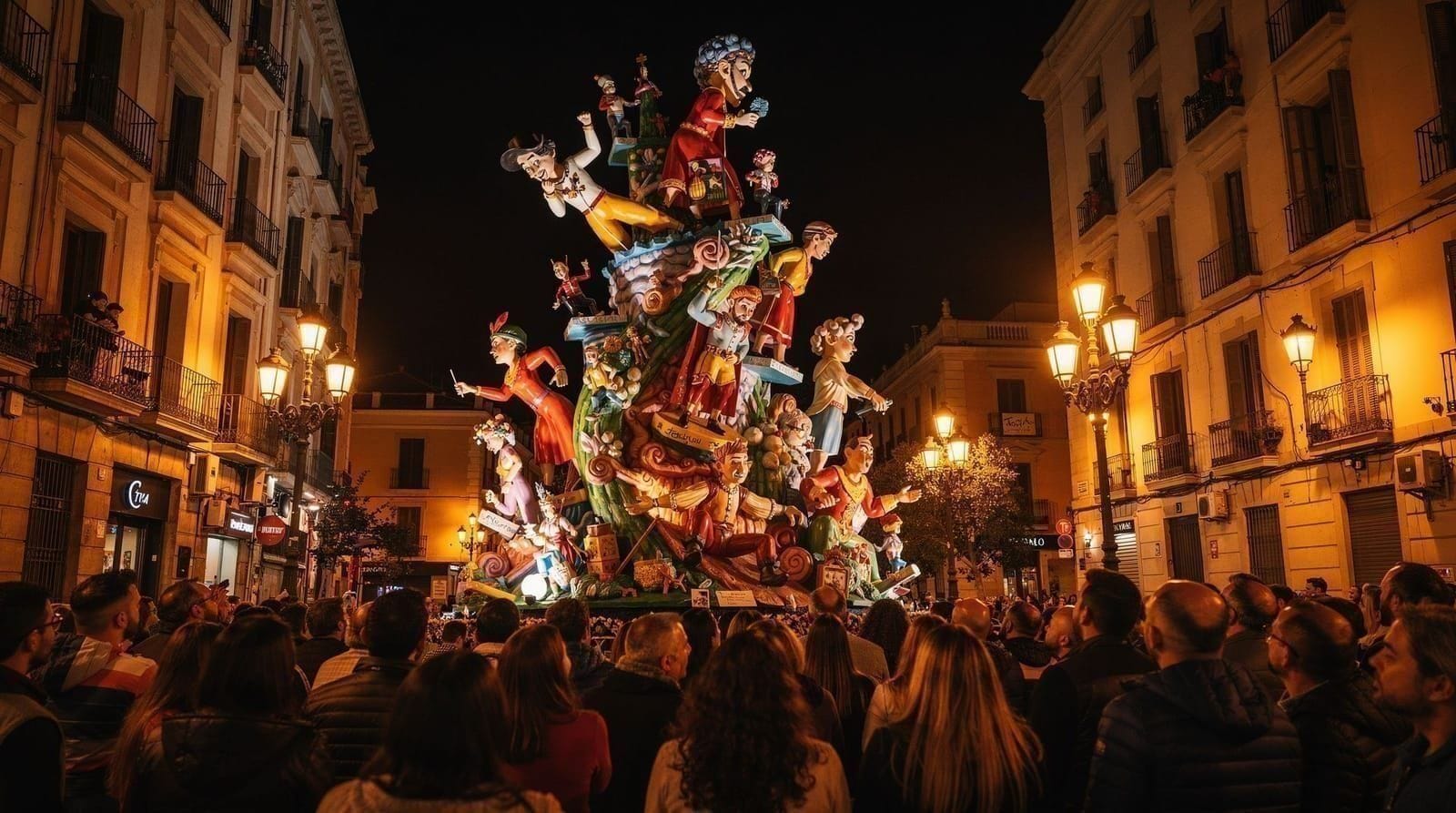
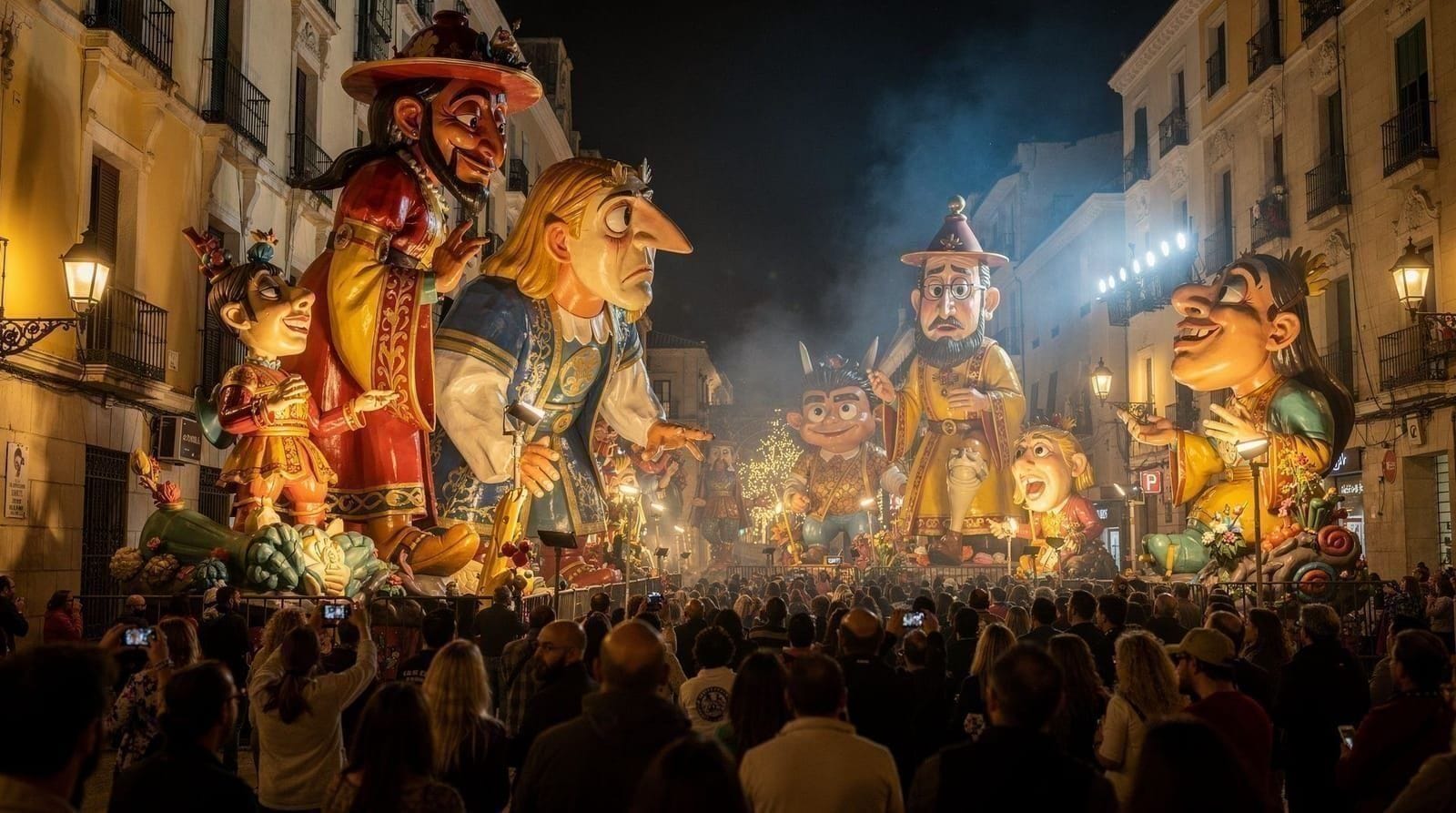
The festival grew from the medieval tradition of carpenters burning their wood shavings and old candle stands (parots) on the feast day of their patron saint, St. Joseph, on 19 March. Over centuries, the burning of discarded wood evolved into the burning of increasingly elaborate satirical sculptures mocking politicians, celebrities, and local figures. Today, some 800 fallas (the sculptures) are erected across Valencia by neighbourhood associations (comissiones falleras) that spend the entire year planning, funding, and building their entry.
The sculptures range from small neighbourhood fallas of a few square metres to enormous multi-storey structures in the city centre costing hundreds of thousands of euros. Every falla includes at least one ninot (individual figurine) that is exempt from burning: the most popular ninots, voted on by the public, are preserved in the Museu Faller (Fallas Museum, Plaza de Monteolivete 4). The rest — including the main structures — burn on 19 March.
The event has been a UNESCO Intangible Cultural Heritage since 2016. It draws an estimated 1.5–2 million visitors during the climax week, making accommodation planning the most critical logistical decision for any visitor.
The festival calendar in full
1–14 March: the festival builds
The fallas sculptures are installed in public spaces across the city during the first two weeks of March. This is actually an excellent time to visit: the sculptures are up, the city is in festive mode, and prices and crowds are lower than during the climax week.
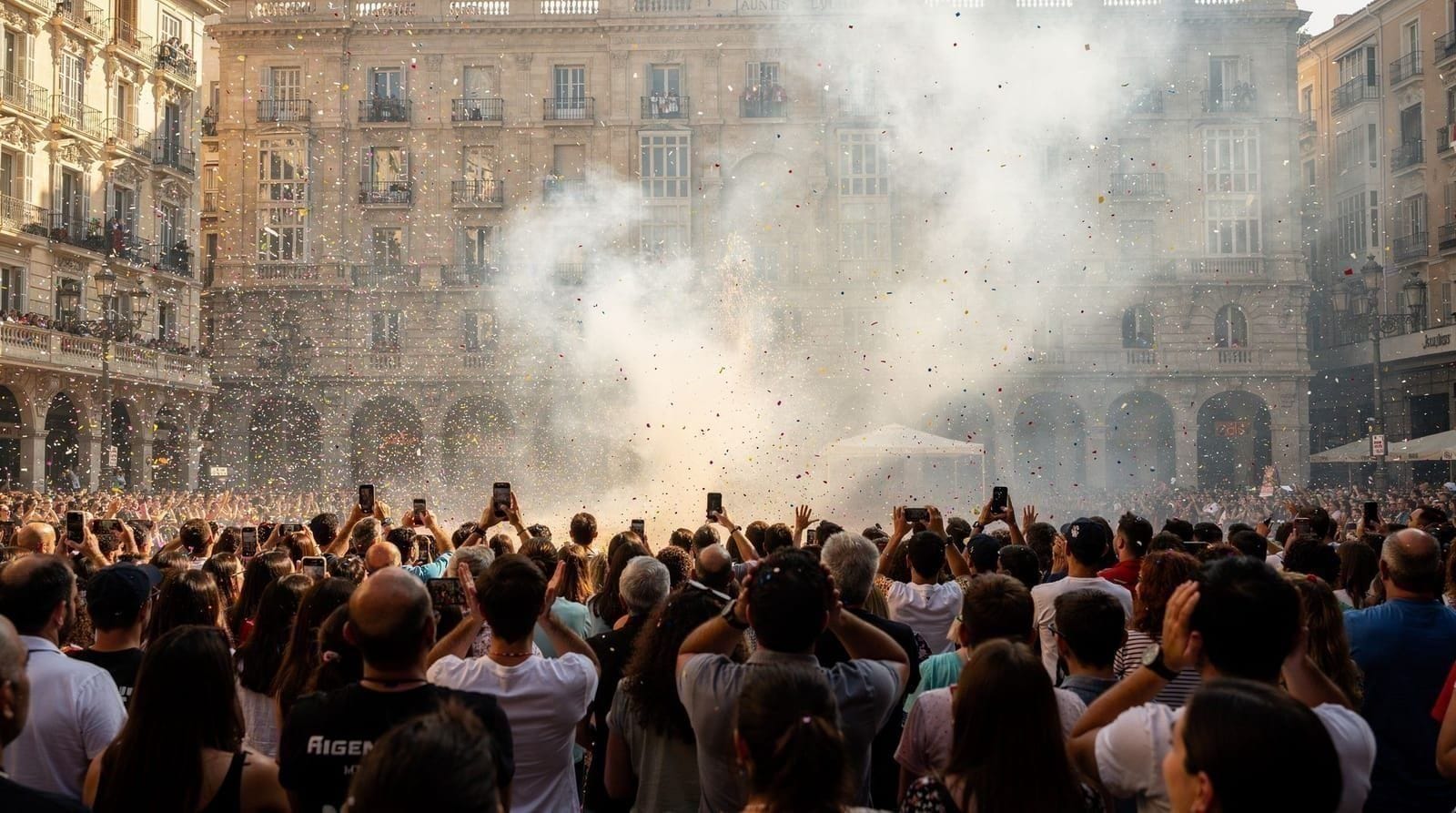
Daily mascletàs begin on 1 March at 14:00 in Plaza del Ayuntamiento. Each neighbourhood also organises its own firecrackers, music, and street parties. Traditional food stalls selling buñuelos de calabaza (pumpkin fritters) and hot chocolate appear throughout the city.
The Fallas Museum at Plaza de Monteolivete 4 is worth visiting during this period when it is less crowded — it displays the winning ninots preserved from burning over the past century and gives context for what you’ll see on the streets.
Visit the Fallas Artists’ Quarter — see giant sculptures being created in the workshops before the festival starts
15–18 March: the climax period
The intensity rises sharply on 15 March. This is when the best fireworks begin, the ofrenda de flores crowds the cathedral quarter, and the city essentially stops sleeping.
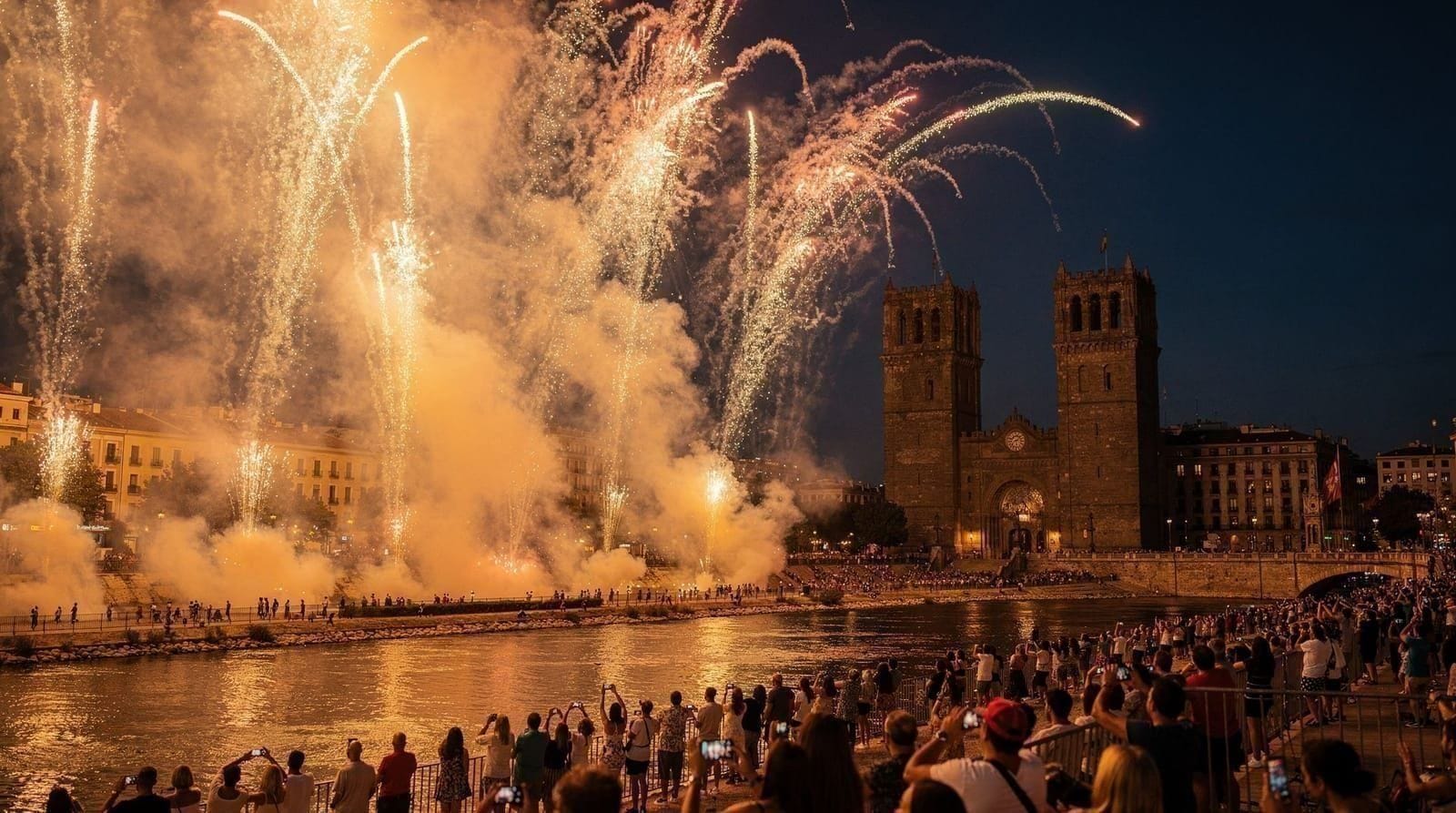
15–18 March, at 23:59: nightly fireworks. On 15 March they are launched from Plaza del Ayuntamiento (L’Alba de les Falles); on 16–18 March from the Monteolivete bridge in the Turia riverbed. The 18 March display is the Nit del Foc, the largest.
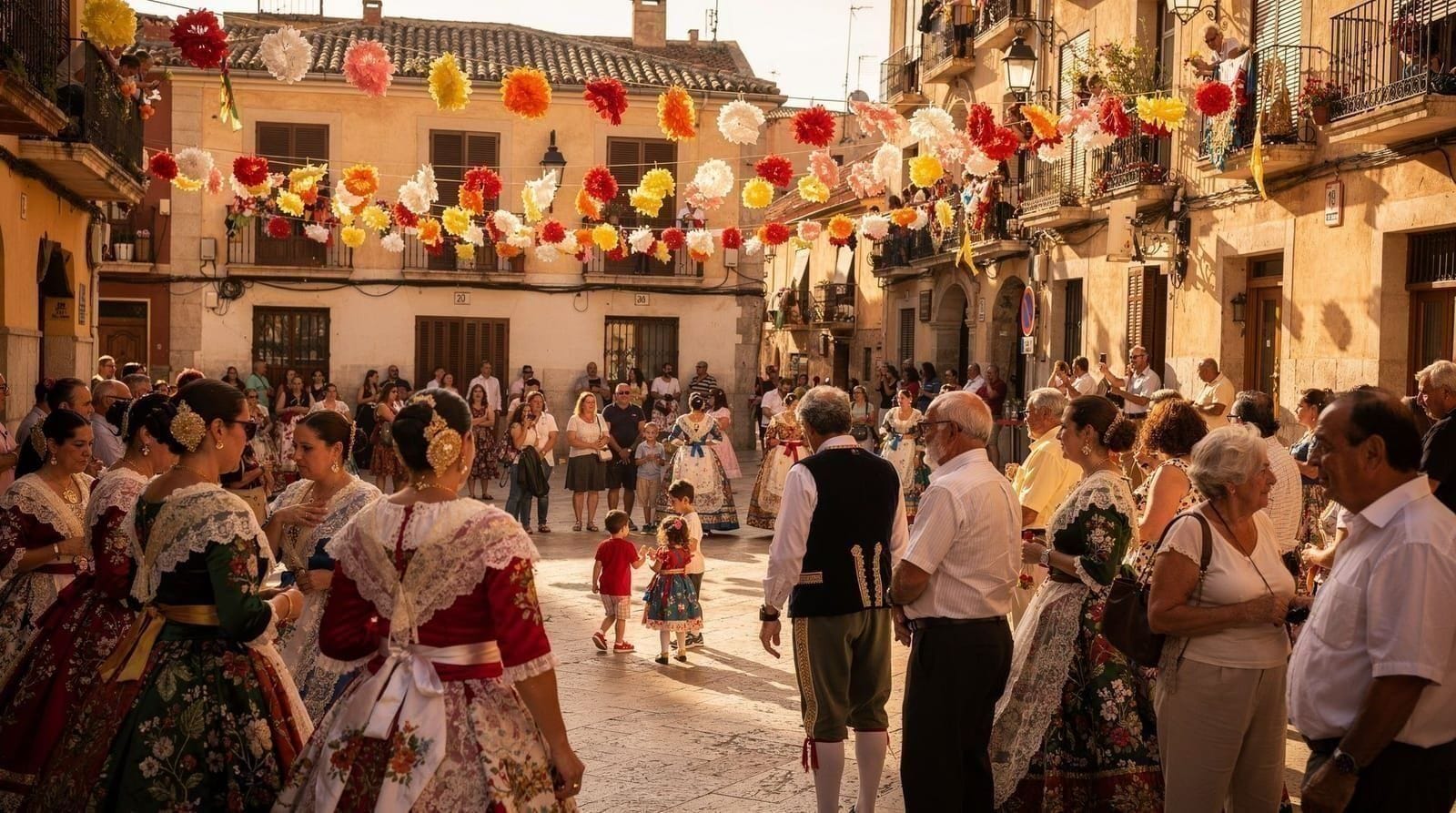
17–18 March, from 15:30 until about 01:00: Ofrenda de flores. Tens of thousands of falleras in traditional dress walk in procession through the old town to Plaza de la Virgen, each carrying flowers that are placed on a frame outside the Basilica de la Virgen. By the end of the two nights, the Virgin’s 15-metre wooden frame is covered entirely in carnations and roses, creating a mass of colour that photographs magnificently.
Daily from 14:00: Mascletàs continue. The 17, 18, and 19 March mascletàs tend to be the most elaborate of the festival.
19 March: La Cremà
The day starts with the Cabalgata del Fuego (around 19:00 in 2026), then the children’s fallas burn from around 20:00. Other fallas burn from around 22:00; the main city-centre falla (in Plaza del Ayuntamiento) is the last to burn, around 23:00 in 2026. Check fallas.com for the 2027 times. The city’s fire brigade stands at every burning with hoses to protect surrounding buildings.
The most memorable experience is walking between several neighbourhood burnings in Ruzafa, El Carmen, or El Cabanyal rather than trying to get close to the main plaza, which is impossibly crowded. The heat from a large burning falla is substantial — stand at least 30 metres back.
The sculptures: what to look for
The fallas range enormously in style, size, and ambition. The city rates them in categories (sections 1, 2A, 2B, etc., down to the smallest neighbourhood fallas), and prizes are awarded by judges in each category. Winning the top prize in Section 1 is enormously prestigious and contested.
The best large fallas are typically found on Calle Sueca (Ruzafa), Convento Jerusalén, and the flagship falla in front of the Town Hall. The Sección Especial (special section) fallas are the tallest and most expensive. Maps showing all falla locations are available from the tourist office on Calle Paz or from the official Las Fallas app.
Neighbourhood fallas, especially in El Carmen, Ruzafa, and El Cabanyal, are often more interesting than the city-centre giants — they tend to be more experimental, politically pointed, or locally specific. Walking through these neighbourhoods at night, when the structures are lit and the streets are full, is one of the pleasures of the festival.
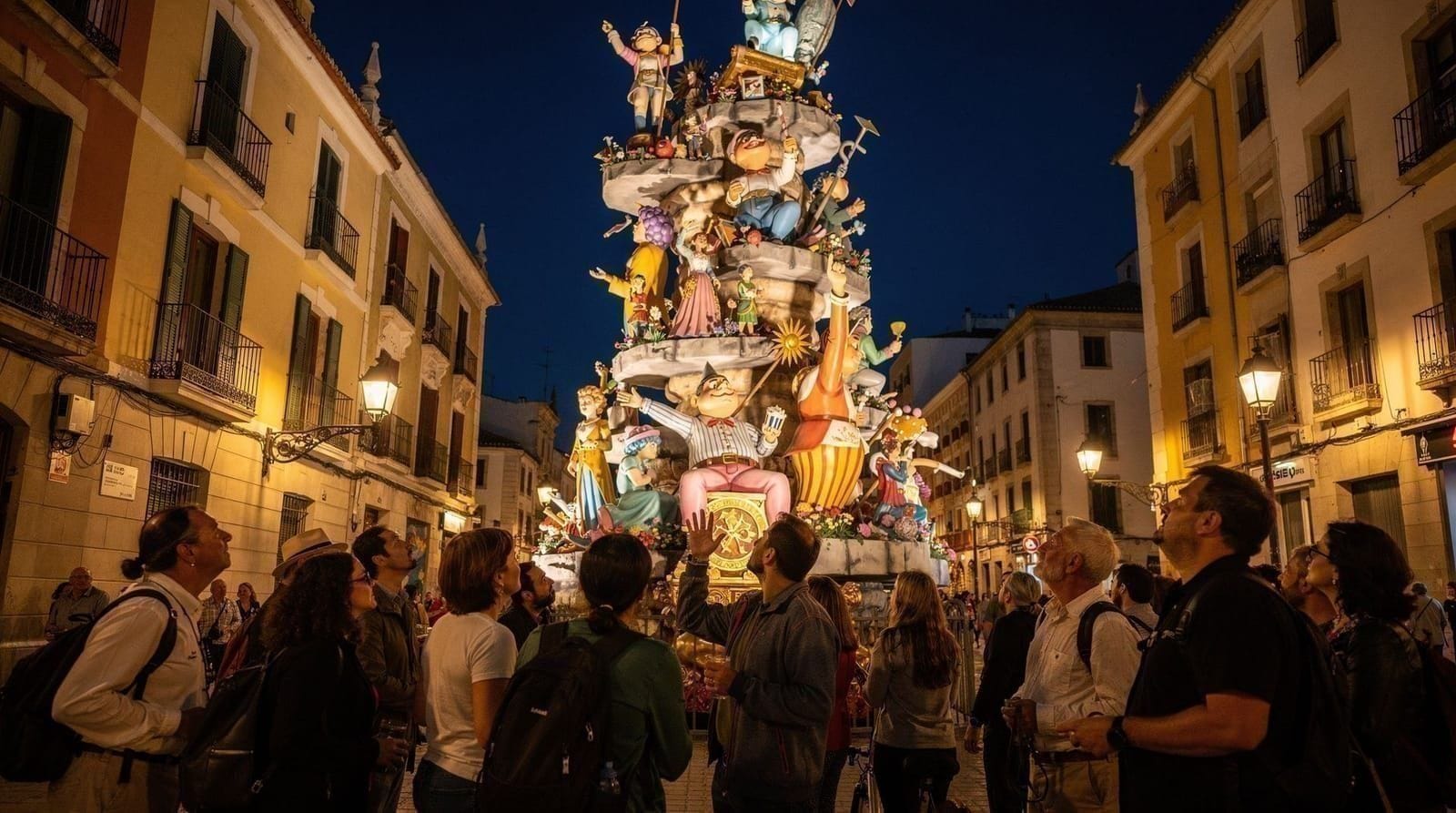
Join a guided Fallas walking tour to understand the symbolism, history, and neighbourhood politics behind the sculptures
Practical logistics
Getting around during Las Fallas
The city’s EMT bus network operates extended hours during Las Fallas, but many central streets are closed to traffic. Walking is the primary mode. The metro runs late but platforms become extremely crowded on peak nights (18–19 March). Valenbisi bike-sharing is a good option for moving quickly between neighbourhoods during the day (check valenbisi.es for current rates).
Pickpockets are active during Las Fallas — the crowds during mascletàs and the ofrenda are specifically targeted. Use a money belt or front-pocket wallet, keep phones in zipped pockets, and be especially alert in Plaza del Ayuntamiento and Plaza de la Virgen.
Food during Las Fallas
The festival is as much a food event as a fireworks event. Street stalls appear throughout the city selling:
- Buñuelos de calabaza: deep-fried pumpkin fritters dusted with sugar, traditionally eaten with thick hot chocolate. This is the definitive Las Fallas snack and is sold everywhere.
- Churros con chocolate: a standard Spanish street food, ubiquitous here.
- Paella: restaurants do brisk trade during the festival. The tourist trap risk is elevated; stick to establishments away from Plaza de la Virgen and the cathedral area. See the authentic paella guide for reliable options.
The Mercado Central remains open during Las Fallas (closed Sundays) and is a good source of fresh produce and sandwiches if you need a break from street food.
Noise and safety
Las Fallas is genuinely very loud. The mascletàs, neighbourhood firecracker shows (called castells de foc or traca), and the street-level explosions that locals set off from handheld tubes throughout the festival create a near-continuous soundscape of explosions from 1–19 March.
Earplugs are essential for the mascletà if you have any sensitivity to loud noise. Children under 12 should have proper ear defenders. The city experiences an increase in minor burns and hearing incidents during Las Fallas each year.
Neighbourhood-by-neighbourhood experience
El Carmen (Ciutat Vella)
The old town is the historic heart of the festival. The fallas here tend to be mid-size but with strong traditional artistic styles. The El Carmen neighbourhood is narrow and atmospheric for walking, though extremely crowded on peak nights.
Ruzafa / Russafa
Ruzafa fields some of the most ambitious and politically charged fallas in the city. The neighbourhood association here has won multiple section prizes. The streets around Calle Sueca and Calle Cuba are excellent for falla-viewing and have good bars for shelter from the noise.
El Cabanyal
El Cabanyal has a distinct maritime working-class festival culture. The fallas here are locally funded with community contributions, and the neighbourhood burning on 19 March has a raw communal atmosphere rarely found in the city centre.
Best viewing spot by event
Not every event rewards the same strategy — some favour arriving early and staking a fixed position, others reward mobility.
| Event | Best spot | Strategy |
|---|---|---|
| Mascletà | Plaza del Ayuntamiento, centre | Arrive 30–45 min early; side streets give a partial view with an easier exit |
| Ofrenda de flores | Plaza de la Virgen, near the Basilica | Arrive early (the procession starts at 15:30) for a front position; the procession itself can be watched anywhere along its route through El Carmen |
| Nit del Foc | Turia gardens near the old riverbed, or Passeig de l’Albereda | No need to arrive more than 30 minutes early — the gardens are wide and sightlines are good from most points |
| La Cremà | A neighbourhood falla in Ruzafa or El Cabanyal rather than the main plaza | Walk between two or three smaller burnings instead of queuing for the overcrowded city-centre one |
Photographing the festival
Las Fallas rewards patience more than gear. For the ofrenda, a position along the El Carmen procession route gives better candid shots of the falleras’ dresses than the crowded plaza itself, where you are mostly shooting the backs of heads. For La Cremà, keep a respectful distance — the heat from a large falla can warp a phone held too close — and expect smoke to affect visibility in the final minutes. Mascletà photography is largely pointless: it is a sound experience, and most visitors put the camera away and just feel it. If you want a genuinely quiet, well-lit look at the artistry, visit fallas in the 1–14 March build-up window rather than during the smoke and crowds of the climax.
Guided options
First-time visitors benefit significantly from a guided introduction to the festival — the symbols, the neighbourhood politics behind specific sculptures, and the logistics of getting to the right place at the right time are not obvious from the street.
2-hour guided Fallas tour: understanding the history, art, and symbolism of the sculptures with a local guide
The day-by-day Las Fallas schedule gives a full breakdown of daily events with times. For accommodation strategy, see where to stay during Las Fallas.
Frequently asked questions about Las Fallas Valencia
What are the must-see events during Las Fallas?
At minimum: one mascletà in Plaza del Ayuntamiento (daily at 14:00, free, arrive 30 minutes early for position), the ofrenda de flores on 17–18 March (free procession), the Nit del Foc fireworks on 18 March (the climax, launched at 23:59), and La Cremà on 19 March, when the main burnings start around 22:00. The fallas sculptures themselves can be viewed day and night — neighbourhood fallas are often more creative than the prized city-centre ones.When do the Nit del Foc fireworks happen?
Nit del Foc ('Night of Fire') is the name for the main fireworks display on 18 March, launched at 23:59 from the Monteolivete bridge area in the Turia riverbed. Other displays happen every night from 15–17 March at 23:59 too (15 March in Plaza del Ayuntamiento, 16 and 17 March at the Monteolivete bridge). The 18 March display is the largest. Position yourself along the Turia gardens for good views; check the official programme on fallas.com for the exact spot and time each year.When is the ofrenda de flores and how does it work?
The Ofrenda de Flores (Offering of Flowers) takes place over two evenings: 17 and 18 March, from about 15:30 until around 01:00 each day. Falleras (participants in traditional dress) carry bunches of flowers through the old town to the Cathedral's Plaza de la Virgen, where the flowers are arranged on a massive wooden frame shaped as the Virgin's mantle. It is a free procession and one of the most photogenic events of the festival — arrive early for a position on the plaza.What is a mascletà and where do you watch it?
A mascletà is a structured daytime gunpowder percussion display — not a visual fireworks show but a rhythmic sequence of firecracker explosions designed to be felt as much as heard. Each mascletà lasts about 5 minutes and peaks in an overwhelming simultaneous barrage. They take place daily from 1–19 March at exactly 14:00 in Plaza del Ayuntamiento. Arrive by 13:30 to get a good position. Earplugs are advisable; the pressure wave from the finale is physically intense.What is La Cremà and when does it happen?
La Cremà ('The Burning') is the final night of Las Fallas, 19 March. All the fallas sculptures — which can be 4 storeys tall and took months to build — are set on fire. Neighbourhood fallas burn first (children's fallas from around 20:00, all other fallas from around 22:00 in the 2026 programme), with the main city-centre falla in Plaza del Ayuntamiento burning last, around 23:00 in 2026. The city's firefighters are present at every burning and use hoses to protect surrounding buildings. Watching several neighbourhood burnings on foot gives a better experience than crowding Plaza del Ayuntamiento.How far in advance should I book accommodation for Las Fallas?
Book at least 6 months in advance for 15–19 March (the climax period). Hotel prices multiply by 3–5× during this window. The 1–14 March period is still busy but significantly cheaper and quieter. Some visitors stay 30–45 minutes outside Valencia and commute in by regional train (Cercanías) to avoid the accommodation premium. Airbnb prices in the city centre also surge; check suburban Valencia or nearby towns like Sagunto or Xàtiva.Is Las Fallas suitable for children?
Yes, but with caveats. The mascletàs are extremely loud — children under 10 need proper ear protection (not just fingers). The evening street parties and late-night Cremà mean sleep is difficult during the climax nights. On the positive side, the sculptures are colourful and entertaining, traditional sweets (buñuelos, churros) are sold everywhere, and the flower-gathering atmosphere of the ofrenda is genuinely family-friendly.Is Las Fallas a UNESCO World Heritage event?
Yes. Las Fallas de Valencia was inscribed on UNESCO's Representative List of the Intangible Cultural Heritage of Humanity in 2016, alongside the Falles de la Comunitat Valenciana (which includes surrounding towns). The recognition specifically covers the festival's craftsmanship traditions, the community associations (comissiones falleras), and the festive culture around the event.What time do the mascletàs happen?
Daily at exactly 14:00 in Plaza del Ayuntamiento, from 1 to 19 March. There is a countdown and formal announcement. Arrive by 13:30 for a decent position.Is Las Fallas free?
Most events are free: mascletàs, ofrenda, street fallas viewing, La Cremà. Some neighbourhood fallera association parties require membership or ticket. Guided tours cost €15–30 per person. The Fallas Museum entry is €2 (free on Sundays).Can I attend if I arrive on 18 or 19 March only?
Yes, but expect very high prices, limited accommodation, and extreme crowds. Two days is enough to experience a mascletà, the ofrenda climax, Nit del Foc, and La Cremà — but accommodation must be booked months ahead.Is it worth visiting Las Fallas with young children?
The daytime events (fallas sculpture viewing, ofrenda procession) are excellent for children. The late-night events (Cremà, Nit del Foc) run past midnight and the noise is extreme. A realistic approach is to base younger children on an earlier schedule and send one adult to the late events.Where is the best position for the mascletà?
Inside Plaza del Ayuntamiento, central to the spectacle — but this requires arriving 30–45 minutes early. The balconies of the Hotel Inglés and nearby buildings are sometimes available as paid viewing positions. Side streets opening onto the plaza give a partial view with a better escape route.Do I need to buy tickets for anything?
The main events are free. Guided tours should be booked in advance for 15–19 March as they sell out. If you want to attend any official fallera association galas or dinners, these require advance contact with the association. La Tomatina (August) requires a ticket — see the La Tomatina guide.What should I pack for Las Fallas?
Earplugs or ear defenders (non-negotiable for mascletàs), comfortable walking shoes (you will cover 15+ km/day during the climax), a light jacket for cool March nights, and a small daypack. Avoid large backpacks in crowds. Sunscreen is useful on clear days when temperatures can reach 18–20°C.
Top experiences
Bookable activities with verified prices and instant confirmation on GetYourGuide.