Montanejos nature guide: thermal pools and the Mijares gorge
Valencia: waterfalls and thermal springs tour with swimming
What makes Montanejos worth visiting from Valencia?
Natural thermal pools at 25°C year-round in a dramatic limestone gorge, 100 km northwest of Valencia. The Fuente de los Baños thermal spring enters the Mijares river and creates natural bathing pools accessible by a short walk. The surrounding gorge offers hiking, wild swimming, and canyon scenery absent from the coastal region.
Montanejos has been visited for its thermal waters since Roman times. The village of 400 people sits at the entrance to the Mijares river gorge, where a thermal spring emerges at a constant 25°C and flows into the river, warming the natural pools to bathing temperature. The surrounding gorge — limestone cliffs 100–200 metres high, pine forest clinging to the rock face — provides the dramatic setting.
| Where | 100 km northwest of Valencia, inland Castellón province |
| Cost | Free to swim outside peak periods; guided day trips around €30–60 |
| Time needed | Half a day minimum, full day recommended |
| Getting there | 1.5–1h45 by car; limited bus from Castellón only |
| Best time | September–November or March–May, before 10:00 in summer |
What makes Montanejos useful for visitors to Valencia is its proximity (100 km, 1.5–2 hours) and the contrast with the coastal plain. After days of city, beach, and Mediterranean seafood, an afternoon of cold mountain air and warm water in a limestone gorge resets the senses in ways that are difficult to achieve anywhere near the coast.
Why come here rather than stay on the coast
Valencia gives you city streets, beaches and rice dishes, and many visitors leave without ever seeing the interior. Montanejos is one of the easiest ways to fix that. If you have already worked through the best beaches near Valencia and want something that feels like a different region, the gorge delivers. It also works as a counterweight to a museum-heavy stay: after the City of Arts and Sciences, a day spent outdoors in the river valley feels like a proper change of pace.
The trip suits couples, groups of friends and families who like being outside. It suits people who dislike fixed schedules less well, because the day depends on the weather, the water level and how crowded the pools are. Treat it as a day built around the river rather than a checklist of sights, and you will enjoy it more.
The thermal pools: what to expect
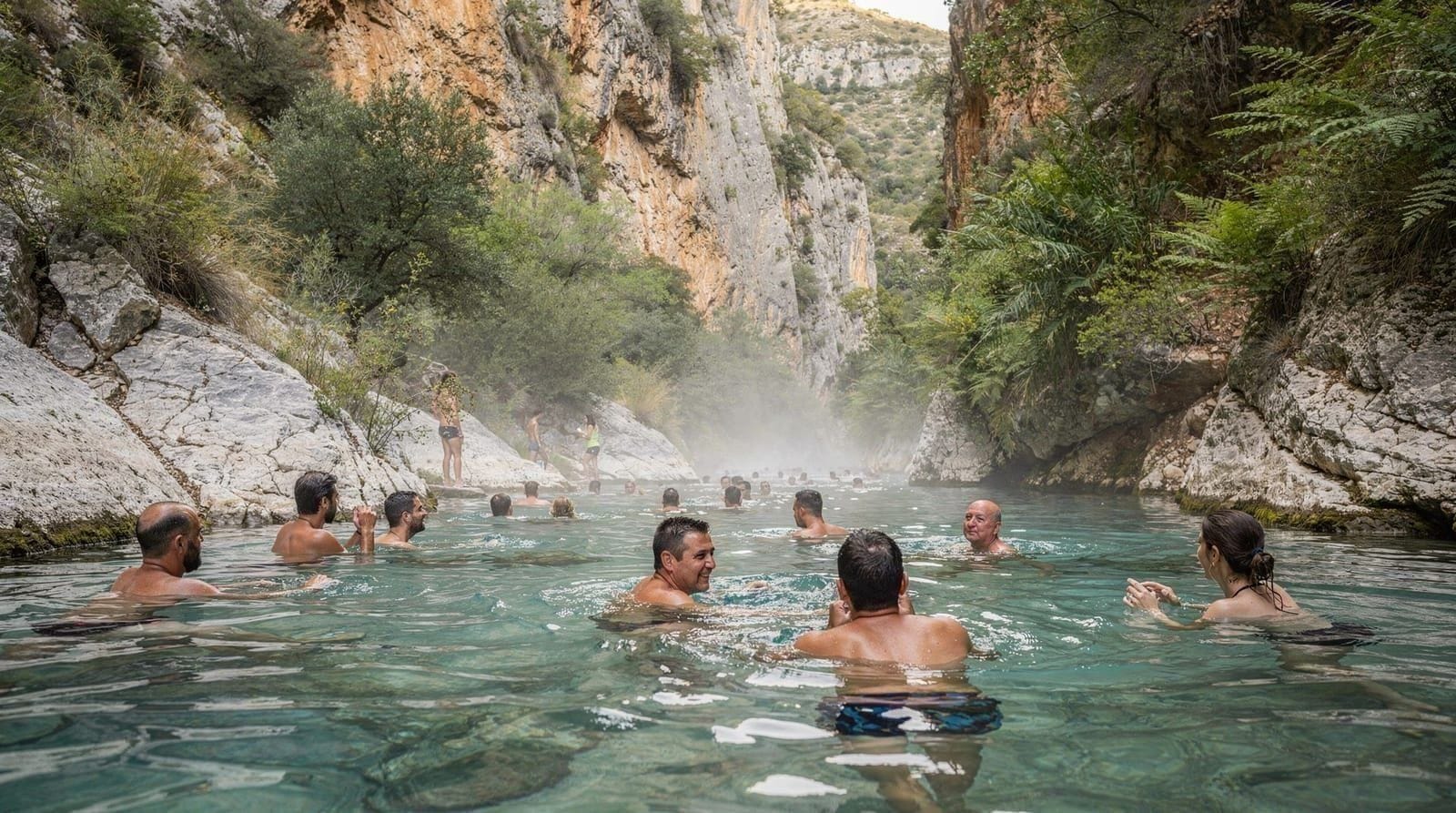
The Fuente de los Baños spring emerges from the limestone at 25°C — the temperature of a warm swimming pool — and feeds directly into the Mijares river. In winter, the contrast between the cold air and warm water creates a steam effect over the pools that is atmospheric and completely natural.
The main bathing area is a 15-minute walk from the village centre along the marked path (Sendero de los Baños). The path is flat and well-maintained for most of its length. At the pools themselves, the river has formed a series of natural basins — some shallow enough for children, some deep enough for adult swimming. The water is clear; you can see the bottom at 4–5 metres in calm conditions.
What the water is like: Slightly sulphurous smell near the spring outlet (common with thermal mineral water), clear colour, pleasant temperature. The mineral content gives it a slightly silky texture. It is not a spa — it is a river with warm water, with all the natural character that implies.
Facilities: Minimal. There are changing areas near the pool entrance in summer, a small kiosk, and toilets. Do not expect spa infrastructure. Come prepared with towels, water shoes (the river bed is stony), and food if you plan to spend several hours.
Crowds in summer: August weekends are busy. Very busy. The pools were designed by nature for 40 people at a time; they attract several hundred on August Saturdays. The crowd management system (timed entry reservations in some years) exists for exactly this reason. Check current requirements before the visit and book if required.
 waterfalls and thermal springs tour with swimmingCheck availability
A sensible rhythm for the day: walk to the pools first, swim while the light is soft, eat something simple, then decide whether the gorge trail suits your energy and the conditions. Doing the walk after a long soak can leave legs heavy, so many people prefer to hike first and swim afterwards as a reward. Either order works; what matters is not rushing either half.
Etiquette at the pools: the basins are shared by everyone, so keep music low, take your rubbish back to the village, and leave the stones and vegetation where they are. Families often settle at the shallow edges, while stronger swimmers use the deeper basins; give each group some room.
The Mijares gorge hike
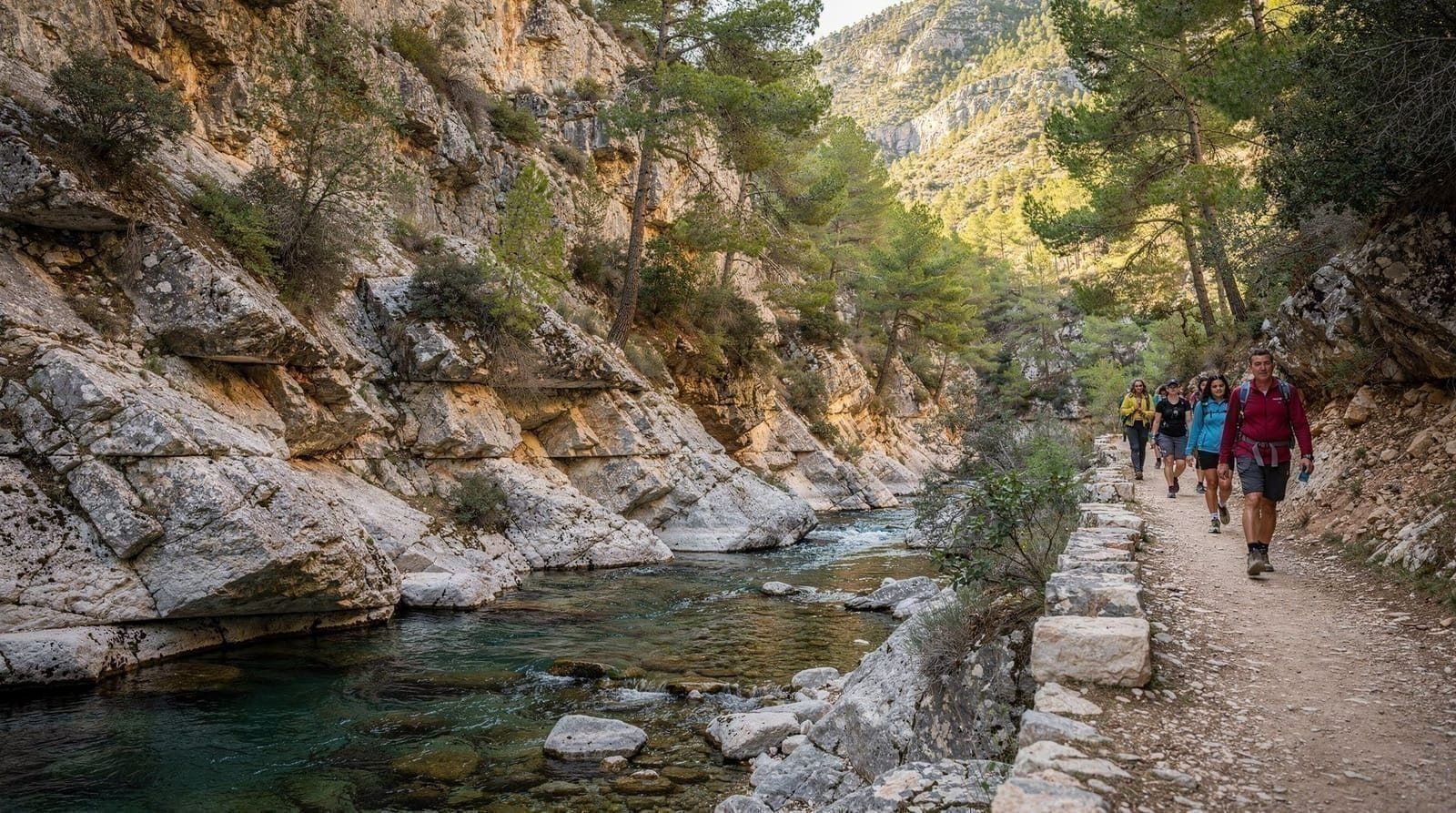
The Sendero del Río Mijares trail follows the river from the village upstream through the gorge. It is one of the most dramatic short walks in the Valencia region — accessible to any reasonably fit adult but with enough exposure on the gorge sections to make it feel genuinely adventurous.
Distance and difficulty: The route to the main thermal pools and back is 3 km return and easy. The full gorge trail extending upstream is approximately 7 km return and involves:
- Rock ledge sections with fixed chains and ropes
- River crossings (in summer, you wade; in spring, water levels may be higher — check before attempting)
- Scrambling over boulders in the canyon
The full trail is classified as medium difficulty. Normal walking shoes are adequate for the lower sections; proper walking shoes (with grip) are needed for the upper gorge sections. Do not do the full trail in flip-flops.
The upper gorge: Beyond the main bathing zone, the canyon narrows and the walls close to 30–40 metres apart in places. The colour of the rock — white and ochre limestone, heavily eroded — changes with the light. Carry water and do not rely on the river water (however clear it looks) for drinking.
Guided versions: The standard gorge hike can be done independently with a good map. Several operators offer guided versions that include transport from Valencia, the guide narration, and return transport — see the tours section below for options.
 natural wonders — exploring the top 4 waterfallsCheck availability
Reading the conditions: the river is the main variable. After rain, crossings that are easy in dry weather can become slow and slippery, and the sensible choice is to shorten the route or stay with the pools. If you are unsure, ask in the village before setting out. The same caution applies to anyone walking alone: tell someone your plan, carry water, and turn back when the trail stops feeling comfortable. The deeper reasons to hike in the gorge are the quiet and the scale of the walls, and neither disappears if you turn around early.
Photography: the upper canyon rewards patience. Light changes the colour of the rock through the day, so a slow walk with time to stop gives better pictures than a fast one. Keep phones and cameras in a dry bag near water. If photography is the main goal of your trip, our photography tours guide covers other places where it pays to bring a camera.
Walking with a group or a guide: if you would rather not navigate on your own, the guided versus self-guided comparison helps you decide how much structure you want. Independent walkers who like to set their own pace will be happy on the standard trail; those who value commentary and a ready-made transport plan will prefer a tour.
Getting there from Valencia
By car: The most practical option. A-23 motorway from Valencia toward Sagunto, then inland via Segorbe and the CV-20 to Montanejos. Total driving time 1.5–1 h 45 min. Park in the municipal car park at the village entrance (parking charges vary by season; check the Montanejos town hall site). Do not park along the approach road — fines are applied.
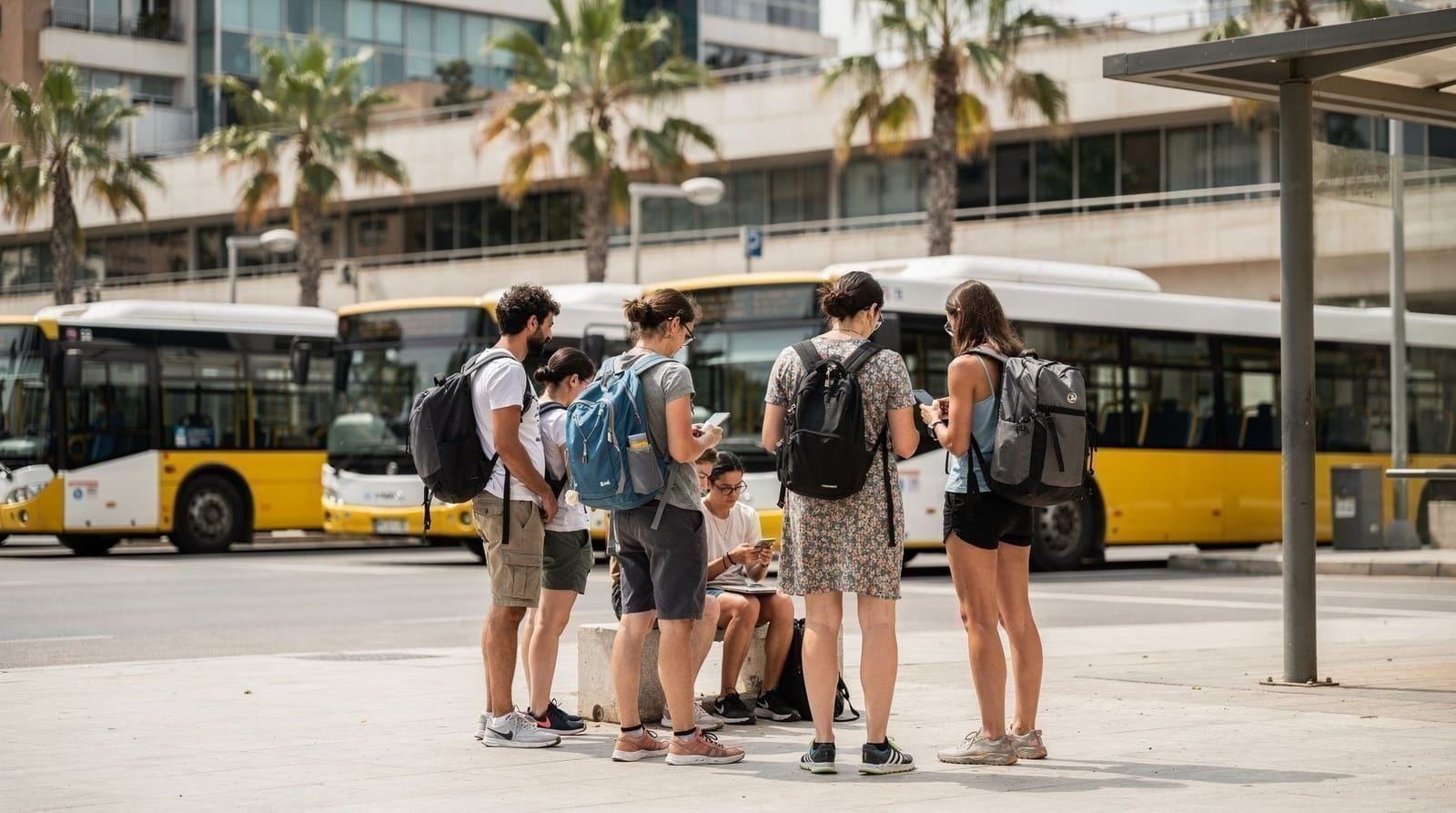
By bus: Buses from Castellón de la Plana (not Valencia) reach Montanejos 2–3 times daily, but the schedule is designed for local residents rather than day-trippers. This means an early afternoon arrival and a late morning departure. Check current HIFE bus company schedules. There is no direct bus service from Valencia to Montanejos.
Organised tours: Several Valencia-based operators run day trips to Montanejos with transport included. These cost €30–60 per person and are the practical solution for visitors without a car.
 day trip to explore waterfalls, springs and cavesCheck availability
Choosing between driving and a tour: driving gives freedom to stay as long as the water and light invite you, and to stop in small villages on the way. Our car rental day trips guide explains how to organise a rental for inland outings. If you prefer not to drive, the day trips without a car guide and the train day trips guide show what else is possible, while recognising that Montanejos itself is best reached by road or by an organised tour.
Start early: whichever option you pick, leaving Valencia early gives you the pools at their calmest and leaves margin for the return drive. Plan to be back on the road before you are tired, since a long day of swimming and walking makes the journey home feel longer.
What to bring
For a day at Montanejos:
- Swimwear (you will be in the water)
- Water shoes or sandals with grip (stony river bed)
- Towel and dry clothes for after swimming
- Food and water (shops in the village are limited and overpriced in summer)
- Sun protection (high altitude, reflective white limestone, strong sun)
- Walking shoes if you plan to do the gorge trail
- Small dry bag for phones and valuables
The village has several restaurants and bars that serve adequate food at acceptable prices — all-i-pebre and rice dishes are available, though the cooking here is not at the same level as the coast. If you want to know what the local rice-and-stew tradition is about before you order, read our all i pebre guide, and for a general approach to eating well on the road see how to eat like a local.
Bringing children: the shallow edges of the pools are the place for little ones, with an adult always within arm’s reach. Pack snacks, a change of clothes and something warm for after the swim, because wet children cool down fast in mountain air. For more ideas that suit families, see the Valencia with kids guide.
Keeping costs sensible: swimming in the river is free outside the Easter and summer controlled periods, so the main costs are transport, parking and food. Packing a picnic keeps the day cheap; the Valencia on a budget guide has more ways to stretch a travel budget.
Combining with nearby areas
Anna Lakes: The Paraje Natural Municipal de las Fuentes del Algar near Anna is 45 minutes east of Montanejos, with waterfalls and natural pools similar in character to Montanejos but smaller and gentler. See the Anna Lakes destination guide.
Segorbe: A small city 40 minutes east of Montanejos with a cathedral, old town, and the famous Entrada de Toros y Caballos festival (September). Worth an hour en route.
Sierra Calderona: The mountain range north of Valencia. See the Sierra Calderona guide for walking trails. Doable as part of an inland day if you are already away from the coast.
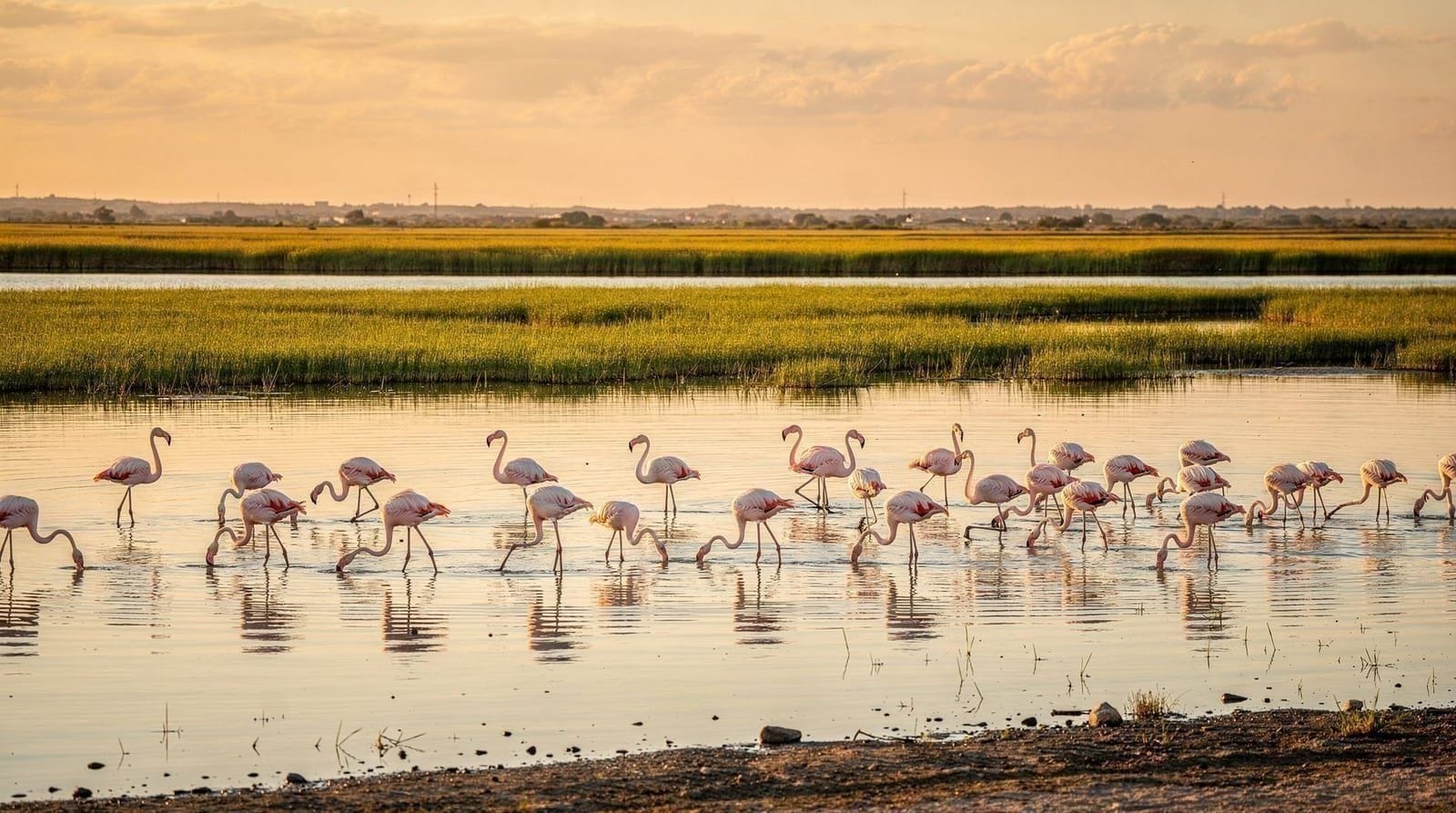
Other inland and nature trips: for a very different kind of nature day, the Albufera natural park offers lagoon landscapes close to the city, and the Albufera and Montanejos nature itinerary shows how the two can sit in the same trip. The Guadalest and Algar day trip is another water-and-mountain outing, and the Turia natural park guide covers greener ground nearer the city. Further afield, the hill village in the Bocairent guide pairs well with a car-based inland holiday.
Seasonal recommendations
If you are still deciding when to travel, the best time to visit Valencia guide sets the wider picture, and the seasonal pages for spring, summer, autumn and winter show what else is happening around the region in each period.
Autumn (September–November): The best season. Walking temperatures (15–22°C), warm water (25°C), autumn colour on the deciduous trees in the upper gorge, and crowds reduced to a manageable level after August. A November visit to see steam rising over the pools in cold morning air is one of the inland Valencia region’s most atmospheric experiences.
Winter (December–February): The gorge hike is excellent on clear winter days. The thermal pools remain at 25°C and are entirely different when the air is cold. Very few visitors. Some mountain sections can be slippery after rain.
Spring (March–May): Beautiful — the gorge vegetation is at its greenest, the water level is slightly higher from winter rains (more dramatic), and temperatures are pleasant for hiking.
Summer (June–August): The pools are at their warmest (the river is supplemented by summer sun). Crowds are the main issue. If visiting in summer, arrive before 10:00 on weekdays, or accept the weekend crowd reality and plan accordingly.
| Season | Water/air | Crowds | Verdict |
|---|---|---|---|
| Autumn (Sep–Nov) | 25°C water, 15–22°C air | Low after August | Best overall — steam effect on cool mornings |
| Winter (Dec–Feb) | 25°C water, cold air | Minimal | Atmospheric, dramatic steam; some slippery trail sections |
| Spring (Mar–May) | 25°C water, mild air | Low–moderate | Greenest gorge, higher water levels |
| Summer (Jun–Aug) | 25°C+ water, hot air | Very high on weekends | Arrive before 10:00 on weekdays or expect crowds |
For more on inland day trips from Valencia, see the day trips guide, the dedicated Montanejos thermal pools guide for pool-specific logistics, and the Montanejos destination page.
Frequently asked questions about Montanejos nature guide
How far is Montanejos from Valencia?
Approximately 100 km northwest, through the interior of Castellón province. Driving time is 1.5–1 h 45 min via the A-23 motorway and then provincial roads. There is limited public transport — a bus from Castellón de la Plana takes about 2 hours, but frequency is low. Most visitors come by car.What temperature is the water at Montanejos?
The Fuente de los Baños thermal spring maintains a constant temperature of 25°C year-round. This makes it warm enough for comfortable swimming in any month, which is the main attraction in autumn, winter, and spring when other outdoor water options are cold.When is the best time to visit Montanejos?
Autumn (September–November) and spring (March–May) are ideal: comfortable hiking temperatures, warm water, and far fewer visitors than August. Summer weekends in July and August see large crowds from Valencia and Castellón. Winter visits are possible and special — steam rises from the warm water in cold air.What hike can you do at Montanejos?
The main route is the Sendero del Río Mijares — a gorge trail that follows the river upstream from the village through limestone cliffs, past the thermal springs, and into increasingly wild canyon terrain. The full trail is about 7 km return. Sections of it require wading through the river (in summer) or using fixed ropes on rock ledges.Is Montanejos suitable for children?
The thermal pools near the village entrance are excellent for children — warm, shallow near the edges, and in a beautiful setting. The gorge hiking trail has some sections that are not suitable for young children (narrow ledges, river crossings). Families with children under 8 are better suited to the pool sections than the full trail.Do I need to pay to enter Montanejos pools?
The natural river pools are free and publicly accessible. In peak season (June–August), a reservation or timed entry system has been implemented in some years to manage crowds — check current requirements before visiting, as the system changes annually.
Top experiences
Bookable activities with verified prices and instant confirmation on GetYourGuide.