Turia Gardens Valencia: the complete park guide
Valencia: Turia Park guided bike tour
What are the Turia Gardens in Valencia?
The Turia Gardens (Jardí del Túria) is a 9 km linear park built in the former Turia riverbed after the river was diverted in 1957. It runs from the western edge of the city to the sea, passing through the old city and ending at the Ciudad de las Artes y las Ciencias. It is free, car-free, and one of Europe's best urban parks.
The Jardí del Túria is one of the most significant urban planning decisions in modern Spanish history, and Valencia residents know it. After the catastrophic floods of October 1957, the Turia river was diverted south of the city through an artificial channel. The old riverbed — 9 km long, 100–200 m wide — was then the subject of competing proposals, including a motorway. A sustained civic campaign in the 1970s and 1980s argued instead for a public park. The park won, and Valencia got what is now one of Europe’s longest urban green corridors: a continuous car-free park stretching from the western outskirts to the Ciudad de las Artes y las Ciencias and the sea.
| Where | Former Turia riverbed, western Valencia to the sea |
| Cost | Free; optional bike rental or guided tour |
| Time needed | 1–2hrs focused visit; half/full day combined with nearby sights |
| Getting there | Multiple entry points; metro Túria, Alameda, or Marítima-Serreria |
| Best time | Early morning or evening in summer; any time spring/winter |
The park from west to east
The Turia Gardens are divided into numbered sections (tramos), each with slightly different character:
Western sections (tramos 1–5): Quieter, more local character, less visited by tourists. These sections near the Palau de la Música and the Bioparc contain football pitches, running tracks, and family picnic areas. The mature plane trees provide good shade. Accessible via Nou d’Octubre metro station.
Central sections near the old city (tramos 6–9): The most architecturally significant stretch, where the park passes under the bridges of the old city walls. The bridges — the Pont de Serranos, the Pont de la Trinitat, the Pont del Real — are medieval and early modern structures now repurposed as pedestrian crossings over the park. The Fine Arts Museum sits on the north bank at this section; the Torres de Serranos is visible to the south.
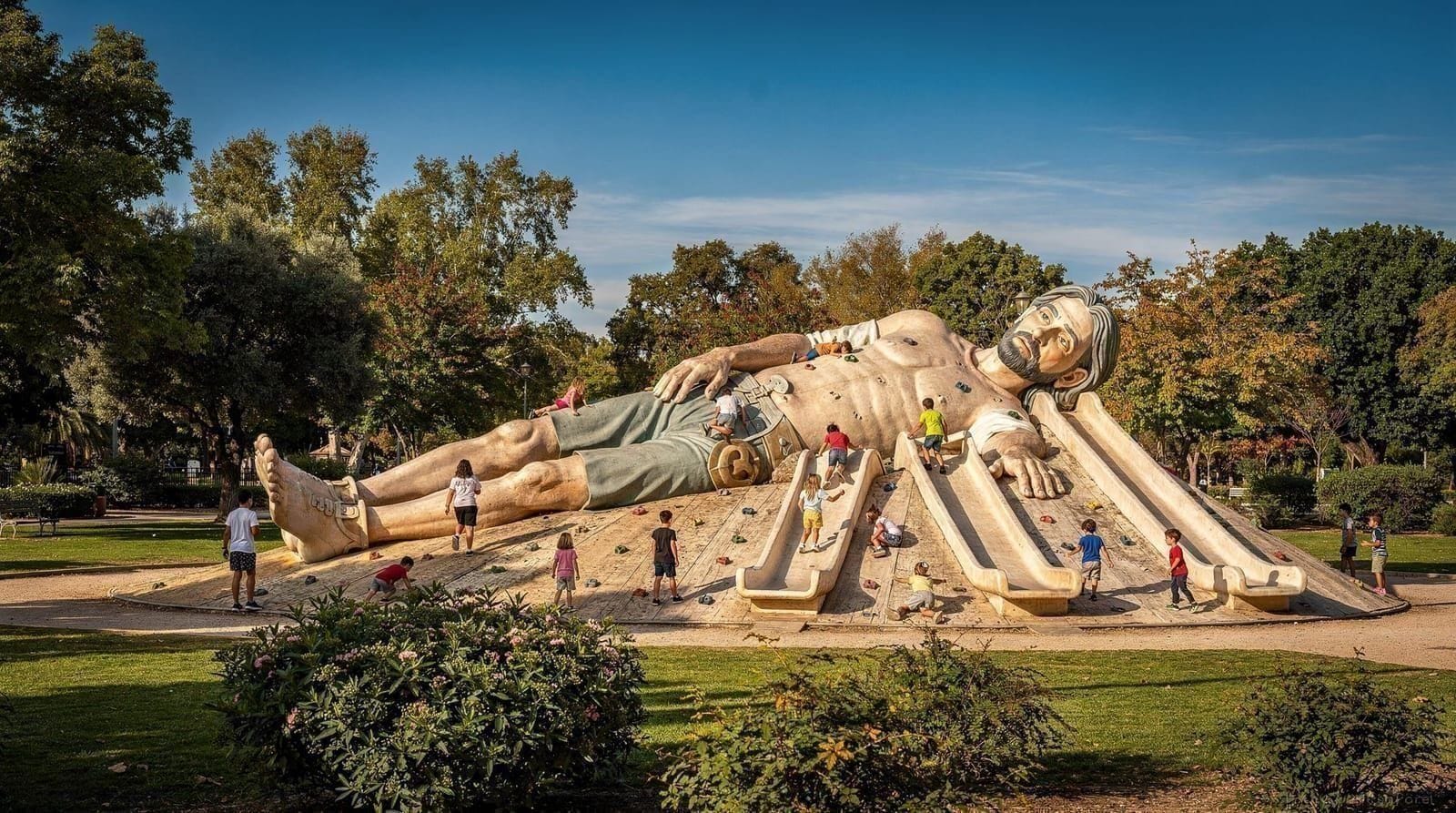
The Gulliver Park section (tramo 10): The Gulliver Park playground sits in the riverbed just east of the old city bridges. The giant Gulliver figure embedded in the landscape (40 m long, accessible by slides and ladders) is one of Valencia’s most popular free attractions for families.
Eastern sections toward City of Arts (tramos 11–18): The widest and most formal sections of the park, with the Palau de la Música concert hall (tramo 11) and the approach to the Ciudad de las Artes y las Ciencias in the final sections. The cycle path is at its widest and most separated from foot traffic in these eastern sections.
How to plan your first visit
The easiest mistake is to ask which single spot in the park is the best one. The gardens reward a different question: where do you want to end up? If your day is anchored on the City of Arts and Sciences, start near the old city and let the park carry you east, so the futuristic buildings appear gradually instead of all at once. If you are staying in El Carmen, the nearest ramps put you in the riverbed within minutes, and the walk west toward the Bioparc feels like leaving the city without ever really leaving it.
Visitors who only have a short stay can follow the logic of the one-day itinerary: cross the park on foot in the morning, spend the hottest hours indoors, and come back to the riverbed once the light softens. Anyone with more time will find that the first weekend itinerary treats the gardens as a recurring backdrop rather than a single stop, which is exactly how locals use them.
A few habits make the experience better. Carry water, because kiosks are not evenly spread along the route. Wear shoes you can walk in, since the paths are long even when they are flat. Keep to the correct side of the lane when cycling, and remember that joggers, dog walkers and children share the same corridor. Above all, do not try to see everything in one go: the park is a place to dip in and out of, and a short stretch walked slowly is worth more than the whole length rushed.
Cycling through the Turia Gardens
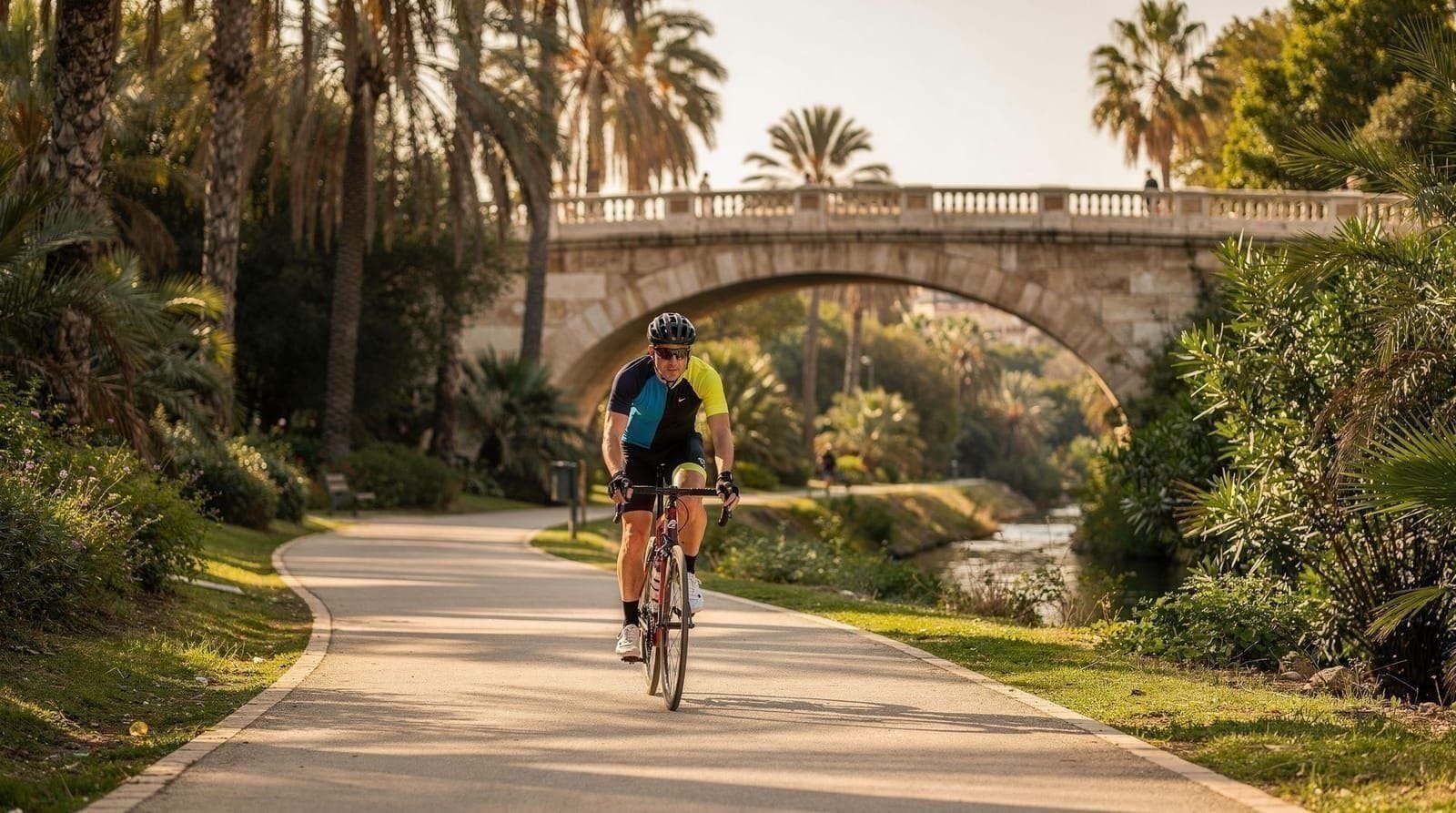
The Turia Gardens are Valencia’s premier cycling route. A dedicated cycle lane runs the full 9 km from the western park entrance to the Oceanogràfic entrance. The lane is separated from pedestrian paths for most of its length and is free of traffic for the entire distance.
Rental options:
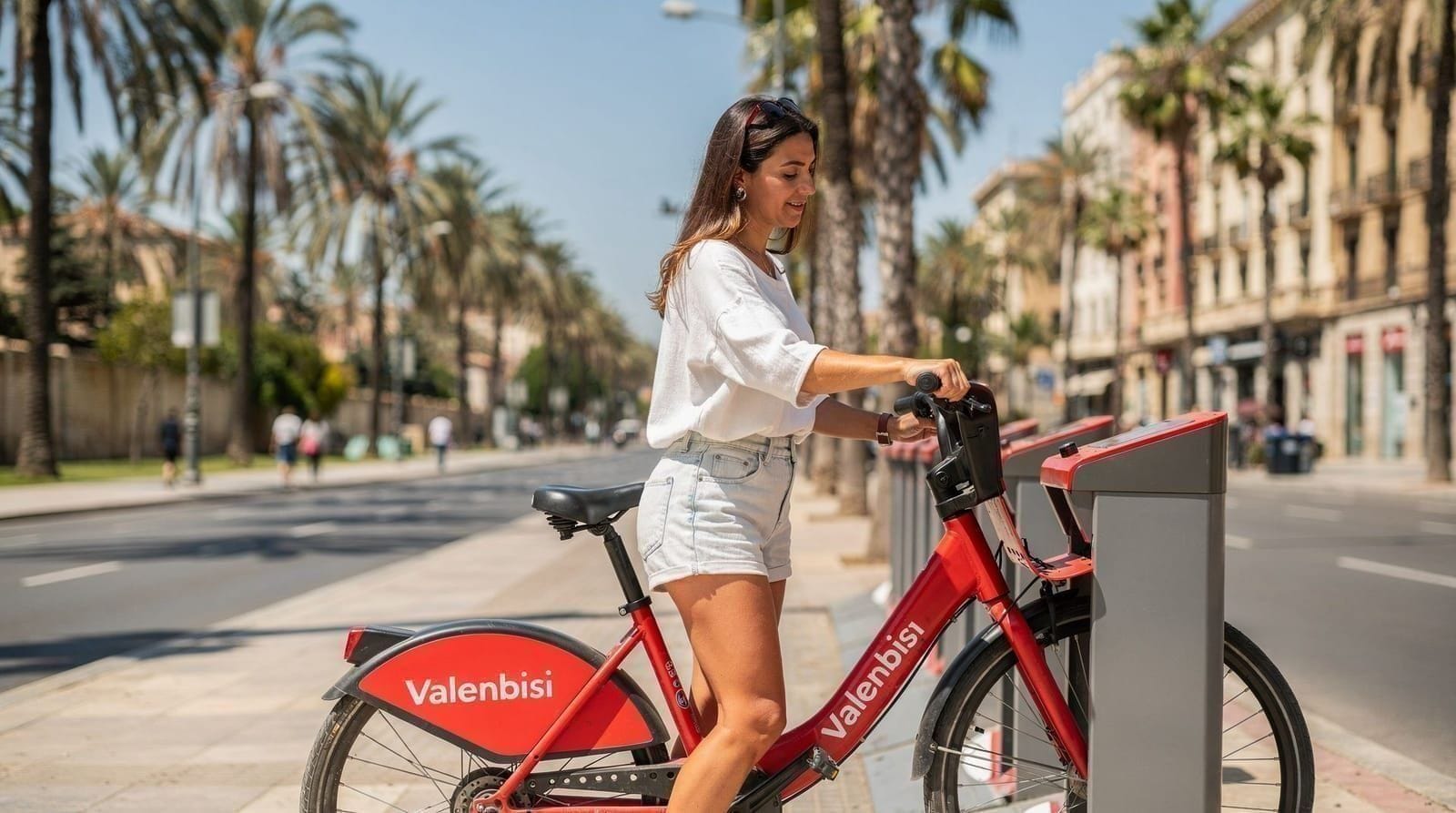
- Valenbisi: Valencia’s public bike-share system has stations at multiple entry points along the park. €6.70 for a 24-hour pass (first 30 minutes of each ride free). See the Valenbisi guide.
- Private rental shops: Several bike rental operators near the old city entry points offer hourly or half-day rentals, including e-bikes. Typical pricing: €5–8 per hour, €15–20 per day.
City-centre to City of Arts by bike: The full 4 km ride from Plaza de España to the Oceanogràfic entrance takes 20–25 minutes at a relaxed pace. No traffic lights, no cars, and almost entirely flat. This is the best way to approach the City of Arts complex.
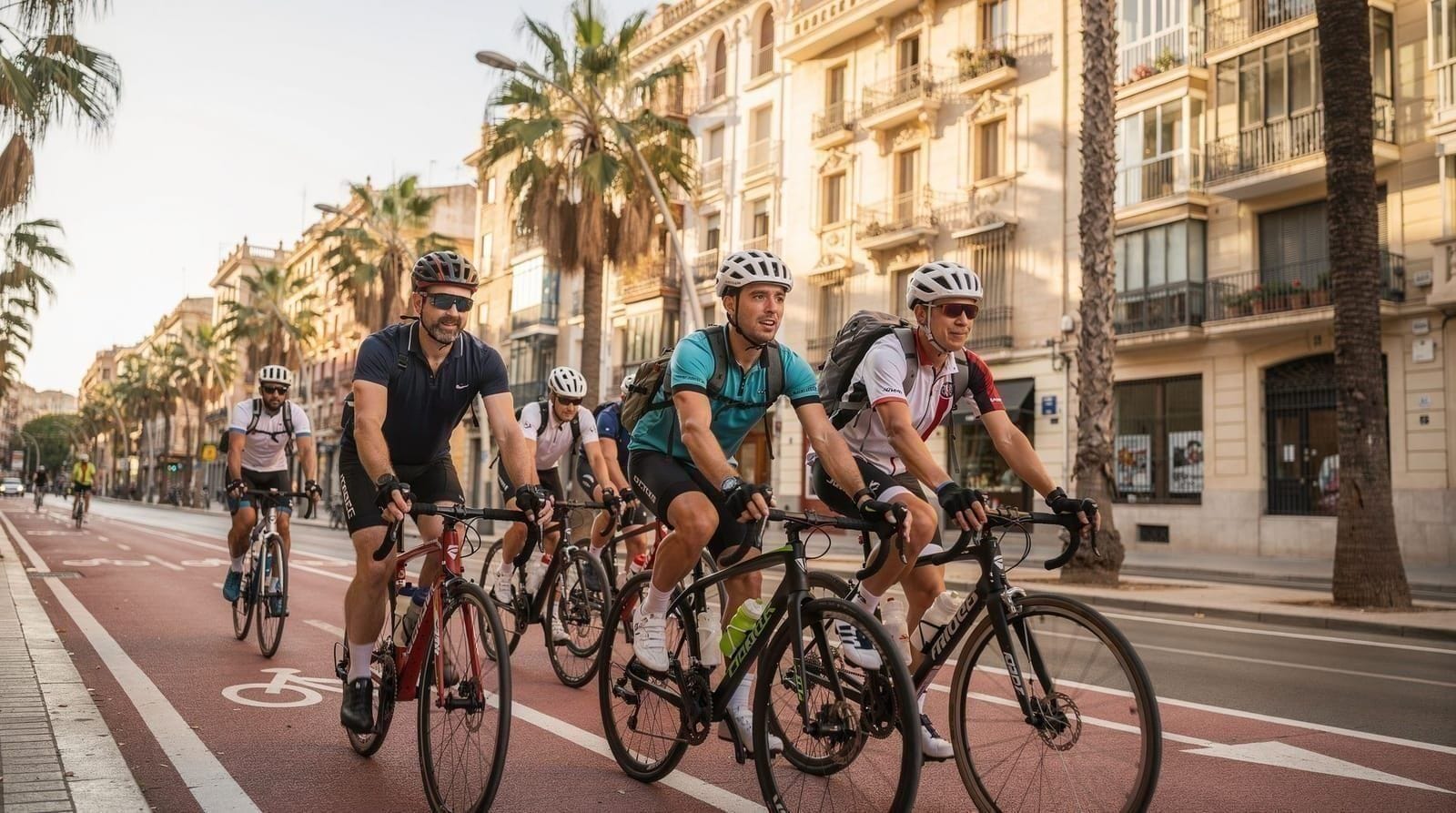 Turia Park guided bike tourCheck availability
What to do in the park
Running: The Turia Gardens are Valencia’s primary running destination. The flat surface, car-free environment, and shade from mature trees make it significantly better than running on city streets. Multiple distances are possible — a popular loop from the Torres de Serranos to the Palau de la Música and back is approximately 5 km. See the running in the Turia guide.
Football and sports: The western sections have marked football pitches available for informal use (no booking required, first-come basis). Basketball courts, tennis courts, and a skate park are distributed along the route.
Picnicking: Prohibited from bringing in large coolers or amplified music in some sections, but casual picnicking is universal throughout the park. The sections under the old city bridges have the most atmospheric picnic spots — sheltered, tree-covered, and near the medieval stone of the bridges above.
Segway tours: Guided segway tours that use the Turia Gardens as their primary route are one of the popular city experiences. The flat surface makes it ideal for first-time segway users.
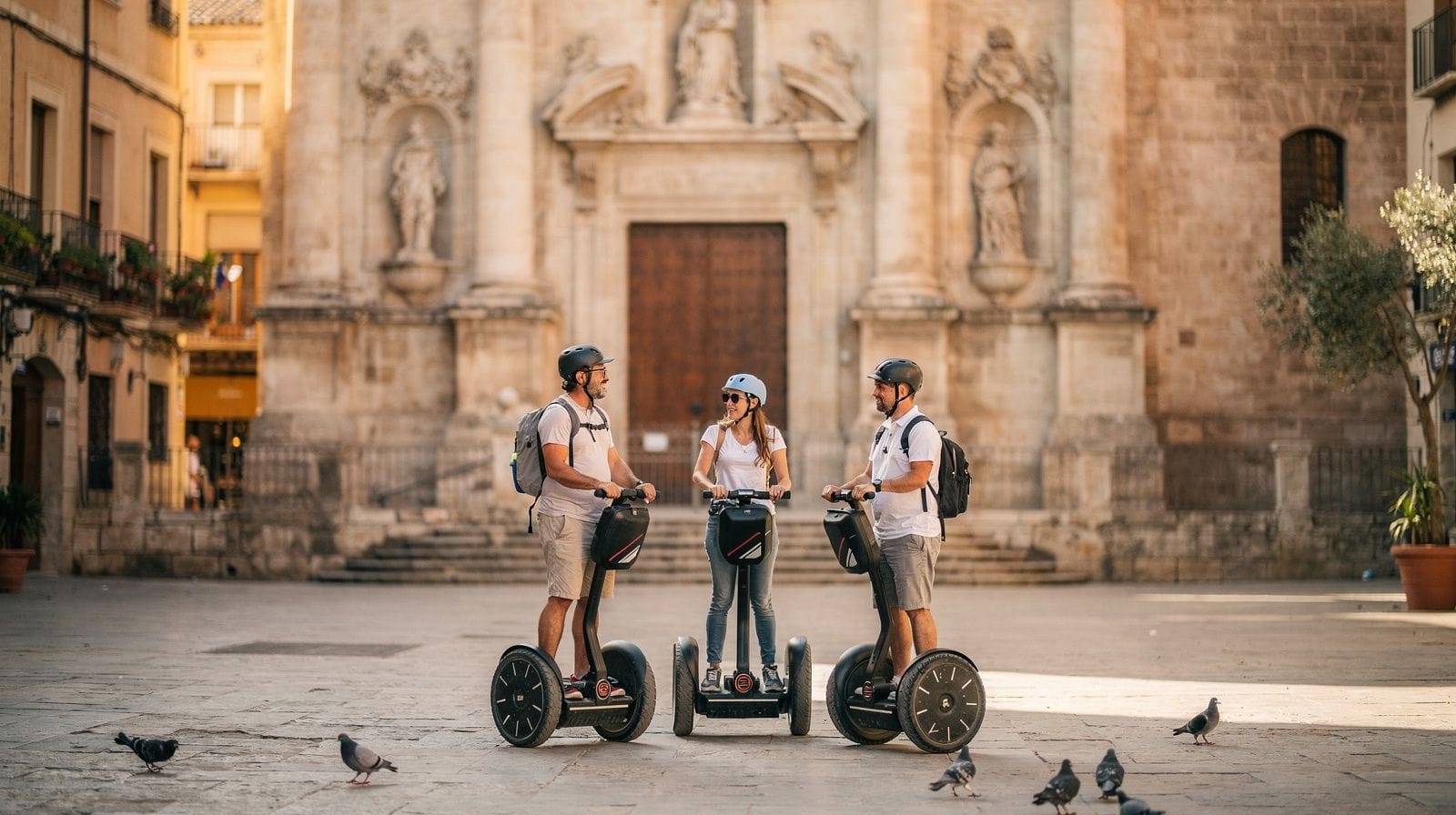 segway group sightseeing tourCheck availability
Sights beside the riverbed
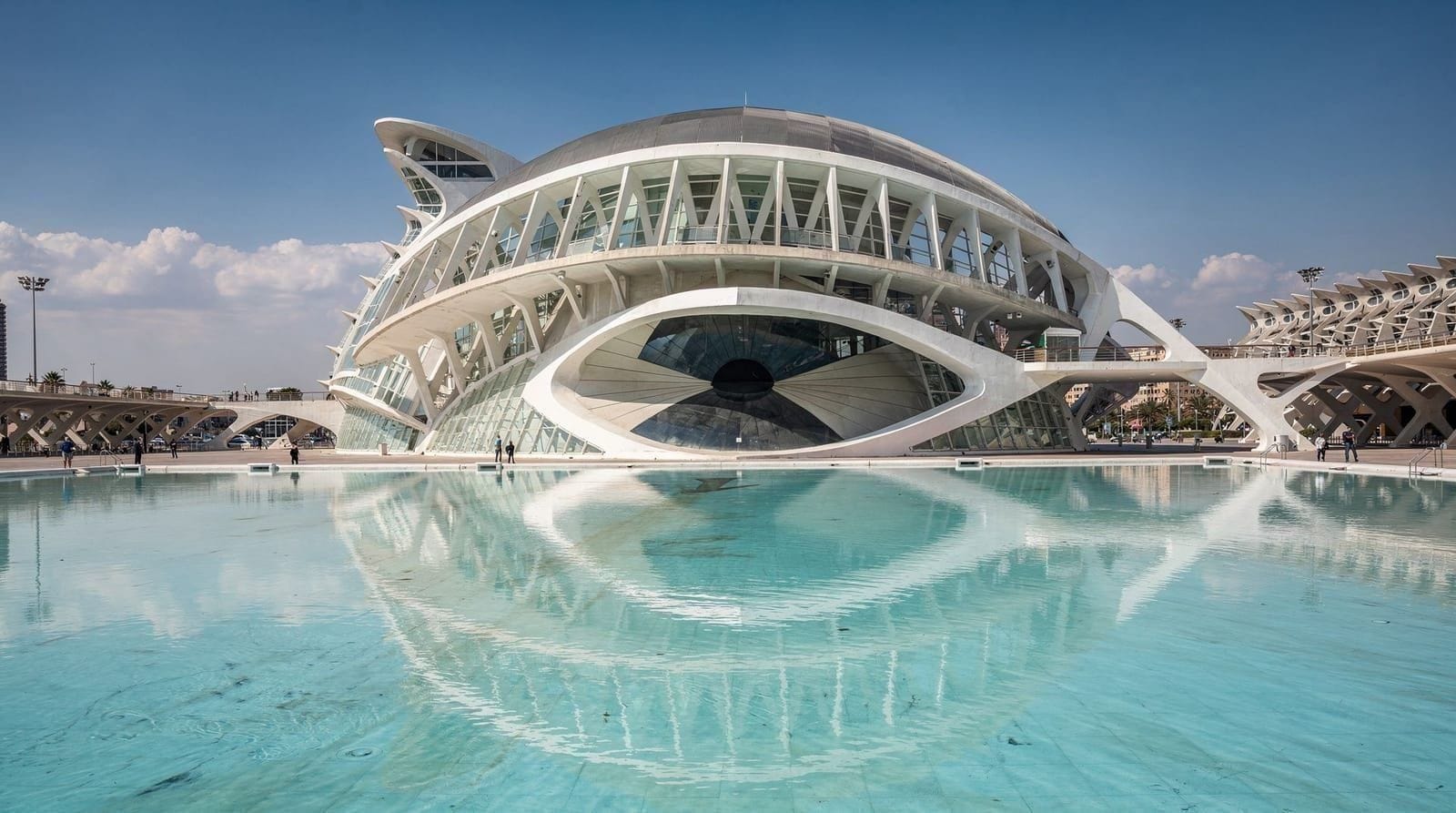
Several of Valencia’s best-known sights sit just above the park, and the riverbed makes a pleasant way to string them together. The Hemisfèric and the Science Museum mark the eastern end, close to the Oceanogràfic, so a bike ride finishing there turns naturally into an afternoon of indoor attractions when the weather is hot. Families who want to keep children busy can look at the Science Museum for kids before choosing which stop to prioritise.
Going the other way, a short climb from the old-city ramps brings you to the Valencia Cathedral and Miguelete tower, the Lonja de la Seda and the Central Market. The IVAM modern art museum is also within reach of the park, which is useful if you want a cultural stop between two stretches of fresh air. None of these requires a car or a bus: the gardens are the shortcut.
Accessing the park
Entry points from the city:
- Plaza de España area (west of the old city): multiple entry ramps from street level
- Torres de Serranos: stairs down from the plaza in front of the gate
- Pont del Real / Jardines del Real: near the Fine Arts Museum
- Calle del Pintor López: central entry near the Palau de la Música
- Avenida de Tarongers: eastern access near the City of Arts
Metro access: The park passes near several metro stations — Túria (line 5), Alameda (lines 3/5), and Marítima-Serreria (lines 5/6) are the most useful depending on your starting point.
The park and the city
The Turia Gardens are not a self-contained visitor destination — they are the connective tissue between most of Valencia’s major attractions. Walking or cycling through the park, you can move between the old city, the medieval walls, the Fine Arts Museum, the Gulliver Park, and the City of Arts complex without once encountering car traffic.
This is one of the things that makes Valencia immediately legible to visitors: the park provides an axis that orients you within the city and provides a default pedestrian and cycling route that happens to pass most of the things worth seeing.
For a structured cycling tour of the park and city:
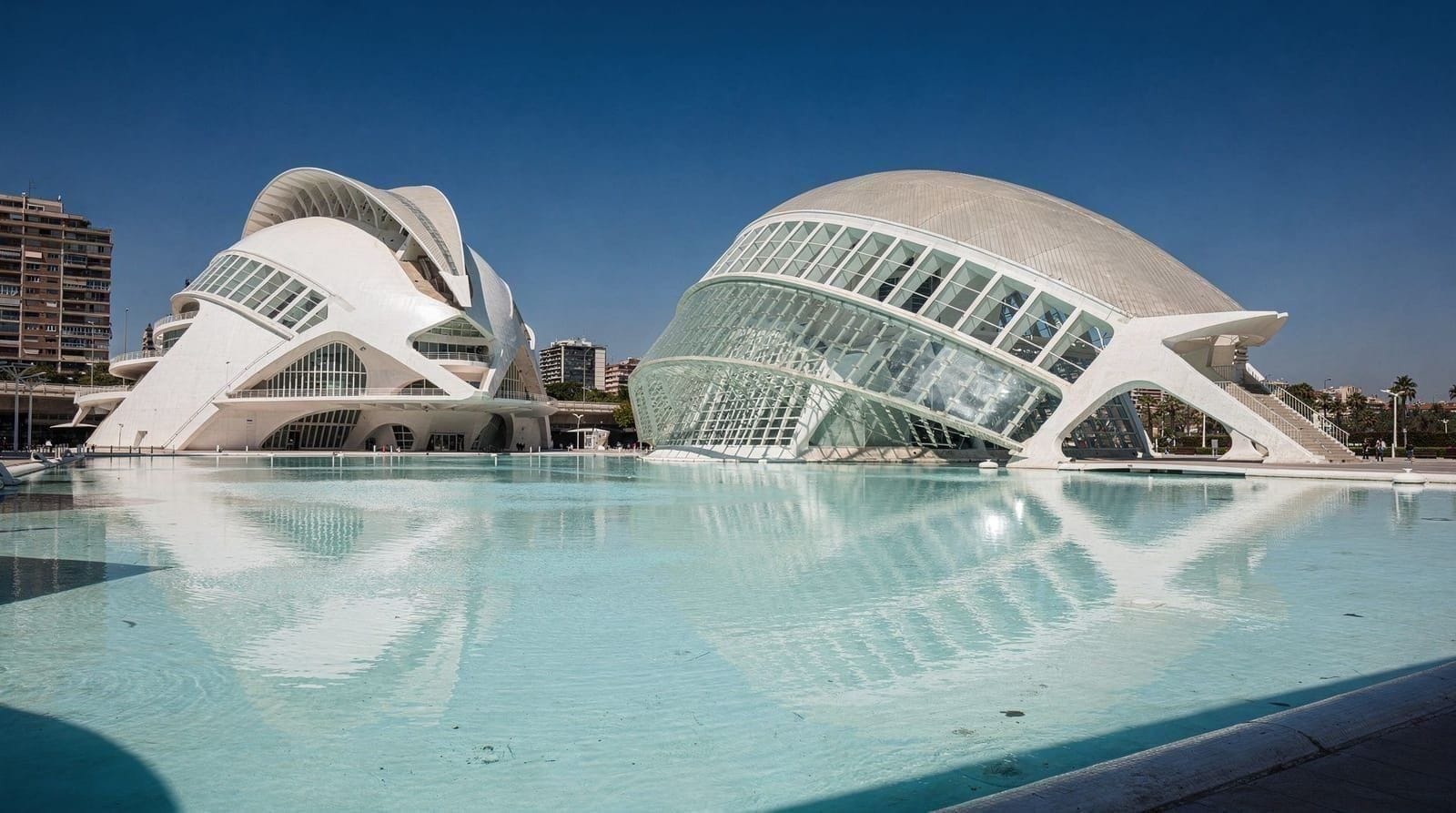 3-hour grand bike tour — City of Arts and SciencesCheck availability
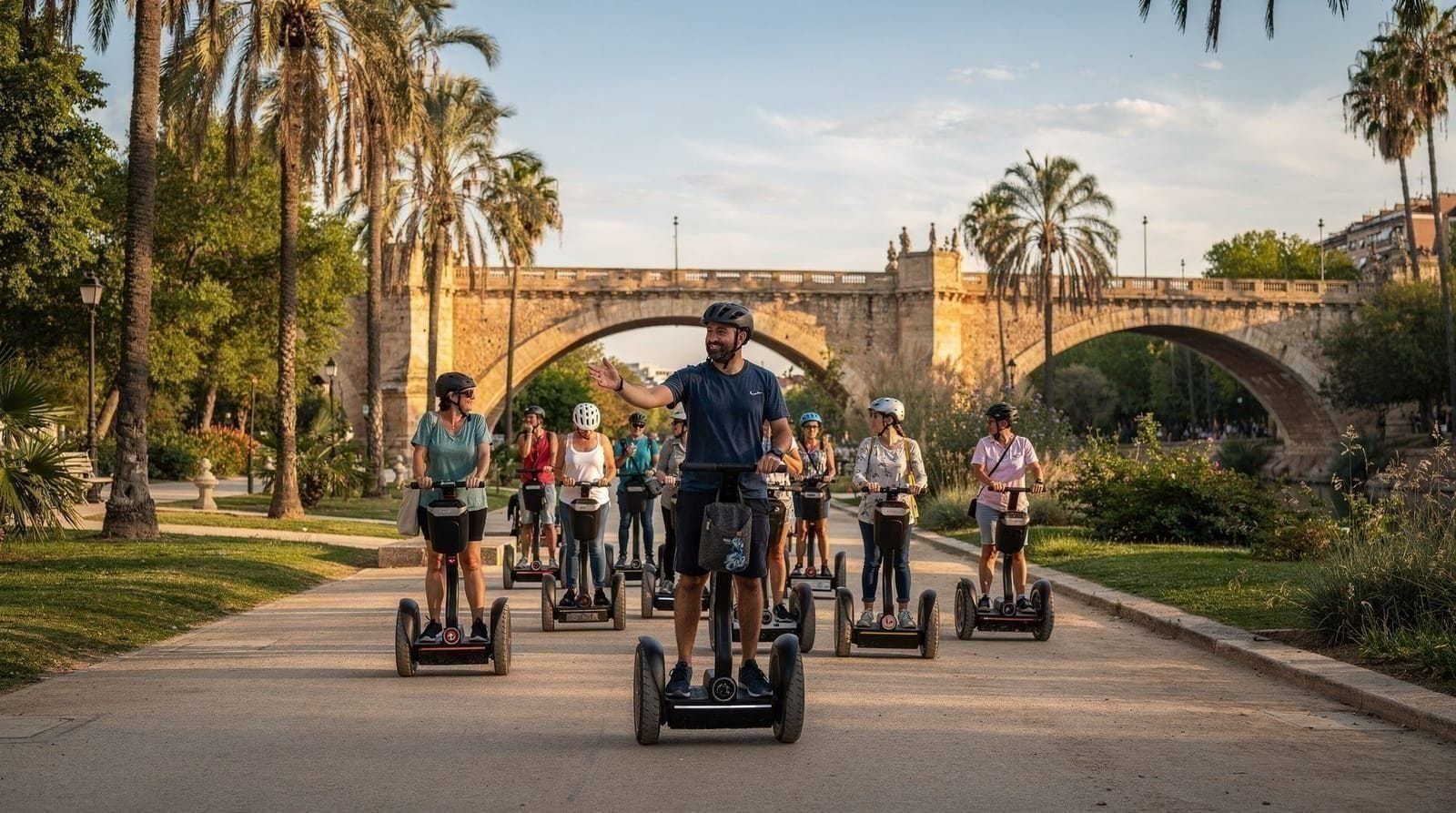 segway tour — gardens, palace and musicCheck availability
The cycling in Valencia guide covers routes, rental advice, and how to combine the Turia Gardens with a broader day on bike. The Valenbisi bike share guide covers the station system in detail for those using the public hire scheme.
For family visits, the Gulliver Park guide covers the park within a park — the giant playground that is the most-visited single point along the entire garden route.
Visiting with children
Few cities offer families a green corridor like this one. Toddlers can run without the constant worry of traffic, older children can ride bikes on the separated lanes, and the playground at Gulliver is a reliable stop when patience runs low. Our Valencia with kids guide and the family itinerary show how the park fits into a wider plan. On days when the weather turns, the rainy-day ideas for kids give you indoor alternatives; the park itself is best kept for dry weather, as the riverbed has little cover.
Food, drink and rest stops
The park is not a dining destination in itself, so plan your meals around its edges. A relaxed morning start with a traditional second breakfast, as described in the esmorzaret guide, pairs well with an early ride before the heat builds. For something more substantial, the Mercado Colón and the food markets guide point to places a short walk from the park where you can sit down properly. Bringing a simple picnic from a market is often the best option, and it keeps costs low, which matters if you are following the Valencia on a budget guide.
Other ways to explore
If you prefer someone else to handle the route, guided formats make good use of the flat terrain. The e-bike tours guide and the segway tours guide compare the options, while the free walking tours often cross the riverbed on their way between neighbourhoods. Photographers should read the photography tours guide, because the bridges and the low evening light make the park a rewarding subject. For getting to and from the park by public transport, the metro and EMT guide explains your options.
Seasonal notes
Summer (June–August): The park is heavily used in the evenings when Valencians come to exercise and socialise in the cooling air. Between 08:00 and 10:00 it is relatively quiet; midday heat empties the exposed sections. The western (shaded) sections are more comfortable in afternoon heat.
Spring (March–May): The best season for cycling and walking — warm but not hot, the trees in full leaf, the park used heavily by local families on weekend mornings.
Winter (December–February): The park is quiet and very pleasant on clear winter days. The light in the park at 15:00 in January is exceptional. The lack of shade is not a problem in winter and allows the bridge architecture to be seen more clearly.
Las Fallas (March): The park is used as an informal gathering and recovery space during the festival. The firecrackers and late nights of Las Fallas make the park’s calm more valuable than usual.
Season at a glance
| Season | Atmosphere | Best time of day | Notes |
|---|---|---|---|
| Summer (Jun–Aug) | Busy evenings, quiet mornings | 08:00–10:00 or after 19:00 | Midday heat empties exposed sections |
| Spring (Mar–May) | Best overall — mild, green, active | Any time | Weekend mornings busiest with local families |
| Winter (Dec–Feb) | Quiet, clear light | Afternoon (around 15:00) | No shade needed; bridge views at their clearest |
| Las Fallas (Mar) | Informal gathering space | Daytime, away from firecracker zones | Useful calm during a loud festival |
Accessibility
The park’s main paths are flat, wide, and paved — genuinely accessible for wheelchairs, pushchairs, and anyone with mobility limitations, unlike much of Valencia’s cobbled old town. Ramps connect street level to the sunken park at most entry points, though a handful of older entries still rely on stairs (Torres de Serranos among them) — check an alternative ramped entry nearby, such as Plaza de España or Pont del Real, if stairs are a problem. Surface quality varies slightly by section; the eastern tramos near the City of Arts are the smoothest and widest, while some western sections have compacted gravel edges that are less comfortable for narrow wheels.
Frequently asked questions about Turia Gardens Valencia
Is the Turia Gardens free to visit?
Yes, entirely. There is no entry fee or ticket for any part of the park — it is public urban space, open at all hours, with free access at numerous points along its 9 km length. The only costs involved are optional, such as bike rental or a guided tour.How much time should I budget for the Turia Gardens?
For a focused visit — cycling end to end or walking a central section — 1–2 hours is enough. If you're combining it with Gulliver Park, the Fine Arts Museum, or the City of Arts and Sciences, budget a half or full day, since the park functions as the connective route between these attractions rather than a single stop.
Top experiences
Bookable activities with verified prices and instant confirmation on GetYourGuide.