Valenbisi bike share guide: how to use Valencia's public bikes
Valencia: Turia Park guided bike tour
How much does Valenbisi cost for tourists?
Valenbisi offers short-term subscriptions for visitors, and the first 30 minutes of each journey are free. Most city-centre trips are under 30 minutes, so a short-term pass is effectively unlimited for typical tourist use. Current prices are on valenbisi.es.
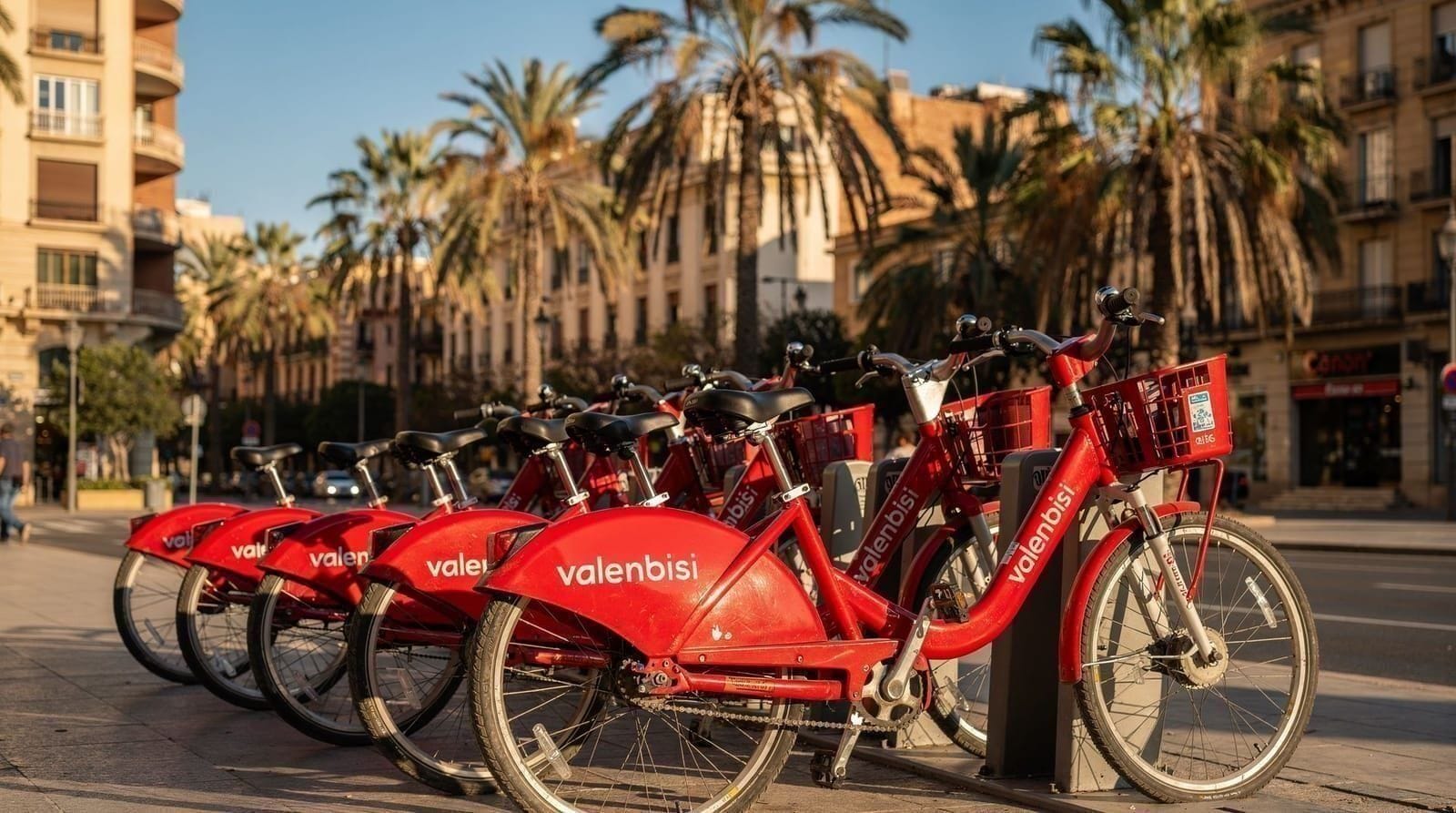
Valenbisi is Valencia’s public bike-sharing scheme — a network of stations across the urban core, operated by JCDecaux on behalf of the city council. For visitors who are comfortable cycling in a city, it is arguably the best way to get around Valencia: faster than walking, cheaper than taxis, and far more pleasant than waiting for buses in summer heat.
| Where | Stations across central Valencia, thinning past the M-30 ring |
| Cost | Short-term tourist pass, current price on valenbisi.es |
| Time needed | 2–3 min to subscribe at a terminal; first 30 min of each ride free |
| Getting there | Any docking station — pick up in El Carmen, Russafa or near the beach |
| Best time | Year-round; mornings before 09:00 in summer, avoid heavy rain |
Why Valenbisi works well in Valencia
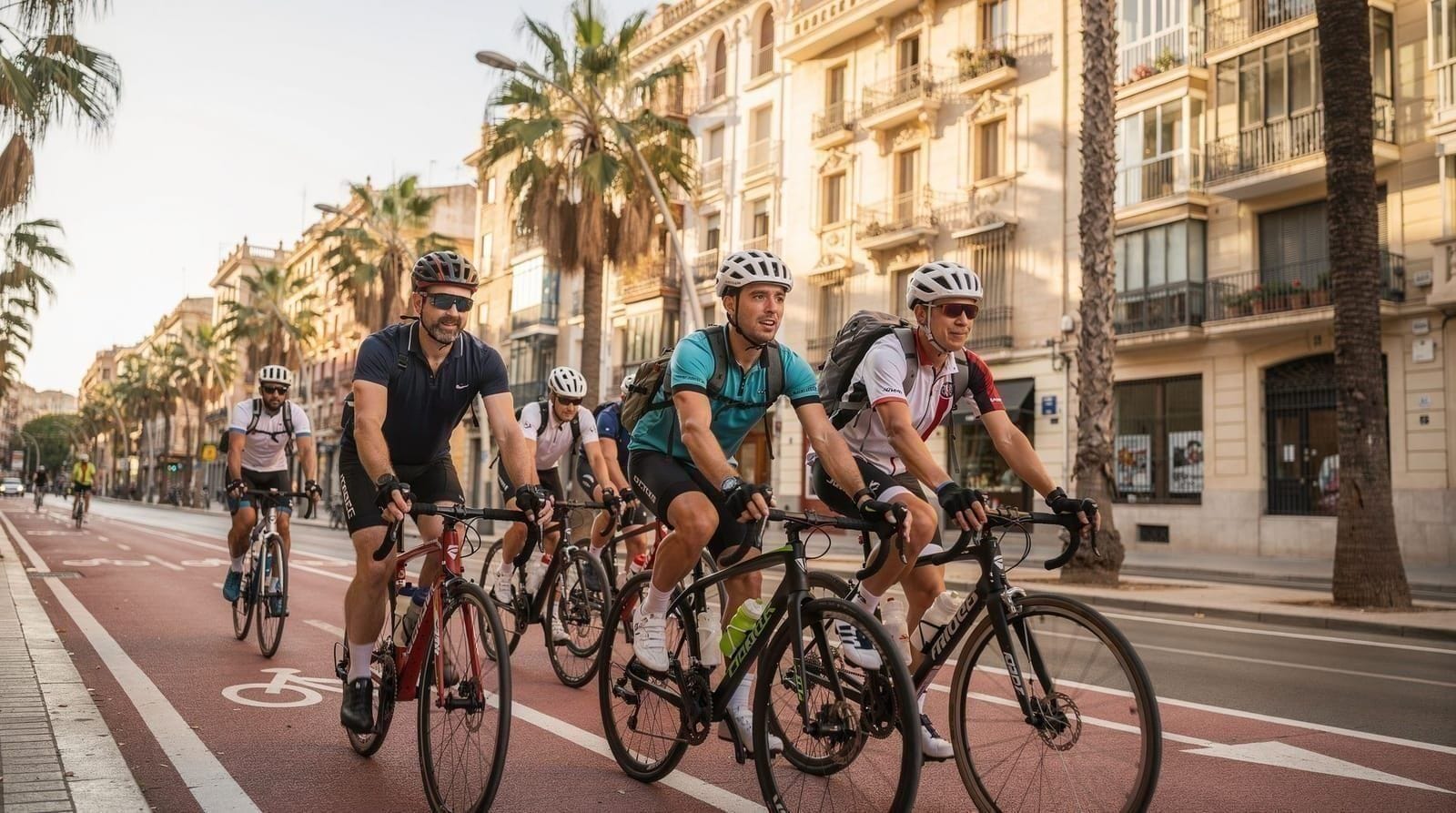
Valencia has invested heavily in cycling infrastructure since the mid-2000s. The city now has around 180 km of protected cycle lanes (carril bici), and the Turia Gardens riverbed park provides a completely traffic-free 9 km corridor connecting the old town to Ciudad de las Artes y las Ciencias. On flat terrain in a city with 300 sunny days per year, cycling is genuinely comfortable for most of the year.
Unlike some city bike schemes where the bikes are heavy and slow, Valenbisi maintains its fleet reasonably well. The bikes are 7-speed upright city bikes with a rear rack and mudguards — practical rather than sporty. They are not e-bikes (no electric assist), but Valencia’s flat topography means this rarely matters.
The scheme also suits the way Valencia is laid out. The sights people most want to see sit in a handful of districts that link up naturally by bike: the lanes and lanes of El Carmen in the old town, the café-lined streets of Russafa, the seaside barrio of El Cabanyal, and the modern complex at the City of Arts and Sciences. A bike turns those separate stops into one continuous day, and if you are still choosing where to base yourself, the best area for first-time visitors explains which neighbourhoods have a station on the doorstep.
Subscriptions and pricing
Short-term (tourist) subscription: available online or at the Valenbisi terminal at any station with a credit card. The first 30 minutes of each journey are free. Prices, longer-stay options, overtime charges and any deposit change over time, so check the current rates on valenbisi.es before you subscribe.
Long-term subscription: designed for residents or very frequent visitors; see valenbisi.es for current conditions.
Additional costs: If you damage or lose a bike, liability charges apply per the Valenbisi terms and conditions.
The key rule: Return the bike within 30 minutes to avoid overtime charges (rates on valenbisi.es). Since most city trips (old town to beach, Turia park end to end, Russafa to Mercado Central) are under 30 minutes, this is rarely a constraint in practice. If you’re going on a longer ride, plan a mid-route docking stop at any station.
How to subscribe and get started
Online subscription: Visit valenbisi.es or use the Valenbisi app. You’ll need a valid credit card and email address. You receive a subscriber number (abonado) and a PIN, which you enter at the station terminal to release a bike.
At-station terminal: Each docking station has a terminal where you can subscribe (for the short-term pass), release a subscribed bike, or check availability. The terminal interface is available in English. Pay by card — there is no cash option.
Releasing a bike: Enter your subscriber number at the terminal, confirm with your PIN, and select a dock number. The dock light turns green; pull the bike firmly to release. Check the bike quickly before riding: test the brakes (both should engage), confirm the tyres feel inflated, and adjust the saddle height.
Returning a bike: Dock firmly into any available station until the lock clicks and the light turns red. The terminal display should confirm a successful return. If the station is full (all docks occupied), the app’s “full station” alert shows nearby alternatives.
The Valenbisi app
The free Valenbisi app (iOS and Android) shows:
- Real-time bike availability at every station
- Real-time empty-dock availability (useful when you need to return)
- Station locations on a map
- Your current rental status
This last feature — knowing which nearby stations have available docks before you arrive — is the most practically useful. Nothing is more frustrating than cycling to a station at full capacity. In summer, stations near the beach and Turia park fill quickly on weekend afternoons.
Google Maps in Valencia shows Valenbisi stations and real-time availability for route planning, which is an easier interface for one-off users.
Coverage and station locations
Valenbisi stations are dense in the central districts — El Carmen, Russafa, Eixample, Cabanyal, and along the main avenues (Blasco Ibáñez, Colón, Gran Via). Coverage thins out in the outer suburbs and disappears beyond the M-30 ring road.
No Valenbisi coverage for:
- Valencia Airport (8 km west of the city — too far outside coverage)
- Albufera (the lake district south of the city)
- Most day-trip destinations
For these, the metro, EMT bus, or a rental bike from a private operator is needed. The airport to city guide covers the arrival transfer, and the Albufera day trip guide explains how to reach the lake without a bike.
Busiest stations (and where to find bikes early):
- Pont de Fusta (popular start for beach rides)
- Plaza del Ayuntamiento (city hall square)
- Ruzafa market area
- Near Colón metro station
During morning peak hours (08:00–09:00), stations near university areas and offices empty quickly. If you’re staying in the centre and need a bike by 09:00, plan to check multiple nearby stations or use the app the evening before to identify quieter options.
If you are weighing how long to stay and how much riding to plan, the how many days in Valencia guide helps you decide whether a short-term pass makes sense. In the hottest months, read the Valencia in summer guide too: early-morning rides are far more comfortable than anything after midday.
Cycling infrastructure in Valencia
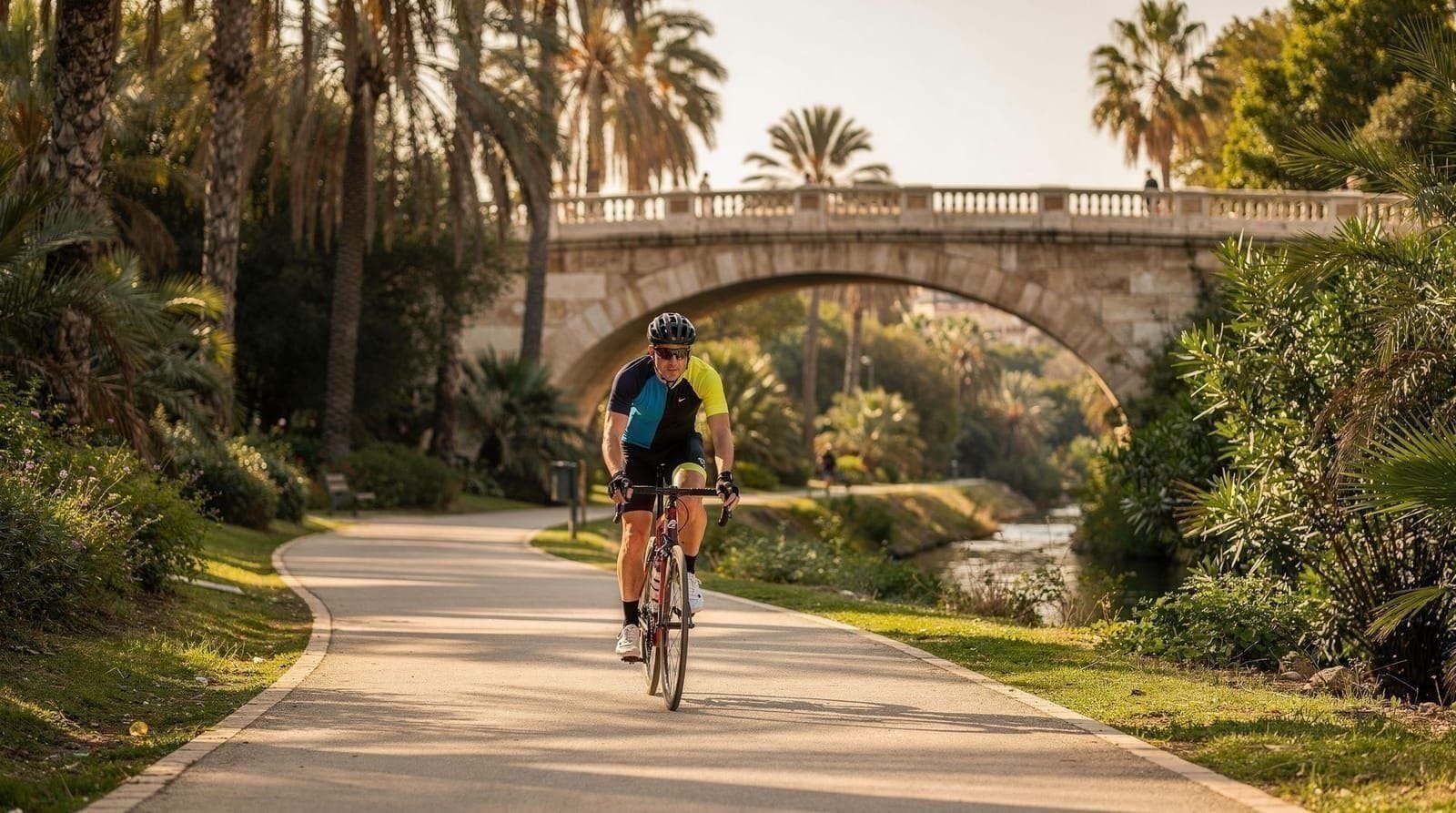
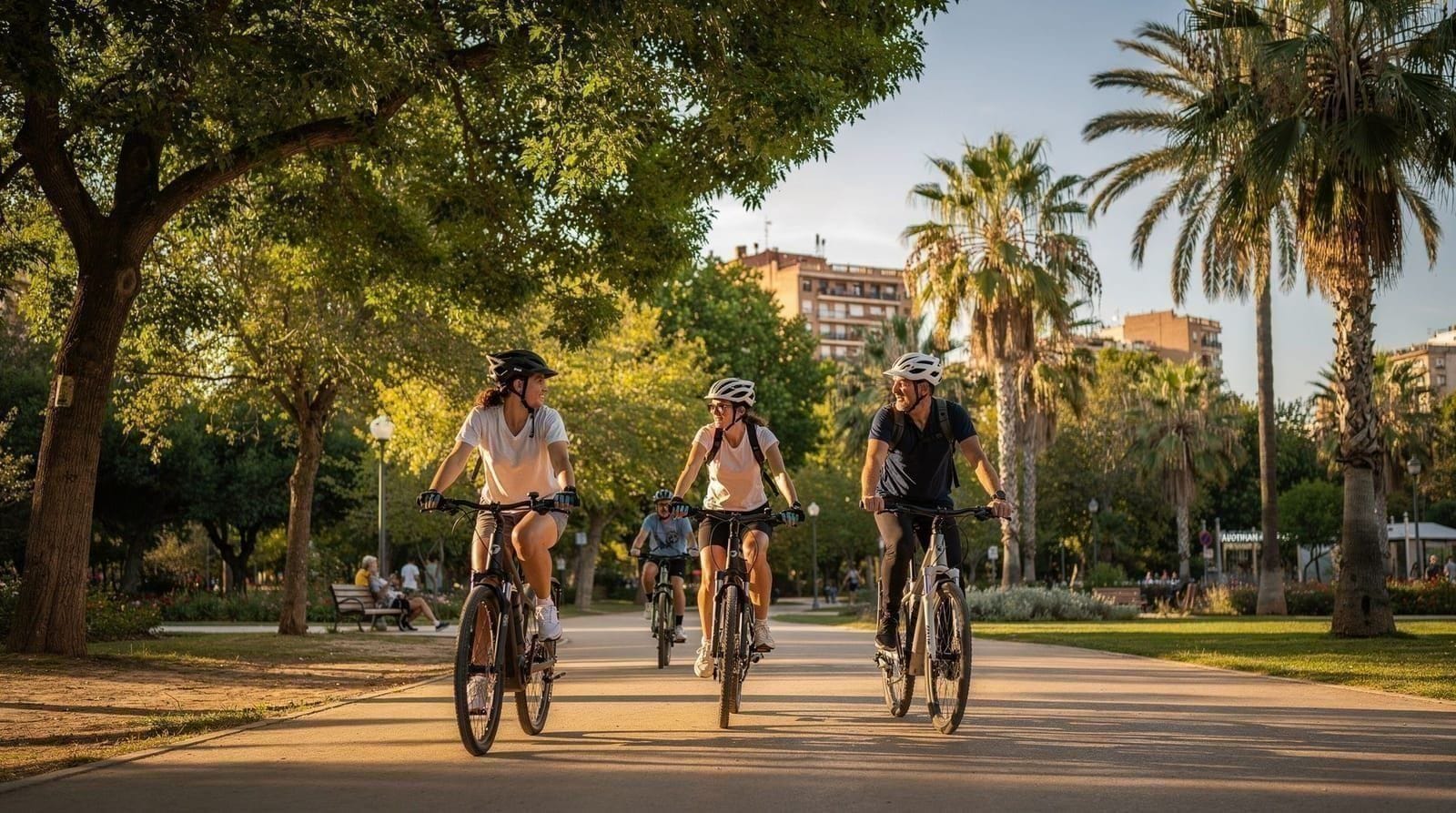
Turia Gardens: The disused Turia riverbed running east–west across the city is Valencia’s finest cycling corridor. Completely traffic-free, the 9 km route connects the old city to Ciudad de las Artes y las Ciencias. Bikes are shared with joggers, parents with prams, and skaters — keep to the right and don’t sprint. On summer mornings before 09:00, the gardens are quiet and beautiful. See the cycling in Valencia guide and Turia by bike guide for detailed route information. The park itself is described in the Turia Gardens guide, and if you would rather have someone show you the route and explain what you pass, a guided bike ride through the Turia park is an easy way to do it without planning anything yourself.
City cycle lanes: Dedicated lanes on Blasco Ibáñez, Gran Via Marquès del Túria, and most main arteries. Lane quality varies — some are well-separated from traffic, others are painted lines on the road only. Generally safe by Spanish city standards.
Beach route: A cycle lane runs north–south along the coast through Malvarrosa and Patacona, continuing to Alboraia. From the city centre, reach it via the Cabanyal streets or the tram-side path from Marítim-Serreria. Along the way you pass the sand of Malvarrosa beach and, further north, the quieter promenade of Patacona beach, both good places to stop for a swim or a drink before riding on to Alboraia.
Rules: Cycling on pedestrianised streets in the old town is prohibited (and the cobbles make it uncomfortable anyway). Helmets are recommended but not legally mandatory for adults on city bikes in urban areas. E-scooter rules are separate and stricter — Valenbisi bikes fall under standard cycling rules.
Valenbisi during Las Fallas and other festivals
Station availability changes noticeably during Valencia’s biggest events. During Las Fallas (1–19 March), stations near the Ayuntamiento and El Carmen empty out fast around mascletà time (13:30–14:30) as locals and visitors converge on the centre, and several central streets close to all traffic including bikes for the fireworks and burning schedule — check the festivals calendar before planning a Valenbisi route on 15–19 March. During the Gran Fira in July and any weekend with a Turia park concert, stations near the riverbed fill early in the evening; the app’s real-time dock counter is the only reliable way to plan a return during these peaks. Outside festival weeks, Valenbisi coverage and reliability are consistent year-round.
Who should use Valenbisi
Ideal for: Visitors staying 3+ days who are comfortable with city cycling and want to cover the city quickly without metro fares. Check the current price on valenbisi.es against your expected metro fares.
Less suitable for: First-time city cyclists unfamiliar with lane etiquette, visitors with significant luggage, or anyone needing to reach the airport or outer suburbs. Also less appropriate in heavy rain — the bikes have no waterproofing and Valencia’s drainage occasionally floods parts of the Turia cycleway during downpours.
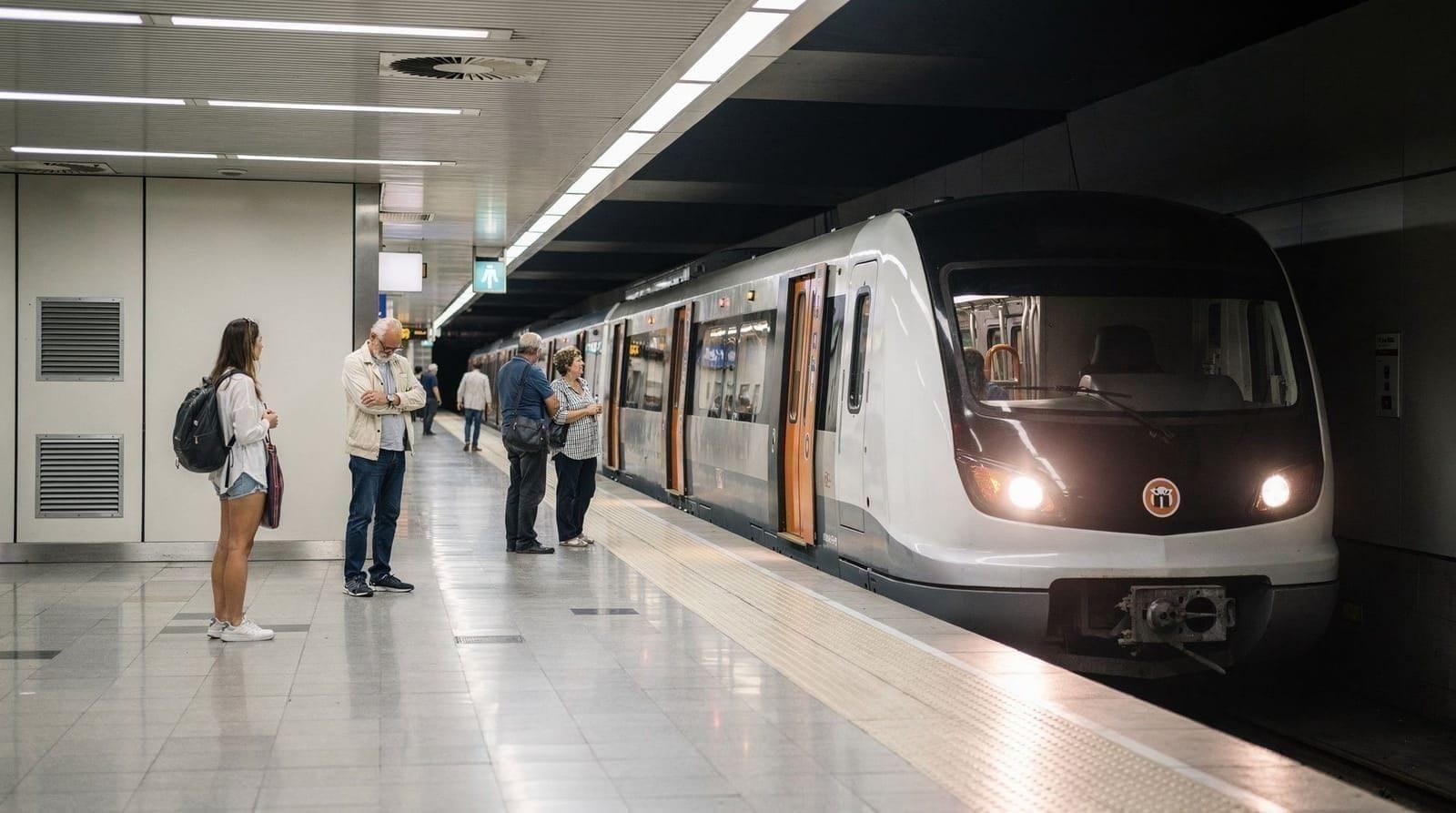
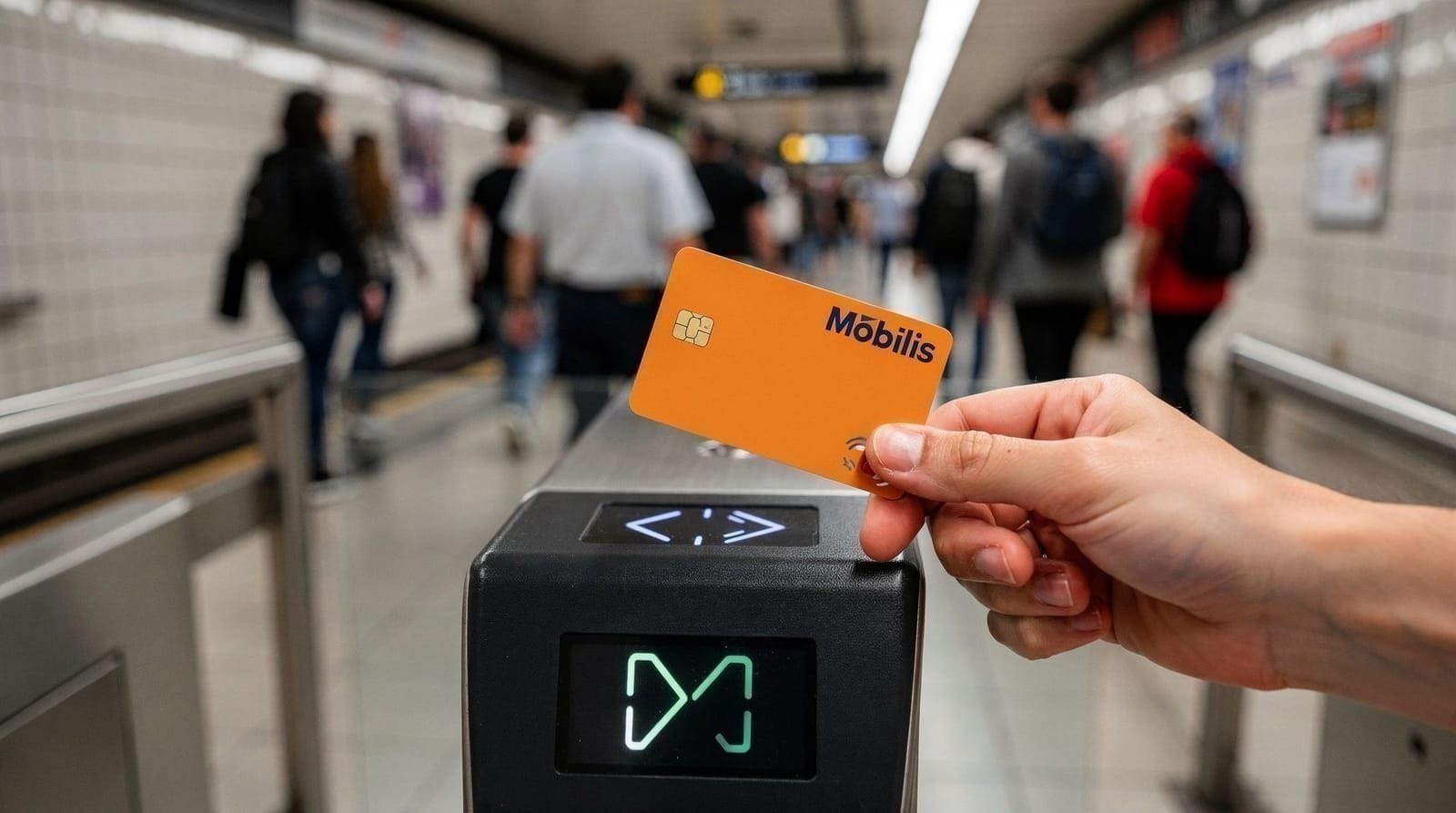
Combine with the metro: The most efficient approach for visitors is a combination: Valenbisi for flat urban hops up to 2–3 km, the metro for longer cross-city journeys and the airport. The Mobilis card handles the transit portion, Valenbisi the bike portion.
Frequently asked questions about Valenbisi
Can children use Valenbisi?
Only riders over 14 (with parental consent) can subscribe to Valenbisi. Children under 14 cannot ride Valenbisi bikes legally. For family cycling, private bike rental shops in the Turia park offer child bikes and trailers — see the Turia by bike guide for rental options.
What happens if I return a bike to a full station?
The app alerts you to full stations in real time. If you arrive at a full station, you can contact Valenbisi customer service and get up to 30 extra minutes to find another station — call the service line or use the terminal.
Are there e-bikes in the Valenbisi fleet?
As of 2026, Valenbisi bikes are standard mechanical bikes, not e-bikes. Several private rental shops offer e-bike hire (typically €15–25 per day) if pedal-assist is needed. See the e-bike tours guide for guided options.
Valencia e-bike rental — Port Saplaya coastal routeWhat if the bike breaks down mid-ride?
Use the Valenbisi app or call the service line to report a faulty bike. Lock the bike at the nearest available rack or station, and the rental time is noted. You will not be charged for time spent dealing with a breakdown.
Is it safe to cycle in Valencia at night?
Yes, for routes on dedicated lanes or through the Turia park, which is lit until late. Standard urban caution applies — be visible (Valenbisi bikes have front and rear lights that activate when the bike is moving), avoid empty back streets, and don’t cycle while using your phone.
Is Valenbisi worth it for a short weekend trip?
For a 2–3 day visit staying centrally, Valenbisi is usually worth a short-term pass if you plan to combine the old town, Turia park and beach in the same trip — three destinations that would otherwise mean separate metro or tram fares each way. For a single-day visit focused only on the old town, walking is simpler and Valenbisi adds little.
Sample Valenbisi itineraries
Half-day old town and beach loop
This is the most popular tourist use of Valenbisi and takes approximately 2.5–3 hours at a relaxed pace:
- Start: Pick up a bike from the Plaza del Ayuntamiento station (or any Ruzafa-area station if staying there)
- Old town: Cycle north through El Carmen’s narrow streets — the main east–west arteries are manageable by bike; the alleys are better walked. Lock at the Torres de Serranos station and explore on foot
- Turia park entry: Re-mount and descend into the Turia park from the Pont de Serrans
- Turia Gardens westward: Follow the riverbed park path past the Parque de Cabecera. (Alternatively, go east toward Ciudad de las Artes y las Ciencias — see below)
- Beach route: Exit the Turia at Marítim-Serreria area, cross via the Pont de les Arts or similar, and follow the coastal cycle lane north to Malvarrosa beach
- Return: Dock at Neptú station near the beach, take the L4 tram back to Colón (20 min), pick up another Valenbisi at Colón for the final stretch to your hotel
Ciudad de las Artes y las Ciencias via Turia
The Turia Gardens run 9 km from the old town to the Palau de les Arts and the Ciudad de las Artes y las Ciencias. On a Valenbisi bike from the central station at Passeig de la Petxina, the full journey east takes 25–30 minutes at a comfortable pace. This is the definitive Valencia cycling experience — essentially flat, entirely traffic-free (shared with pedestrians and joggers), and one of the finest urban parks in Spain.
Key stops along the Turia: Pont de les Flors (small bridges with flower plantings), Parque Gulliver (the enormous children’s slide installation), and the final emergence into the Ciudad de las Artes forecourt. Dock the bike at the Museu de les Ciències or Hemisfèric stations and explore on foot.
Valenbisi etiquette and common mistakes
Don’t leave the bike at non-Valenbisi infrastructure. You must dock at an official station — locking to a street post or café railing is not a return and the clock continues ticking. The app shows all stations; dock properly.
Don’t cycle the wrong way on one-way streets. Valencia’s one-way street grid applies to cyclists as well as cars. Cycle lanes with arrow markings show permitted direction. Cycling the wrong way in the old town is both illegal (fine risk) and dangerous (drivers do not expect it).
Don’t leave the bike unattended outside the coverage zone. If you somehow end up more than 1 km outside the station network (which requires deliberate effort), you are responsible for returning the bike to the nearest station. This typically only happens if visitors cycle to the airport or Albufera area by mistake.
Plan your return before the 30 minutes. The app timer shows your remaining free time. If you are 25 minutes into a journey, look for the nearest available dock now. Arriving at a full station with 2 minutes left is stressful — check ahead.
Comparing Valenbisi with private bike rental
Several private bike rental shops operate in Valencia, primarily near the Turia park and the beachfront. The comparison:
| Option | Price | Range | Type |
|---|---|---|---|
| Valenbisi (short-term pass) | See valenbisi.es | City only | Standard city bike |
| Private hire (daily) | €10–18/day | No restriction | Various (city, e-bike, hybrid) |
| Private hire (e-bike) | €20–28/day | No restriction | Electric assist |
Valenbisi wins on price for multi-day city use. Private rental is better for day trips beyond the station network, e-bike touring, or taking a specific bike for a long coastal excursion that might exceed 30-minute docking windows.
If your main interest is the Russafa district and its food scene, a guided cycle through Russafa pairs well with a few days of self-guided Valenbisi riding, and the Russafa tapas guide tells you where to eat afterwards. Families should also read the Valencia with kids guide and the Gulliver Park guide before deciding who rides and who walks, and anyone heading to the covered market on two wheels will find the Central Market guide useful for timing a visit.
For guided bike experiences including e-bikes, see the e-bike tours guide and the Valencia by bike guide.