Peñíscola and Morella road trip — the medieval north in one day
Valencia: excursion to Morella and Peñíscola with tickets
Duration: 11 hours
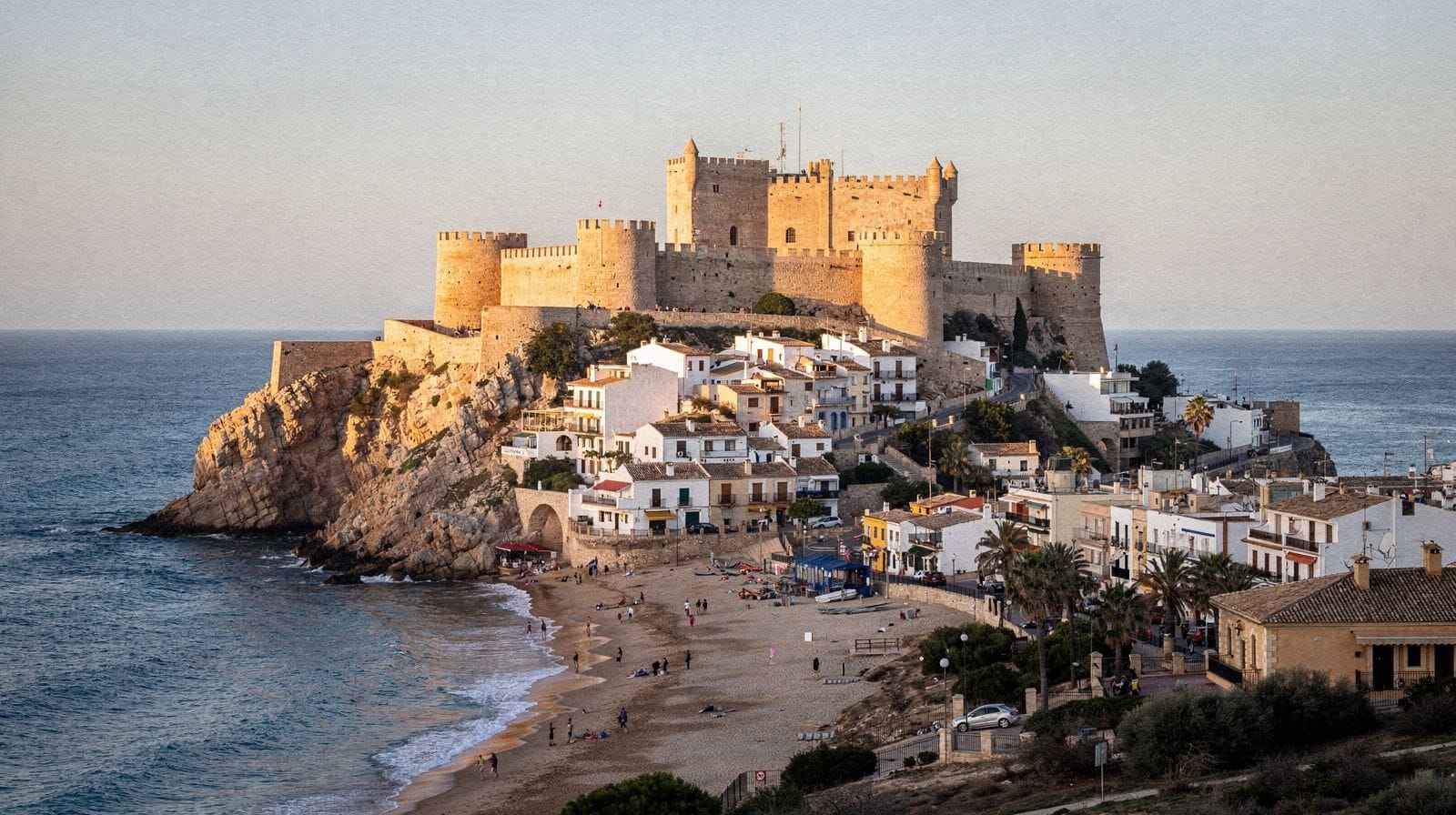
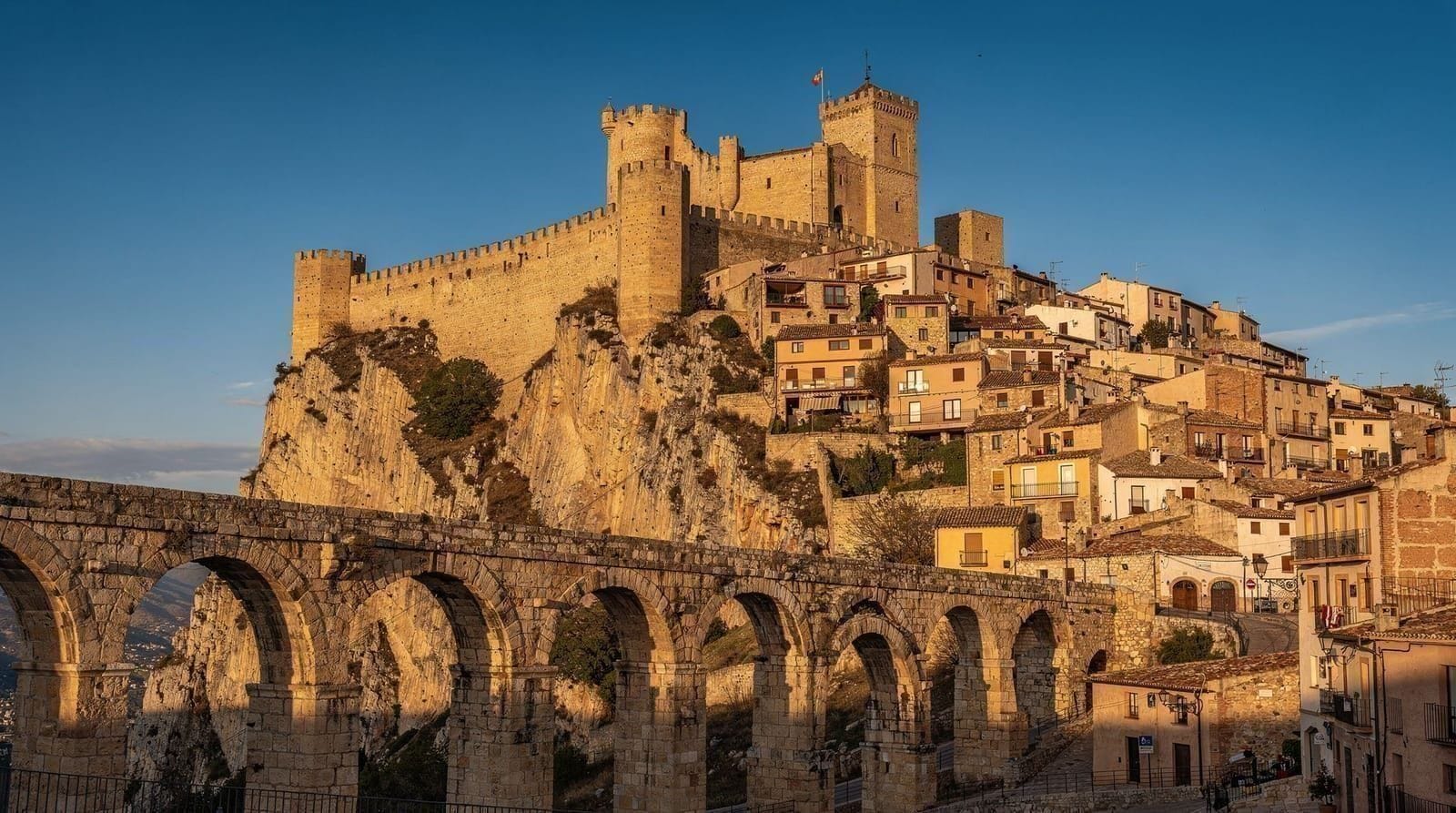
Peñíscola and Morella are the two best-preserved medieval towns in the Valencian Community, and combining them in a single day by car gives you two completely different experiences of what “medieval” means. Peñíscola is coastal and dramatic — a Templar castle on a rocky promontory, series 5 of Game of Thrones filmed here, genuinely photogenic. Morella is inland and austere — a hilltop fortified town at 1,000 metres altitude, entirely intact medieval walls, a basilica, and a weekly market that was already old when the Black Death arrived.
| Where | Morella (180 km north) then Peñíscola (60 km further east) |
| Cost | around €50–90/day incl. car, entries and meals |
| Time needed | 1 long day (11–12 hours door to door) |
| Getting there | Car essential for the combined circuit |
| Best time | September–October for driving comfort; avoid Aug weekends in Peñíscola |
Quick answer: Leave Valencia by 8:00. Drive north on the AP-7 to Morella (inland, 180 km, ~2 hours). Explore Morella castle and old town until 13:30. Drive east to Peñíscola (60 km, 50 min). Lunch in Peñíscola at 14:30. Afternoon at the walled city and beach. Return to Valencia by 20:00.
Logistics
Why visit Morella first? Logic of direction: Morella is inland from the AP-7. Going north first to Morella, then east to Peñíscola on the coast, then south back to Valencia creates a clean triangle. Doing Peñíscola first means backtracking inland through the interior.
The driving:
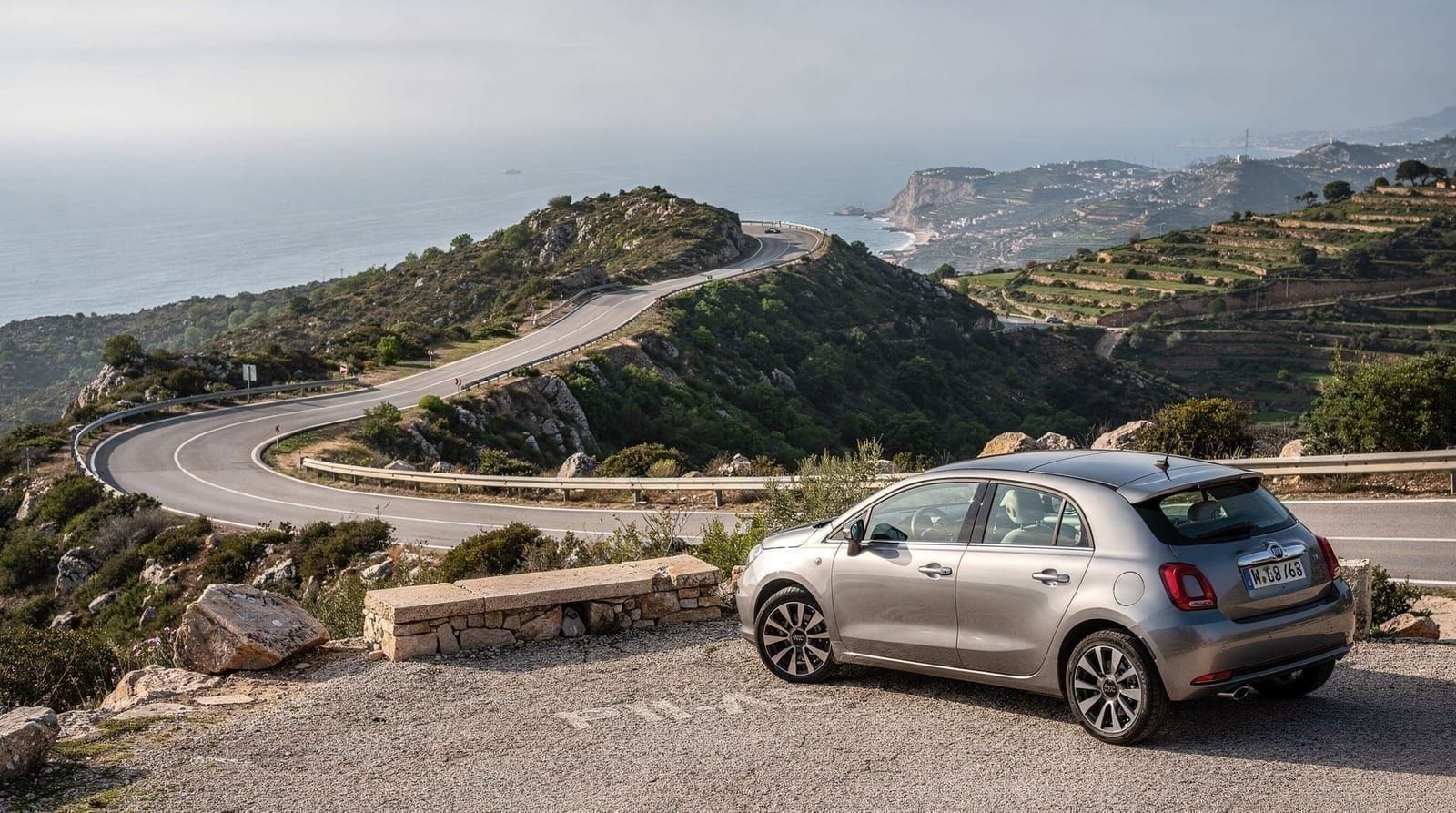
- Valencia → Morella: AP-7 north to N-232 at Vinaròs (or CV-15 from Ulldecona), then west to Morella. 180 km, 2 hours. Or via CV-15 from l’Aldea, which is more scenic but slower (30 min longer).
- Morella → Peñíscola: N-232 east to Vinaròs, then south on AP-7 or coastal N-340 to Peñíscola. 60 km, 50–60 min.
- Peñíscola → Valencia: AP-7 south. 140 km, 90 min.
Total driving: approximately 380 km. A long day by European city-break standards but entirely manageable if you leave early.
Tolls: the AP-7 is toll-free. The N-340/E-15 along the coast is slower, adding 30–40 minutes each way.
Car rental: See car rental for day trips from Valencia.
Alternative without driving: There is an organised tour that covers both towns:
 excursion to Morella and Peñíscola with ticketsCheck availability
This 11-hour guided tour departs from Valencia and includes entry tickets — the best option if you don’t want to drive.
Comparing castle day trips: If a hilltop castle is the main draw rather than the coast-plus-inland combination, Xàtiva castle is a closer, easier half-day option reachable by train — see the day trips by train guide for how it compares logistically to this drive.
Day-by-day summary
| Time | Stop | Focus |
|---|---|---|
| 8:00–10:00 | Drive to Morella | Landscape transition, fuel stop |
| 10:00–13:00 | Morella | Old town, basilica, castle and walls |
| 13:00–14:00 | Morella | Lunch |
| 14:00–14:30 | Drive to Peñíscola | Coastal approach |
| 14:30–19:00 | Peñíscola | Castle, walled city, beach |
| 19:00–20:30 | Drive to Valencia | Return via AP-7 |
8:00 — Depart Valencia
Take the AP-7 north from Valencia. The landscape changes quickly north of Sagunto: drier, more rugged, olive groves replacing the huerta. By Vinaròs (the last major town before the Morella turnoff), you’re already in the interior Valencian landscape.
Fill up with petrol on the AP-7 — Morella has one petrol station in the town, and it’s small.
10:00 — Arrive Morella
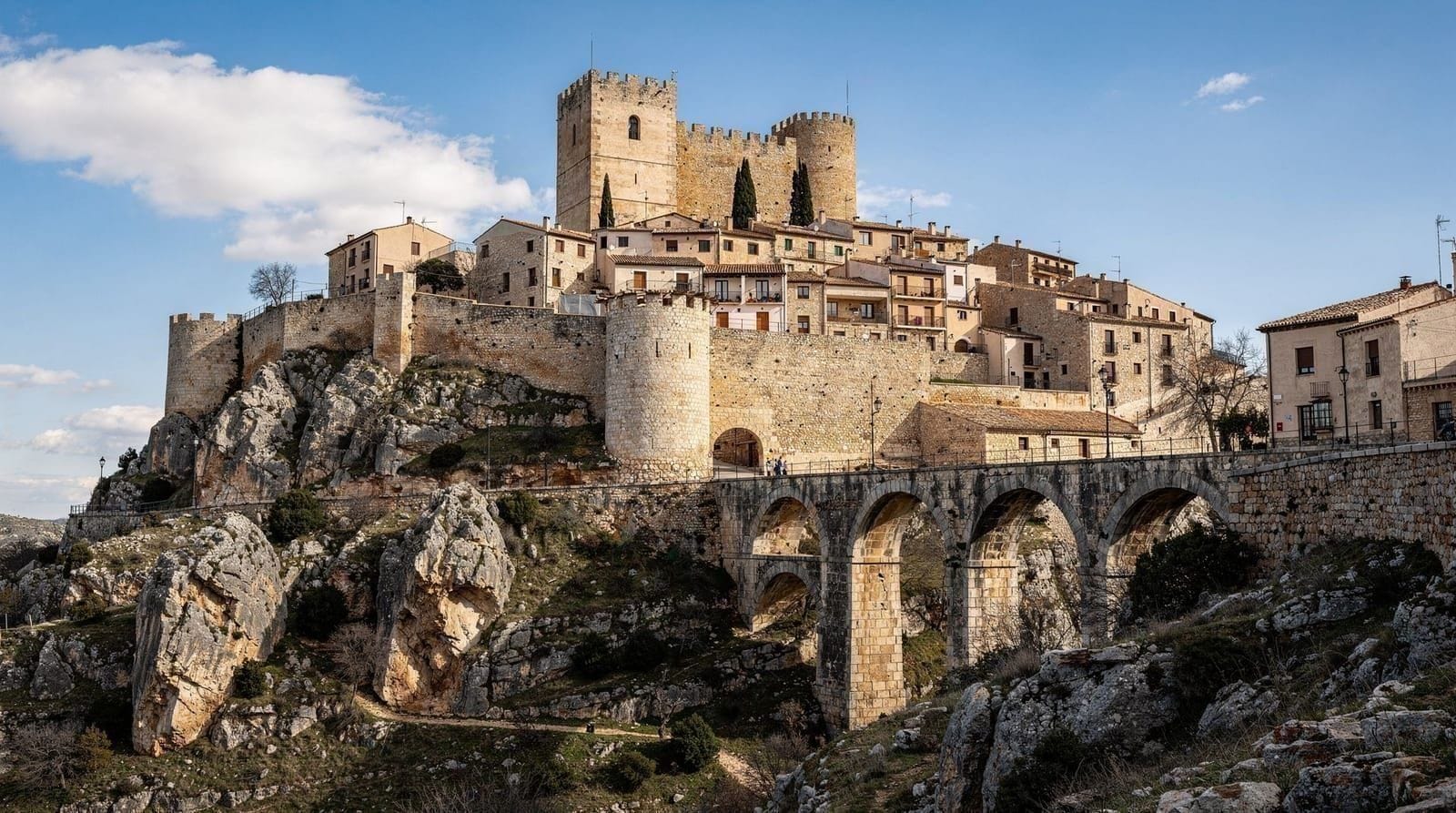
Morella is visible from 20 km away: a fortified hill town with a castle at the summit, intact medieval walls encircling the lower town, and a basilica halfway up. Population: around 2,500 permanent residents. Altitude: 1,004 metres.
Parking: Park at the main car park below the town (€1.50/hour, free after 20:00 and on Sundays). The entry to the old town is through one of the six ancient gates — the most accessible for cars is the Puerta de San Miguel on the south side.
10:15 — The old town
Morella’s street plan has not changed significantly since the 13th century. The main street, Carrer dels Calderés/Blasco de Alagón, runs the length of the town from one gate to the other. Small Gothic arcades, shops selling the local black truffle (peak season November–February), jamón from the pigs raised on the slopes below, and Morella’s characteristic black clay pottery.
Key sights:
- Basílica Arxiprestal de Santa Maria la Major (the Basilica): the best Gothic church in the interior Valencian Community. Two portals (the Apostles’ Portal and the Virgin’s Portal) are exceptional. For museum prices, see the official Morella tourism website.
- The castle and fort: at the summit, accessible by a path from the upper old town. Built from Iberian-Roman foundations, developed through Moorish and Christian occupation. For the entry price, see the official Morella tourism website. Views from the top cover the entire plain of the Maestrat — on clear days, the sea is visible 60 km east. Allow 1 hour.
- Aqueduct (from outside the town walls): the medieval aqueduct feeding the town is visible from below on the road in. Best photographed from the road level.
11:30 — Castle and walls
The castle walk from the old town takes 20 minutes. The fortifications are serious military architecture — not decorative. The town withstood numerous sieges (most notably in 1838 during the First Carlist War). The walls run 2.5 km around the entire perimeter of the hill; you can walk significant sections of the upper walls from the castle.
The castle hosts a modest museum covering the town’s military history. More valuable is simply being in the space — the windswept summit in clear weather, the vertiginous drops on the north face, the sense of the strategic logic that placed a town here in the first place.
13:00 — Lunch in Morella
Leave an hour for lunch before the drive east. Morella’s restaurant scene is small but genuine:
- Restaurant Casa Roque (Carrer dels Forcall 4): the best kitchen in town, slow-cooked meats and truffle-season specials, €22–35/pers. Reservations recommended at weekends.
- Vinatea (Carrer dels Blasco de Alagón 17): classic Maestrat food, truffled eggs, cured meats, simpler and slightly cheaper (€16–22/pers)
- Bar del Museu (next to the Basílica museum): coffee and sandwiches, €5–8 if you need something quick
What to eat in Morella: truffle-based dishes in season (November–March), the local botifarra (white sausage) and morcilla (black pudding), and the cheese made from the sheep of the Maestrat — they sell it at stalls in the market square on weekends.
14:00 — Drive to Peñíscola (50 minutes)
N-232 east to Vinaròs, then south on the coastal road or AP-7 to Peñíscola. The contrast as you approach the coast is immediate — the dry interior gives way to pine-covered hills, then the Mediterranean appears suddenly as you come over the coastal ridge.
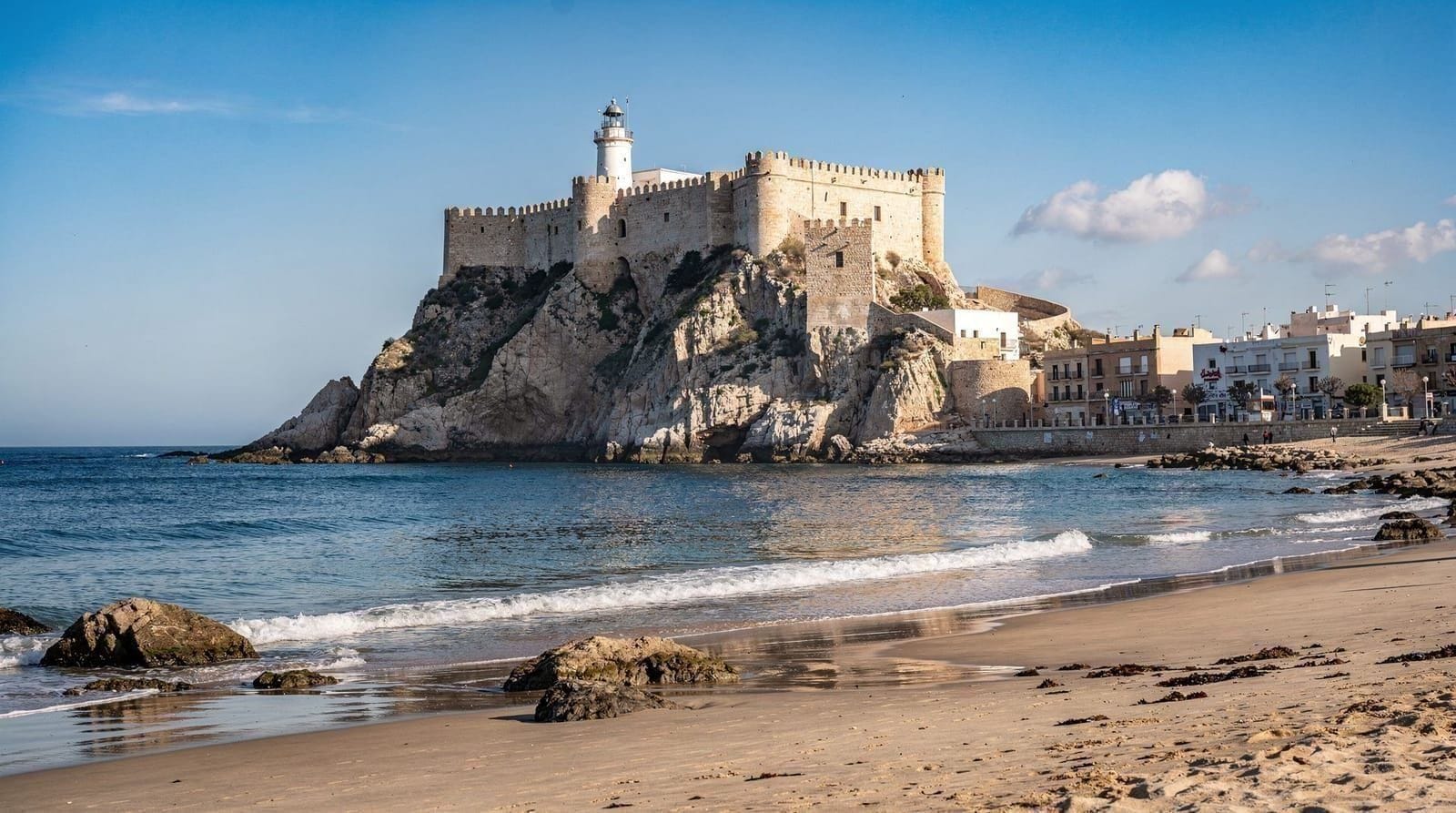
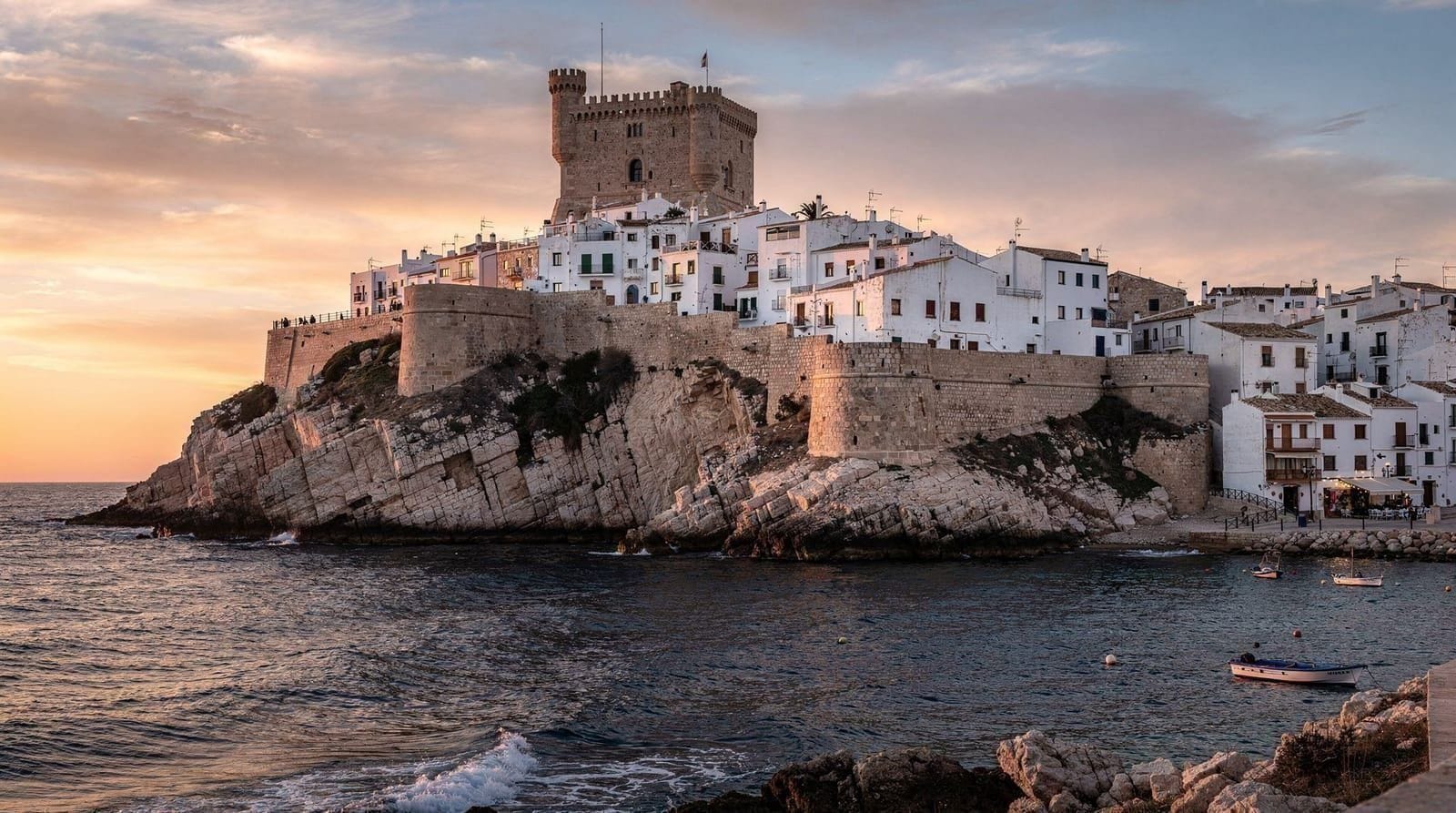
Peñíscola is visible from the motorway: the castle on its rocky promontory extending into the sea, the old town climbing up below it, the modern resort town spreading inland. Population: 8,000 permanent residents, 200,000+ in August.
Parking: The car parks at the base of the walled city (Parking del Mar, €2/hour) are the most practical. The old town is pedestrianised.
14:30 — Lunch in Peñíscola or brief castle visit first
Decision point: eat first or visit the castle first. If you ate a full lunch in Morella, skip straight to the castle (14:30) and eat dinner in Peñíscola later. If you only had something light, eat now.
Best restaurants in Peñíscola:
- El Pòsit (Carrer Sant Roc 2): inside the old town walls, good seafood and rice dishes, €18–25/pers, best local option
- Restaurante Hostería del Mar (Avinguda del Papa Luna 18): beach hotel restaurant, reliable paella, €22–28/pers
- La Taverna (Plaça de l’Església, inside the walls): sandwiches and local tapas, budget-friendly at €8–12
15:30 — Peñíscola castle and walled city
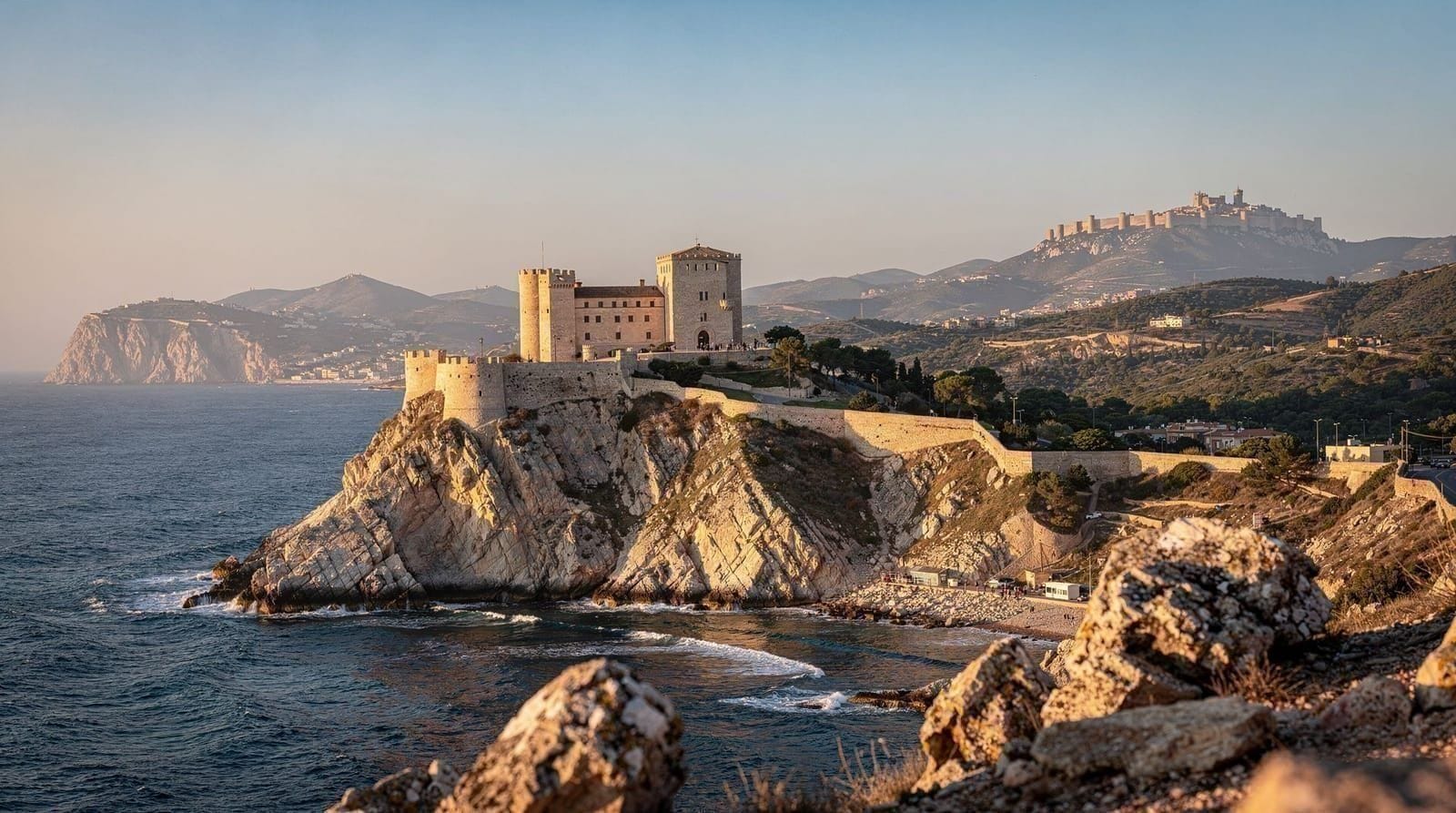
Peñíscola was home to the antipope Benedict XIII (Papa Luna, 1328–1423) who lived here after being deposed and refused to acknowledge the Council of Constance. He died in the castle still claiming to be the legitimate pope. The castle was built by the Knights Templar in 1307. For the entry price and opening hours, see the official Peñíscola tourism website.
The Game of Thrones connection: Peñíscola’s walled city stood in for the fictional city of Meereen in seasons 5 and 6 of Game of Thrones. The main gate, the castle exterior and several streets in the old town were used as filming locations. If this is why you’ve come, the tourist office sells a GoT walking map (€1).
For a tour specifically focused on the Game of Thrones filming locations:
 Peñíscola Game of Thrones day tripCheck availability
For a guided tour from Valencia focusing on the castle and historical context:
 day trip to Peñíscola with castle visitCheck availability
What to see: The castle interior (the Hall of Papa Luna, the Gothic church within the castle walls, the cistern), the old town street maze inside the walls, and the sea view from the castle battlements — the Mediterranean on three sides, the resort town stretched south, the Maestrat mountains visible inland.
The old town itself is a genuine medieval walled city, not a reconstruction. The narrow streets, whitewashed buildings with coloured doors and window boxes, and the cliff drop into the sea on the seaward side are all authentic.
17:00 — Beach south of the promontory
The beach immediately south of the walled city (Playa Norte) is dominated by the castle view — one of the most photogenic beaches in Spain with a medieval castle on a rocky promontory. The beach is sandy, reasonable for swimming, and packed in summer (arrive early or go to the south end). Playa Sur (south beach) is better for swimming and less dramatic photographically.
19:00 — Return to Valencia
AP-7 south. Allow 90 minutes to Valencia without traffic. Friday evening traffic adds 20–40 minutes south of Castelló de la Plana. Petrol stations on the AP-7 between Peñíscola and Valencia at Castelló and Sagunto.
Return the rental car and finish in Valencia for a late dinner or drink. The AP-7 is well-lit and straightforward night driving.
Day trip vs private tour option
The self-drive option gives full flexibility (timing in each town, where to eat, how long to stay). The organised guided tour from Valencia handles transport and entry but fixes your timing.
For the private option that includes both towns and is flexible:
private Morella and Peñíscola full-day tripCheck availability
Practical notes for the Peñíscola-Morella circuit
Best time of year: September–October for the most pleasant driving and cooler temperatures in both towns. May–June for green countryside. July–August: Peñíscola is extremely busy; expect queues and full beaches. Morella stays calm year-round.
Morella market: If you happen to visit on a Sunday, Morella’s weekly market in the main square has excellent local produce. The truffle market runs November–February in the Plaça de la Colmena.
Peñíscola in summer: In July and August, the walled city fills with tourists from the resort hotels. Arrive at the castle before 10:00 to have it relatively to yourself, or visit after 17:00.
Fuel: Don’t rely on Morella’s single petrol station. Fill up on the AP-7 or in Vinaròs.
If you have children: This is a long day, and the driving totals nearly six hours. Families sometimes split it into two shorter days with an overnight in Peñíscola instead — see the family itinerary for Valencia for pacing ideas if a single 12-hour day feels too ambitious with kids.
On a tighter budget: Castle entries and two lunches add up. The Valencia on a budget guide has general cost-cutting tactics that apply here too — packing a picnic for one of the two lunches is the easiest saving on this particular route.
Frequently asked questions about the Peñíscola and Morella road trip
Is the Peñíscola-Morella trip doable in one day from Valencia?
Yes, with an early start (8:00 from Valencia). The driving is approximately 380 km total. Starting with Morella (the more distant inland destination) before heading east to Peñíscola on the coast creates an efficient triangle. Budget 11–12 hours door to door.
Was Peñíscola really used in Game of Thrones?
Yes — the walled city and castle served as Meereen in seasons 5 and 6. The main gate, several streets and the castle exterior were filming locations. The tourist office has a dedicated map. See our Peñíscola day trip guide for details.
Is Morella worth visiting on its own?
Yes — Morella is in a different league from the typical Spanish day-trip town. The intact medieval fortifications, the castle, and the Basilica are genuinely impressive, and the town has an authentic year-round character that most tourist towns lack. If driving north from Valencia, Morella alone justifies a half-day visit. See our Morella day trip guide.
Can I reach Morella and Peñíscola by public transport from Valencia?
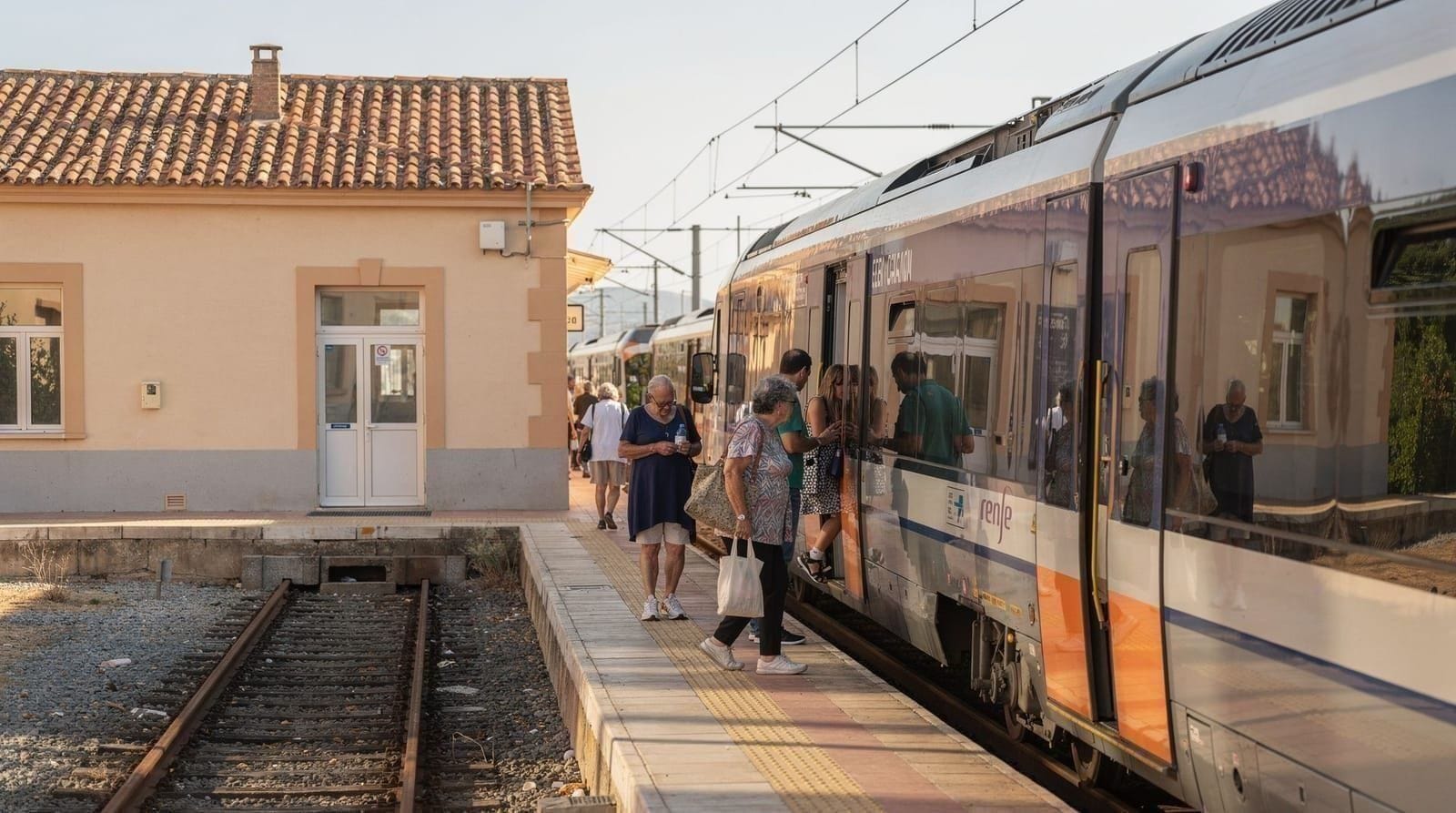
Morella has limited bus service (Hife company, 1–2 daily departures from Valencia, 2.5 hours). Peñíscola has regular RENFE connections via Castelló and Vinaròs (1.5–2 hours). Combining both in one day by public transport is impractical — you’d need to stay overnight. The car (or organised tour) is the practical choice for the circuit.
What should I buy in Morella?
Black truffle (in season, November–March) — the Maestrat is one of Spain’s main truffle-producing areas. Local jamón (Morella-area pork). Black clay pottery (a local craft tradition). Locally produced honey. Artisan botifarra (cured sausage). These are genuine regional products at market prices, not tourist tchotchkes.
Is this trip too long to do with young children?
It’s a genuinely long day (11–12 hours, nearly six hours of driving). Families with young children often prefer to split it: Morella one day with an overnight nearby, Peñíscola the next as a relaxed beach-and-castle day. See the family itinerary for Valencia for how to adapt the pacing.
How does this compare to a Xàtiva castle day trip?
Xàtiva is much closer (60 km, 45 minutes by train) and works as a half-day without a car, but it’s a single hilltop castle rather than a coast-and-inland double feature. Choose Xàtiva if you want an easy half-day; choose Peñíscola-Morella if you want a fuller, more ambitious day and don’t mind the driving. See the Xàtiva castle guide and the day trips by train guide for the comparison.
Top experiences
Bookable activities with verified prices and instant confirmation on GetYourGuide.