Las Fallas guided tour Valencia: what to book and what to skip
Valencia: the ultimate Fallas tour — celebrate like a local
Duration: 3 hours
Las Fallas is one of Europe’s most extraordinary festivals — a week-long explosion of fire, fireworks, colour and noise that takes over Valencia every March. Guided tours during the festival vary enormously in quality: the best ones unlock cultural depth that independent visitors miss; the worst are expensive walks past monuments you could find for free. This review identifies which experiences are worth paying for.
| Where | Citywide, centred on Plaza del Ayuntamiento and Ciutat Vella |
| Cost | Free to watch; guided tours around €20–65 |
| Time needed | 2–3 hours for a guided walk; days if exploring independently |
| Getting there | Walkable from most central Valencia accommodation |
| Best time | Climax week, 15–19 March — book 3–4 weeks ahead |
The honest case for and against a Fallas guide
Las Fallas is simultaneously one of the world’s most accessible festivals and one of the most opaque for outsiders. The monuments are free, the streets are open, the mascletà costs nothing. You can spend four days in Valencia during Fallas and never pay a euro for festival-specific experiences.
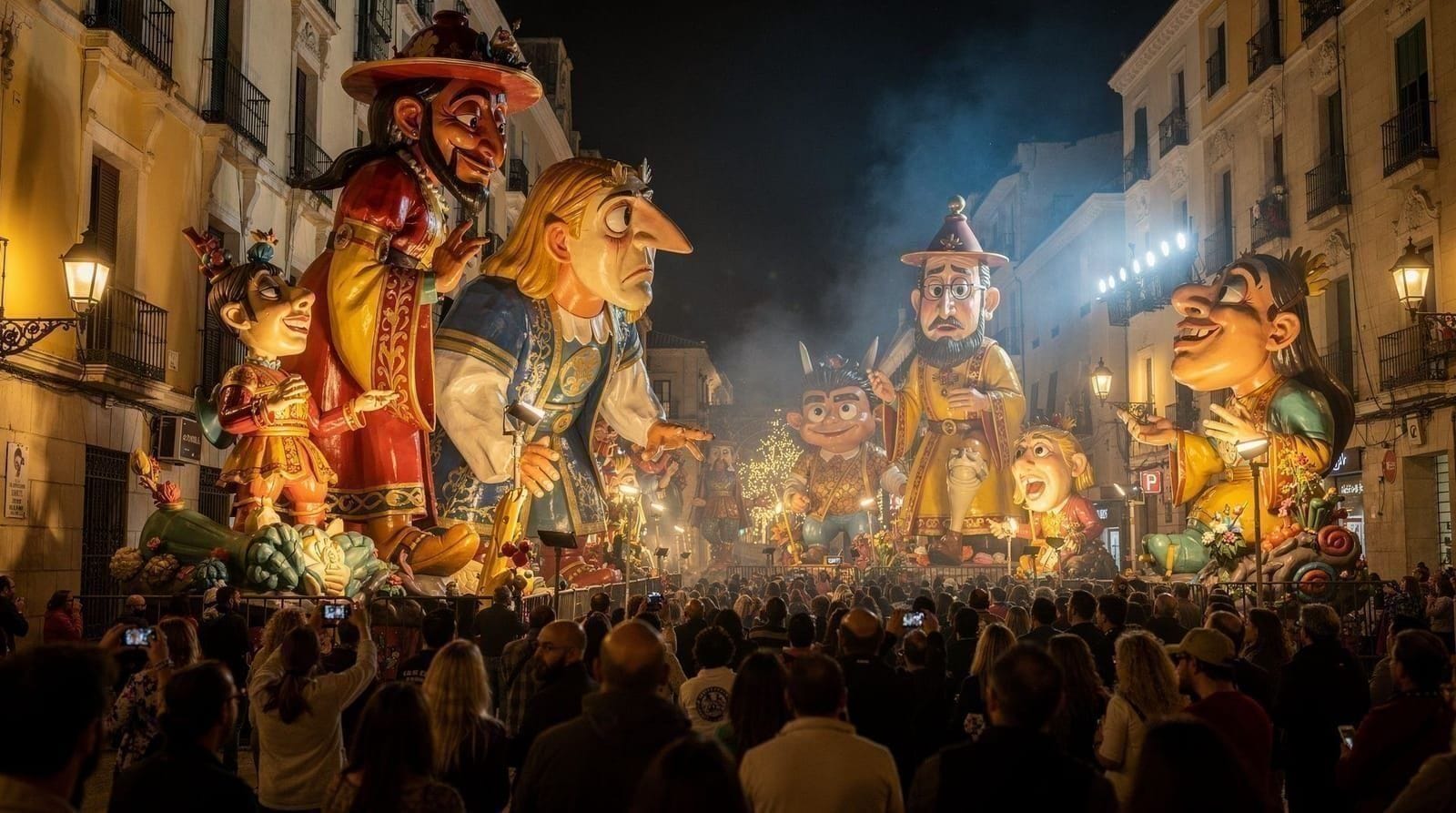
The case for a guide rests on two things: efficiency and context. Valencia erects over 700 fallas monuments, ranging from neighbourhood decorations to €500,000 masterpieces. Without local knowledge, you may walk past mediocre monuments and miss the twenty genuinely spectacular ones. A good guide curates the route and explains the satirical content — most of which is incomprehensible without knowing who the political figures being lampooned are.
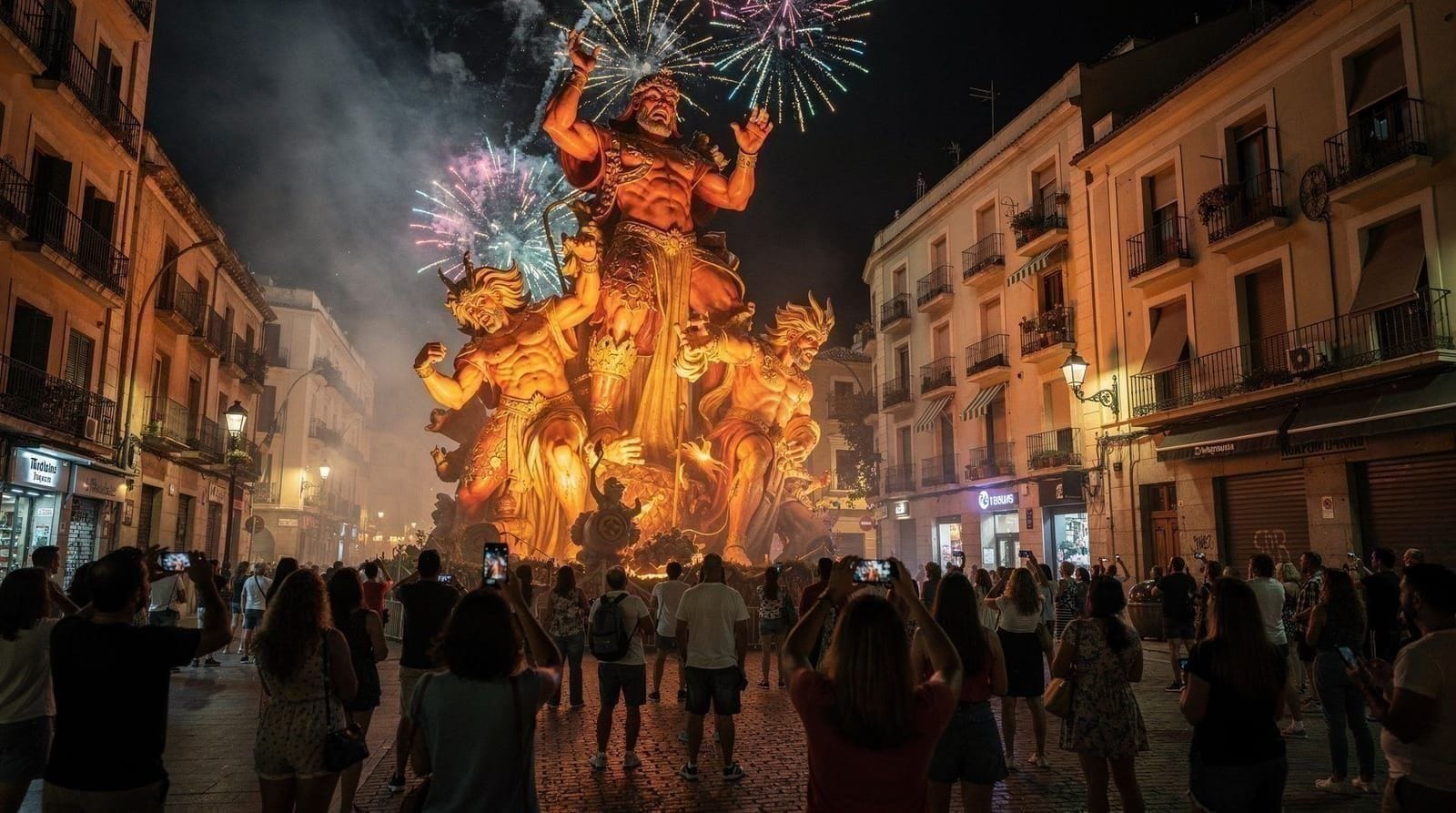
Context matters enormously for Fallas. The burning of the monuments (Nit de la Cremà on 19 March) is not random destruction — it is a deeply ingrained ritual with religious, political and civic meaning. The guilds (comisiones) that build each falla spend the year saving money, selecting artists and organising their neighbourhood. A guide who can explain this turns a spectacle into a cultural experience.
Tours compared
The ultimate Fallas tour — celebrate like a localThis 3-hour walking tour is the most popular Fallas experience on GetYourGuide. Small groups, bilingual guide (English/Spanish), and a curated route through the best monuments in the centre and one or two outer neighbourhoods. Includes the history of the festival, commentary on the year’s satirical themes, and timing coordination with the daily mascletà if the schedule allows. Price: approximately €25–35. Best overall choice for a solid introduction.
Las Fallas Festival guided tourA shorter (2-hour) alternative at a lower price point. More compressed route but covers the essential monuments in the city centre. Good if you only have a morning free or are doing a self-guided exploration for the rest of the time. Price: approximately €20–28.
Guided tour and Fallas workshop in the City of the Fallas ArtistThis is the most distinctive option: a visit to the Fallas Artisan Quarter (Barrio del Artista Fallero) where the monument workshops are based, combined with a hands-on workshop in papier-mâché or painting techniques. The Artisan Quarter is in the north of the city (near Camino de Moncada) and rarely visited by tourists. This tour runs year-round, not only during March — which means it is accessible even for visitors who cannot make the festival itself. Best for families with children or anyone with a serious interest in the craft. Price: approximately €35–55.
Fallas theme tour with creative workshopA similar concept — combining a walking tour with creative participation. Good for children aged 8 and above who want to make something rather than just observe.
What you can do entirely free during Fallas
Understanding the free access points matters:
The monuments: All 700+ fallas monuments are on public streets, completely free to view at any hour. The official fallas map (available from tourist offices and online) marks every monument by category and prize level.
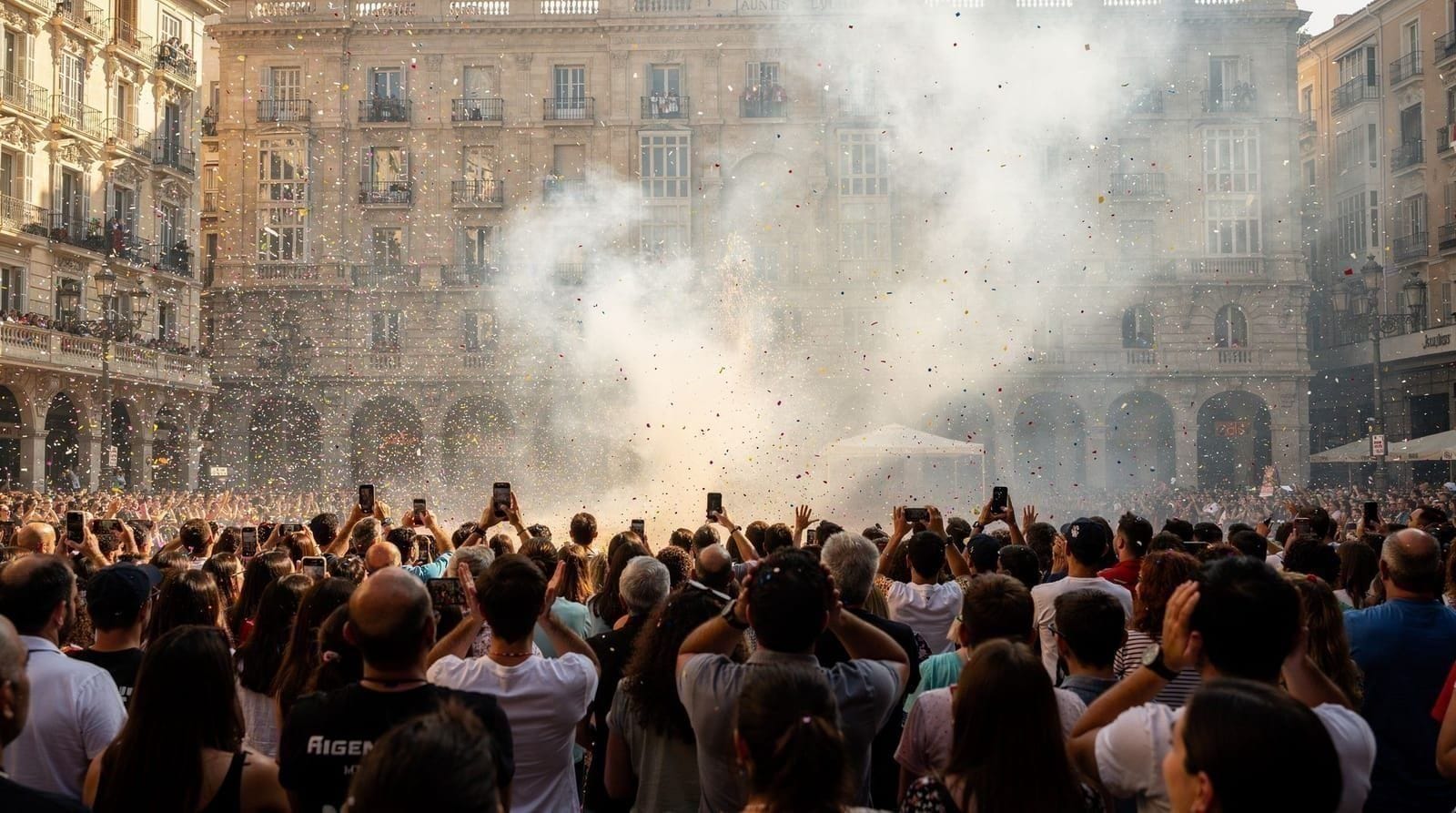
The mascletà: Daily at 14:00 in Plaza del Ayuntamiento (1–19 March). Free. Arrive by 13:30 for a reasonable viewing position. By 13:15 for the front rows.
Street music and processions: The desfile de falleras (traditional costumed parade) and the ofrena (flower offering procession to the Virgin) are free public events.
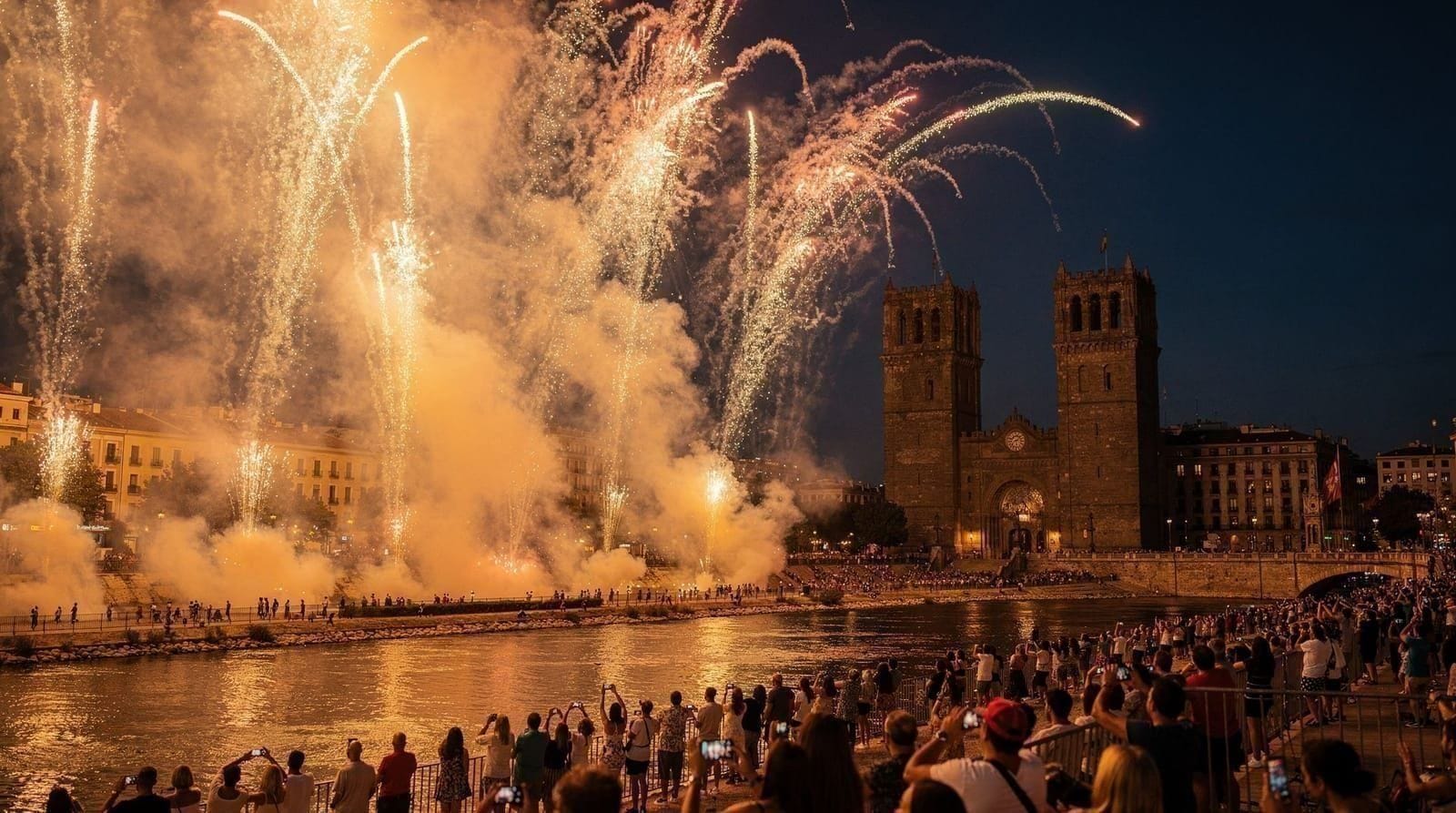
Fireworks (Castillo): Nightly fireworks shows are free to watch from public areas along the Turia.
Nit del Foc (Night of Fire, 18 March): The largest fireworks display in Europe. Free, from any open space on the riverbed or nearby streets. Crowds are extreme.
Nit de la Cremà (19 March): The burning of all monuments. Free. Different fallas burn at different times throughout the night. The last and largest burn (the guanyadora, prize-winning monument in Plaza del Ayuntamiento) happens after midnight.
Practical advice for Fallas
Accommodation: Hotels charge 3x normal rates during the climax week (15–19 March). Book 3–6 months in advance. Consider staying in Ruzafa or Benimaclet for slightly calmer access.
Earplugs: Non-negotiable. The petardos (firecrackers) that children and adults set off on the streets are very loud. Children especially need protection. The mascletà reaches 120 decibels.
Crowds: The central streets around Plaza del Ayuntamiento become impassable on 18 and 19 March. Use side streets to navigate. Do not attempt to drive in the city centre during the climax week.
Fallas tours outside March: The workshop tours in the Artisan Quarter operate year-round and offer a legitimate way to engage with the festival culture outside the festival itself.
Verdict
The 3-hour guided walking tour is worth paying for if this is your first Fallas — it saves an hour of map reading, delivers context that significantly improves the experience, and gets you to the best monuments efficiently. The Artisan Quarter workshop tour is the most distinctive experience and is genuinely unavailable independently.
Everything else — the mascletà, monument viewing, street music, fireworks — is free and can be done well without a guide if you have the complete Fallas guide bookmarked.
Worth adding: the smell of gunpowder and the constant background pop of small firecrackers set off by children and teenagers on ordinary streets is as much a part of Fallas as the monuments themselves. It starts weeks before the climax and is easy to underestimate if you’ve only read about the mascletà and the Cremà — expect noise from the moment you land in Valencia during the festival window, not only during the scheduled ceremonies.
Fallas week day by day
| Date | What happens |
|---|---|
| 1–14 March | Early fallas period; mascletà builds up daily; quieter crowds |
| 15 March | Plantà — all monuments fully installed and unveiled |
| 16–18 March | Daily mascletà at 14:00; nightly fireworks (Castillo); processions |
| 18 March | Nit del Foc — the largest fireworks display of the festival |
| 19 March | Ofrena flower procession by day; Nit de la Cremà — monuments burn, the final one after midnight |
Where to stay and how to get around
For the climax week specifically, the where to stay during Fallas guide covers which neighbourhoods stay liveable versus which become unnavigable. Ruzafa and Benimaclet both offer a calmer base a short walk from the action, and both connect easily to Ciutat Vella/El Carmen, where most of the largest monuments stand. If you’re mapping out which days to prioritise, the Fallas day by day breakdown goes deeper than the summary table above, and the Nit del Foc guide is essential reading before the 18 March fireworks specifically. For a full multi-day itinerary built entirely around the festival, see the Valencia during Fallas itinerary.
Frequently asked questions about Las Fallas tours
Can I experience Las Fallas if I visit Valencia outside of March?
Yes. The Fallas Museum (Museo Fallero) in the Monteolivete neighbourhood houses the ninots indultats — the small figures voted by the public to be spared from burning each year. The museum holds these dating back to 1934. The Artisan Quarter workshop tours also run year-round.
What are the best fallas monuments to see?
The prize-winning monuments (first prize, Sección Especial) in Plaza del Ayuntamiento and the surrounding streets are the most elaborate and best-funded. But smaller neighbourhood fallas in areas like Ruzafa, El Carmen and Benimaclet often offer more creative and satirical content than the prestige entries.
Is Las Fallas suitable for people who dislike loud noise?
The street-level petardos and the mascletà are intensely loud. If you have noise sensitivity, Fallas is genuinely challenging — earplugs are helpful but do not eliminate the impact. The monument viewing itself (outside masletà hours) is quiet and perfectly accessible.
Do the tours operate on Nit de la Cremà?
Some operators offer guided experiences specifically for Nit de la Cremà — curated routes to watch multiple neighbourhood burnings before the final ceremony. These tend to sell out very early. Worth booking if you want guidance through what can otherwise be a chaotic night.
What should I wear to Las Fallas?
Comfortable walking shoes (you will walk 8–12 kilometres per day), layers (March in Valencia can be cold at night despite warm days), and clothes you do not mind smelling of smoke by the end of the night. Avoid synthetic fabrics near the burning monuments.
Are Las Fallas tours available in languages other than English?
Yes. Most operators offer tours in Spanish, English, French and German. Some tours operate in Italian or other languages — check the listing language options at booking.
What is the difference between Las Fallas and Sant Josep?
Sant Josep (19 March) is the saint’s day that marks the final night of Fallas — the Nit de la Cremà. The festival culminates with the burning of the monuments on this date. The two names are often used interchangeably in common usage.
Compare alternative tours
Frequently asked questions about Valencia
What does a Las Fallas guided tour include?
Most tours cover a guided walk past the major falla monuments (the giant papier-mâché sculptures), explanation of the festival's history and traditions, visits to one or more neighbourhoods with decorated streets, and context for the mascletà (daily firecracker ceremony). Premium tours add a workshop in the artist district or evening activities.When is the best time to book a Las Fallas tour?
Tours during the climax week (15-19 March) are the most atmospheric but also the busiest. Book at least 3-4 weeks in advance. Nit del Foc (19 March) tours especially sell out. Early-week tours (1-14 March) offer a quieter but still impressive experience.Do you need a guided tour for Las Fallas, or can you explore independently?
The monuments are free to see without any ticket or guide — you simply walk the streets. A guide adds historical and cultural context, helps you navigate efficiently, and explains what you are seeing. Independent exploration is entirely viable and free.How much does a Las Fallas guided tour cost?
Group walking tours cost approximately €20-35 per person for 2-3 hours. Workshop experiences and evening tours run €35-65. Private tours can reach €100-150 per person.What is a falla monument?
Each falla is a large satirical sculpture built from papier-mâché, wood and cardboard by neighbourhood associations (comisiones falleras). They depict public figures, social commentary and folk tales. They are burned on the final night (Nit de la Cremà). Over 700 fallas are erected across Valencia during the festival.Is Las Fallas safe with children?
Yes, during daytime and early evening. The petardos (firecrackers) and mascletà are extremely loud — earplugs are essential for children and adults alike. Nights during the climax week (especially Nit del Foc) are very crowded and better suited to older children and adults.What is the mascletà?
The mascletà is a daily firecracker and percussion ceremony held at 14:00 in Plaza del Ayuntamiento during Las Fallas (1-19 March). It is a 5-minute sensory experience of escalating explosions — felt physically as much as heard. Free to attend but very loud. Arrive 30-45 minutes early for a viewing position.