Gulliver playground Valencia: the free kids' landmark in the Turia Gardens
Every parent who has spent a wet afternoon dragging tired children between paid attractions eventually asks the same question in Valencia: is there anything genuinely good that doesn’t cost anything? Gulliver Park is the answer, and it’s a better answer than most cities manage.
| Where | Turia Gardens, near Ciudad de las Artes y las Ciencias |
| Cost | Free |
| Time needed | 45 minutes to an hour |
| Best age | 4–12 years old |
| Best time | Weekday mornings or late afternoon; avoid 1–4pm in August |
What Gulliver Park actually is
In the eastern section of Valencia’s Turia Gardens, about five minutes’ walk from the City of Arts and Sciences complex, there is a 70-metre long figure of Gulliver lying on his back, pinned to the ground by cables and stakes.
Children climb on him via ramps on each side. His body contains twelve slides of varying lengths and heights — the longest is around eight metres — plus climbing nets, spiral staircases up to his head and shoulders, and rope bridges between structures. The cables that “tie him down” are themselves climbing elements: tensioned steel cables at various heights that children work their way along.
It is large enough that twenty children can be on the figure simultaneously without interfering much with each other. It is well-maintained, regularly repainted, and has been in this spot since 1990.
Admission is free.
Location and how to get there
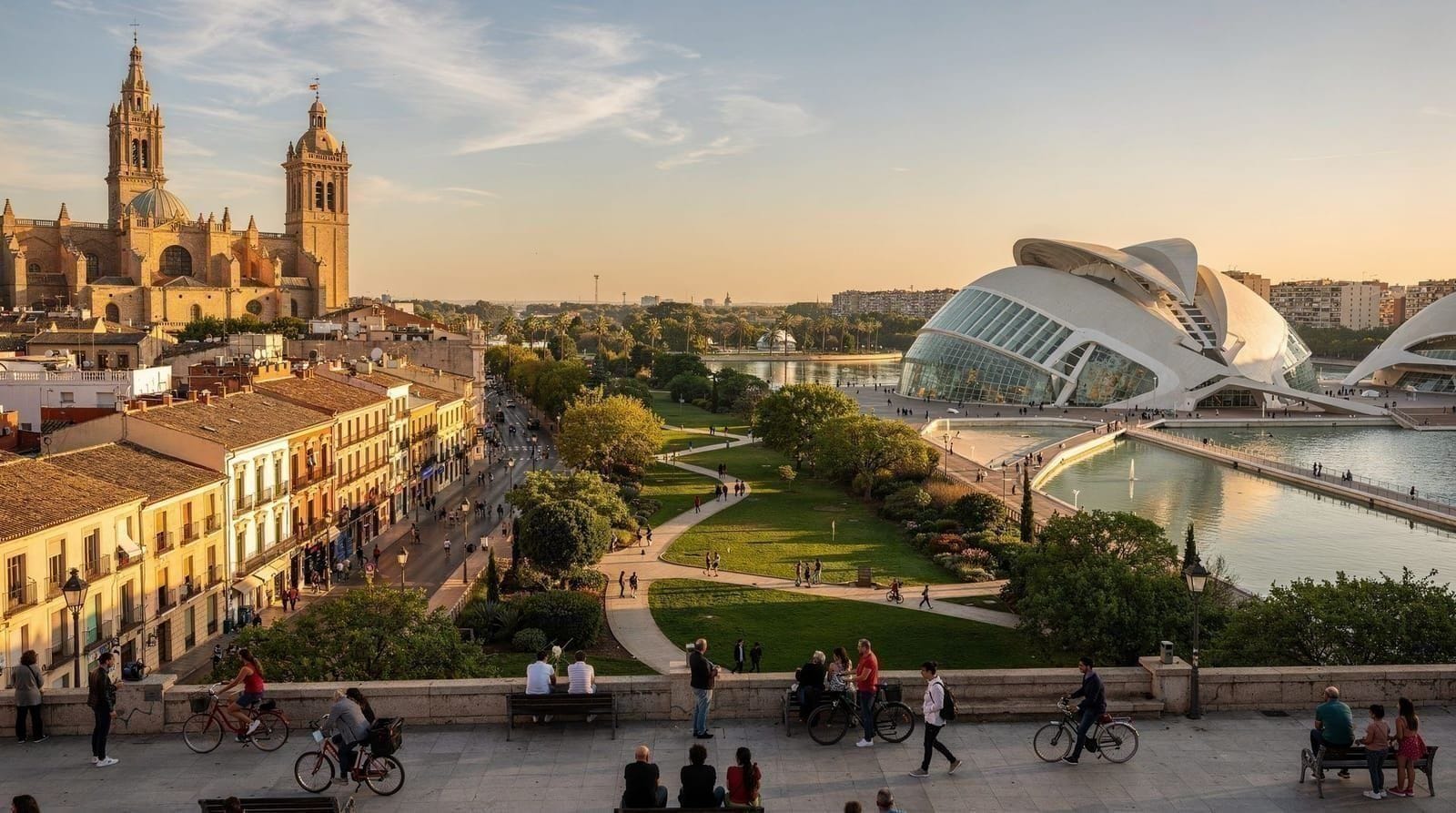
Gulliver Park sits in the Turia Gardens near the intersection of the gardens with Calle Campoamor, in the section of the Jardins del Turia closest to the Ciudad de las Artes y las Ciencias.
Getting there:
- On foot from the city centre: About 45 minutes walking east along the Turia riverbed path. The path is flat, shaded in sections, and very pleasant.
- By bike: 15-20 minutes from the old town via the Turia Gardens path. Rental bikes (Valenbisi or private rental) work well.
- By bus: Line 35 stops on Avenida Autopista del Saler, about 5 minutes’ walk. Lines 19, 40 and 95 also serve the area.
- By metro: Closest stop is Àngel Guimerà (Lines 1, 2, 7) or Àgora (Line 5), then a 10-15 minute walk through the gardens.
If you’re combining Gulliver with a visit to the Oceanogràfic or the Science Museum, the City of Arts and Sciences car park is about 800 metres away and has paid parking.
Practical notes
Opening hours: The park is open-air and has no formal opening or closing time as such — it’s part of the public Turia Gardens. However, maintenance and occasional safety closures happen. In practice, it’s accessible from early morning until around 10pm in summer (when the gardens remain active).
Best time to visit: Weekday mornings before school groups arrive, or late afternoon when the summer heat subsides. Saturday mornings in school term are busy but manageable. August afternoons in the full heat (1-4pm) are very uncomfortable.
Shade: Limited around the Gulliver structure itself. The gardens nearby have trees but the immediate area around the figure is exposed. Bring sun protection and water in summer. The hats-and-sunscreen reality of Valencia in July applies here as strongly as anywhere.
Age range: Best suited to ages four to twelve. Under-fours can play on the lower accessible elements with close supervision. Older teenagers typically find it has nothing to offer them. The upper slides are steep enough that children who are timid about heights may want to watch others before committing.
Accessibility: The main ramps that access the figure are suitable for children with some mobility limitations; the upper structures require climbing ability.
What to combine it with
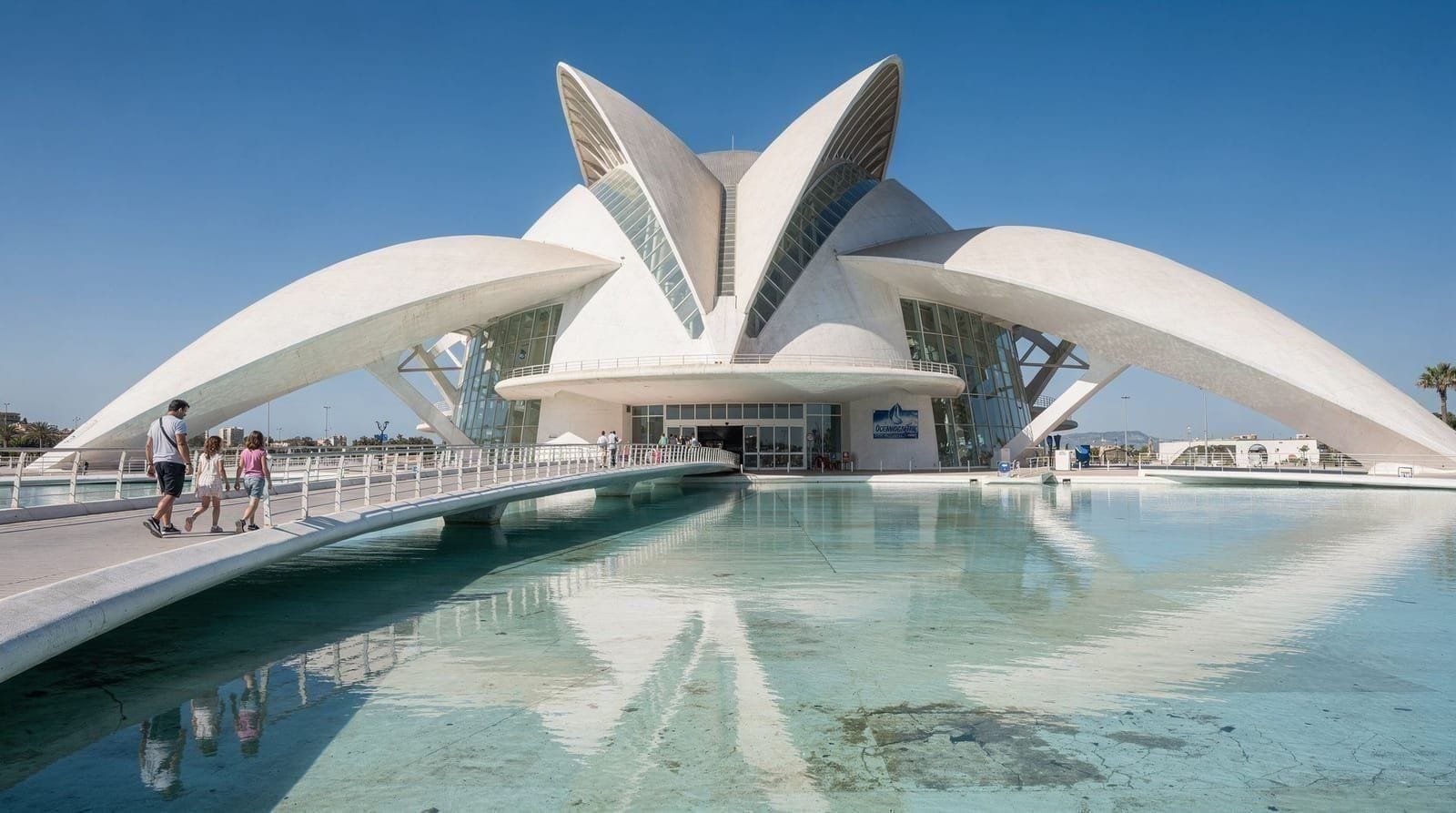
The City of Arts and Sciences complex begins immediately east of the park. The Hemisfèric 3D cinema, the Science Museum and the Oceanogràfic are all within a ten-minute walk. A practical family itinerary might be: Gulliver in the morning until energy runs out, lunch at the complex or at one of the restaurants on Avenida del Professor López Piñero, then a museum or the aquarium in the afternoon.
Book Oceanogràfic tickets in advance to skip the ticket-desk queue after your Gulliver morningThe Turia Gardens path west of Gulliver leads into the city’s central section, passing the Palau de la Música and eventually reaching the old town. Walking this stretch with children who are comfortable on bicycles (or in a cargo bike or buggy) is a very Valencian way to move through the city — see the running and cycling in the Turia guide for the full length of the path.
The free things to do in Valencia category includes Gulliver, the Turia Gardens overall, and the Torres de Serranos (free Sunday mornings). For families on a budget, this combination plus the beach at Malvarrosa provides a very full day at minimal cost. If the day turns hot or you need a change of pace, the rainy-day and indoor options guide has backups that don’t depend on weather.
Facilities and what to bring
There are no toilets or water fountains attached directly to the Gulliver structure itself, but the wider Turia Gardens has public toilets at intervals and several kiosks selling drinks and ice cream nearby, particularly toward the City of Arts and Sciences side. Bring your own water in summer regardless — queues at kiosks build up around midday. There is no dedicated pram parking, but the ramps are wide enough to leave a folded buggy at the base while children climb. Benches ring the perimeter, which matters more than it sounds: this is the kind of attraction where adults sit for 45 minutes while children do the work, and shaded seating is limited, so a portable seat cushion or picnic blanket for the grass nearby is worth packing.
For a broader sense of what else works well with children in the city, the Valencia with kids guide and the family itinerary guide both place Gulliver early in a typical day, precisely because it’s free, close to other attractions, and burns off morning energy before anything that requires patience.
Making the most of the morning
Let children set the pace. Most arrive at the figure and head straight for the biggest slides, then drift toward the nets and cables once the novelty wears off. A sensible rhythm is to let them run first, take a drink break on the benches, and only then think about moving on. Children who are still happily climbing are a good sign that the rest of the day can wait.
If you have a mixed-age group, older children can tackle the cable elements and upper staircases while younger siblings stay on the lower ramps within reach of a parent. It helps to agree on a meeting point at the base before anyone climbs, because the structure is large and a small child can disappear behind a slide surprisingly quickly.
Once energy finally runs low, the nearby science attractions make a natural second half of the day. A family that likes hands-on exhibits can head to the interactive science museum next door when the sun gets too strong, and the Science Museum with kids guide explains how to get the best from it. For the full picture of the area around the park, the City of Arts and Sciences guide covers everything within walking distance, and the Gulliver Park guide goes deeper on the playground itself.
The thing nobody mentions
Gulliver doesn’t have a shop, a ticket booth, or a refreshments van attached to it. There are no sponsored experiences. It is a 1990 public artwork that doubles as a playground, maintained by the city council, sitting in a free public park.
In a world where family attractions reliably convert every aspect of the visit into a commercial transaction — the photo opportunity, the branded snack, the gift shop exit — Gulliver’s complete absence of all of that is notable. You arrive, your children climb a giant, you leave. That’s the whole transaction.
It is also genuinely one of the most distinctive pieces of public art in Spain. The scale, the detail of the figure (right down to Gulliver’s rope-bound clothing and his expression of mild resignation), and the implicit message about what cities owe their children in public space — all of it is more interesting than it has any business being.
If you’re visiting Valencia with children, Gulliver Park is not optional. It takes 45 minutes to an hour, it is free, and it will be one of the things your children remember. Put it in the morning of your first full day.