Three days in Valencia: what the trip actually looked like
We arrived on a Thursday evening
The flight landed at Valencia Airport at 7:15pm in late September. The metro to the city centre — Line 3, Aeroport to Xàtiva — took 25 minutes and cost 2.50 €. The hostel was in El Carmen. By 9pm we were sitting at a table outside a bar on Calle Cavallers with a glass of white wine, feeling the particular relief of having arrived somewhere that was genuinely warmer than the city we’d left.
| Where we stayed | El Carmen, old town |
| Total cost (2 people, food + activities) | around €280-320, excluding flights and lodging |
| Pace | Two full days out, one relaxed; jet lag ate part of day one |
| Best for | First-timers who want a walkable old town plus one nature day |
| What we’d change | Later dinner reservations, and one more day for the Bioparc and Ruzafa’s street art |
This is where the three-day Valencia itinerary starts in the practical sense — the metro route, the neighbourhood, the first evening meal. What it can’t convey is what it feels like to walk through El Carmen at dusk, the light doing specific things to the sandstone, the tables filling up and the city settling into its Thursday-evening rhythm. I’ll try to cover that here.
Day one: the old city on foot
We spent the first full day almost entirely in the medieval centre — not because it’s objectively the best day’s agenda, but because jet lag (we’d come from far enough that Thursday night felt late) meant we needed to move slowly.
The routine emerged without planning: coffee and toast at a café on Plaza de España around 9am, then a slow walk east through the streets of the Carmen neighbourhood. The El Carmen guide has all the official context — the Roman walls, the medieval towers, the street art of Calle de Dalt. What it can’t prepare you for is how compressed the scale is. Valencia’s old town is genuinely walkable in a way that Barcelona’s Gothic Quarter, for comparison, is not. We walked from the Torres de Serranos to the Cathedral in about seven minutes, and the Cathedral to the Mercado Central in four.
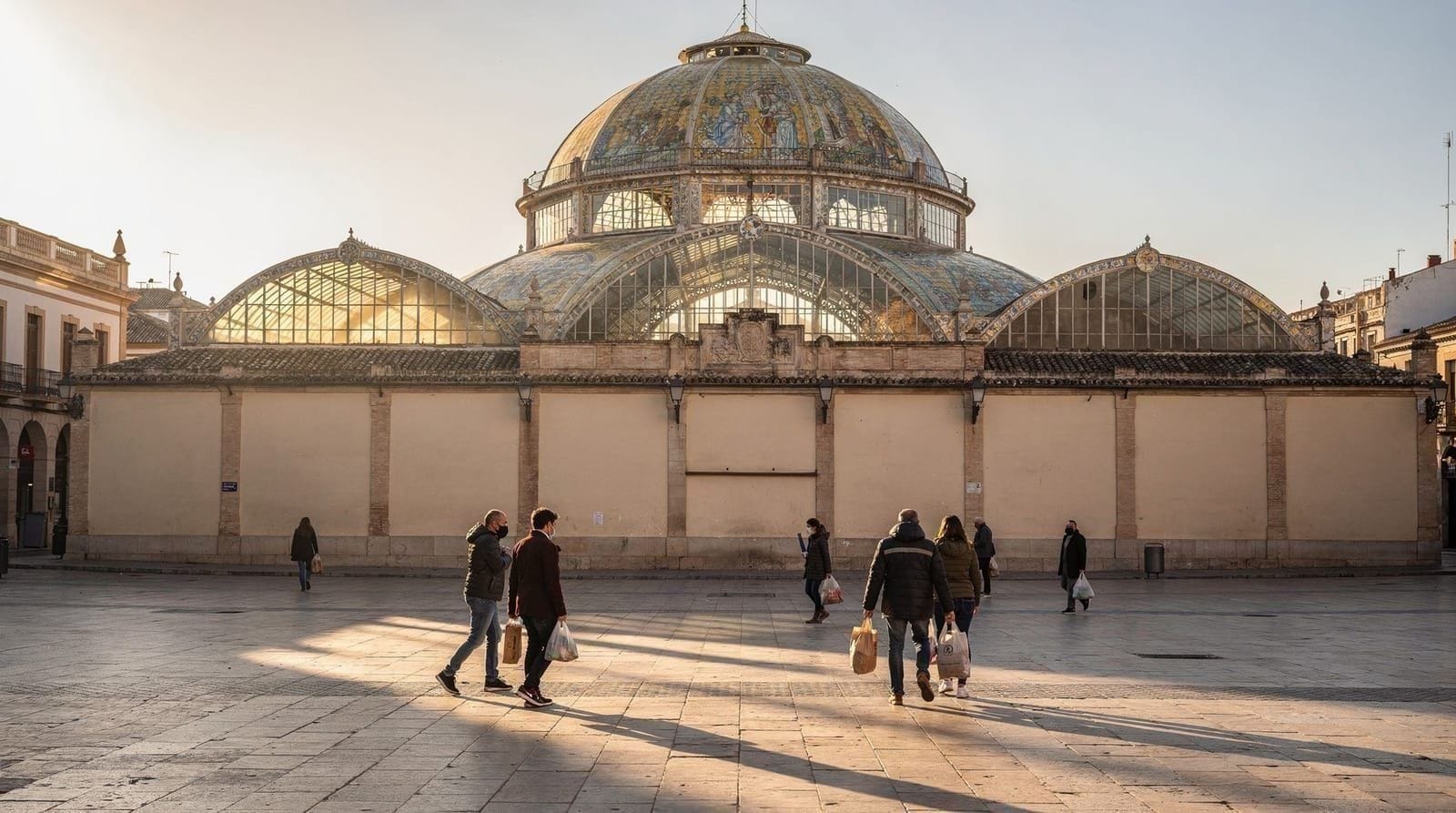
We spent an hour in the Mercado Central. We didn’t buy anything that needed refrigeration, but we watched cheese being sliced, looked at dried peppers and cured meats, drank an overpriced but cold horchata near the entrance, and felt we’d seen something real. Then we walked to the Llotja de la Seda, which is often described as Valencia’s most important Gothic building and genuinely earns that. The Hall of Columns is remarkable. It costs 2 € to enter. We were almost alone inside it at 11am on a Friday morning in late September.
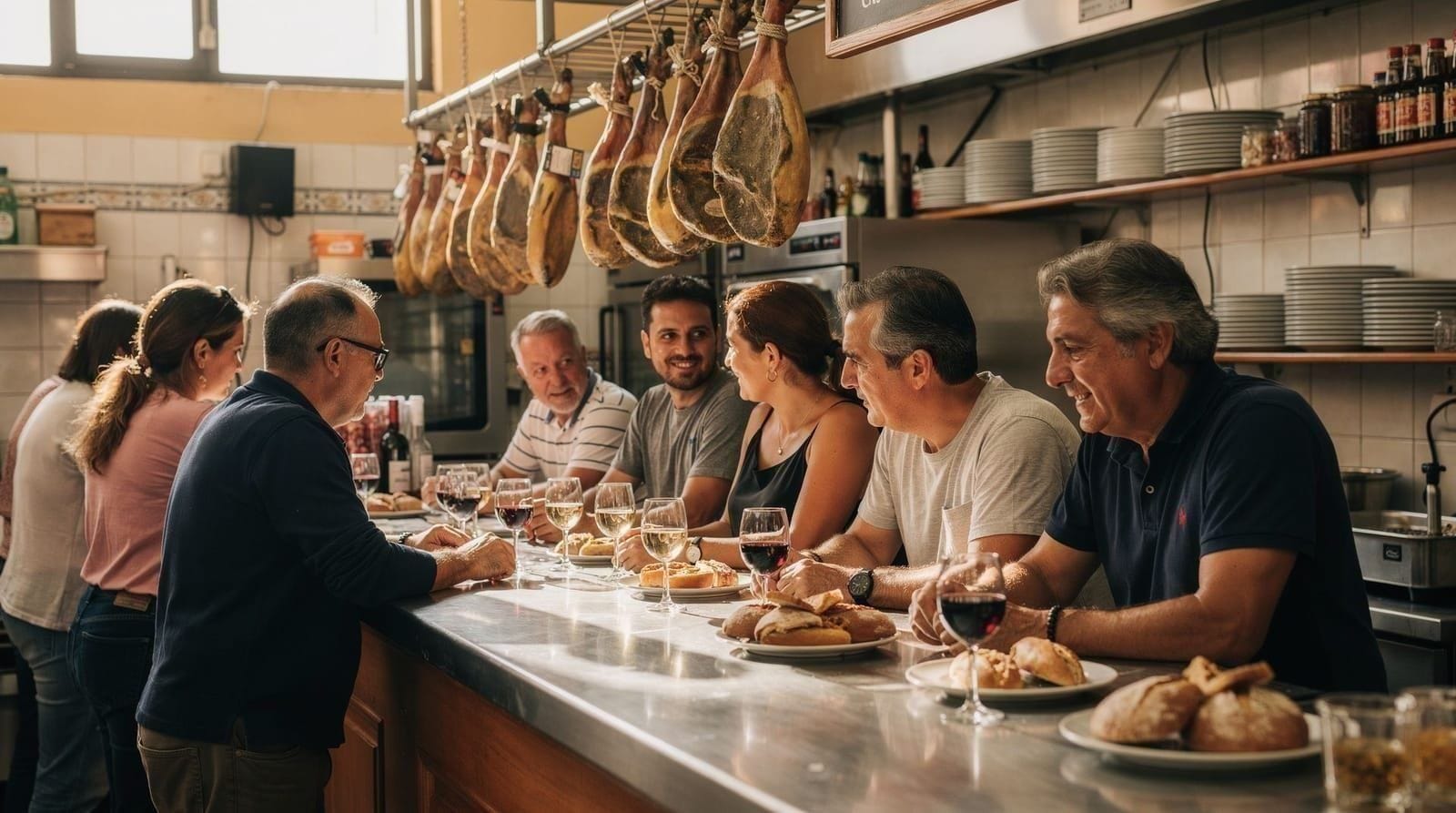
Lunch: we followed the eat like a local principle and went four streets away from the Cathedral before choosing a restaurant. The menú del día at a place called something unmemorable on a side street off Calle Quart: fideuà, braised beef, a glass of red wine from Utiel-Requena, and a coffee. 14 € each. It was good.
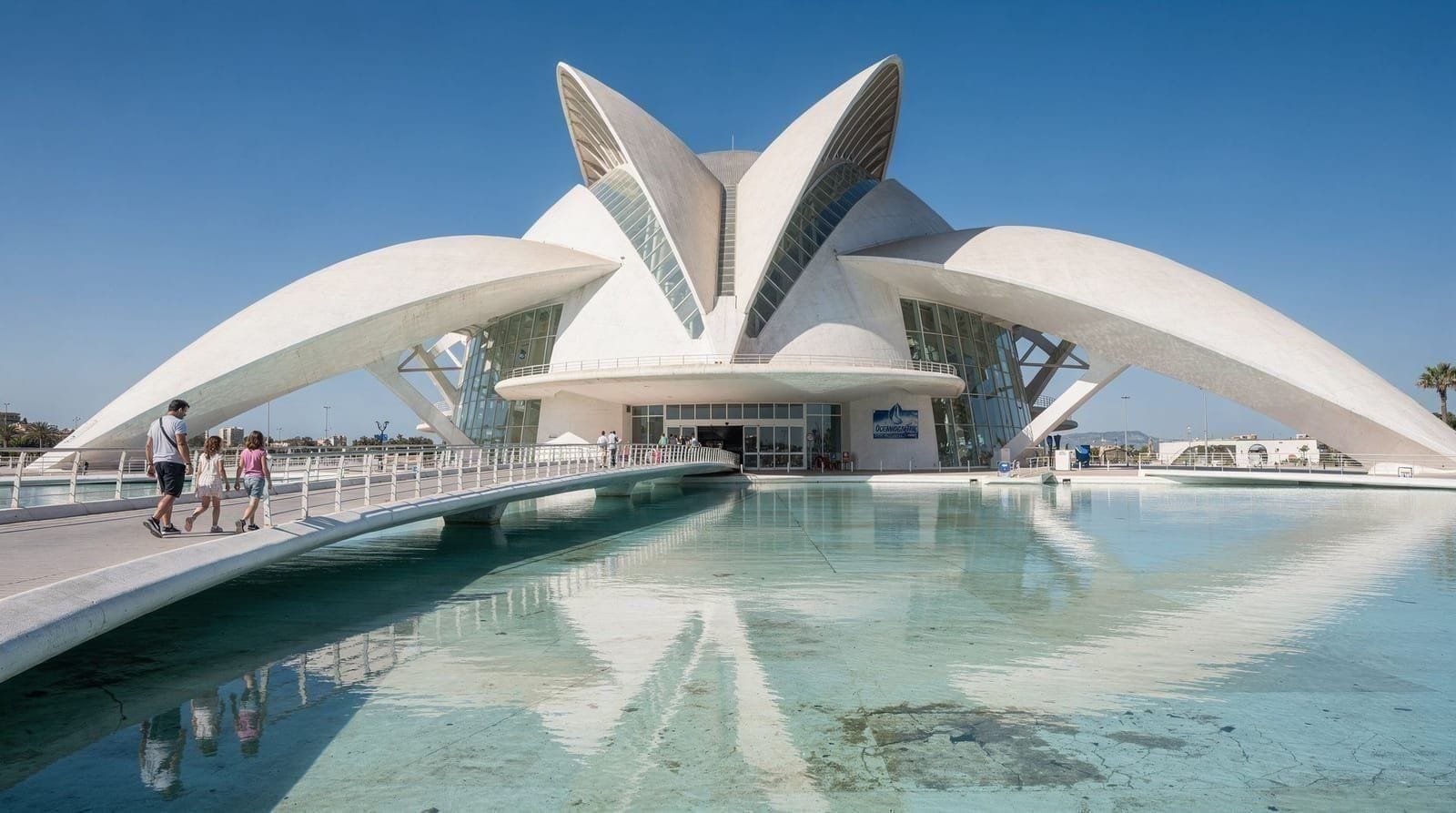
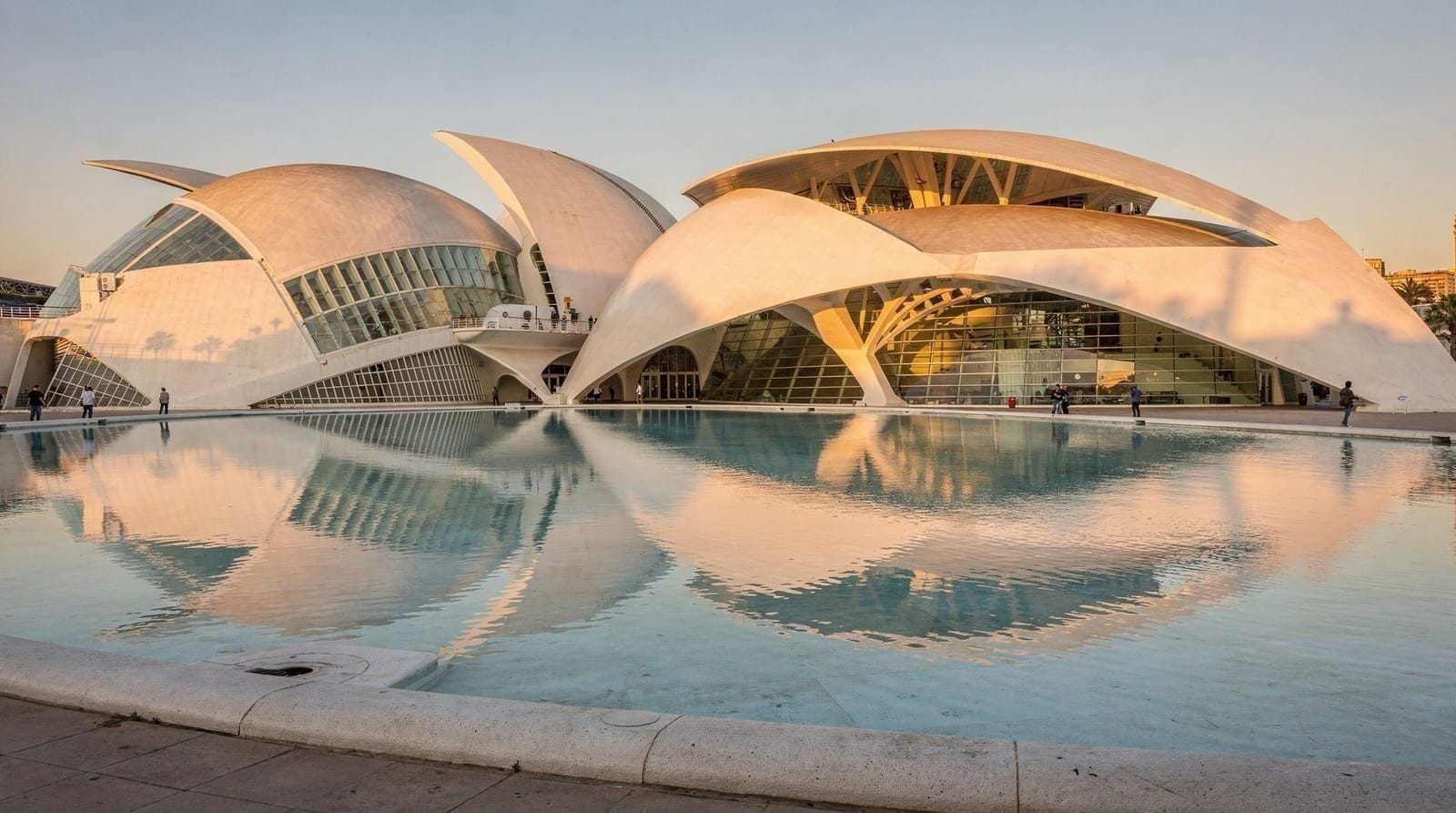
Afternoon: we walked south through the city gardens toward the City of Arts and Sciences, not to go inside anything but to see the exterior. This is worth doing even if you’re not planning visits to the venues — Santiago Calatrava’s complex at dusk, with the reflecting pools turning gold, is one of the more dramatic cityscapes in Spain. We walked back through Ruzafa for dinner.
Day two: Oceanogràfic and the decision we almost made wrong
We’d debated the Oceanogràfic the evening before. It’s expensive. We’d read mixed reviews from people who’d found it underwhelming. We almost skipped it.
We didn’t, and we’re glad. We bought tickets online the night before (€32 per adult) and arrived when it opened at 10am. We spent four hours inside, including twenty minutes sitting in the shark tunnel doing nothing but watching. This is, as I wrote in the honest Oceanogràfic assessment, the correct way to use the shark tunnel. The beluga whales were active. The jellyfish room was dark and calming in the middle of a bright September morning. We emerged at 2pm blinking and went for a late lunch.
 Oceanogràfic ticket with immersive experienceCheck availability
The afternoon went to the beach. Not Malvarrosa — we took a bus to El Saler, which took about 40 minutes from central Valencia, and spent two hours at a beach backed by pine trees with a fraction of the crowd that Malvarrosa would have had. The water was warm but not August-hot. We swam and read and took the bus back.
Dinner in Ruzafa: we went back to a bar on Calle Cadiz that a local we’d met at the hostel had recommended. Small plates, good natural wine, €45 between us for two people eating properly.
Day three: Albufera and what it costs to do it right
We’d been told by multiple people that the Albufera is the thing that makes Valencia different from other Spanish cities. They were right, and we almost ran out of time to see it.
We took the bus (line 24 from Torres de Serranos) to El Palmar, which takes about 45 minutes. El Palmar is a small village in the middle of the Albufera Natural Park, surrounded by rice fields and the lagoon. We had lunch there — all i pebre (eel in garlic and pepper sauce), arrós a banda (rice cooked in fish stock), a carafe of local wine — at one of the restaurants on the main road. The lunch was exceptional and cost around 22 € per person, which felt fair.
After lunch we took a small electric boat tour on the lagoon. These run from El Palmar and from Port de Catarroja; the experience is gentle and allows you to appreciate the landscape as a landscape rather than a destination to photograph. The tour lasted about 50 minutes.
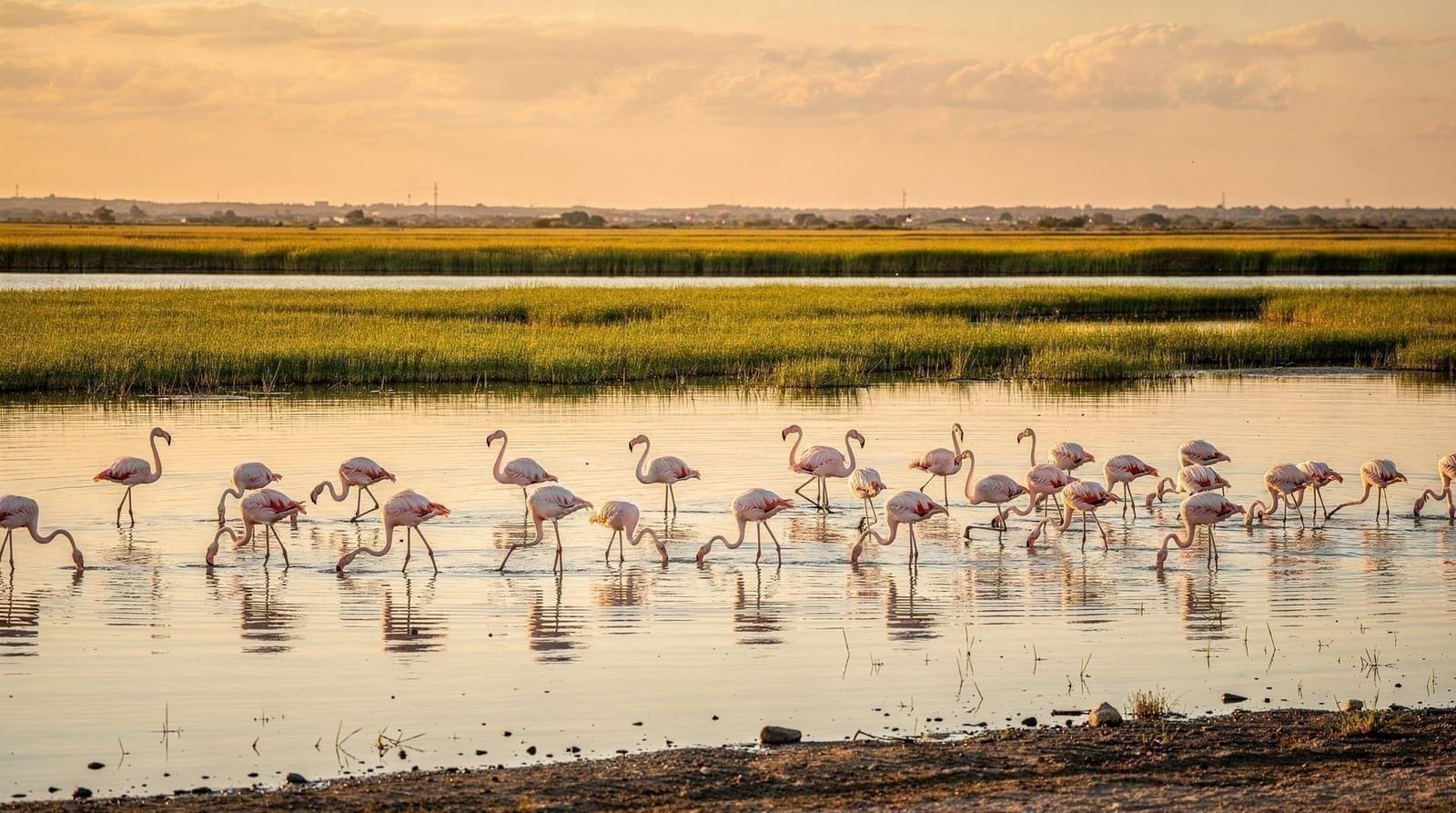 Albufera Natural Park eco boat tour at sunsetCheck availability
We returned to Valencia by bus, got back to the apartment by 6pm, and spent the last evening in El Carmen. A final Agua de Valencia at a bar on Calle Bolsería (not the tourist-zone price — this was in the neighbourhood proper). A plate of cured meat and cheese from a bar that did late tapas. A walk back through the illuminated streets to pack.
The three days, roughly costed
| Day | Main activity | Rough spend per person |
|---|---|---|
| Day 1 | Old town on foot, Llotja de la Seda, menú del día lunch | around €25-35 |
| Day 2 | Oceanogràfic, El Saler beach, Ruzafa dinner | around €65-75 |
| Day 3 | Albufera bus, El Palmar lunch, boat tour, final evening | around €55-65 |
These figures exclude accommodation and flights, and they reflect a mid-range approach — sit-down lunches, one paid attraction, one boat tour. It’s easy to spend less by skipping Oceanogràfic or eating more from markets, and easy to spend more by adding wine tastings or a second paid activity per day.
What we got wrong
We didn’t see the Bioparc. We didn’t visit Ruzafa’s street art. We didn’t have time for a paella cooking class, which I would add to a longer trip without hesitation.
Paella cooking class we’d add next timeWe also made the mistake of trying to eat dinner at 8pm on the first evening, which in Valencia in September means you sit in an almost empty restaurant feeling like you’ve arrived at the wrong party. The optimal dinner reservation is 9pm or later.
And we underestimated the distances. Three days doesn’t feel like much until you’re calculating: old town, Turia Gardens walk, City of Arts and Sciences, beach, and Albufera, all in 72 hours. The itinerary proper spaces it out more sensibly than we did.
What I’d change with a fourth day
If we’d had a fourth day, it would have gone to the things we cut for time: a slower morning in Ruzafa actually looking at the street art rather than just eating dinner there, an afternoon at the Bioparc, and probably a half-day trip out to Xàtiva for the castle and a change of scenery from the coast. Three days is enough to feel like you’ve properly met Valencia; four starts to let you slow down inside it.
What made the trip
The specific food at that unmemorable restaurant on Friday lunchtime. The shark tunnel. The pine trees at El Saler. The evening light on El Carmen’s walls. Valencia is not a city that rewards the visitor who tries to tick boxes quickly. It rewards the visitor who accepts Spanish lunch hours, orders the menú del día, walks slowly and arrives somewhere by accident.
If you’re planning your first visit, the best time to go and the practical itinerary will answer most of your logistics questions. This piece is just what it was like.
Frequently asked questions about Three days in Valencia
Is three days really enough time in Valencia? Enough to get a real feel for the city — old town, one major paid attraction, and the Albufera — but not enough to slow down or add extras like the Bioparc. If your trip allows it, the four-to-five-day itinerary gives more breathing room.
What would you cut if you only had two days instead of three? The Albufera day is the hardest to justify cutting given how different it feels from the city, but if forced, we’d drop the Oceanogràfic before we’d drop Albufera — the old town and Albufera together give the fullest sense of Valencia in the least time.