Is the Oceanogràfic worth it? An honest assessment
The honest summary
The Oceanogràfic is one of the best aquariums in Europe. It is also expensive, often very crowded, and structured in ways that make it less impressive if you arrive with unrealistic expectations. Whether it’s worth it depends almost entirely on who’s in your group and how much time you give it.
| Cost | Around 42 € adult, 31 € child (4–12) |
| Time needed | 3–4 hours for a proper visit |
| Best for | Families with children aged roughly 5–12 |
| Best time | Weekday mornings, May–June or September–October |
| Booking | Online in advance, especially July–August |
For families with children between about four and fourteen: yes, it’s worth it. Allow four hours and buy tickets in advance.
For adults without children who have already seen good aquariums elsewhere: the architecture is remarkable, the shark tunnel is legitimately impressive, but it’s hard to justify the full adult ticket price as a must-do rather than a should-try.
For anyone on a very tight schedule: skip it. Rushed aquariums are frustrating in ways that rushed museums are not.
What you’re getting
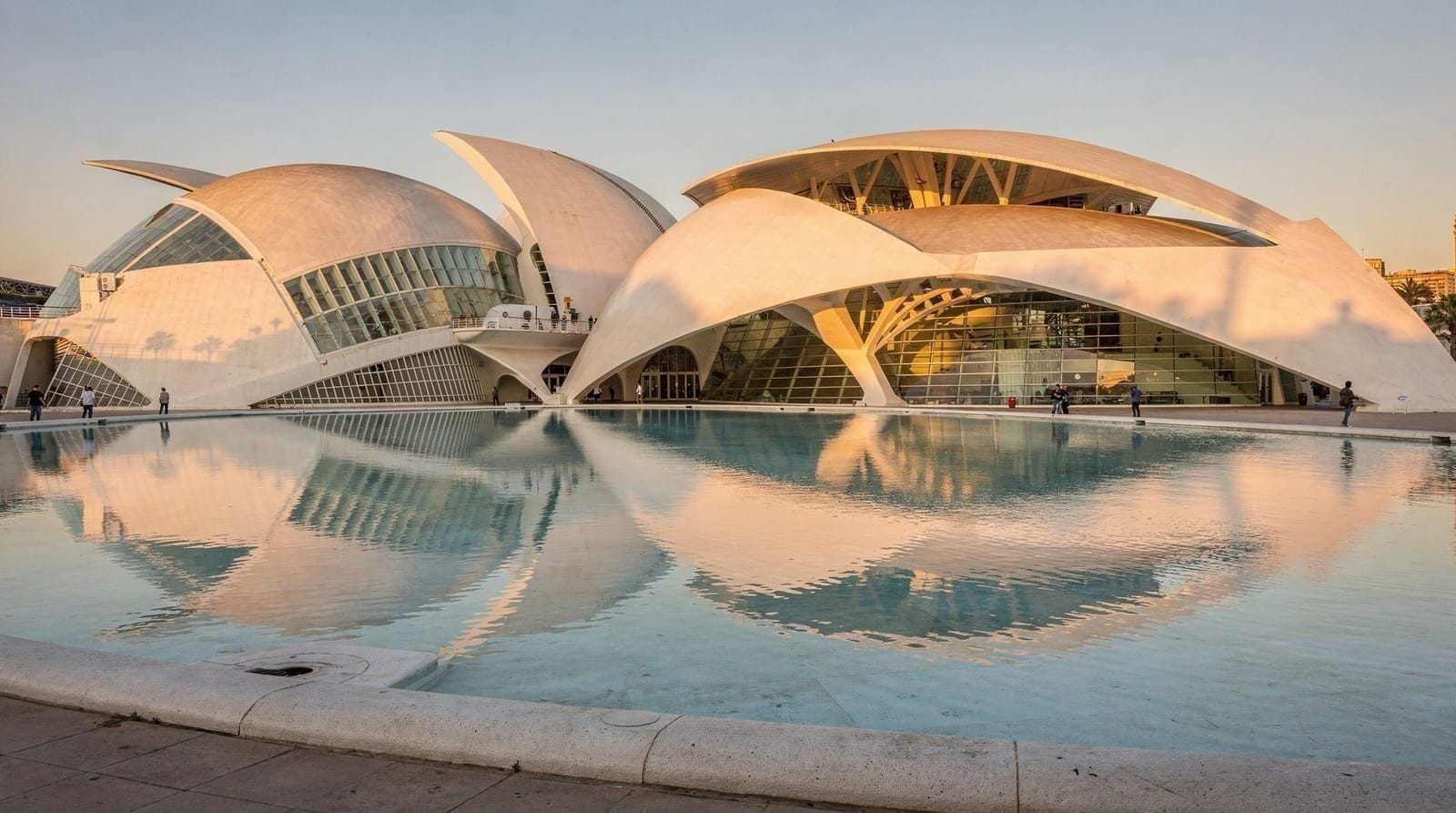
The Oceanogràfic sits in the southeast corner of the Ciudad de las Artes y las Ciencias complex, designed by Félix Candela and opened in 2003. It covers around 110,000 square metres and holds approximately 45 million litres of water.
The main sections:
The Mediterranean: The first hall covers Valencian and wider Mediterranean sea life. Familiar fish — sea bream, bass, grouper — in large tanks that recreate rocky seabed environments. Good but not the highlight.
The Ocean tunnel: The shark tank walk-through tunnel is the centrepiece and it earns the description. Sand tiger sharks, nurse sharks, rays and a variety of large pelagic fish pass overhead and on both sides in a tank that holds around 7 million litres. The sense of scale is genuinely hard to describe without sounding like marketing. It takes about 15 minutes to walk through properly.
Beluga whales: The Arctic section holds beluga whales in a large tank. Whether this is appropriate to discuss in 2026 is a legitimate question; animal welfare debates around large cetaceans in captivity have become more mainstream. The Oceanogràfic’s beluga section is large by cetacean-in-captivity standards, but it is still captivity. Make of that what you will.
Dolphins: Dolphin shows were modified in recent years following animal welfare pressure. The current format presents dolphin behaviour in an educational framework rather than a pure performance. This is an improvement but the shows still generate mixed feelings.
Red Sea, Tropics, Mangroves, Temperate: Each biome gets its own building. The tropical tanks contain genuinely beautiful reef fish; the Red Sea section has moray eels and lionfish; the mangrove section is quieter and more contemplative.
Penguins: Two species in a cold-water outdoor section. Popular with children and genuinely engaging at feeding times (check the schedule; it’s posted at the entrance).
Jellyfish room: A dark, lit room with illuminated cylindrical tanks containing various jellyfish species. One of the most visually striking parts of the visit. Jellyfish are inherently cinematic.
Practical matters
Price: Around 42 € per adult for basic entry. Children 4-12 pay around 31 €. Under-3 free. A family ticket (2+2) is around 146 €. These prices change seasonally and are lower if you book online in advance.
 Oceanogràfic ticket with immersive experienceCheck availability
The combo ticket with the Hemisfèric or Science Museum reduces the per-venue cost if you’re planning multiple attractions in the complex.
Oceanogràfic + Hemisfèric + Science Museum comboCheck availability
Which ticket type makes sense
| Ticket | Best for | Trade-off |
|---|---|---|
| Oceanogràfic only | Families focused solely on the aquarium | No discount if you also want the Hemisfèric or Science Museum |
| Oceanogràfic + Hemisfèric + Science Museum combo | Anyone spending a full day at the complex | Long day; only worth it if you have the stamina for all three |
| Hop-on-hop-off + Oceanogràfic combo | Visitors also seeing the wider city that day | Splits attention across sightseeing and the aquarium |
The City of Arts and Sciences area guide breaks down what else sits in the complex if you’re deciding how to split a day across the Hemisfèric, the Science Museum and the Oceanogràfic.
Queues: In July and August, ticket-desk queues of 45-90 minutes exist. This is not an exaggeration. Book online. The QR code entry lane is significantly faster. Mobile data access to your ticket is all you need.
Time needed: The venue takes three to four hours to cover properly. Rushing is counterproductive — the tanks reward stillness and patience, particularly the shark tunnel and the beluga section. A rushed walk-through in 90 minutes misses most of what justifies the ticket price.
Best times: Weekday mornings in May, June, September and October. Avoid August weekends — the venue is uncomfortably crowded and the combination of heat outside and air conditioning inside creates a stop-start experience that frustrates children.
Food: There is a cafeteria inside the complex. The food is institutional and expensive. Consider eating lunch before you arrive or returning to the city after the visit. The restaurants near the City of Arts and Sciences include some reasonable options.
Who should skip it
- Adults who have visited the Monterey Bay Aquarium, the Georgia Aquarium, or similar world-class institutions: the Oceanogràfic is comparable but not better, and is more expensive.
- Solo travellers on short trips: three to four hours is a significant investment. The old town, Ruzafa, the Turia Gardens and the Central Market might give a more broadly representative picture of Valencia.
- Anyone with a dolphin-show ethical objection who hasn’t checked the current format: the programming has evolved but the dolphins are still present in a performance context.
My actual take
I’ve been to the Oceanogràfic twice. The first time, I rushed it in ninety minutes. The second time, I spent nearly four hours, sat in the shark tunnel for twenty minutes doing nothing, watched the beluga whales eat, and stood in the jellyfish room until everyone else had moved on. The second visit was genuinely one of the better aquarium experiences I’ve had.
The difference was entirely time and approach. Treat it as a destination rather than a checkbox and the ticket price starts to feel reasonable. Treat it as something to get through and it feels overpriced.
If you’re travelling with children who are at the age of maximum wonder about sea creatures — roughly 5-12 — it is close to a mandatory stop. If you’re travelling alone or as a couple primarily interested in the city’s food, architecture and neighbourhood character, it’s optional.
The City of Arts and Sciences full-day experience covers what else the complex offers and how to build a full day around the area.
Pairing it with the rest of a family day
If your children still have energy after the Oceanogràfic, Gulliver Park is a five-minute walk away and free — a good way to let them burn off the last of the day’s energy outdoors rather than in a car or on a metro platform. For a fuller sense of how the aquarium fits into a family-paced Valencia trip, the Valencia with kids guide sequences it against the beach, the old town and day trips so you’re not doing two exhausting attractions back to back.
Crowds during Fallas and school holidays
Outside of summer, the other predictable crowd spike is Las Fallas in March, when school groups and festival visitors overlap. If your trip coincides with Fallas, book the earliest available morning slot and expect the shark tunnel and jellyfish room — the two most popular sections — to be genuinely busy by 11am. Spanish school holiday weeks (roughly Easter week and the first half of summer) bring a similar, if smaller, spike. Outside these windows, a weekday morning visit is noticeably calmer than the same slot in July or August.