Valencia pickpockets and safety: what's real and what's overstated
The actual risk level
Valencia is a mid-sized Spanish city with a crime rate typical of comparable European urban centres. It is not a high-risk destination. Violent crime against tourists is rare. The primary safety issue for visitors is petty theft — specifically, pickpocketing in crowded environments.
This is neither peculiar to Valencia nor something to lose significant anxiety over. It is a reality in every major city in southern Europe, and the same basic precautions that work in Barcelona, Madrid or Rome work here: be aware of your surroundings, don’t carry valuables you can’t afford to lose in your front trouser pocket, and pay attention in specific high-risk environments.
| Overall risk | Low; petty theft only, violent crime against tourists is rare |
| Highest-risk period | Las Fallas (1-19 March), especially Nit del Foc and the Cremà |
| Highest-risk spots | Mercado Central surroundings, Malvarrosa beach in summer, airport metro |
| Report theft to | Policía Nacional (not Policía Local), for the denuncia report |
| Neighbourhoods to relax about | El Carmen, Ruzafa, most of El Cabanyal |
Where pickpockets actually operate
Las Fallas period (1-19 March): The highest concentration of pickpocket activity in Valencia occurs during the Fallas festival, particularly on Nit del Foc (the night of the 18th/19th March) and the final Cremà (19th March). The central city draws hundreds of thousands of people; the crowds are dense, the noise is disorienting, and the combination creates ideal conditions for bag-dipping. Keep phones in interior pockets, zipped bags in front, and assume that anyone who bumps into you firmly in a crowd is checking whether you’ve noticed. The Fallas complete guide and Fallas day-by-day guide cover the festival itself, and the where to stay during Fallas guide is worth reading alongside this one if you’re visiting during the festival.
Central Market and surroundings: The Mercado Central is genuinely packed at peak hours, and the tourist concentration around it is high. The streets immediately outside — Calle Bolsería, Calle Quart — see consistent pickpocket activity. Main technique here is distraction: someone approaches to ask a question or show you something while an accomplice works your pockets. The same crowded-market dynamic is covered from a different angle — overpriced food rather than theft — in the tourist traps guide.
Malvarrosa beach in summer: Any crowded beach has a pickpocket risk for the obvious reason that people leave valuables unattended while in the water. The standard beach bag left on a towel while the owner swims is the main target. Use the lockers available at some beach areas, go in groups and take turns swimming, or carry minimal valuables to the beach. The Valencia beach season guide covers which months and beaches see the heaviest crowds, which correlates with theft risk.
Metro line 3 from the airport: High tourist traffic, luggage distraction, and the standard conditions for wallet lifting. Keep bags in front, hold phone in hand rather than pocket while navigating. The airport to city guide covers the route itself.
Bus 95/tourist routes: Any transport route with a high tourist-to-local ratio has elevated risk during crowded periods. The getting around by metro and EMT bus guide has the wider transport picture.
Big attractions and queues
Ticket queues and entrance halls at the major attractions are another place where crowds bunch up and attention drifts, so the same habits apply: bag in front, phone in hand or zipped away while you dig out a ticket. Booking ahead means less time standing in a line with your wallet open. At the City of Arts and Sciences, for example, a ticket for the Oceanogràfic aquarium can be arranged in advance, and a skip-the-line style entry such as an Oceanogràfic entry ticket keeps the entrance moment short.
If you plan to see several sites in one outing, a combined ticket covering the aquarium, the planetarium-style Hemisfèric and the science museum means one purchase on your phone rather than repeated stops at ticket desks. Inside, lockers and a bag worn across the body are more practical than anything elaborate. The Oceanogràfic guide and the City of Arts and Sciences guide cover the visit itself.
Neighbourhoods and their actual safety level
El Carmen (Barrio del Carmen): This is the neighbourhood with the most consistently overstated safety concern. El Carmen is Valencia’s oldest neighbourhood and parts of it were genuinely rough in the 1980s and 1990s. It is now an extensively gentrified area full of restaurants, bars and boutiques. Some streets feel dark and empty late at night, but the risk of walking through them is minor if you look like you know where you’re going.
The occasional drug activity and late-night drunken behaviour exists as it does in any nightlife-adjacent neighbourhood, but El Carmen is not a place to avoid. The El Carmen guide gives a realistic picture.
Ruzafa/Russafa: Very safe. Tourist and local mixed neighbourhood with significant evening activity. Normal urban awareness is sufficient. The Russafa guide covers what makes the neighbourhood worth an evening beyond the safety question.
El Cabanyal: This fishing neighbourhood near the beach has had some issues over the years related to poverty and marginal social problems in specific blocks. It has improved significantly in the past decade as gentrification has spread. The main commercial and restaurant strip is perfectly safe and actively worth visiting — the Cabanyal guide has the detail.
Benimaclet, Eixample, Patraix: Residential neighbourhoods where the relevant security consideration is: very little tourist infrastructure, so you may feel conspicuous. No meaningful safety concern.
How this compares to other Spanish cities
Visitors arriving from a first stop in Barcelona in particular tend to over-apply that city’s reputation for aggressive, organised pickpocket rings to Valencia, where the scale and organisation of petty theft is meaningfully smaller. Valencia’s tourist volume is lower, the city centre is more residential and less purely tourist-transactional, and the crowds that create prime pickpocket conditions are more concentrated around specific events — Las Fallas above all — rather than being a constant, year-round feature of the main squares. That doesn’t mean complacency is warranted, just that the mental model many visitors bring from Barcelona or Rome overstates Valencia’s risk level.
Standard precautions that actually matter
- Money belt: Genuinely useful in crowded festival conditions. Unnecessary in normal day-to-day city movement.
- Phone: The primary theft target. Keep it in a front pocket or inside a bag with a zip. Don’t leave it on a restaurant table.
- Card vs. cash: Contactless payments work everywhere in Valencia. Carrying minimal cash (20-40 €) reduces your exposure.
- Bag type: Crossbody bags are harder to grab-and-run than shoulder bags. Backpacks worn on the back in crowded areas are accessible to people behind you; wear them on the front in very dense crowds.
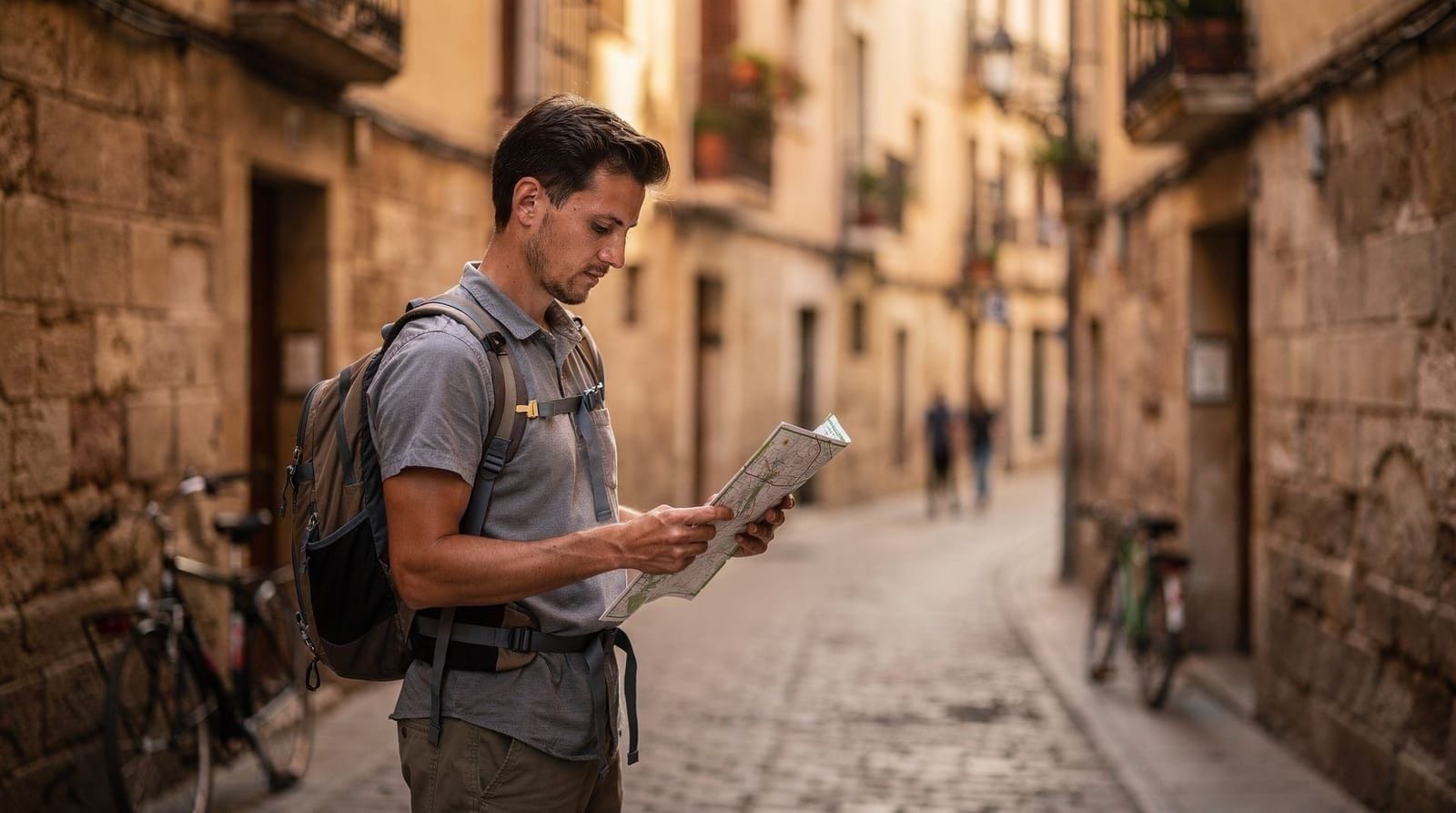
- Distractions: The “you have something on your jacket” or “can you help me read this map” approach exists. You can be polite and move on immediately without stopping.
What police presence looks like
Valencia has a visible Policía Local (municipal police) presence in tourist areas, particularly during major events. There is also a Policía Nacional presence. Neither is there specifically for your benefit as a tourist, but they are present.
If something is stolen, the path is: report to the Policía Nacional (not the Policía Local — this is a national crime matter). The address is Comisaría de Policía Nacional, Gran Vía Marqués del Turia, about 15 minutes’ walk from the Cathedral. You will receive a denuncia (official theft report) which you need for insurance purposes. The realistic expectation of recovering anything is low.
If your phone or wallet is actually stolen
Beyond filing the denuncia, cancel cards immediately through your bank’s app or hotline — most Spanish card readers still work with contactless up to a limit even on a card you’ve reported, so speed matters. If your phone is gone, use “find my device” from another device to lock or wipe it before worrying about recovery, since recovery is unlikely. Keep a photo or note of your passport details and travel insurance policy number somewhere separate from your bag, so a theft doesn’t also strand you without identification. None of this is Valencia-specific, but it’s the practical sequence that actually limits the damage when the rare theft does happen.
The point worth making clearly
A significant number of travellers prepare for Valencia as though it were significantly more dangerous than it is, based on reading crime forums that overrepresent the experiences of unlucky visitors. The majority of Valencia visits involve no crime at all. The city is genuinely welcoming, the population is not hostile to tourists, and the infrastructure — public transport, street lighting, visible commerce — is that of a well-functioning mid-sized European city.
Being aware of pickpockets in Las Fallas crowds is sensible. Avoiding the Central Market because of a vague sense of danger is not. Enjoying Valencia as the open, lively city it is while keeping your phone in a front pocket is the right calibration.
For context on when to visit and what the different periods of the year are actually like in the city, the seasonal guide covers it in detail, and the three-day itinerary story shows what a normal, uneventful visit actually looks like day to day.
Frequently asked questions about Valencia pickpockets and safety
Is it safe to walk around Valencia at night? Yes, in the great majority of neighbourhoods, including El Carmen and Ruzafa, which have active evening life and reasonable street lighting. Ordinary city-night awareness is sufficient outside of isolated residential streets late at night.
Do I need a money belt for a normal Valencia trip? Not for day-to-day sightseeing outside Las Fallas. A money belt is genuinely useful in the dense festival crowds in March, but for a typical visit a zipped bag worn in front and a phone kept out of a back pocket is enough.