Tourist traps to avoid in Valencia: an honest field guide
The traps are rarely obvious
Valencia’s tourist traps are mostly not scams in the dramatic sense — no one is going to swap your bill for a counterfeit or vanish with your bag (well, pickpockets exist, but that’s different). What they mostly are is a series of small, easily avoided situations where you pay more than you should for less than you think you’re getting, because no one told you the local rules.
This is a practical list based on returning to Valencia many times. Some of these will be familiar from general Spain travel advice. Others are specific to Valencia and its particular food and tourist economy.
| Worst zone for traps | Streets immediately around the Cathedral and Plaza de la Reina |
| Biggest single mistake | Ordering paella for dinner |
| Typical overcharge | 2-3x local price on food and drink near major landmarks |
| Easy fix | Walk 5-10 minutes into Ciutat Vella’s side streets, El Carmen or Ruzafa |
| Safe from most traps by default | Anywhere more than a short walk from the Cathedral |
Paella for dinner
This is the most important one and it is not intuitive to visitors from cultures where paella appears on menus for lunch and dinner alike.
Traditional Valencian paella — the wood-fire, chicken-and-rabbit version that locals eat — is a midday dish. It has always been a midday dish. It requires a specific cooking process (socarrat, the crispy rice base, develops correctly over a sustained fire) and historically was prepared at a time when the people eating it had just finished a morning of agricultural work. Every Valencian family that still makes proper paella does so for Sunday lunch, not Saturday dinner.
The restaurants that serve paella at dinner in Valencia — particularly the ones visible from Plaza de la Reina or Plaza del Ayuntamiento — are doing so because tourists expect it. The paella you eat there is usually made in advance, reheated, and served at a price (20-30 € per person) that bears no relationship to what a properly made paella costs at the restaurants where locals eat.
The solution: eat paella at lunch. The guide to eating like a local has specific restaurant recommendations. The authentic paella guide covers the best options in detail, and if you’d rather learn to make it than order it, a paella cooking class sidesteps the whole restaurant question.
Traditional paella cooking class in ValenciaThe bread charge
This one catches nearly everyone their first time. In many Valencian restaurants, particularly tourist-facing ones near the old town, bread will appear on your table automatically, unbidden, and then appear on your bill at 1.50-3 € per person.
You did not ask for it. You may not have eaten much of it. You will nonetheless be charged for it.
This practice is technically legal and is common across Spain, not just Valencia. But the tourist restaurants near major landmarks have elevated it to a near-universal experience. The countermove is simple: when bread arrives, you can ask “¿Está incluido?” (is it included?). If the answer is no and you don’t want it, send it back — the waiter will remove it and the charge with it.
A related issue: some restaurants charge a “cubierto” (cover charge) separately. This is a fixed per-person fee — anywhere from 1 € to 5 € depending on the establishment — that covers bread, water, and the cost of your table. It should appear on the menu or at least be disclosed when you sit down. If it doesn’t, ask before ordering.
Agua de Valencia at the wrong price
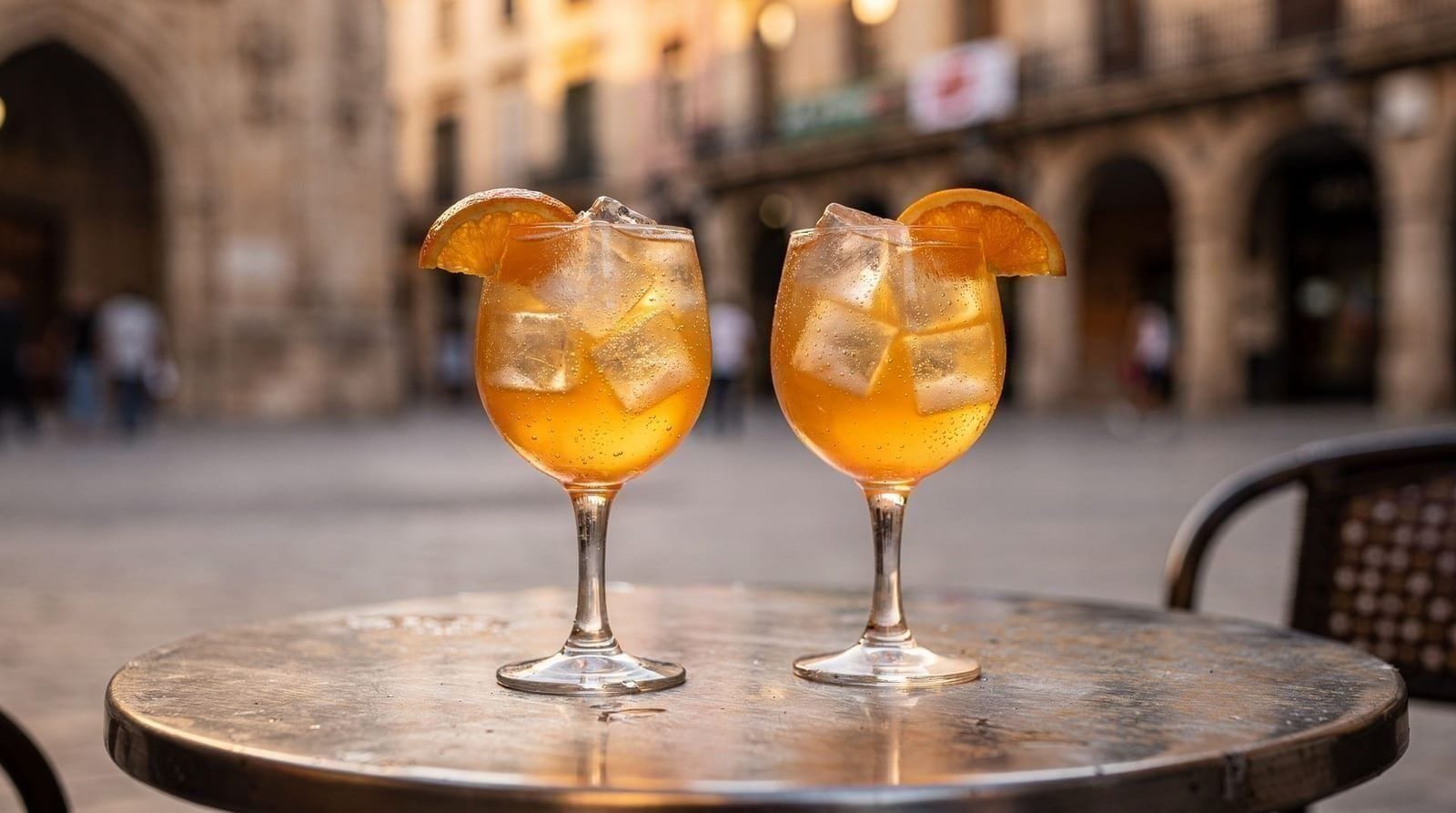
Agua de Valencia — the local cocktail of cava, orange juice, vodka and gin — is genuinely good when made properly. The tourist price is not good.
In the bars around Plaza de la Reina, you’ll commonly see it sold by the glass at 8-12 €. The “authentic” version, made with proper local ingredients and mixed fresh, costs 4-6 € at bars in Ruzafa or El Carmen. The tourist-zone glasses are often larger and more spectacular-looking (the tall glass, the garnish) but the ratio of alcohol to orange juice is usually less interesting than what you get at a proper cocktail bar.
The larger carafas (a large glass jug serving 4-6 people) are the traditional way to order it, particularly during Las Fallas. They’re better value and more social. But even here: compare prices before you sit down.
Mercado Central overpriced smoothies
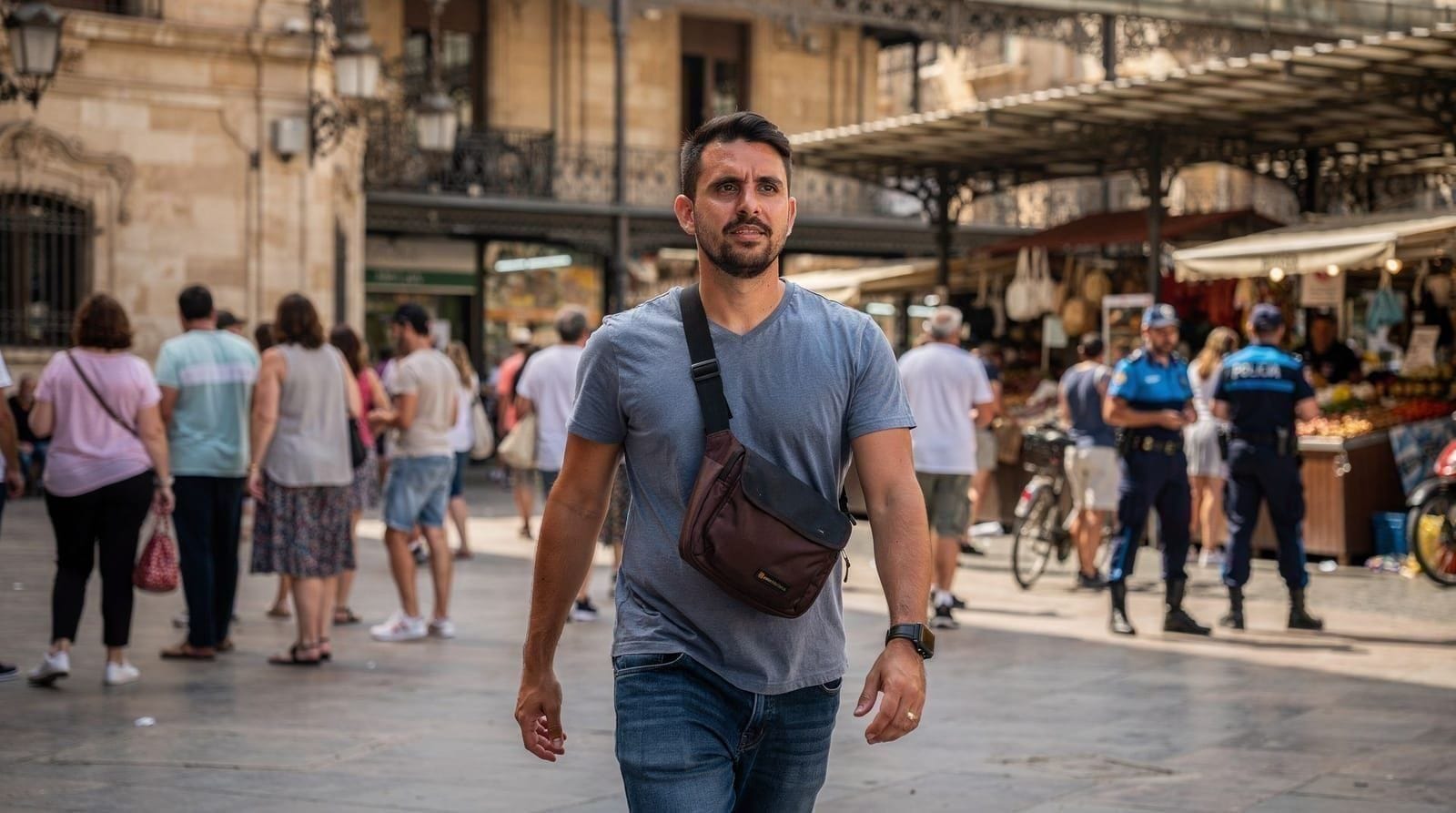
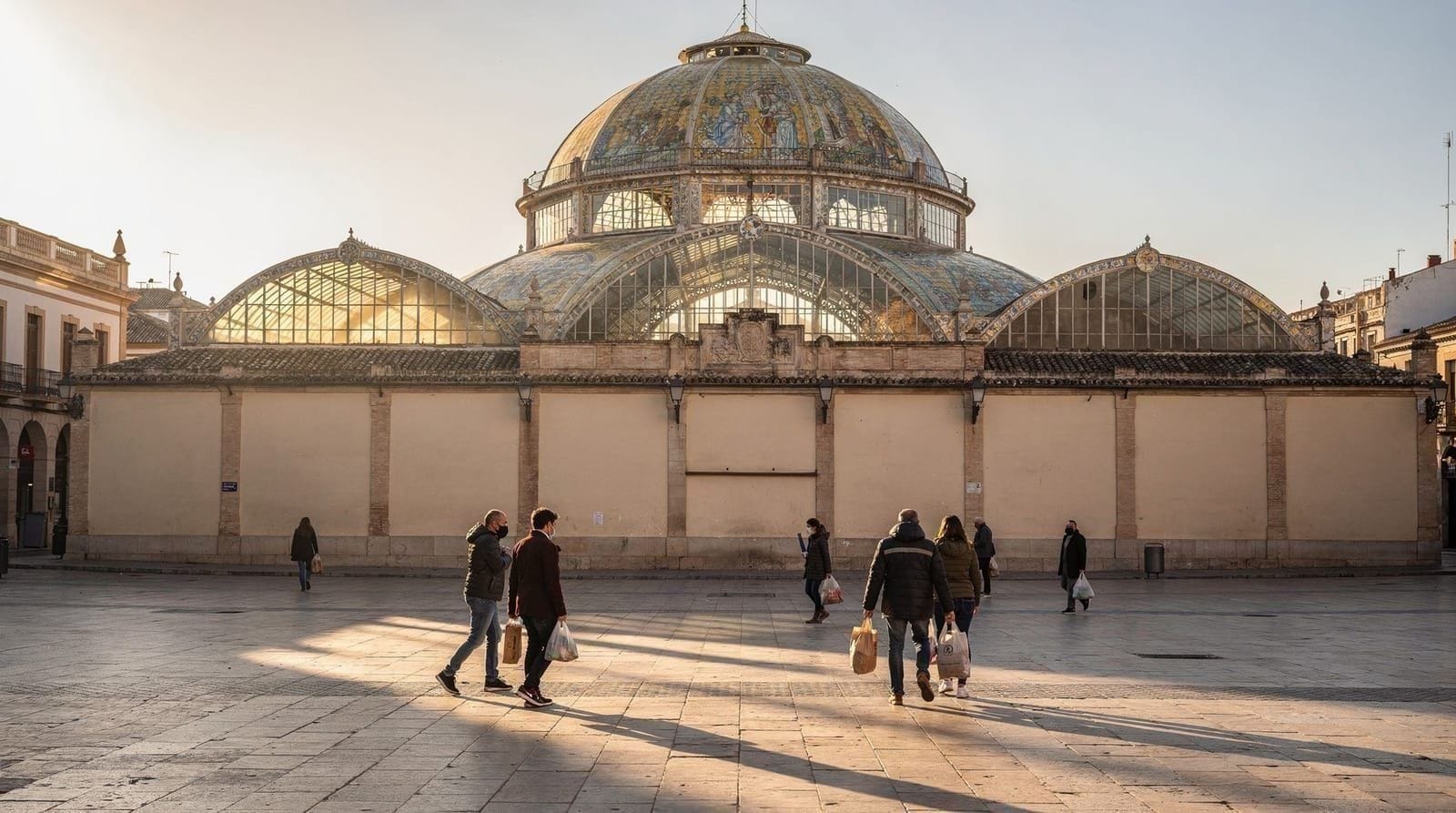
The Mercado Central is a genuinely extraordinary building and worth visiting just to see. The food stalls, however, have adapted to tourist traffic in specific ways. The fresh juice and smoothie stands near the main entrance — the ones with the Instagram-ready stacked fruit displays — charge 5-8 € for a small glass of orange juice that you could buy from a street cart or a nearby café for 1.50 €.
This is not a scam. You’re paying for location and spectacle. If that seems fair to you, go ahead. If you want actual food from the market at something resembling local prices, go to the stands that sell cut fish, preserved goods and local produce rather than the smoothie bars that primarily exist to photograph well.
The Central Market food guide has specific stall recommendations, and the wider Valencia food markets guide covers the other markets worth a visit if Mercado Central feels too crowded.
Tours from aggressive vendors near major sights
Around the Cathedral, near the Torres de Serranos, and on the Paseo de la Ciudadela, you’ll be approached by people selling city tours. These are not universally bad — some are perfectly decent walking tours — but the pricing mechanism is opaque and the quality range is wide.
The better option for walking tours is booking through established operators in advance. Free walking tours (tipping-based) also exist and are generally good quality. The free walking tour guide has current options.
Booked-in-advance old town walking tourHop-on hop-off buses, covered in the honest assessment here, are a more nuanced topic: they can be useful for orientation but are often not the best value if you can walk or use the metro.
The rosemary sprig / bracelet “gift”
A less common but real trap: someone near the Cathedral or Plaza de la Virgen presses a sprig of rosemary, a bracelet, or a small flower into your hand as a “free gift,” then demands payment or a “donation” once you’ve accepted it. It’s a low-grade version of a trick seen across major European tourist cities, not something specific to Valencia, but it does happen here.
The fix is simple: don’t accept anything pressed into your hand by a stranger on the street, even if they insist it’s free. A polite but firm “no, gracias” while keeping your hands down works, and walking away ends it. It’s an annoyance rather than a danger — see the pickpockets and safe areas guide for the more serious safety topics.
Menus touristiques near Plaza de la Reina
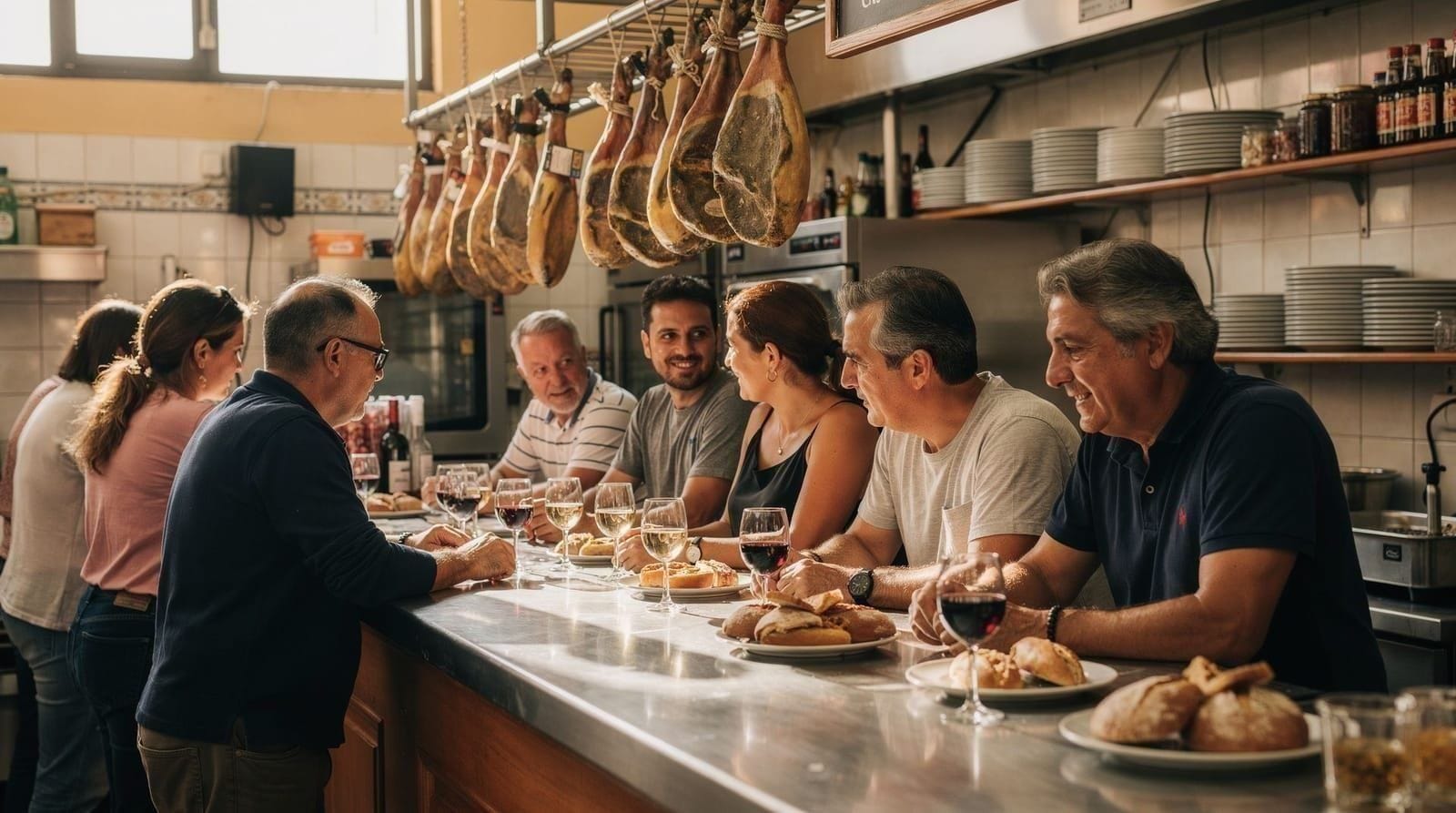
The rectangle of streets immediately around Valencia’s Cathedral and Plaza de la Reina contains a cluster of restaurants that operate on a specific economic model: high volume, tourist traffic, menus printed in six languages, and food that is representative of nothing in particular.
The “menú del día” at these restaurants will often be 20-25 €, versus 12-16 € at the same type of lunch menu fifteen minutes’ walk away. The paella on the menu, as discussed above, will have been made at some point today and reheated. The wine will be generic and the dessert will be flan from a commercial package.
None of this is unique to Valencia — it’s the standard tourist restaurant model — but the density of it near the Cathedral is particularly high. Walking five minutes further into El Carmen or Ruzafa changes the equation entirely.
The saffron problem
Valencia’s Mercado Central and some shops in the tourist zone sell small packets of “saffron” at prices that are conspicuously low. Genuine saffron from La Mancha or Iran costs around 10-15 € per gram; the small packets you’ll see at 2-3 € for what appears to be several grams are almost certainly not saffron. They may be safflower, dyed grass, or mixed blends with a minimal saffron content.
If you want to buy saffron to take home, buy it at a reputable herbalist (herboristería) or a serious food shop. Ask where it comes from; genuine Spanish saffron will be from La Mancha and come with a DOP label.
The taxi from the airport
The official taxi from Valencia airport to the city centre costs around 20-25 €. This is reasonable and the taxis are metered.
What is not reasonable: the informal private transfer operators who approach you in the arrivals hall and offer “fixed price” transfers. Their prices are typically higher than the meter taxi, they may not be licensed, and the vehicles are variable in quality. The metro L3/L5 from the airport to the city centre costs about 2.50 € and takes 25 minutes. For most travellers, it’s the better option. More detail in the airport to city guide.
A note on the Fallas period
Las Fallas (1-19 March) is an extraordinary event but it generates its own specific set of tourist-trap conditions. Hotel prices in the city triple or more. Restaurants add supplements to menus. Service slows because every establishment is at full capacity. The tourist concentration near the major fallas sculptures is intense.
If you’re attending Las Fallas specifically for the experience, this is worth it. If you find yourself in Valencia during Fallas by accident, the Fallas complete guide covers how to navigate it, and the where to stay during Fallas guide covers the accommodation side specifically.
The short version: book accommodation many months in advance, eat at restaurants in residential neighborhoods rather than tourist ones, and expect everything to cost more and take longer than it would in a normal week.
Frequently asked questions about Tourist traps to avoid in Valencia
Are Valencia’s tourist traps dangerous, or just annoying? Almost entirely just annoying — overpriced food and drink near major sights, not physical danger. Genuine safety concerns like pickpocketing are a separate topic, covered in the pickpockets and safe areas guide.
Is it fine to eat near the Cathedral if I’m only in Valencia for a day? It’s fine if convenience matters more than value to you, but even a five-minute walk into a side street usually finds better food at a lower price — you don’t need to go far to escape the worst of the markup.