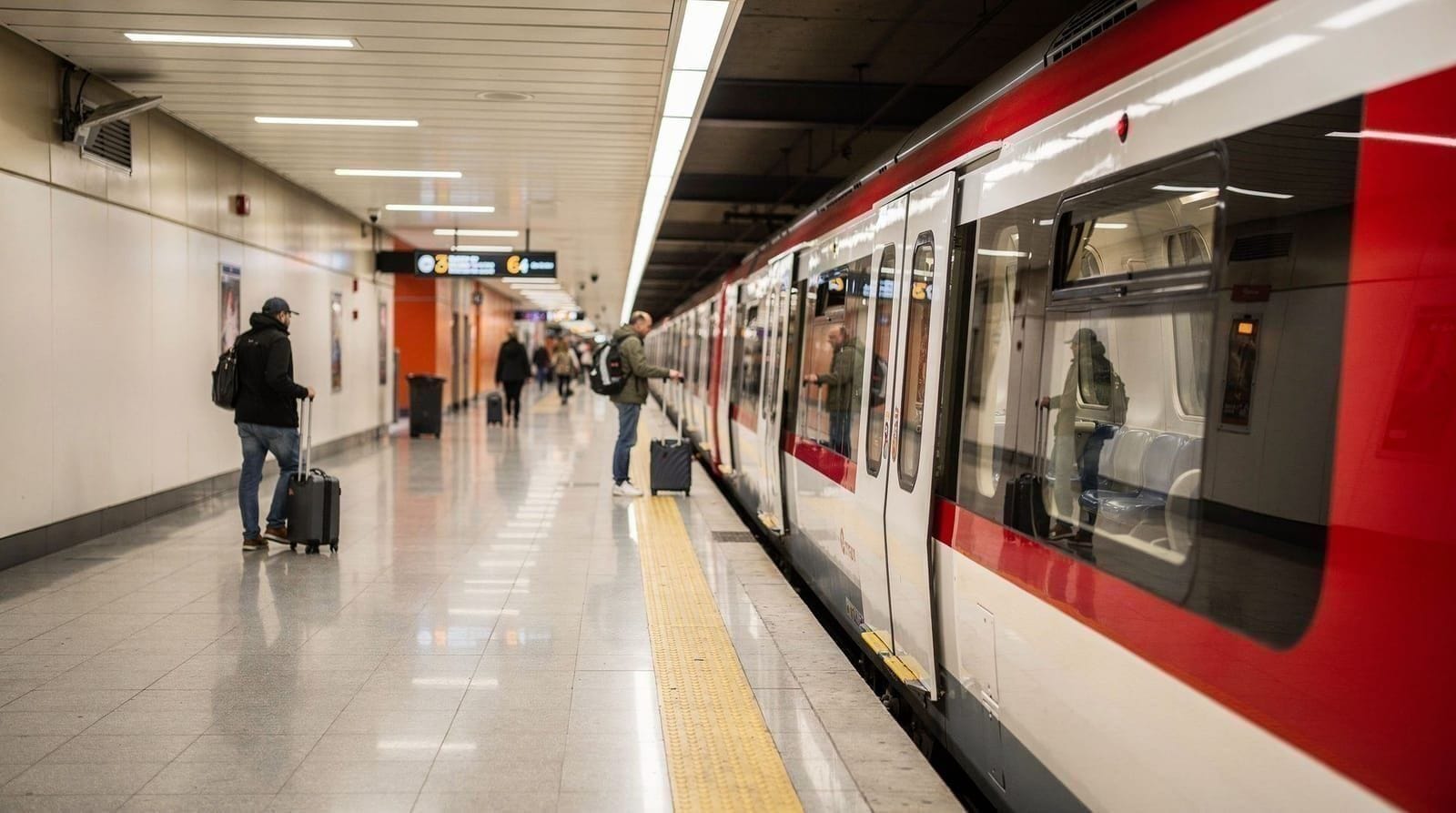
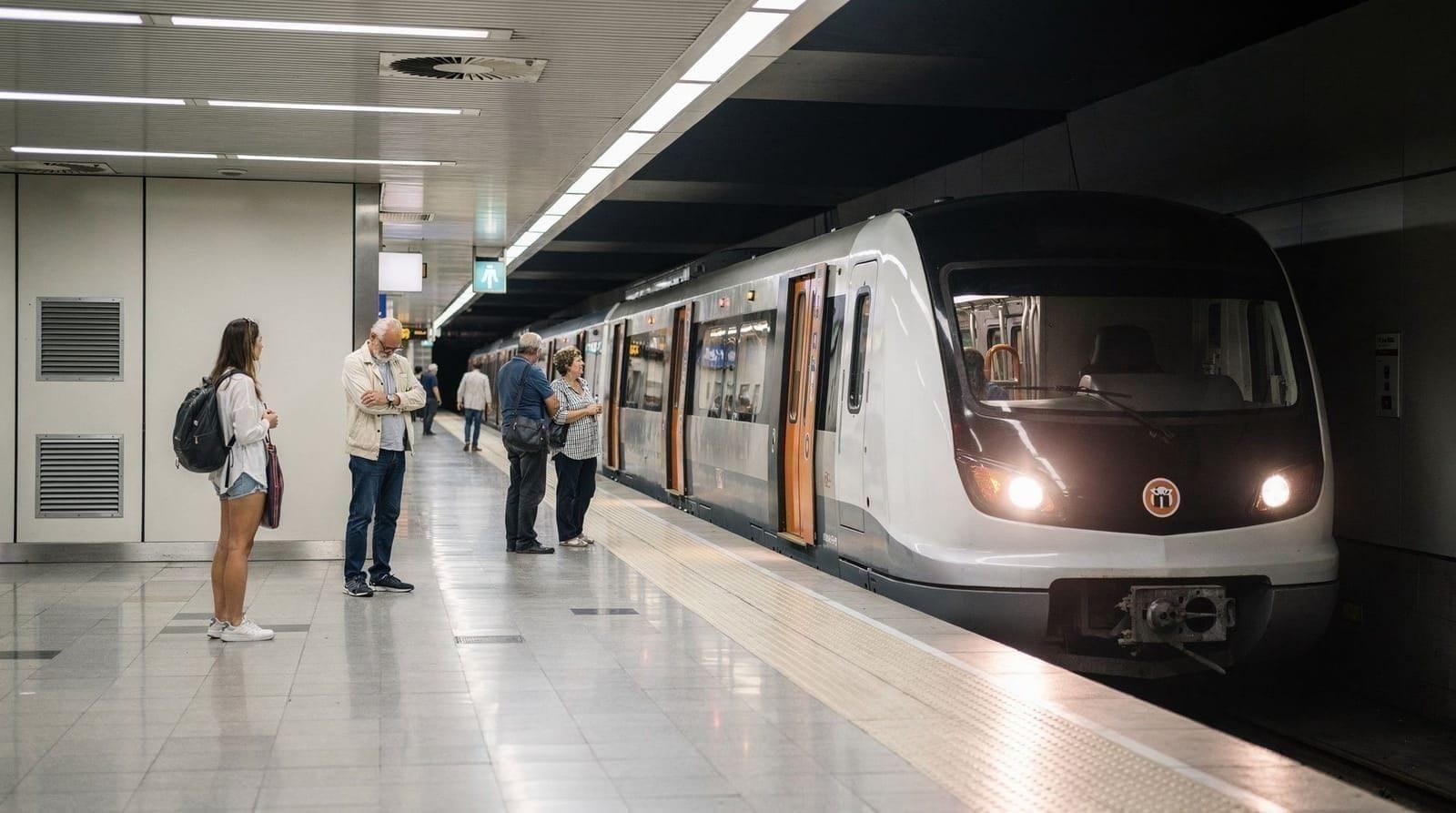
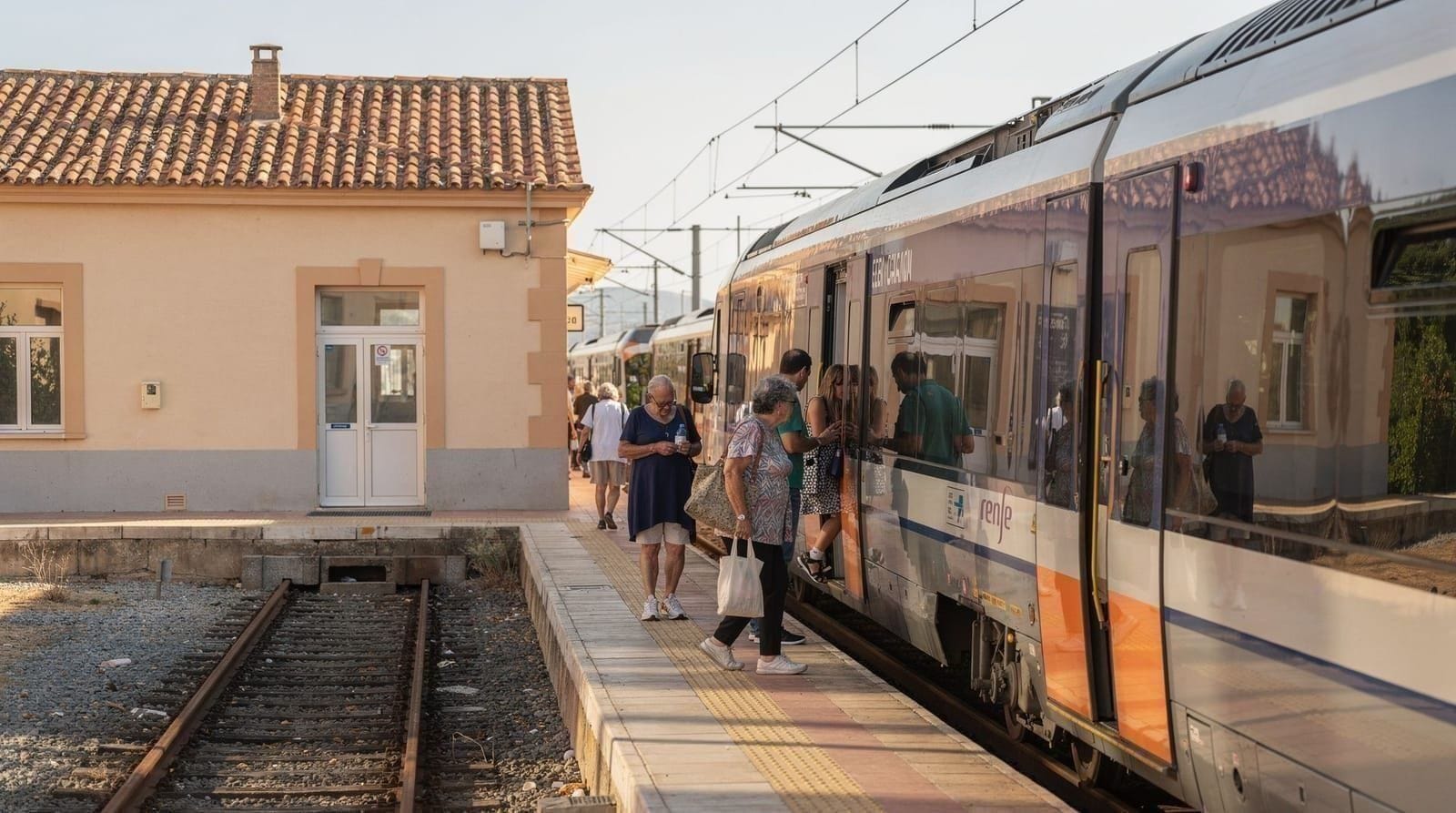
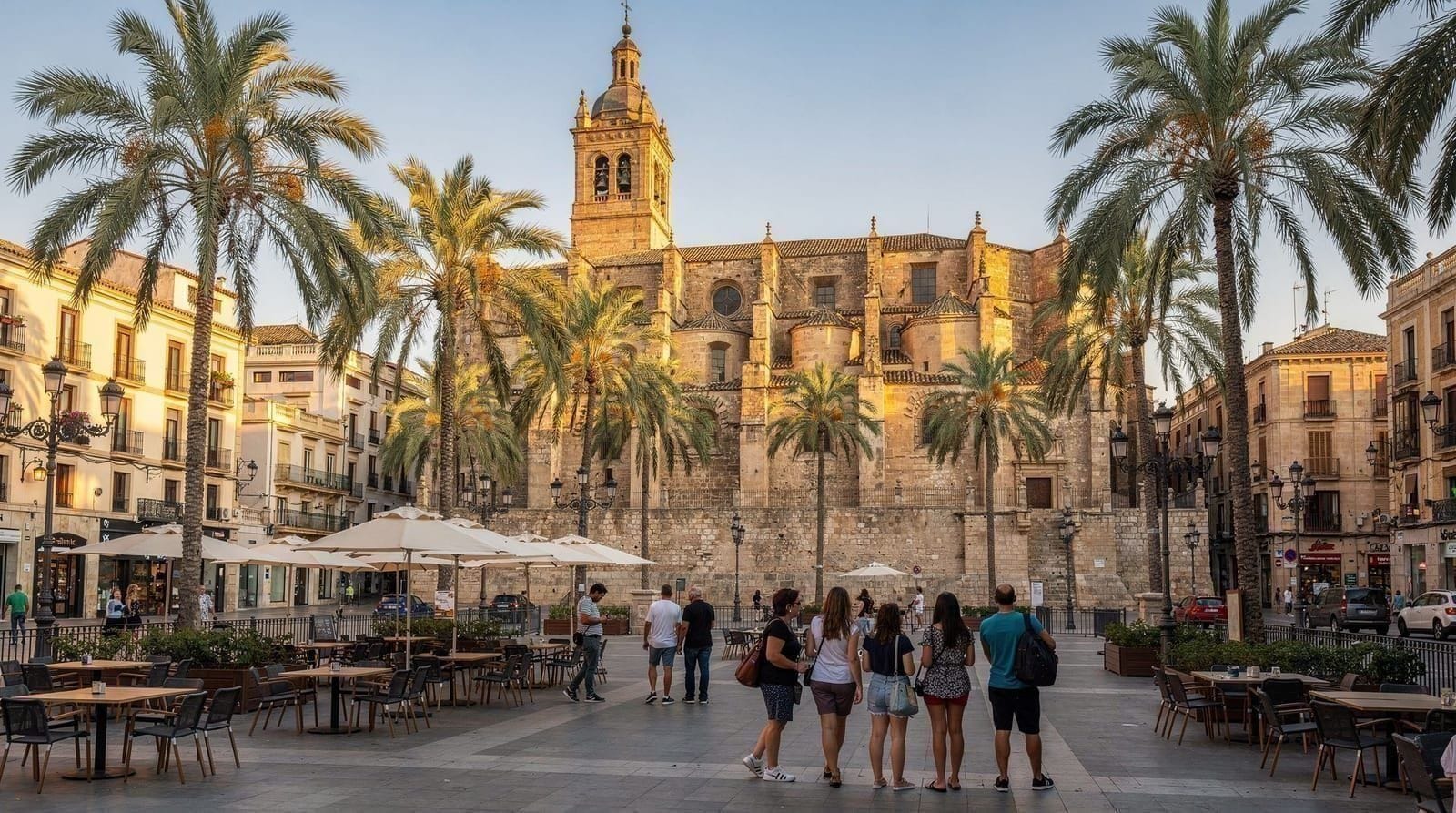
AVE train to Valencia from Madrid and Barcelona
Valencia: historical tour by tuk-tuk (1 hour)
Duration: 1 hour
How long is the AVE train from Madrid to Valencia?
The fastest AVE service from Madrid Puerta de Atocha to Valencia Joaquín Sorolla takes 1 hour 55 minutes. Standard fares start around €25 booked in advance; last-minute tickets are €55–90. From Barcelona, the Euromed (not strictly AVE) takes around 3 hours to Valencia Nord.
Spain’s high-speed rail network makes Valencia genuinely easy to reach overland from Madrid and, with a bit more effort, from Barcelona. For city-centre to city-centre travel, the train beats flying once airport transit and security time are factored in, particularly on the Madrid–Valencia corridor.
| From Madrid | 1h55, from €15–30 booked well ahead |
| From Barcelona | ~3h10 (Euromed), from €20–25 booked well ahead |
| Madrid station | Joaquín Sorolla (separate from Estació del Nord) |
| Barcelona station | Valencia Estació del Nord |
| Book by | 2–4 weeks ahead for the best fares |
Madrid to Valencia by AVE
The Madrid–Valencia high-speed line opened in 2010 and cut the journey from a meandering 3.5-hour trip to under two hours. Today it is one of Spain’s busiest inter-city corridors.
Departure station (Madrid): Madrid Puerta de Atocha (also called Atocha Cercanías — not to be confused with the separate Cercanías platforms in the same complex). Atocha is on metro lines 1 and 3 and is the main hub for all AVE services heading south and east. The AVE platforms are the upper level, with a departure lounge, shops, and a tropical garden in the old arrivals hall.
Arrival station (Valencia): Valencia Joaquín Sorolla. This is a relatively recent high-speed station separate from Valencia’s historic Estació del Nord. Joaquín Sorolla is linked to Estació del Nord by a free navette bus (about 10 minutes, runs every 15–20 minutes). From either station, the city centre is a 10-minute walk or short metro ride.
Journey time: 1 hour 55 minutes (fastest services). Some services stop at Cuenca Fernando Zobel, adding 20–30 minutes — check the timetable for non-stop options.
Frequency: Around 8–12 services per day in each direction, spread from 06:30 to 21:30. More services on Fridays and Sunday evenings (peak demand direction).
Fares: Renfe operates a dynamic pricing system similar to airlines. Advance purchase of 2–4 weeks typically gives the best prices:
| Booking window | Typical fare (single) |
|---|---|
| 2+ months ahead | €15–30 (Promo/Promo+) |
| 2–4 weeks ahead | €25–50 |
| 1 week ahead | €40–75 |
| Same day / last minute | €55–90 |
These are one-way economy (Turista) prices. First class (Preferente) is typically €30–50 more. Flexible tickets (Flexible/Business) allow changes and refunds, costing roughly double the cheapest Promo fare.
Booking: Book through Renfe’s website (renfe.com) or the Renfe app. Third-party booking sites work but add fees. The Renfe app is the most reliable way to manage bookings and access digital tickets. Non-Spanish cards occasionally have issues with Renfe’s payment system — try a different card or use PayPal as payment method if the first attempt fails.
Compared to flying: Madrid–Valencia by air takes about 1 hour of flight time, but add two hours for airport check-in/security/boarding on each end and the total door-to-door time is 5–6 hours versus 2h15–2h30 door-to-door by AVE. Train wins comprehensively on convenience; flying is competitive only on price for those who book very far in advance with Vueling or Iberia Express.
Barcelona to Valencia by train
The Barcelona–Valencia connection is served primarily by Renfe’s Euromed service (not strictly AVE technology but high-speed on the coastal corridor) and some Intercity services. Unlike the Madrid connection, there is no dedicated high-speed line for the full route — the existing network is used for most of the journey.
Departure station (Barcelona): Barcelona Sants (main hub) or Barcelona Passeig de Gràcia (a convenient second stop in the city centre, near Eixample hotels).
Arrival station (Valencia): Valencia Estació del Nord — the main historic station in the city centre. This is different from Joaquín Sorolla, which handles Madrid AVE services. Nord is 5 minutes’ walk from the old town.
Journey time:
- Euromed: approximately 3 hours 10 minutes to 3 hours 25 minutes
- Intercity: 3 hours 30 minutes to 4 hours (slower, stops more frequently)
Fare: Euromed single fares start around €20–25 in advance; typical realistic booking price is €30–55. The Barcelona–Valencia route is somewhat cheaper than Madrid–Valencia.
Frequency: 6–8 Euromed services per day, plus regional and Intercity options. Check Renfe’s timetable tool for current schedules — the route is well-served on weekdays, slightly less so on Sundays.
The coastal route: The Euromed runs along the Costa Dorada coast south of Barcelona — Sitges, Tarragona, and the rice-growing plain of the Ebro delta — before arriving in Valencia from the north. Window seats on the western side of the train give the best coastal views.
Alternative from Barcelona: Avlo (Renfe’s low-cost high-speed service) operates on the Madrid–Valencia corridor but not consistently on Barcelona–Valencia. Check availability on renfe.com — when running, Avlo fares start from €9.90.
At Valencia’s train stations
Estació del Nord (Valencia’s historic station, 1917) receives Barcelona Euromed and regional trains. The building itself is one of the finest Art Nouveau railway stations in Spain — the ceramic orange blossom and mosaic interior are worth pausing to admire even if you are just passing through. The station is adjacent to the Plaza de Toros (bullring) and a 10-minute walk from the Mercado Central and El Carmen. The metro (lines L3, L5) has a stop directly underneath at Xàtiva.
Joaquín Sorolla is 1 km south of Nord and handles all Madrid AVE and some other high-speed services. It is a functional modern station without Nord’s architectural character. The free navette bus connecting the two stations is marked on signs inside both buildings — catch it outside the main exit of Joaquín Sorolla.
If arriving at Joaquín Sorolla with luggage and heading to a central hotel, a taxi (€8–12) or the navette-plus-walking combination is sensible. The navette is free and drops at Nord, from where most of the old-town accommodation is within walking distance.
Booking strategies
Buy early for Madrid. The Madrid–Valencia AVE regularly sells out on Friday afternoon and Sunday evening services. Promo fares (non-refundable, non-exchangeable) are the cheapest and disappear first. If your trip dates are fixed, book 3–4 weeks ahead minimum.
Return tickets vs two singles. On the Madrid–Valencia route, return tickets are not always cheaper than two singles — compare both options when booking. On the Barcelona route, return promotions occasionally offer meaningful savings.
Ida-vuelta (return fare). Renfe offers combined ida-vuelta pricing on some routes; these require booking both directions in a single transaction and may impose fixed return windows. Read the conditions before buying.
Season variations. Fares spike during Las Fallas (March 1–19), Easter week, summer peak (July–August), and Christmas. Book well in advance for those periods. In January, February, and November, excellent last-minute deals appear.
EU261 rights. As a Renfe passenger in Spain, you have EU rail passenger rights — including the right to reimbursement if the train arrives more than 60 minutes late. Keep your booking confirmation as evidence.
Valencia as a base for onward trips
If you are using Valencia as a base to explore the wider region, the train network extends to useful day-trip destinations. Xàtiva (50 minutes, Cercanías C2), Sagunto (30 minutes, C6), Cullera (45 minutes, C1), and Gandia (65 minutes, C1) are all accessible on suburban Cercanías trains without reservations.
For the full picture of regional train options, see day trips from Valencia by train and trains to the coast from Valencia.
Frequently asked questions about AVE to Valencia
Do I need to print my ticket or can I use a mobile?
The Renfe app generates a QR code that is accepted at turnstiles. You do not need to print. Screenshots of tickets are not always accepted — use the live app. If you book through a third-party site, check their ticket delivery method.
Is there a luggage allowance on the AVE?
Officially, AVE allows 1 large bag (55×35×25 cm) plus 1 smaller bag and a personal item per passenger, stored in overhead racks. In practice, enforcement is loose, but blocking aisles with oversized luggage will draw complaints from staff. There are no luggage storage compartments by the doors as on some European trains.
Can I take a bicycle on the AVE?
Folded bikes are allowed as hand luggage. Full-size bikes must be booked as accompanied luggage (bicicleta), which costs around €7–15 extra and requires prior reservation. Not all AVE services accept bikes — check at booking time.
How early should I arrive at the station?
AVE services have ticketed boarding with name checks in some cases. Arriving 20–25 minutes before departure is normally sufficient. During holiday weekends (Fallas, Easter, Christmas), allow 30–40 minutes as security queues can form.
What happens if I miss my AVE train?
Promo tickets are non-exchangeable and non-refundable — you lose the ticket value. Flexible (Cambio) tickets allow free date/time changes before departure. If you bought through a credit card with travel protection, check your card’s terms. The next available train can be purchased at the ticket office or on the app, at whatever price is current.
From the station to the city: getting your bearings on arrival
Arriving at Joaquín Sorolla (from Madrid): Exit the main doors onto Calle San Vicente Mártir. To reach the city centre, you can:
- Take the free navette bus to Estació del Nord (10 min, runs every 15–20 min from outside the exit)
- Walk 15 minutes north to the old town along Calle San Vicente Mártir
- Take a taxi (rank outside the exit, €8–12 to any central hotel)
- Take the metro from Xàtiva station: 5 minutes’ walk north from Joaquín Sorolla, then any line to your destination
Arriving at Estació del Nord (from Barcelona): The station is immediately adjacent to the old town. The Mercat de Colón is a 5-minute walk east; the Mercado Central and cathedral are 10 minutes on foot northwest through the centre. The Xàtiva metro station is directly underneath the station building.
If you land in Valencia mid-morning with bags to drop and a few hours before check-in, a short guided orientation is a low-effort way to get your bearings in the old town rather than wandering with luggage-brain.
Valencia historical highlights tour by tuk-tuk (1 hour, easy first-day orientation)Day trips from Valencia by AVE or high-speed rail
One non-obvious use of the AVE connection is treating Valencia as a base for fast day trips to other Spanish cities — or vice versa.
Valencia to Madrid as a day trip: The 1h55 each way theoretically allows a Madrid day trip (Prado, Reina Sofía, or simply the city) from Valencia, leaving at 07:00 and returning by 22:00. This is a long day and requires careful ticket selection for the return. It works best for specific purposes (a concert, a museum, a business meeting) rather than casual tourism — Madrid deserves more time.
Madrid to Valencia for Las Fallas: Madrileños make this trip by the thousands during March Fallas week. The Friday evening and Saturday morning trains toward Valencia in mid-March sell out weeks ahead. Book early if this is your plan.
Barcelona to Valencia for the day: The 3-hour journey makes Barcelona-to-Valencia a long day trip but feasible for a specific purpose. More commonly, visitors combining both cities split the journey with a 2–3 night stay in each, using the Euromed as transport between cities rather than a commuter connection.
Seat selection tips
Madrid–Valencia: On the Talgo/AVE sets used on this route, seats are in a 2+2 configuration. Window seats fill first. Booking a window seat on the right side (A or D column) going toward Valencia gives views of the plateau terrain and the approach to Valencia’s rice plain — not dramatic but pleasant. On the return, the same side shows sunset views over the Meseta.
Barcelona–Valencia (Euromed): The coastal route south of Barcelona is beautiful. Window seats on the sea side (column A going south, column D going north) show the Mediterranean. The best views are between Sitges and Tarragona, approximately 40–60 minutes from Barcelona Sants.
Reservation seats: All AVE and Euromed tickets are seat-specific — your ticket shows carriage (coche) and seat number (asiento). There is no standing-room travel on high-speed services. If boarding a crowded train, someone in your seat is misreading their ticket.
AVE versus bus versus flying: the full comparison
For completeness, here is how the three main long-distance transport options compare for the Madrid–Valencia route:
| Mode | Door-to-door time | Typical cost | Carbon footprint | Reliability |
|---|---|---|---|---|
| AVE | 2h15–2h45 | €25–90 | Low | High |
| ALSA bus | 3h30–4h | €12–25 | Moderate | High |
| Vueling/Iberia | 3h30–5h (incl. airports) | €30–120 | High | Variable |
ALSA bus is the budget option — Valencia is well-served by ALSA coaches from Madrid’s Méndez Álvaro bus station. Journey time is 3.5–4 hours depending on stops. The overnight bus from Madrid (departing ~23:30, arriving ~03:30) is used by budget travellers who want to save a night’s accommodation cost. Comfort is reasonable; delays occur but are less common than flying.
Flying: Iberia, Vueling, and occasionally Ryanair serve Madrid–Valencia. On-paper flight time is 55 minutes, but accounting for airport check-in (arrive 60 min before), security, boarding, taxi (15 min each end), and baggage claim, door-to-door is 3.5–5 hours. Worse than the AVE in almost every scenario except very late booking when AVE fares have spiked and flight prices have not.
Combining the train with the rest of your trip
If Valencia is a stop on a wider Spain itinerary, the AVE connections work in both directions without much extra planning: arrive from Madrid or Barcelona, spend your days in Valencia using the metro and EMT network, and depart onward using the same Joaquín Sorolla or Estació del Nord stations. For visitors renting a car only for specific excursions rather than the whole stay — Requena’s wineries, the Costa Blanca, or inland day trips — picking up the rental in the city rather than at the airport is often simpler once you’ve already arrived by train; see the car rental for day trips guide for that approach. And if your itinerary includes the coast north or south of the city, the trains to the coast guide covers the local Cercanías network that connects with both AVE stations.
Planning your first days after the train
Arriving by rail puts you in the middle of the city rather than out at the airport, so you can start sightseeing sooner. If you are coming from the airport side instead, the airport to city guide covers that alternative, and the Mobilis card is worth a look if you plan to lean on public transport.
Where you sleep matters more than usual when you arrive at a station. Our where to stay guide and the best area for first-timers help you choose a base close to Estació del Nord or the old town, and the El Carmen guide describes the neighbourhood most visitors reach first on foot.
If you have only a short stop between trains, the Valencia in one day itinerary and the first weekend itinerary show how to fit the essentials around your arrival and departure times. For a longer visit, how many days to spend in Valencia helps you decide whether the train journey is worth a longer stay, and the Valencia versus Barcelona comparison is useful if you are deciding how to split your time between the two cities.
Travellers who want a single, well-organised day in the modern part of town can look at a guided visit to the City of Arts and Sciences, such as a guided tour of the City of Arts and Sciences complex, which keeps the logistics simple after a long morning on the train.
First-time Renfe booking: a walkthrough
For travellers who haven’t used Renfe before, the booking flow on renfe.com or the app follows a consistent pattern: select origin and destination stations (not just cities — Madrid has two AVE stations, Valencia has two), pick a date and see the fare classes (Básico, Elige, Prémium, roughly ascending in price and flexibility), select seats if the interface offers it, and pay. Create an account before you start rather than mid-checkout — it saves re-entering passport or ID details for each traveller, which Spanish rail sometimes requires for identity verification on certain fare types. If the payment fails on a non-Spanish card, switching to PayPal within the same session usually resolves it without losing your seat selection, provided you complete the retry within the holding window (typically 10–15 minutes).