L'Oceanogràfic Valencia: the complete visitor guide
Valencia: Oceanogràfic ticket with immersive experience
Is L'Oceanogràfic worth visiting in Valencia?
Yes. Europe's largest aquarium covers 110,000 m² and houses over 500 species. Allow 3–4 hours minimum. Adult tickets cost around €42 online; expect queues of 40–60 minutes without a pre-booked ticket in summer.
Europe’s largest aquarium sits at the southern end of the old Turia riverbed. L’Oceanogràfic opened in 2003 as part of the Ciudad de las Artes y las Ciencias complex and houses more than 500 marine species across 110,000 m² of built space, including the only beluga whales in Spain. A well-planned visit takes 3.5 to 4 hours; a rushed one will still leave you wanting more.
| Where | Southern end of the Ciudad de las Artes y las Ciencias complex |
| Cost | Around €42 adult online, around €31 child (4–12), under-3 free |
| Time needed | 3.5–4 hours |
| Getting there | Metro to Alameda + bus 95/walk, bus 13, bike via Turia Gardens |
| Best time | Weekdays 10:00–12:00, booked online ahead in summer |
What to expect inside
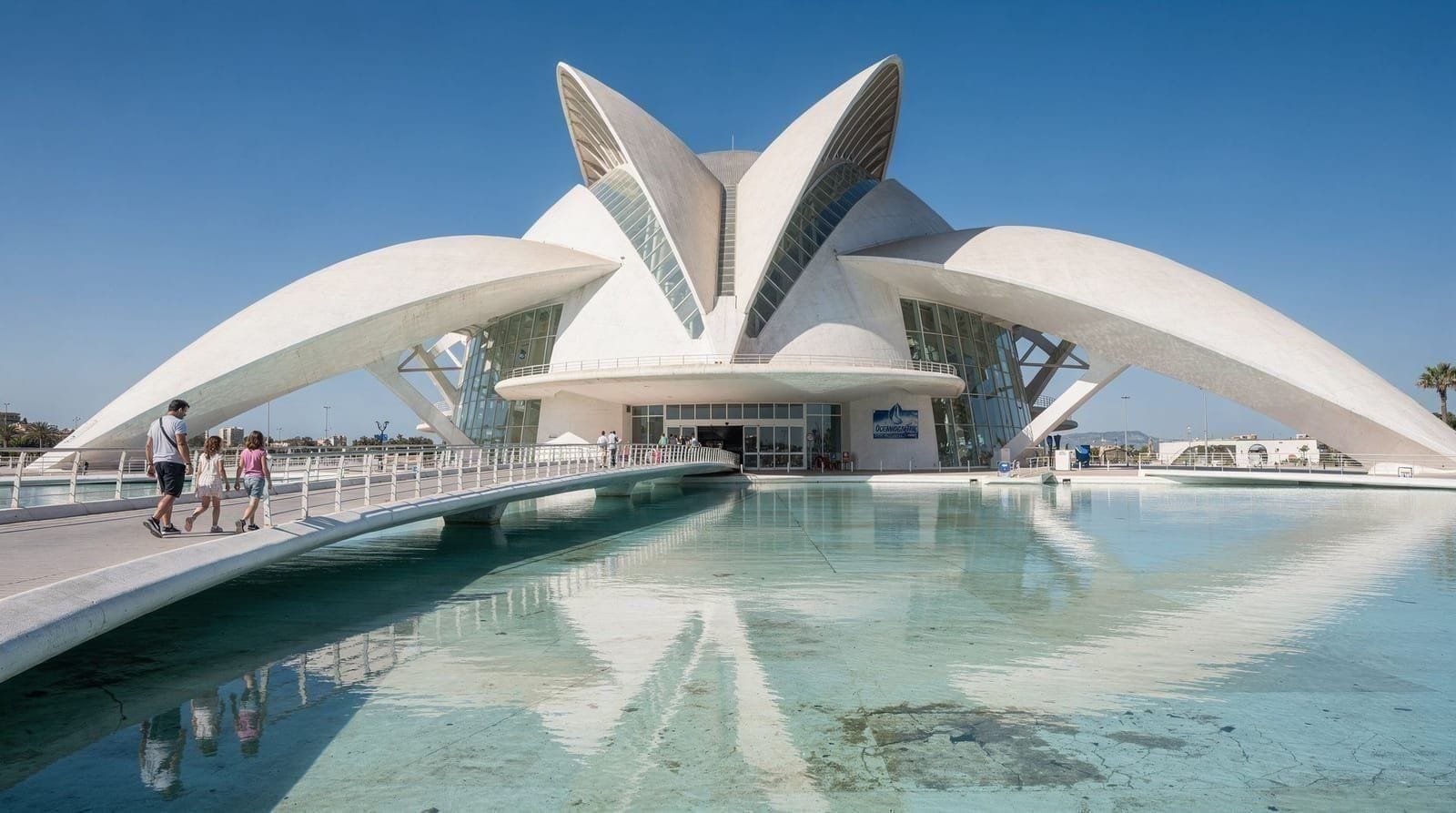
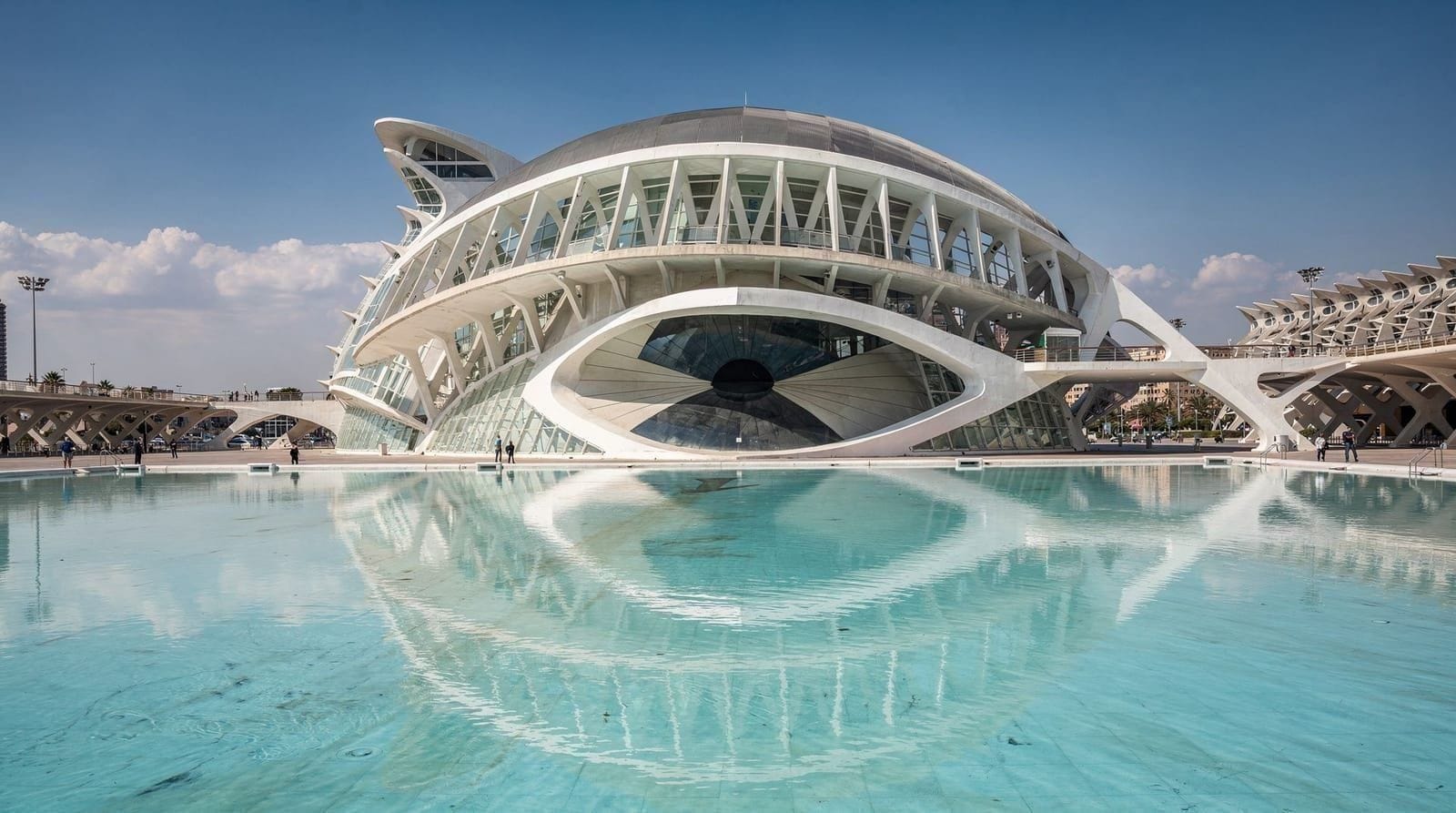
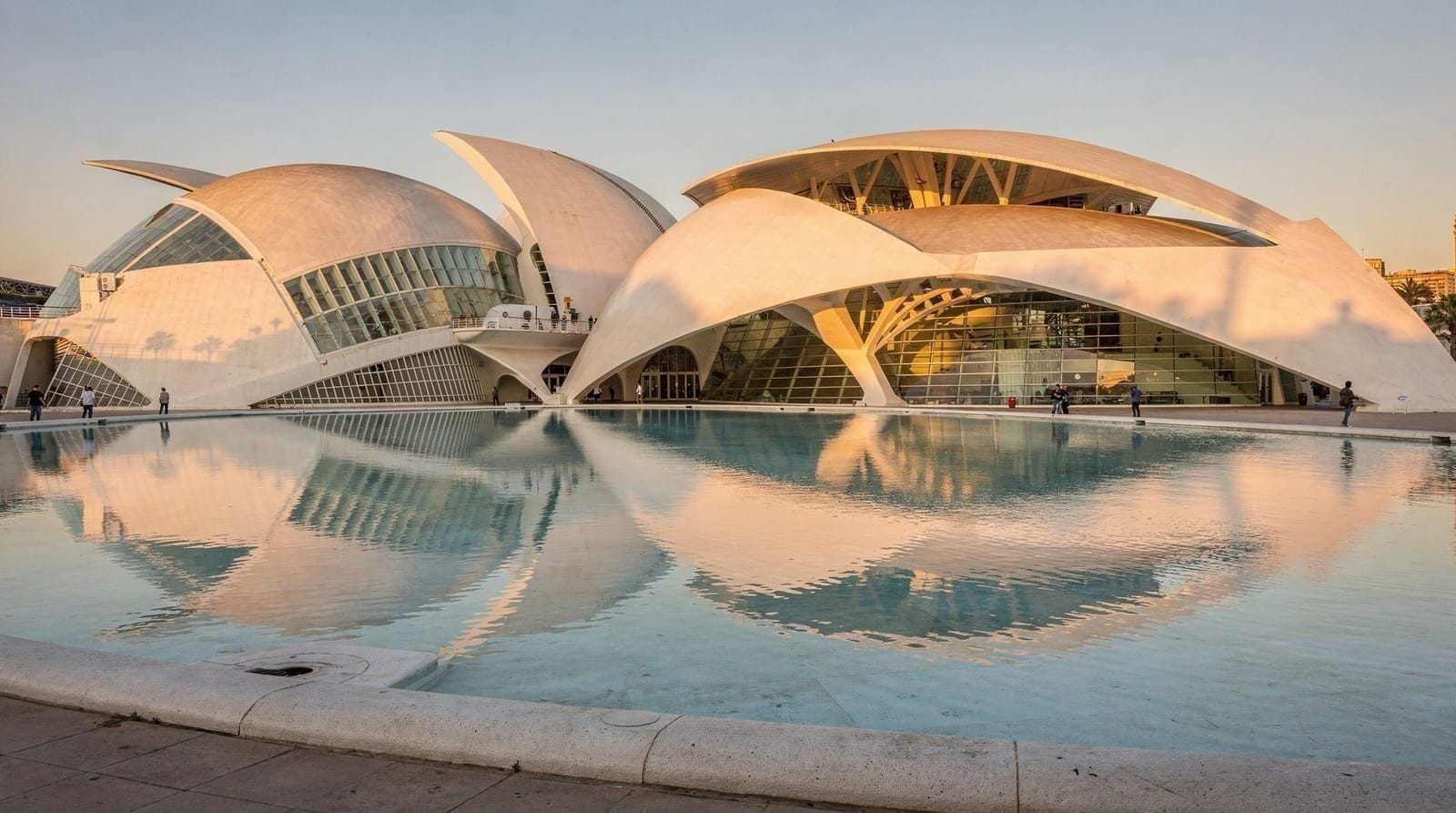
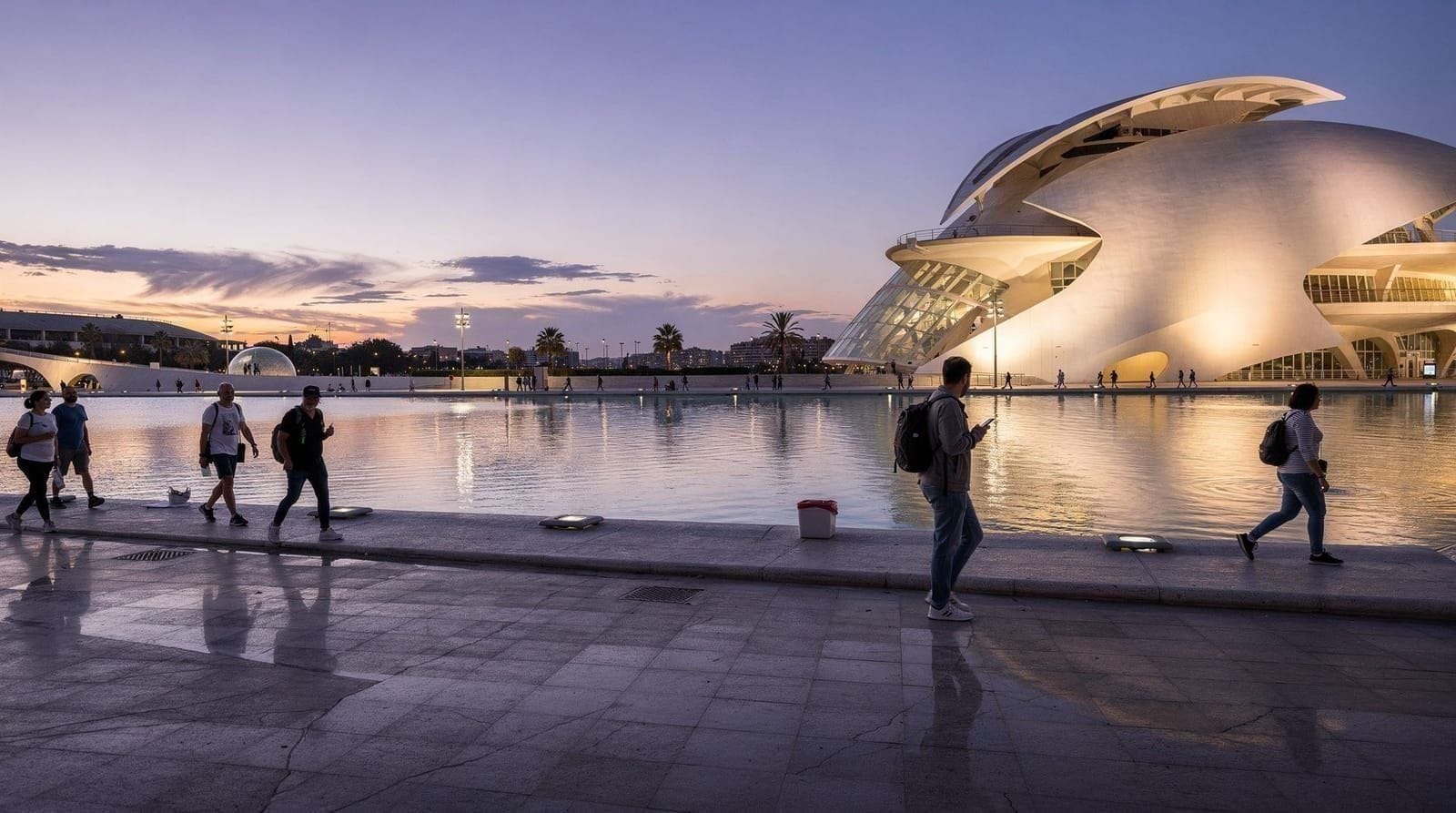
L’Oceanogràfic is organized around distinct marine ecosystems, each occupying a separate building or outdoor lagoon. The experience flows from temperate Mediterranean waters through tropical coral reefs, polar habitats, and open-ocean tanks. The architecture — white concrete canopies designed by Félix Candela — is itself a reason to visit, though most visitors are too captivated by the fish to look up.
The Mediterranean pavilion
This is the entry point for most visitors. The tanks replicate the shallow coastal and deep benthic zones of the Valencian coast: moray eels, grouper, spider crabs, and red mullet in habitats that look remarkably like the seabed below the Malvarrosa beach a few kilometres north. It is not the most dramatic pavilion, but it provides useful context before you reach the bigger exhibits.
Coral reefs and tropical lagoons
The reef pavilion is where families tend to slow down. Hundreds of reef fish — clownfish, angelfish, butterflyfish, surgeonfish — fill tanks that rise three metres above and below the walkway. The building is kept dark and warm. The turtles sharing these tanks are gentle to watch and draw predictable crowds.
The Arctic and Antarctic exhibits
The polar pavilions house beluga whales, walruses, king penguins, and Magellanic penguins. The beluga tank is perhaps the single most striking exhibit: three animals circling silently in water lit from below. Note that feeding times and the popular penguin parade are scheduled events — pick up a programme card at the entrance and plan around them. The penguin parade runs daily at around 12:30 and 17:00.
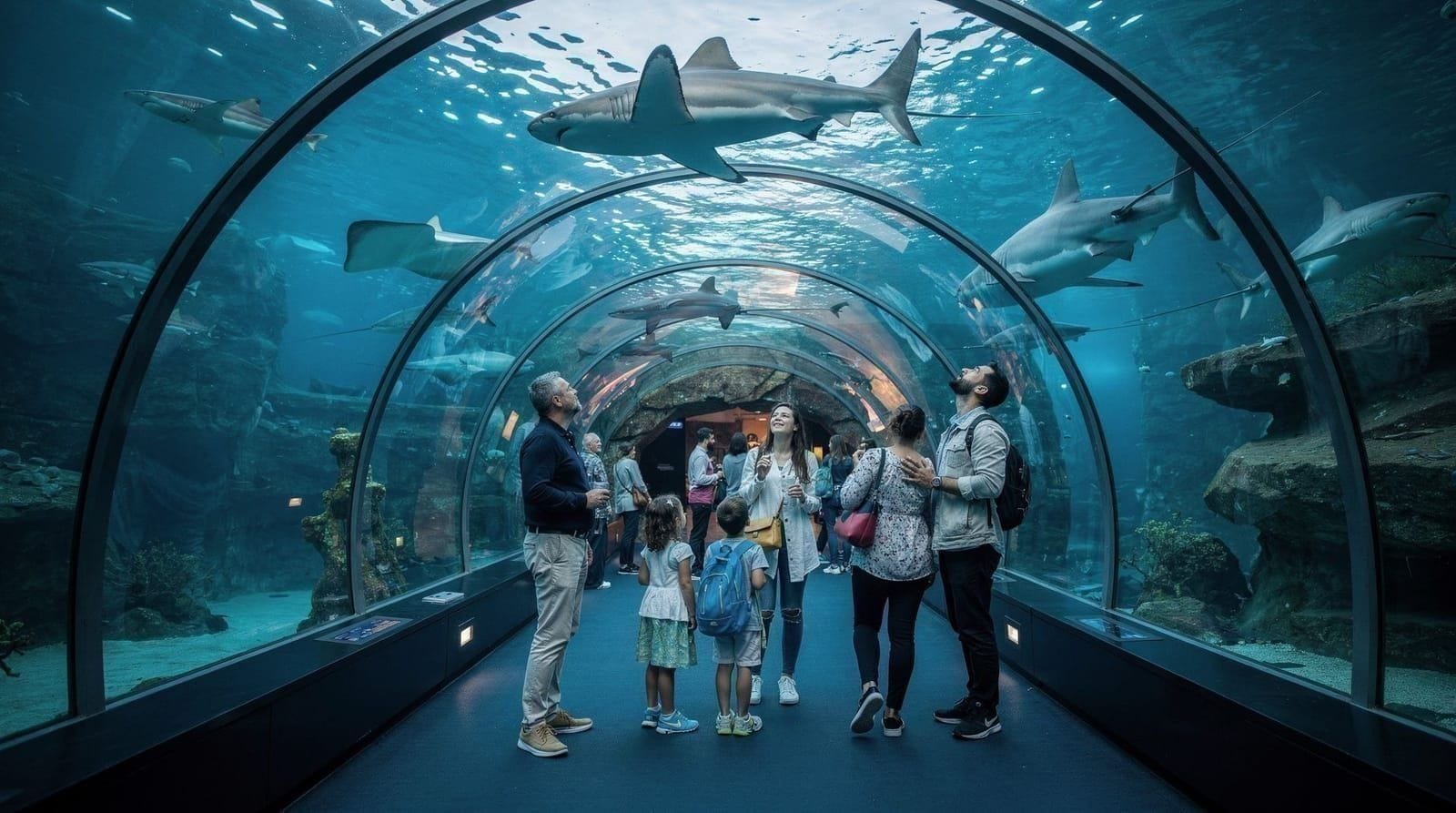
The underwater viewing tunnel that passes through the beluga tank gives a perspective you will not find elsewhere in Spain.
The deep ocean tank
The central feature of the complex is the 7-million-litre deep-ocean tank, visible from multiple levels through a glass-roofed underwater restaurant (booking required separately, not included in ticket price). Sand tiger sharks, oceanic whitetip sharks, green sea turtles, and large rays move through this space continuously. The shark feeding sessions are not ticketed events — they happen on a regular schedule and are easy to catch if you check the board at the tank entrance.
Dolphins and orcas — current situation
As of 2026, the dolphin show that once anchored a visit to L’Oceanogràfic has been suspended. Following a sustained campaign by animal welfare organisations and a 2021 regional government review, public shows featuring trained dolphin behaviour are on hold. The dolphins remain in residence and are visible in their lagoon, but there is no performance element. This is worth knowing before you build expectations based on older reviews or marketing materials.
Practical information
Opening hours: Daily 10:00–20:00 in summer (June–August), 10:00–18:00 in winter. Hours extend to 22:00 on selected Friday and Saturday evenings in July and August for a “night at the aquarium” concept — worth booking if you are visiting in peak season.
Ticket prices (2026):
- Adult (13+): €41.80 online / ~€43 at the door
- Child (4–12): €31 online
- Senior (65+): €31 online
- Under 3: free
- Backstage tour add-on: €12 per person
Prices change seasonally. Always book online — the ticket office queue in summer can add 45–60 minutes to your visit.
Combination tickets available:
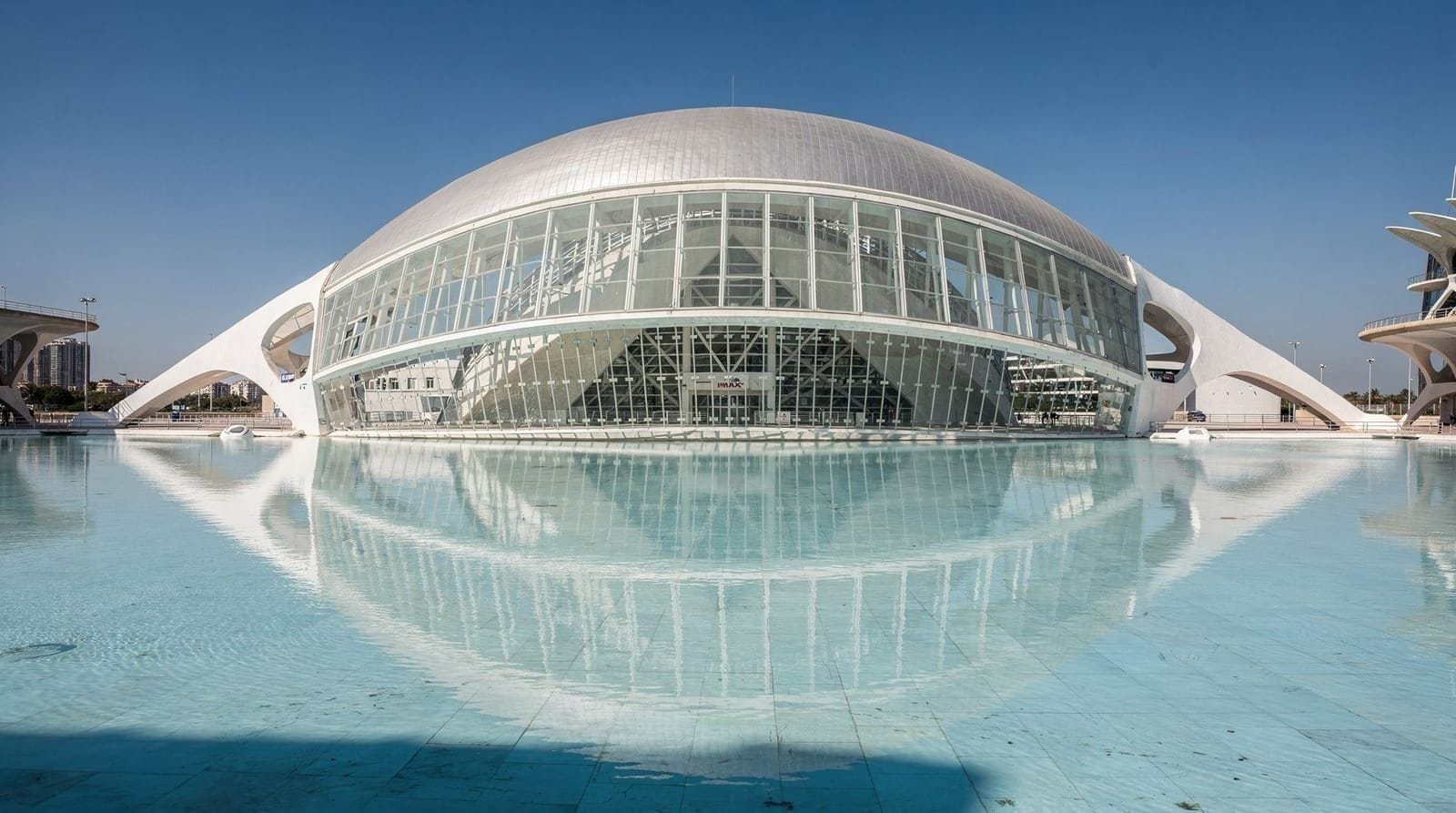
- Oceanogràfic + Hemisfèric: ~€42–44
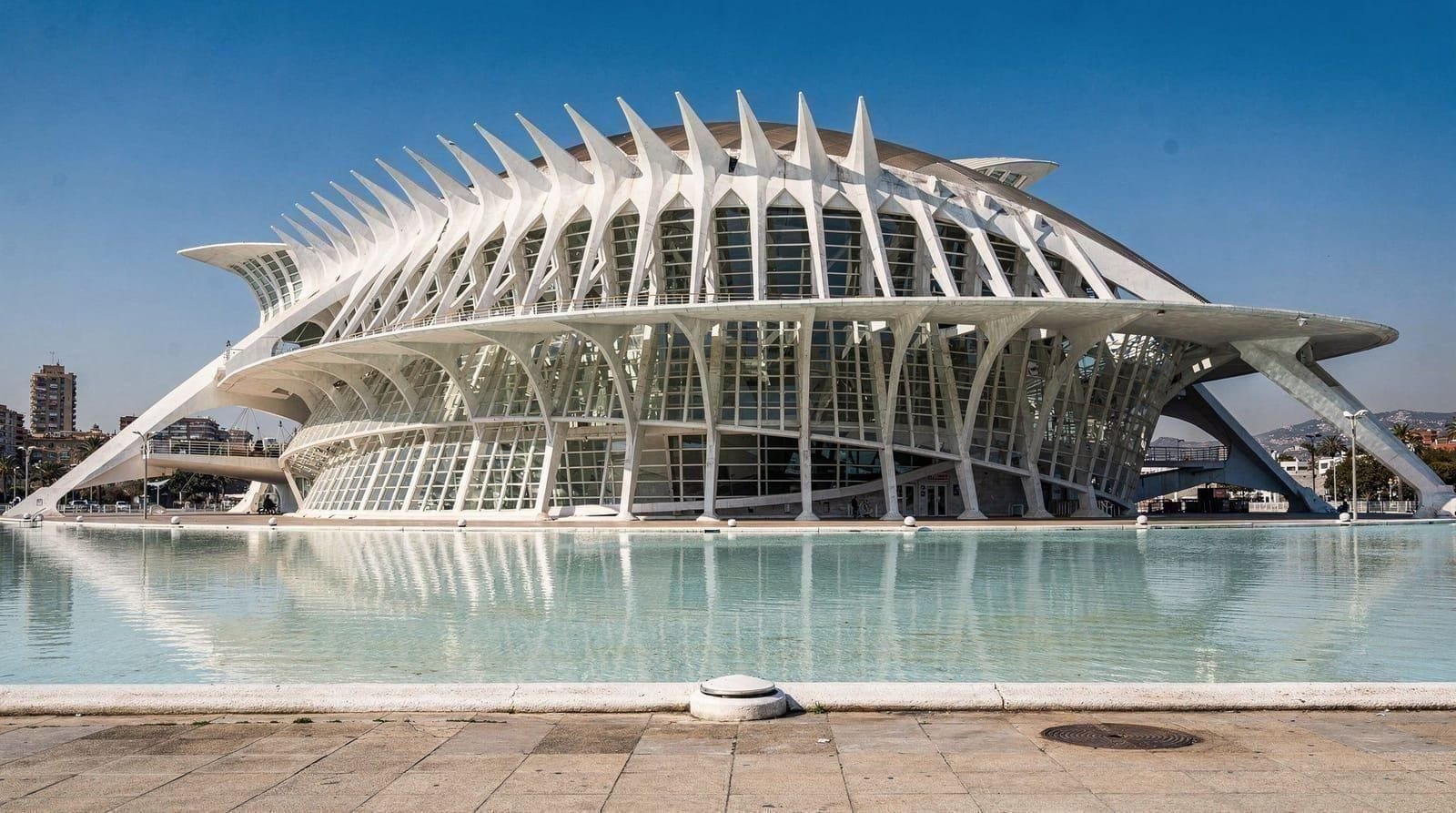
- Oceanogràfic + Hemisfèric + Science Museum: ~€48–50
- City of Arts full-day combined pass: covers all three plus the Umbracle and Ágora
 Oceanogràfic ticket with immersive experienceCheck availability
Oceanogràfic + Hemisfèric + Science Museum comboCheck availability
Oceanogràfic ticket with immersive experienceCheck availability
Oceanogràfic + Hemisfèric + Science Museum comboCheck availability
Accessibility and facilities
The self-guided route is flat and step-free throughout, with ramps at every level change, making L’Oceanogràfic one of the more accessible major attractions in the city. Pushchairs move freely except in the narrowest section of the underwater tunnel at the busiest times, when staff occasionally ask visitors to wait a moment for space. Baby-changing facilities are available near the main restrooms in each zone. Lockers near the entrance take a small refundable deposit; large backpacks and cool bags are discouraged but not banned.
How to get there
Metro: Lines 3 and 5 stop at Alameda (10 minutes from Xàtiva interchange). From Alameda, take bus 95 or walk 2.5 km along the Turia Garden path. The walk is pleasant and flat — most families manage it.
Bus: Bus 13 runs from the Mestalla stadium area directly to Ciudad de las Artes y las Ciencias. Bus 95 connects Alameda metro to the entrance in about 12 minutes.
Turia Garden by bike: Rent a Valenbisi or a private bike and follow the dedicated cycle lane through Turia Gardens from the city centre. The 4 km route is car-free and shaded in sections. This is the most enjoyable way to arrive.
Car: Parking is available at the Ágora underground car park (Calle del Parque Pío IX). Expect to pay €2.30 per hour. The car park fills quickly in summer.
By hop-on hop-off bus: Both tourist bus routes stop at the Ciudad de las Artes y las Ciencias complex. This is a reasonable option if you have a tourist card or have already bought a bus pass.
What to avoid and honest traps
Arrival without a ticket: The queues at peak times are not trivial. We observed 50-minute waits at the ticket office on a Saturday in August at 11:00. Buy online the day before at minimum.
The underwater restaurant at peak times: Submarino is a real spectacle — you eat surrounded by the deep-ocean tank. It is also expensive (starter and main will reach €50–70 per person easily), and it books out weeks ahead in summer. If you want to eat here, book before you book your flights.
Visiting in the hour before closing: The last pavilions close their doors 45 minutes before the stated closing time. If you arrive at 19:00 on a day when the aquarium closes at 20:00, you will see perhaps a third of the exhibits.
Combining with too much else in one day: A full visit to L’Oceanogràfic followed by the Hemisfèric and Science Museum is a reasonable full day for adults but exhausting for children under seven. The City of Arts and Sciences guide has planning advice for structuring the whole complex across one or two days.
Going with children
L’Oceanogràfic works well with children from about age three upward, and exceptionally well from age five. The touch tanks in the Mediterranean pavilion are gently supervised — children can handle starfish and sea urchins under staff guidance. The penguin areas are universally popular. The shark tanks produce reliable expressions of awe even in teenagers who claim to be bored by everything.
There is a dedicated play area near the polar pavilion. Café and snack facilities are distributed throughout — prices are high (€4–6 for a coffee, €12–15 for a children’s meal), but not absurd by major attraction standards.
If you are planning a family itinerary in Valencia, L’Oceanogràfic is the non-negotiable anchor. Pair it with Bioparc for a two-day family programme or with Gulliver Park for an afternoon wind-down.
L’Oceanogràfic versus the Bioparc
Both are major paid attractions and both are frequently compared, but they serve different interests. L’Oceanogràfic covers marine life across polar, tropical, and Mediterranean ecosystems in an architecturally striking setting; the Bioparc is a well-regarded zoo built around an African savannah concept, with open enclosures and no visible barriers between species groupings. If you can only fit one into your trip, L’Oceanogràfic has the broader international reputation and the beluga whales are unique in Spain. Families staying several days, or those specifically interested in African wildlife, get real additional value from doing both on separate days rather than trying to combine them.
Should you book a guided tour?
For most visitors, the self-guided route with the included audio guide (available in English, Spanish, French, German) is adequate. The exhibits are well labelled and the layout is logical.
A guided tour adds real value if you have children under ten who engage better with a narrator, or if you want access to the backstage areas. The 2-hour guided tour option that combines a walk through the complex with Oceanogràfic admission is good value if you plan to explore City of Arts and Sciences more broadly.
 2-hour guided tour City of Arts & Sciences with OceanogràficCheck availability
Tips for a better visit
- Download the Oceanogràfic app before arrival. It has a live map with show times and tank-by-tank species information.
- Arrive when it opens. The first 90 minutes are reliably the quietest period of the day.
- Bring a light jacket for the polar pavilions. The temperature drops noticeably.
- Eat before or after. The café food is mediocre. Excellent restaurants sit 10 minutes away on Calle del Doctor Lluch or in the nearby Ruzafa neighbourhood.
- The evening openings in summer are genuinely atmospheric — different lighting, smaller crowds, and a very different feel. Check the programme for July–August.
- Children’s single-day fatigue: combine the aquarium with the adjacent Turia Gardens for a late-afternoon decompress.
Weather and seasonal considerations
L’Oceanogràfic works well whatever the weather, since most of the exhibit space is indoors, but the outdoor lagoon areas (including part of the beluga and sea lion viewing) are exposed. In the height of summer, the outdoor walkways between pavilions can be genuinely hot by early afternoon — another reason to arrive at opening rather than mid-morning. In winter, the indoor pavilions stay comfortably warm, and the extended evening openings do not run outside July–August, so a winter visit means sticking to standard daytime hours. Rain does not meaningfully affect the visit, since the walkways between buildings are mostly covered.
Combining with the Valencia Tourist Card
The Valencia Tourist Card (24, 48, or 72 hours) does not include L’Oceanogràfic admission — it covers public transport and discounts on many attractions but not the main City of Arts buildings. See the Valencia Tourist Card guide for what is and is not included before buying.
If you are visiting multiple sites in the complex, compare the City of Arts combined day ticket vs. the tourist card + individual tickets to find the better price for your itinerary. As a rule of thumb, the tourist card pays off primarily through transport savings and small discounts elsewhere in the city; treat the L’Oceanogràfic ticket itself as a separate purchase rather than something the card meaningfully subsidises.
L’Oceanogràfic in context
A 2025 expansion added a section dedicated to freshwater ecosystems — the first of its kind at L’Oceanogràfic — covering the Albufera lagoon’s endemic species including the fartet (Aphanius iberus), a tiny endangered fish found only in the Valencia coastal wetlands. This connects the aquarium experience to a wider story about the Albufera Natural Park that most visitors explore on a separate day trip.
The building itself sits at the southern end of the former Turia river channel, which was diverted in 1957 after catastrophic flooding. Where the river once ran, Valencia now has one of Europe’s longest urban parks — stretching 9 km from the western edge of the city to the sea. The Oceanogràfic visit and a Turia Garden walk or cycle make a natural pairing.
 City of Arts full-day combined ticketsCheck availability
Oceanogràfic entry with backstage tourCheck availability
City of Arts full-day combined ticketsCheck availability
Oceanogràfic entry with backstage tourCheck availability
For the full picture of what to see and do in the complex, read the Ciudad de las Artes y las Ciencias guide.
Frequently asked questions about L'Oceanogràfic Valencia
How much does L'Oceanogràfic cost?
Standard adult entry is €41.80 online, around €43 at the door. Children (4–12) pay €31 online. Under-3s are free. A combo with Hemisfèric or the Science Museum saves 15–20% vs. buying separately.How long should I spend at L'Oceanogràfic?
Budget 3.5 to 4 hours for a thorough visit — longer if you have young children or plan to watch a dolphin show. The full route, including outdoor areas, totals nearly 3 km.How do I get to L'Oceanogràfic by public transport?
Take metro line 3 or 5 to Alameda, then bus 95 toward Ciudad de las Artes y las Ciencias. Alternatively, bus 13 runs directly from the city centre. By bike, follow the Turia Garden cycle path southeast — about 4 km from Plaza de España.What is the best time to visit to avoid crowds?
Weekdays between 10:00 and 12:00 are significantly quieter. Avoid weekend afternoons in July and August. Spanish school groups are heavy on Tuesday and Thursday mornings in spring.Is there a backstage or behind-the-scenes tour?
Yes. The backstage experience (sold as an add-on, €12 extra) lets you enter restricted areas near the beluga and shark tanks and speak with marine biologists. Numbers are capped at 20 per session — book well in advance.Are dolphin shows still running?
Dolphin shows were suspended in 2021 and remain on hold as of 2026 following ongoing animal welfare debates. Beluga whales, however, are still exhibited. Check the official site before booking if this is a priority.Can I buy a combo that includes Hemisfèric and the Science Museum?
Yes. The triple combo — Oceanogràfic + Hemisfèric + Príncipe Felipe Science Museum — costs around €48–50 per adult and is the best-value option if you plan to visit all three buildings in one day.Is L'Oceanogràfic good for young children?
It's one of the best family attractions in Valencia. The shallow touch tanks, penguin parade (daily at 12:30 and 17:00), and underwater restaurant are particular hits. Pushchair access is good throughout.
Top experiences
Bookable activities with verified prices and instant confirmation on GetYourGuide.