Hemisfèric Valencia: IMAX films, tickets and visitor tips
Valencia: City of Arts and Sciences 3D film at Hemisfèric
Is the Hemisfèric worth visiting in Valencia?
Worth it as an add-on to a City of Arts day if you enjoy IMAX documentaries — not worth a separate trip. Adult tickets cost around €8.90 online. Films run 40 minutes and change monthly. English screenings are available but not guaranteed for all shows.
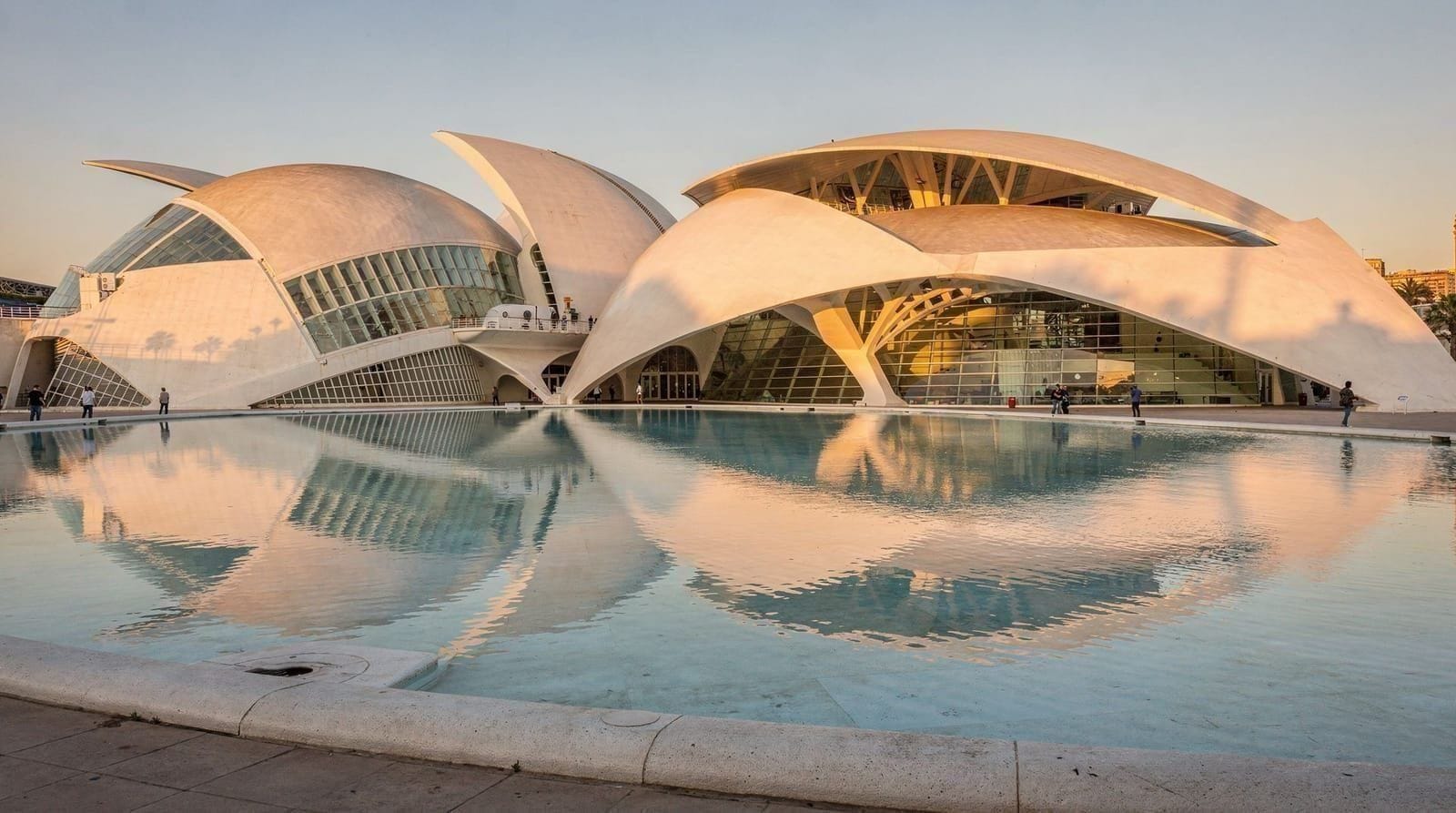
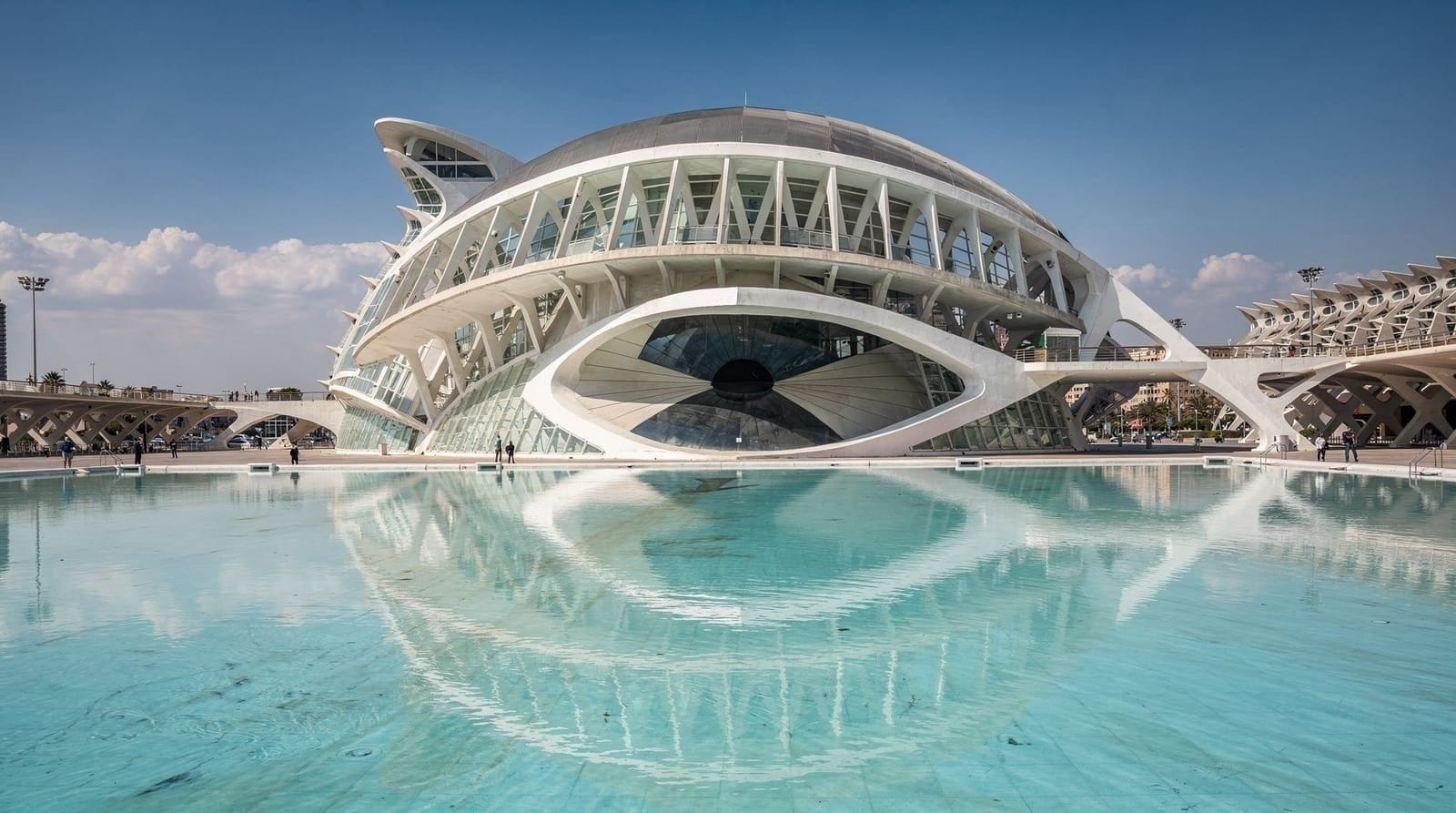
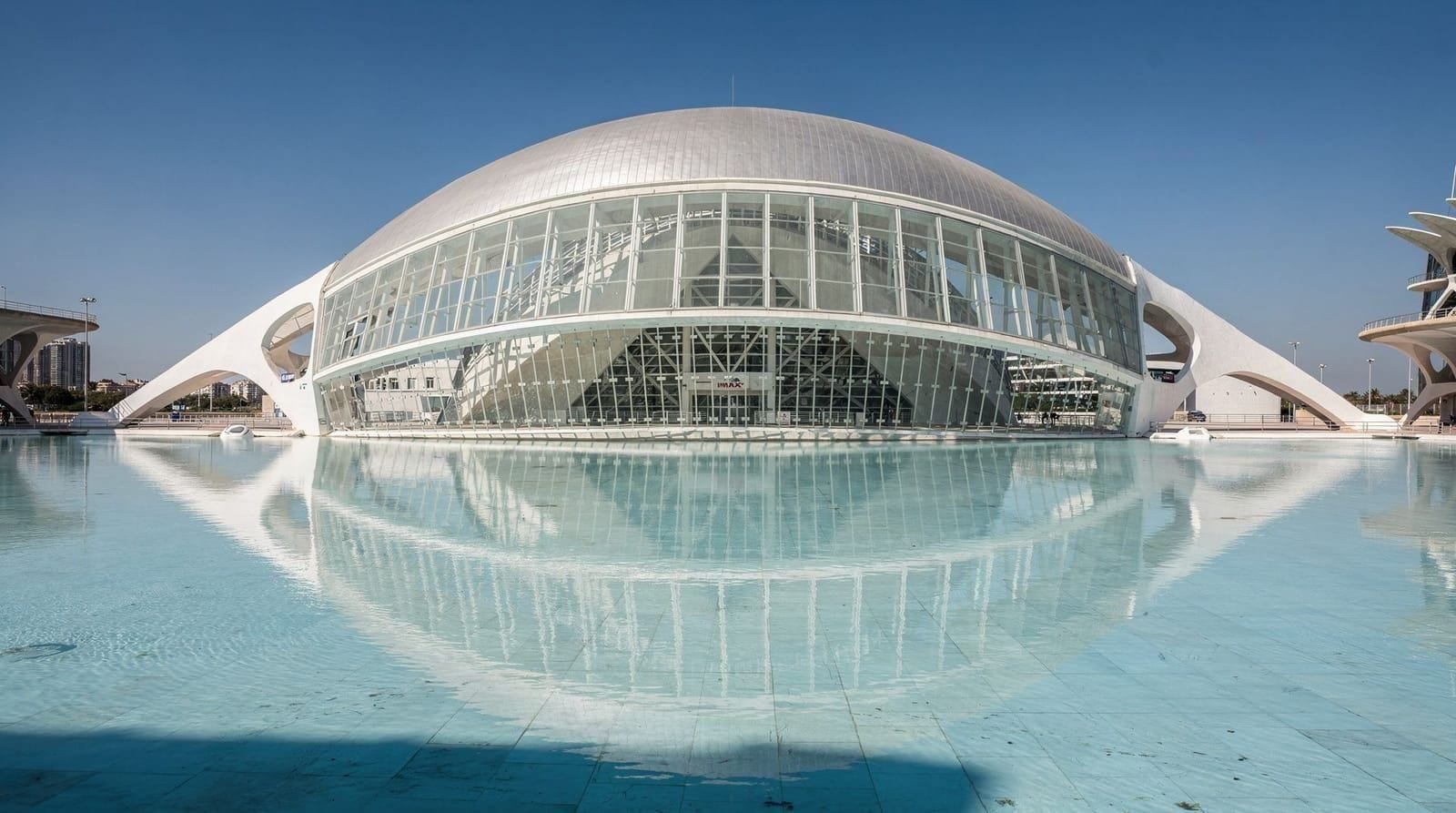
The Hemisfèric is the building that most visitors photograph first when they reach the Ciudad de las Artes y las Ciencias. The eye-shaped structure — a concrete eyelid that appears to open and close as you walk past — reflects in the 24,000 m² artificial lake in front of it. What is inside, however, is simpler than the architecture suggests: a planetarium, an IMAX cinema, and a laser show space, all contained within the same domed auditorium.
| Where | Ciudad de las Artes y las Ciencias, north side of the lake |
| Cost | around €8.90 adult online |
| Time needed | 40–45 minutes per screening |
| Getting there | Bus 13 to Museo de las Ciencias, or Turia path by bike |
| Best combined with | Oceanogràfic and/or Science Museum combo ticket |
What to expect from a visit
The Hemisfèric auditorium holds around 300 people on reclined seats that tip back at 30 degrees to face the full-dome screen above. Films rotate every few months and typically cover natural history, astronomy, or ocean sciences. As of mid-2026, the programme includes a film on ocean life and a separate astronomy presentation.
A session lasts 40 to 45 minutes. There is no additional content beyond the film — no gallery, no exhibit space, no interactive elements. This is a cinema, not a museum.
The building itself
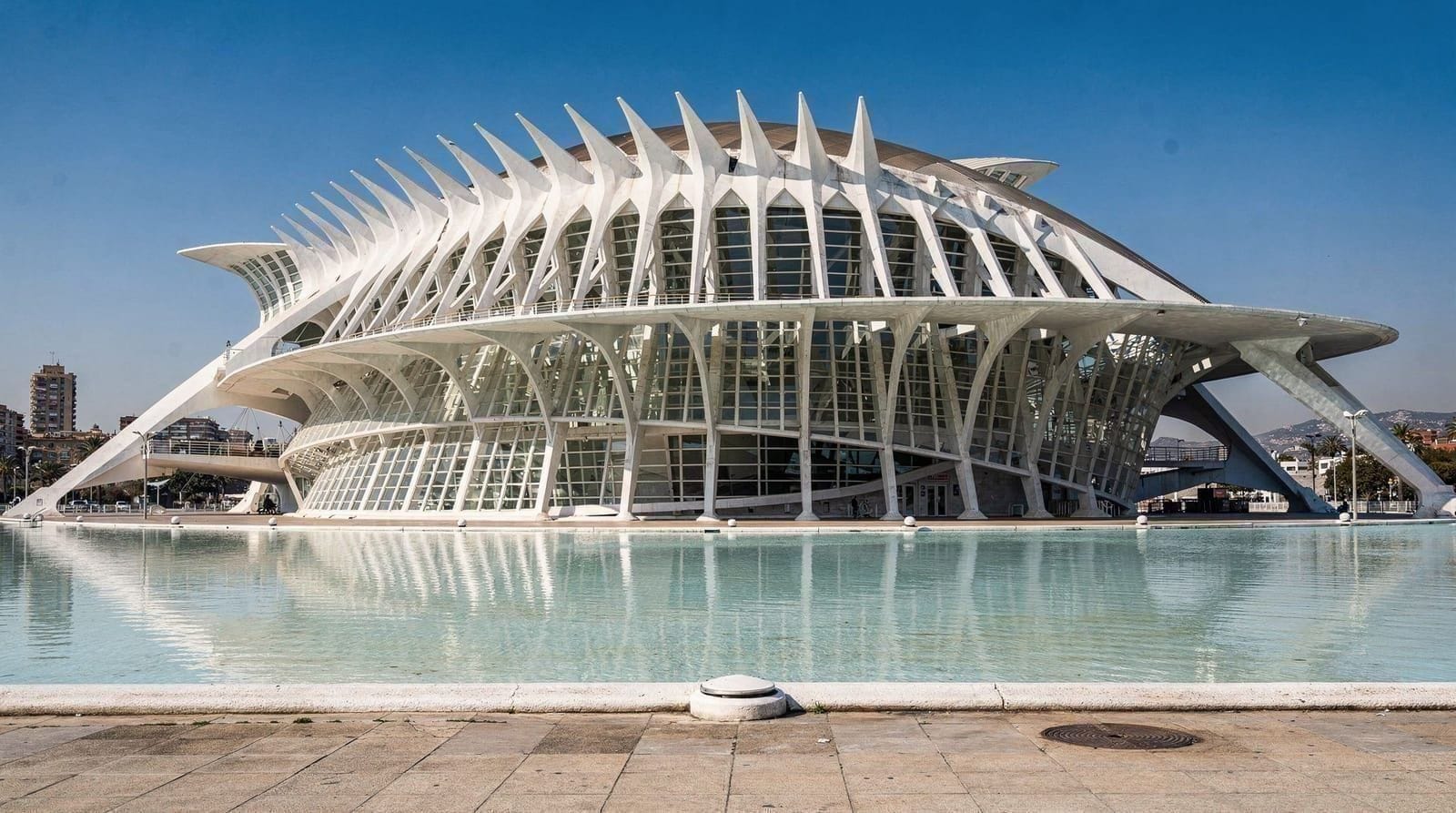
The exterior is one of Santiago Calatrava’s most memorable works — an elongated parabola of white concrete and glass that opens skyward. The kinetic eyelid mechanism operates on a schedule: it opens in the morning and closes in the early evening. If you want to see it in motion, arrive around 09:30 or check the schedule at the ticket office.
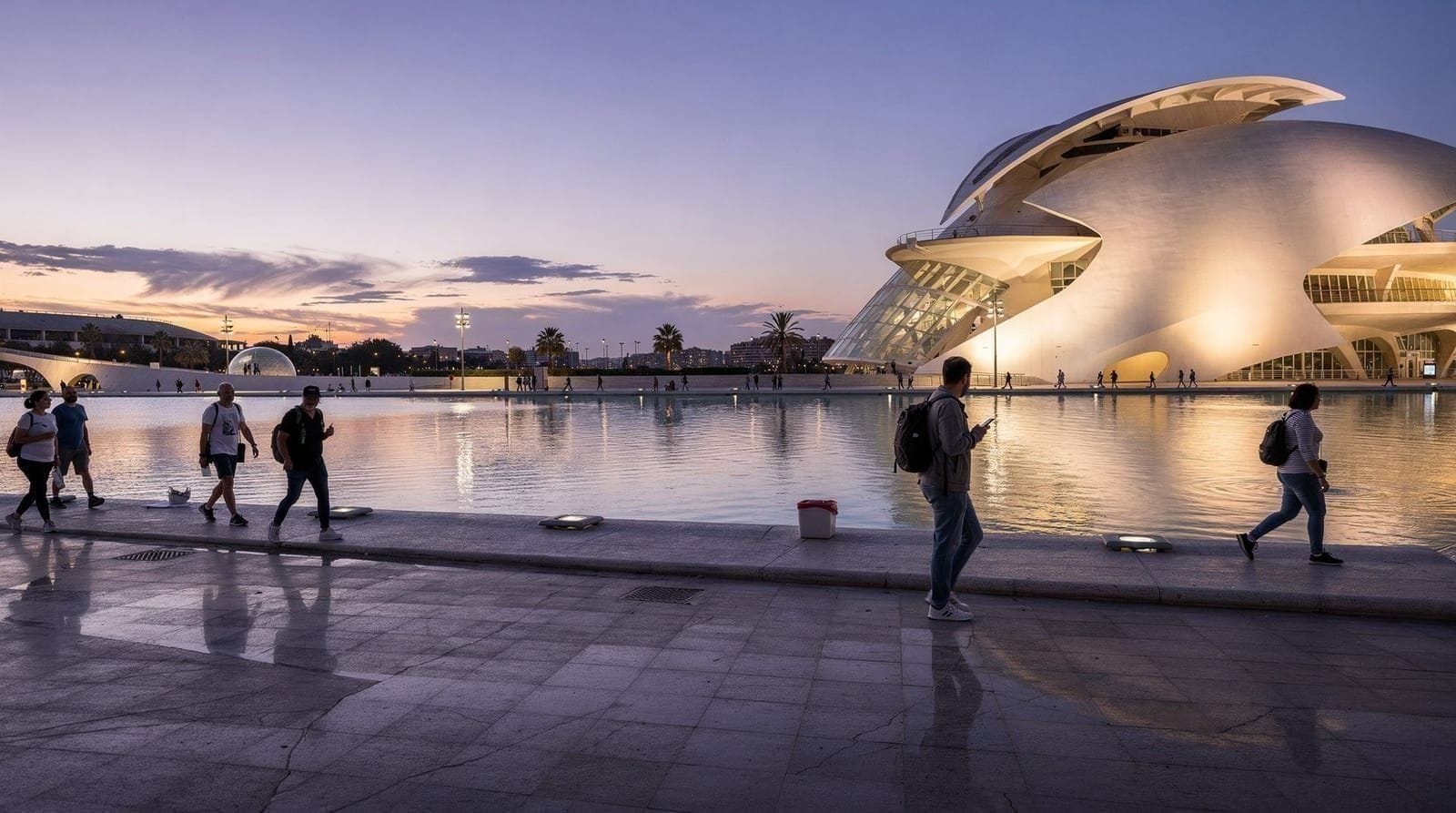
The reflecting pool in front provides one of the best mirror-image photographs in Valencia. Best light for photography is early morning before crowds arrive, or late afternoon with the sun behind you facing west.
Practical information
Opening hours: 10:00–20:00 in summer (July–August), 10:00–18:00 in winter. Show times vary — typically three to four screenings per day. Check the City of Arts website for the current programme.
Ticket prices (2026):
- Adult (13+): €8.90 online
- Child (4–12): €6.90 online
- Under 3: free (no seat allocated)
Language: Most films are available in Spanish and a dubbed or subtitled English version. English showtimes are typically fewer — check online before booking if language is important to you.
 City of Arts and Sciences 3D film at HemisfèricCheck availability
Combo options
The Hemisfèric is almost always better value as part of a combo ticket rather than a standalone visit. Options:
- Hemisfèric + Science Museum: ~€14.10 per adult
- Oceanogràfic + Hemisfèric: ~€42–44 per adult
- Triple combo (Oceanogràfic + Hemisfèric + Science Museum): ~€48–50 per adult
If you are visiting L’Oceanogràfic anyway, adding the Hemisfèric for around €9 more is easy to justify.
Hemisfèric + Science Museum comboCheck availability
How the Hemisfèric compares to the other City of Arts buildings
If you are deciding how to allocate a limited budget or a single day at the complex, here is how the three main paid buildings compare:
| Building | Time needed | Best for | Standalone value |
|---|---|---|---|
| Hemisfèric | 40–45 min | IMAX documentaries, architecture photos | Low — best as an add-on |
| Oceanogràfic | 3–4 hours | Marine life, Europe’s largest aquarium complex | High — worth a dedicated visit |
| Science Museum | 2–3 hours | Hands-on exhibits, families with older kids | Moderate — good half-day on its own |
The practical takeaway: build your day around the Oceanogràfic, treat the Science Museum as a strong half-day option if you have time, and slot the Hemisfèric in as the restful midday interlude between the two rather than a destination in itself.
Honest assessment
The Hemisfèric is not the main event at the City of Arts complex. It is a high-quality IMAX cinema that happens to be housed in one of Europe’s most striking buildings. If you enjoy nature documentaries and the full-dome projection format, you will appreciate it. If you are short on time or primarily visiting for the Oceanogràfic, it is the element most easily dropped without regret.
Where it earns its place: as the ideal mid-day slot between the morning aquarium session and the afternoon science museum. The 40-minute air-conditioned screening provides a break from walking and a convenient restructuring of a full day at the complex.
For families with children between 6 and 12, the astronomy films work particularly well. For children under six, the reclined seating and low-light environment can be disorienting — plan around nap schedules.
Choosing a film and a seat
Because the programme rotates, the first decision is which film suits the people you are with. Nature and ocean documentaries tend to work for almost everyone, while astronomy presentations reward visitors who like a slower, more explanatory pace. If your group is split on taste, read the synopsis on the official programme before you buy and pick the film that the least enthusiastic person will still enjoy.
Seating matters more than you might expect in a full-dome cinema. The image wraps over your head rather than sitting in front of you, so seats very close to the screen make you crane your neck, while seats too far back lose some of the sense of being surrounded. Aim for the middle of the auditorium if you have a choice, and let the reclined backrest do the work. If anyone in your group is sensitive to motion on screen, tell them to look at the horizon line when the camera sweeps, or simply close their eyes for a moment; sweeping aerial shots are the usual culprit.
Sound is part of the experience too. Headsets or subtitles may be offered for the non-Spanish versions, so check what the version you booked actually includes before you sit down, and arrive early enough to sort it out without disturbing the people already seated.
Making the visit easier with children
A planetarium-style screening is a good test of a child’s attention span. Younger visitors usually cope better when they know what to expect, so explain beforehand that the room will be dark, the seats will lean back and the picture will be above them. Bring a calm activity for the wait outside, and visit the toilets before the doors close, since leaving mid-film is disruptive for everyone around you.
If your children have already burned energy at Gulliver Park or in the Science Museum, the quiet of the Hemisfèric can be a welcome reset. Pair it with a snack stop afterwards rather than before, so nobody is rustling a packet while the film runs. More ideas for planning a day around younger travellers are in our Valencia with kids guide and the family itinerary.
On a wet day the Hemisfèric is one of the easier indoor choices in the city, because you can move between buildings with little time spent outside. Our rainy day kids page lists other options if the weather turns and you want a back-up plan.
Photographing the building
Even if you never buy a ticket, the exterior repays a few minutes. The curve of the structure, the water in front and the neighbouring white arches give you several different compositions without moving far. Walk along the edge of the pool to change the angle, and try shooting low to the water for a cleaner reflection when the surface is still.
Wind ripples the lake and breaks up the mirror effect, so if the reflection matters to you, be flexible about timing and come back later in the day if the first attempt is spoiled. Wide-angle lenses suit the building best, but a phone panorama also copes well because the structure is so long and horizontal.
For a different view, keep walking through the surrounding complex and take in the other buildings from the paths between them; the City of Arts and Sciences guide and the area guide to Ciudad de las Artes describe the best vantage points. If you enjoy this kind of image-hunting, consider a photography tour elsewhere in the city, or follow the river on foot or by bike through the Turia Gardens and the Turia by bike route.
Fitting the Hemisfèric into a longer stay
The Hemisfèric rarely deserves its own day, so think about where it sits in the wider trip. On a short break it can be the quiet slot in an otherwise busy first weekend or a full three-day plan. If you have more time, the family version of the city plan gives the complex more space.
Visitors counting every euro should look at Valencia on a budget and at whether a city pass makes sense; our tourist card guide explains how to judge it against the attractions you actually plan to enter. For other cultural stops that pair well with a day of science, the Fine Arts Museum and the Lonja de la Seda offer a completely different mood in the old town, and the UNESCO sites guide puts the whole picture together.
When you are ready to eat, the restaurant guide and the advice on eating like a local help you avoid the obvious traps around the main sights, and getting around by metro and bus explains how to return to the centre without fuss. If you are still deciding when to come, best time to visit covers the seasons, and the broader Valencia destination page is the place to start planning.
Getting there
The Hemisfèric is the first major building you encounter arriving from the city centre along the Turia Gardens path. It sits on the north bank of the complex’s central lake, directly opposite the Science Museum.
Bus 13 from Plaza del Ayuntamiento stops at Museo de las Ciencias, which is a 5-minute walk across the pedestrian bridge to the Hemisfèric entrance.
By bike: Follow the Turia Garden cycle lane from the city centre — the path deposits you at the northern end of the complex, directly adjacent to the Hemisfèric. Distance from Plaza de España: about 4 km.
Metro: Alameda (lines 3 and 5) + bus 95 takes approximately 25 minutes from the city centre.
Combining with the rest of the complex
The Hemisfèric fits naturally into a full City of Arts and Sciences day as a midday interlude. A practical sequence: arrive at Oceanogràfic at 10:00, spend the morning there, break for lunch at the complex café or at a restaurant on Calle de Músic Palau, then catch a 14:30 or 15:00 Hemisfèric screening, followed by the Science Museum in the late afternoon.
If you are using the full-day combined ticket, which includes shuttle service between the buildings, the transition between attractions is straightforward.
For broader context on where the Hemisfèric fits in Valencia’s museums landscape, the Ciudad de las Artes y las Ciencias guide covers all buildings together with pricing comparisons.
Frequently asked questions about the Hemisfèric
Is the Hemisfèric the same as the Science Museum?
No. The Hemisfèric is a single IMAX cinema and planetarium inside one domed building, showing 40–45 minute films with no exhibit space. The Science Museum is a separate, much larger building with hands-on interactive exhibits across multiple floors. They are both part of the Ciudad de las Artes y las Ciencias complex but are entirely different experiences.
How far in advance should I book Hemisfèric tickets?
Booking online a day or two ahead is usually enough outside peak summer weekends, when specific showtimes (especially English-language ones) can sell out. If a particular screening time matters to your schedule, book as soon as you have fixed your visit date.
Top experiences
Bookable activities with verified prices and instant confirmation on GetYourGuide.