The Holy Grail in Valencia Cathedral: what you need to know
Valencia: Indiana Jones and the Holy Grail tour
Duration: 2 hours
Is the Holy Grail really in Valencia Cathedral?
The Cathedral of Valencia holds the Santo Cáliz (Holy Chalice) — an agate cup estimated to date from the 1st century BCE to 1st century CE, which Church tradition holds to be the cup used by Christ at the Last Supper. It has been in Valencia since 1437. Whether it is 'the' Holy Grail depends on your theological and historical views, but the chalice itself is a genuine ancient artefact with a documented medieval provenance, displayed prominently in the Cathedral's Capilla del Santo Cáliz.
One of the more remarkable facts about Valencia’s city centre is that the Cathedral at Plaza de la Reina claims to hold the Holy Grail — the cup used by Christ at the Last Supper. Most visitors to Valencia either don’t know this or treat it as a curiosity. It deserves more serious attention: the object in question is a genuine ancient artefact with a real documented history, and the story of how it came to Valencia is legitimately interesting regardless of your theological position.
| Where | Capilla del Santo Cáliz, Valencia Cathedral, Plaza de la Reina |
| Cost | €12 adults, €6 reduced (includes museum and chalice chapel; Miguelete tower €3 extra) |
| Time needed | 1.5–2 hours for a full cathedral visit |
| Best time | Weekday mornings before 11:00, or Sunday after 14:00 |
| Photography | Permitted without flash |
The chalice: physical description
The Santo Cáliz (Holy Chalice) is displayed in the Capilla del Santo Cáliz — a converted 14th-century chapter house that serves as the chapel’s setting. The chalice sits on the altar in a glass case, well lit, and can be seen clearly from the front of the chapel at a distance of roughly 4–5 metres.
The cup is smaller than most visitors expect, and it is not the jewelled golden goblet of medieval legend. It is a dark reddish cup of carnelian agate — roughly 9 cm tall in the agate component alone, mounted on a medieval setting that adds gold filigree handles, enamel panels, and semi-precious stones. The upper cup (the ancient component) and the inverted lower cup forming the base are both agate; the gold setting connecting them dates from the medieval period.
The agate is high quality — a translucent reddish-brown with natural banding. The cup’s shape is consistent with ceremonial vessels of the Roman-era eastern Mediterranean. Nothing about the physical object contradicts the proposed date range (1st century BCE to 1st century CE).
The provenance: what can actually be traced
The chalice’s documented history in Spain begins clearly in the medieval period. Key verified dates:
1170: The chalice is listed in the inventory of relics at the monastery of San Juan de la Peña in Aragón — the earliest unambiguous documentary reference to its presence in Spain.
1399–1437: The chalice was in the possession of the Aragonese royal house, moving between Zaragoza and Barcelona. Alfonso V of Aragon granted it to Valencia Cathedral in 1437 to discharge a debt of 40,000 florins owed to the cathedral by the royal house.
1437–present: The chalice has been in Valencia Cathedral continuously, with the exception of a period during the Spanish Civil War when it was moved for protection (reportedly to the coastal town of Carlet and later hidden in the mountains).
2006: Pope John Paul II used the chalice for Mass during the World Meeting of Families in Valencia. Pope Benedict XVI repeated this in July 2006.
Before 1170, the provenance is tradition rather than documentation. The commonly repeated narrative — brought from Jerusalem to Rome by Saint Peter; kept by the early popes; sent to Zaragoza via Saint Lawrence in 258 CE to protect it from Emperor Valerian’s persecutions — cannot be verified through contemporary records but is consistent with the chalice’s physical dating.
The Capilla del Santo Cáliz
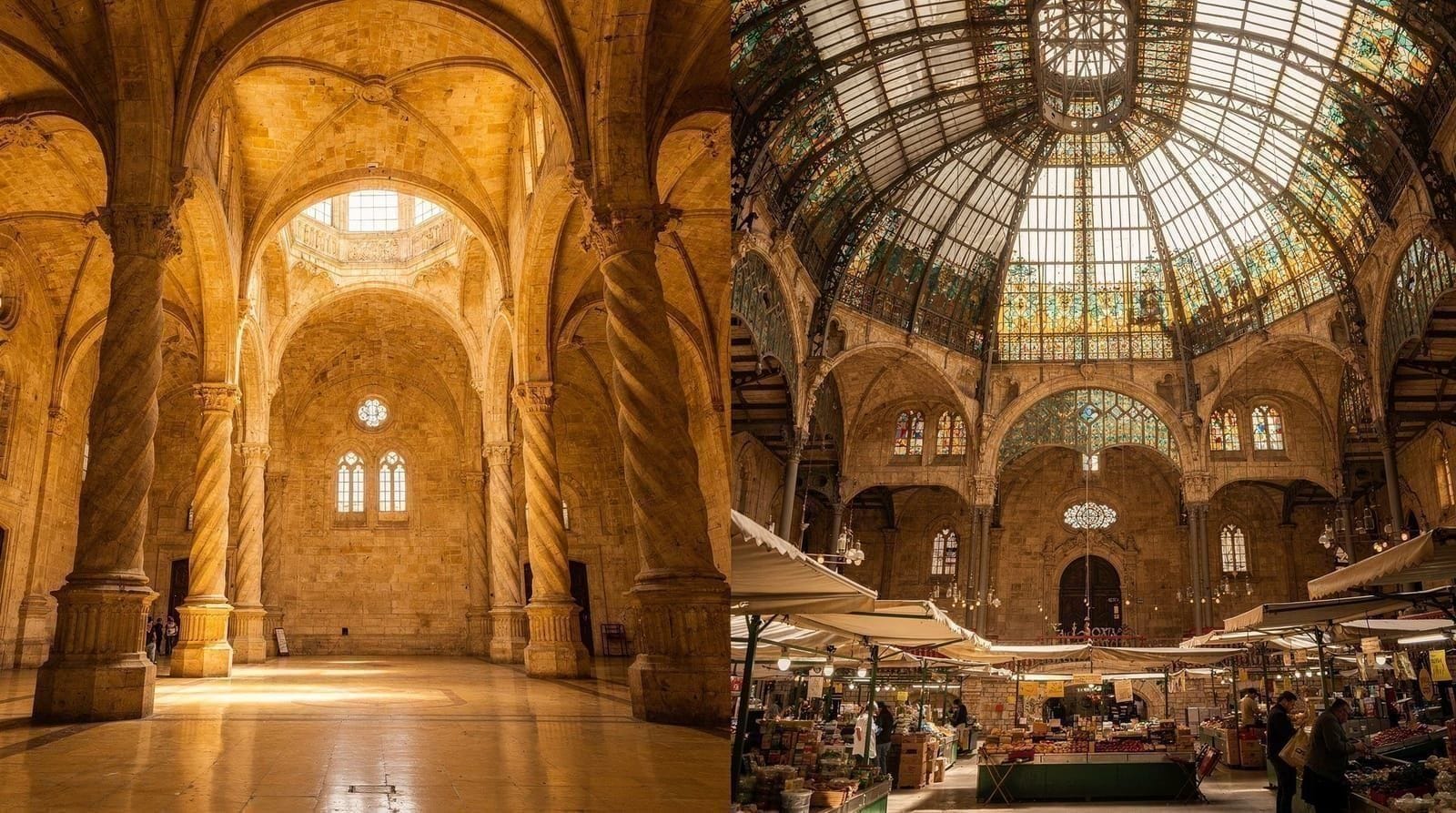
The chapel housing the chalice is aesthetically the most impressive space in the cathedral. It was originally built in the 14th century as the chapter house, converted to a chapel dedicated to the chalice in the 15th century.
The chapel walls are covered with 15th-century frescoes by Jacomart and Juan Reixach, depicting scenes from the life of Christ with particular emphasis on the Last Supper. The vaulted ceiling has Gothic lierne vaulting — elegant and historically significant in its own right. The rose window and the natural light it creates in the afternoon are worth timing your visit around (best between 14:00 and 16:00 for the light angle).
The chalice is displayed in a custom glass case at the altar, elevated for viewing. The scale of the cup against the elaborate medieval altar setting is immediately striking.
The Indiana Jones connection — and why it matters for tourism
The cultural power of the Holy Grail narrative — amplified enormously by Indiana Jones and the Last Crusade (1989) — means that the Santo Cáliz in Valencia attracts visitors specifically because of the legend, regardless of religious belief. The tour operators offering Holy Grail-themed visits to the cathedral are not wrong to use this framing: it contextualises an ancient object within a story that millions of people know.
The honest assessment is that no physical evidence can prove or disprove the Santo Cáliz’s specific use at the Last Supper. The cup is genuinely old, genuinely ancient, and genuinely of the right type and material for the claimed period. The medieval documentation places it in Spain from at least the 12th century. These facts are either impressive or not depending on your priors.
Indiana Jones and the Holy Grail guided tour of Valencia Cathedral — 2-hour exploration of the chalice’s history and the medieval legends surrounding it
How to approach the visit
The easiest way to enjoy the chalice is to arrive with a clear idea of what you are looking at. This is not a treasure-vault spectacle; it is a small, quiet object in a beautiful room, and it rewards slow looking. Spend a few minutes at the front of the chapel, then step to one side and look again from a slight angle. The agate changes in tone depending on the light, and the contrast between the plain ancient cup and the elaborate medieval setting is the real point of the display.
It also helps to decide beforehand how you want to read the story. Some visitors come as pilgrims, some as history enthusiasts, some simply because of the film. All three approaches work in this chapel. If you treat the legend as a way into the history, the visit becomes much richer: you are looking at an object that a Spanish royal house, a mountain monastery and a cathedral chapter all considered important enough to guard, trade and record.
If you are building a wider plan around the old town, the Valencia in one day itinerary and the three-day itinerary both place the cathedral at a natural point in the route, close to the Plaza de la Reina and the Lonja. First-time visitors choosing where to base themselves can compare options in the best area for first-time visitors guide.
Valencia Cathedral: beyond the chalice
The cathedral is a significant building independent of the Holy Grail. Construction began in 1262 on the site of the old mosque, and the building shows the full history of Valencia’s architectural development:
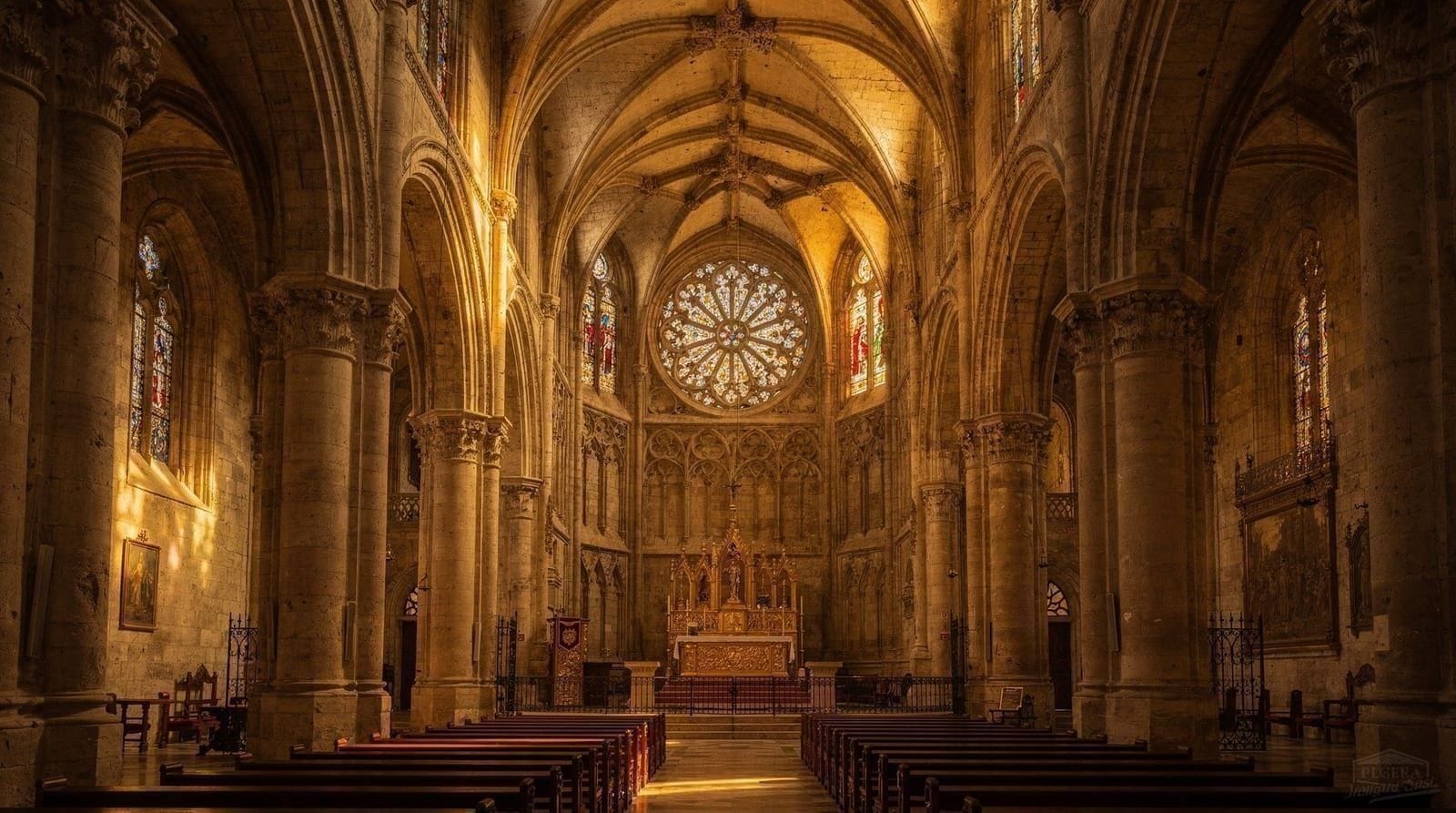
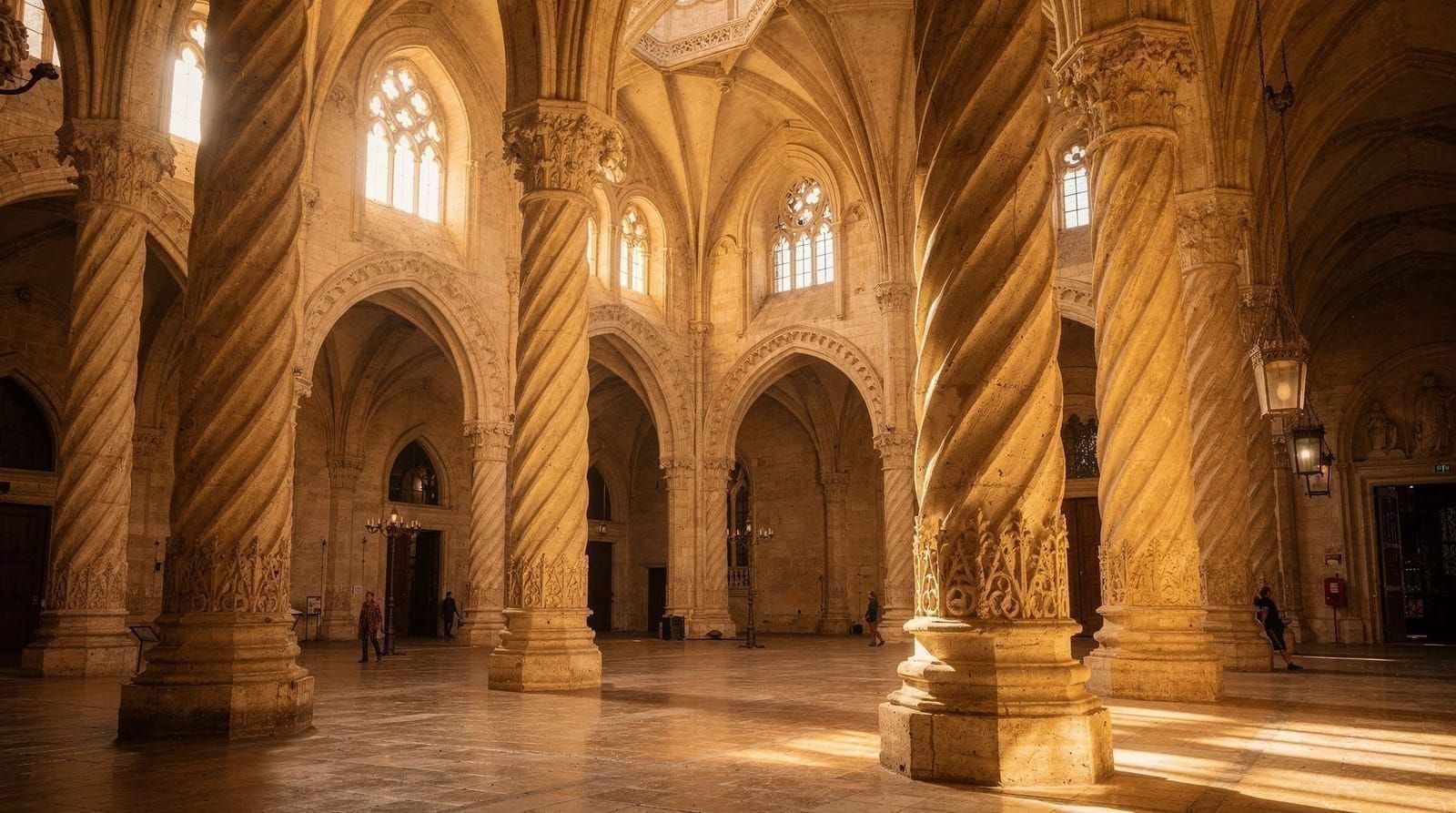
The Gothic nave: The interior follows a single-aisled Gothic design typical of the Valencian-Catalan tradition — broader and lower than French Gothic, with a simpler structural system. The dome at the crossing (the Micalet) is one of the first Renaissance domes in Spain.
The Puerta de los Apóstoles: The Gothic doorway facing Plaza de la Virgen is where the Tribunal de las Aguas (Water Court) meets every Thursday at noon. The sculpted apostle figures on the doorway are among the finest medieval sculpture in Valencia.
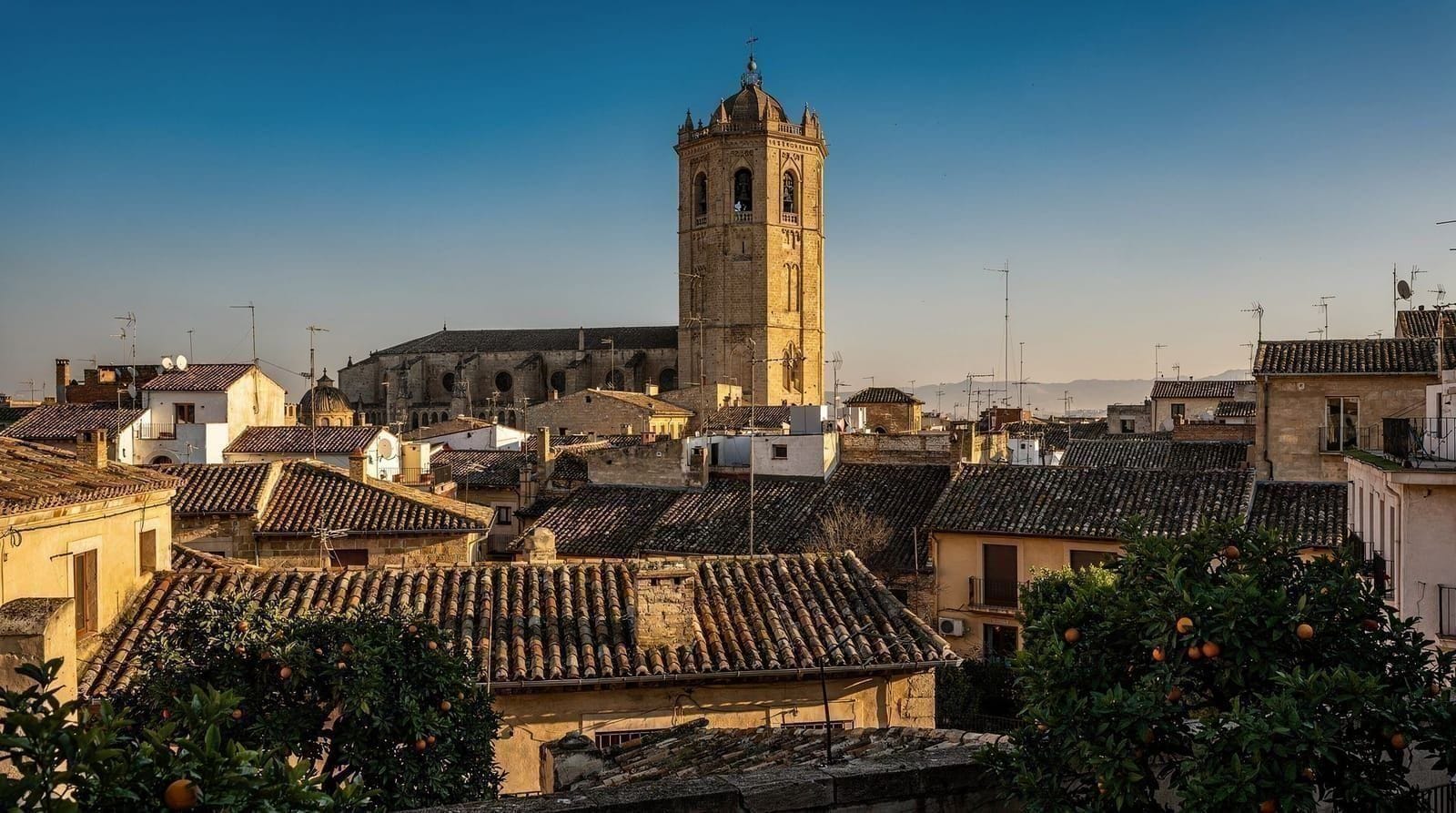
The Miguelete Tower (El Micalet): The octagonal bell tower standing to the left of the cathedral’s main façade. 207 steps to the top; the view over Valencia’s old town roofscape is one of the best in the city. The tower is worth climbing in the morning light.
The Baroque doorway: The main façade on Plaza de la Reina was rebuilt in the 18th century in Churrigueresque Baroque — elaborate, theatrical, and somewhat at odds with the medieval interior. The contrast between the Gothic nave and the Baroque doorway is jarring in an interesting way.
The museum: The cathedral museum (accessed from inside) holds Gothic altarpieces, paintings by Juan de Juanes (16th century, considered the finest Valencian Renaissance painter), and ecclesiastical silver. Worth 20–30 minutes.
The detailed guide to the cathedral and Miguelete tower is at the Cathedral and the Miguelete.
Other claimed Holy Grail sites: a comparison
Valencia is not the only place claiming a connection to the Holy Grail. For context on how the claim stacks up:
| Site | Type of claim | Physical object dated to period? |
|---|---|---|
| Valencia Cathedral | Documented medieval provenance from 1170 | Yes — agate cup, 1st c. BCE–1st c. CE |
| Genoa Cathedral (Sacro Catino) | Medieval legend, brought from Caesarea | Glass, later dated to Islamic-era origin |
| Glastonbury Abbey (UK) | Arthurian legend, no physical object | No surviving object |
| Rosslyn Chapel (Scotland) | Symbolic/legendary association | No surviving object |
Valencia’s claim stands out among these because it combines an actual surviving object, dated by material analysis to a plausible period, with a documented chain of custody back to the 12th century — a stronger evidentiary basis than most rival claims, even though the pre-1170 chain remains tradition rather than record.
If the wider silk and trade history of medieval Valencia interests you as much as the religious relic, the silk route guide and the Lonja de la Seda covered in the UNESCO Valencia guide give the secular counterpart to the cathedral’s story.
Cathedral, St. Nicholas and Lonja tour — combine the three major historic buildings in a single guided 3-hour walk
Combining the chalice with the rest of the old town
The cathedral sits at the heart of Valencia’s historic centre, so it pairs easily with other sights on foot. The Torres de Serranos and Torres de Quart guide covers the medieval gates that once guarded the old city, and the Lonja de la Seda guide explains the Gothic trading hall that reflects the city’s commercial golden age. Together with the cathedral, they give a clear picture of medieval Valencia as both a religious and a mercantile centre.
For a broader overview of the heritage on offer, the UNESCO guide is a good companion, and the Central Market guide is a convenient place to stop for something to eat once you have finished inside. If you prefer to see the old town with a guide who can connect the buildings into one story, a historical walking tour of the old town is worth comparing with a paid option such as a historical walking tour through the old town.
Visitors who enjoy the Grail theme may also like the medieval atmosphere of Xàtiva and its castle, an easy excursion once you have finished in the city, and the Sagunto day trip for a deeper dive into the region’s ancient past.
Practical visiting information
Address: Plaza de la Reina (main entrance, Baroque doorway) and Plaza de la Virgen (Apostles’ Door)
Opening hours (winter season, 1 Jan–30 Jun and 1 Oct–31 Dec): Monday–Friday 10:30–18:30; Saturday 10:30–17:30; Sunday 14:00–17:30. The Miguelete is open 10:00–18:45. Summer hours differ, and the cultural visit is not available on some feast days (1 Jan, 6 Jan, 19 Mar, Palm Sunday, Good Friday, 9 Oct, 8 Dec, 25 Dec); check catedraldevalencia.es.
Admission: €12 adults; €6 reduced (ages 8–17, retirees, people with disabilities, unemployed); under 8 free; family pack €22. Includes the museum and Capilla del Santo Cáliz. The Miguelete tower is a separate ticket: €3 (€2 reduced).
Combined visit: The tourist route through the cathedral, museum, and Miguelete takes 1.5–2 hours. Add another 20 minutes if attending Mass (held in Spanish/Valencian, not part of the tourist ticket).
Photography: Permitted without flash. The glass case over the chalice creates reflections — best photographs are from a slight angle.
Best time to visit: Weekday mornings before tour groups arrive (before 11:00). Sunday afternoons are quiet after 14:00.
Pair the visit with the rest of the old city: the El Carmen guide covers the surrounding streets, and the street art in El Carmen guide is a natural add-on for an afternoon after the cathedral.
Etiquette inside a working cathedral
Valencia Cathedral is an active place of worship, not only a monument. Keep your voice low in the Capilla del Santo Cáliz, and be aware that some visitors are there to pray. Dress respectfully, avoid blocking the approach to the altar while taking photographs, and step aside once you have had your look so others can come forward. Using the chalice for Mass on special days is a reminder that, for many people, this object is a living part of their faith rather than an exhibit.
Families will find the visit easier if children know what to expect. The Valencia with kids guide has ideas for balancing quiet historic sights with more active stops, and the tower climb is often the part children remember best.
Frequently asked questions about The Holy Grail in Valencia Cathedral
What does the Holy Grail actually look like?
The Santo Cáliz is a dark red agate cup of modest size (approximately 9 cm tall without the stand), mounted on a medieval setting of gold, enamel, and precious stones. It has two handles (gold added in the medieval period) and sits on an inverted stone cup serving as its base. The upper cup is the ancient element claimed as authentic; the gold setting dates from medieval Spain. It is smaller than most visitors expect.How did the chalice get to Valencia?
The chalice is documented in Spain from at least the 3rd century. It was held by various monasteries and, following conflicts and political upheaval, was transferred to Valencia Cathedral in 1437 as a pledge for war debts owed to Alfonso V of Aragon by the monastery of San Juan de la Peña (in the Pyrenees). The earlier provenance — purportedly from Jerusalem to Rome, then to Spain with Saint Lawrence in the 3rd century — is a matter of religious tradition rather than documented history.What do historians and scholars say about the chalice?
The agate cup itself is dated by scholars to the 1st century BCE to 1st century CE and is consistent with a ceremonial drinking vessel of the period. No physical evidence proves or disproves its specific use at the Last Supper. Two historical documents (the Inventario de Reliquias of San Juan de la Peña, 1200; and medieval papal references) support an early medieval Spanish provenance. The cup's material (carnelian agate) is appropriate to period; Roman and Jewish ceremonial cups of this type and material are known from archaeological contexts.Is the chalice on public display?
Yes — the Santo Cáliz is displayed in the Capilla del Santo Cáliz (Holy Chalice Chapel) inside Valencia Cathedral. The chapel is included in the standard cathedral visit. The chalice is in a glass case at the altar of the chapel. You can get close enough to see it in detail; photography is permitted without flash.How much does it cost to see the Holy Grail?
Cathedral admission is €12 for adults (€6 reduced; children under 8 free), and includes the Cathedral Museum and the Capilla del Santo Cáliz. The Miguelete bell tower is a separate ticket (€3, €2 reduced). The chalice is not separately ticketed. On certain feast days, Mass is celebrated with the chalice used — check the Cathedral's website (catedraldevalencia.es) for special celebrations.How long does a cathedral visit take?
1.5–2 hours for a thorough visit: the Capilla del Santo Cáliz, the Gothic nave, the Renaissance doorway, the museum collections, and the Miguelete tower climb (207 steps). The tower offers one of the best views over Valencia's old town roofscape.Are there guided tours of the cathedral and chalice?
Yes — guided tours in English are available from the cathedral's own desk and from external operators. The Indiana Jones-themed tour specifically focuses on the Holy Grail legend and its historical claims. The Cathedral + St. Nicholas + Lonja tour covers the major ecclesiastical buildings together.Is Pope John Paul II's connection to the chalice real?
Yes — Pope John Paul II celebrated Mass with the Santo Cáliz during his visit to Valencia for the World Meeting of Families in November 2006. Pope Benedict XVI did the same in July 2006. These papal uses have been significant for the chalice's reputation as a genuine relic rather than a medieval fabrication.How does the Santo Cáliz compare to other Holy Grail claims in Europe?
Valencia's claim is generally considered the most substantive: it combines a surviving ancient agate cup, dated by material analysis to the 1st century BCE to 1st century CE, with a documented chain of custody in Spain from at least 1170. Rival sites such as Glastonbury Abbey or Rosslyn Chapel rest on legend without a surviving physical object of comparable age.Can children appreciate a visit to see the Holy Grail?
Yes, especially if the Indiana Jones connection is framed for them beforehand — many children respond well to the film reference, and the chapel itself, with its frescoes and glass case, is visually striking even without historical context. The 207-step Miguelete tower climb afterward is usually the highlight for younger visitors.Can I see the Holy Grail for free?
The cultural visit requires an admission fee (€12 for adults). The chalice is inside and cannot be seen without entering the cathedral. On major religious feast days, the chalice may be used for Mass in the chapel — these services are sometimes open to all without an admission fee, but the chapel may be more crowded.How does Valencia's claim compare to other Holy Grail sites?
Several sites in Europe claim connections to the Holy Grail. Valencia's is historically the most substantive in terms of documented provenance and physical dating. The Rosslyn Chapel (Scotland), Glastonbury Abbey, and various other sites have claims based on legend without physical objects; Valencia's chalice is an actual object of the right period and material.Is there a specific feast day for the Holy Chalice?
Yes — Valencia Cathedral celebrates the Feast of the Holy Chalice on the Thursday of the fourth week of Easter (Ascension Thursday). On this day, a special Mass with the chalice is celebrated, and the chapel is particularly decorated.Is the tour in English?
The cathedral self-guided visit (included in the admission) is supported by informational panels in Spanish, English, French, and other languages. Guided tours in English are available from the cathedral desk and from external operators like the Indiana Jones Holy Grail tour.
Top experiences
Bookable activities with verified prices and instant confirmation on GetYourGuide.