UNESCO World Heritage in Valencia: the three inscriptions explained
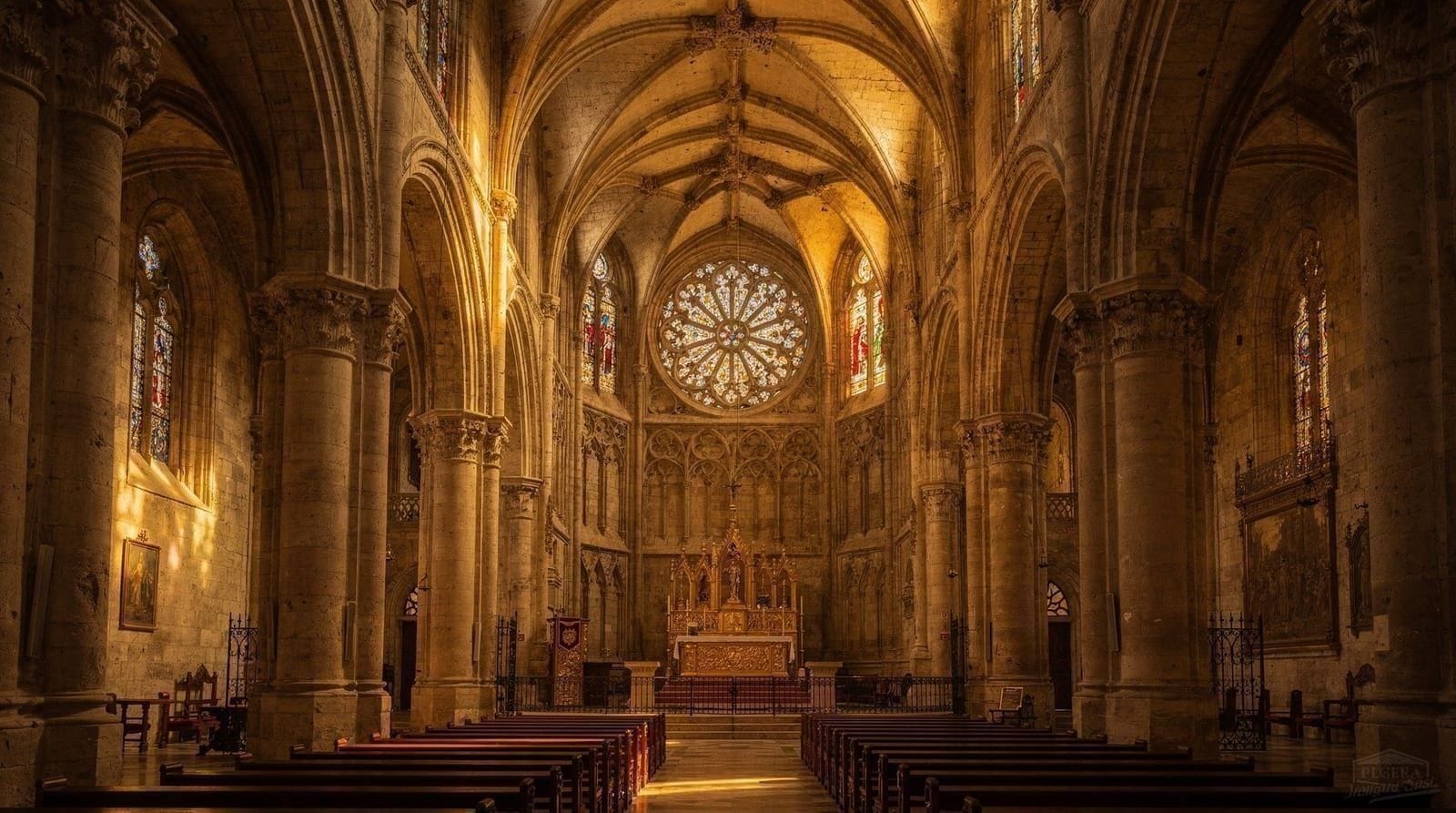
Valencia: Cathedral, St. Nicholas and Lonja de la Seda tour
What UNESCO World Heritage sites are in Valencia?
Valencia has three UNESCO designations: La Lonja de la Seda (Silk Exchange, inscribed 1996 — architectural heritage), the Tribunal de las Aguas (Water Tribunal, inscribed 2009 — intangible heritage), and Las Fallas de la Comunitat Valenciana (inscribed 2016 — intangible cultural heritage). All three are accessible to visitors.
Valencia is one of the few cities in the world where UNESCO has recognised both built heritage and living cultural practices as World Heritage. The three designations — an architectural masterpiece, a judicial institution unchanged since the medieval period, and a fire festival — together capture something genuine about the city’s character: its commercial history, its relationship with water and agriculture, and its relationship with fire and communal celebration.
| Sites | La Lonja de la Seda, Tribunal de las Aguas, Las Fallas |
| Cost | Lonja €2 (free Sundays); Tribunal and Fallas viewing are free |
| Time needed | Half a day for the Lonja + Tribunal circuit |
| Getting there | All within a 10-minute walk of each other in the old town |
| Best time | Thursday midday for the Tribunal; any day for the Lonja |
La Lonja de la Seda (Silk Exchange) — UNESCO 1996
What it is
La Lonja de la Seda (the Silk Exchange) was built between 1482 and 1548 as Valencia’s official trading hall for the silk industry. At its commercial height, Valencia was one of the wealthiest cities in the Iberian Peninsula, and the Lonja was its architectural statement of civic legitimacy.
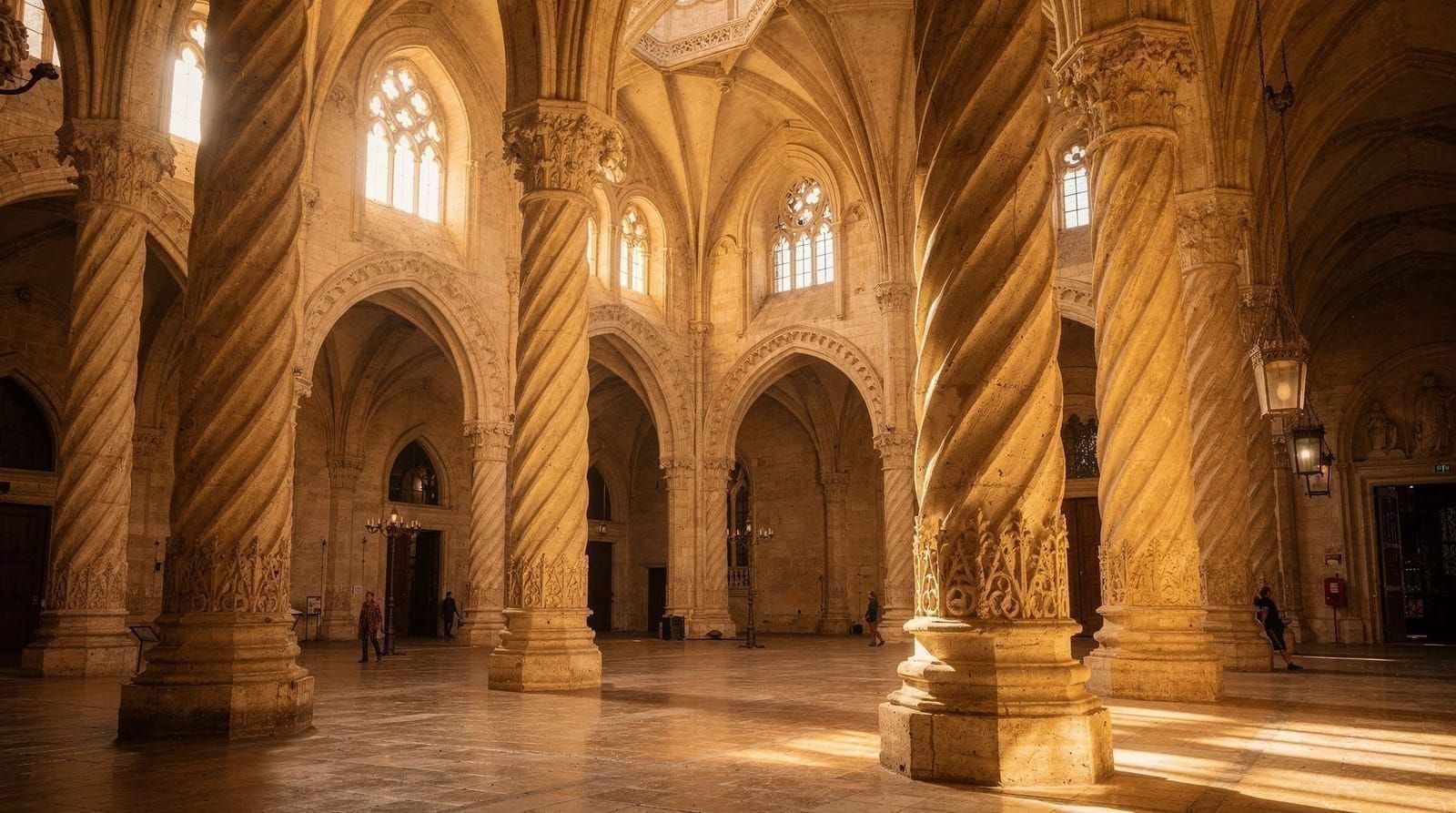
The building comprises three main elements: the Sala de Contratación (trading hall), the Consulat del Mar (commercial court and prison), and the orange tree courtyard between them. The Sala de Contratación — the main trading room — is covered by Gothic vaulting carried on eight twisted helical columns rising 17.4 metres. The effect is extraordinary: the columns, deliberately designed to resemble twisted ropes or palm trees, carry the ceiling with an effortless elegance that still registers as startling to a first-time visitor.
Why UNESCO inscribed it
UNESCO’s 1996 inscription specifically recognises the Lonja as “an outstanding example of Late Gothic civil architecture and a unique reflection of the mercantile city’s cultural and social history.” The significance is not just stylistic — the Lonja represents a moment when a civic government was confident enough to commission a secular building of cathedral quality for commercial purposes. The inscription runs around the upper walls of the trading hall in Latin, addressing merchants to trade honestly.
Visiting
- Address: Plaza del Mercado, adjacent to the Mercado Central
- Hours: Tuesday–Saturday 09:30–19:00, Sunday 09:30–15:00, Monday closed
- Price: €2 (free every Sunday and public holidays)
- Duration: 45–60 minutes including audio guide (included in price)
The Lonja is best combined with the Mercado Central (immediately opposite) and Valencia Cathedral (7 minutes’ walk). The full Lonja guide covers the building in detail.
Photography is permitted without flash. The Sala de Contratación is at its best for photography in the late morning, when light angles through the high windows onto the helical columns; midday visits get flatter light. The Consulat del Mar section, less visited than the main trading hall, has a coffered wooden ceiling worth the extra few minutes — many visitors see only the columns and miss it.
Silk Road tour with guided entry to the UNESCO Silk Exchange — covers the building’s history and the trading routes that made it necessary
The Tribunal de las Aguas — UNESCO 2009
What it is
The Tribunal de las Aguas (Water Court, or Tribunal de les Aigues in Valencian) is the oldest continuously functioning court in the world. It has been meeting every Thursday at noon since at least the 10th century CE — some historians argue for Roman or Visigoth origins — to adjudicate disputes among farmers who share the eight main irrigation channels (acequias) of the Valencia huerta.
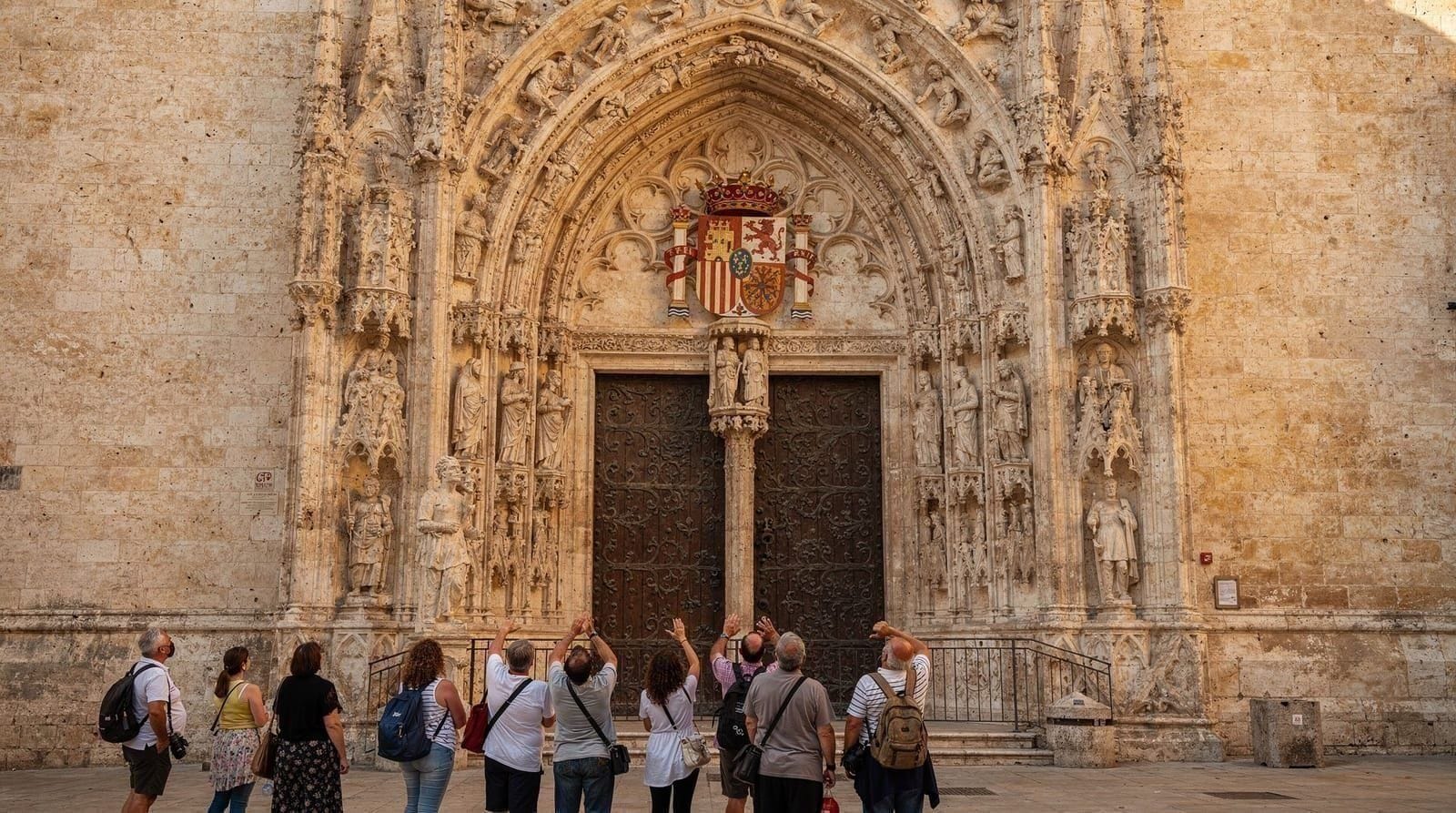
The tribunal has no building. It meets outside — for centuries outside the Apostles’ Door of Valencia Cathedral, exposed to the public gaze. It uses no written records. Decisions are made on the spot, enforced by community agreement rather than state power. There is no appeal process to a higher court. The tribunal’s authority rests entirely on centuries of custom and mutual consent.
How the tribunal works
Eight sindics (syndics) represent the eight main irrigation channels (Acequia de Mislata, Acequia de Favara, Acequia de Rascanya, Acequia de Tormos, Acequia de Mestalla, Acequia de Robella, Acequia de Quart, and Acequia de Benàger). The president — typically a veteran sindic elected by the others — presides.
Any farmer with a complaint about water use — a neighbour blocking their flow, misuse of shared channels, failure to maintain obligations — can present their case directly. The sindics deliberate openly, in Valencian. The judgment is verbal and immediate. Fines can be imposed; the highest penalty is exclusion from the irrigation system, which for a farmer is effectively a death sentence for their crops.
What makes the tribunal’s continued existence remarkable is that it functions without coercion: there are no police, no bailiffs, no enforcement mechanism beyond community sanction. The farmers of Valencia’s huerta continue to bring their disputes here rather than to the civil courts because the tribunal’s decisions are faster, cheaper, and more respected by the farming community.
How to attend
The session is every Thursday at 12:00 outside the Apostles’ Door (Puerta de los Apóstoles) of Valencia Cathedral, facing Plaza de la Virgen. Arrive by 11:45. The session lasts 15–20 minutes. It is conducted in Valencian; non-speakers follow the visual ritual and the occasional translation from bystanders.
The sindics wear everyday clothes — not robes, not uniforms. The president carries a carved wooden staff (the maza) as the only symbol of authority. The entire apparatus of medieval jurisprudence is reduced to a handful of men in work clothes standing in a cathedral doorway.
Sessions do not happen during official public holidays. If Thursday falls on a public holiday, no session takes place that week.
Cathedral, St. Nicholas and Lonja tour — passes the Tribunal de las Aguas door and covers Valencia’s religious and civic heritage
Las Fallas de la Comunitat Valenciana — UNESCO 2016
What it is
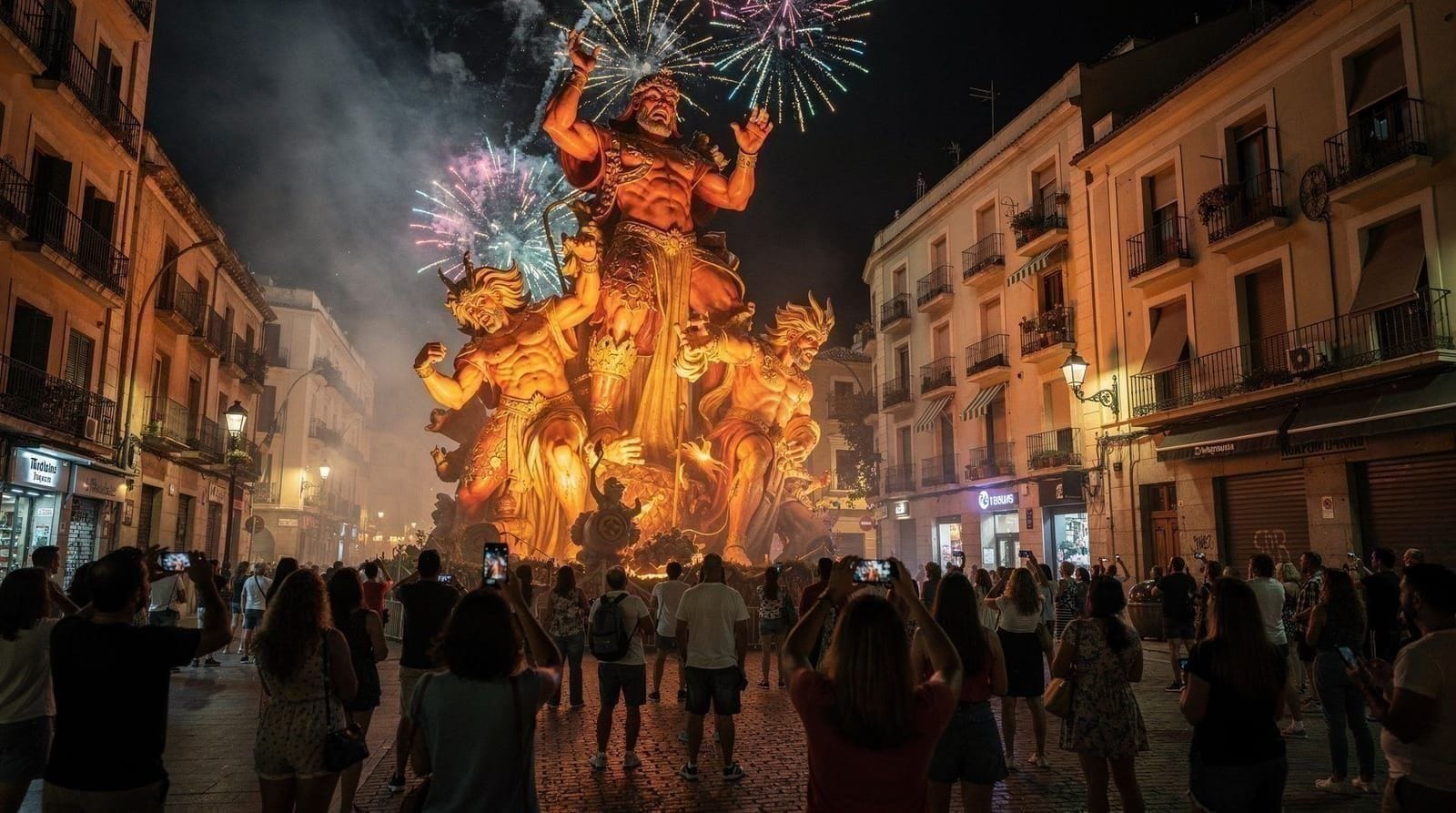
Las Fallas is a festival, not a building — and UNESCO’s designation recognises a living cultural practice rather than a physical site. The inscription on the Representative List of the Intangible Cultural Heritage of Humanity covers the entire tradition: the craftsmanship of the falla builders, the community structures of the comissiones falleras (neighbourhood associations), the ritual calendar from planning through construction to burning, and the artistic tradition of satirical sculptural commentary.
The inscription is for “Las Fallas de la Comunitat Valenciana” — it includes not just Valencia city’s festival but the parallel celebrations in surrounding towns across the Valencian Community, which maintain their own independent traditions within the broader framework.
What the UNESCO recognition means
UNESCO’s intangible heritage inscriptions are not about preserving traditions unchanged — they recognise living practices that communities continue to transmit. Las Fallas is listed alongside practices such as the Samba de Roda of Brazil, the Tango, and the Mediterranean Diet. The recognition specifically validates the community participation structures (the fallera associations), the artisan craftsmanship (ninot sculptors and falla builders), and the oral transmission of festival culture through generations.
The irony that UNESCO has recognised as heritage a festival built on burning its own creations is not lost on the city. The entire point of Las Fallas is that the sculptures are temporary — beauty and effort made explicitly for destruction. The UNESCO inscription recognises the living tradition, not any permanent artifact.
For a complete visitor guide to Las Fallas, see the complete guide and the festival calendar.
The UNESCO circuit as a walking day
A single day in central Valencia can take in all three World Heritage elements:
Morning (09:30): La Lonja de la Seda — 45 minutes at the building, then cross Plaza del Mercado to the Mercado Central for coffee and breakfast.
Midday (11:45): Walk 7 minutes to Valencia Cathedral’s Apostles’ Door. Attend the Tribunal de las Aguas session at 12:00 (Thursdays only — if not Thursday, visit the cathedral interior instead; it houses the Holy Grail). After the session, visit the cathedral.
Afternoon: Follow the El Carmen neighbourhood walking route — the old town where Las Fallas sculptures are installed each March.
March addition: If visiting during Las Fallas, all three elements converge in the festival period — the Lonja is in the heart of the fallas zone, the cathedral plaza hosts the ofrenda, and the Tribunal de las Aguas continues its Thursday sessions even during the festival.
The three inscriptions compared
| La Lonja de la Seda | Tribunal de las Aguas | Las Fallas | |
|---|---|---|---|
| Inscribed | 1996 | 2009 | 2016 |
| Type | Physical building | Living institution | Living festival |
| Cost | €2 (free Sundays) | Free | Free to view |
| Time needed | 45–60 min | 15–20 min (Thursdays only) | A full day or more, mid-March |
| Availability | Any day (except Monday) | Thursdays at noon only | Mid-March annually |
Tips for pairing the sites with the rest of your trip
The three inscriptions sit naturally inside a wider old-town visit rather than needing a trip of their own. The Lonja faces the covered market, so the Mercado Central guide and the food market overview are good companions for the same morning. If you would rather have someone connect the dots between the buildings, a historical walking tour of the old town gives the context that a first visit tends to miss, and it leaves you free to attend the Tribunal on your own.
For the Silk Exchange in particular, the story of the trade that built it is half the interest. The Silk Route guide explains how the silk industry shaped the city, and it makes the carved details inside the trading hall easier to read. Anyone who enjoys Gothic architecture can follow it with the Holy Grail and cathedral guide, since the cathedral doorway where the Tribunal meets is only a few steps from the chapel that holds the chalice.
If the water court catches your imagination, the surrounding landscape is the next thing to explore. The huerta that the farmers irrigate is part of the same story, and the Albufera natural park guide shows another side of how the region manages water, rice fields and wetland. The Turia by bike guide is a gentle way to see how the old riverbed, the gardens and the farmland relate to one another.
Planning around the festival
Las Fallas is the one inscription that changes how you plan everything else, because accommodation, crowds and street closures all shift around it. Read where to stay during Fallas before booking, and use the Fallas day-by-day guide to decide which days matter most to you. First-time visitors may also like the Fallas first-timer blog post, which is written from the point of view of someone arriving without any background. For the final night, the Nit del Foc guide explains the fireworks that open the festival’s climax, and for a guided way into the celebrations there is a walking experience through the festival streets.
Making the most of a short visit
Visitors with only a few hours can still see the essentials. The Lonja takes the least time and is open most days, so it is the safest anchor for the day. The Tribunal is the item that depends on the calendar, so decide first whether your trip includes a Thursday, then arrange the rest around it. Our three-day Valencia itinerary shows how the old-town sights fit with the City of Arts and Sciences and the beaches, and the one-day itinerary shows how to fit the Lonja and the cathedral into a single compressed visit. Travellers who prefer to avoid wasted days can also check the best time to visit guide before settling on dates.
A last practical point: all three inscriptions reward patience. The columns of the Lonja look different as your eyes adjust to the light, the Tribunal feels more meaningful once you understand what the sindics are doing, and the festival makes sense only when you have seen the community effort behind it. Treat each as a short, focused experience rather than a checklist item, and the heritage designations stop being labels and start being something you remember.
Why these three and not others
Valencia has other historically significant sites — the Cathedral, the medieval towers, the modernist market halls — that have not received UNESCO inscription, which sometimes surprises first-time visitors. UNESCO’s criteria are narrower than “historically important”: a site or practice needs to demonstrate outstanding universal value against specific cultural or architectural benchmarks, and many worthy candidates simply haven’t been formally nominated or have been assessed as not meeting the threshold relative to comparable sites elsewhere.
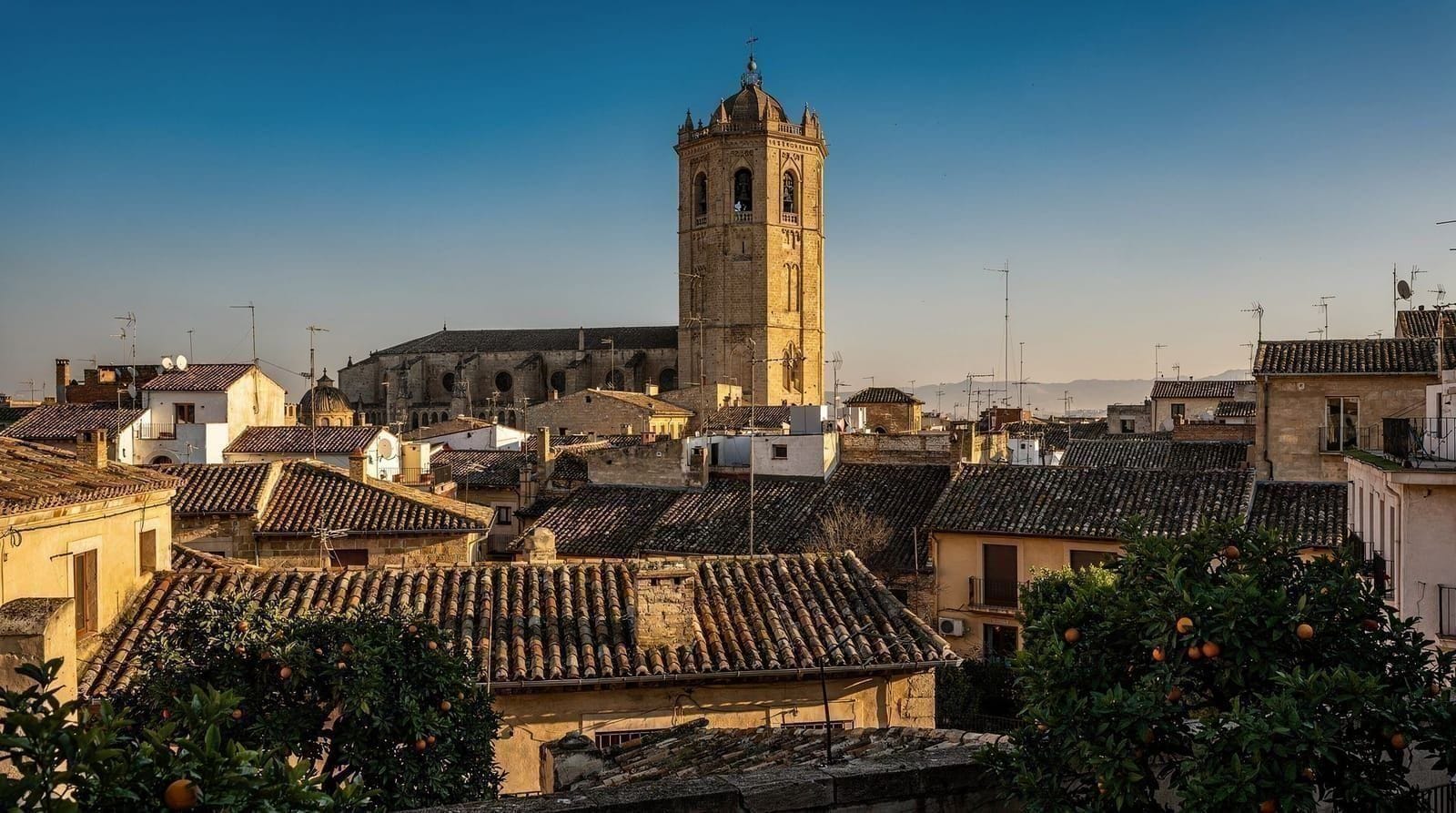
The Cathedral, for instance, is a significant Gothic-Baroque building but is one of many such cathedrals across Spain and Europe with comparable status; the Lonja’s civil (rather than religious) Gothic architecture and its unusually intact trading-hall design gave it a stronger, more distinctive case. This is worth knowing so as not to treat “not UNESCO-listed” as a proxy for “not worth visiting” — plenty of Valencia’s best sights, including the Cathedral and Miguelete tower, fall into that category.
Frequently asked questions about UNESCO World Heritage in Valencia
What is the Lonja de la Seda and why is it UNESCO listed?
La Lonja de la Seda (Silk Exchange) is a 15th-century Gothic civic building in the centre of Valencia, built as the official trading hall for the silk industry. UNESCO inscribed it in 1996 as an outstanding example of secular Late Gothic architecture — specifically for its twisted helical columns, vaulted trading hall, and the coherence of its civic design. It is the only UNESCO-listed building structure in Valencia and costs €2 to enter (free Sundays).What is the Tribunal de las Aguas and where does it meet?
The Tribunal de las Aguas (Water Court) is the world's oldest continuously operating judicial institution, meeting every Thursday at 12:00 outside the Puerta de los Apóstoles (Apostles' Door) of Valencia Cathedral. It has been regulating irrigation disputes among farmers of the Valencia huerta (market garden) since at least the 10th century — possibly Moorish or even Roman in origin. UNESCO inscribed it in 2009 as Intangible Cultural Heritage. The 15-minute hearing is open to the public.Can I watch the Tribunal de las Aguas meeting?
Yes — it is a public session held every Thursday at noon outside the Cathedral's Apostles' Door (facing Plaza de la Virgen). Arrive by 11:45. The session is brief (15–20 minutes) and conducted in Valencian. The sindics (syndics — farmer representatives) of the eight irrigation channels stand in a semicircle; the presiding judge hears any disputes. The visual spectacle of this ancient court meeting in street clothes, with no written records, in the doorway of a Gothic cathedral is genuinely extraordinary.Why is Las Fallas UNESCO listed?
Las Fallas de la Comunitat Valenciana was inscribed in 2016 on UNESCO's Representative List of the Intangible Cultural Heritage of Humanity. The inscription recognises the craftsmanship traditions of the falla builders, the community associations (comissiones falleras), and the living culture of the festival as transmitted through generations. It covers not just Valencia's festival but the broader Valencian Community version including surrounding towns.Are there any other UNESCO designations in the Valencia region?
The Palmeral de Elche (Elche date-palm grove, 60 km south) is a UNESCO Cultural Heritage landscape. The Mystery of Elche (Misteri d'Elx), a medieval musical drama, is also UNESCO Intangible Heritage. These are day-trip destinations from Valencia.Are there guided tours that cover all the UNESCO sites?
The Cathedral + St. Nicholas + Lonja tour covers two of the physical sites. The Silk Road tour focuses specifically on the Lonja in its historical context. For a complete UNESCO overview including the Tribunal de las Aguas, a general historical walking tour combined with a self-guided Thursday noon visit to the tribunal session is the most effective combination.Is the Lonja more or less interesting than the Cathedral?
Different in character. The cathedral is larger, has more art, and contains the Holy Grail chalice. The Lonja has more dramatic architecture per square metre — the Sala de Contratación is one of the finest Gothic interiors in Spain. For pure architectural impact, the Lonja is arguably the better single hour.Can I visit the irrigation channels the Tribunal oversees?
The main acequias (irrigation channels) flow through the huerta north and south of Valencia city. Some sections are visible from the road; the huerta landscape itself is accessible by bicycle from the city. The Turia gardens guide covers the historical context of Valencia's water management.
Top experiences
Bookable activities with verified prices and instant confirmation on GetYourGuide.