Valencia Cathedral and the Miguelete tower: visitor guide
Valencia: Cathedral, St. Nicholas and Lonja de la Seda tour
What is there to see at Valencia Cathedral?
The cathedral houses what many believe is the actual Holy Grail (the agate cup is displayed in a side chapel and described as the chalice used at the Last Supper). The Miguelete bell tower offers the best panoramic view of Valencia's old town from 207 steps. The cultural visit costs €12 and the Miguelete is a separate €3 ticket.
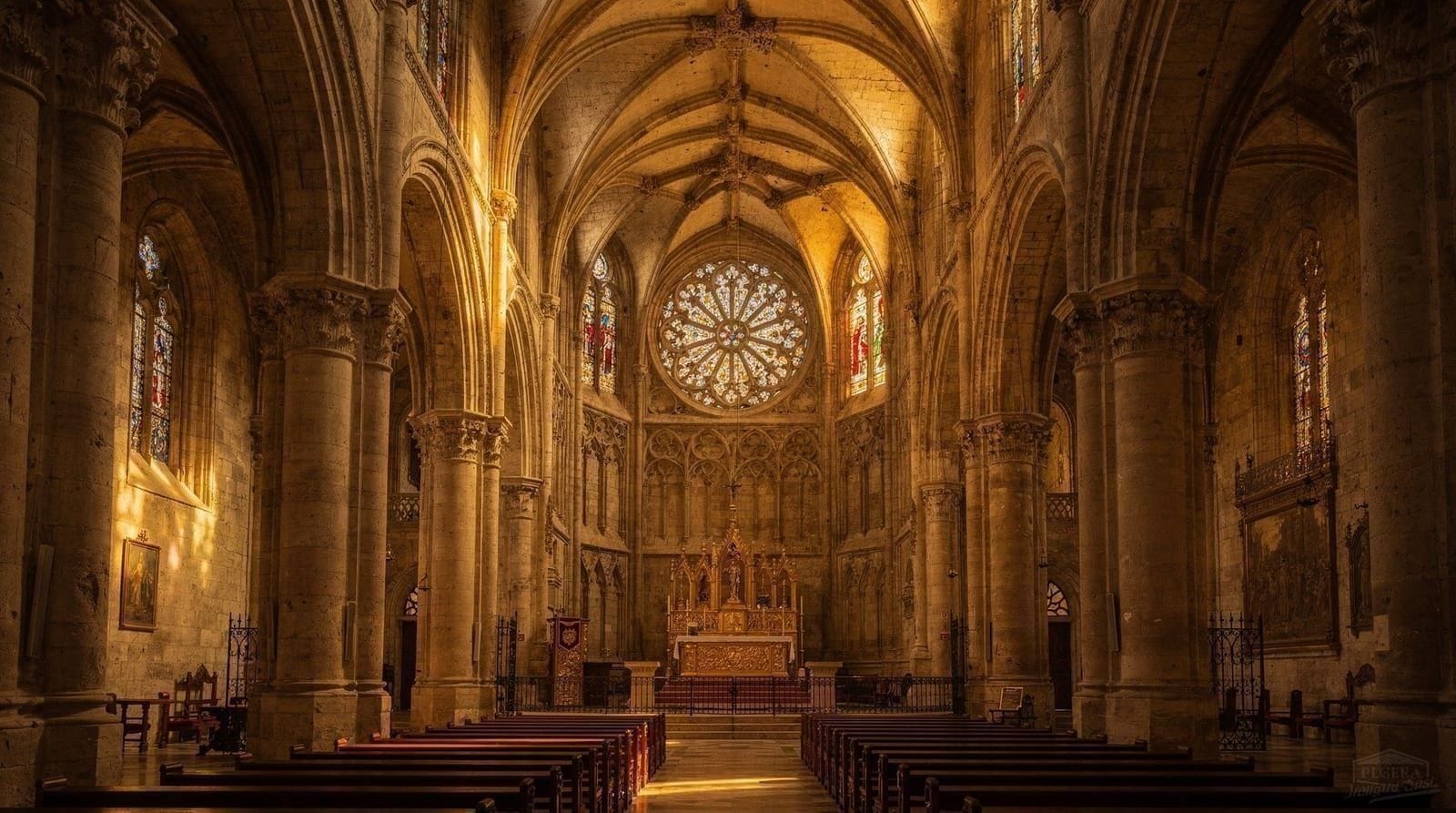
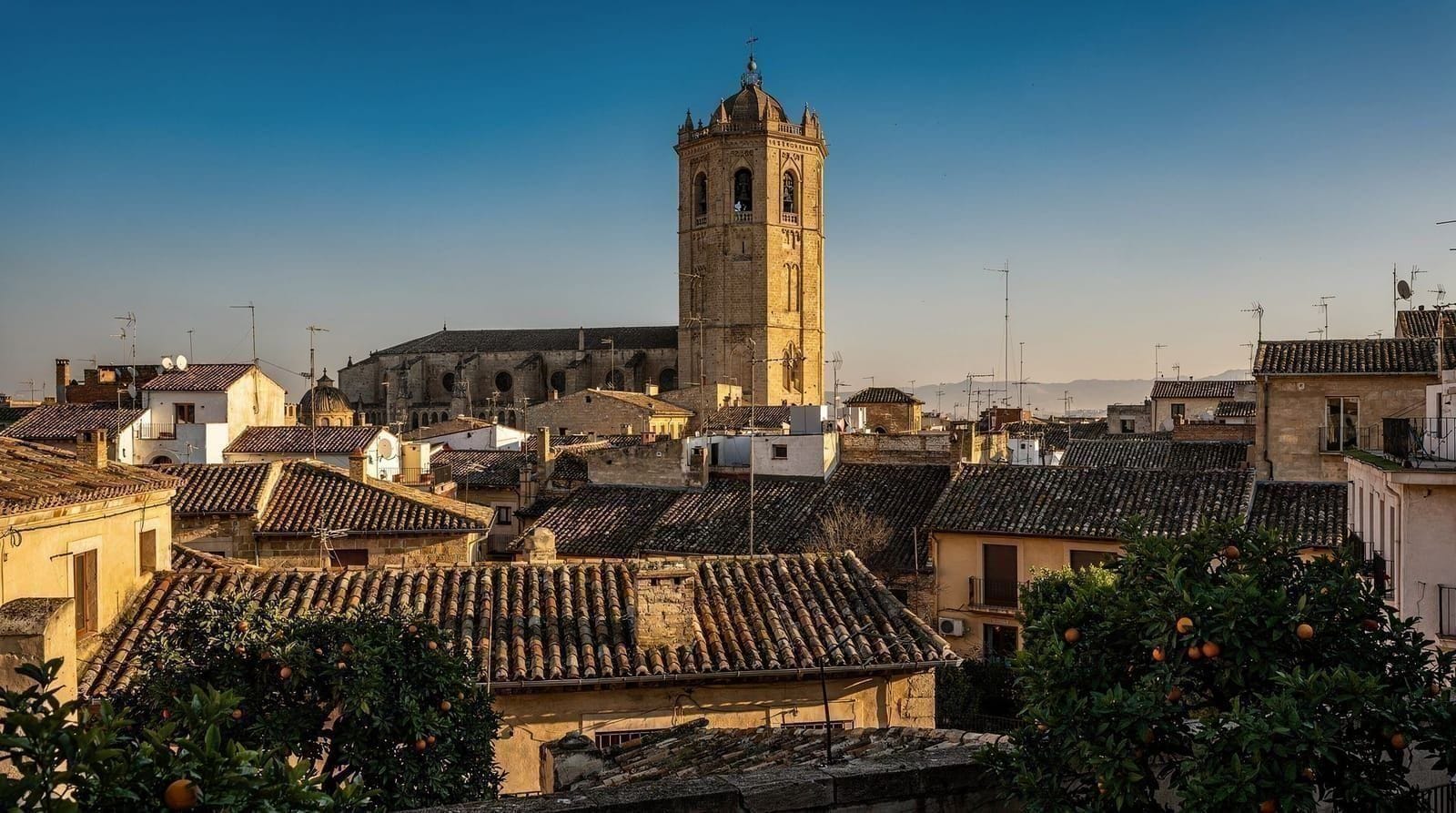
Valencia Cathedral sits at the heart of the Ciutat Vella at the precise point where a Roman temple, then a Moorish mosque, then a medieval Christian church occupied the same ground for 2,000 consecutive years. The current building was begun in 1262 and received additions and renovations through the 18th century, resulting in a structure that shows six distinct architectural styles without looking chaotic. The Miguelete tower, an octagonal Gothic belfry built in the 14th century, is the definitive viewpoint over the old city. The cathedral also houses what the Church describes as the chalice used by Christ at the Last Supper — one of the more provocative claims attached to any tourist attraction in Europe.
| Where | Plaza de la Reina, Ciutat Vella |
| Cost | €12 cultural visit, plus €3 for the Miguelete tower |
| Time needed | 1–1.5 hours (add 20 min for the tower) |
| Getting there | 5 min walk from Xàtiva metro (lines 3/5) |
| Best time | Tuesday–Friday mornings, 10:00–12:30 |
The Holy Grail chapel
The Capilla del Santo Cáliz occupies what was originally the chapter house of the Gothic cathedral, a soaring rectangular space covered with a star-vault ceiling. The chalice itself — a small agate cup, deep reddish-brown, set into a medieval gold mounting with handles and a base of later craftsmanship — is displayed in a thick glass reliquary at altar height.
The agate cup dates from the 1st century BC to the 1st century AD, placing it squarely in the period when the New Testament events are said to have occurred. Its documented history begins in the 3rd century, when Pope Sixtus II reputedly sent it from Rome to Spain during the Valerian persecution. It arrived in Valencia from the Monastery of San Juan de la Peña in Aragon in 1437.
Three modern popes have treated this cup as authentic: Pope John Paul II celebrated mass using it in Valencia in 1982, Pope Benedict XVI used it during his visit to Valencia for World Family Day in 2006, and Pope Francis visited the chalice in 2019. For visitors of any faith or none, the cup is a genuinely interesting historical object in an extraordinary Gothic space.
Practical note: On major liturgical calendar dates (Holy Week, Corpus Christi, the Feast of the Assumption), the chalice is moved for public veneration processions and the chapel may have limited access. Corpus Christi in Valencia — typically in June — is when the city’s oldest procession takes the chalice through the streets.
The Miguelete tower
The Micalet, as Valencians call it (Miguelete in Castilian), is an octagonal tower rising 51 metres from its base, with 13 bells and a flat roof accessible to visitors. The 207-step spiral staircase is narrow — two people cannot pass comfortably — and unlit except for small windows. The stairs are original 14th-century stone and are worn smooth in the middle. Take it steadily.
From the top, you can orient yourself to the entire old city in a way that no other vantage point provides. The tile-covered rooftops of the Barrio del Carmen stretch northwest; the Central Market and La Lonja de la Seda are visible to the southwest; the Torres de Serranos mark the northern gate of the medieval walls; the port and the sea are visible on clear days to the east.
Tower entry: €3 (€2 reduced), separate ticket, open 10:00–18:45 (March–November only, per the official site). There is no lift and the staircase has no intermediate landing where you can turn around easily — once you start up, the only practical exit is the roof. On busy days, the tower operates a one-way flow with queuing at the bottom.
Photographers should know that the roof is a small, shared space, so patience matters more than gear. Wait for a gap at the parapet rather than leaning over other visitors, and take your wide shots first, before the crowd on the platform thickens. If the light is harsh, the view still works for orientation; the softer hours around the edges of the day suit the terracotta roofs better, and a separate look at the photography tours in Valencia can help if you want a more deliberate session.
The cathedral museum
The museum occupies several chapels and the Gothic apse of the cathedral. Highlights include the El Greco paintings (two panels attributed to the artist’s early Spanish period), a large collection of Valencian Gothic altarpieces from the 14th–16th centuries, and medieval reliquary cabinets.
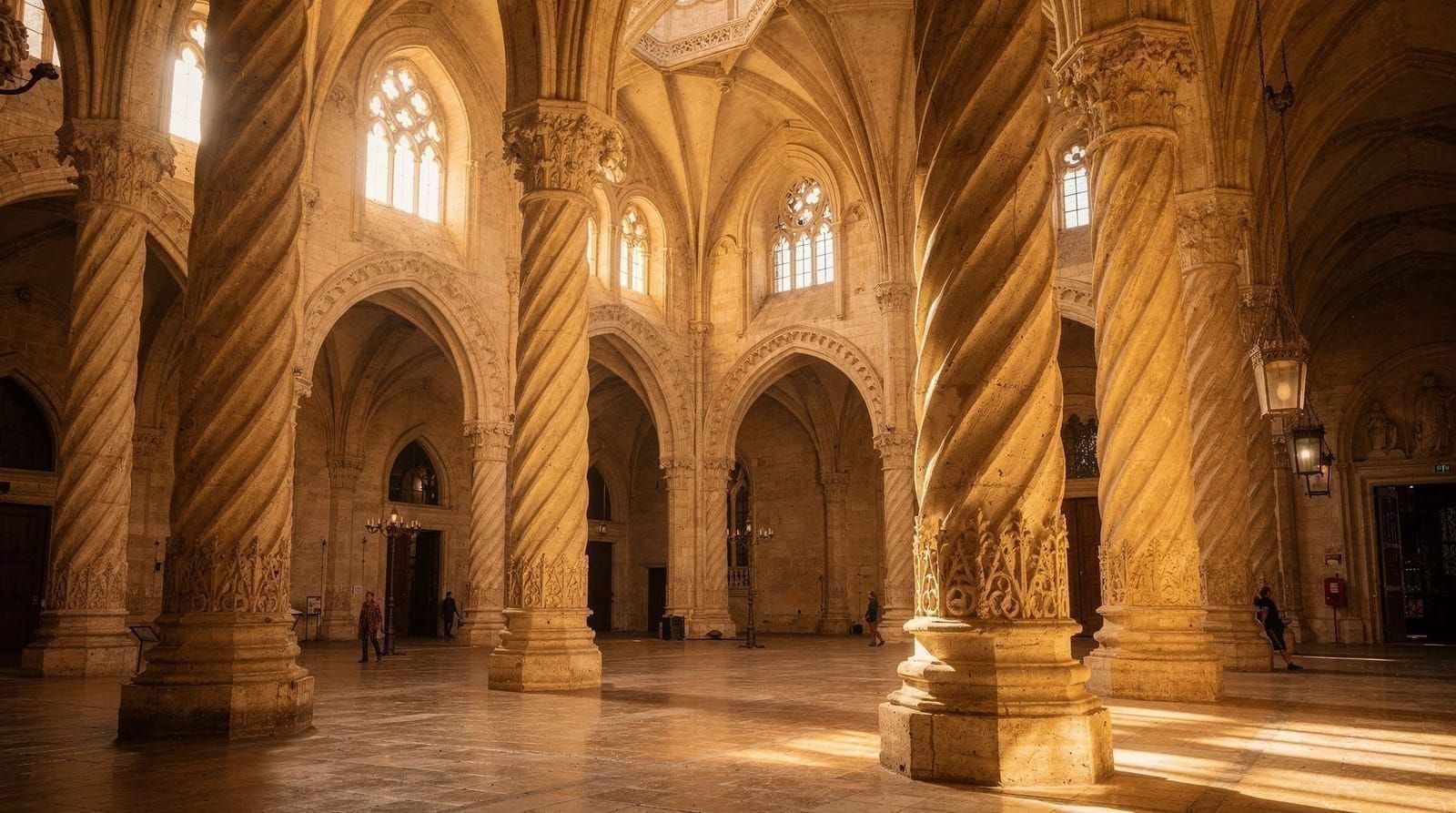
The cultural-visit ticket also grants access to the main nave of the cathedral, where the Gothic arches are some of the finest unaltered examples in Spain’s Mediterranean Gothic style.
Audio guide: availability, languages and price are not confirmed here; check the official site (catedraldevalencia.es) before you go.
Architecture walk around the exterior
The cathedral has three distinct entrance portals, each representing a different era:
The Almoina door (north): The oldest, dating from the 12th century in Romanesque style. The tympanum carvings are worn but show the Epiphany. This door faces onto the Plaza de la Almoina, where archaeological excavations have exposed Roman and Moorish foundations visible through glass panels in the pavement — free to view.
The Apostles door (east): A 14th-century Gothic doorway — the most elaborate of the three. The Tribunal de las Aguas, the world’s oldest functioning court (judges disputes over irrigation water rights in the Valencia huerta), has met at this door every Thursday at noon without interruption for approximately 1,000 years.
The Iron door / main facade (west): The 18th-century Baroque facade faces Plaza de la Reina. It is imposing but considered the least architecturally interesting of the three doors. It faces the main tourist area, which is why it appears in most photographs.
Tribunal de las Aguas: Every Thursday at noon, eight judges in black robes take their places at the Apostles door and adjudicate water disputes verbally, in Valencian, with no written records. The session lasts 15–30 minutes and is open to observers. It is UNESCO-listed (Intangible Cultural Heritage, 2009) and genuinely unusual — not a performance but a functioning court that has operated continuously since the Moorish period.
Cathedral vs. Miguelete tower: which to prioritise
| Cathedral museum + Holy Grail | Miguelete tower | |
|---|---|---|
| Cost | €12 | €3 (separate ticket) |
| Time | 45–60 min | 15–20 min round trip |
| Physical effort | Minimal, ground floor | 207 unlit spiral steps, no lift |
| Best for | History, the relic, art | Photos, orientation over the old city |
| Skip if | You have very little time | You have mobility issues or claustrophobia |
Most visitors should do both if time allows — the museum gives context, the tower gives the view that makes sense of everything you’ve just seen at street level. If you must choose one, the museum and Holy Grail chapel are the more substantial experience; the tower is the better photo opportunity.
How to plan the morning around the cathedral
The cathedral rewards a slow start rather than a rushed tick-off. Begin outside, walking the three portals before you buy a ticket, so that the building’s layers make sense once you are inside. Then do the Holy Grail chapel and museum while your attention is fresh, and keep the tower for last: the climb is a natural finale, and the view over the rooftops lets you spot the places you will visit next.
If you are building a wider plan, the cathedral slots naturally into a first day. The Valencia in one day itinerary and the three-day itinerary both start from the old town, and the guide to the best area for first-time visitors explains why staying near this district makes early starts easy. Travellers weighing how long to give the city can check how many days to spend in Valencia.
Visitors travelling with children should treat the museum as a short, quiet stop rather than a long one. The tower is a good adventure for older children who like stairs, but the narrow staircase calls for patience and close supervision; the Valencia with kids guide offers ideas for balancing a heritage morning with something livelier in the afternoon. On a wet day, the cathedral works well as an indoor anchor, and the rainy-day ideas for kids cover what to add around it.
Respectful visiting
The cathedral is a working place of worship, not only a monument. Keep your voice low, switch your phone to silent, and step aside during services rather than walking through them. Dress with covered shoulders and knees, as noted above, and carry a light scarf or shirt in warmer months so you are not turned back at the door. When a Mass is in progress, wait until it ends before photographing the chapels, and never use flash near the relic or the altarpieces. These small courtesies make the visit better for everyone, including you.
Opening hours and practical details
Cathedral cultural visit hours (winter season, 1 Jan–30 Jun and 1 Oct–31 Dec; see the official site for summer):
- Monday–Friday: 10:30–18:30
- Saturday: 10:30–17:30
- Sunday: 14:00–17:30
- No cultural visit on 1 Jan, 6 Jan, 19 Mar, Palm Sunday, Good Friday, 9 Oct, 8 Dec and 25 Dec
Ticket prices:
- Cultural visit (museum + Holy Grail chapel): €12; €6 reduced; under 8 free; family pack €22
- Miguelete tower: €3 (€2 reduced), separate ticket
- Free entry to services only: Sunday 07:30–13:30 and 18:30–20:30, no sightseeing
Getting there: The cathedral sits on Plaza de la Reina, 5 minutes’ walk from Xàtiva metro station (lines 3 and 5). From Plaza del Ayuntamiento, it is a 10-minute walk north through the old town.
Tourist traps to avoid
Plaza de la Reina restaurants: The restaurants facing the western facade of the cathedral are among the most aggressively tourist-targeted in the city. A paella here will cost €18–25 for a dish that is almost certainly not cooked to order, probably microwaved from a batch, and quite possibly made with frozen seafood. This is one of the classic Valencia tourist traps. Walk two blocks to Bar Pilar or into the El Carmen neighbourhood for food at half the price and twice the quality.
Guided tour touts: Street touts outside the cathedral offer “special guided tours” that are typically the same audio guide experience available inside, at double the price. Book guided tours in advance through legitimate operators if you want a proper tour.
“Authentic” souvenir stalls: The souvenir stalls immediately surrounding the cathedral — particularly on the Calle del Miguelete — sell mass-produced ceramics at elevated prices. Better ceramics at better prices are available at the market stalls in the nearby Central Market or at specialist shops in the Barrio del Carmen.
Guided tour options
The best-value guided tour format for the cathedral is one that combines it with nearby monuments. The Cathedral + St. Nicholas + Lonja de la Seda tour covers three major old-city monuments in a single session of about 3 hours, with an expert English-language guide.
 Cathedral, St. Nicholas and Lonja de la Seda tourCheck availability
For visitors specifically interested in the Holy Grail mythology and the medieval Aragonese history of the chalice, the Indiana Jones-themed tour offers a more narrative-driven experience of the same space.
Indiana Jones and the Holy Grail tourCheck availability
The cathedral and Fallas
If your visit coincides with Las Fallas (mid-March), the cathedral area sits close to some of the festival’s most important events: the daily flower offering to the Virgin builds a floral tapestry in the adjacent Plaza de la Virgen, and the surrounding streets fill with fireworks smoke and crowds. The cathedral itself stays open on a modified schedule during Fallas week — check ahead, as some access points may be restricted for crowd management around the flower offering. Visiting the Holy Grail chapel and tower early on a Fallas morning, before the day’s events build, is far more comfortable than trying to fit it in during the afternoon crush.
Connecting your visit
The cathedral sits at the centre of the most walkable concentration of monuments in the city. Within 10 minutes on foot:
- La Lonja de la Seda (UNESCO World Heritage, 300 m west): the 15th-century silk exchange, one of the finest examples of Valencian Gothic civic architecture
- Mercado Central (400 m west): Europe’s largest covered food market, housed in a 1928 Art Nouveau building
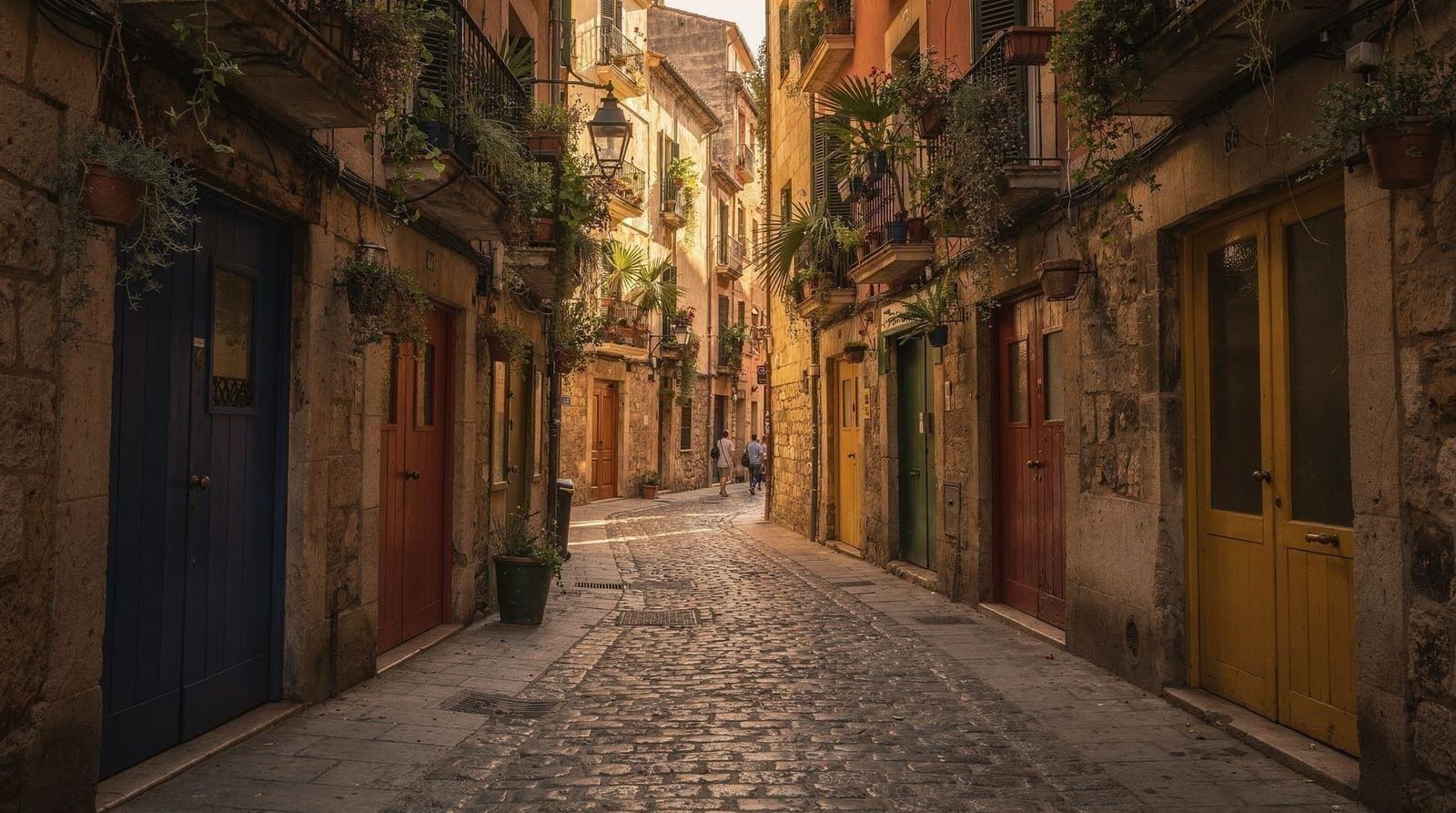
- El Carmen neighbourhood (300 m north): medieval street network with Roman foundations visible in several buildings
- Torres de Serranos (600 m north): the 14th-century northern gate of the old city walls, with rooftop access
After the monuments, the old town is also a good place to eat well. The Valencia food markets guide and the guide to eating like a local point you towards honest meals, and the how to order paella guide will keep you from the worst of the square. If you would rather not navigate alone, the free walking tours and the comparison of guided versus self-guided visits can help you decide, while the Holy Grail cathedral guide goes deeper on the relic itself.
For a half-day walking itinerary connecting all these monuments, see the Valencia old town walking guide or the first weekend in Valencia itinerary.
 historical city tourCheck availability
Frequently asked questions about Valencia Cathedral and the Miguelete tower
Does Valencia Cathedral really have the Holy Grail?
The cathedral displays an agate cup dating from the 1st century BC–1st century AD that has been venerated as the Holy Grail since at least the 14th century. Pope John Paul II and Pope Benedict XVI both celebrated mass using this cup. Whether it is the actual chalice is a matter of faith — it is unquestionably a significant medieval relic with an interesting documented history.How much does it cost to enter Valencia Cathedral?
Entry to the cathedral museum and Holy Grail chapel (cultural visit, including the cathedral museum and the Holy Grail chapel) costs €12, or €6 reduced (ages 8–17, pensioners, disabled visitors, unemployed); children under 8 are free and a family pack is €22. The Miguelete tower is a separate ticket at €3 (€2 reduced). Entry is free to attend services (Sunday 07:30–13:30 and 18:30–20:30), but that is for worship only, not sightseeing.How many steps is the Miguelete tower?
207 steps on a narrow spiral staircase. There is no lift and no stopping platform. The ascent takes about 10–15 minutes at a comfortable pace. Those with mobility limitations or claustrophobia should skip it. The views from the top are unobstructed — the best in the old city.What is the best time to visit the cathedral?
Tuesday to Friday mornings between 10:00 and 12:30 are the least crowded. Avoid midday Saturday and Sunday when both tourist groups and Mass-goers fill the space. Check the official site for closed days (1 Jan, 6 Jan, 19 Mar, Palm Sunday, Good Friday, 9 Oct, 8 Dec, 25 Dec).What tourist traps surround the cathedral?
Plaza de la Reina, directly in front of the western facade, is lined with tourist restaurants charging €18–25 for a mediocre paella. The smoothie bars near the cathedral entrance charge €7–10 for juice they will happily sell you at half that price elsewhere. Walk two blocks and prices halve.Is there a guided tour worth taking?
The Cathedral + St. Nicholas + Lonja tour combines three major monuments with an expert guide and is one of the better-value options in the city. The Indiana Jones Holy Grail tour is specifically designed around the relic's mythology and is well-rated for history enthusiasts.What architectural styles can I see in the cathedral?
The cathedral was begun in Gothic style in 1262, built over a Roman temple and then a Moorish mosque. Subsequent additions brought Romanesque elements (the Almoina door), Baroque (the main facade, completed 1703), and Renaissance (the chapter house). The Miguelete tower is a 14th-century octagonal Gothic belfry.Can I attend a Mass at the cathedral?
Yes. Mass is celebrated daily. Sunday and holiday masses are listed on the cathedral's official site (catedraldevalencia.es). Mass entry is free and does not require a ticket. Visitors attending for tourism are asked to dress respectfully (covered shoulders and knees).Can I skip the Miguelete tower if I have mobility issues?
Yes, and it is the sensible choice. The 207-step spiral staircase has no lift, no rest platform, and no easy turning-back point once you start. The museum and Holy Grail chapel are fully accessible on the ground floor and are worth visiting on their own without the tower climb.Is the cathedral worth visiting if I only have one day in Valencia?
Yes, it is one of the highest-value stops in the old city given how much sits within a short walk of it. Pair the cathedral with La Lonja de la Seda and the Central Market, all within about 400 metres, to cover the historic centre's essentials efficiently in a morning.
Top experiences
Bookable activities with verified prices and instant confirmation on GetYourGuide.