La Lonja de la Seda Valencia: the UNESCO Silk Exchange guide
Valencia: Silk Road tour with entrance to the World Heritage Silk Exchange
Duration: 3 hours
What is La Lonja de la Seda and is it worth visiting?
La Lonja de la Seda is a 15th-century Gothic silk trading hall and one of the finest examples of civic Gothic architecture in Europe. It has been a UNESCO World Heritage Site since 1996. Entry costs €2 (free on Sundays). The visit takes 45–60 minutes and is one of the best-value monuments in the city.
La Lonja de la Seda — the Silk Exchange — was built between 1482 and 1548 as the trading hall for Valencia’s silk merchants at the height of the city’s commercial power. In the 15th century, Valencia was one of the largest and wealthiest cities in the Iberian Peninsula, and the Lonja was its architectural statement: a building deliberately designed to communicate the legitimacy, dignity, and permanence of trade. It has been a UNESCO World Heritage Site since 1996 and remains one of the most undervisited major monuments in Spain for its entrance price.
| Where | Plaza del Mercado, Ciutat Vella (opposite the Mercado Central) |
| Cost | €2 (free Sundays and public holidays) |
| Time needed | 45–60 minutes |
| Getting there | Xàtiva metro (lines 3, 5), 10 min walk; 8 min north of Plaza del Ayuntamiento |
| Best time | Weekday mornings; avoid 13:30–15:00 tour-group crush |
Historical background
Valencia’s silk industry reached its peak in the 15th–16th centuries. The city was a centre for raw silk imports from Granada and Murcia, silk weaving and dyeing, and the export of finished goods to markets across the Mediterranean. The Lonja was built to provide a formal, legally recognised trading space — a place where contracts made in the building carried automatic legal weight enforced by the Consulat del Mar, the commercial court that occupied the adjacent tower.
The building was commissioned by the Valencia city council and designed primarily by Pere Compte, the same architect who worked on the Valencia Cathedral. Construction proceeded in two main phases: the Sala de Contratación (1482–1498) and the Consulat del Mar (1498–1548). The result is one of the most coherent examples of Valencian Gothic civic architecture in existence.
The name “Lonja de la Seda” (Silk Exchange) reflects the primary commodity traded here in its commercial prime, though the building was used for the exchange of other goods as well. By the 18th century, the silk trade had declined and the Lonja lost its commercial function. It passed through various uses — storage, market overflow — before being restored and opened to the public.
Understanding this setting makes the visit richer. The Lonja was never a place of worship or a palace; it was a workplace, and its designers wanted every merchant who walked in to feel that the city stood behind the deals made under its vault. When you stand inside, try to picture the hall full of people, voices echoing, samples of cloth being passed from hand to hand. The silence you find today is the exception, not the rule, in the building’s long life.
If the Lonja leaves you curious about the wider story of the trade, the silk route in Valencia guide follows the thread through the rest of the old city, and the Ciutat Vella and El Carmen destination page puts the monument in its neighbourhood.
What to see: the three main spaces
The Sala de Contratación (Silk Hall)
This is the reason to visit. The main trading hall measures 35 by 21 metres and is covered by an intricate Gothic vault carried on eight twisted helical columns that rise 17.4 metres from polished stone floors. The columns — deliberately reminiscent of palm trees or twisted ropes — were a deliberate design choice: Compte and his patrons wanted a space that looked unlike anything else in the city, and succeeded.
The ceiling vaulting above the columns distributes weight through 24 individual bays, each terminating in a carved boss. The bosses depict religious imagery, municipal emblems, and merchant motifs — worth looking at carefully with a pair of binoculars if you have them. The audio guide points out the most significant ones.
The hall is lit by natural light through tall clerestory windows with delicate Gothic tracery. The effect is of restrained grandeur — not the overwhelming scale of a cathedral but the confident elegance of a building designed for business, not worship. Merchants conducting their negotiations here were meant to feel both secure and slightly awed.
Look at the inscription running around the upper walls in Latin: it addresses merchants directly, advising them to trade honestly, honour their debts, and avoid fraud. This was a message from the city government to those who used the space — and also a statement that trade conducted here was conducted under moral as well as legal supervision.
The Consulat del Mar
The Consulat del Mar (Sea Consulate) occupies the taller southern wing, which was added in the early 16th century. It contained the commercial court on the upper floor and the merchants’ prison on the lower floor. The court heard disputes about trade, contracts, and maritime commerce and was one of the first institutions in Europe to apply a consistent body of commercial law.
The upper floor is now used for temporary exhibitions; the permanent collection in the ground floor rooms includes Gothic sculpture from churches and civil buildings across the Valencia region — pieces that would otherwise be in storage or scattered across smaller museums. The quality is high and the space is rarely crowded.
The Torre del Consulado rises above the Consulat wing. The prison cells visible in the tower base are original — complete with carved graffiti left by detained merchants, some dating from the 16th century.
The orange tree courtyard (Patio de los Naranjos)
Between the Silk Hall and the Consulat del Mar, a small cloister garden of bitter orange trees (portocales amargs in Valencian) grows in a walled courtyard open to the sky. The orange trees bloom in February–March, filling the courtyard with a scent that carries into both buildings on warm days.
This courtyard is largely overlooked by visitors who move quickly through the Lonja, but it is a worthwhile pause — a glimpse of the private space within the building where merchants could rest, and where the physical separation between the commercial and judicial functions of the complex was made visible.
How to look at the Silk Hall
Most visitors walk in, look up, take a photograph and move on. A slower routine works much better. Start by standing near the entrance and letting your eyes adjust to the light, then follow a single column from floor to vault, noticing how the twist carries upward and opens into the ribs of the ceiling. Move to the opposite end of the hall and repeat. From there, walk the perimeter and read the upper walls, then finish at the centre, where the whole composition makes sense at once.
Photography is easiest on a quiet morning, when you can step back without someone entering the frame. Wide shots work best from the corners, and a steady hand helps because the light is soft rather than bright. If you enjoy architecture, the Lonja pairs well with other civic and religious Gothic landmarks, such as the Torres de Serranos and Torres de Quart and the Cathedral and Miguelete.
Visiting with children or a mixed group
The Lonja is compact, which is an advantage with younger travellers. Turn the visit into a small game: count the columns, find a carved boss with an animal or a face, and look for the graffiti in the tower prison. The audio guide helps keep older children engaged, and the open-air courtyard offers a place to pause. For a longer family day built around the old city, see the Valencia with kids guide.
Accessibility notes
The main hall is a large open space that is easy to cross on foot, but older monuments often involve steps and uneven stone, so check access to the upper floors and the tower before you go if mobility is a concern. Our accessible Valencia guide gathers practical advice for the wider city.
Practical information
Opening hours (2026):
- Monday–Saturday: 10:00–19:00
- Sunday and public holidays: 10:00–14:00
Ticket prices:
- Adults: €2
- Reduced: €1 (groups, students, pensioners, large families)
- Sundays and public holidays: free
- Audio guide: rented separately at the ticket office (€2.25)
Getting there: The Lonja is on Plaza del Mercado in the Barrio del Carmen, 5 minutes’ walk from the Mercado Central and 10 minutes from Xàtiva metro (lines 3 and 5). From Plaza del Ayuntamiento, walk north along Calle de San Vicente Mártir for 8 minutes.
When to go: comparing your options
| Time | Crowds | Cost | Notes |
|---|---|---|---|
| Weekday morning (10:00–11:00) | Lowest | €2 | Best light through the clerestory windows, quiet enough to actually look at the ceiling bosses |
| Sunday | Moderate–high | Free | Good value but expect to share the Silk Hall with more visitors |
| Just before midday break (13:30–15:00) | Highest | €2 | Avoid — tour groups converge here between other old-city stops |
| Late afternoon (17:00–18:30) | Low | €2 | Quiet again, softer light, good second-best option to a morning visit |
Visiting the Lonja with a guided tour
The Lonja rewards careful attention — the architectural detail is dense and not self-explanatory without context. The audio guide covers the basic narrative but misses the trading history, the legal significance of the building, and the architectural technique of the twisted columns.
A guided tour that places the Lonja in its medieval commercial context — combined with the Cathedral and St. Nicholas church — is the best way to appreciate what you are looking at.
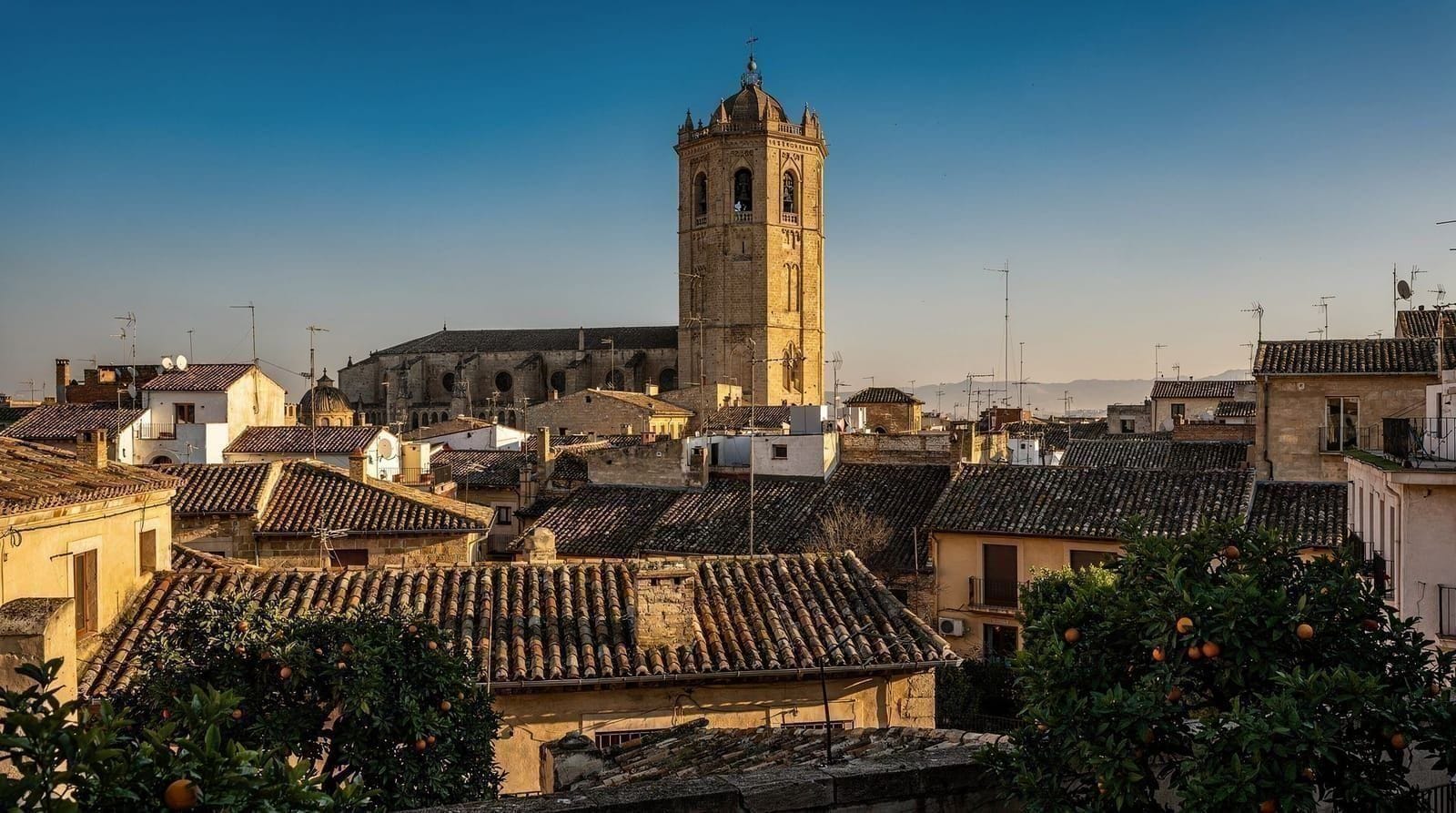 Cathedral, St. Nicholas and Lonja de la Seda tourCheck availability
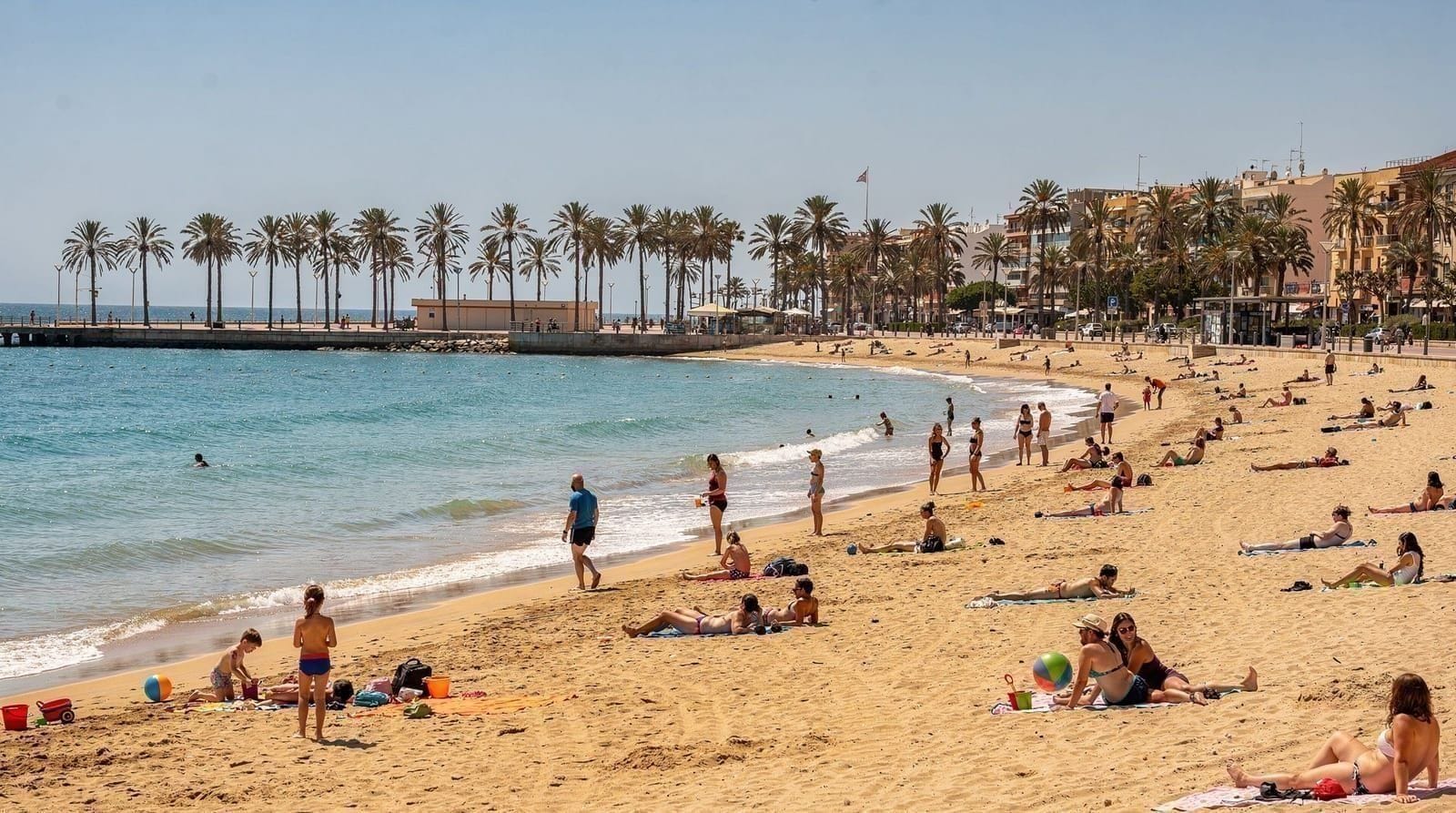 Silk TourCheck availability
The Silk Road tour specifically traces the trading history of Valencia’s silk industry from the raw material through the merchant guilds and into the European market, using the Lonja as its main physical anchor.
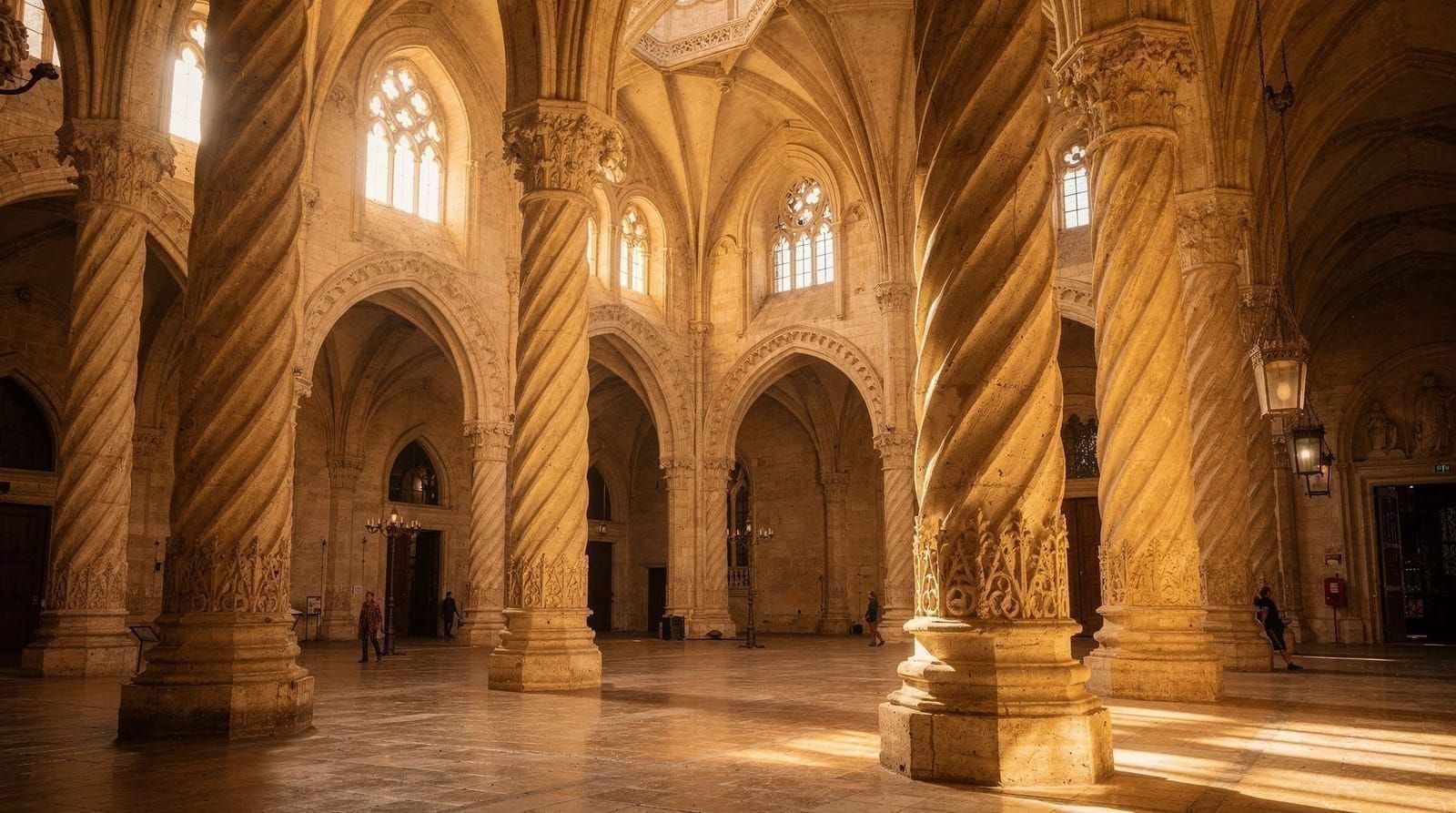 Silk Road tour with entrance to the World Heritage Silk ExchangeCheck availability
For a broader tour of the old city centre that includes the Lonja as part of a walking itinerary:
guided tour of city centre and Lonja de la SedaCheck availability
Choose a guided visit if you like stories and context, and the audio guide if you prefer to move at your own pace. Many travellers do both over a trip: an introductory walking tour early on, then a return visit alone to look at the details you want. If you are still deciding between formats across the city, the guided versus self-guided comparison and the free walking tours guide will help you weigh the options.
Lonja de la Seda and the Central Market — combined visit
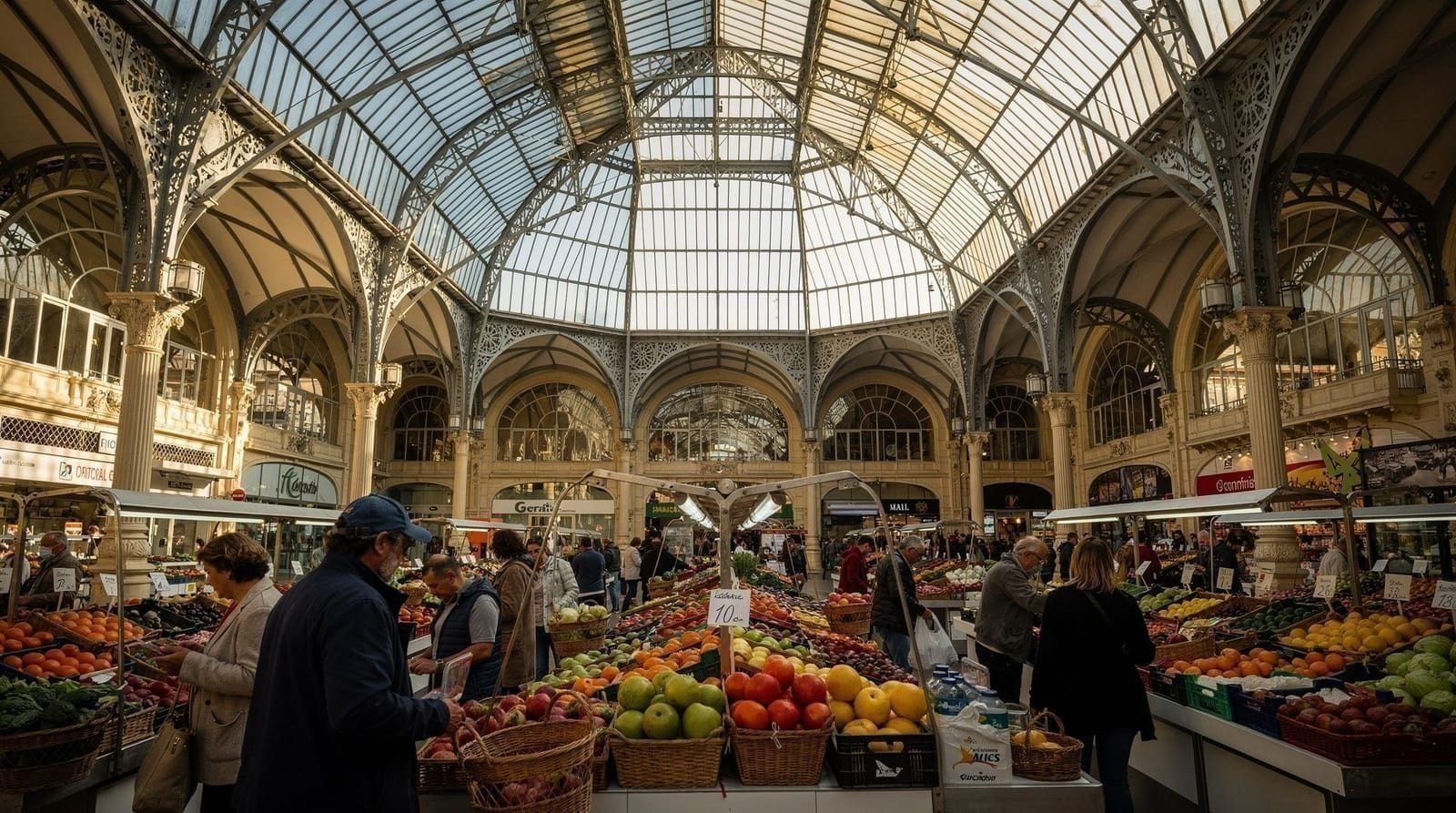
The Lonja and the Mercado Central face each other across Plaza del Mercado. The market was deliberately built on the square facing the Lonja in the early 20th century, continuing a spatial relationship between commerce and its architecture that has existed on this site for 500 years. A morning that begins at the market (09:00–12:00) and continues with the Lonja (arrive by 11:00 to avoid the pre-lunch tour groups) covers two of the city’s three most important historic buildings in a single easy circuit.
Add the Cathedral (10 minutes north on foot) to complete the old-city triangle of major monuments.
Fitting the Lonja into your Valencia days
The Lonja suits almost any itinerary because it is short and central. On a first visit, it slots naturally into a morning on foot through the historic core; the Valencia in one day and Valencia 3 days plans both pass through this part of town. If food is your priority, the Central Market food guide shows how to turn the neighbouring market into a full tasting stop, and the El Carmen guide covers the streets just beyond the monument.
On a rainy day, the Lonja is a good indoor choice, since most of the visit happens under a roof. Pair it with other indoor sights using the rainy day with kids ideas, or with a museum stop from the museums free on Sunday list when you are visiting on a Sunday. Travellers who plan to see many monuments can also check whether the Valencia Tourist Card fits their plans before paying separately, though at such a low entrance price the Lonja rarely tips the balance on its own.
The Silk Exchange in the context of UNESCO
The Lonja is one of only a handful of secular Gothic buildings in Spain with UNESCO inscription. It was inscribed on the basis of its “outstanding universal value” as a reflection of the social, economic, and cultural achievements of a 15th-century Mediterranean trading city — specifically, its demonstration that trade could be conducted in a dignified, morally supervised, architecturally ambitious context.
For the broader context of Valencia’s UNESCO-listed heritage — which also includes the Fallas festival (UNESCO Intangible Cultural Heritage, 2016) and the Tribunal de las Aguas (UNESCO Intangible Cultural Heritage, 2009) — see the UNESCO Valencia guide.
What to eat nearby after visiting
Bar Pilar (Calle del Moro Zeit, 300 m north in El Carmen): Valencian bar open since 1917, famous for cloïsses (clams) in broth and mussels. The tile work inside is original. No menu for tourists — just the blackboard.
Mercado Central’s central bar (inside the market building): Counter seats, excellent fresh produce, reasonable coffee. Crowded by 10:00 but worth it.
Avoid: The restaurants directly on Plaza del Mercado facing the Lonja tend to be tourist-oriented — see our tourist traps guide for the pattern to look for.
Frequently asked questions about La Lonja de la Seda Valencia
Why is the Lonja de la Seda a UNESCO World Heritage Site?
Inscribed in 1996, the Lonja is recognised as an outstanding example of secular Gothic architecture, representing the prosperity and self-confidence of a Mediterranean trading city at its commercial peak. The Silk Hall, Consulat del Mar, and the orange tree courtyard together form a coherent late-medieval complex of exceptional quality.How much does it cost to enter?
€2 per person (one of the cheapest major monuments in Spain). Free every Sunday and on public holidays. An audio guide can be rented separately at the ticket office (€2.25).What can I see inside?
Three main spaces: the Sala de Contratación (Silk Hall) with 8 twisted columns rising 17.4 metres; the Consulat del Mar (medieval commercial court), now housing Gothic sculpture; and the Torre del Consulado (tower), which housed the commercial prison. The orange tree patio between the buildings is open to the sky.How long does a visit take?
45 to 60 minutes for a thorough visit with the audio guide. The space is not large but deserves attention — the column capitals and the ceiling bosses reward slow looking.When is the best time to visit?
Weekday mornings are very quiet. Sundays are free but tend to attract more visitors. Avoid the brief window just before the midday break (13:30–15:00) when tour groups crowd the Silk Hall.What is the Sala de Contratación?
The main hall of the Lonja, where silk merchants physically traded under the twisted columns. The hall was completed in 1498 and is considered the masterpiece of the architect Pere Compte. The 24-metre span ceiling, the twisted helical columns, and the natural light from the high windows create a space that was deliberately designed to impress traders from across the Mediterranean.Is the Lonja near the Central Market?
Yes — they face each other across Plaza del Mercado, about 50 metres apart. The Lonja de la Seda and the Mercado Central are routinely visited together in a morning or afternoon walking circuit that also takes in the Cathedral and St. Nicholas church.Are there guided tours available?
The most efficient option is the Cathedral + St. Nicholas + Lonja guided tour, which covers three major monuments with an English-speaking guide in about 3 hours. The Silk Road tour specifically focuses on the trading history of the building. Both are recommended over the audio guide for those who want context.
Top experiences
Bookable activities with verified prices and instant confirmation on GetYourGuide.