La Devesa beach and forest: the unspoilt Albufera coast
Valencia: Albufera Natural Park bike and boat tour
What is La Devesa beach and how do you get there?
La Devesa is a 25 km pine-backed coastal strip inside the Albufera Natural Park, south of El Saler. The beach has minimal facilities by design — it is protected land. Access is by car via the CV-500 or by bike through the forest from El Saler. No public bus serves La Devesa beach directly.
| Where | Albufera Natural Park, south of El Saler |
| Cost | Free (parking free, tours from around €25-45) |
| Facilities | Minimal to none — bring water, food, sun protection |
| Best time | Mornings, before 09:00 for parking in summer |
| Getting there | Car via CV-500, bike from El Saler, no direct bus |
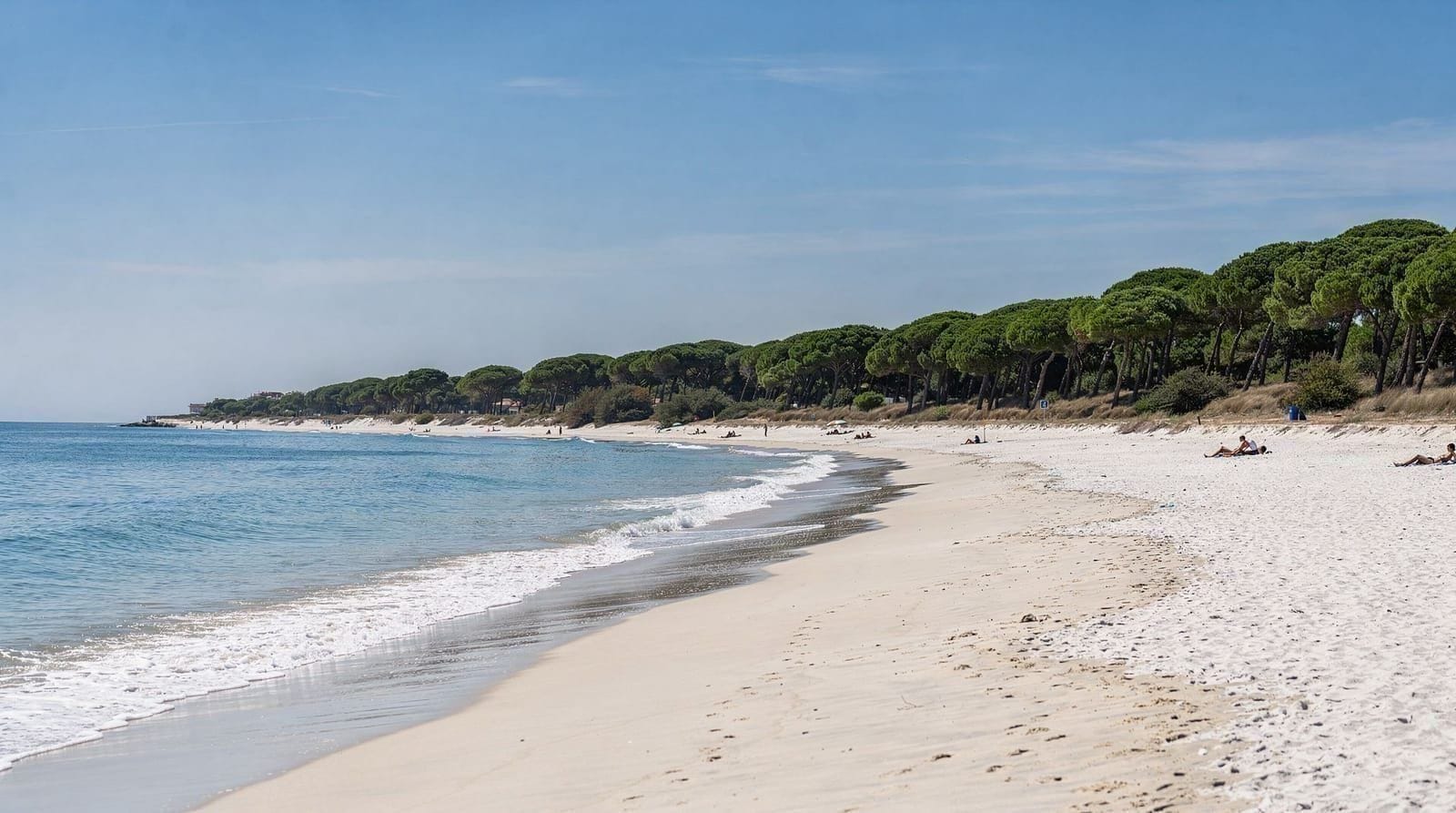
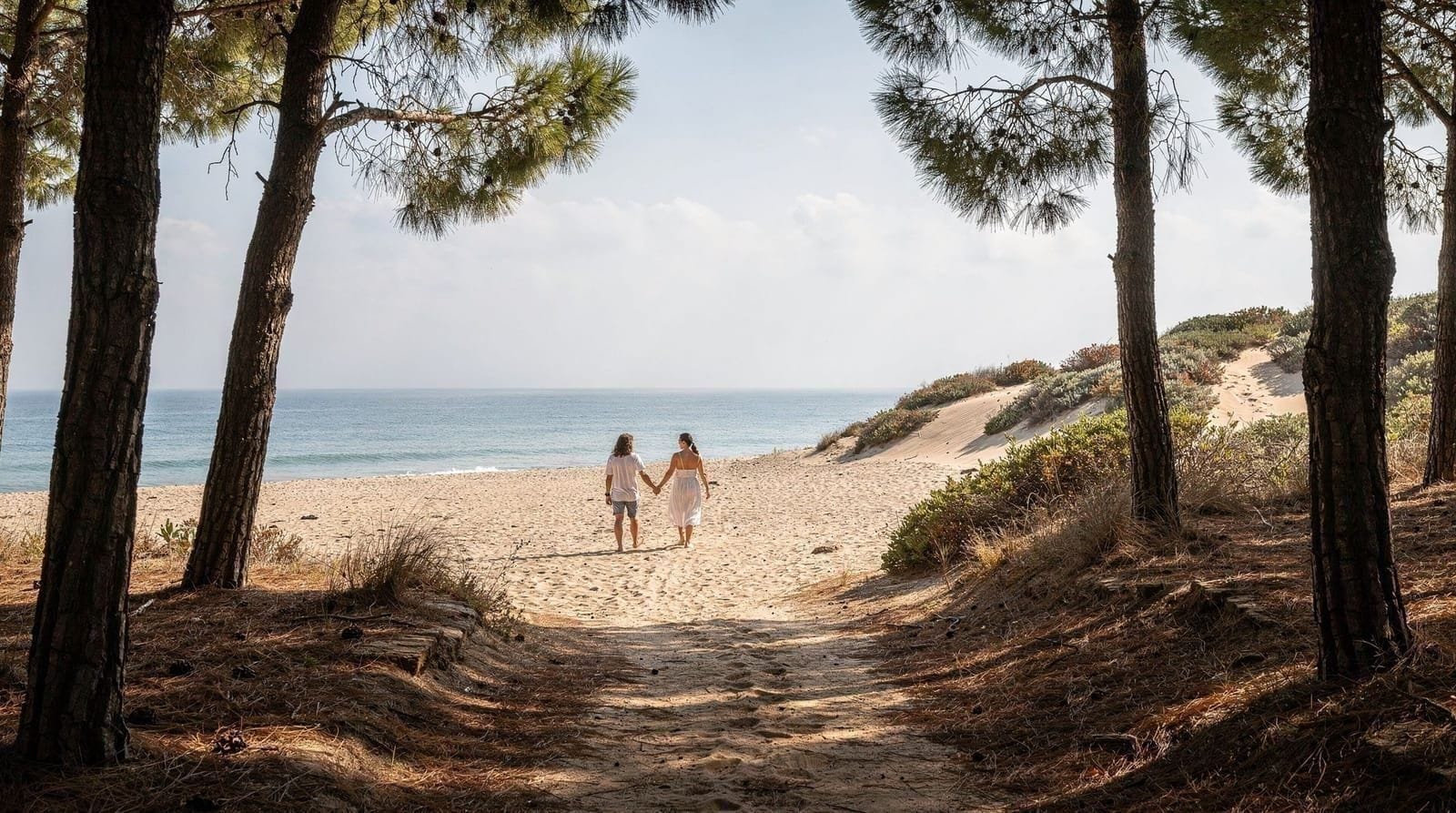
La Devesa is simultaneously a forest and a beach — a 25 km coastal barrier of maritime pine, dune, and wetland that separates the Albufera lagoon from the Mediterranean. The beach on the sea side of La Devesa is among the least developed on the entire Spanish Mediterranean coast accessible within 30 minutes of a major city. There is no promenade, no beach club, no lifeguard post in most sections. What there is: several kilometres of uninterrupted sand, crystalline water in season, and the sound of pine trees rather than pop music from a speaker system.
If this sounds like the kind of beach that takes preparation — transport, drinking water, sun protection, a plan — you are correct. La Devesa rewards visitors who treat it as a natural area rather than a resort.
La Devesa within the Albufera Natural Park
La Devesa is the protective coastal forest of the Albufera Natural Park, classified since 1986 as a natural park and more recently as part of a RAMSAR wetland of international importance. The strip runs from El Saler in the north to the Perellonet in the south — approximately 25 km of continuous dune-backed beach and forest.
The forest itself (La Devesa de la Albufera) covers roughly 700 hectares and represents one of the last significant stands of Mediterranean dune forest remaining on the Valencian coast. The dominant species are stone pine and maritime pine; the understory includes cistus, rosemary, and a variety of orchids. Birds use the area heavily — the interface between forest and lagoon behind it, and forest and sea in front, creates a rich microhabitat. Flamingos, herons, egrets, and waders are visible from the forest tracks in the right seasons.
The natural park designation is why the beach remains in this condition. Development approvals are not granted within the park boundary. This is not an accident of geography; it is a deliberate management choice.
Access
By car
The main access road is the CV-500 running south from Valencia through El Saler. Several turnoffs along the CV-500 provide access through the forest to the beach. The marked access points are:
- El Dosser (approximately 3 km south of El Saler village): a small car park and forest path to the beach.
- La Garrofera (approximately 6 km south of El Saler): another small car park with beach access.
- El Perellonet (approximately 12 km south): the southern end of La Devesa with slightly more facilities.
Parking at the La Devesa access points is limited — typically 20–40 spaces at each. They fill on summer mornings; early arrival (before 09:00 in July–August) is necessary if you want guaranteed parking.
By bike
The most satisfying access to La Devesa is by bicycle through the forest track. The Camí de la Devesa is a forestry track that runs through the forest interior from El Saler to El Perellonet — approximately 12 km of flat cycling through pine trees with glimpses of both the lagoon and the sea. This route is open to cyclists and pedestrians; motor vehicles are restricted.
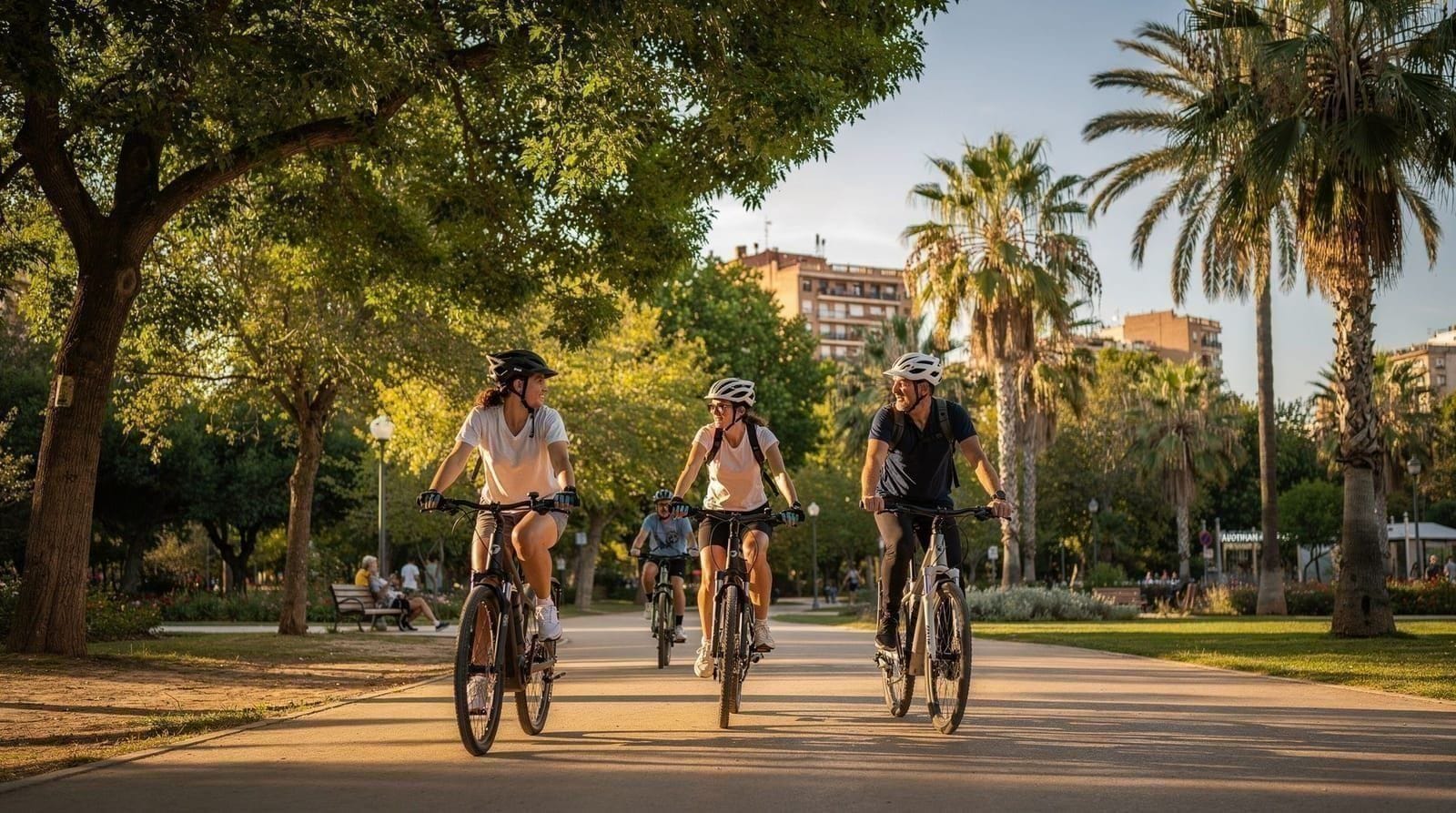 parks private tour on bicycle, e-bike or e-stepCheck availability
The guided bike and boat tour that combines La Devesa, the Albufera lagoon, and a boat ride is the most efficient way to experience the full landscape:
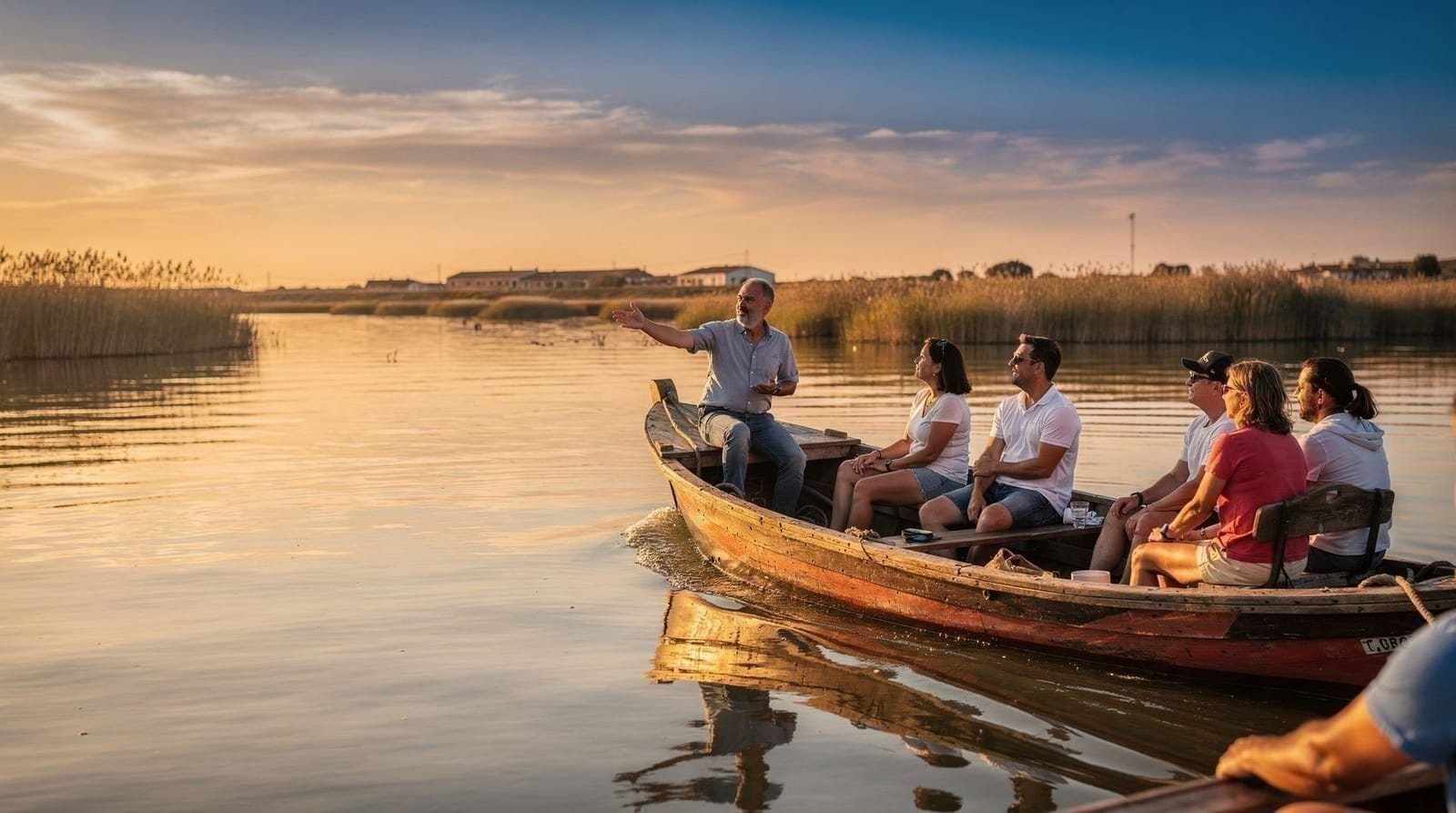 Albufera Natural Park bike and boat tourCheck availability
By boat from the Valencia marina
The catamaran tours that anchor off El Saler often follow the coast south, giving views of La Devesa from the sea. Some tours anchor in this stretch for swimming:
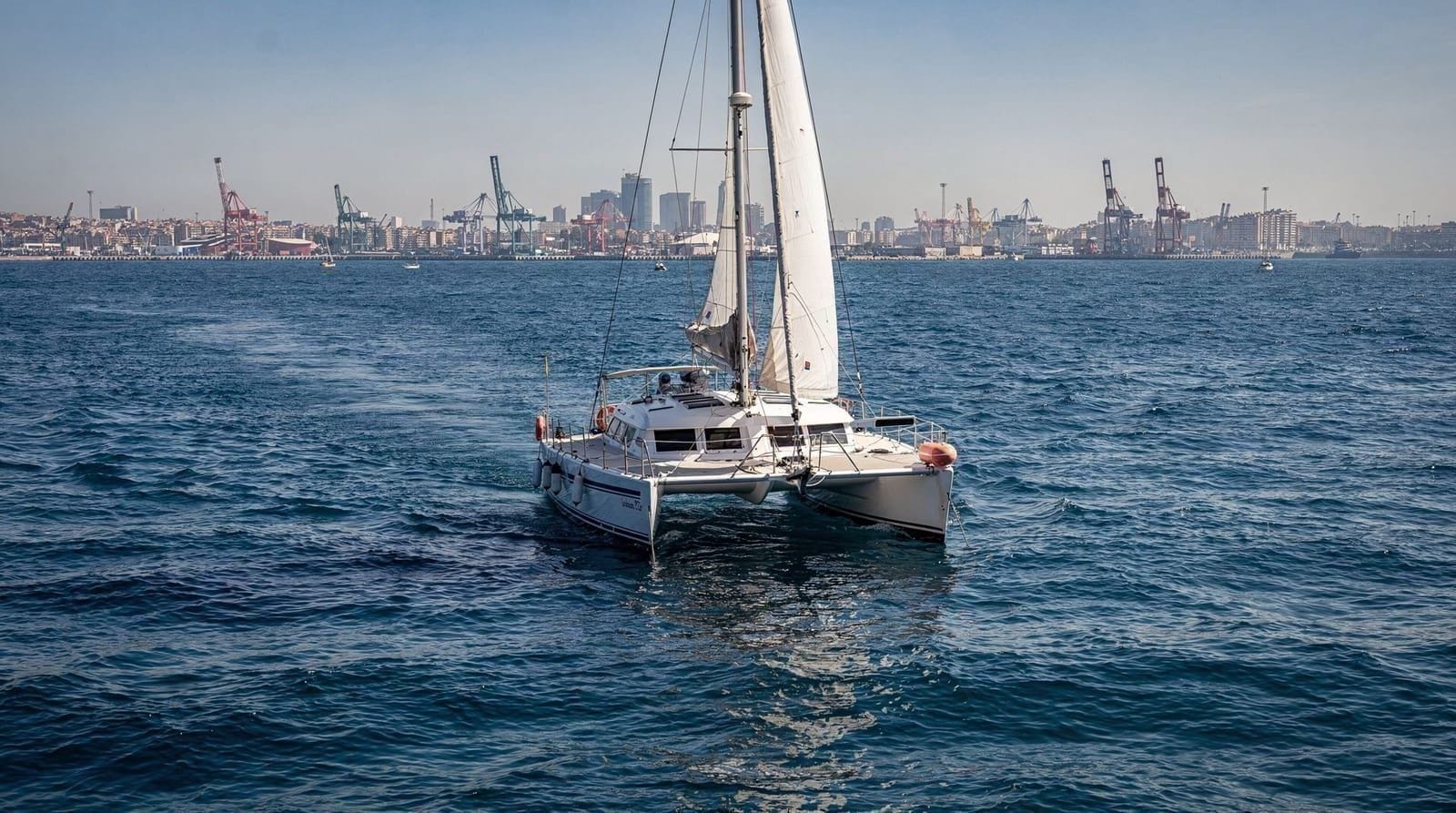 catamaran cruise with snack and swim at El SalerCheck availability
No direct bus service
Unlike El Saler beach, there is no public bus that serves La Devesa beach directly. Bus 25 stops at El Saler village, from which the forest walk to the La Devesa beach sections is 2–4 km depending on which access point you target.
The beach
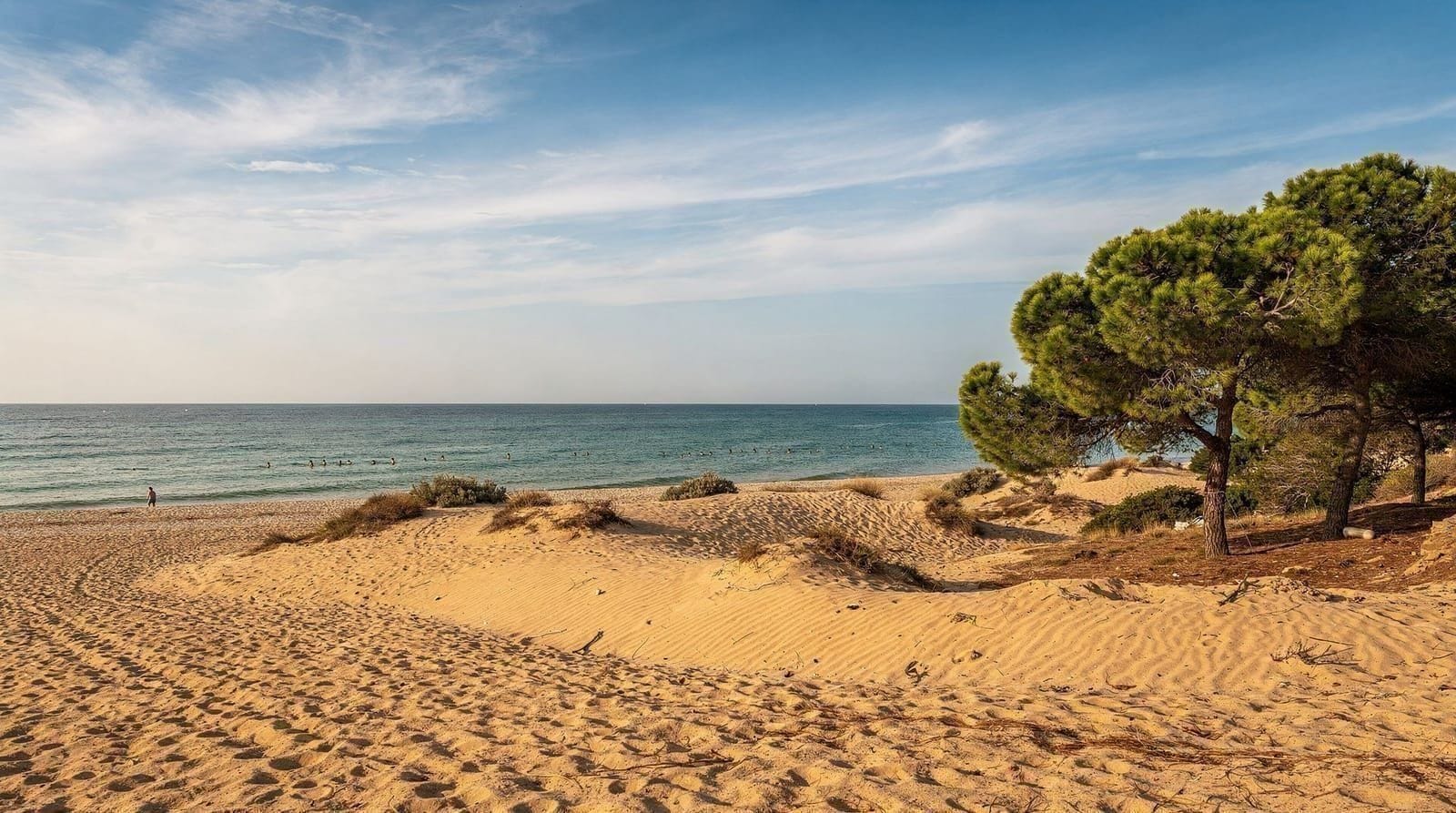
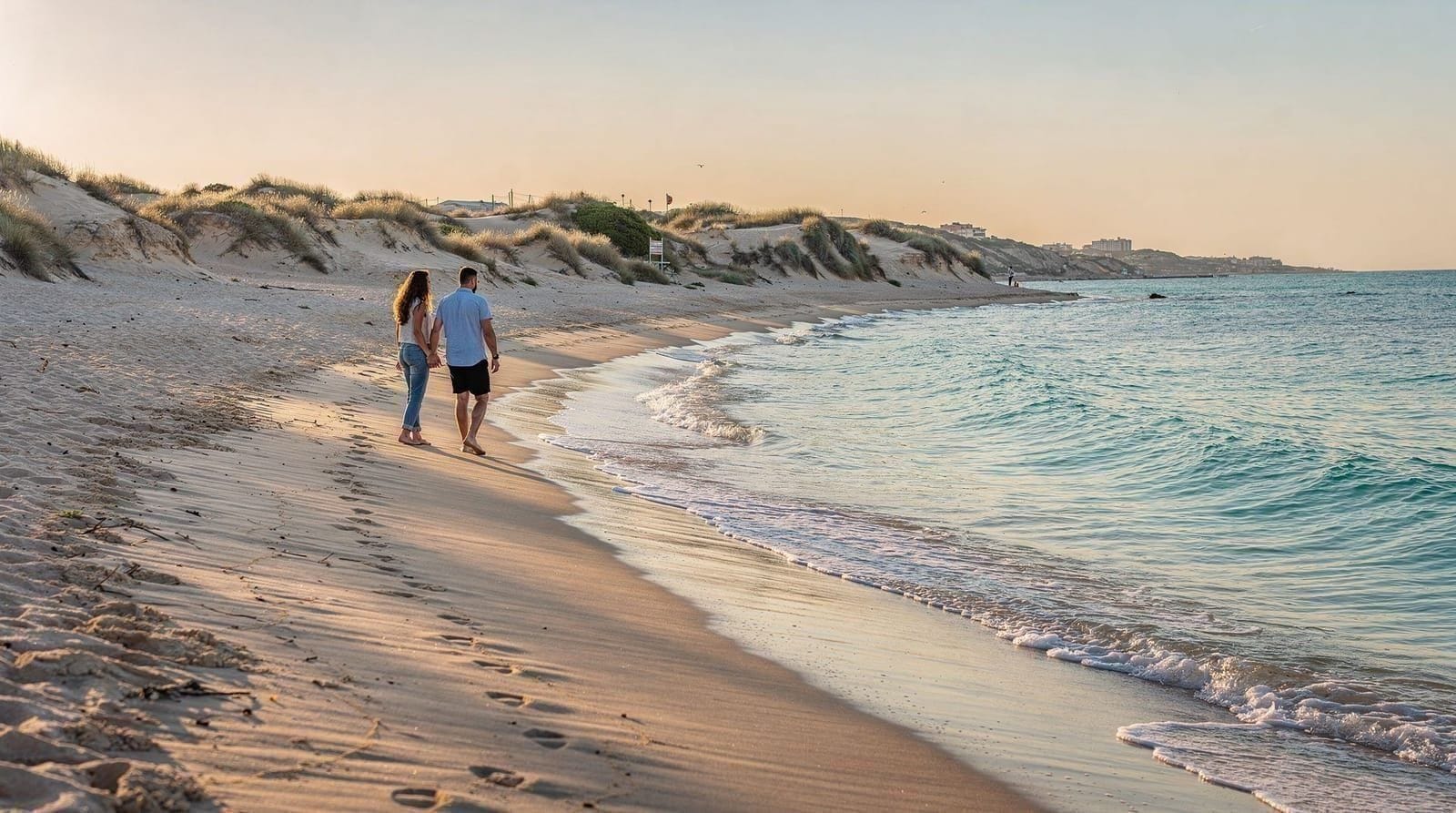
La Devesa beach is wide and exposed. The sand quality is excellent — fine and pale, comparable to the better beaches further south on the Costa Blanca. The absence of construction behind the beach means the dune system is intact in most sections: climbing the dunes is discouraged (it damages the stabilising vegetation) but the visual effect of the dune ridge behind the beach is distinctive.
Swimming: The water is clean and, at the La Devesa sections away from the El Saler village, noticeably clear. The beach faces east-southeast, so afternoon sun is less direct in summer. Wave conditions are slightly more exposed than the sheltered urban beaches but typically manageable — 0–0.5 m swell on most summer days.
Facilities: Minimal. Bring water and food. There are no showers or toilets at the forest access points (only at El Saler village and El Perellonet at the southern end). There is no sunbed rental. There are no restaurants.
Lifeguards: Not present at the La Devesa access points. The main El Saler beach section further north has summer lifeguard coverage. If you are swimming with young children at La Devesa, you are responsible for safety.
La Devesa forest walk
The forest interior deserves as much attention as the beach. Several well-signed paths run through La Devesa:
Ruta de los Pinos (Pine Route): a circular 4 km walk through the densest section of stone pine. Interpretive panels explain the dune ecology, the history of the forest, and the bird life. The path is shaded and appropriate for all fitness levels. Start from the El Dosser car park.
Ruta del Litoral (Coastal Route): a linear path following the seaward edge of the dunes, closer to the beach. Approximately 8 km one-way from El Saler to El Perellonet. Best walked north to south in the morning to keep the sun behind you.
Birdwatching: The forest/lagoon interface is productive for birds. Dawn and dusk in spring and autumn bring migrant warblers and flycatchers to the pine understory. The lagoon side of the track in winter has flamingo flocks. Binoculars are worth bringing.
Combining La Devesa with the Albufera lagoon
The classic combination is La Devesa beach in the morning followed by a sunset boat ride on the Albufera lagoon in the late afternoon. The lagoon lies immediately behind the La Devesa forest — you can cross from the beach side to the lagoon shore in 10–15 minutes through the forest.
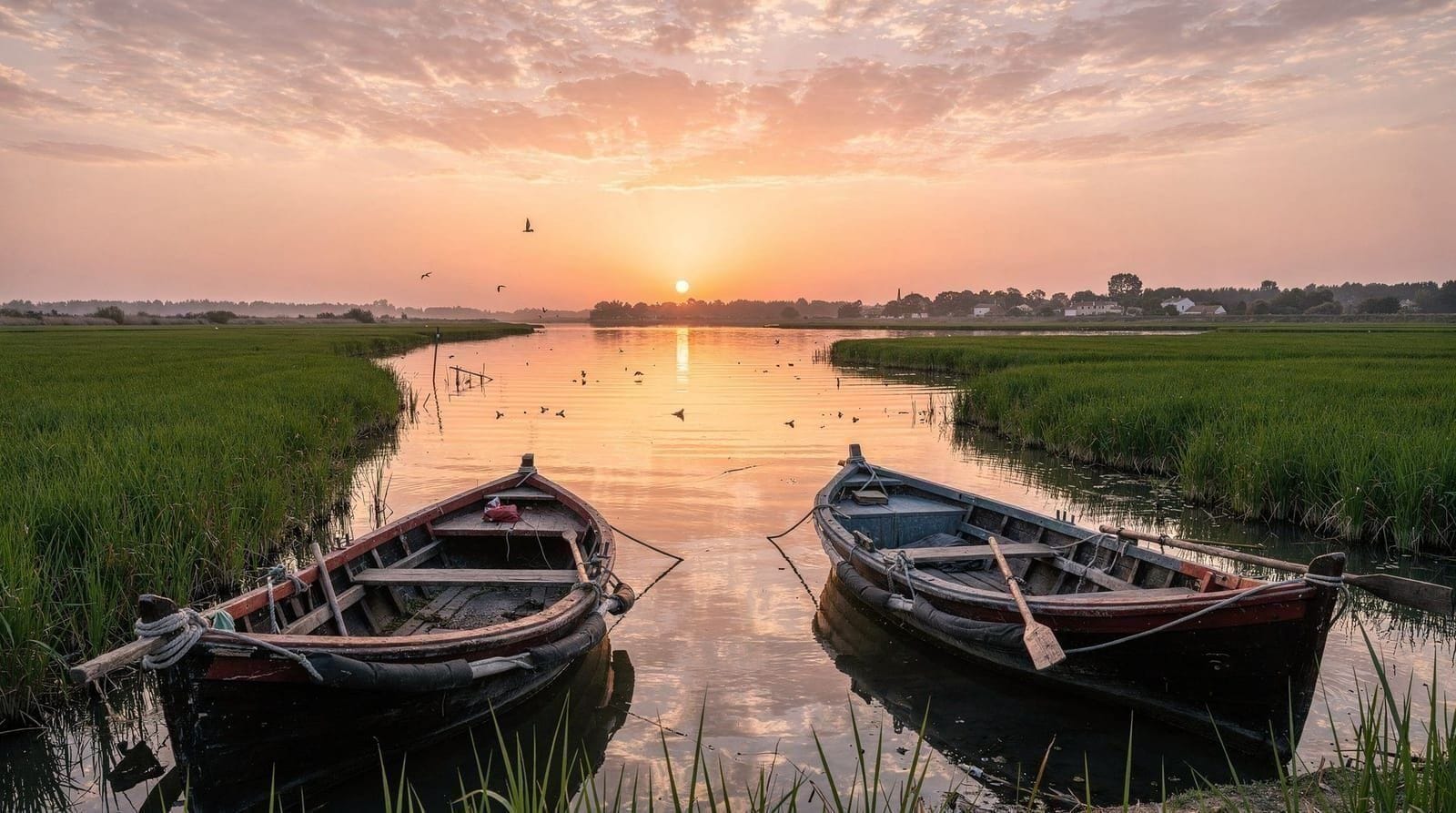
Sunset boat rides depart from El Palmar village (9 km south of El Saler on the CV-500). They represent the most direct connection to the traditional Albufera experience:
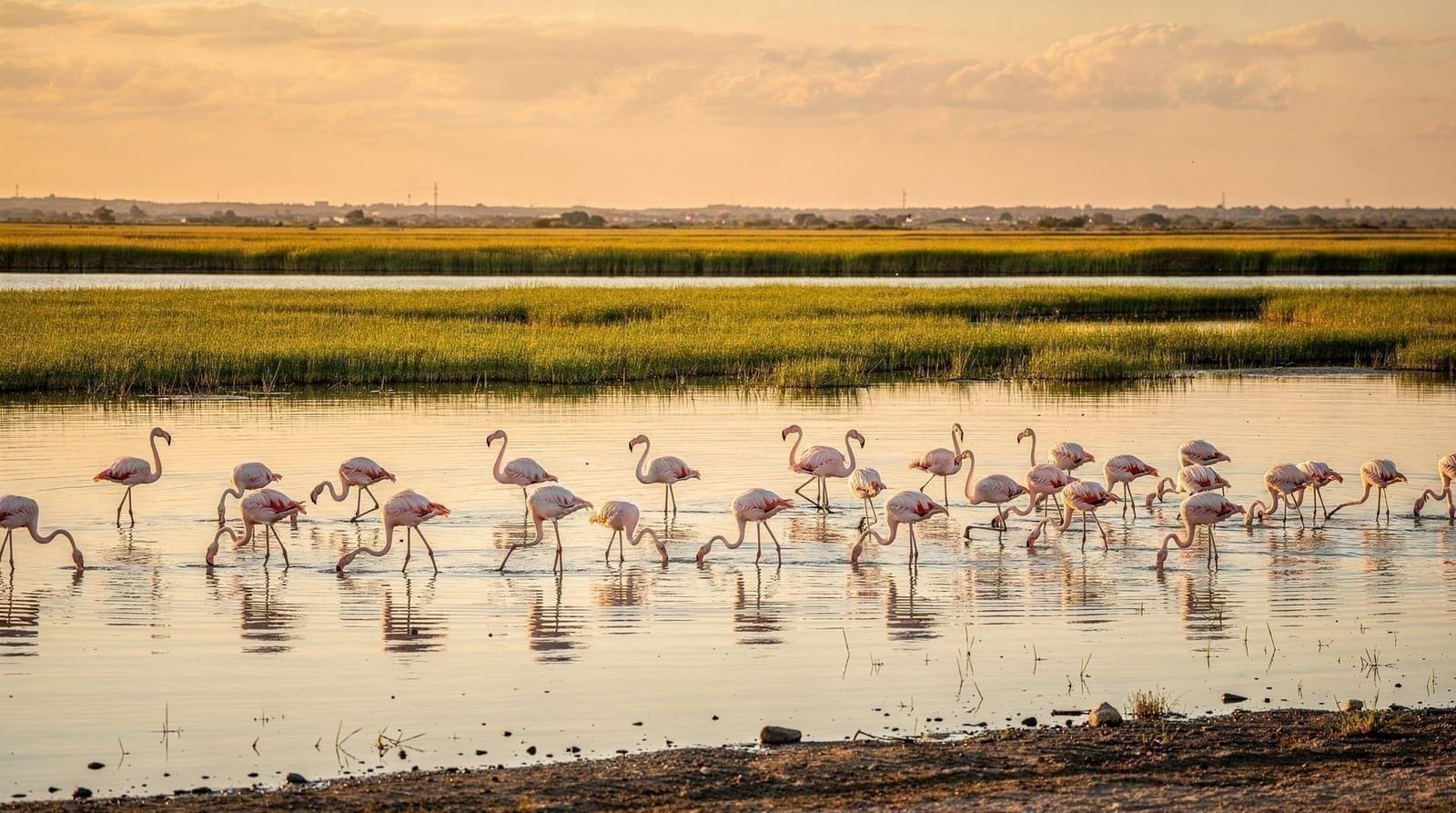 Albufera Natural Park eco boat tour at sunsetCheck availability
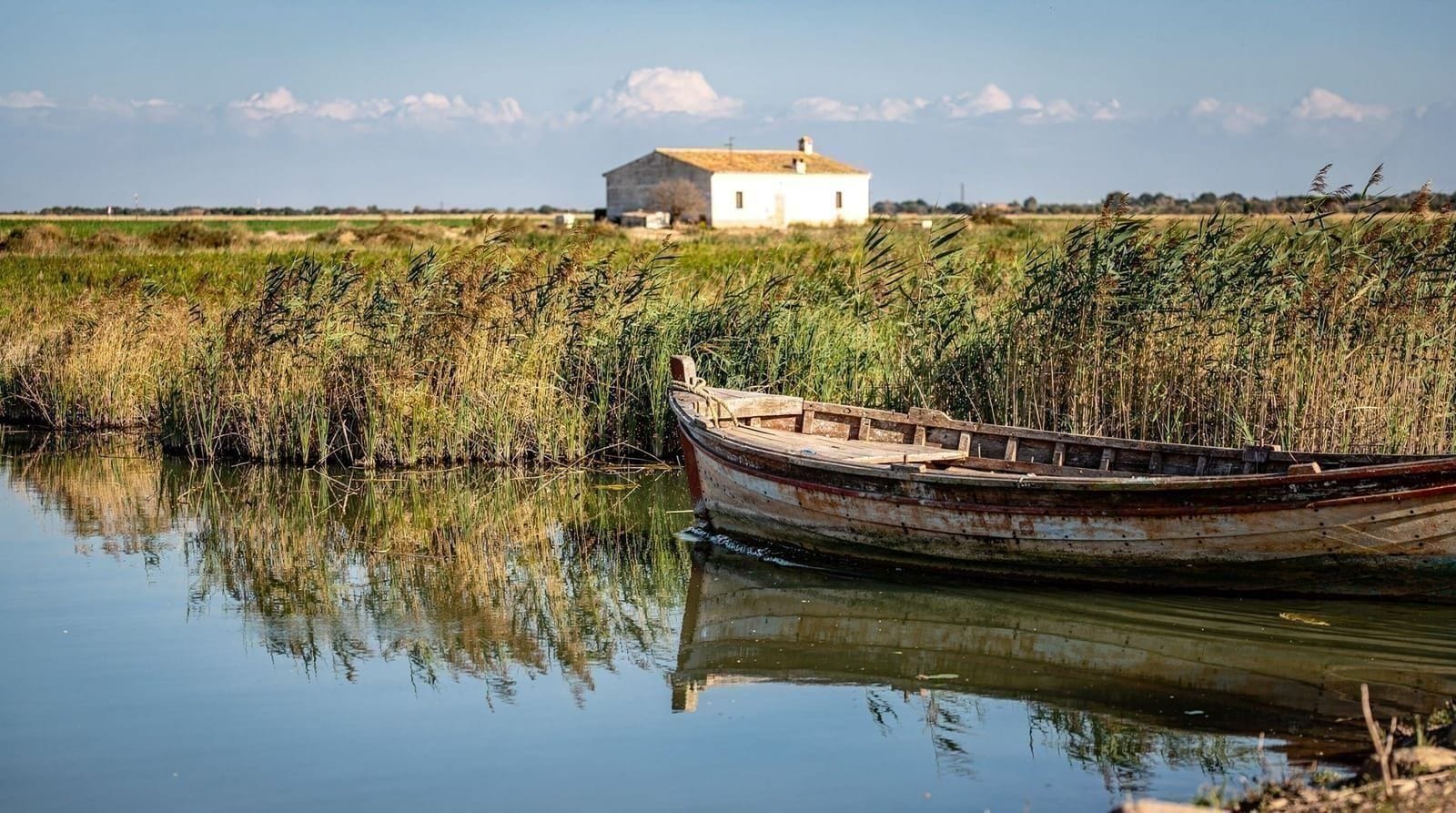
Local barquero (boatman) services in El Palmar also offer informal rides without advance booking, typically €4–8 per person for a 30–40 minute tour of the lagoon channels. These are traditional wooden flat-bottomed barques — not motorised tourist boats. The experience is unhurried and authentic.
Practical information
How to get there: Car via CV-500 south from Valencia (~25 min). Bike from El Saler village through the Camí de la Devesa forest track. No direct bus service to La Devesa access points.
Parking: Small lots at El Dosser, La Garrofera, El Perellonet. Fill early in July–August. Arrive before 09:00 on summer weekends.
Facilities: Minimal to none at forest access points. Bring water, snacks, and sun protection.
Beach length: ~25 km total (La Devesa barrier), with multiple access points spread along its length.
Swimming: June–October. No lifeguards at La Devesa points. Families with young children should use supervised sections at El Saler village.
Best for: Nature-oriented visitors, hikers, cyclists, birdwatchers, anyone seeking a beach without concessions and crowds.
Worst time: August weekends at the El Dosser access (limited parking, no facilities, can feel frustrating if you arrive and cannot park). Go to El Saler beach instead if you need facilities.
Frequently asked questions about La Devesa
Is La Devesa beach the same as El Saler beach?
They are adjacent and both within the Albufera Natural Park, but they are different sections of the coast. El Saler beach is the northern end, closest to the El Saler village with basic facilities and lifeguards in season. La Devesa refers to the longer, wilder stretch extending south, accessible via the forest tracks, with minimal facilities.
Can you camp at La Devesa?
No. Camping is prohibited within the Albufera Natural Park, including La Devesa. Fires are also prohibited. The park boundary signs make this clear, and rangers do patrol the area in summer.
Is La Devesa beach suitable for children?
The beach itself is excellent for children — shallow gradient, clean water, no crowds. The access challenge is the lack of toilets and shade structures (beyond the trees). For young children, El Saler beach is more practical as it has basic facilities. Older children who can manage a 2–4 km forest walk will find La Devesa a memorable experience.
What wildlife might I see at La Devesa?
The forest holds booted eagles, short-toed eagles, hoopoes, wrynecks (in migration), and various Mediterranean reptiles including Montpellier snakes (harmless unless handled). The lagoon side has flamingos, herons, spoonbills, and in winter significant duck flocks. Chameleons (Chamaeleo chamaeleon) are present in the dune zone — one of their few Spanish mainland populations — though you need patience and luck to see them.
La Devesa and the Albufera rice culture
The forest of La Devesa is the eastern wall of the Albufera lagoon system. Behind the trees on the lagoon side lie rice paddies that have been cultivated continuously since Moorish occupation of the region. This proximity matters for the visitor: within 2 km of a beach with zero facilities, you can be standing in an agricultural landscape with direct historical continuity stretching back a thousand years.
The rice varieties grown in the Albufera paddies — principally Sénia, Bomba, and the recently protected Albufera variety — are the basis of authentic Valencian paella and arrós a banda. When the Spanish government granted Protected Denomination of Origin (DO) status to Arroz de Valencia, the geographic boundary centred on this lagoon and its paddies.
Walking west from the La Devesa beach access points through the forest, you cross the dune ridge, enter the pine woodland, and emerge after 15 minutes at the lagoon shore. In the right season (July–September: green paddies; October: harvest), the visual contrast with the open sea 2 km behind you is dramatic.
The dune system
The dunes of La Devesa are among the few semi-intact dune systems remaining on Spain’s Mediterranean coast. Most Mediterranean dunes were either built over during the 20th-century coastal development rush or destabilised by uncontrolled foot traffic. At La Devesa, the combination of natural park protection and the physical inaccessibility of much of the coastline has allowed the dune vegetation to persist.
Dune vegetation: The foredunes closest to the sea have typical pioneer species — sea rocket, sea spurge, and the binding grass Ammophila arenaria. Behind these, in the fixed dunes, more stable plant communities include sea holly (Eryngium maritimum), sea bindweed, and various Mediterranean herbs. The fixed dune zone grades into the pine forest over a transition zone of cistus scrub.
What this means for visitors: The vegetation holds the dunes in place. Walking on the foredune vegetation destroys the plants and destabilises the sand. The paths to the beach are clearly marked; using them matters here more than on an urban beach where nothing natural survives anyway.
Photography at La Devesa
La Devesa is used regularly by Valencia-based photographers for landscape and nature work. The combination of pine forest, dune backdrop, and sea provides foreground interest that straight sandy beach cannot match. Specific shooting opportunities:
Sunrise: The beach faces east. Sunrise at La Devesa is direct and clean — the first light from the Mediterranean comes without obstruction. June sunrise times are around 06:30; September around 07:15. Getting to the La Garrofera access for sunrise requires leaving Valencia before 05:30 — feasible but demanding.
Sunset: Shooting back toward the forest at sunset, with the low light coming through the pine trunks, creates the most distinctive La Devesa light. This is the opposite of the classic sunset-on-water shot — the light source is inland and the forest becomes the subject.
Rice paddies: The paddies are accessible along the CV-500 edges and from the forest tracks on the lagoon side. Harvest season (October) provides the most photographic variety — machinery, workers, golden light, bird flocks.
Planning a first visit: what to expect step by step
For a first-time visitor arriving by car, the sequence looks roughly like this: leave Valencia via the CV-500, expect around 25 minutes of driving south past El Saler village, and choose an access point — El Dosser for the shortest walk from car to sand, La Garrofera for a slightly quieter stretch, or El Perellonet at the southern end if you want a little more infrastructure nearby. Park early (before 09:00 in July and August), then follow the marked forest path, which typically takes 5-10 minutes on foot depending on the access point.
Once at the beach, there’s no return trip needed until you’re ready to leave — bring everything for the day, since there’s no way to restock once you’re there. Cyclists coming from El Saler village via the Camí de la Devesa should budget closer to 45-60 minutes each way if riding the full forest track to the southern access points, considerably longer than the direct car route but more scenic and requiring no parking search at all. Either way, allow the whole morning or afternoon rather than treating La Devesa as a quick stop — the value here is in the slower pace, not a fast visit ticked off a list.
Historical context: La Devesa as military barrier
La Devesa’s historical role was partially defensive. The narrow strip between the sea and the lagoon made it a natural chokepoint — any army approaching Valencia from the south by coast had to cross La Devesa or go around the lagoon system, adding considerable distance. The pine forest was maintained partly for this strategic value, providing timber for ship-building and construction while also serving as a natural screen.
Several of the named areas within La Devesa — including El Dosser — have origins in this military geography, with “dosser” cognate to defensive earthwork terminology.
Combining La Devesa, El Palmar, and the sunset boat
The ideal single-day Albufera circuit:
- 09:00–12:00: La Devesa beach via El Dosser or La Garrofera access. Swim, forest walk.
- 12:30: Drive or cycle 8 km south to El Palmar via CV-500.
- 13:00–15:00: Lunch at El Palmar. Traditional paella or all-i-pebre. Reserve in advance for weekends.
- 15:00–16:00: Explore El Palmar village and lagoon shore.
- 16:30–18:00: Sunset boat ride on the Albufera.
Albufera Natural Park eco boat tour at sunsetCheck availability
This circuit covers all three of the Albufera area’s major experiences — ocean beach, traditional rice village, and lagoon sunset — in a single manageable day.
Practical notes for a La Devesa visit
Carry everything you need. No shops, no restaurants, no toilets at the La Garrofera and El Dosser access points. Minimum carry: 1.5 litres water per person, sunscreen, snacks, emergency contact info.
Early departure in summer. The car parks have 20–40 spaces and fill by 09:30 on summer weekends. Aim for the car park before 09:00 or accept parking on the CV-500 verge and a longer walk.
Respect the dune vegetation. Use the marked beach access paths. The dune ecosystem is fragile and protected under the natural park regulations. Rangers do patrol the area.
No camping, no fires. Both are prohibited by the natural park rules. The signs are explicit.
La Devesa vs the other beaches near Valencia
| Beach | Facilities | Crowds | Best for |
|---|---|---|---|
| La Devesa | Minimal to none | Very low | Nature, quiet, hiking |
| El Saler | Basic (showers, lifeguards) | Low-moderate | Families wanting some facilities |
| Malvarrosa | Full (bars, sunbeds, promenade) | High in summer | Convenience, nightlife nearby |
| El Cabanyal | Full | Moderate-high | Local neighbourhood atmosphere |
If you want an unspoilt beach and don’t mind the lack of facilities, La Devesa is unmatched this close to a major Spanish city. If you’d rather have a bar and a sunbed within reach, Malvarrosa or El Cabanyal make more sense.
Who La Devesa suits, and who it doesn’t
La Devesa rewards travellers who enjoy nature over convenience: birdwatchers, hikers, cyclists, and photographers get real value here that a standard urban beach can’t offer. Families with very young children, visitors without a car, and anyone who wants shade structures, toilets, or a snack bar nearby will have a smoother day at El Saler or Malvarrosa instead. If your Valencia trip is short and you’re weighing whether the effort of getting here is worth it, the honest answer depends on whether you value the emptiness and the pine forest more than the practicality of a beach with services — for many visitors on their first, brief trip, El Saler delivers 80% of the Albufera coast experience with far less logistics.
Valencia: catamaran with swim stop near El SalerTop experiences
Bookable activities with verified prices and instant confirmation on GetYourGuide.