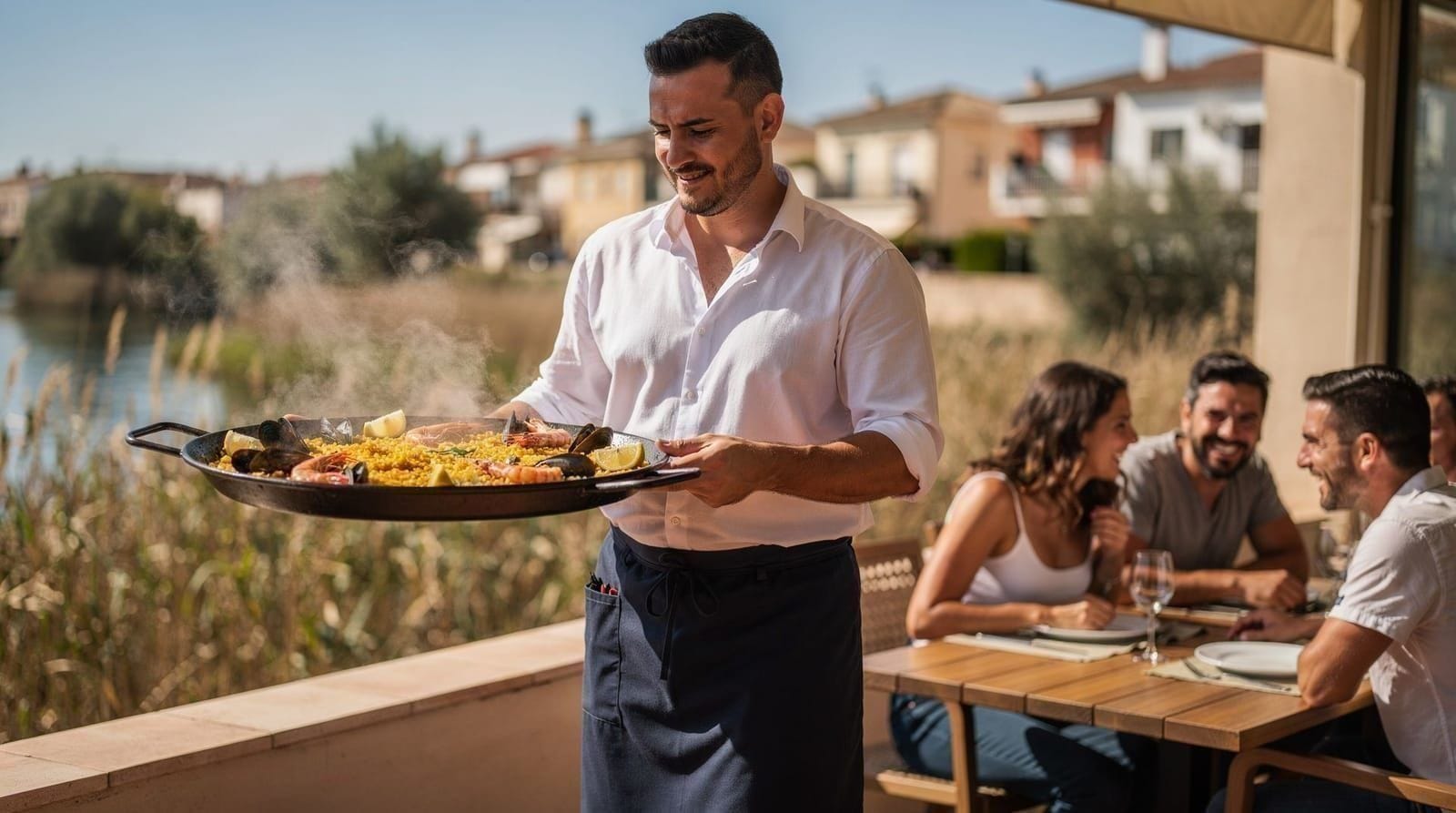
Paella traps in Valencia — how to avoid bad paella and find the real thing
Valencia: paella cooking class with Central Market tour
Duration: 4 hours
How do I avoid bad paella in Valencia?
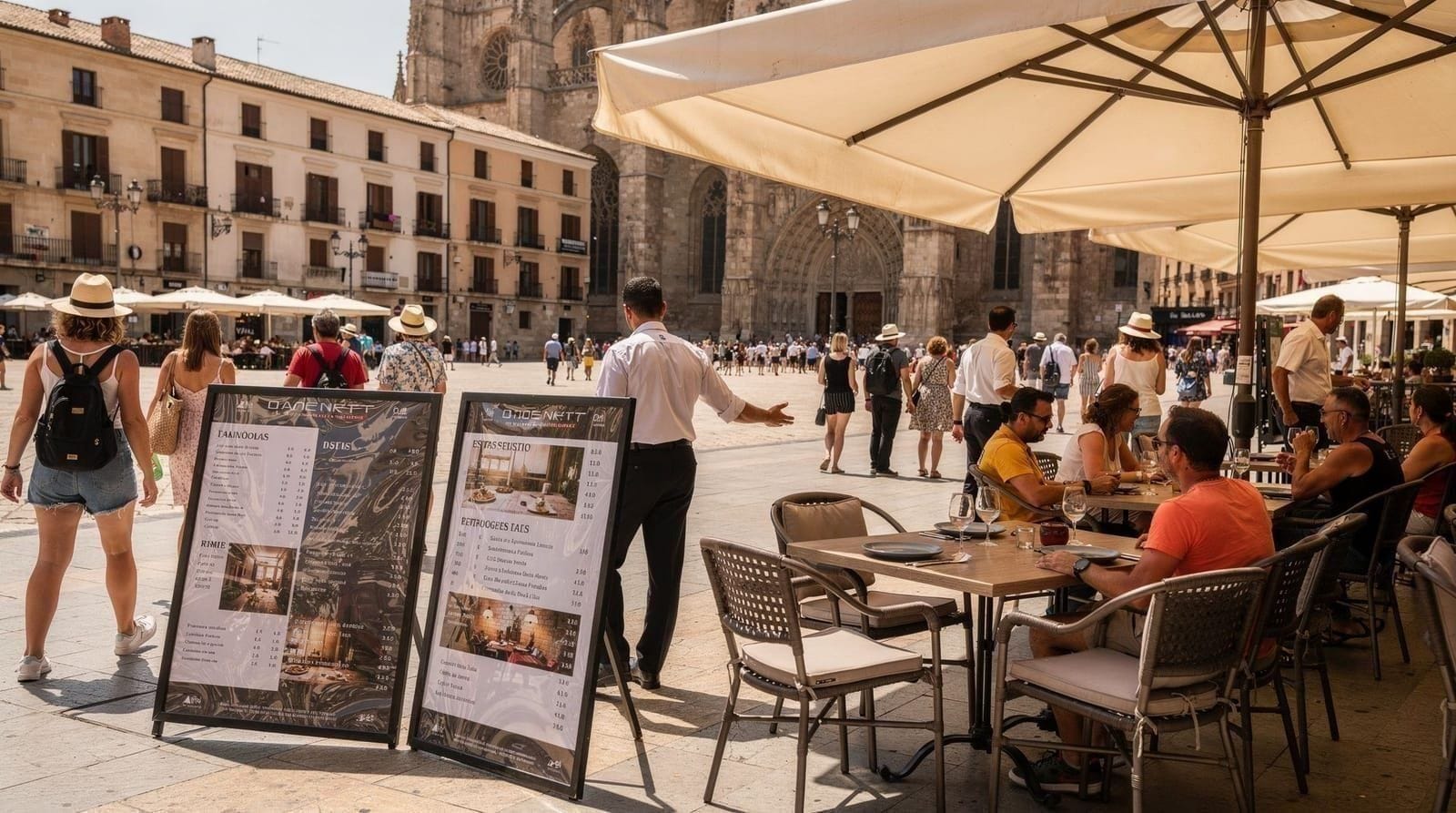
The golden rule — never order paella for dinner. Any restaurant serving paella in the evening is using pre-made or reheated rice. Good paella is a lunch dish, takes 45-60 minutes to cook over a wood fire, and is served at 14:00-16:00. Avoid restaurants near Plaza de la Reina with photo menus and English-language "authentic Valencia paella" signs. Seek out arrosseries (rice restaurants) with minimum 2-person orders and no evening service.
The paella problem
Valencia is the birthplace of paella. It’s also home to some of the worst tourist paella in Spain. The contradiction resolves quickly once you understand the economics: tourist-zone restaurants in Valencia discovered decades ago that “paella” is what tourists come to eat, so “paella” is what they sell — regardless of how it’s prepared.
The dish served in many tourist restaurants near Plaza de la Reina, the Cathedral, and the beachfront is to genuine Valencian paella what a microwaved burger is to a wood-grill smashburger. Same name, different product.
This guide identifies the specific traps and the specific alternatives.
| Where to avoid | Restaurants with photo menus near Plaza de la Reina and the Cathedral |
| Where to go instead | El Palmar, El Grau, Alboraia arrosseries |
| When | Lunch only, 13:30–16:00 — never dinner |
| Price | Around €15–25 per person at a proper restaurant, 2-person minimum |
| Booking | Recommended for weekends and El Palmar restaurants |
Trap 1: Paella at dinner
This is the most reliable indicator of tourist-grade paella and the single most important thing to know.
Why dinner paella is always a trap:
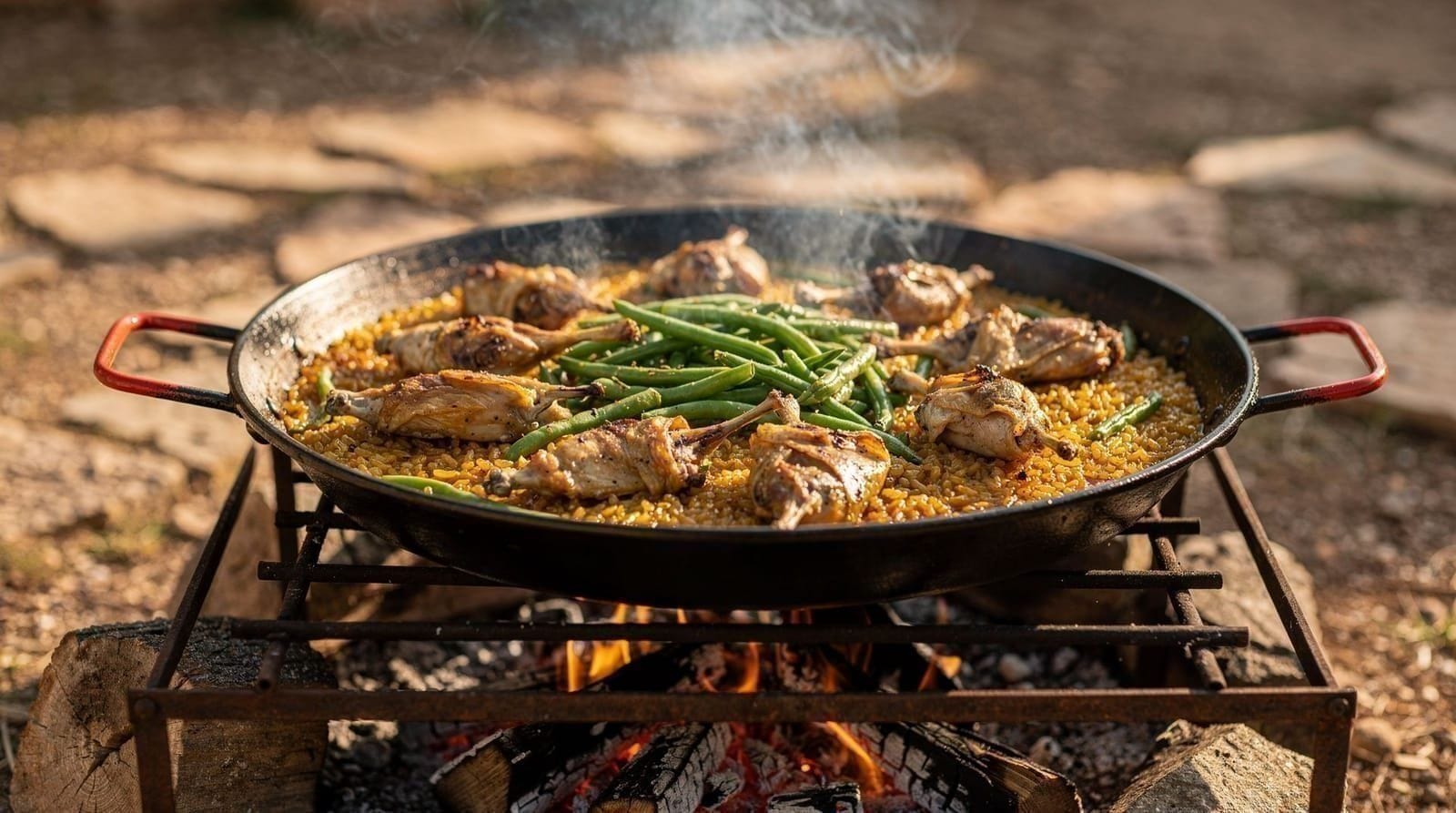
Traditional Valencian paella (paella valenciana) is cooked in a specific way:
- Over a wood fire (traditionally orange or vine branches for flavour)
- In a large, flat paellera (the pan)
- For a minimum of 45-60 minutes, monitored constantly for heat distribution
- Served immediately from the pan — it cannot be held or reheated successfully
The socarrat — the caramelised, slightly crispy layer of rice at the bottom of the pan — is the defining feature of a well-made paella. It forms in the final minutes of cooking and begins to deteriorate within 15-20 minutes. It cannot survive reheating.
What dinner paella actually is: A batch cooked earlier in the day, held in a warming oven or refrigerated and reheated. The socarrat is gone. The rice is mushy or, if reheated from cold, rubbery. The flavour profile is flat. It looks like paella; it tastes like a memory of paella.
Restaurants that offer paella at dinner do so because tourist demand outstrips their ability to produce it properly. The solution is industrial production.
The rule: Go for lunch. Arrive at 13:30 or 14:00. Order immediately if it’s busy — the day’s paella has finite portions. If you arrive at 15:30, the paella is often finished or nearly done.
Trap 2: Chorizo and other inauthentic ingredients
A menu that includes “paella Valencia” with chorizo, prawns, or peas is not serving you authentic paella valenciana. These additions are either inventions for tourist palates or represent a different type of rice dish that’s been mislabelled.
What paella valenciana actually contains:
- Short-grain rice (arroz bomba or arroz J. Sendra, grown in the Albufera region)
- Chicken (pollo)
- Rabbit (conill/conejo)
- Ferraura beans (green flat beans, native to Valencia)
- Garrofó (large flat white Valencian bean — essential, not substitutable)
- Tomato (tomàquet)
- Saffron (safrà/azafrán)
- Olive oil, water, salt, and optionally rosemary
- Sometimes snails (vaquetes) in the traditional rural recipe
What it does not contain:
- Chorizo (never — this is the clearest sign of an inauthentic recipe, actively campaigned against by Valencian chefs and the local government)
- Prawns or seafood (that’s paella de marisco or arrós a banda — different dishes)
- Peas (not traditional, sometimes added in tourist versions for colour)
- Capsicum peppers (a common non-Valencian addition)
- Onion (traditional recipes don’t include it)
If the menu photo shows bright red chorizo slices, the restaurant is not making traditional Valencian paella. This isn’t cultural snobbery — the dish tastes different with these substitutions, and specifically worse with chorizo, which overpowers the subtle saffron and vegetable flavour.
Trap 3: Photo menus with pictures of paella
The presence of a laminated, multi-language menu with colour photographs of food is a general indicator of tourist-oriented restaurants. For paella specifically, it correlates with lower quality because:
- Restaurants that photograph their paella are marketing a product, not a craft
- Real paella arrosseries don’t need photos — they have regulars and reputation
- The photo version is often the “generic” paella that works for everyone (which means chorizo, mixed seafood, visual appeal over traditional preparation)
This isn’t an absolute rule — there are exceptions — but a menu with a large photograph of paella labeled “Our speciality, authentic Valencia paella” is a warning sign.
Trap 4: “Instant paella” (15-minute rice)
Proper paella takes a minimum of 40-50 minutes from the moment the sofritto is started. A wood-fire paella takes longer because the fire itself needs to be prepared and regulated.
If a tourist-area restaurant brings you a paella within 15-20 minutes of ordering, it was not made fresh for your table.
How to test: When you order paella, ask how long the wait will be. A restaurant making it properly will say 25-45 minutes. If they say “ready in 10 minutes,” the batch was pre-made. This single question filters out most tourist-trap kitchens before you’ve even committed to ordering — a genuine cook has no reason to hide the timing, since it’s a point of pride rather than an inconvenience.
Some arrosseries (rice restaurants) pre-prepare the base (the sofritto, the stock) but only add the rice and complete the cooking when ordered — this reduces total wait time to around 20-25 minutes and is a legitimate technique. Ask if you’re unsure: “¿Se cocina el arròs a la comanda?” (Is the rice cooked to order?).
Trap 5 — but really, know your dish: paella vs. fideuà vs. arrós
Not every rice-pan dish on a Valencian menu is paella, and confusing them leads to disappointment either way. If a menu offers fideuà (a noodle version) or arrós a banda (rice cooked separately from the fish), that’s not a lesser or fake paella — it’s a different traditional dish with its own rules. The paella vs. fideuà guide explains the distinction in full; the trap-avoidance principles here (lunch only, proper cooking time, minimum two portions) apply equally to both.
Trap 6: Single-portion paella
Traditional paella is cooked in a paellera for a minimum of two people (ideally four or more). The physics of the pan — surface area relative to depth — require a minimum quantity of rice and liquid to produce the correct texture and socarrat.
Single-portion paella is technically possible but compromised by the pan size needed. Most arrosseries and traditional restaurants require a minimum order of 2 portions. Some will make a single serving but it’s not the optimal presentation.
If a tourist restaurant offers you “paella for one,” at dinner, immediately — the trifecta of traps — you’re looking at the complete tourist version.
Where to find genuine paella in Valencia
El Palmar village (Albufera): This small village south of Valencia, inside the Albufera natural park, is where traditional rice dishes are cooked to the original recipes by restaurants that have been doing it for decades. The setting is the rice fields and lake where the dish was invented. Restaurants like Casa Salvador, Canyisset, and Nou Raco are long-established and serve traditional preparations. Lunch only, reservations strongly recommended on weekends.
Arrosseries in Valencia city: The best city-based rice restaurants operate with the same principles — lunch only, wood fire, minimum 2 portions. Look for restaurants in the El Grau (port) area and in Alboraia (north of the city, the same zone famous for horchata). The zona franca area around Camí de les Moreres has traditional arrosseries serving to a local lunch crowd.
Restaurants with DOP recognition: The Consell Regulador de la Denominació d’Origen “Arròs de València” certifies restaurants that use DO-certified Valencian rice and follow traditional preparation methods. A short list of certified restaurants is available from the local tourist office — ask specifically for “restaurants con DO arròs de València.” This certification is a genuinely useful shortcut if you don’t have time to research individual restaurants — it filters out the tourist-menu operators almost entirely, since certification requires demonstrating traditional technique and sourcing.
For a full guide to specific named restaurants and what to order, see authentic paella where to eat.
Cooking classes as an alternative
If you want to understand paella preparation hands-on rather than just eat it, a paella cooking class taught by a local cook explains the process and lets you eat what you’ve made. This is particularly good for people who plan to reproduce the dish at home.
The best classes are taught in actual kitchens using proper techniques — wood fire if possible, or at minimum a proper paella pan over gas with authentic ingredients.
For a structured class experience, a traditional paella cooking class also typically includes a market visit to source ingredients. Many classes start at the Mercado Central itself, buying the same ferraura and garrofó beans a local cook would use.
Paella cooking class starting with a Central Market shopping visit Authentic paella cooking class with a local Valencian cookBeyond paella: other tourist-menu traps
The same economics that produce bad tourist paella apply to Valencia’s tourist menus more broadly — see the tourist menu traps guide for the wider picture, and how to eat like a local for the general principles (timing, neighbourhood choice, reading a menu) that apply well beyond rice dishes.
Frequently asked questions about paella traps
Can you eat paella for dinner anywhere in Valencia?
Some tourist restaurants serve it for dinner and some will bring you a perfectly edible plate of rice — but you won’t be eating a properly prepared traditional paella valenciana. If you’re genuinely curious about authentic Valencian rice culture, lunch is the only viable option. If you just want something that tastes approximately like paella in the evening without caring about tradition, some tourist-area restaurants produce a decent-enough product.
What should I do if I’ve already ordered paella at a tourist restaurant?
Eat it — it’ll be fine in the same way that a supermarket pizza is fine. Don’t feel cheated; you now know the distinction for next time. Many visitors eat “tourist paella” and enjoy it perfectly well. The issue is specifically paying premium prices or believing you’ve experienced Valencian food culture.
Is paella de marisco (seafood paella) also traditional?
Paella de marisco is a legitimate rice dish but it’s not the traditional Valencian preparation — it comes from the coast of Valencia and neighbouring regions (particularly Alicante) rather than the Albufera inland. It’s not a lesser version, just a different one. The tourist industry often presents it alongside paella valenciana as equivalent, which muddles the distinction. Both are worth eating; understand that they’re different dishes.
How do I order paella like a local?
Go to a restaurant on a Sunday, arrive at 14:00, specify “paella valenciana” (not mixed or seafood), and confirm the minimum is 2 portions. Tell the waiter you’re happy to wait. Don’t ask for modifications to the ingredients. At good restaurants, the waiter will bring the pan to the table so you can see the socarrat before serving. Eat it all — leaving significant rice behind is considered wasteful by the cook.
What is the difference between paella and arrós (rice)?
In Valencia, “arròs” (arrós in Valencian, arroz in Castilian) is the generic term for all rice dishes. Paella valenciana is the specific traditional preparation. Other local rice dishes include arrós al forn (oven-baked rice), arrós negre (black rice with squid ink), arrós a banda (seafood rice, traditionally served with the fish course first), and fideuà (noodle version — see the paella vs. fideuà comparison). All are made properly at lunch.